2027 Fastest Graduate Degrees

Co-Founder and Chief Data Scientist
A fast graduate degree can save time, but an advertised completion date may assume full-time enrollment, completed prerequisites, or credits you already hold. That matters when you are weighing a career change against lost work hours and tuition costs.
The U.S. Bureau of Labor Statistics projects 34% employment growth for data scientists from 2024 to 2034, illustrating why some students want to build specialized skills quickly. This guide compares master's-level fields, explains what actually shortens a degree, and helps you identify when a slower or different path is the better investment.
Key Things You Should Know
- Business, IT, analytics, and some nonlicensure education master's degrees can offer roughly one-year pathways; clinical placements, prerequisites, and course sequencing often make other fields slower.
- A short course is not a short degree. Compare remaining graduate credits, available terms, capstone requirements, and the enrollment load behind any advertised timeline.
- Speed should serve your goal: the Bureau of Labor Statistics projects 29% growth for information security analysts from 2024 to 2034, but an accelerated cybersecurity degree alone does not qualify you for every such role.
Top 10 Fastest Graduate Degrees - Fastest Graduate Degrees
Business / MBA Programs
Accelerated Master of Business Administration (MBA) programs can suit professionals who already have business experience and can sustain an intensive course load. Compare required foundation classes, cohort schedules, internship expectations, and whether classes run year-round. A specialized MS in management may move faster if it requires fewer courses, but it offers a narrower curriculum. Neither credential alone qualifies you for a management job; weigh the time away from work against the roles you can realistically pursue afterward.
Healthcare Administration & Management Programs
A Master of Healthcare Administration (MHA) or healthcare management MS prepares students for organizational work rather than clinical licensure. Some accelerated options favor applicants with healthcare experience or completed prerequisites. Check whether an internship, residency, or employer-based project adds time beyond classroom terms. An MBA with a healthcare concentration may be preferable if you want broader business mobility. Leadership positions generally require substantial relevant experience in addition to graduate education.
Information Technology Programs
An IT-focused MS can be a relatively fast route to advanced systems, cloud, or technology-management coursework, particularly for applicants with technical preparation. Career changers may need programming or networking prerequisites before the advertised degree schedule begins. Compare how often required courses run and whether a capstone can be completed alongside other classes. For an experienced professional, a targeted certification or graduate certificate may meet a narrower skills goal sooner and at lower cost.
Computer Science Programs
An MS in computer science may offer an accelerated non-thesis track, but speed depends heavily on your starting knowledge. Applicants without sufficient programming, mathematics, or algorithms coursework may face bridge requirements that extend the total timeline. Research-oriented thesis tracks may take longer because progress depends on supervision and the project itself. Choose a faster coursework-based route for a defined technical goal; consider a research track when doctoral preparation matters more than finishing quickly.
Cybersecurity Programs
Cybersecurity MS programs often combine security engineering, risk, and policy. An accelerated schedule is more plausible when you already have computing or IT experience; otherwise, foundation courses can delay completion. Look for hands-on labs or a capstone, not merely short online classes. Security occupations vary widely: an entry-level applicant may need practical experience, while experienced IT workers may use the degree to specialize. Certifications can be a faster alternative for a specific employer requirement.
Data Science / Analytics Programs
An MS in data science or analytics can move quickly for students who already know statistics and programming. Others may need preparatory courses before starting graduate-level modeling and machine learning. Compare an applied analytics program's projects and employer relevance with a more mathematical, research-oriented data science degree. A compressed schedule leaves less time to build a portfolio, so ask whether substantial projects fit within the advertised completion window.
Education / Educational Leadership Programs
A Master of Education (MEd) in curriculum or instructional design may be faster than a licensure-oriented pathway because it may not require student teaching. Educational leadership programs can have experience, certification, or practicum requirements that limit acceleration. Check your state's rules before assuming an online degree qualifies you for an administrator credential. If your aim is professional development rather than a new license, a nonlicensure concentration may offer a shorter, better-fitting route.
Counseling / Psychology Programs
A counseling master's that prepares students for licensure typically includes supervised fieldwork and state-specific coursework. Those requirements make a claimed one-year route especially important to scrutinize. A nonlicensure psychology MA or MS may finish sooner, but it generally does not substitute for a clinical counseling degree or qualify you to practice as a psychologist. Start with the occupation and state license you want, then confirm that the program's curriculum and placements meet those requirements.
Nursing Programs
Master of Science in Nursing (MSN) timelines depend on your nursing credential, intended specialty, and required clinical hours. An RN-to-MSN or other bridge pathway may advertise a short graduate phase while counting substantial earlier preparation; that is not the same as a short path from initial admission. Clinical placements can also constrain scheduling. Confirm admission eligibility, programmatic accreditation, state requirements, and whether the degree prepares you for the certification or license tied to your intended role.
Engineering Management Programs
An MS in engineering management often serves engineers seeking project, operations, or technical-leadership skills without completing a research thesis. A coursework-based option may be faster if you already meet quantitative prerequisites and can take required courses without scheduling gaps. Compare its technical depth with an MBA: the former may fit engineering operations, while the latter can offer broader business study. Advancement into management still depends on experience and employer needs.
What are the fastest graduate degrees to complete?
Coursework-based master's degrees in business, IT, analytics, and some nonlicensure education fields are often the strongest candidates for a roughly one-year plan. This is a comparison of degree fields, not a ranking of particular schools: no field has a universal minimum completion time.
The comparison below shows which requirements are most likely to determine whether an accelerated schedule is realistic. Use it to narrow your search before checking individual catalogs.
| Degree family | When a shorter path is plausible | Common source of delay |
| MBA or management MS | Full-time, year-round coursework with foundations already met | Foundation courses or fixed cohort sequencing |
| IT, cybersecurity, or analytics MS | Relevant technical preparation and a coursework-based track | Prerequisites, labs, or capstone scheduling |
| Nonlicensure MEd | No student-teaching or administrator-licensure requirement | Fieldwork or state credential requirements |
| Counseling or clinical MSN | Prior qualifying preparation and available placements | Supervised practice and clinical scheduling |
The fastest suitable degree is the one that meets your career objective without leaving out required preparation. A shorter nonlicensure credential is not interchangeable with a program designed for licensed practice.
How long do accelerated graduate degree programs take?
Some coursework-based master's programs advertise completion in about one year of intensive study. Many students need longer because they enroll part-time, start with prerequisites, or must complete a thesis, capstone, internship, or clinical placement. A program's course length describes one class, not the time needed for the entire degree.
Ask an admissions adviser for a term-by-term plan based on your transcript. Confirm the remaining graduate credits, the maximum permitted course load, when required classes are offered, and whether the published timeline assumes summer enrollment. If you have prior graduate coursework or a stackable certificate, request an evaluation showing which credits apply to this degree. Transfer limits, grades, course age, equivalency, and in-residence credit rules can change the answer. A combined bachelor's/master's pathway has its own eligibility rules; ordinary undergraduate credits should not be assumed to satisfy graduate requirements.
Are online graduate degrees faster than campus programs?
Not necessarily. Online delivery can remove a commute, but completion time depends on course availability, permitted course load, prerequisites, and culminating requirements. An online program may still require live meetings, fixed deadlines, proctored work, campus visits, or local field placements. A campus or hybrid program with year-round scheduling could finish sooner than an online program whose required classes run infrequently.
When comparing accredited schools online, verify institutional accreditation and then inspect the specific graduate program's schedule. Ask whether every required class is offered in your planned terms and whether any in-person requirement would delay graduation.
What coursework do accelerated graduate programs include?
Accelerated programs still require their published graduate curriculum. An MBA may include finance, strategy, and operations; a technical MS may combine advanced core courses with a specialization and applied project. Research tracks can require a thesis, while practice-oriented degrees may include an internship, portfolio, or comprehensive assessment.
The key question is not whether a requirement exists, but when you can complete it. A capstone offered only after all core courses can extend a short-term schedule. In counseling, nursing, and some education pathways, supervised work must also fit placement availability and regulatory rules. Ask for the actual sequence rather than relying on the length of individual classes.
What are the admission requirements for fast graduate degrees?
Master's admission normally requires a completed bachelor's degree. Depending on the program, you may also need relevant undergraduate courses, a qualifying GPA, recommendations, a statement, work experience, a portfolio, or an interview. GRE or GMAT policies vary by program; a test waiver at one school does not establish a general rule. Selective nursing and licensure-oriented programs can impose additional credential or placement requirements.
Check graduate-school and program-specific policies separately, including conditional admission and bridge coursework. If you have not completed a bachelor's degree, an associate degree in 6 months online is an undergraduate option, not direct eligibility for a master's. Ask whether required foundation courses are included in the advertised completion time.
How much do accelerated graduate degrees cost?
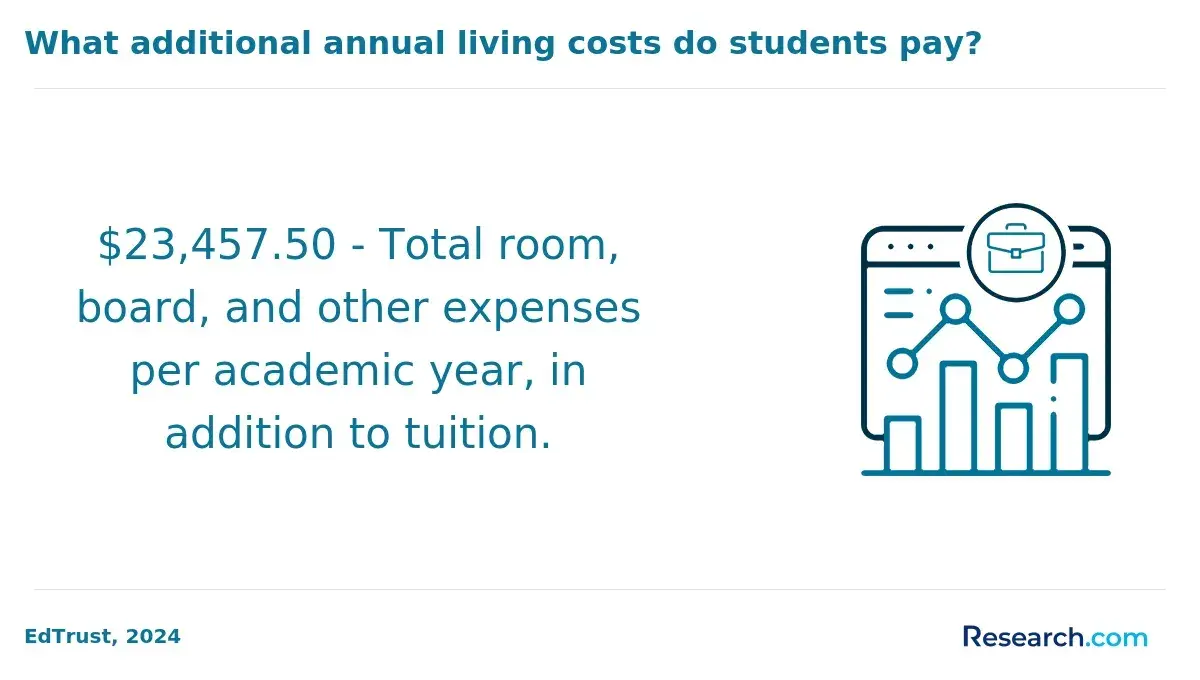
There is no dependable single price for these fields: schools charge differently by credit, residency, program, and enrollment status. A faster schedule may reduce living expenses or time away from work, yet intensive enrollment can make it harder to keep earning. Compare the total cost to finish, not just a per-credit tuition figure.
Request a written estimate that includes remaining graduate credits, mandatory and technology fees, differential tuition, books or software, and any travel or placement expenses. Confirm whether accepted graduate transfer credit reduces billable credits and whether your enrollment schedule affects financial aid, scholarships, assistantships, or employer assistance. Application costs matter too: listings of online schools no application fee can help you find candidates, but verify the fee for the specific graduate application. A low sticker price is not a low total price if prerequisites or required visits add costs.
Which careers can you pursue with a fast graduate degree?
Your destination depends more on the degree's purpose and your prior experience than on its speed. An MBA may support a move within business; an analytics MS can deepen quantitative skills; an MHA can prepare someone for healthcare operations. A cybersecurity or computer science MS can support technical specialization, but employers may still expect demonstrated skills and experience.
Work backward from job postings and, for regulated roles, state requirements. If your target calls for supervised practice, certification, or a license, verify that the program supports that pathway before prioritizing speed. Research careers or certain psychologist roles may require doctoral education; comparing a cheapest doctorate degree option can be relevant when a master's alone will not meet the goal. For a narrow skills gap, a certificate or professional certification may be more proportionate than another degree.
What salaries and job outlooks do fast graduate degrees offer?
Wages attach to occupations, not to the speed of a graduate program. For context, the Bureau of Labor Statistics reports a 2024 median annual wage of $112,590 for data scientists. That figure describes workers in the occupation; it is not an expected starting salary or a measured payoff from an analytics master's.
BLS projections also indicate strong growth in data science and information security, but openings can differ by location, experience level, and specialty. Before borrowing for an accelerated degree, compare its full cost and any earnings you would forgo with the qualifications in jobs you could plausibly obtain. Check whether those jobs require a master's at all: if experience or a targeted credential is sufficient, finishing a degree faster may still be the more expensive choice.
How can you verify graduate program accreditation and licensing?
Confirm institutional accreditation through the U.S. Department of Education's accreditation database or the accreditor itself. Then check whether your intended profession expects programmatic accreditation and whether the specific program holds it. An institution's accreditation does not, by itself, establish that a counseling, nursing, or education pathway satisfies professional requirements.
For a licensed occupation, consult the licensing board in the state where you intend to work. Compare its coursework, supervised-practice, examination, and authorization rules with the program's published curriculum and placement policies. Ask the school for written clarification about out-of-state eligibility and required in-person activities. Do this before enrolling: discovering a missing clinical component after completing a fast online degree is a costly mistake.
Other Things You Should Know About
Possibly, but an intensive course load can be difficult alongside full-time work. Request the weekly attendance expectations and a term-by-term schedule before committing.
No. The school must accept the credits and apply them to your specific degree requirements; residency and remaining core courses still matter.
Speed and delivery format do not establish quality. Check institutional accreditation, the curriculum, required practical work, and any profession-specific approval.
Only if it fits your career goal, budget, preparation, and licensing needs. A longer program with required supervised training may be the quicker route to a regulated occupation.
References
- Credit for Prior Learning - Ohio Department of Higher Education https://highered.ohio.gov/initiatives/access-acceleration/credit-for-prior-learning
- Cost of Attendance (Budget) | 2025-2026 Federal Student Aid Handbook https://fsapartners.ed.gov/knowledge-center/fsa-handbook/2025-2026/vol3/ch2-cost-attendance-budget
- DAPIP | Homepage - Office of Postsecondary Education (OPE) https://ope.ed.gov/dapip/
- Understanding U.S. Accreditation | EducationUSA https://educationusa.state.gov/understanding-us-accreditation
- Fast Track - Policies and Procedures - UT Dallas 2025 Graduate Catalog - The University of Texas at Dallas https://catalog.utdallas.edu/2025/graduate/policies/undergraduate-registration-for-graduate-courses/fasttrack
- Masters Degree Requirements | Graduate School Handbook https://handbook.unc.edu/masters.html
- 5. Master's Degrees | Rackham Graduate School https://rackham.umich.edu/policy/section5/
- Degree Completion Options | Gannon University https://www.gannon.edu/academic-offerings/health-professions-and-sciences/graduate/applied-exercise-physiology/degree-completion-options/
- How long does it take to earn an online master's degree? | ASU Online https://asuonline.asu.edu/newsroom/online-learning-tips/how-long-does-it-take-earn-online-masters-degree/
- Fast Track Programs - Graduate School | The University of Texas at Arlington https://www.uta.edu/academics/schools-colleges/gradschool/fast-track