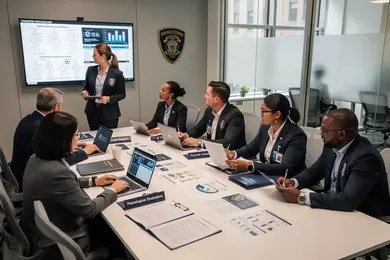
2027 Fastest Accredited Online Forensic Psychology Degree Programs That Accept Transfer Credits

Co-Founder and Chief Data Scientist
If you already have college credits, the fastest path to an accredited online forensic psychology degree is not the shortest advertised program; it is the program that applies the most of your credits to the degree plan. NCES reported in 2024 that more than half of U.S. undergraduates took at least one distance education course, making online transfer pathways more mainstream.
This guide is for transfer students, returning adults, and degree completers who want a legitimate route to graduation. You will learn how to compare accredited programs, transfer limits, residency rules, realistic timelines, costs, and red flags.
Key Things You Should Know
- The fastest realistic bachelor's completion path is usually a regionally accredited online forensic psychology major, concentration, or closely related psychology/criminal justice track that accepts up to 90 transfer credits and requires about 30 remaining credits in residence.
- SNHU, Liberty University, Maryville University, Purdue Global, ASU Online, and UND are among the transfer-friendly online options to compare, but the fastest choice depends on how your credits apply to general education, electives, upper-division psychology, and forensic coursework.
- A student transferring 75 to 90 applicable credits may finish in about 1 to 2 years, while students with 30 to 60 applicable credits should expect closer to 2 to 3 years depending on course load, term length, prerequisite sequencing, and residency requirements.
What Are the Fastest Accredited Online Forensic Psychology Degree Programs That Accept Transfer Credits?
The fastest accredited online forensic psychology degree programs are usually bachelor's programs that combine four features: regional accreditation, generous transfer acceptance, short online terms, and a degree audit that applies prior credits to required categories rather than counting them only as electives. Because fully online "forensic psychology" majors are less common than general psychology majors, the strongest options may be labeled as forensic psychology, psychology with a forensic psychology concentration, criminal psychology, or criminal justice with a forensic psychology concentration.
The table below compares transfer-friendly online programs and closely related routes that are commonly worth checking first. Use it as a short list for requesting official transfer evaluations, not as a substitute for confirming the current catalog, tuition, and transfer decision with the school.
| School or online route | Relevant online degree format | Accreditation type to verify | Transfer-credit feature | Why it may be fast for transfer students |
| Southern New Hampshire University | Online BA in Psychology with forensic psychology concentration | Regional accreditation through NECHE | Accepts up to 90 transfer credits toward many bachelor's degrees | Eight-week terms and a 30-credit remaining pathway can work well for students with many applicable lower-division and elective credits |
| Liberty University | Online BS in Psychology: Criminal Psychology or related psychology track | Regional accreditation through SACSCOC | May accept up to 75% of a bachelor's degree in transfer credits | Eight-week courses and a high transfer ceiling can shorten completion for students whose prior credits meet degree requirements |
| Maryville University | Online BA in Forensic Psychology | Regional accreditation through HLC | Transfer-friendly online bachelor's policy, commonly up to 90 credits depending on evaluation | A dedicated forensic psychology degree may reduce the need to piece together a general psychology major and separate forensic electives |
| Purdue Global | Online criminal justice or psychology-related bachelor's pathway with forensic psychology emphasis where available | Regional accreditation through HLC | May accept substantial transfer, experiential, military, and prior learning credit within institutional limits | Multiple start dates and prior learning options can help adult learners reduce remaining credits |
| Arizona State University Online | Online psychology or forensic psychology-related pathway where offered | Regional accreditation through HLC | Transfer credit depends heavily on course equivalencies, community college limits, and upper-division requirements | Strong transfer tools and large online course availability can help students plan efficiently, especially with Arizona transfer pathways |
| University of North Dakota | Online forensic psychology or psychology-related bachelor's option where available | Regional accreditation through HLC | Transfer evaluation determines how prior credits apply to the major, general education, and electives | May be a good fit for students who want a public university option with online psychology coursework and a structured plan |
The best "fast" program is not always the school with the largest maximum transfer number. A 90-credit transfer policy is valuable only if those credits satisfy the degree's general education, psychology foundation, statistics or research methods, forensic psychology, upper-division, and elective requirements.
For students comparing other online degree-completion models in health and human services, transfer-friendly online RN to BSN programs show a similar pattern: the fastest route is usually determined by residency rules and how many prior credits apply to the actual curriculum.
How Fast Can You Complete an Online Forensic Psychology Degree With Transfer Credits?
With transfer credits, an online forensic psychology bachelor's degree can sometimes be completed in about 12 to 24 months, but that timeline is realistic only for students who bring a large block of applicable credits and can study full time. A bachelor's degree typically requires about 120 credits, so every credit that applies to the degree can reduce both time and tuition.
The table below shows how completion time often changes based on applicable transfer credits. These are planning estimates; your actual timeline depends on course availability, prerequisites, term length, financial aid enrollment rules, and whether you study full time or part time.
| Applicable transfer credits | Typical remaining credits | Realistic full-time online timeline | Best fit |
| 90 credits | About 30 credits | About 1 year, sometimes longer if major courses are sequenced | Degree completers with an associate degree plus extra credits that match the new degree plan |
| 75 credits | About 45 credits | About 1.5 years | Students with broad general education, social science, and elective credits |
| 60 credits | About 60 credits | About 2 years | Associate degree holders whose credits cover general education but not all major requirements |
| 30 credits | About 90 credits | About 3 years | Students with one prior year of college or mixed credits from multiple schools |
| 0 to 15 credits | About 105 to 120 credits | About 3.5 to 4 years | First-time students or students whose older credits do not apply |
To estimate your own timeline, focus on credits that apply, not credits you have earned. A school might accept 80 credits to your transcript but apply only 55 to the forensic psychology degree if several courses duplicate each other, fall outside the curriculum, or do not meet upper-division requirements.
Before enrolling, use this sequence to get a realistic graduation estimate rather than relying on a marketing timeline:
- Send official transcripts from every college you attended, including community colleges, four-year schools, and military or exam-credit sources.
- Ask for a degree-specific transfer evaluation for the exact forensic psychology, criminal psychology, or psychology concentration you plan to pursue.
- Request a remaining-course map that shows prerequisites, course rotation, term length, and whether every required course is available online.
- Calculate whether you can handle the accelerated workload, especially if courses run in five-, six-, seven-, or eight-week terms.
- Confirm whether changing majors, concentrations, or catalogs later would reduce the number of credits that apply.
A faster schedule can be a poor choice if it causes repeated withdrawals, low grades, or financial aid problems. Students working full time, raising children, or returning after a long academic break may graduate sooner by taking a steady part-time load than by overloading and stopping out.
How Many Transfer Credits Can You Apply Toward an Online Forensic Psychology Degree?
Many transfer-friendly online bachelor's programs allow up to 75% of the degree to be completed through transfer credits, which is why 90 credits is a common ceiling for 120-credit degrees. However, some programs require more than 120 total credits, and many require a minimum number of institutional credits, upper-division credits, or major credits from the degree-granting school.
The table below explains the transfer-credit numbers that matter most. This distinction is essential because "maximum accepted credits" and "credits that shorten your degree" are not always the same.
| Policy term | What it means | Why it affects speed |
| Maximum transfer credits | The most credits the institution may accept from prior colleges or approved sources | Sets the outer limit, but does not guarantee that all credits will satisfy your degree plan |
| Applicable transfer credits | Credits that fill general education, major, concentration, prerequisite, or elective requirements | This is the number that actually reduces time to graduation |
| Residency requirement | Minimum credits you must complete at the school awarding the degree | Often prevents students from transferring in a full bachelor's degree worth of coursework |
| Upper-division requirement | Minimum junior- and senior-level credits needed overall or in the major | Can add time if most transfer credits are lower-division community college courses |
| Major-credit requirement | Courses required specifically for psychology, forensic psychology, statistics, research methods, or criminal justice | May limit how much unrelated prior coursework can shorten the program |
As a rule, associate degree holders with completed general education blocks usually have a clearer path than students with scattered credits. Even then, forensic psychology programs often require specific coursework in abnormal psychology, research methods, statistics, criminal behavior, law and psychology, victimology, or ethics that may not be included in a general associate degree.
Ask each school these questions before you choose based on transfer maximums:
- How many of my credits apply to this exact degree, not just to the university transcript?
- How many credits must I complete at your institution to graduate?
- How many upper-division psychology or forensic psychology credits must be completed through your school?
- Will my associate degree satisfy the full general education requirement, or will I still need specific courses?
- Do any of my credits expire for statistics, research methods, technology, or psychology prerequisites?
- Can I appeal a transfer decision with a syllabus or course description?
The most common mistake is assuming that all prior credits are equally useful. A student with 90 credits in unrelated electives may have a longer path than a student with 60 credits that precisely match general education and psychology prerequisites.
How Can You Verify Accreditation for Fast Online Forensic Psychology Degree Programs?
For a fast online forensic psychology degree, accreditation is nonnegotiable. The safest starting point is institutional accreditation from an accreditor recognized by the U.S. Department of Education, such as HLC, SACSCOC, MSCHE, NECHE, NWCCU, or WSCUC. This matters for federal financial aid, transferability, employer recognition, and graduate school admission.
Specialized accreditation is different. At the bachelor's level, forensic psychology programs are generally not individually accredited by the American Psychological Association; APA accreditation is primarily relevant to doctoral programs in professional psychology, internships, and postdoctoral residencies. Therefore, a bachelor's program can be legitimate without APA programmatic accreditation, but the institution itself should still be properly accredited.
Use this verification process before applying or paying an enrollment deposit:
- Search the school in the U.S. Department of Education's accreditation database and confirm the accreditor is currently recognized.
- Check the accreditor's own website to confirm the school's accreditation status and any warnings, probation, or teach-out issues.
- Verify that the online campus or online division is covered by the same accreditation, not treated as a separate unaccredited entity.
- Confirm the exact degree name in the current catalog, including whether forensic psychology is a major, concentration, minor, or elective track.
- Ask graduate programs or employers in your target field whether the degree format meets their expectations.
Be cautious if a school emphasizes speed but avoids clear accreditation language. Other red flags include guaranteed transfer acceptance before transcript review, pressure to enroll immediately, unclear tuition and fee disclosures, or claims that a bachelor's degree alone qualifies you to practice independently as a forensic psychologist.
Students exploring healthcare-adjacent administrative options should apply the same accreditation discipline when comparing programs such as the best online medical billing and coding schools, where institutional recognition and eligibility for aid can strongly affect value.
Which Types of Transfer Credits Can Count Toward an Online Forensic Psychology Degree?
Transfer credits for an online forensic psychology degree can come from several sources. Traditional college coursework is the most common, but many adult learners also use exam credit, military training, professional learning, or portfolio assessment when the school allows it.
The table below summarizes common transfer-credit sources and how they may apply. The key is whether the credit satisfies a requirement in the forensic psychology degree plan rather than simply adding to total earned hours.
| Credit source | How it may apply | Common limitation |
| Community college coursework | General education, introductory psychology, sociology, criminal justice, statistics, and electives | May be capped for lower-division or community college transfer credits |
| Four-year college coursework | Upper-division psychology, research methods, abnormal psychology, criminology, and electives | Courses must match content level and credit value closely enough |
| Associate degree block transfer | May satisfy most or all general education requirements | Does not always satisfy major prerequisites or upper-division requirements |
| AP, IB, CLEP, or DSST exams | Introductory general education, psychology, sociology, composition, math, or humanities credits | Score minimums and exam equivalencies vary by school |
| Military training | Electives, leadership, criminal justice, security, or general education credit if ACE-recommended | May not replace specialized forensic psychology requirements |
| Prior learning assessment | Credit for documented college-level learning from work, training, or certifications | Usually requires a portfolio, faculty review, fees, and strict documentation |
For forensic psychology students, the most useful prior coursework often includes introduction to psychology, abnormal psychology, lifespan development, social psychology, statistics, research methods, criminal justice, ethics, sociology, and writing-intensive courses. Credits in unrelated technical fields may still help as electives, but they may not shorten the major sequence.
Credit mobility is also a growing issue across health, behavioral science, and public-service programs. Students comparing health information management online programs will see similar questions about whether prior coursework applies to professional core requirements or only to electives.
How Do Residency and Major Requirements Affect Transfer Credits for an Online Forensic Psychology Degree?
Residency requirements can be the biggest hidden limiter in fast online forensic psychology degree completion. In this context, "residency" usually means credits completed through the degree-granting institution, not where you physically live. Many online bachelor's programs require at least 30 institutional credits, and some also require a certain number of upper-division major credits from the school.
Major requirements can slow down transfer students because forensic psychology is specialized. Even if your general education is complete, you may still need a set sequence of psychology and forensic courses that are offered only in certain terms.
The table below shows how residency and major rules can change the fastest possible timeline. These requirements are why two students with the same number of transfer credits can receive very different graduation estimates.
| Requirement | Example of how it affects a transfer student | Best way to manage it |
| Institutional residency | A student with 100 prior credits may still need 30 credits at the new school | Plan around the required minimum rather than total credits earned |
| Upper-division credits | Community college credits may not satisfy junior- or senior-level requirements | Prioritize online upper-division psychology courses early |
| Major core | Research methods, statistics, and abnormal psychology may be prerequisites for advanced forensic courses | Identify prerequisite chains before choosing a start term |
| Concentration courses | Forensic psychology electives may rotate less often than general psychology courses | Ask for a term-by-term course schedule before enrolling |
| Capstone requirement | Some programs require a final project, seminar, or integrative course at the home institution | Do not leave required capstone prerequisites until the final term |
Students often make the mistake of choosing the program with the lowest tuition per credit while overlooking residency. If the cheaper school accepts fewer applicable credits or requires more major courses in residence, it may cost more overall and take longer than a higher per-credit program with a cleaner transfer pathway.
A strong transfer plan should show all remaining courses in order. If an advisor cannot explain when each required course is offered online, ask for clarification before committing.
Can Prior Learning, CLEP, Military Training, or Certifications Help You Finish an Online Forensic Psychology Degree Faster?
Prior learning credit can help some students finish faster, but it is not automatic and usually works best for general education, electives, criminal justice, military, or professional training rather than advanced forensic psychology theory. Schools may award credit through standardized exams, ACE-recommended training, military transcripts, industry certifications, or a portfolio review.
In 2024, the Council for Adult and Experiential Learning continued to identify credit for prior learning as an important completion strategy for adult students because it can reduce repeated coursework. For the reader, the practical takeaway is simple: if you have significant work, military, public safety, corrections, victim services, or social services experience, ask whether the school evaluates it for credit before you enroll.
Use this checklist to decide whether prior learning credit is worth pursuing:
- Ask whether the school accepts CLEP, DSST, AP, IB, ACE, military Joint Services Transcript, corporate training, or portfolio-based credit.
- Confirm whether prior learning credits count toward the major, general education, free electives, or only total credit hours.
- Compare the assessment fee with the tuition you would avoid by earning the credit.
- Ask whether there is a maximum number of nontraditional credits allowed within the overall transfer limit.
- Check whether graduate schools or licensing-related pathways in your target field treat exam or portfolio credits differently for prerequisites.
CLEP or DSST may be useful for broad requirements such as composition, college algebra, sociology, or introductory psychology if your school accepts the exam. Portfolio credit may be useful for professionals with documented training in corrections, law enforcement, case management, advocacy, or behavioral health support, but it usually requires evidence of college-level learning, not just years of experience.
If your long-term goal is in healthcare leadership rather than forensic or justice settings, comparing prior-learning policies in an MBA in healthcare management later can also help you understand how undergraduate credits, prerequisites, and professional experience may affect graduate study.
How Much Does a Fast Online Forensic Psychology Degree Cost After Transfer Credits and Financial Aid?
The cost of a fast online forensic psychology degree depends less on the sticker price and more on the number of credits you still need after transfer, the school's tuition model, fees, books, and financial aid. College Board's 2024 Trends in College Pricing reported average published tuition and fees of $11,610 for in-state students at public four-year institutions for 2024-25. Online programs can be lower or higher than that benchmark, so the better comparison is total remaining program cost.
Use this simple cost formula when comparing programs: remaining credits multiplied by tuition per credit, plus required fees, books, technology costs, prior learning assessment fees, and any residency-related expenses. Then subtract grants, scholarships, employer tuition assistance, military benefits, or other aid that does not need to be repaid.
The table below illustrates why transfer credits can change affordability more than a small tuition difference. It uses hypothetical remaining-credit scenarios rather than school-specific prices because tuition and fees change frequently.
| Scenario | Remaining credits after transfer | Main cost implication | Decision point |
| High-transfer pathway | About 30 credits | Lowest total tuition exposure if all key requirements are satisfied | Confirm the program does not add hidden prerequisites or extra major courses |
| Moderate-transfer pathway | About 45 to 60 credits | May still be affordable, especially with grants or employer aid | Compare course sequence and annual tuition, not just per-credit rate |
| Low-applicability pathway | About 75 to 90 credits | Prior credits exist but do not reduce the degree enough | Consider a different major, concentration, or school with better applicability |
| Competency-based pathway | Variable by completed competencies | Can be cost-effective for highly prepared students who move quickly | Check whether the format is available for the exact forensic psychology route |
Financial aid can also affect speed. Federal Pell Grants, loans, and many scholarships require minimum enrollment levels, while employer reimbursement may pay only after a course is completed. Students using aid should ask whether accelerated terms change disbursement timing or satisfactory academic progress requirements.
Before selecting the fastest option, compare these cost factors:
- Total remaining credits after the official degree audit.
- Tuition per credit or subscription-period tuition.
- Technology, online course, graduation, transcript, and portfolio assessment fees.
- Textbook or digital material costs.
- Availability of federal aid, institutional scholarships, employer assistance, military benefits, or transfer scholarships.
- Cost of retaking courses that do not transfer or do not meet minimum grade requirements.
Students comparing affordability across helping professions may also want to review the structure of the cheapest online acute care nurse practitioner programs, where total clinical, fee, and credit requirements can matter more than tuition alone.
How Do Accelerated, Competency-Based, and Self-Paced Online Forensic Psychology Degree Programs Compare?
Accelerated, competency-based, and self-paced online programs can all shorten time to graduation, but they work in different ways. The right choice depends on your transfer credits, schedule, motivation, learning style, and how much structure you need.
The table below compares the major online formats. This matters because "fast" can mean shorter terms, faster mastery, or flexible pacing, and each model has different risks.
| Format | How it works | When it can be fastest | Main risk |
| Accelerated term-based | Courses run in shorter sessions, often five to eight weeks | Best for students who can manage steady deadlines and take multiple terms per year | Workload can feel intense because the same material is compressed |
| Competency-based | Students progress by demonstrating mastery, sometimes within subscription periods | Best for experienced learners who already know much of the material | Not always available for specialized forensic psychology majors or concentrations |
| Self-paced | Students complete coursework within a broad deadline, with flexible weekly pacing | Best for disciplined students with unpredictable schedules | Students may delay work without fixed weekly structure |
| Traditional online semester | Courses follow 15- or 16-week academic terms | Best for students who need more time with writing, statistics, or research methods | May take longer even when transfer credits are generous |
Accelerated terms are often the most available option for forensic psychology students. Competency-based models may be excellent for general education or business-related degree completion, but they are less common for specialized forensic psychology curricula. Self-paced courses can help if you are highly organized, but they can backfire if you need instructor interaction and regular deadlines.
Choose a slower or more traditional format if you are new to psychology, have struggled with online learning, need strong faculty support, or plan to apply to competitive graduate programs where grades, writing samples, research preparation, and recommendations matter. Finishing quickly is valuable only if the academic record supports your next step.
Are Fast Accredited Online Forensic Psychology Degrees Respected by Employers and Graduate Schools?
Fast accredited online forensic psychology degrees can be respected by employers and graduate schools when the institution is properly accredited, the curriculum is rigorous, and the student can show relevant skills. Employers are typically more concerned with accreditation, degree relevance, experience, communication skills, ethics, and applied knowledge than with whether courses were completed online.
A bachelor's degree in forensic psychology can support entry-level or advancement pathways in victim advocacy, case management, probation support, corrections, court services, social services, research assistance, behavioral health support, and law enforcement-adjacent roles. It does not, by itself, qualify someone to practice independently as a licensed psychologist. Forensic psychologist roles generally require graduate education, supervised experience, and licensure; requirements vary by state.
BLS 2024 wage data reported median annual pay for psychologists at $94,310, but that figure generally reflects roles requiring graduate-level training, not entry-level bachelor's jobs. For bachelor's students, the value of the degree is often its role as a foundation for graduate study, human services employment, justice-system work, or career advancement in a related field.
To improve recognition and career value, build evidence of applied learning while you complete the degree:
- Choose courses that strengthen research, statistics, writing, ethics, trauma-informed practice, criminal behavior, and legal-system knowledge.
- Seek internships, volunteer work, or paid roles in victim services, social services, corrections, advocacy, behavioral health, or court-related settings when available.
- Keep syllabi and major assignments in case graduate schools need prerequisite documentation.
- Ask faculty for guidance on research experience, letters of recommendation, and graduate school preparation.
- Check state licensure boards early if your long-term goal is clinical, counseling, or forensic psychological practice.
If you want a faster credential mainly for immediate employment, compare forensic psychology with adjacent online programs in healthcare, public administration, criminal justice, social work, and human services. The best degree is the one that matches the job requirements you actually plan to pursue.
Other Things You Should Know About Forensic Psychology
No. A bachelor's degree can prepare you for entry-level roles or graduate school, but forensic psychologists typically need a doctoral degree, supervised professional experience, and state licensure. An online bachelor's degree can still be a useful first step if it is accredited and includes strong psychology, research, and ethics coursework.
Often, yes, especially for general education and elective courses. Some schools may review older statistics, research methods, technology, or major-specific psychology courses more closely. If credits are old, ask whether syllabi, course descriptions, or placement options can help preserve more transfer value.
It can help substantially, especially if the associate degree satisfies general education requirements. However, you may still need upper-division psychology, forensic psychology, research methods, statistics, and capstone courses. The fastest route depends on the official degree audit.
Choose the option that best fits your goals and transfers the most credits. A dedicated forensic psychology major may offer more focused coursework, while a general psychology degree with a forensic concentration may be more flexible for graduate school or broader psychology-related careers.
References
- Forensic Psychology Master’s Programs Online: Compare Schools https://www.onlinemastersdegrees.org/best-programs/psychology/forensic-psychology/
- How To Become A Forensic Psychologist | Careers And Degrees https://www.learnhowtobecome.org/psychologist/forensic-psychologist/
- Online Certificate Programs in Forensic Psychology https://www.forensicscolleges.com/online/certificate-in-forensic-psychology
- What do you learn in a bachelor's in forensic psychology? | edX https://www.edx.org/resources/what-do-you-learn-in-a-bachelors-in-forensic-psychology
- How To Become A Forensic Psychologist: Step-By-Step Guide https://www.psychology.org/careers/forensic-psychologist/
- Forensic Psychology Bachelor's Degree Program https://www.baypath.edu/academics/undergraduate-programs/forensic-psychology/availability/online/
- 2025 Most Affordable Online Master's Degrees in Forensic Psychology https://www.onlineu.com/most-affordable-colleges/forensic-psychology-masters-degrees