2027 Fastest Accredited Online Elementary Education Degree Programs That Accept Transfer Credits

Co-Founder and Chief Data Scientist
Transfer students often face the same problem: plenty of earned credits, but no clear path to a finished teaching degree. Transfer enrollment rose 5.3% in fall 2023, according to the National Student Clearinghouse Research Center's 2024 transfer report, showing that credit mobility is becoming a major completion strategy.
This guide explains how accredited online elementary education programs can shorten graduation time, who benefits most, and how to compare transfer limits, residency rules, licensure requirements, costs, and realistic accelerated timelines before enrolling.
Key Things You Should Know
- The fastest legitimate route is usually a regionally accredited online bachelor's program that accepts up to 90 transfer credits or 75% of the degree, but only credits that fit general education, electives, and education-major requirements reduce time to graduation.
- Transfer-heavy students can often finish a non-licensure education studies degree in about 12 to 18 months, while licensure-track elementary education degrees usually take longer because fieldwork, student teaching, background checks, and state approval cannot be skipped.
- WGU, Liberty University, University of Arizona Global Campus, Grand Canyon University, Kansas State University, and similar accredited online or hybrid completion programs are worth comparing because their speed depends on transfer evaluation, residency minimums, clinical placement rules, and whether the program leads to teacher licensure.
What Are the Fastest Accredited Online Elementary Education Degree Programs That Accept Transfer Credits?
The fastest accredited online elementary education degree programs are not always the ones advertising the shortest course terms. For transfer students, speed depends on four things: how many credits the school accepts, how many apply to the degree plan, whether the program leads to licensure, and how quickly required education courses and clinical experiences can be completed.
In practice, the fastest options usually fall into three categories. Competency-based programs can be quickest for experienced learners who can move rapidly through material. Eight-week or five-week course programs can be fast for students who can handle year-round full-time study. Degree-completion programs can be efficient for students who already have an associate degree or most lower-division requirements finished.
The table below summarizes commonly transfer-friendly online elementary education or closely related education-degree options. Program policies change, so use this as a comparison starting point rather than a substitute for an official transfer evaluation:
| School or program type | Accreditation to verify | Transfer-friendly feature | Fastest-fit student | Important caution |
| Western Governors University, B.A. Elementary Education | Regional accreditation; educator-preparation approval and CAEP-related recognition where applicable | Competency-based terms and substantial transfer-credit review | Students with prior college credit, strong independent-study skills, and readiness for demonstration teaching | Licensure requirements, student teaching, and state-specific approvals can extend the timeline |
| Liberty University, online elementary education or education-related bachelor's options | Regional accreditation; state approval for licensure-track options | Up to 75% transfer toward many bachelor's degrees and accelerated online courses | Students with many lower-division credits who want structured accelerated terms | Some education tracks are licensure-oriented and others are not; confirm before enrolling |
| Grand Canyon University, online elementary education licensure pathway | Regional accreditation and state educator-preparation approval | Transfer-credit review plus online coursework with required practicum and student teaching | Students seeking an online path to initial teaching licensure | Clinical placement availability may matter more than course speed |
| Kansas State University and similar public university online completion pathways | Regional accreditation and educator-preparation approval | Designed for students entering with prior credits or an associate degree | Students who want a public university pathway and a clearer licensure structure | Cohort sequencing can make the path less flexible than self-paced formats |
| University of Arizona Global Campus or similar education studies bachelor's programs | Regional accreditation | Often accepts a high number of transfer credits and uses short online courses | Students seeking a fast non-licensure education-related bachelor's degree | Education studies is not the same as a state-approved teacher licensure program |
A good shortcut is to separate "fast to a bachelor's degree" from "fast to a teaching license." If you already work in education and need a bachelor's for advancement, a non-licensure education studies program may be the fastest. If your goal is to become a licensed elementary teacher, choose the program that your state recognizes, even if it takes longer.
How Fast Can You Complete an Online Elementary Education Degree With Transfer Credits?
Most online elementary education bachelor's degrees require about 120 credits. Transfer credits can reduce that number, but they do not remove major courses, teacher-preparation checkpoints, or supervised clinical practice. This is why two students who both transfer 60 credits can receive very different graduation timelines after evaluation.
The table below shows realistic completion ranges for motivated students studying year-round. These are planning estimates, not promises, because course availability, licensure rules, field placements, and personal workload all affect pace:
| Credits already earned | Approximate credits remaining | Possible timeline in an accelerated non-licensure program | Possible timeline in a licensure-track elementary education program |
| 0 to 30 credits | 90 to 120 credits | 3 to 4 years | 3.5 to 4.5 years |
| 45 to 60 credits | 60 to 75 credits | 18 to 30 months | 2 to 3 years |
| 75 to 90 credits | 30 to 45 credits | 12 to 18 months | 18 to 30 months |
| 90+ credits | Usually at least 30 credits because of residency rules | 9 to 15 months in the most flexible formats | Often 18+ months if student teaching remains |
Acceleration works best when your completed credits line up with the new program's curriculum. A student transferring an associate degree with English composition, math, science, humanities, social science, and introductory education courses may move faster than a student with the same number of unrelated credits.
Before you assume a timeline, ask the school for a written degree audit. A useful sequence is:
- Send transcripts from every college you attended, including community colleges and dual-enrollment coursework.
- Ask which credits apply to general education, free electives, education prerequisites, and upper-division major requirements.
- Identify courses that must be completed at the new institution because of residency, accreditation, or teacher-preparation rules.
- Confirm whether student teaching, practicum hours, or field observations have fixed start dates.
- Build a term-by-term plan that includes realistic work hours, family responsibilities, and required testing windows.
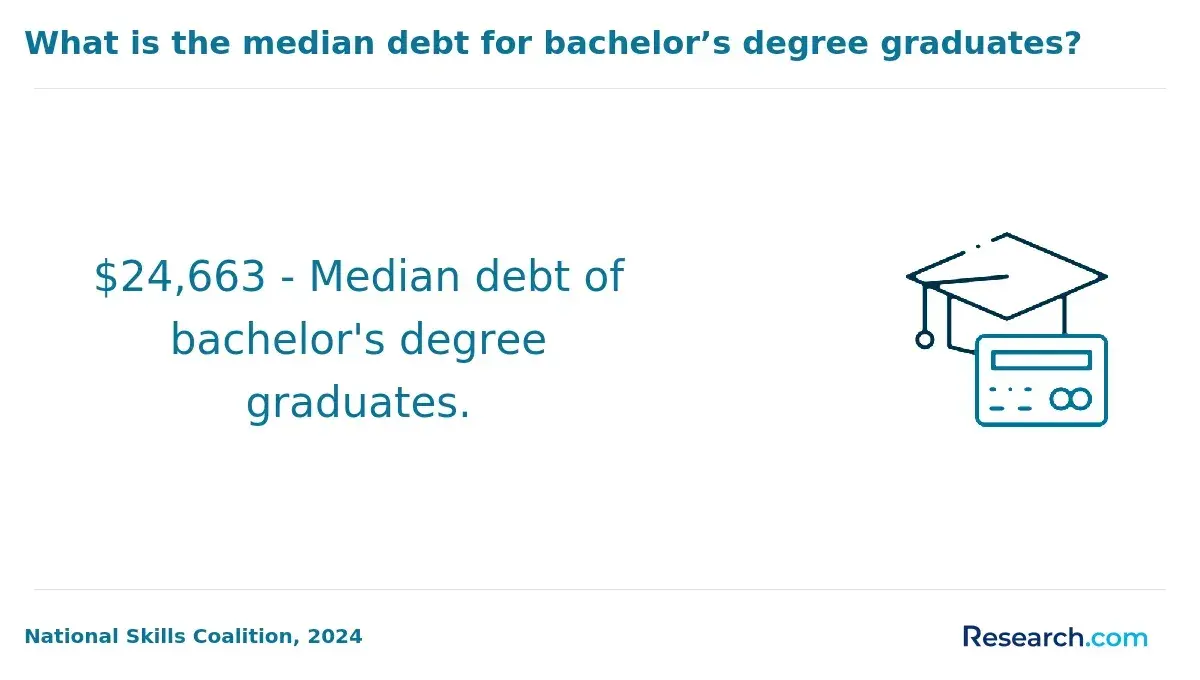
College Board's 2024 pricing data shows that published tuition and fees continue to rise across public and private four-year institutions. For transfer students, finishing faster can reduce tuition exposure, but only if the accelerated plan does not force course overloads that increase withdrawal risk.
How Many Transfer Credits Can You Apply Toward an Online Elementary Education Degree?
Many bachelor's programs allow transfer students to bring in as many as 90 credits toward a 120-credit degree, while competency-based institutions may describe the limit as up to 75% of the program. The more important question is not "How many credits will the university accept?" but "How many credits will satisfy this elementary education degree?"
Credits usually fall into three buckets after evaluation. Some apply directly to requirements, some count only as electives, and some transfer to the institution but do not reduce the remaining degree plan. That difference can change your graduation date by several terms:
| Transfer-credit category | How it affects speed | Example | Risk to watch |
| Direct equivalent credit | Usually shortens the degree plan immediately | English composition transfers as the required writing course | Older courses may need department approval |
| General education credit | Can clear broad lower-division requirements | College algebra, biology, U.S. history, or public speaking | Teacher-preparation programs may require specific math or science content |
| Major or professional education credit | Can reduce education coursework if accepted | Child development or foundations of education | Upper-division pedagogy courses may need to be taken at the receiving school |
| Free elective credit | Helps only if the degree has elective space | Business, criminal justice, or extra humanities courses | Students with many electives may still have many major courses left |
| Non-applicable credit | Does not shorten the degree plan | Duplicate courses or credits below minimum grade standards | The transcript may look credit-rich, but the degree audit may not be |
For a fast online elementary education degree, the best transfer profile is usually a completed associate degree from a regionally accredited college, strong grades in core general education courses, and some education-related coursework. The weakest profile is a large collection of unrelated electives with few required math, writing, science, or child development courses.
Common mistakes include assuming that every prior course will count, ignoring minimum grade rules, and enrolling before receiving an official evaluation. Avoid those mistakes by requesting a written transfer map before paying a deposit.
How Can You Verify Accreditation for Fast Online Elementary Education Degree Programs?
Accreditation is the line between a legitimate fast degree and a risky shortcut. For elementary education, you need to check both institutional accreditation and, if you want licensure, state educator-preparation approval.
Regional accreditation helps with federal financial aid, graduate-school recognition, and transferability. State approval matters because teacher licensure is regulated by state education agencies.
Use this verification process before choosing any accelerated online program:
- Confirm institutional accreditation through the U.S. Department of Education's recognized accreditor database or the school's official accreditation page.
- Check whether the program is approved for elementary teacher preparation in the state where the school operates.
- Ask whether the program leads to initial licensure, non-licensure education studies, or licensure only in selected states.
- Verify whether CAEP accreditation, state approval, or another educator-preparation recognition applies to the specific program, not just the college of education.
- Contact your own state licensing board if you plan to teach outside the school's home state.
- Get written confirmation of field placement, student teaching, testing, and background-check requirements.
If you are comparing broad online-school quality, Research.com's guide to the best online universities can help you think through accreditation, online support, and institutional fit, but elementary education students should still verify teacher-licensure approval separately.
Red flags include vague accreditation language, pressure to enroll before transcript review, no clear licensure disclosure, promises that every transfer credit will apply, and claims that student teaching can always be waived. A fast degree should still be transparent, documented, and recognized.
Which Types of Transfer Credits Can Count Toward an Online Elementary Education Degree?
Online elementary education programs may accept several kinds of transfer credit, but each type has a different effect on graduation speed. Traditional college credits are usually the strongest because they are easiest to match to degree requirements.
Here are the main credit types to ask about during advising:
- Regionally accredited college coursework, including community college, four-year college, and previous online courses.
- Associate degrees that may satisfy blocks of general education requirements through articulation agreements.
- Dual-enrollment and early-college credits earned during high school, if they appear on an official college transcript.
- Education-related courses such as child development, educational psychology, foundations of education, literacy, or classroom technology.
- Standardized exam credits such as CLEP, DSST, or AP, if the school accepts them and they match open requirements.
- Military training evaluated through ACE recommendations, subject to institutional policy.
- Prior learning assessment portfolios documenting college-level learning from work, training, or professional experience.
The best transfer strategy is to fill lower-division requirements first. Elementary education majors often need specific math for teachers, science with lab or inquiry components, literacy preparation, and child development coursework. If those are missing, a large number of elective credits may not create a fast path.
Students interested in special education, autism support, or behavioral intervention should also think beyond the bachelor's degree. Some later pursue BCBA master's programs online, but those programs have separate graduate admissions, supervised fieldwork, and certification requirements.
How Do Residency and Major Requirements Affect Transfer Credits for an Online Elementary Education Degree?
Residency requirements are one of the biggest reasons transfer students cannot simply apply 100 or more credits and graduate immediately. A residency rule requires students to complete a minimum number of credits through the degree-granting institution. For many bachelor's programs, that minimum is commonly around 30 credits, though some schools require more for education majors.
Major requirements can be even more restrictive. Teacher-preparation programs often require students to complete methods courses, classroom management, literacy instruction, assessment, practicum, and student teaching through the approved program because those courses are tied to licensure standards.
The table below shows how residency and major rules can change the value of transfer credits:
| Requirement | Typical effect on transfer students | Why it matters for speed |
| Institutional residency minimum | Requires a set number of credits at the new school | Creates a floor for remaining coursework even with many transfer credits |
| Upper-division credit rule | Requires advanced courses at the junior or senior level | Lower-division community college credits may not satisfy advanced major requirements |
| Professional education sequence | Requires specific pedagogy and methods courses | Courses may be offered in sequence, limiting acceleration |
| Field experience and practicum | Requires supervised classroom hours | Placement timing can delay graduation even when online coursework is complete |
| Student teaching | Usually requires a full-time or near-full-time placement | Work schedules may need adjustment during the final term |
A generous transfer-credit cap is helpful only when paired with a reasonable residency requirement and a flexible course schedule. Ask admissions and the education department the same question in two ways: "How many credits can I transfer?" and "After evaluation, how many credits will I actually have left to graduate?"
Students should also ask whether major courses are offered every term, whether practicum can be completed near their home, and whether student teaching has limited placement windows. These operational details often decide the real completion date.
Can Prior Learning, CLEP, Military Training, or Certifications Help You Finish an Online Elementary Education Degree Faster?
Prior learning, CLEP, military training, and professional certifications can help some students finish faster, but they rarely replace the core teaching methods or student teaching requirements in a licensure-track elementary education degree. They are most useful for clearing general education, electives, or introductory content.
Ask each school how it evaluates nontraditional credit. Policies vary widely, and some education programs limit how much prior learning can be applied to the major:
- CLEP and DSST: These exams may satisfy lower-division subjects such as composition, humanities, social science, math, or natural science if the school accepts the scores.
- AP or IB credit: These can help recent high school graduates or returning adults who previously earned college-level exam credit.
- Military credit: ACE-evaluated military training may count toward electives, communication, leadership, technology, or other requirements.
- Prior learning assessment: A portfolio may document college-level learning from paraprofessional work, childcare administration, tutoring, training design, or instructional support.
- Professional certifications: Early childhood, childcare, substitute teaching, or classroom aide credentials may support prior learning claims, depending on school policy.
The trade-off is effort. Portfolio-based prior learning can take time to document, and exam credit only helps if it fills an open requirement. If you need one math course and can prepare quickly for an approved exam, it may save a term. If your remaining courses are upper-division literacy methods and student teaching, exams will not replace them.
Career changers should be especially cautious. Work experience with children is valuable, but teacher licensure usually requires demonstrated competence in pedagogy, assessment, classroom management, literacy instruction, and supervised teaching practice.
How Much Does a Fast Online Elementary Education Degree Cost After Transfer Credits and Financial Aid?
The cost of a fast online elementary education degree depends on remaining credits, tuition rate, fees, books, testing, background checks, travel to field placements, and financial aid. Transfer credits can reduce cost because you pay for fewer remaining courses, but accelerated formats may have technology fees, subscription terms, or flat-rate tuition structures that change the math.
College Board's 2024 Trends in College Pricing reported average published tuition and fees of $11,610 for in-state students at public four-year institutions and $43,350 at private nonprofit four-year institutions for the 2024-25 academic year. That gap matters because a transfer-friendly public program may be cheaper, while a private accelerated program may be faster if it accepts more credits and offers more flexible start dates.
The table below shows the main cost drivers transfer students should compare before choosing the fastest option:
| Cost factor | Why it matters | What to ask |
| Remaining credits | The fewer applicable credits left, the lower the tuition exposure | How many credits will I need after official evaluation? |
| Tuition model | Per-credit, flat-term, and subscription models reward different study speeds | Do I pay by credit, term, course, or competency unit? |
| Course load | Accelerated full-time study can reduce time but may affect work income | What course load do successful transfer students usually take? |
| Clinical costs | Licensure programs may require testing, background checks, travel, and unpaid student teaching | What additional costs occur before student teaching? |
| Financial aid | Federal aid, grants, employer benefits, and scholarships can lower net cost | Will my accelerated schedule maintain aid eligibility? |
If affordability is your top priority, compare transfer-friendly education programs with broader lists of cheap online colleges, then narrow the list to schools that meet elementary education accreditation and licensure requirements.
A smart cost comparison uses net remaining cost, not sticker tuition. A program with higher tuition can be cheaper overall if it accepts more applicable credits, while a lower-cost program can become more expensive if it requires many repeated courses.
How Do Accelerated, Competency-Based, and Self-Paced Online Elementary Education Degree Programs Compare?
Accelerated, competency-based, and self-paced programs can all be fast, but they work differently. The best format depends on your transfer credits, learning style, work schedule, and whether you need teacher licensure.
The comparison below summarizes how each format typically affects speed and risk for elementary education students:
| Format | How it works | Best for | Main risk |
| Accelerated online courses | Courses run in shorter sessions, often five to eight weeks | Students who want structure and can handle frequent deadlines | Heavy reading, assignments, and fieldwork can pile up quickly |
| Competency-based education | Students progress by demonstrating mastery, sometimes within flat-rate terms | Experienced, self-motivated learners who can move quickly through familiar material | Students who need more instructor structure may slow down |
| Self-paced online study | Students control pacing within course or term limits | Adults with unpredictable schedules | Too much flexibility can lead to procrastination |
| Cohort-based completion program | Students move through a planned sequence with a group | Students seeking licensure structure and advising support | Course sequencing can limit acceleration |
For a non-licensure education studies degree, competency-based or short-course formats may be the fastest. For licensure, the fastest format is usually the one that coordinates field experiences smoothly, not necessarily the one with the shortest online courses.
AI-supported tutoring, online simulations, digital assessment tools, and learning analytics are making online coursework more responsive, but they do not replace supervised classroom practice. Elementary education remains a human-centered field where schools need evidence that candidates can teach real children safely and effectively.
Competency-based and accelerated formats are also appearing in other online fields, including human resources master's programs online, but elementary education has the added complexity of state licensure, child-safety requirements, and clinical teaching expectations.
Are Fast Accredited Online Elementary Education Degrees Respected by Employers and Graduate Schools?
Accredited online elementary education degrees are generally respected when the institution is properly accredited, the program is transparent, and the degree aligns with state licensure or career requirements. Employers usually care less about whether coursework was online and more about whether the candidate is eligible for licensure, has completed student teaching or relevant field experience, and can demonstrate classroom readiness.
The labor-market context is practical rather than automatic. BLS 2024 wage data places median pay for elementary school teachers, except special education, at roughly $65,000, but pay varies significantly by state, district, years of service, union contracts, and advanced credentials. Use salary data as a planning benchmark, not a guaranteed outcome.
Graduate schools also commonly accept accredited online bachelor's degrees, but they may require minimum GPA, prerequisite coursework, recommendation letters, licensure status, or professional experience. If your long-term interest is child assessment, counseling, or mental health rather than classroom teaching, compare different graduate pathways, such as online clinical psychology masters, because those fields have separate licensure and supervised-practice rules.
Before enrolling, ask these decision questions:
- Does this program lead to elementary teacher licensure in the state where I want to teach?
- How many of my transfer credits apply directly to the degree, not just to the university?
- What is the minimum number of credits I must complete through this school?
- Are field experiences and student teaching available near my location?
- What happens if I move to another state before graduation?
- Can the school provide a written term-by-term plan based on my evaluated credits?
- What are the total estimated costs after transfer credits, fees, tests, and financial aid?
The most respected fast program is not necessarily the shortest advertised option. It is the accredited program that accepts the most applicable credits, keeps you eligible for your intended career path, and gives you a realistic completion plan you can actually finish.
Other Things You Should Know About Elementary Education
Usually not by itself. A non-licensure education degree may help with roles in tutoring, childcare administration, educational services, or paraprofessional work, but public school elementary teaching normally requires state licensure. If you want to teach in a public elementary classroom, confirm that the program is state-approved for initial teacher preparation.
They may, but age limits vary. General education credits often transfer more easily than older education, science, technology, or methods courses. Schools may require recent coursework for subjects tied to current teaching standards, child safety, assessment, or classroom technology.
No, but an associate degree can help if it satisfies a block of general education requirements. Students without an associate degree can still transfer individual courses, but they should request a course-by-course evaluation to see which credits actually reduce the remaining degree plan.
Many students work during online coursework, but licensure-track programs may require daytime classroom observations, practicum hours, and student teaching. The final student-teaching term can be difficult to combine with full-time employment, so ask about placement schedules before enrolling.
References
- Top Online Schools That Accept Transfer Credits https://www.edvisorly.com/student-guides/online-schools-that-accept-transfer-credits
- Athens State University | Elementary Education Degree https://www.athens.edu/degree-completion-transfer-students/tips-and-tricks-for-your-elementary-education-degree-navigating-the-transfer-process/
- Guide to Online Education Degrees | OEDb.org https://www.oedb.org/rankings/online-education-programs/
- 2025 Most Affordable Online Education Degrees https://www.onlineu.com/most-affordable-colleges/education-degrees
- Online Bachelor of Education (Elementary) https://www.uregina.ca/academics/programs/education/online-bachelor-education-elementary.html