2026 Fastest Accredited Online Crime Analysis Programs: Accelerated Degrees and Completion Times

Co-Founder and Chief Data Scientist
Choosing the fastest online crime analysis program is really a timing question: How quickly can you finish without choosing a weak credential? The need is practical, too. The U.S. Bureau of Labor Statistics reported a May 2024 median annual wage of $93,580 for detectives and criminal investigators, a related career group where analytical skills matter.
This guide is for students comparing accredited online criminal justice, criminology, crime analysis, and intelligence-focused programs. You will learn what makes a program genuinely accelerated, how transfer credits change completion time, and why prerequisites, course load, start dates, and fieldwork can affect the advertised timeline.
Key Things You Should Know
- The fastest accredited option with "crime analysis" in the credential is usually a graduate certificate, often around 15 credits and commonly completed in about 6 to 12 months by students who already have a bachelor's degree.
- The fastest full online bachelor's paths are typically degree-completion programs that accept up to 90 transfer credits; students starting with most general education credits finished may complete the remaining coursework in roughly 12 to 24 months.
- Accelerated online programs usually use 7.5-week, 8-week, or 10-week courses, but shorter terms do not reduce the total work; they compress deadlines and require careful scheduling, especially for working adults.
Which Colleges Offer the Fastest Accredited Online Crime Analysis Programs?
There is no single universally the "fastest" accredited online crime analysis degree because schools use different credential names. Many programs prepare students for crime analysis through online criminal justice, criminology, crime mapping, intelligence analysis, data analysis, and investigative coursework rather than through a standalone bachelor's titled "Crime Analysis."
The table below focuses on accredited U.S. colleges with online programs that can support crime analysis career goals and offer acceleration features such as short terms, high transfer-credit limits, rolling starts, or certificate-length completion. Always confirm the current catalog, tuition, transfer policy, and course availability before applying.
| College | Online crime analysis-related option | Accreditation to verify | Acceleration features | Fastest realistic fit |
| University of Cincinnati Online | Graduate Certificate in Crime Analysis | Higher Learning Commission institutional accreditation | Short graduate certificate curriculum; designed for students who already hold a bachelor's degree | Fastest named crime analysis credential for eligible bachelor's holders, commonly around 1 year or less depending on course sequencing |
| Southern New Hampshire University | Online BS in Criminal Justice with crime and criminology-focused coursework | New England Commission of Higher Education institutional accreditation | 8-week undergraduate terms; up to 90 transfer credits may be accepted toward a 120-credit bachelor's degree | Strong bachelor's completion option for students entering with substantial transfer credit |
| Arizona State University Online | Online BS in Criminology and Criminal Justice | Higher Learning Commission institutional accreditation | 7.5-week online classes; multiple start dates; broad criminology and justice curriculum | Good fit for students who want a well-known public university option with accelerated course sessions |
| American Public University System | Online BA in Criminal Justice and related public safety pathways | Higher Learning Commission institutional accreditation | Monthly course starts; 8-week and 16-week course options; transfer-friendly structure | Useful for military, law enforcement, and adult learners who need frequent start dates |
| Colorado State University Global | Online BS in Criminal Justice and Law Enforcement Administration | Higher Learning Commission institutional accreditation | 8-week courses; monthly starts; generous transfer-credit evaluation | Efficient completion pathway for students who need predictable online terms |
| Liberty University | Online BS in Criminal Justice with crime scene investigation and public safety-related options | Southern Association of Colleges and Schools Commission on Colleges institutional accreditation | 8-week courses; transfer credit may cover a large share of the bachelor's degree | Potentially fast for students with prior college, military, or academy coursework |
| Purdue Global | Online BS in Criminal Justice and related public safety programs | Higher Learning Commission institutional accreditation | 10-week terms; transfer-credit and prior-learning review; career-focused curriculum | Good fit for students who want structured online terms and a workforce-oriented curriculum |
| Excelsior University | Online BS in Criminal Justice | Middle States Commission on Higher Education institutional accreditation | Very transfer-friendly adult learner model; evaluates prior college, military, and approved training | One of the fastest possible degree-completion routes for students who already have many applicable credits |
The main takeaway is that the fastest program for one student may not be the fastest for another. A student with 90 transferable credits may finish faster in a bachelor's completion program, while a student who already has a bachelor's degree may be better served by a graduate crime analysis certificate.
How Long Does It Take to Complete an Accredited Online Crime Analysis Degree?
In this field, "completion time" means the time from your first enrolled course to finishing all required credits, not just the advertised term length. The "fastest" usually means the shortest credible path offered by an accredited school for a student with the right transfer credits, prerequisites, schedule, and academic readiness.
The table below compares common online crime analysis-related credentials by starting point. It can help you avoid comparing a 15-credit certificate to a 120-credit bachelor's degree as if they were the same kind of program.
| Credential type | Typical credit load | Fastest common online timeline | Who it fits best | What may slow it down |
| Graduate certificate in crime analysis | About 12 to 18 graduate credits | 6 to 12 months | Students who already hold a bachelor's degree and want targeted crime analysis training | Course rotation, graduate prerequisites, and limited annual starts |
| Bachelor's completion degree | Usually 30 to 60 remaining credits after transfer | 12 to 24 months | Students with prior college credit, military training, police academy coursework, or an associate degree | Credits not applying to major, residency requirements, and upper-division course sequencing |
| Full online bachelor's degree | Usually 120 credits | About 3 to 4 years with year-round full-time study | First-time college students who need the full general education and major curriculum | Part-time enrollment, developmental coursework, repeated courses, or work schedule conflicts |
| Online master's in criminal justice, criminology, intelligence, or analytics-adjacent fields | Usually about 30 to 36 graduate credits | 12 to 24 months | Bachelor's graduates seeking advancement or specialized analytical roles | Capstone sequencing, thesis requirements, and employer tuition-reimbursement pacing |
| Online associate degree in criminal justice | Usually about 60 credits | 12 to 24 months | Students building transfer credit before a bachelor's degree | Transfer articulation gaps and limited upper-division preparation |
A shorter calendar does not automatically mean a better return. Students comparing fast public safety pathways with other accelerated options may also want to review the highest paying online degrees to understand how time, cost, and career goals interact.
How Do Accelerated and Competency-Based Online Crime Analysis Programs Work?
Accelerated online crime analysis programs usually work by compressing courses into shorter academic terms, allowing year-round enrollment, or accepting a large number of transfer credits.
Competency-based education works differently. Students move through material by demonstrating mastery, although true competency-based crime analysis bachelor's programs are much less common than term-based criminal justice programs.
The table below explains the main accelerated formats you are likely to see and what each one means for your schedule. The fastest format is not always the easiest format, so the workload trade-off matters.
| Format | How it works | Typical speed advantage | Best for | Main trade-off |
| 7.5-week or 8-week courses | Courses cover the same credit value in about half a traditional semester | Students can complete more terms per year | Organized students who can handle weekly deadlines | Reading, projects, and exams arrive quickly |
| 10-week courses | Courses are shorter than a semester but slightly less compressed than 8-week classes | Allows steady acceleration without the most compressed pace | Working adults who need structure | Still requires consistent weekly study time |
| Year-round enrollment | Students take fall, spring, and summer courses without long breaks | Can reduce total calendar time by several months | Students prioritizing speed over breaks | Less recovery time between courses |
| High-transfer bachelor's completion | The school applies prior credits toward general education, electives, and sometimes major requirements | Can reduce a 120-credit degree to 30 to 60 remaining credits | Transfer students, military learners, and working public safety professionals | Not all credits apply to the degree plan |
| Competency-based learning | Students progress by proving mastery instead of only completing weekly assignments | May be fast for students with strong prior knowledge | Experienced adults who can study independently | Limited availability in crime analysis-specific programs |
Students who have looked at other accelerated social science pathways, such as a psychology degree online, will recognize the same core trade-off: shorter terms can speed graduation, but they do not reduce the amount of reading, writing, research, or assessment required for college credit.
What Accreditation Should an Online Crime Analysis Program Have?
For online crime analysis programs, the most important accreditation issue is institutional accreditation from an agency recognized by the U.S. Department of Education or the Council for Higher Education Accreditation. This is what typically determines eligibility for federal financial aid, transfer-credit acceptance, and recognition by many employers and graduate schools.
Programmatic accreditation is less standardized in criminal justice and crime analysis than it is in fields such as nursing, counseling, or engineering. Some criminal justice programs may hold certification or recognition from professional organizations, but a lack of specialized programmatic accreditation does not automatically mean the program is weak.
Use this checklist before relying on any advertised completion time, because accreditation problems can make a "fast" program costly if credits do not transfer or the credential is not recognized:
- Verify that the college or university is institutionally accredited by a recognized accreditor.
- Check whether the online program is offered by the same accredited institution, not by an unaffiliated training vendor.
- Confirm whether the credential is a degree, certificate, concentration, minor, or professional training program.
- Ask whether credits can transfer into a bachelor's or graduate program later.
- Review whether the curriculum includes crime analysis-relevant topics such as statistics, research methods, GIS or crime mapping, intelligence analysis, data systems, and ethics.
Be especially careful with schools that advertise extremely fast degree completion without explaining transfer-credit limits, residency requirements, course sequencing, or accreditation. A legitimate accelerated pathway should still show how many credits you must complete and which requirements remain.
How Can Transfer Credits and Prior Learning Shorten an Online Crime Analysis Degree?
Transfer credit is usually the biggest factor in shortening an online crime analysis degree. A 120-credit bachelor's degree can only become a 12- to 24-month pathway if the student enters with a large number of applicable credits and can take the remaining courses in an efficient sequence.
The table below shows how prior credit can change the realistic timeline for a bachelor's degree. These are planning ranges, not promises, because each school decides how credits apply to its curriculum.
| Starting point | Possible transferable credit | Credits still needed in a 120-credit degree | Realistic accelerated timeline | Important limitation |
| No prior college credit | 0 credits | About 120 credits | About 3 to 4 years with full-time, year-round study | General education and major requirements must all be completed |
| Some college coursework | 15 to 45 credits | About 75 to 105 credits | About 2.5 to 3.5 years | Old, low-grade, or unrelated courses may not apply |
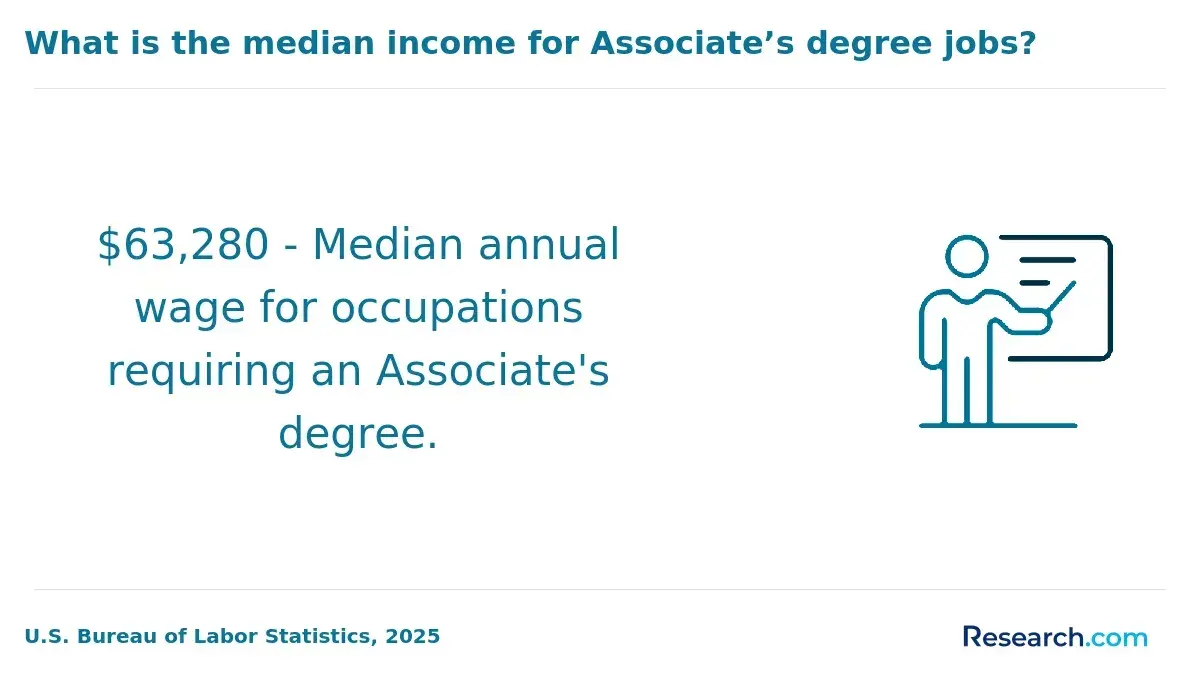
| Associate degree or equivalent | About 60 credits | About 60 credits | About 18 to 30 months | Major prerequisites and upper-division credits may remain |
| High-transfer applicant | Up to 90 credits at many schools | About 30 credits | About 12 to 18 months | Residency and capstone requirements still apply |
| Very transfer-friendly adult learner pathway | More than 90 credits may be reviewed at select institutions | Varies by school policy | Potentially under 12 months for students with nearly complete degree plans | Students still must meet institutional, major, and minimum grade requirements |
Prior learning can also help, but it is not automatic. Police academy training, military education, industry certifications, FEMA coursework, or professional development may be evaluated through ACE recommendations, institutional challenge exams, portfolio review, or school-specific credit policies.
To maximize time savings, take these steps before enrolling:
- Request an unofficial transfer evaluation before committing to a program.
- Ask how many credits apply to general education, major requirements, electives, and upper-division requirements.
- Confirm the minimum number of credits you must complete at the school to graduate.
- Ask whether prior police, military, investigative, or technical training can be evaluated for credit.
- Get the remaining course sequence in writing, including when each required course is offered.
What Are the Admission Requirements and Start Dates for Accelerated Online Crime Analysis Programs?
Accelerated online crime analysis-related programs often use flexible admissions and multiple start dates, but the requirements depend on the credential level. Bachelor's programs usually require a high school diploma or equivalent and official transcripts, while graduate certificates require a completed bachelor's degree and may require a minimum GPA.
Start dates affect completion time more than many students expect. A school with monthly or six-times-per-year starts may let you begin sooner, but you still need the right course sequence to finish quickly.
| Program level | Common admissions requirements | Common start-date pattern | Timeline issue to check |
| Online bachelor's degree | High school diploma or GED, official transcripts, transfer-credit review, possible placement requirements | Several starts per year; some use 7.5-week, 8-week, or 10-week terms | Whether major courses are available every term or only once per year |
| Bachelor's completion program | Prior college credit, official transcripts from all schools, minimum GPA for transfer work | Often rolling or multiple annual starts | Whether transferred credits satisfy upper-division or major requirements |
| Graduate certificate | Bachelor's degree, official transcripts, possible statement of purpose or resume | Usually fewer starts than undergraduate programs | Whether required courses are sequenced across two or three terms |
| Online master's program | Bachelor's degree, GPA minimum, transcripts, resume, possible recommendations or writing sample | Several annual starts, depending on school | Capstone, thesis, or practicum timing |
Before you apply, ask admissions and the department these timing-specific questions. They are more useful than asking only, "How fast can I finish?"
- How many credits will I have left after transfer evaluation?
- Can I take two accelerated courses at the same time, and is that recommended for working adults?
- Are statistics, research methods, GIS, or capstone courses offered every term?
- Is there an internship, practicum, field experience, or proctored assessment that could delay graduation?
- What is the earliest graduation date if I start in the next available term?
How Much Does a Fast Online Crime Analysis Degree Cost, and Is Financial Aid Available?
The cost of a fast online crime analysis degree depends on tuition per credit, remaining credits after transfer, fees, books, technology costs, and whether you qualify for employer, military, state, or federal aid. Faster graduation can reduce living expenses and opportunity cost, but it does not always reduce tuition if the school charges by credit.
Recent U.S. cost benchmarks show why transfer credit matters. The College Board reported these 2024-25 published tuition and fee averages, while Federal Student Aid listed the maximum Pell Grant for the same award year:
- $11,610 for in-state students at public four-year colleges.
- $30,780 for out-of-state students at public four-year colleges.
- $43,350 for private nonprofit four-year colleges.
- $7,395 maximum Federal Pell Grant for eligible students in the 2024-25 award year.
Those benchmarks are not program-specific prices, but they help frame the decision. A student who transfers 60 to 90 credits may pay for far fewer credits than a first-time student, while a student starting from zero should compare the full degree cost rather than the cost of one term.
Financial aid is generally available for eligible students enrolled in accredited degree programs, but nondegree certificates may have different aid rules. Ask whether the crime analysis certificate is financial-aid eligible, whether graduate certificate credits can later apply to a master's degree, and whether your employer reimburses job-related coursework.
Because crime analysis increasingly overlaps with data privacy, digital evidence, and information systems, some students compare public safety programs with cyber security degrees before deciding which online path offers the best mix of speed, cost, and career fit.
Can You Work Full Time While Completing an Accelerated Online Crime Analysis Degree?
Yes, many students work full time while completing an accelerated online crime analysis program, but the realistic course load matters. Short terms can be manageable if you take one course at a time; they become much harder when you stack multiple writing-heavy, statistics-heavy, or project-based courses in the same session.
The table below compares common enrollment patterns for working adults. Use it to estimate whether the fastest advertised schedule matches your weekly availability.
| Enrollment pattern | Typical course load | Likely fit for full-time workers | Speed impact | Risk |
| One accelerated course at a time | Usually 3 credits per short term | Often manageable with disciplined weekly study | Steady but not the fastest | Completion may stretch beyond advertised full-time timelines |
| Two accelerated courses at a time | Usually 6 credits per short term | Possible for students with flexible schedules | Much faster degree progress | High workload during exams, research papers, or data projects |
| Full-time year-round enrollment | Multiple courses across fall, spring, and summer | Best for students with strong support systems | Can significantly shorten calendar time | Burnout and lower performance if work demands spike |
| Part-time enrollment | One course per term or fewer | Best for unpredictable work schedules | Slower but more sustainable | Longer time to graduation and possible catalog changes |
Crime analysis programs are often more flexible than fields with required clinical hours, but they can still include internships, capstones, statistics labs, research projects, or software-based assignments.
Students comparing workload across online professional programs may notice that marriage and family therapy programs online usually have stricter supervised fieldwork requirements, while crime analysis timelines are more often affected by course sequencing, transfer credits, and technical readiness.
Are Accelerated Online Crime Analysis Degrees Respected by Employers and Graduate Schools?
Accredited online crime analysis degrees are generally respected when the institution is properly accredited, the curriculum is relevant, and the student can demonstrate practical analytical skills. Employers usually care less about whether coursework was online and more about whether the credential is legitimate and aligned with the role.
For crime analyst, intelligence analyst, investigative support, and public safety research roles, hiring managers often look for evidence of applied skills. A degree title alone may not be enough if the coursework does not include data interpretation, research methods, report writing, mapping, statistics, public records, ethics, or criminal justice systems.
Relevant skills commonly include:
- Analyzing crime patterns, calls for service, incidents, and investigative data.
- Using spreadsheets, databases, GIS tools, dashboards, or statistical software.
- Writing clear intelligence briefs, tactical summaries, and strategic reports.
- Understanding legal, ethical, and privacy limits on criminal justice data.
- Communicating findings to investigators, command staff, community partners, or policy teams.
Graduate schools usually evaluate accredited online degrees similarly to campus degrees, but they may require specific prerequisites, minimum GPA standards, writing samples, or research preparation. If graduate study is part of your plan, choose a program with enough research, statistics, and upper-division coursework to support later admission.
Salary outcomes vary by employer, location, experience, and job title. The May 2024 BLS wage figure for detectives and criminal investigators is useful context for related law enforcement analytical work, but it should not be treated as a guaranteed crime analyst salary.
How Should You Compare the Fastest Accredited Online Crime Analysis Programs?
The best accelerated online crime analysis program is the one that gets you to a recognized credential quickly without leaving you underprepared, overextended, or unable to transfer credits later. Compare programs by remaining credits, not by marketing language alone.
Use this step-by-step process to narrow your list. It focuses on the variables that most directly affect real completion time.
- Decide whether you need a full degree, a bachelor's completion program, a graduate certificate, or a master's degree.
- Verify institutional accreditation before reviewing speed, cost, or curriculum.
- Request a transfer-credit estimate from each school using all prior transcripts and training records.
- Ask for a term-by-term degree plan that shows the earliest possible graduation date.
- Compare course length, start dates, course availability, capstone requirements, and maximum course load.
- Review the curriculum for crime analysis skills, including statistics, research methods, GIS or crime mapping, intelligence analysis, data ethics, and written reporting.
- Estimate total cost based on remaining credits, not just tuition per credit.
- Choose the fastest schedule you can complete successfully, not simply the fastest schedule the school allows.
The table below highlights common mistakes students make when chasing the fastest advertised timeline. Avoiding these problems can save more time than choosing a program with a slightly shorter term length.
| Common mistake | Why it can delay graduation | Better approach |
| Assuming "accelerated" means easier | Shorter terms compress the same credit expectations into fewer weeks | Ask for sample syllabi and estimate weekly study time before enrolling full time |
| Ignoring transfer-credit fit | Credits may transfer as electives but not satisfy major or upper-division requirements | Compare written transfer evaluations from multiple schools |
| Choosing a nondegree certificate when a degree is required | Some employers require a bachelor's degree regardless of certificate training | Match the credential to job postings in your target agencies or departments |
| Overlooking course sequencing | A required capstone, statistics course, or mapping course may be offered only in certain terms | Ask for the earliest possible graduation plan by term |
| Focusing only on tuition per credit | Fees, repeated courses, lost transfer credits, and extra terms can raise the total cost | Calculate total remaining program cost and expected time to completion |
| Skipping graduate-school planning | A fast degree may lack prerequisites for a later master's or analytics program | Choose electives that build research, statistics, and technical skills |
If you are comparing speed and affordability across graduate-level options, a resource on the quickest cheapest masters degree can also help you think through the broader trade-off between low cost, short timelines, and long-term academic goals.
Other Things You Should Know About Crime Analysis Programs
A certificate may be enough for professionals who already have a bachelor's degree or law enforcement experience and want targeted skills. If job postings in your area require a bachelor's degree, a certificate alone may not meet the minimum requirement.
Most programs do not require advanced mathematics, but they often include statistics, research methods, data interpretation, and software-based assignments. Students should be comfortable working with numbers, patterns, reports, and evidence-based conclusions.
It can, depending on the school. Many adult-focused universities review military education, academy training, professional certifications, or prior learning, but the credits must still fit the degree plan to shorten graduation time.
Relevant roles may include crime analyst, intelligence analyst, investigative analyst, law enforcement research analyst, public safety data analyst, or investigative support specialist. Requirements vary by agency, and many roles also value experience with databases, GIS, report writing, and criminal justice systems.
References
- Implementing Crime Analysis https://www.iaca.net/implementing-crime-analysis
- Top Online Criminal Justice Degree and Other FBI Degree Programs https://www.fbiagentedu.org/online-degrees/
- Becoming a Crime Analyst | Certified Crime & Intelligence Analyst (CCIA) https://www.forensicscolleges.com/blog/htb/how-to-become-a-crime-analyst
- How to become a crime analyst | edX https://www.edx.org/become/how-to-become-a-crime-analyst
- Schools With Crime Analysis Degrees - AnalyticsDegrees.org https://www.analyticsdegrees.org/specialties/crime-analysis/
- Top Online Criminal Justice Degrees https://www.criminaljusticeprograms.com/online-criminal-justice-degrees/