2027 Do Employers Pay for Library Science Degrees: Tuition Reimbursement and Sponsorship Options

Co-Founder and Chief Data Scientist
A library science degree can open the door to librarian, archivist, records management, digital asset, research, and information services roles, but the cost can make the decision difficult for working adults. Graduate programs can average over $20, 000 annually, and student debt for master's degrees has reached an average of $66, 000 nationwide. For many professionals, the central question is not whether the degree has value, but whether there is a practical way to pay for it without taking on too much debt.
Employer tuition reimbursement and sponsorship programs can make that path more realistic. These benefits are especially relevant for employees already working in libraries, schools, universities, museums, government agencies, archives, nonprofits, research departments, legal or medical information settings, and corporate knowledge management roles.
This guide explains when employers may pay for a library science degree, what types of tuition assistance are common, who usually qualifies, how reimbursement works, what online students should confirm, and what to do if your employer does not offer support. It also highlights the trade-offs to review before accepting employer funding, including repayment clauses, grade requirements, annual caps, and post-graduation service commitments.
Key Benefits of Employers Paying for Library Science Degrees
- Employers offering tuition reimbursement reduce financial burden, lowering average student debt in library science, which often exceeds $30,000 for graduate degrees.
- Sponsorships provide structured support, including tuition payment and mentoring, enhancing employee retention and career advancement within library science roles.
- Tuition benefits encourage workforce development, enabling employers to cultivate specialized skills aligned with evolving library science technologies and community needs.
Do Employers Pay for Library Science Degrees?
Yes, some employers pay for library science degrees, usually through tuition reimbursement, direct tuition payment, scholarships, or professional development funds. The strongest cases are employees whose current or future responsibilities clearly involve information organization, research support, records management, archives, digital collections, metadata, patron services, instruction, or institutional knowledge management.
Many U.S. employers provide education assistance. According to the Society for Human Resource Management, about 56% offer tuition reimbursement or sponsorship programs. That does not mean every employer will approve a library science degree, but it does mean the request is common enough that HR departments often have a process for reviewing it.
Approval usually depends on business relevance. Public libraries, academic libraries, schools, universities, government agencies, museums, archives, law firms, healthcare systems, publishers, and information-heavy organizations may see a library science degree as a direct investment in workforce capability. Employers are more likely to contribute when the degree helps the organization fill skill gaps, retain trained staff, improve services, or prepare an employee for a role that is difficult to staff.
Before applying to programs, review your employer's policy and ask three practical questions:
- Is the degree job-related? Employers are more receptive when you can connect coursework to your current position or a realistic internal career path.
- Is the program accredited or otherwise recognized by the employer? Many tuition policies require approved institutions and formal documentation.
- Will the employer benefit soon enough to justify the cost? A clear plan for applying new skills at work can make your request stronger.
If your role sits at the intersection of libraries and public service, research, education, or community programs, you may also compare adjacent graduate pathways. For example, some professionals explore online MSW programs when their career goals involve social services, outreach, or community-based support.
What Types of Tuition Assistance Do Employers Offer for Library Science Degrees?
Employers do not all fund education in the same way. Some reimburse you after you pass a course, while others pay the school directly or provide a fixed professional development allowance. The right option matters because it affects your cash flow, tax planning, enrollment timing, and out-of-pocket risk.
- Tuition reimbursement: This is the most common model. You pay the school first, complete the course, submit grades and receipts, and receive reimbursement afterward. Employers may cover 50% to 100% of tuition costs annually, up to a set limit. Policies often require the course or degree to be related to your job and offered by an accredited program.
- Direct payment to institutions: Some employers pay tuition fees directly to the college or university. This can reduce your need to front the money, but it usually requires approval before registration and may apply only to approved courses or institutions.
- Scholarships and grants: A smaller number of employers offer internal scholarships, grants, or professional development awards for employees pursuing degrees tied to library science, archives, data organization, research, or information management.
Most employer assistance applies to tuition, not the full cost of attendance. You may still need to budget for application fees, technology fees, books, materials, transportation, professional association dues, or unpaid internship requirements. Ask for a written explanation of what is covered before enrolling.
When comparing benefits, focus on the total financial effect rather than the headline percentage. A program that reimburses a lower percentage but pays quickly may be easier to manage than a higher reimbursement that requires you to carry the full balance for months. Professionals comparing employer education benefits across fields may notice similar policy structures in other areas, including online engineering programs.
Who Is Eligible for Employer Tuition Reimbursement for Library Science Degrees?
Eligibility is usually determined before you enroll, not after you complete a class. That makes it important to confirm the rules early. If you register without written approval, you may lose reimbursement even if the degree is relevant and you earn strong grades.
- Employment status: Many employers limit tuition assistance to full-time employees. Some allow part-time employees who meet specific hours requirements. Contractors, temporary workers, and employees in probationary periods may be excluded.
- Tenure requirements: Employees often must complete a minimum tenure, typically six months to one year, before becoming eligible. This helps employers direct funds to workers who have already shown commitment to the organization.
- Degree relevance: Employers generally require the library science degree to connect to current duties or a documented future role. A stronger request explains how the degree supports cataloging, reference services, digital collections, archives, records management, research assistance, instruction, or leadership needs.
- Academic standards: Many policies require a minimum grade point average or minimum course grade to continue receiving funds. If reimbursement depends on grades, clarify whether lower grades reduce payment or eliminate it entirely.
- Approval procedures: Most employers require a formal application, manager approval, HR approval, program description, tuition estimate, and sometimes a signed agreement before the course begins.
- Ongoing employment commitment: Some employers require you to remain employed during the program or for a set period afterward. Leaving early may trigger repayment obligations.
Eligibility is not only an HR issue; it is also a return-on-investment issue. If your employer funds only a small portion of tuition or requires a long service commitment, compare that support with other aid options before committing. Professionals planning long-term advancement may also review education pathways beyond the master's level, such as a doctorate in organizational leadership, if leadership or administration is part of their career plan.
How Do Employer Tuition Reimbursement Programs Work for Library Science Degrees?
Employer tuition reimbursement programs usually follow a set sequence: confirm eligibility, request approval, enroll, complete coursework, submit documentation, and receive payment. The details vary by employer, so the safest approach is to treat the process like a formal financial agreement rather than an informal workplace perk.
- Approval process: Most programs require authorization before you enroll. You may need to show how the library science coursework supports your current job, an internal promotion path, or a documented organizational need.
- Payment and reimbursement timing: Some employers pay tuition upfront, while others reimburse you after course completion. Payment may occur each semester, after each course, or after the entire program ends. Timing matters if you need to pay tuition before reimbursement arrives.
- Documentation requirements: Expect to submit tuition bills, proof of payment, official or unofficial transcripts, grade reports, course descriptions, and sometimes evidence that the institution or program is approved.
- Reimbursement limits: Many employers set annual, semester, per-course, or lifetime caps. If your degree will take multiple years, map employer payments against each term so you know when you will owe the difference.
- Academic performance expectations: Policies commonly require a "B" or better for full or partial reimbursement. Ask what happens if you withdraw, receive an incomplete, repeat a course, or earn a grade below the threshold.
Before accepting funds, request the policy in writing and save copies of every approval. Verbal assurances may not protect you if your manager changes, budgets tighten, or HR interprets the policy differently later.
Are Online Library Science Degrees Eligible for Company Sponsorship?
Online library science degrees may be eligible for company sponsorship, but approval depends on employer policy, accreditation expectations, program quality, and job relevance. Online delivery by itself is less likely to be a barrier than it once was, but employees should not assume every online program will qualify.
A 2023 workforce education survey found that about 70% of employers regard online qualifications as comparable to campus-based ones, though acceptance can differ across industries and job functions. This shift helps working professionals, especially those who need to keep their jobs while completing graduate coursework.
Employers commonly review several factors before sponsoring an online library science degree:
- Accreditation and institutional legitimacy: Employers often require an accredited institution and may have additional standards for professional programs.
- Connection to the employee's role: The degree should support work the employee already does or a role the employer can reasonably expect the employee to fill.
- Program rigor and reputation: Curriculum, faculty qualifications, field experiences, and alignment with library and information science competencies can influence approval.
- Scheduling and work impact: Employers may prefer online programs that allow employees to maintain regular job performance while studying.
- Budget and policy limits: Even a strong program may be denied if it exceeds annual caps or falls outside the employer's education benefit rules.
One professional who completed an employee-sponsored library science degree online described the approval process as more than a paperwork exercise. "I had to demonstrate how the program closely aligned with my job duties and the organization's goals," he explained. He added that persistence mattered: "It wasn't just about submitting paperwork but showing real value to the company."
The lesson is practical: when requesting sponsorship for an online program, do not simply say that the degree is convenient. Show how specific courses, projects, or credentials will improve the work your employer already needs done.
How Much Tuition Reimbursement Can You Get for Library Science Degrees?
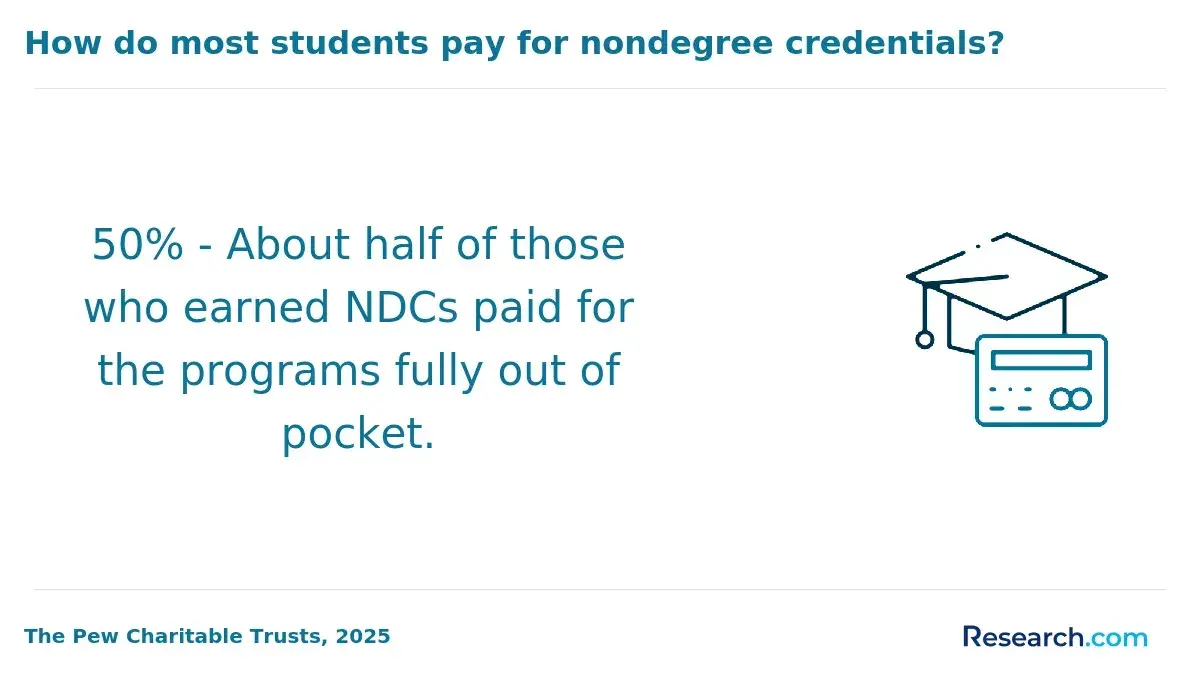
The amount you can receive depends on your employer's policy, the program's cost, your grades, your employment status, and whether the degree is considered job-related. According to a National Association of Colleges and Employers survey, 56% of employers offer some form of tuition assistance, though the amounts vary widely depending on industry and company size.
Typically, annual employer reimbursement caps for library science programs range from $5,000 to $10,000, while lifetime limits often fall between $20,000 and $50,000. Larger organizations or employers closely tied to information work may provide more generous support, but caps are still common.
Federal tax treatment also affects how benefits are structured. Federal tax regulations exclude up to $5,250 of employer-funded educational benefits from taxable income each year. This tax rule is separate from the reimbursement limit your employer sets, but it often influences how companies design education benefits.
To estimate your real savings, compare four numbers before enrolling:
- Total tuition for the degree: Use the school's published tuition and required fees, not just the per-credit rate.
- Annual employer cap: Check whether the cap resets by calendar year, fiscal year, academic year, or semester.
- Program length: A part-time schedule may allow you to use the annual benefit over more years, but it may delay career advancement.
- Out-of-pocket costs: Include books, fees, technology, travel, and any tuition above the employer's limit.
A smaller, predictable reimbursement can still be valuable if it reduces borrowing and allows you to stay employed while studying. The key is to calculate the full degree cost after employer support, not just the amount your employer advertises.
Are There Penalties for Leaving an Employer-Sponsored Library Science Program Early?
Yes, some employer-sponsored library science degree agreements include penalties if you leave the program, fail to meet academic requirements, or resign before completing a required service period. Nearly one-third of tuition reimbursement agreements include clauses requiring repayment or other consequences if the employee does not fulfill a service commitment.
Common penalty terms include:
- Repayment obligations: You may have to repay tuition funds already paid if you leave the organization before a specified date or fail to complete approved coursework.
- Prorated repayment schedules: Some employers reduce the amount owed over time. For example, the repayment amount may decline the longer you remain employed after the employer pays tuition.
- Early termination clauses: Agreements may define what happens if you withdraw from the degree, change jobs internally, are terminated, or resign before fulfilling the commitment.
- Impact on future eligibility: Leaving early or failing to meet requirements may limit your ability to receive future tuition assistance from the same employer.
Read repayment language carefully before signing. Pay attention to whether repayment is required if you resign voluntarily, are laid off, are terminated for cause, transfer departments, reduce your hours, or pause enrollment. If the policy is unclear, ask HR to clarify it in writing.
A professional who completed a library science degree with employer tuition assistance said the commitment affected her choices during the program. She remembered balancing demanding coursework with job responsibilities and feeling pressure to honor the agreement. "I knew there were consequences if I left early, so it motivated me to stay on track and contribute meaningfully to the organization," she said.
Employer funding can be a strong opportunity, but it should not trap you in a role that no longer fits. Treat the agreement as both a financial aid source and an employment contract.
Can Employer-Paid Library Science Degrees Improve Long-Term Earning Potential?
An employer-paid library science degree can improve long-term earning potential when it helps you qualify for roles with greater responsibility, reduces your education debt, or positions you for promotion. The degree alone does not guarantee higher pay, but employer support can improve the financial equation by lowering the amount you must borrow or pay out of pocket.
- Increased promotion opportunities: If your employer values the credential, sponsorship may help you compete for librarian, archivist, department lead, systems, instruction, or management roles within the organization.
- Faster career progression: Tuition assistance can make it easier to enroll sooner or continue without pausing for financial reasons, which may shorten the time to qualification.
- Access to higher-paying roles: Master's degrees in library science typically lead to roles with greater responsibility and compensation. Employer-paid education can make those roles more financially reachable.
- Enhanced skills and qualifications: Graduate coursework can strengthen skills in information organization, user services, digital systems, research methods, metadata, archives, and leadership, depending on the program.
- Return on investment: Employer funding reduces upfront educational costs, which can improve ROI if the degree supports advancement. Professionals comparing graduate options may also evaluate costs across other programs, including the cheapest online EdD, to understand how tuition, debt, and career outcomes interact.
The biggest financial benefit often comes from combining three factors: an affordable program, meaningful employer support, and a clear career plan. Without all three, tuition reimbursement may reduce cost but not necessarily produce strong career returns.
How Do You Ask Your Employer to Pay for a Library Science Degree?
To ask your employer to pay for a library science degree, prepare a business case before you approach your manager or HR. Over 50% of employers offer tuition assistance programs, but approval usually depends on whether you can show that the degree benefits the organization as well as your own career.
- Research company tuition policies: Find the official education assistance policy, including eligibility rules, caps, deadlines, grade requirements, repayment clauses, and approved institutions.
- Choose a program before making the request: Prepare the program name, institution, delivery format, estimated cost, length, accreditation status, and relevant courses.
- Prepare a business case: Explain how the degree will improve your work. Connect coursework to needs such as cataloging, reference support, digital collections, records management, research services, instruction, community programming, or leadership capacity.
- Schedule a formal meeting: Ask for dedicated time with your supervisor or HR representative rather than raising the request casually. Bring a concise written proposal.
- Demonstrate program relevance: Identify the skills your employer will gain and when those skills can be applied. If possible, propose projects or responsibilities you can take on during the degree.
- Follow up with documentation: After the meeting, send a summary of the discussion, attach required materials, and confirm deadlines and next steps.
Your request should sound like a workplace investment, not only a personal goal. A useful framing is: "This degree will help me solve these specific organizational problems, and here is how I will apply the training while remaining productive in my current role." If you need a flexible path while working, reviewing easy online degrees can also help you understand how online formats differ in workload and structure.
What To Do If Your Employer Doesn't Pay for a Library Science Degree?
If your employer does not pay for a library science degree, you still have options. Nearly 70% of graduate students in the U.S. utilize some form of financial aid, so the next step is to build a funding plan that combines aid sources and limits unnecessary borrowing.
- Federal and state financial aid: Complete the FAFSA to determine eligibility for federal aid programs, student employment, and loans. Some states also offer scholarships or grants for graduate students in education or library-related fields.
- Scholarships and grants: Look for awards from universities, library associations, foundations, local organizations, and professional groups. These funds do not require repayment and can reduce the amount you need to borrow.
- Lower-cost programs: Compare tuition carefully across accredited options, especially if you are considering an online library masters degree that allows you to keep working while studying.
- Personal savings and student loans: Savings can reduce borrowing, while loans may help cover remaining costs. Review interest rates, repayment timelines, and monthly payment estimates before accepting loan funds.
- Income-share agreements (ISAs): ISAs allow students to pay a portion of future income instead of upfront tuition. Read the terms closely, including payment caps, income thresholds, duration, and total repayment exposure.
- Part-time or online programs: Flexible enrollment can help you maintain income while completing the degree. This may reduce financial pressure, though it can extend the time needed to graduate.
If employer support is unavailable now, you can also revisit the conversation later. A promotion, department need, budget change, or revised job description may make your request stronger in a future cycle.
What Graduates Say About Employers Paying for Their Library Science Degrees
- : "Completing my library science degree felt financially daunting at first, with average costs easily reaching thousands per year. Thankfully, my employer's tuition assistance program covered a significant portion of these expenses, allowing me to focus on my studies without the stress of debt. This sponsorship not only eased my financial burden but also accelerated my advancement into a senior librarian role. — Eileen"
- : "The investment required for a library science degree can be overwhelming, but employer sponsorship transformed this challenge into an achievable goal for me. By covering much of my tuition, my employer empowered me to expand my skills and take on new responsibilities, which directly led to a promotion within the organization. Reflecting on this opportunity, I'm grateful for the partnership that made my career growth possible. — Ada"
- : "Library science programs often come with steep tuition costs, which made me hesitant about pursuing further education. However, my employer's tuition assistance was instrumental in alleviating these financial barriers. With their support, I was able to obtain my degree while maintaining my professional role, ultimately enhancing my qualifications and credibility in the field. — Julia"
Other Things You Should Know About Library Science Degrees
Yes, many employers cover continuing education needed for library science credentials such as the American Library Association’s digital badges, cataloging workshops, or state recertification classes. Reimbursement usually applies only if the training is job-related, approved in advance, and completed with a passing grade within the employer’s annual benefit cap.
Many employers include a service obligation as a condition for tuition reimbursement, requiring employees to remain with the company for a specified period after completing their degree.
This period typically ranges from one to three years. Failing to meet this requirement may result in the employee having to repay the tuition funds.
Yes, tuition reimbursement for library science degrees can often be combined with other forms of financial aid, such as scholarships and grants. However, it is crucial to understand the stipulations of both the employer's program and the financial aid awards to ensure they complement each other without conflict.
References
- What is a Tuition Reimbursement & Case Study on How it Helps Employers https://incentfit.com/wellness-word/what-is-tuition-reimbursement-case-study-on-how-it-helps-employers/
- Explore Online Masters in Library Science Degree Programs https://teach.com/online-ed/education-degrees/online-masters-library-science/
- Employer Tuition Assistance Program / Employee Tuition Reimbursement - Finance | Learn & Work Ecosystem Library https://learnworkecosystemlibrary.com/topics/employer-tuition-assistance-program-employee-tuition-reimbursement-finance/
- Best Online Library Science Degrees, Updated for 2025 https://www.librarysciencedegrees.org/programs/online
- Librarians and Library Media Specialists https://www.bls.gov/ooh/education-training-and-library/librarians.htm
- Illinois Laws Effective January 1, 2025, that Employers Need to Know About - Klein, Thorpe and Jenkins, Ltd. https://www.ktjlaw.com/blog/illinois-laws-effective-january-1-2025-that-employers-need-to-know-about/
- Library and Information Science - Master's https://www.usm.edu/graduate-programs/library-information-science.php
- How to Use Your Employer’s Tuition Assistance Program https://straighterline.com/blog/four-steps-to-using-your-employers-tuition-assistance-program
- 2025's Most Affordable Library Science Degrees (MLIS) Online https://librarysciencedegreesonline.org/affordable-library-science-programs/
- Financial Aid and Scholarships for Library Science Students - Master's in Library Science MLS & MLIS Programs Online https://www.mastersinlibraryscience.org/financial-aid-scholarships-mls-students/