2027 DNP Pediatric Primary Care NP Programs for Nurses in Vermont: BSN and MSN Entry Routes and Clinical Training
Audited and Verified:
Our Editorial and Data Verification Process
Research.com uses government datasets, official education statistics and primary institutional information to support its career and degree guides. Our review process checks factual accuracy, occupational definitions, source dates and the requirements associated with the credentials discussed.
How This Article Was Fact-Checked
Our editorial team verifies salary estimates, employment projections, education requirements and program information against original data providers and official organizations. Salary figures are checked against the relevant occupational definitions and reporting periods. Information about licensure, accreditation and required in-person training is reviewed separately.
Fact-checked and verified on:

Co-Founder and Chief Data Scientist
For a Vermont nurse seeking to care for children as a pediatric primary care nurse practitioner, the first decision is whether a DNP program actually prepares graduates for that population-focused role. A pediatric label, an online format, or a doctoral degree alone is not enough. This guide compares BSN- and MSN-entry routes, explains how to evaluate clinical training in Vermont, and separates graduation from certification and APRN licensure. It also shows when a shorter post-master's route may be more sensible than another full degree.
Key Things You Should Know
- There are two principal DNP entry points: BSN-to-DNP for RNs seeking initial pediatric primary care NP preparation, and post-MSN DNP study, which may or may not include a new NP specialty.
- Confirm that supervised pediatric primary care placements are available where you can complete them; the Pediatric Nursing Certification Board's primary care certification pathway specifies at least 500 supervised direct-care clinical hours.
- A DNP does not confer Vermont APRN authority. Graduates must meet the applicable national certification and Vermont Board of Nursing requirements before practicing as pediatric primary care NPs.
What are pediatric primary care DNP programs for nurses in Vermont?
A pediatric primary care DNP combines practice-focused doctoral study with preparation to assess, diagnose, and manage children's routine and ongoing health needs as a nurse practitioner. Its population focus is children, generally from birth through young adulthood; its primary care emphasis includes prevention, development, common illness, and chronic-condition follow-up. It is not interchangeable with pediatric acute care, family NP, or psychiatric-mental health NP preparation.
"For nurses in Vermont" does not necessarily mean "offered by a Vermont campus." A Vermont RN may consider an out-of-state program if that program enrolls Vermont residents and can arrange approved pediatric clinical education in locations the student can use. Do not infer that a Vermont institution offers a dedicated pediatric primary care DNP track from a general DNP listing. Ask for the current track name, degree plan, Vermont enrollment eligibility, and clinical-placement policy before treating any school as an option.
These are postlicensure programs: they assume nursing preparation and an RN license, rather than providing a first route into nursing. Readers without an RN background need an initial nursing pathway first; a guide to nursing degrees without an RN background addresses that different starting point.
What are the BSN and MSN entry routes for pediatric primary care DNP programs?
The decisive distinction is not simply which degree an applicant holds. It is whether the nurse has already completed pediatric primary care NP education and supervised clinical training. The table separates the common routes and the credential each applicant must verify.
| Entry route | Typical starting point | What the program must provide | Main decision |
| BSN-to-DNP, pediatric primary care NP track | BSN-prepared RN without NP preparation | Graduate-level NP coursework, supervised pediatric primary care experiences, and doctoral study | Can the school support approved clinical placements and certification eligibility for a Vermont resident? |
| Post-MSN DNP with a pediatric NP specialty | Master's-prepared RN or APRN seeking pediatric primary care preparation | A documented review of prior work plus every missing specialty course and supervised pediatric experience | Does the track actually add the new population focus, rather than only doctoral coursework? |
| Post-MSN DNP without a new NP specialty | Often an already-prepared APRN seeking a practice doctorate | Doctoral coursework and project requirements, but not necessarily new NP preparation | Is a DNP needed for the nurse's goal at all? |
An MSN in leadership, education, or another non-APRN field does not by itself satisfy pediatric NP requirements. Likewise, an FNP or pediatric acute care NP changing focus needs the receiving program to evaluate prior courses, documented clinical hours, and missing primary care competencies. For a nurse who already holds an MSN, a post-graduate pediatric NP certificate may be more direct than a second doctorate if it meets the intended certification and licensing requirements.
An ADN-prepared RN ordinarily needs additional academic preparation before entering these routes. ADN-to-MSN education pathways can help frame that earlier step, but applicants must still verify that a subsequent pediatric specialty track accepts their credentials.
How do you become a pediatric primary care nurse practitioner in Vermont?
For a Vermont RN, the route runs through population-focused education, national certification, and state APRN authorization - not through the doctoral award alone. The sequence below identifies the separate decisions involved.
- Maintain an active RN license and select a graduate track explicitly preparing pediatric primary care NPs.
- Complete the school's required advanced practice courses and faculty-supervised pediatric primary care experiences at approved sites.
- Obtain the school documentation needed to apply for the appropriate pediatric primary care NP national certification examination.
- Meet the Vermont Board of Nursing's APRN application requirements and receive authorization before practicing in the APRN role.
- Complete employer credentialing, orientation, and setting-specific competency assessment before taking on an independent patient panel.
For nurses already certified in another population focus, prior experience matters but does not automatically add pediatric primary care authority. An FNP considering a shorter route can compare post-master's FNP certificate completion timelines as an example of why certificate length is specialty-specific; an FNP certificate is not a substitute for pediatric primary care NP preparation.
Check three different forms of oversight. The institution should hold recognized institutional accreditation; the nursing program should hold accreditation appropriate to its degree, commonly through the Commission on Collegiate Nursing Education or the Accreditation Commission for Education in Nursing; and the school must be able to explain whether its specific pediatric primary care track meets relevant certification and Vermont practice requirements. Accreditation of a university or its general DNP program does not, by itself, prove that a pediatric track exists.
Ask the school to identify the accredited program's scope, the exact specialty on the transcript or completion documents, and the state in which it can enroll and place you. Verify the program's claims with the accreditor and the Vermont Board of Nursing when eligibility is uncertain. Advertised less restrictive DNP entry options should never replace those checks: accessible admissions and qualifying pediatric NP preparation are separate matters.
Schools set their own thresholds, but BSN-entry applicants should expect a current RN license, nursing transcripts, a stated academic minimum, recommendations, and evidence of readiness for graduate clinical study. Some schools also request a résumé, essay, interview, or RN experience. A post-MSN applicant may need graduate syllabi, APRN certification records, and detailed logs of supervised clinical hours so faculty can perform a gap analysis.
Admission and placement eligibility are different. A student may be admitted academically yet still need a clinical site, qualified preceptor, background clearance, immunizations, and school-site agreements before starting patient care. Ask whether the program requires pediatric RN experience, whether prior advanced assessment, pharmacology, and pathophysiology courses remain acceptable, and whether it will confirm any credit or clinical-hour substitutions in writing.
If cost is pushing a BSN-prepared nurse toward an intermediate master's degree, budget-conscious graduate nursing options for BSN nurses offer a comparison point. Confirm that any chosen master's specialty - not merely its price - advances the pediatric primary care goal.
Qualifying NP study integrates advanced assessment, pathophysiology, and pharmacology with pediatric growth and development, health promotion, diagnosis, treatment planning, family education, and care coordination. Supervised encounters should let faculty evaluate clinical judgment across relevant ages and primary care needs. The DNP component adds evidence appraisal, quality improvement, systems leadership, and a practice-focused scholarly project; its exact format depends on the school.
Clinical-hour labels require scrutiny. Pediatric direct-care hours, broader DNP practice hours, simulation, and paid RN employment are not automatically interchangeable. Ask for separate totals, required patient populations, preceptor qualifications, and the process for approving a Vermont site. A discussion of DNP project-based practice expectations may describe doctorates with different practice requirements; it does not establish that an initial pediatric NP student can skip supervised patient care.
Course delivery changes travel and scheduling, but neither format removes the need for approved pediatric patient-care experiences. This comparison highlights the practical differences most likely to affect a Vermont student.
| Feature | Mostly online or hybrid | Campus-based |
| Classes | May mix asynchronous work with scheduled live sessions | Usually requires recurring travel for in-person classes |
| Hands-on requirements | May require campus intensives, simulation, or skills assessments | May integrate those activities into regular campus attendance |
| Clinical placements | Must still be approved; local preceptor recruitment may fall partly on the student | May have established regional partners, but pediatric capacity is not guaranteed |
| Best fit | Nurses who can manage remote coursework and secure approved clinical access | Nurses who can travel regularly and value on-site instruction |
Before enrolling, request a sample term schedule and written answers about Vermont placement eligibility, who finds preceptors, campus-visit dates, and what happens if a site falls through. Online does not necessarily mean self-paced. The placement question also applies to other specialties; online PMHNP certificate clinical requirements illustrate why a remote course format should not be mistaken for remote clinical training, although PMHNP preparation does not qualify someone for pediatric primary care practice.
There is no reliable Vermont-wide duration or price for this specific track. A BSN-to-DNP student must complete both initial NP preparation and doctoral requirements, so the route generally involves more coursework and clinical education than a post-MSN DNP for an already-qualified pediatric NP. A post-MSN applicant changing specialties can still face substantial additional coursework and supervised hours after a faculty gap analysis. Part-time sequencing, clinical-site delays, and project completion can extend either route.
Compare schools using each program's published credit plan and tuition schedule for your entry term, then request an individualized estimate. Include mandatory fees, books, certification and licensing expenses, campus travel, clinical travel, and earnings lost if work hours must decrease. Ask whether tuition changes after a standard completion period and whether employer assistance covers the pediatric track. Exploring faster online DNP routes can help identify scheduling questions, but the shortest advertised doctorate may not include initial pediatric NP preparation.
The relevant national credential is pediatric primary care nurse practitioner certification through the Pediatric Nursing Certification Board. Its eligibility criteria include qualifying graduate preparation and supervised pediatric primary care clinical education; applicants should check the current candidate handbook for documentation and hour rules. Passing the examination establishes national certification, not a Vermont license.
The Vermont Board of Nursing, within the Office of Professional Regulation, makes the state APRN licensing decision. Verify its current RN-license, education, certification, application, and practice requirements before graduation, particularly if your school is outside Vermont. Keep copies of transcripts, specialty verification, and clinical documentation. Employer privileges and onboarding are additional steps, not replacements for state authorization.
A nurse choosing between NP specialties should follow the intended patient population rather than the quickest credential. For example, comparing accelerated psychiatric nursing master's programs is relevant to a mental health NP goal, but that certification pathway does not authorize pediatric primary care practice.
What careers, salaries, and job outlook can pediatric primary care NPs expect?
Pediatric primary care NPs may work in pediatric practices, community clinics, health systems, and other settings serving children and families. Duties can include preventive visits, developmental screening, assessment of common conditions, chronic-care follow-up, referrals, and family education, within applicable state law and employer privileges. When evaluating a job, ask about pediatric patient volume, clinician backup, orientation, after-hours coverage, and whether the position is truly primary care rather than acute care.
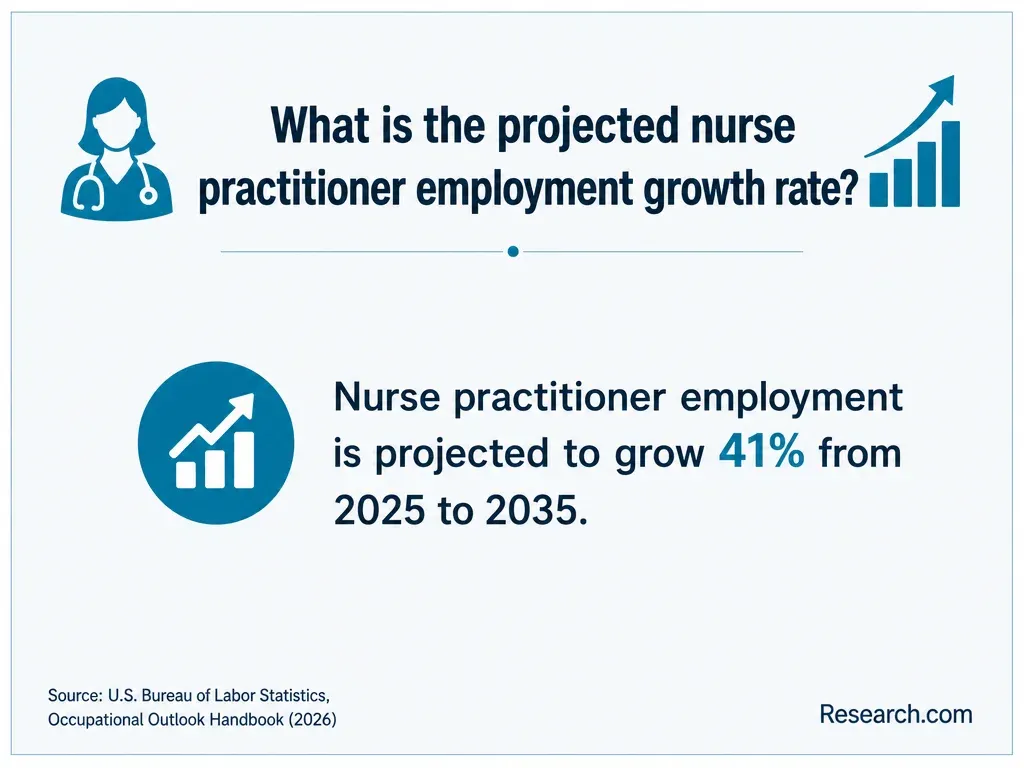
The U.S. Bureau of Labor Statistics reports nurse practitioners as an occupation; it does not publish a separate pediatric primary care NP wage or a DNP-graduate salary. For historical context, its May 2024 national median for nurse practitioners was $129,210. That occupation-wide figure is not a Vermont offer or a prediction of what a new pediatric NP will earn. NP employment projections likewise cover the broader occupation, so local pediatric openings and compensation should be assessed through current Vermont job postings and actual offers.
If the intended work is primarily psychiatric care rather than general pediatric primary care, compare the different training and clinical opportunities before committing to a specialty. Lower-cost mental health advanced practice study may be relevant to that alternative goal, but its lower apparent cost would not make it a pediatric primary care qualification.
Other Things You Should Know About Nursing
Possibly, but the school must approve the site, learning activities, preceptor, and supervision. Ordinary paid RN hours do not automatically become NP clinical hours.
No. They represent different educational and certification population-focus pathways. Check the preparation and credential required for a particular position.
Policies vary. Ask in writing whether the school secures placements, assists with contacts, or requires you to propose a site, and what support it provides if a placement is delayed.
Not by itself. A nursing PhD focuses on research and does not substitute for population-focused NP education, certification, or Vermont APRN licensure.
- Facilitators and Barriers to Pediatric Nurse Practitioner... - PMC https://pmc.ncbi.nlm.nih.gov/articles/PMC11222060/
- Nursing Applications & Renewals - Vermont Secretary of State https://sos.vermont.gov/nursing/apply-renew
- MSN in Pediatric Primary Care Nurse Practitioner | Drexel University Online https://www.online.drexel.edu/online-degrees/nursing-degrees/msn-ppcnp/index.aspx
- Pediatric Primary Care Nurse Practitioner Program - NYC | Columbia School of Nursing https://www.nursing.columbia.edu/academics/academic-programs/doctor-nursing-practice/pediatric-primary-care-nurse-practitioner
- Pediatric Nurse Practitioner (PNP) Primary Care | Walden University https://www.waldenu.edu/online-doctoral-programs/doctor-of-nursing-practice/pediatric-nurse-practitioner-primary-care
- Pediatric Primary Care Nurse Practitioner | jefferson.edu https://www.jefferson.edu/academics/colleges-schools-institutes/nursing/degrees-programs/master-science-nursing/degrees/pediatric-primary-care-nurse-practitioner.html
- Nursing Practice DNP - UVM Catalogue - University of Vermont https://catalogue.uvm.edu/graduate/nursing/nursingpracticednp/