
2027 Deferred Nursing Admission: Keeping Courses, Screening, and Funding Current
Audited and Verified:
Our Editorial and Data Verification Process
Research.com uses government datasets, official education statistics and primary institutional information to support its career and degree guides. Our review process checks factual accuracy, occupational definitions, source dates and the requirements associated with the credentials discussed.
How This Article Was Fact-Checked
Our editorial team verifies salary estimates, employment projections, education requirements and program information against original data providers and official organizations. Salary figures are checked against the relevant occupational definitions and reporting periods. Information about licensure, accreditation and required in-person training is reviewed separately.
Fact-checked and verified on:

Co-Founder and Chief Data Scientist
A deferred nursing admission gives you more time before starting, but it may not preserve every condition attached to your original offer. Science courses can age out, clinical-site clearances can expire, and financial aid may need a new application. This guide is for admitted nursing students considering a later start or preparing to return after an approved deferral.
It explains which requirements to recheck, who can confirm them, and how to decide whether delaying entry will still get you to graduation on an affordable, workable schedule.
Key Things You Should Know
- Get the deferral terms in writing: a later university start date does not necessarily reserve a seat in the nursing cohort or clinical sequence.
- Track 3 separate deadlines - course recency, clinical screening, and financial aid - and confirm each against your new entry term.
- Reprice the entire delay, not just tuition: a missed once-a-year nursing course or clinical placement can extend completion beyond the term you defer.
What does deferred nursing admission mean for courses, screening, and funding?
A deferred admission is permission to begin later than the term in your original offer. Its scope depends on the school's written policy. The university might approve a later start while the nursing program requires a separate decision about your cohort seat, prerequisite review, or clinical placement. An approved deferral is not the same as a leave of absence after enrollment or readmission after leaving a program.
Ask admissions and the nursing program for a revised offer identifying your entry term, whether your seat is reserved, and every condition that will be checked again. Then make a dated record of three workstreams: academic eligibility, clinical-site eligibility, and funding. This matters especially when a science course will cross a recency cutoff or a screening document expires shortly before orientation.
Students deferring postlicensure study should confirm their track separately. A licensed RN comparing affordable graduate study after a nursing bachelor's, for example, needs the receiving program to confirm its admission and enrollment terms; a prelicensure student's cohort decision does not establish them.
Which nursing degree pathway should you choose: ADN, BSN, or diploma?
If a deferral changes your plans, compare routes by the qualification you need: preparation for initial RN licensure. An associate degree in nursing (ADN or ASN), a prelicensure bachelor of science in nursing (BSN), and an eligible hospital-based diploma can all be entry routes, subject to the applicable state board's requirements. An RN-to-BSN program instead assumes you are already an RN.
The comparison below highlights what a delayed applicant might gain or give up by changing routes. Availability and admissions rules vary by program.
| Route | Potential advantage after a deferral | Condition to check |
| ADN or ASN | May offer a different entry term or lower tuition than another option | Prerequisite equivalencies, clinical sequence, and any later BSN completion plans |
| Prelicensure BSN | Provides a bachelor's degree alongside initial RN preparation | Whether a different cohort actually starts sooner and the total additional cost |
| Nursing diploma | May be an alternative where approved programs are available | State eligibility, program availability, and how credits would apply to future study |
Do not surrender a confirmed seat because another school advertises a shorter program. Obtain a written credit evaluation and a realistic first clinical start date first. Applicants considering another entry route can use entry-level nursing degree comparisons to identify questions for each program, then verify its actual licensure pathway and attendance requirements.
How do accreditation and state approval affect nursing program eligibility?
These are different checks. Institutional accreditation applies to the school; nursing program accreditation, when held, applies to a defined program under an accreditor's scope; and state board approval or recognition affects whether the prelicensure program meets that state's educational requirements for examination eligibility. One designation does not substitute for the others.
If you switch programs during a deferral, confirm each designation for the exact degree, campus or delivery arrangement, and intended entry term. Ask the nursing program and the board where you intend to seek initial licensure whether its graduates meet that jurisdiction's educational requirements. Also ask whether a change in program status between your original and revised entry terms affects you.
The same exact-track check applies to a licensed RN exploring online ADN-to-MSN program comparisons: approval of an initial RN program does not establish the accreditation, admissions terms, or intended outcome of a graduate bridge.
Often, yes - but only if the receiving nursing program still accepts them for the new entry term. Schools set their own rules for science-course age, grades, labs, repeat attempts, and equivalencies. Credit appearing on a university transcript does not necessarily mean it still satisfies nursing-major admission.
Request a revised prerequisite evaluation before registering for a repeat course. The following steps help distinguish a requirement you must retake from one the program will still accept:
- List each required course, completion date, grade, credit value, and laboratory format from your transcripts.
- Ask the nursing admissions office which date controls recency: application, admission, or the deferred cohort's start.
- Request written confirmation of any equivalency, exception, or required repeat, including whether a later course substitutes for an older one.
- Check whether repeating a course affects your sequence, enrollment status, and aid eligibility before paying for it.
If a course is no longer acceptable and retaking it would cause another delay, compare the written rules at other schools rather than assuming they are identical. Accessible nursing school entry pathways can be a starting point, but each nursing program must decide whether your specific coursework meets its requirements.
Nursing programs and clinical partners commonly require some combination of a background check, drug screening, immunization or immunity records, tuberculosis screening, CPR certification, and health documentation. The exact items, approved vendors, timing, and renewal intervals vary. A clearance accepted for your original start may be too old for a later clinical placement.
Ask the program's clinical compliance office for the checklist applicable to your new cohort and when each item must be completed. Doing a time-limited test too early can mean paying for it twice; waiting until after a placement deadline can block clinical entry. Disclose questions about a prior offense through the school's stated process and, where relevant, seek guidance from the state board. School admission, clinical-site clearance, and eventual licensure are separate decisions.
Screening also depends on the track. An already-licensed nurse considering online FNP certificate routes after an MSN should obtain that program's graduate clinical requirements, not assume a prelicensure cohort checklist applies.
Online coursework can reduce commuting, but a program preparing students for initial RN licensure still needs approved skills instruction, assessment, and supervised clinical learning. "Online" does not establish that labs, simulation, examinations, or clinical shifts are remote - or that a school can place a student near home.
Before replacing a deferred seat with an online option, ask for the required campus-visit calendar, clinical placement policy, geographic restrictions, and state-specific enrollment and licensure disclosures. Ask who secures clinical sites and what happens if a placement is unavailable. These details matter particularly if work or caregiving obligations make fixed weekday shifts impractical.
Postlicensure programs serve different goals. Short online Doctor of Nursing Practice degrees, for instance, are not substitutes for initial RN education; their own practice, project, and on-site requirements still need checking.
A published program length may begin after prerequisites and assume uninterrupted full-time progression. The useful number for a deferred applicant is the time from the revised start date to the expected graduation date. Ask whether required nursing courses run every term, whether clinical seats are limited, and whether a missed sequence can be resumed in the next term.
Compare written, term-by-term estimates rather than tuition alone. Include mandatory fees, books, equipment, screening, immunizations, clinical travel, any required lodging, examination and licensure expenses, and income you expect to forgo. Separate costs you would pay in either cohort from costs caused specifically by the delay, such as another screening or an extra term of living expenses.
Duration claims for graduate specialties should not be used as a benchmark for initial RN preparation. A licensed RN reviewing short family nurse practitioner program options must assess that program's entry credentials and clinical schedule separately.
A deferral does not automatically carry a financial aid offer into a different award year. Ask the school's aid office whether you must submit a new Free Application for Federal Student Aid (FAFSA), update your enrollment plans, or be reconsidered for institutional grants and scholarships. Federal loan eligibility also depends on applicable aid rules and your enrollment; an offer for the original term is not a funding guarantee for the new one.
If you are already enrolled, ask how a leave or reduced course load affects satisfactory academic progress, disbursement, and loan repayment status. If you have not enrolled, ask whether a deposit or scholarship can be held. Employer tuition assistance, state grants, and private scholarships may help, but confirm their start-term, credit-load, and reimbursement conditions before building them into your budget.
Graduate funding is a separate comparison for licensed nurses. Budget-conscious PMHNP study options may help frame tuition questions, but a deferred applicant still needs an individual aid offer and a full clinical-travel budget.
For an initial RN pathway, graduation is followed by an application to the relevant state board of nursing, satisfaction of its individual eligibility requirements, registration for and passage of the NCLEX-RN, and issuance of a license by the board. Requirements and processing timelines vary by jurisdiction. Completing a degree or passing an exam alone is not permission to practice as an RN.
When evaluating a deferral or a program switch, check the board's educational rules before enrollment, especially if you plan to study in one state and seek your first license in another. Ask the school how it documents program completion and whether any background or other eligibility issue should be raised with the board in advance.
Advanced practice follows a different route after RN licensure and appropriate graduate preparation. An online PMHNP certificate program guide concerns an existing nurse's specialty preparation; it does not replace initial RN graduation, NCLEX eligibility, or a state license.
What nursing careers, salaries, and job outlook can graduates expect?
After licensure, new RNs may seek roles in hospitals, ambulatory care, long-term care, home health, and other settings. Hiring and onboarding depend on the employer and role; graduation does not establish independent specialty competence. Compare offers by orientation, supervision, scheduling, location, and support as well as pay.
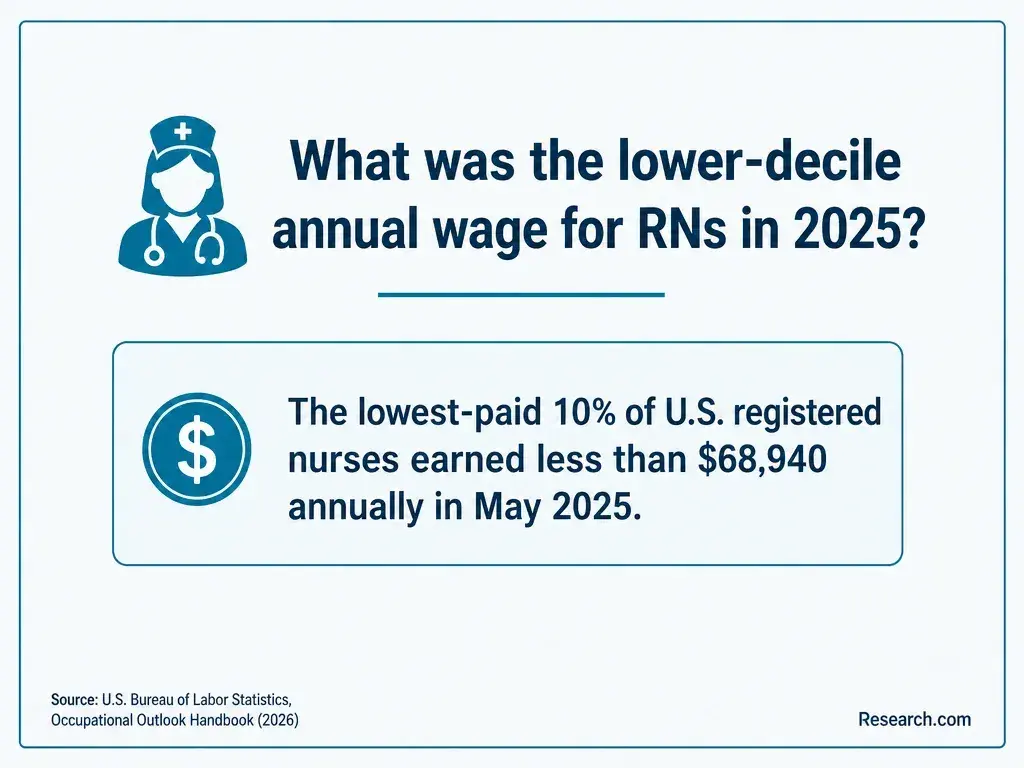
The U.S. Bureau of Labor Statistics publishes national wage and employment projections for registered nurses as an occupation. Those figures are useful for understanding the broad market, but they are not starting salaries for a particular ADN, diploma, or BSN graduate, nor do they predict a local job offer. For a deferral decision, local new-graduate postings and the cost of reaching licensure are more directly comparable than a national median.
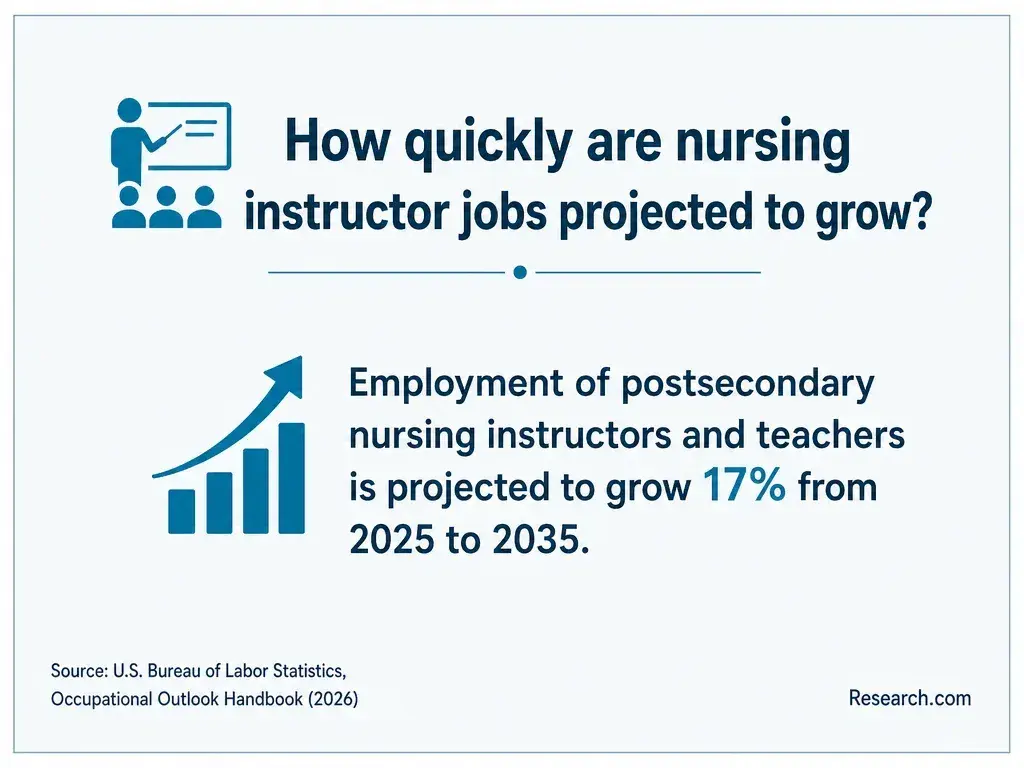
Advanced roles require additional qualifications and a separate financial calculation. Nurse practitioner program tuition comparisons may be useful later to an eligible RN, but projected advanced-practice pay should not be used to justify the immediate cost of delaying initial nursing admission.
Other Things You Should Know About Nursing
Only if the nursing program says so in writing. Confirm the specific cohort and any conditions for retaining the seat; a university-level deferral alone may not reserve clinical capacity.
You can ask, but another change may require a new application or approval. Contact the nursing admissions office before its deadline and request the decision in writing.
Usually not automatically. Patient-care work can build familiarity with the setting, but the nursing program decides whether any prior learning satisfies a stated academic requirement; employment does not replace required supervised RN clinical education.
Notify the program promptly rather than letting the offer lapse. Ask whether another deferral, a later application, or a formal withdrawal is available, and request the consequences for your seat and deposit in writing.
- School-Determined Requirements | 2024-2025 Federal Student Aid Handbook https://fsapartners.ed.gov/knowledge-center/fsa-handbook/2024-2025/vol1/ch1-school-determined-requirements
- Accepting Financial Aid | studentaid.gov https://studentaid.gov/complete-aid-process/accept-aid
- Program Integrity Questions and Answers - Retaking Coursework https://www.ed.gov/laws-and-policy/higher-education-laws-and-policy/program-integrity-information-questions-and-2
- Deferring Your Enrollment | nyu.edu https://www.nyu.edu/admissions/undergraduate-admissions/admitted-students/deferring-your-enrollment.html
- Fee Deferment - Office of Financial Aid and Scholarships | California State University, Fresno https://studentaffairs.fresnostate.edu/financialaid/policies/feedeferment.html
- Repeating Coursework | Office of Scholarships & Financial Aid https://financialaid.arizona.edu/policies/repeat-coursework
- Policy 02:21:00 Records Requirements for Clinical Placement | Platt College https://www.plattcolorado.edu/policy-022100-records-requirements-for-clinical-placement
- Nursing Field Experience: Onboarding - Academic Guides | Academics at Walden University https://academicguides.waldenu.edu/nursing-field/onboarding
- Clinical/Health Requirements and Criminal Background Checks | Marquette University https://bulletin.marquette.edu/nursing/policies/clinicalhealth-requirements-criminal-background-checks/
- Policy 3.2: Clinical Compliance and Onboarding | Current Students https://students.nursing.uw.edu/policies/policy-3-2-clinical-compliance-and-onboarding/


