2027 Combining Local Agency Nursing with Graduate Nursing Study: Clinical Days and Calendar Conflicts
Audited and Verified:
Our Editorial and Data Verification Process
Research.com uses government datasets, official education statistics and primary institutional information to support its career and degree guides. Our review process checks factual accuracy, occupational definitions, source dates and the requirements associated with the credentials discussed.
How This Article Was Fact-Checked
Our editorial team verifies salary estimates, employment projections, education requirements and program information against original data providers and official organizations. Salary figures are checked against the relevant occupational definitions and reporting periods. Information about licensure, accreditation and required in-person training is reviewed separately.
Fact-checked and verified on:

Co-Founder and Chief Data Scientist
Local agency shifts can help an RN pay for graduate school, but clinical days are usually less flexible than work shifts. A placement may require particular weekdays, a preceptor's availability, and enough time away from paid work to travel, prepare, and rest safely.
This guide is for working nurses weighing an MSN, DNP, or graduate certificate. It explains how to test a schedule before enrolling, protect required clinical time, and decide whether the income from agency work justifies its effect on study and clinical preparation.
Key Things You Should Know
- Build your budget around clinical days first: two 8-hour clinical days and two 12-hour agency shifts already total 40 scheduled hours, before classes, documentation, travel, and sleep.
- Paid RN shifts do not automatically count as supervised graduate clinical hours; the program must approve the site, preceptor, learning activities, and documentation.
- Ask for a term-by-term clinical calendar, placement policy, and total cost before accepting shifts or enrolling; an online program may still require fixed daytime clinical attendance.
How can you combine local agency nursing with graduate nursing school?
Combining local agency nursing with graduate study works best when the school's least-flexible commitments determine the work calendar. Local agency nursing means taking nearby assignments through a staffing agency, often across different facilities. It can offer control over which shifts to accept, but the agency's cancellation rules, minimum commitments, and short-notice offers can reduce that flexibility.
Start by requesting the clinical sequence for your intended track - not merely the general course schedule. An ADN-prepared RN considering an ADN-to-MSN bridge program guide should also check when bridge coursework ends and graduate clinical courses begin; those periods may have very different work capacity.
A workable plan has three parts:
- Block required classes, labs, campus visits, and likely clinical days before offering availability to the agency.
- Set a maximum number of paid shifts for clinical terms, leaving time for preparation, clinical documentation, travel, and recovery.
- Recheck the plan before each term and renegotiate agency availability when a placement or preceptor schedule changes.
If the budget only works when every available day becomes a paid shift, slower enrollment, a different employment arrangement, or postponing the program may be safer than relying on a calendar with no room for change.
How do clinical days create calendar conflicts with agency nursing shifts?
Clinical days can conflict with agency work even when the hours do not overlap on paper. A preceptor may work only weekdays; a site may require consecutive days; orientation may occur before the regular rotation; and a night shift can end shortly before a morning clinical assignment. Clinical preparation and documentation also take time outside the hours recorded at the site.
This illustrative week shows why counting only scheduled hours can understate the commitment. It is a planning example, not a program requirement.
| Commitment | Illustrative schedule | Potential conflict |
| Graduate clinical | Tuesday and Thursday, 8 hours each | Preceptor availability fixes the days |
| Local agency work | Two 12-hour shifts | Shifts may end close to clinical start times |
| Scheduled total | 40 hours | Excludes class, assignments, travel, and rest |
Before committing to an agency block, ask the program how much notice it gives for placement changes and whether students can request particular days. Family NP programs with clinical placement assistance are worth examining if finding a preceptor is the main obstacle, but assistance is not a promise of a nearby site or agency-compatible hours.
Can graduate nursing students work local agency shifts during clinical training?
Graduate nursing students can generally continue working licensed agency shifts if their license, employer policies, and school rules permit it. The critical distinction is between working as an RN and learning as a supervised graduate student. Neither a paycheck nor exposure to patients makes an agency shift eligible for graduate clinical credit.
Using your agency workplace as a clinical site requires advance school approval, an eligible preceptor, appropriate learning experiences, and a clear separation of student and employee responsibilities. Do not assume you can record the same hours as both paid staffing time and supervised clinical time. Confirm how the program and site handle liability coverage, documentation, patient access, and conflicts of interest.
For an RN whose goal is a bachelor's degree rather than a graduate clinical role, exploring RN-to-BSN nontraditional clinical formats may reveal a schedule better suited to agency work. That is a different educational objective; it does not replace required graduate practice experiences or APRN preparation.
There is no single clinical-hour requirement for every graduate nursing program. The number and type of hours depend on the degree, specialty, prior preparation, program standards, and any certification or state requirements. An NP track needs supervised experiences aligned with its population focus; a nursing education or leadership track may instead require different practice activities. A research-focused PhD should not be evaluated as though it were an NP clinical program.
Many DNP programs plan around at least 1,000 post-baccalaureate practice hours under AACN DNP guidance, but applicants should obtain the school's current written accounting of required hours, accepted prior graduate hours, and experiences still to be completed. Do not assume all those hours are direct patient-care hours - or that prior RN employment will count. For an APRN track, also verify the current standards of the relevant certifying organization and state board.
Ask for hours by course and term, not just a program total. A concentrated clinical term can be harder to combine with paid shifts than the same total spread over a longer period. Comparisons of psychiatric NP MSN programs by duration should therefore include the weekly placement load and patient-population requirements, not graduation time alone.
"Online" describes where some instruction happens, not when clinical learning occurs. Compare the actual obligations in the term when you expect to work agency shifts, including synchronous classes, simulation, campus visits, and placement travel.
The format comparison below identifies scheduling questions to resolve with each program rather than assuming either format is more flexible.
| Schedule feature | Online or hybrid program | Campus-based program |
| Course meetings | May be asynchronous or require live sessions | Often scheduled on campus; some courses may be hybrid |
| Clinical placement | Usually in person at an approved site; location and days vary | Also in person; assigned sites may require travel |
| Other attendance | May include scheduled simulation or campus intensives | May include labs and simulation on fixed days |
| Key agency-work question | Who secures a local site, and when is its schedule confirmed? | How early are campus and clinical days published? |
A shorter calendar is not necessarily an easier one. When comparing accelerated DNP programs, check whether compressed terms increase simultaneous clinical, project, and coursework demands enough to reduce your paid-shift capacity.
Verify accreditation and authorization for the exact program and track you intend to enter. Check the institution's recognized institutional accreditation and the graduate nursing program's applicable accreditation, such as CCNE or ACEN, directly with the accreditor and school. Ask whether the program can enroll you and arrange required clinical experiences in your state. For an APRN track, separately confirm that its education meets the relevant certification and state licensing requirements.
These are different checks. Institutional accreditation does not, by itself, establish nursing-track accreditation or eligibility for a particular advanced practice credential. Likewise, state approval relevant to initial RN education is not interchangeable with graduate accreditation or APRN eligibility. An RN who is instead planning a first nursing degree must investigate initial-licensure approval and NCLEX eligibility - a different decision from choosing postlicensure graduate study.
Most postlicensure graduate nursing tracks expect an active RN license, qualifying nursing education, transcripts, and whatever GPA, experience, recommendations, or prerequisite courses the school specifies. APRN tracks may require relevant RN experience or additional clinical-readiness documentation. An RN with an ADN or a non-nursing bachelor's degree should ask about bridge eligibility rather than assuming every MSN has the same entry route.
Admission to the university is not always admission to the intended specialty track or permission to begin clinical courses. Before applying, request the track's admissions criteria, clinical-clearance requirements, placement deadlines, and policies for students licensed or living outside the school's home state.
An LPN/LVN who is not yet an RN should not budget around postlicensure MSN agency-work assumptions. Shorter LPN-to-RN program comparisons may help identify a preceding route, but applicants must verify each program's actual length, in-person requirements, and eligibility for initial RN licensure.
Graduate nursing timelines and costs vary too much by track, credit load, transfer policy, clinical availability, and enrollment pace for a single "typical" price to be a useful budget. A part-time plan may preserve more agency income while extending tuition payments and fees; a faster plan may reduce enrollment time but force more unpaid days away from work.
Compare written, term-by-term estimates for tuition and mandatory fees, then add placement travel, campus visits, compliance checks, supplies, certification or licensing expenses where relevant, and earnings you expect to forgo. Agency income can fluctuate, so test the budget against a lower-shift clinical term rather than your busiest working term. When reviewing affordable psychiatric-mental health NP pathways, compare total completion costs and placement arrangements - not advertised tuition alone.
Ask the financial aid office how changing enrollment intensity affects aid, and ask any employer offering tuition assistance whether agency employment qualifies. Neither aid nor reimbursement should be treated as available until the responsible organization confirms your eligibility.
Graduate study does not replace an active RN license or automatically confer a new one. Continue meeting RN renewal and practice requirements while taking agency assignments. After an APRN-focused program, the next steps may include national certification in the specific role and population focus, followed by state APRN licensure or recognition as required where you will practice. The school, certifying organization, and state board each make different eligibility decisions.
An MSN or DNP in leadership, education, informatics, or another non-APRN area does not by itself qualify its graduate to practice as an NP. Before choosing among lower-cost online NP degree options, verify that the exact track supports your intended certification and state authorization. Degree completion, exam eligibility, certification, state authorization, and employer credentialing are separate milestones.
What careers, salaries, and job outlook follow graduate nursing study?
The career payoff depends on the track and your prior experience. Graduate study may support a move toward advanced practice, nursing education, leadership, or informatics, but each role has distinct hiring and credential requirements. An agency RN should compare the target job's duties and schedule with the flexibility and earnings they would give up - not assume a graduate degree guarantees a promotion.
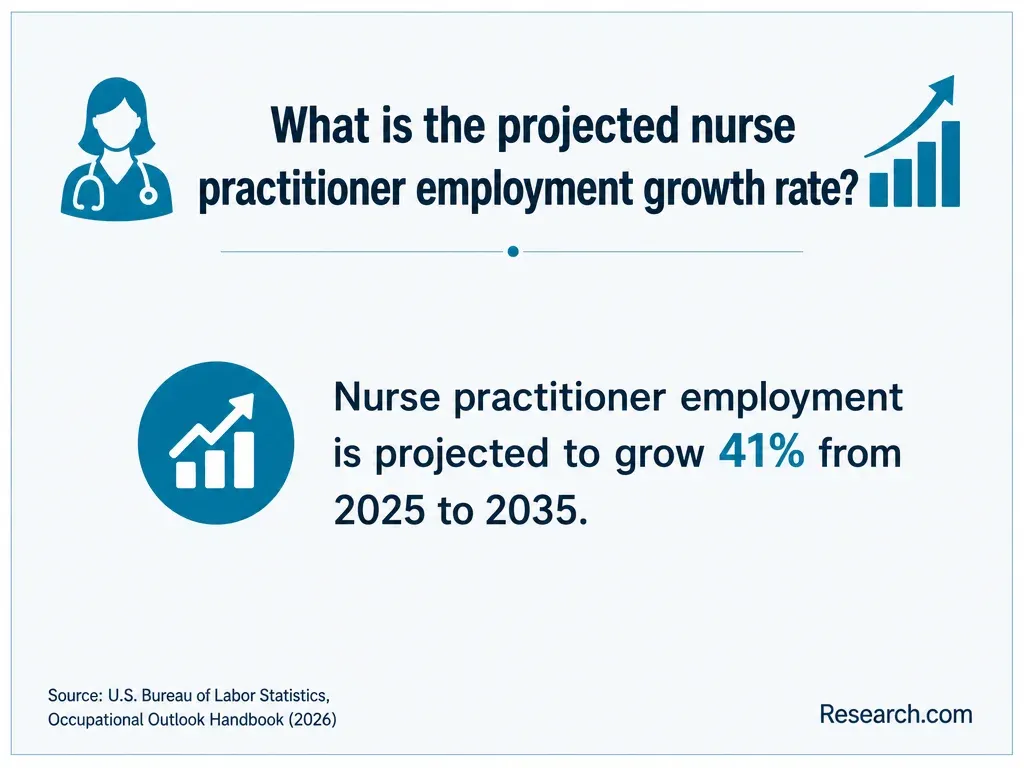
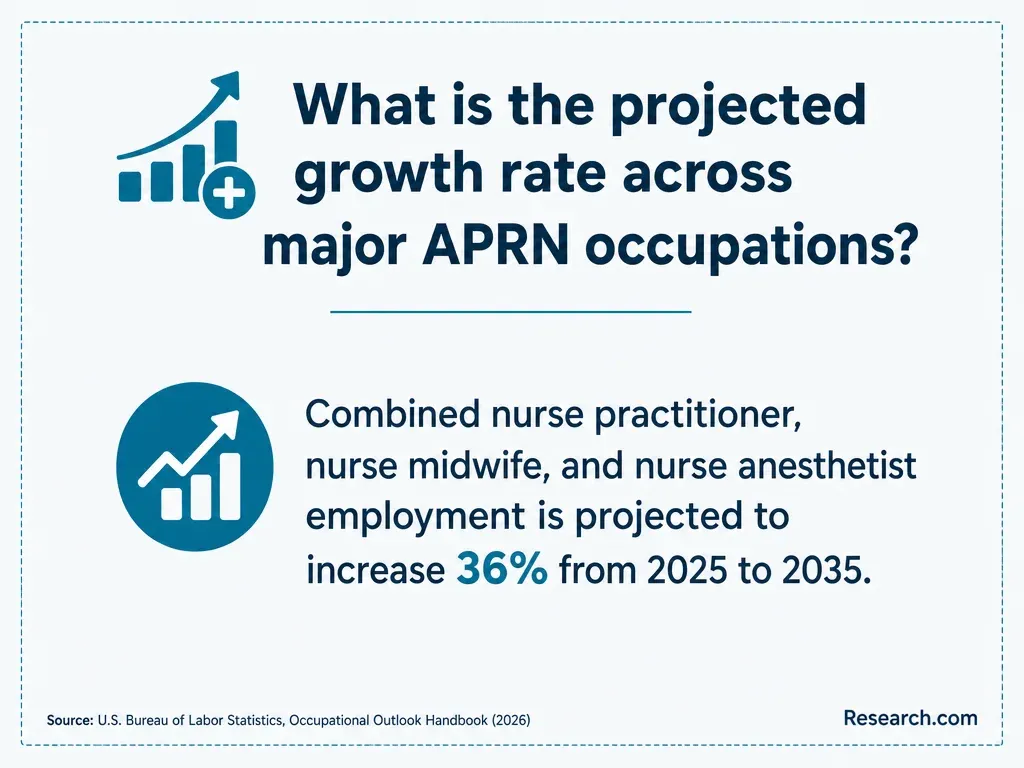
For salary context, the U.S. Bureau of Labor Statistics publishes separate Occupational Outlook Handbook wage and employment-projection figures for registered nurses and for advanced practice occupations such as nurse practitioners. Those occupation-wide figures are useful for comparing career markets, but they are not salaries promised to MSN or DNP graduates; specialty, location, experience, setting, and hours worked affect offers. Request local job postings or employer pay ranges for the role you actually want before estimating a return on tuition and lost shifts.
If the goal is more reliable RN work rather than a new graduate-level role, a different employer, specialty orientation, or schedule may solve the problem without another degree. A prelicensure comparison such as a guide to nursing schools with no TEAS or HESI addresses entry into nursing, not advancement for an already-licensed agency RN; keep that distinction in mind when comparing education options.
Other Things You Should Know About Nursing
You do not need to share more personal detail than required, but give accurate availability and review minimum-shift and cancellation terms before accepting assignments.
Ask faculty how missed hours must be made up and whether the site can offer another approved day. Do not assume an agency shift can replace the canceled experience.
That depends on your agency's eligibility rules and your employment arrangement. Confirm any minimum hours for health coverage or other benefits before cutting shifts.
Treat sleep and safe performance as constraints, not spare calendar space. Decline or rearrange a shift if it would leave you unable to participate safely and meet site expectations.
- Guidance for Nursing Practice by Graduates and Students in their Last Semester of Nursing Programs | Mass.gov https://www.mass.gov/news/guidance-for-nursing-practice-by-graduates-and-students-in-their-last-semester-of-nursing-programs
- Challenges of nursing students during clinical training - PMC https://pmc.ncbi.nlm.nih.gov/articles/PMC11252586/
- How to Become a Nurse While Working Full Time | University of Bridgeport https://www.bridgeport.edu/news/become-a-nurse-while-working-full-time/
- What Is Nursing School Like & Tips for Starting First Year | Nightingale College https://nightingale.edu/blog/what-is-nursing-school-like.html
- School of Nursing: Standard On Clinical Teaching And Supervision | University of North Carolina at Chapel Hill https://policies.unc.edu/TDClient/2833/Portal/KB/Article/132407/School-of-Nursing-Standard-On-Clinical-Teaching-And-Supervision
- Clinical Placements | Yale School of Nursing https://nursing.yale.edu/clinical-placements
- Clinical Placement Standards, Compliance, and Expectations | Current Students https://students.nursing.uw.edu/policies/policy-3-1-clinical-placement-standards-compliance-and-expectations/
- How Do DNP Clinical Hours & Placements Work? | DNPPrograms.com https://www.dnpprograms.com/faq/dnp-clinical-hours/
- ACEN position statement on clinical/practicum | acenursing.org https://www.acenursing.org/position-statement/acen-position-statement-related-to-clinical-practicum-learning-experiences
- Float Pool Nursing Jobs Checklist for 2026 | staffdna.com https://staffdna.com/the-float-pool-nursing-jobs-checklist-every-nurse-should-run-before-ta/