2027 Choosing an Online BS in Business Administration Around A Temporary Layoff
Audited and Verified:
Our Editorial and Data Verification Process
Research.com uses government datasets, official education statistics and primary institutional information to support its career and degree guides. Our review process checks factual accuracy, occupational definitions, source dates and the requirements associated with the credentials discussed.
How This Article Was Fact-Checked
Our editorial team verifies salary estimates, employment projections, education requirements and program information against original data providers and official organizations. Salary figures are checked against the relevant occupational definitions and reporting periods. Information about licensure, accreditation and required in-person training is reviewed separately.
Fact-checked and verified on:

Co-Founder and Chief Data Scientist
A temporary layoff can create time for school, but it can also end with little notice. If you are considering an online BS in Business Administration, the key decision is whether you can start a useful degree path now without creating a schedule or financial commitment you cannot sustain after a recall.
This guide explains how to evaluate online coursework, unemployment-benefit rules, financial aid, credit transfer, and career fit. You will leave with a way to compare programs against both your current time off and your likely return to work.
Key Things You Should Know
- Choose a course load you can keep after a recall, not one that works only while you are laid off; verify live meetings, group work, exam windows, and leave policies.
- Before enrolling, ask your state unemployment agency whether coursework affects your reporting, availability-for-work requirements, or eligibility for approved training. Enrollment does not automatically preserve benefits.
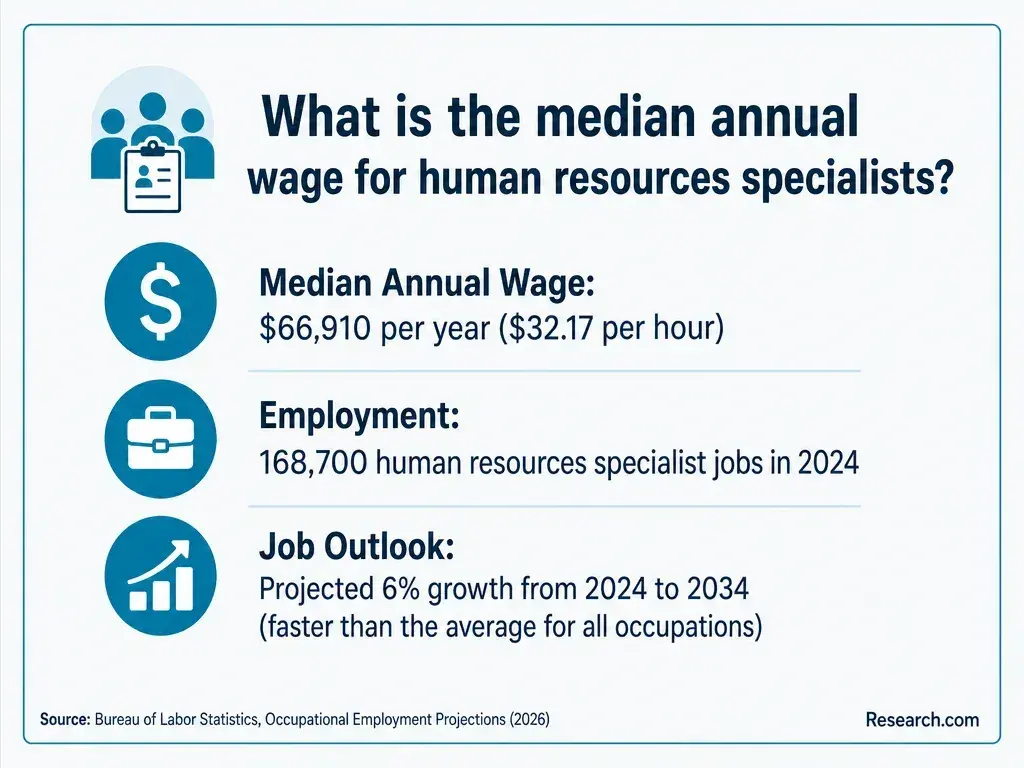
- Compare remaining degree requirements and net cost, not advertised program length. For context, the U.S. median wage for human resources specialists was $75,940 in May 2025, but that occupation-wide figure is not a new graduate's expected salary.
What is an online BS in Business Administration?
An online Bachelor of Science in Business Administration is an undergraduate degree covering how organizations make financial, operational, marketing, and personnel decisions. Students usually complete general education and business-core requirements, with electives or a formal concentration where the school offers one. A BS, BBA, and BA in Business may overlap, but their required courses and quantitative emphasis depend on the institution.
"Online" describes delivery, not necessarily control over the schedule. A program may use recorded lessons while still imposing weekly deadlines, timed exams, live presentations, or group meetings. Online business study with accelerated terms may fit a predictable break from work, but shorter terms can make a sudden return to full-time employment harder to manage.
Is an online business administration degree worthwhile during a temporary layoff?
It can be worthwhile if the degree addresses a lasting career requirement and you can afford and continue it after returning to work. A layoff alone is not a reason to commit to a bachelor's program: the break may be shorter than a term, recall hours may change, and benefits or savings may be needed for immediate expenses. If you need one specific skill for your next job, a targeted course, employer training, or job search may be the better first move.
Test the decision against two schedules: the hours available now and the hours available in a demanding workweek after recall. The following comparison shows why the apparent fastest option is not always the safest one.
| Enrollment approach | Fit during a layoff | Risk after recall |
| Several courses at once | Makes use of temporary free time | Overlapping deadlines and group obligations may become unmanageable |
| One course at a time | Slower progress but easier to test online study | More likely to fit alongside resumed work, subject to course availability |
| Wait or take a transferable course | Limits immediate commitment while plans are uncertain | The course may not satisfy a degree requirement without the receiving school's evaluation |
Before committing, contact your state unemployment agency about school enrollment, work-search and availability rules, reporting obligations, and any approved-training provision. Ask the school what happens if recall occurs midterm: whether you can reduce a future course load, withdraw, take a leave, and retain aid eligibility. For a longer-term view of scheduling options, compare work-compatible business administration education options against your expected work hours, not just your current calendar.
How can an online BS in Business Administration support career advancement?
Start with the work you have already done and the role you want next. Someone who has coordinated schedules, handled customers, tracked inventory, or supported a team may use business coursework to strengthen a credible application for an operations, administrative, or specialist role. The strongest case for the degree is often that it fills a stated bachelor's-degree requirement while helping you document skills you can apply at work.
Pair courses with evidence: a permitted process-improvement proposal, a spreadsheet model using public or fictional data, or a clearly labeled class case study. Do not present confidential employer information or an unimplemented plan as a proven result. If your goal is HR, compare the business curriculum with education options for future HR professionals; a broad business degree may need HR-specific coursework or experience to match the jobs you want. Neither degree nor concentration automatically qualifies you for management or a professional credential.
First, confirm that the institution holds accreditation recognized by the U.S. Department of Education or the Council for Higher Education Accreditation. Verify the school's current status directly with the accreditor and confirm that the online degree is offered by that institution. Institutional accreditation matters for issues such as federal aid eligibility and how other schools may evaluate coursework, though it does not guarantee credit transfer.
Business-school or programmatic accreditation is a separate question. AACSB, ACBSP, and IACBE have different scopes; check whether an accreditation actually covers the school or business program you would enter rather than assuming a logo applies to every degree. Accreditation does not establish that a program's deadlines fit a recall schedule or that graduates obtain particular jobs. Use a US online business college selection guide to identify possibilities, then verify each school's accreditation and current program policies yourself.
Typical requirements include introductory accounting, economics, marketing, management, finance, operations, business law, statistics or quantitative reasoning, and a strategy course or capstone. Exact requirements vary. Some programs offer official concentrations; others offer only electives. If a required course follows a prerequisite sequence or is offered infrequently, that sequence may matter more to your completion date than the advertised term length.
For a temporary layoff, inspect how required courses are assessed. An asynchronous lecture can still require live group presentations, scheduled proctored exams, software access, or a workplace project that needs approval. Ask whether a capstone can use public or simulated data if you no longer have access to an employer's records. If project coordination is your specific goal, compare the business core with affordable online project management degrees rather than assuming a single project-management elective provides the same preparation.
Requirements depend on whether you are applying as a first-year student, transfer student, or returning student. Schools commonly request prior academic records and may set GPA or prerequisite rules; admission to the institution and admission to its business major may be separate decisions. An enrollment gap or layoff does not itself establish admission eligibility or disqualify an applicant.
If you have college credit, request an official evaluation showing which courses satisfy general education, business-core, concentration, elective, and in-residence requirements. Accepted credit is not necessarily credit that advances the major. If most of your previous study is in logistics, compare a general business pathway with shorter completion timelines for supply chain bachelor's students, but rely on each school's written evaluation - not a preliminary estimate - before assuming either route is shorter.
Your completion time depends on applicable prior credits, remaining prerequisites, course availability, and a pace you can maintain once employed again. An accelerated calendar does not eliminate required work. For a fair comparison, ask each school for a degree audit or documented course plan based on your records, including any courses that cannot be taken together.
Calculate cost from the courses you still need, then add mandatory fees, books, software, exam or proctoring charges, and any travel. Distinguish total cost from the cash needed before each term: employer reimbursement, if available after recall, may arrive only after you pay and meet your employer's conditions. A financial-aid office can explain whether a documented loss of income warrants a review of your aid circumstances; that review does not guarantee additional aid. Compare business administration tuition and completion time using the same assumptions about applied credits and enrollment pace.
Relevant openings may include operations coordinator, administrative specialist, sales-support associate, marketing coordinator, HR assistant, or project coordinator. Match the posting's tasks to your prior work and coursework: scheduling and process tracking support operations applications, while customer communication and campaign reporting support some marketing applications. Hiring depends on demonstrated skills, experience, and employer requirements - not the degree title alone.
Specialized roles may require deeper preparation. A supply chain applicant, for example, may need purchasing, inventory, or logistics experience beyond a general business core. Compare the curriculum and local postings with affordable supply chain programs and salary outlook if that function is your target. A recall to your former job can also provide a place to apply new skills, but obtain permission before using workplace data for an assignment.
There is no single salary or growth rate for an online BS in Business Administration: labor-market figures describe occupations, not graduates of a particular degree. The U.S. Bureau of Labor Statistics reports a May 2025 median annual wage of $75,940 for human resources specialists and projects 6% employment growth from 2025 to 2035. That median includes workers at different experience levels; it is not an entry-level offer or a forecast of what you will earn after a layoff.
Use the occupation matching your intended duties when assessing prospects, then check local postings for experience, software, and degree requirements. Project roles provide another example of why both occupation and education cost matter: compare job requirements with affordability checks for accredited project management programs before treating a specialist occupation's wage as a return on any particular program.
How do you choose a reputable online business administration program?
Shortlist schools only after defining your target role, likely recall schedule, and affordable term-by-term payment. Then request written answers tied to the catalog and enrollment term you would enter. These checks reveal whether a program that looks flexible can remain workable when your job resumes:
- Confirm institutional accreditation, the exact degree awarded, and whether any advertised business accreditation covers your program.
- Request an official credit evaluation and a remaining-course plan, including prerequisite order and how often required classes run.
- Ask for sample course calendars showing live sessions, exam windows, group work, internships, and campus visits, if any.
- Review withdrawal, leave, refund, and satisfactory academic progress policies with the registrar and financial-aid office.
- Compare total remaining cost and payment timing; ask career services for outcomes with a clear graduate group and measurement period.
Use low-tuition pathways to a business administration degree as a starting point, not a substitute for your own cost calculation. The best fit is a reputable program whose remaining requirements, workload, and payments still make sense if your layoff ends sooner than expected.
Other Things You Should Know About Business Administration
Possibly, but ask about the school's leave, withdrawal, and reentry rules before enrolling. Pausing midterm can have different academic and financial consequences from finishing the term and skipping the next one.
If you expect recall or hope to use a tuition benefit or workplace project, a conversation may help you understand scheduling and approval requirements. Keep unemployment-agency reporting separate; your employer cannot determine your state benefit eligibility.
Ask the program whether an internship is permitted or required and whether a placement would meet its supervision and credit rules. Also check with your state unemployment agency before accepting work or training that could affect benefit reporting.
It may be if a specific job requires a skill you can learn quickly and you do not need a bachelor's degree. Compare the certificate's content with actual postings; choose a degree when its broader requirements serve a longer-term goal you can afford to complete.
- Academic Years, Academic Calendars, Payment Periods, and Disbursements | 2025-2026 Federal Student Aid Handbook https://fsapartners.ed.gov/knowledge-center/fsa-handbook/2025-2026/vol3/ch1-academic-years-academic-calendars-payment-periods-and-disbursements
- Pell Grant and Approved Training Opportunities | Georgia Department of Labor https://dol.georgia.gov/pell-grant-and-approved-training-opportunities
- Recognition of Accrediting Agencies | Texas Higher Education Coordinating Board https://www.highered.texas.gov/recognition-of-accrediting-agencies/
- Eligibility for Unemployment Benefits | mo.gov https://labor.mo.gov/des/unemployed-workers/eligibility
- Eligibility Information | Department of Labor and Industry https://www.pa.gov/agencies/dli/resources/for-claimants-workers/benefits-information/benefit-guide/eligibility-information
- Overview of Accreditation in the United States | ed.gov https://www.ed.gov/laws-and-policy/higher-education-laws-and-policy/college-accreditation/overview-of-accreditation-united-states
- Post-Secondary Employment Outcomes Tool Shows What You Might Earn Depending on the College You Attend | Census.gov https://www.census.gov/library/stories/2022/06/job-and-earnings-prospects-by-college-and-degree.html
- Fast Facts: Tuition costs of colleges and universities (76) | ed.gov https://nces.ed.gov/fastfacts/display.asp
- Types of Financial Aid: Grants, Work-Study, and Loans | studentaid.gov https://studentaid.gov/understand-aid/types
- Bachelor's in Business Administration Concentrations | Purdue Global https://www.purdueglobal.edu/degree-programs/business/business-administration-concentrations/