2027 Choosing a BS in Business Administration: How to Check a Business School's Accreditation Scope for Online Programs
Audited and Verified:
Our Editorial and Data Verification Process
Research.com uses government datasets, official education statistics and primary institutional information to support its career and degree guides. Our review process checks factual accuracy, occupational definitions, source dates and the requirements associated with the credentials discussed.
How This Article Was Fact-Checked
Our editorial team verifies salary estimates, employment projections, education requirements and program information against original data providers and official organizations. Salary figures are checked against the relevant occupational definitions and reporting periods. Information about licensure, accreditation and required in-person training is reviewed separately.
Fact-checked and verified on:

Co-Founder and Chief Data Scientist
A university may advertise an accredited business school without making clear whether its online BS in Business Administration is included. That distinction matters if you are comparing programs, transferring credits, or paying for a degree while working.
This guide shows prospective US students how to check institutional accreditation, find a business accreditor's published scope, and resolve gaps between a school's claims and its program listing. You will leave with a practical way to document what is, and is not, covered before committing to a program.
Key Things You Should Know
- Check two separate claims, the university's institutional accreditation and whether its business accreditation includes the exact online BS in Business Administration you would enter.
- AACSB, ACBSP, and IACBE are three different business accreditors, a school's use of one name does not establish the status of every degree, campus, or delivery format.
- Before applying or paying a deposit, match the accreditor's directory to the school's current catalog and request written clarification if the online program's coverage remains unclear.
What Is Accreditation for a Business Administration Degree?
Accreditation is an external review of an institution or an academic unit against an accreditor's standards. For a prospective business student, the important distinction is what was reviewed. Institutional accreditation concerns the university as a whole. Business accreditation concerns a defined business school, unit, or set of programs - not necessarily every degree the university offers.
Accreditation is a quality-review process, not a promise that courses will transfer, employers will hire graduates, or a particular student will finish on schedule. It also does not tell you whether a program's compressed calendar suits your life. If you are considering online bachelor's programs with short sessions, check the academic calendar and the accreditation scope as separate decisions.
How Can You Verify a Business School's Accreditation Status?
Start with the exact university name, business school name, degree title, and online program listing in the current catalog. A similar-sounding institution or a separately administered online division may lead you to the wrong record. These checks create a trail you can keep with your enrollment documents:
- Search the US Department of Education's accreditation database for the institution and confirm its accreditor and listed status, consult the Council for Higher Education Accreditation directory as another reference.
- Search AACSB, ACBSP, or IACBE's own directory for the business school, then read its published accreditation status and scope rather than relying on a school logo.
- Compare that record with the current catalog: identify which academic unit awards the BS, where it is offered, and whether the online version shares the listed program name.
- If coverage is not explicit, ask the business school's accreditation contact for written confirmation naming the degree, online format, applicable location, and the date coverage began.
Save the directory entry, catalog page, and written reply with their dates. A comparison of ranked US college pathways in online business can help build a shortlist, but a ranking or school profile cannot replace the accreditor's record.
Does Accreditation Cover an Online BS in Business Administration?
Possibly, but do not infer coverage from the word "online" or from the business school's accreditation badge. An online BS may be included when it belongs to the accredited business unit and falls within the accreditor's applicable scope. Coverage needs closer examination when the online degree is awarded by a different unit, operates under a different program name, or was added after the school's published listing.
Ask the school: "Is the fully online BS in Business Administration I would enter included in your current business accreditation? Which published accreditor record confirms that, and does the answer change for my enrollment term?" If a representative says the online and campus programs are identical, request confirmation of accreditation coverage rather than treating shared coursework as proof.
Coverage and scheduling are different matters. Students choosing flexible online study for business administration career growth should also verify live sessions, group work, exam arrangements, and required visits; an accredited online program is not necessarily self-paced.
Institutional accreditation applies to the university. Business accreditation is an additional review with its own scope. A university can be institutionally accredited while its business school lacks specialized accreditation; conversely, a claim about an accredited business school does not eliminate the need to verify the university's institutional status.
This matters especially when comparing degrees housed in different academic units. For example, an online HR bachelor's program accepting transfer credits may not be housed in the same unit as a university's BS in Business Administration. Neither shared courses nor a related career goal establishes that both programs have the same business-accreditation status. Check each degree individually, and obtain an official transfer evaluation if prior credits affect your choice.
AACSB, ACBSP, and IACBE use their own standards and published records. Their names are not interchangeable, and the presence or absence of any one designation should not stand in for examining a particular program. This comparison shows why the scope statement, rather than the acronym alone, should guide your check.
| Business accreditor | What to inspect in its record | Decision-making limit |
| AACSB | The listed accredited business school and any scope information relevant to the degree. | A school listing alone may not explain an unusual degree arrangement or newly added online offering. |
| ACBSP | The listed institution or business unit and the programs identified as accredited. | Do not assume an unlisted program or separate academic unit is covered. |
| IACBE | The accredited business unit and its published list of covered business programs. | Check that the exact degree appears and clarify any naming or delivery-format mismatch. |
Accreditors' standards differ, but none of these labels by itself tells you how quickly you can graduate. When reviewing online colleges with accelerated business programs, verify accreditation and course availability independently; a faster schedule does not broaden an accreditor's scope.
Business accreditation does not impose one identical BS curriculum on every school. Compare the actual degree audit and course descriptions for accounting, economics, finance, marketing, management, operations, statistics or analytics, and a culminating project if required. Then identify which courses belong to the business core, which are electives, and which form an officially designated concentration.
Curriculum is also a useful cross-check on program identity. A specialized supply chain degree may share business courses with a BS in Business Administration without having the same title or accreditation listing. If you are comparing shorter bachelor's pathways in supply chain management, verify the specialized degree's scope separately rather than extending a general business program's status to it.
Admission rules belong to the institution and, sometimes, the business major; accreditation does not create a universal application checklist. Schools may ask first-year applicants for secondary-school records and transfer applicants for college transcripts. A business major may have additional course or GPA requirements. Confirm which requirements apply to your entry route and whether admission to the university also admits you to the BS.
For returning students, an accepted course may count only as an elective rather than satisfy the business core. Request an official evaluation before assuming prior accounting, statistics, or management coursework shortens the degree. Even if you find colleges that waive online application costs, verify accreditation scope and likely credit applicability before investing time in an application.
Your remaining requirements, transfer evaluation, course rotation, and enrollment pace determine completion time more reliably than an advertised "accelerated" label. Ask for a term-by-term plan that includes prerequisites, upper-level business courses, and any residency requirement. Confirm whether every required course is available online often enough for that plan to work.
Compare costs using the courses you still need, not just the advertised tuition rate. Include mandatory fees, books or software, possible proctoring or travel charges, and the cost of an extra term if a required class is unavailable. A guide to low-tuition pathways to a business administration degree can identify candidates, but the school's written degree audit and current charges are what establish a meaningful personal comparison.
A BS in Business Administration can support applications for roles in operations, HR, marketing, purchasing, and project coordination. The best fit depends on your coursework and evidence of relevant work - not the accreditation label alone. An internship, supervised project, or prior job may help you demonstrate skills that a course title cannot.
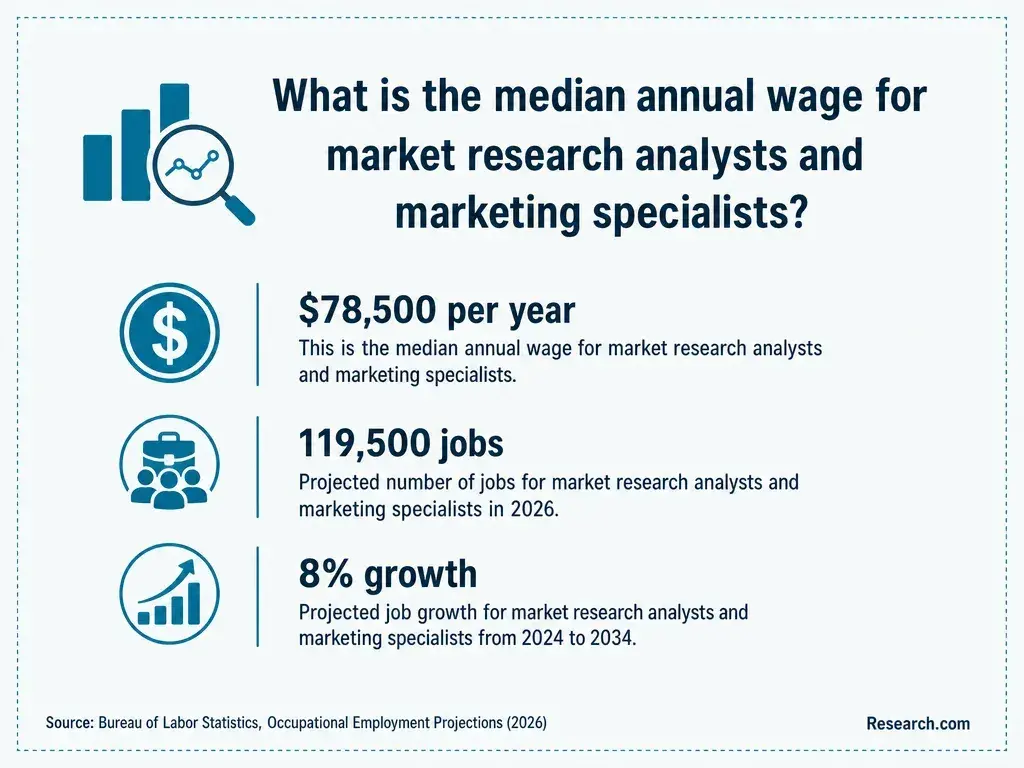
For context, the US Bureau of Labor Statistics reports a $75,940 median annual wage for human resources specialists in May 2025. That is an occupation-wide median, not a starting salary or an expected outcome for business administration graduates; employers may prefer HR-specific preparation or experience. Likewise, readers weighing shorter supply chain degrees and career value should compare the target role's requirements and curriculum alongside accreditation, rather than assuming one business credential fits every function.
Do Business Administration Graduates Need Licenses or Certifications?
Most general business roles do not require a license simply because the applicant holds a BS in Business Administration. Specific work can have separate rules: accounting licensure, financial-services activities, and some industry roles may require additional education, examinations, experience, or regulatory authorization. An accredited business degree does not automatically meet those requirements.
Voluntary professional certifications are a different decision. If HR is your goal, compare the job duties you want with certification eligibility and HR education costs and career planning before paying for another credential. Ask the relevant licensing board or certifying organization about its current rules; a school adviser can explain coursework but cannot grant professional eligibility.
Other Things You Should Know About Business Administration
Ask the school and accreditor how the change applies to your program and enrollment dates. Keep dated records of your catalog, accreditation information, and correspondence; do not assume a later status change automatically changes your individual academic record.
Treat it as a starting point, not final evidence. A logo may identify an accreditor without specifying the covered degree or business unit.
Yes. Provide the exact online degree title and ask the business school's accreditation contact for a written answer. If the answer is unclear, compare it with the accreditor's published record before committing money.
Recognition depends on the country and the organization assessing the degree. If overseas recognition matters to you, check with the relevant employer, credential evaluator, or regulator before enrolling.
- Recognition of Accrediting Agencies | Texas Higher Education Coordinating Board https://www.highered.texas.gov/recognition-of-accrediting-agencies/
- DAPIP | Homepage - Office of Postsecondary Education (OPE) https://ope.ed.gov/dapip/
- An Overview of Accreditation of Higher Education in the United States | Congress.gov | Library of Congress https://www.congress.gov/crs-product/R43826
- Accreditation in the U.S. | ed.gov http://www.ed.gov/laws-and-policy/higher-education-laws-and-policy/college-accreditation/accreditation-in-the-us
- Accreditation and Eligibility Requirements for Distance Education | Knowledge Center https://fsapartners.ed.gov/knowledge-center/library/dear-colleague-letters/2023-05-18/accreditation-and-eligibility-requirements-distance-education
- Fast Online Bachelor's Degree Completion: How to Spot a Smart Investment vs. a Degree Mill https://www.ndnu.edu/articles/business-management/fast-online-bachelors-degree-completion-smart-investment-vs-degree-mill.html
- AACSB vs. ACBSP vs. IACBE: Business School Accreditation | Pittsburg State University https://degree.pittstate.edu/online-programs/mba/general/aacsb-accreditation-explained/
- Accreditation | tamusa.edu https://www.tamusa.edu/about-us/accreditation-recognitions.html
- Search Accredited Schools | AACSB https://www.aacsb.edu/accredited
- Understanding Accreditation for Online Degrees | UMass Global https://www.umassglobal.edu/blog-news/online-degrees-accredited-identify-quality-distance-learning-programs