2027 Cheapest Online Ultrasound Technology Associate Degree Programs That Pay Well: Tuition, Duration, and Career Outcomes

Co-Founder and Chief Data Scientist
Choosing an affordable online ultrasound technology associate degree is really a cost-versus-career decision. Diagnostic medical sonographers earned a median annual wage of $89,340 in May 2024, according to the U.S. Bureau of Labor Statistics, but most employers still expect accredited training, supervised clinical experience, and credential eligibility.
This guide is for students comparing low-cost online or hybrid programs, community college options, and career-focused associate degrees. You will learn how tuition, completion time, accreditation, transfer options, and likely job outcomes affect whether a cheap program is truly worth it.
Key Things You Should Know
- The cheapest realistic ultrasound associate options are usually public community college AAS programs with online theory courses and in-person labs or clinical rotations, not fully online programs.
- A low tuition price only has value if the program supports credential eligibility; the key career target, diagnostic medical sonographer, had a May 2024 median wage of $89,340.
- For cost planning, public two-year colleges charged an average in-district tuition and fee price of $4,050 for 2024-25, but sonography students should also budget for lab fees, uniforms, background checks, travel, and exam costs.
Which Are the Cheapest Online Ultrasound Technology Associate Degree Programs That Lead to Well-Paying Careers?
The cheapest online ultrasound technology associate degree programs that can lead to well-paying careers are usually hybrid Associate of Applied Science programs in diagnostic medical sonography. These programs place lectures or general education courses online but still require hands-on scanning labs and supervised clinical rotations because ultrasound is a patient-care skill, not a purely remote subject.
The table below compares the main low-cost program types students are likely to find. It does not treat "online" as automatically cheaper; instead, it shows which formats tend to provide the strongest balance of affordability, credential preparation, and employment value.
| Program type | Typical delivery | Why it may be affordable | Career value | Best fit |
| Public community college AAS in diagnostic medical sonography | Hybrid or campus-based with some online coursework | Lower in-district tuition and access to state or local financial aid | Often the strongest low-cost route if accredited and clinically well connected | Students who can attend local labs and clinical sites |
| Public community college AAS with online general education courses | Online prerequisites plus in-person sonography sequence | Lets students reduce commuting before the clinical phase | Good value when credits apply directly to the sonography degree | Students completing anatomy, physics, math, or communication courses first |
| State college hybrid sonography associate program | Online theory with scheduled labs and clinical rotations | May offer public tuition but can cost more outside the district or state | Strong if accreditation, registry preparation, and placement support are clear | Students who need more scheduling flexibility than a traditional day program |
| Private nonprofit or proprietary blended associate program | Online coursework plus required in-person training | Usually less affordable, though faster schedules may reduce time out of work | Can be valuable if accredited, but students must verify the total cost carefully | Students who need specific start dates or structured career services |
The main takeaway is simple: the lowest advertised tuition is not always the cheapest path to a job. A program with slightly higher tuition may provide better value if it is accredited, has dependable clinical placements, prepares students for sonography credentials, and can be completed without repeating courses elsewhere.
Students who want a lower-cost healthcare credential but do not want in-person scanning labs may also compare ultrasound technology with medical billing and coding, which is more commonly available in fully online formats.
How Much Does an Online Ultrasound Technology Associate Degree Cost?
An online or hybrid ultrasound technology associate degree usually costs more than standard community college tuition because sonography programs require lab equipment, clinical coordination, health screenings, uniforms, liability insurance, and registry-preparation expenses. The College Board reported an average published in-district tuition and fee price of $4,050 at public two-year colleges for 2024-25, but that figure should be treated as a starting point rather than a complete sonography budget.
The table below shows the cost categories students should add before deciding which program is truly cheapest. This matters because two schools with similar tuition can differ sharply once clinical and program-specific costs are included.
| Cost category | What to verify | Why it affects value |
| Tuition | Cost per credit, residency rate, and total required credits | This is the base price, but it rarely reflects the full amount students pay |
| Program and lab fees | Sonography lab, simulation, technology, and clinical coordination fees | Healthcare programs often carry fees that general associate degrees do not |
| Books and learning materials | Textbooks, anatomy resources, imaging software, and online course platforms | These can be concentrated in technical semesters |
| Clinical requirements | Immunizations, drug screen, background check, CPR certification, uniforms, and travel | Clinical placement costs can make a "cheap" program more expensive in practice |
| Credentialing expenses | Registry exam preparation, application fees, and review materials | Credential eligibility often matters more to employers than the degree name alone |
| Opportunity cost | Reduced work hours during labs, clinical rotations, or daytime scanning practice | A longer or less flexible schedule can raise the real cost of attendance |
To compare programs fairly, calculate the total cost to completion, not just the per-credit tuition. A practical estimate should include every required credit, all mandatory fees, expected travel to clinical sites, and whether you may need prerequisite courses before formal admission.
Use this process when asking schools for cost information:
- Request the current tuition rate for your residency status and the exact number of credits required for the degree.
- Ask for a written list of program-specific fees, including lab, clinical, technology, testing, and graduation fees.
- Confirm whether prerequisites are included in the advertised degree length or must be completed before applying.
- Estimate travel and lost-work costs for clinical rotations, especially if placements may be far from your home.
- Ask whether credits will transfer if you later pursue a bachelor's degree or need to change schools.
If the final cost of ultrasound training is too high or the clinical schedule is unrealistic, fully online alternatives such as a health information management degree online may be worth comparing because they can lead to healthcare careers with fewer in-person training requirements.
How Long Does It Take to Complete an Online Ultrasound Technology Associate Degree?
Most online or hybrid ultrasound technology associate degrees take about two to three years because students must complete prerequisites, a sequenced sonography curriculum, scanning labs, and clinical rotations. Even when lectures are online, the hands-on portions usually follow a fixed schedule that cannot be compressed as easily as general education courses.
The table below explains the common timeline patterns. This helps students compare not only how long a program takes but also how that timeline affects work, family responsibilities, and earning potential.
| Completion path | Typical structure | Best advantage | Main trade-off |
| Full-time AAS pathway | Prerequisites followed by intensive sonography coursework and clinical rotations | Fastest route into entry-level sonography employment | Harder to maintain full-time work during clinical semesters |
| Part-time prerequisite pathway | General education and science courses completed before applying to the clinical program | Lower semester-by-semester cost and more scheduling control | Total time to degree can stretch beyond the advertised program length |
| Cohort-based clinical pathway | Students progress through sonography courses in a fixed group | Clear schedule and structured skill development | Failed or missed courses may delay graduation by a full cycle |
| Accelerated blended pathway | More frequent terms or heavier course loads with required labs and clinical hours | May reduce time before job search | Higher weekly workload and less flexibility for working students |
Students should ask whether the published duration begins at first enrollment or at acceptance into the sonography cohort. This distinction matters because selective programs often require anatomy and physiology, college algebra, physics, medical terminology, and patient-care prerequisites before students start the technical ultrasound sequence.
When deciding between full-time and part-time study, the better return is not always the shortest route. Full-time enrollment can lead to earlier employment, but part-time enrollment may reduce borrowing, protect current income, and make it easier to succeed academically.
The highest-paying career directly aligned with an ultrasound technology associate degree is usually diagnostic medical sonographer, although pay varies by specialty, employer, state, shift, and experience. The BLS reported a May 2024 median annual wage of $89,340 for diagnostic medical sonographers, which makes accredited associate-level sonography training one of the stronger wage pathways among allied health degrees.
The table below compares career options related to ultrasound technology and neighboring imaging fields. It is important to distinguish roles that are directly accessible through sonography training from roles that may require a different program or additional credential.
| Career path | Associate degree relevance | Salary context | Credential or advancement note |
| Diagnostic medical sonographer | Directly aligned with diagnostic medical sonography AAS programs | May 2024 median annual wage of $89,340 | Employers commonly prefer or require professional registry credentials |
| Cardiac sonographer or echocardiographer | Aligned with cardiovascular or cardiac sonography tracks | Often competitive within imaging, especially with registry credentials | Students should confirm whether the program prepares for adult, pediatric, or fetal echo credentials |
| Vascular technologist | Aligned with vascular sonography or vascular concentration options | Can be strong in hospitals, vascular labs, and specialty clinics | Credential eligibility and clinical case variety are especially important |
| OB/GYN or abdominal sonographer | Common specialties within general sonography programs | Pay depends heavily on region, employer type, and experience | Clinical breadth can influence employability after graduation |
| MRI technologist or radiologic technologist | Related imaging fields but usually not direct outcomes of an ultrasound-only degree | Can pay well, but requires different training and certification pathways | Students should not assume an ultrasound associate degree qualifies them for all imaging jobs |
A common mistake is comparing median salaries with entry-level job offers. Median wages reflect workers at many experience levels, so new graduates should research local job postings, registry requirements, shift differentials, and specialty demand before estimating first-year earnings.
Students should also think beyond salary. Physical stamina, patient interaction, image quality responsibility, and schedule expectations are central parts of sonography work. A high-paying path is only valuable if the work setting and daily responsibilities fit the student's strengths.
The affordable online ultrasound technology associate degrees with the best return on investment are usually not the absolute cheapest programs. The best ROI usually comes from a program that combines reasonable tuition, recognized accreditation, strong clinical placement access, credential preparation, and a completion timeline that does not delay entry into the workforce unnecessarily.
A simple way to compare ROI is to divide total education cost by the median wage for the target occupation, then adjust for risk factors such as accreditation, completion time, and credential eligibility. For example, a lower-cost public program may look strong on paper, but its value drops if students cannot secure clinical placements or sit for the expected registry exams.
The table below shows how different program features affect ROI. Use it to compare value, not just price.
| ROI factor | Stronger value signal | Weaker value signal |
| Total cost | Transparent tuition, fees, clinical costs, and exam expenses | Low advertised tuition with unclear program-specific charges |
| Accreditation | Programmatic accreditation aligned with sonography credential eligibility | Institutional accreditation only, with unclear registry preparation |
| Clinical access | School-arranged or clearly supported clinical placements | Student must find a clinical site with little support |
| Completion time | Predictable sequence with few hidden prerequisites | Waitlists, limited cohort seats, or delayed clinical start dates |
| Career alignment | Curriculum prepares for the sonography specialty students want | Generic health science degree marketed as an ultrasound pathway |
| Transfer value | Credits can apply toward a bachelor's degree or advanced healthcare pathway | Credits are occupational only and difficult to transfer |
The strongest low-cost choice is usually a CAAHEP-accredited or otherwise credential-aligned AAS program at a public institution where the student qualifies for in-district tuition and can complete clinical rotations without relocating. However, students should be cautious about choosing a program based only on rankings, marketing claims, or the lowest per-credit cost.
Students should avoid a cheap program when it lacks transparent clinical arrangements, has unclear credential outcomes, does not publish enough cost information, or cannot explain how graduates qualify for entry-level sonography jobs. In those cases, paying somewhat more for a stronger program can be the better financial decision.
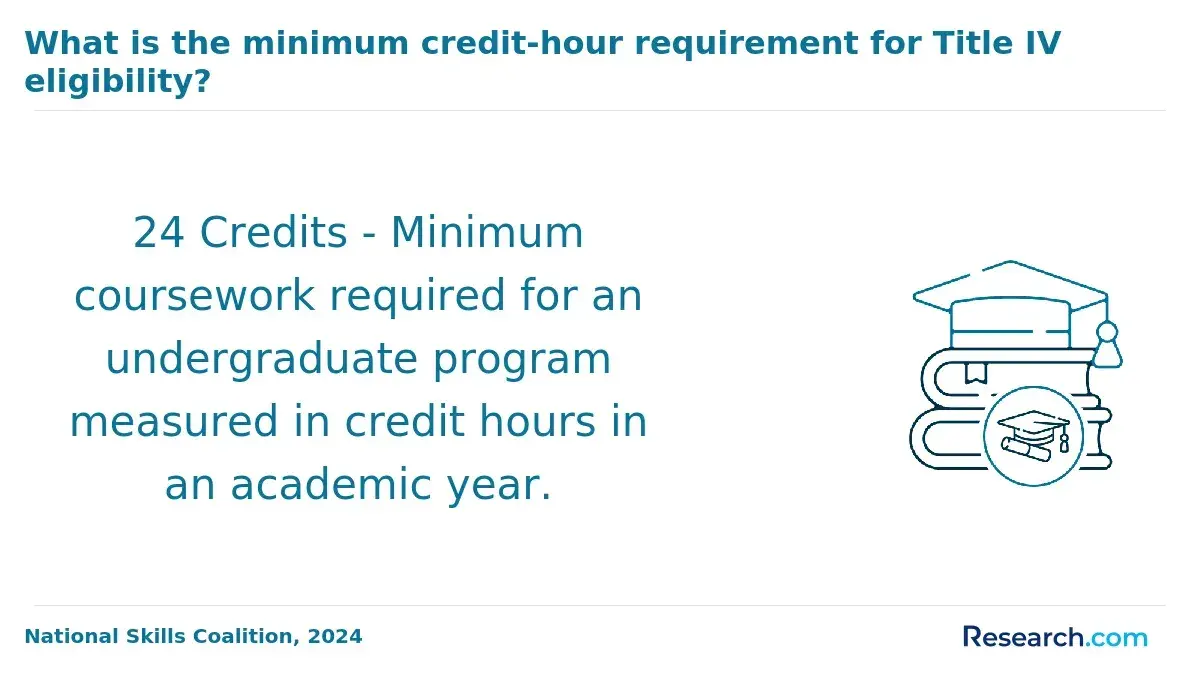
Financial aid can significantly reduce the out-of-pocket cost of an online or hybrid ultrasound technology associate degree, especially at public community colleges. The maximum Federal Pell Grant for the 2024-25 award year was $7,395, which means eligible low-income students may cover a meaningful portion of annual tuition and fees at many public two-year colleges.
Students should build a funding plan before enrolling because sonography programs often include costs that appear outside the main tuition page. The most useful aid sources are the ones that apply to both general education and the clinical portion of the degree.
- Federal Pell Grants and state grants can reduce tuition without requiring repayment, but eligibility depends on FAFSA results, enrollment status, and school participation.
- Federal student loans can help cover remaining costs, but students should borrow conservatively because entry-level wages vary by local market.
- Workforce development funding may be available through local workforce boards for high-demand healthcare training.
- Hospital or employer tuition assistance can help students already working in patient care, registration, transport, or imaging support roles.
- Foundation and allied health scholarships may target students in diagnostic imaging, rural healthcare, or high-need clinical areas.
- Payment plans can spread semester costs, but students should confirm fees and deadlines before relying on them.
Before accepting loans, compare the expected debt with realistic entry-level wages in your state. A sonography associate degree can be financially worthwhile, but borrowing heavily for an unaccredited or poorly supported program can reduce its value.
Students exploring healthcare programs with financial aid options may also compare accredited medical billing and coding schools online with financial aid, especially if they need a fully online pathway rather than a clinical imaging program.
Accreditation and program quality directly affect the value of an online ultrasound technology associate degree because they influence credential eligibility, employer confidence, transfer options, and clinical training quality. For sonography, students should look closely at programmatic accreditation, not only whether the college itself is institutionally accredited.
In practical terms, accreditation answers a high-stakes question: will this program prepare you for the credentials employers expect? Many sonography employers prefer candidates who are eligible for recognized professional registry exams, and some credential pathways depend on graduating from an appropriately accredited program or meeting specific clinical and education requirements.
Use the following checks before enrolling:
- Confirm that the college is institutionally accredited by an agency recognized by the U.S. Department of Education.
- Ask whether the sonography program has programmatic accreditation and which sonography concentrations it covers.
- Request written confirmation of which registry exams graduates are prepared or eligible to pursue.
- Ask how clinical placements are assigned, supervised, and evaluated.
- Review program outcomes such as completion, credential exam pass rates, and job placement if the school publishes them.
- Confirm whether online courses, lab requirements, and clinical rotations are available in your state.
Students comparing healthcare accreditation models may find it useful to review how programmatic recognition works in adjacent fields, such as the best online CAHIIM accredited health information management degree programs.
Flexible and accelerated online ultrasound technology associate degrees do exist, but students should expect limits. Sonography programs can move lectures, assignments, and some simulations online, yet scanning labs and clinical rotations must be completed in person because students need supervised practice with patients and imaging equipment.
The table below compares flexible formats that students may encounter. The right choice depends on whether you need schedule control, faster completion, lower borrowing, or a manageable workload.
| Flexible option | How it works | Who benefits most? | Watch for |
| Online prerequisites | Students complete general education and science courses online before entering the clinical sequence | Working students and students testing career fit before applying | Prerequisites must match the sonography program's requirements |
| Hybrid sonography courses | Lecture content is online, while labs and clinicals occur in person | Students who live near approved training sites but need fewer campus trips | Lab days may still be fixed and mandatory |
| Evening or weekend labs | Some programs schedule hands-on sessions outside standard weekday hours | Students with daytime jobs or caregiving duties | Clinical sites may still require weekday availability |
| Accelerated terms | Courses run in shorter sessions or heavier semester loads | Students with strong study time and prior college credits | High workload can raise the risk of withdrawal or course failure |
| Transfer-credit acceleration | Prior general education credits reduce remaining coursework | Students with previous college experience | Technical sonography courses often must still be taken in sequence |
Students trying to finish quickly should ask whether acceleration applies to the whole degree or only to prerequisites. Clinical rotations are often the limiting factor because programs must coordinate site availability, supervision, required competencies, and patient exposure.
For many students, the best financial return is not the fastest possible schedule; it is the fastest schedule they can complete successfully without excessive debt, repeated courses, or missed clinical requirements.
An online or hybrid ultrasound technology associate degree can lead to career advancement, but the path depends on credentials, work experience, specialty, and transferability. Many students use the associate degree to enter diagnostic imaging, earn registry credentials, gain clinical experience, and later move into advanced sonography specialties, lead technologist roles, education, management, or bachelor's-level healthcare programs.
The table below summarizes common next steps after an ultrasound associate degree. This helps students decide whether they need a career-focused AAS now, a transfer-oriented degree, or a different healthcare major.
| Next step | How the associate degree can help | What to verify before enrolling |
| Entry-level sonography employment | Provides technical education, clinical experience, and credential preparation | Program accreditation, clinical placements, and registry exam pathway |
| Specialty credentials | Clinical experience may support additional credentials in areas such as vascular, cardiac, abdomen, or OB/GYN sonography | Whether the program includes enough cases and specialty preparation |
| Bachelor's degree in sonography or imaging sciences | Associate credits may transfer into degree-completion programs | Transfer agreements, upper-division requirements, and minimum grade rules |
| Healthcare administration or management | Clinical experience can support future supervisory roles | Whether the bachelor's program accepts applied technical credits |
| Health informatics or health information management | Patient care and imaging knowledge can be useful in data, compliance, and operations roles | Whether a separate curriculum or certification is required |
An associate degree is usually a good choice for students who want to enter the workforce sooner and are comfortable with hands-on patient care. A bachelor's degree may make more sense for students targeting management, education, research support, vendor applications, or broader healthcare operations roles.
Students interested in moving away from direct scanning work later may compare sonography with a health information management degree online, which can support healthcare data, compliance, coding leadership, and administrative career paths.
How Should Students Choose the Cheapest Online Ultrasound Technology Associate Degree for Their Career Goals?
Students should choose the cheapest online ultrasound technology associate degree only after confirming that the program can realistically lead to their target career. The best choice balances low cost, accreditation, clinical access, completion time, credential eligibility, and local job demand.
Use the following decision process to compare programs in a practical way:
- Define your target job first, such as general sonographer, cardiac sonographer, vascular technologist, or another imaging role.
- Check whether that job typically requires a specific credential, specialty training, or programmatic accreditation.
- Calculate total cost to completion, including prerequisites, fees, clinical expenses, books, travel, and registry preparation.
- Compare the program timeline with your work schedule, family obligations, and ability to attend labs or clinical rotations.
- Ask how clinical placements are secured and whether students in your location are eligible for placement.
- Review whether credits transfer into bachelor's degree programs if you may want advancement later.
- Compare local job postings to see which credentials, specialties, and experience levels employers request.
- Choose the lowest-cost program only if it also meets your accreditation, clinical, and career-readiness requirements.
Several red flags should slow down your decision. Be cautious if a school markets a fully online ultrasound degree without explaining in-person clinical requirements, refuses to provide total program costs, lacks clear credential outcomes, or uses high salary figures without clarifying that wages vary by region and experience.
It is also worth considering whether an associate degree is the right level. Choose an associate degree if you want a faster, career-focused route into diagnostic imaging. Consider a bachelor's pathway if you want broader advancement options, plan to move into leadership, or need a degree that transfers more easily across healthcare roles.
Bottom line: the cheapest online ultrasound technology associate degree is worth pursuing when it is accredited, clinically credible, affordable to complete, and aligned with the credential employers expect. If any of those pieces are missing, the lowest tuition may not produce the best return.
Other Things You Should Know About Ultrasound Technology
Students do not usually need advanced math, but they should be comfortable with algebra, measurements, and basic physics concepts. Ultrasound physics is important because image quality depends on understanding sound waves, equipment settings, and tissue interaction.
Some students work during prerequisites, but working full time during the clinical phase can be difficult. Labs and clinical rotations may occur during daytime hours, and programs often require consistent attendance to meet competency standards.
It can be. Sonographers may stand for long periods, assist patients with positioning, and use repetitive arm and shoulder movements while scanning. Good ergonomics, physical stamina, and safe patient-handling habits are important for long-term career sustainability.
- Diagnostic Medical Sonographer Program | Why Choose Cambridge https://www.cambridgehealth.edu/diagnostic-medical-sonography-program/
- Ultrasound Technician Courses – What is Required to Be a Sonographer? https://www.ultrasoundschoolsinfo.com/courses/
- Associate Degree - Diagnostic Medical Sonography | Monroe University https://www.monroeu.edu/academics/undergraduate-programs/school-allied-health-professions/associate-diagnostic-medical
- Medical Sonography - Forsyth Tech Community College https://www.forsythtech.edu/programs/medical-sonography/
- Ultrasound & Sonography Technician Schools & Programs for Technicians Des Plaines IL - The Aquarius Institute https://aquariusinstitute.com/
- Best 8 Month Ultrasound Tech Program Online [Accredited] — Kamerpower https://kamerpower.com/best-8-month-ultrasound-tech-program-online-accredited/
- Top 12 Fully Accredited U.S. Ultrasound Schools https://todopocus.com/top-12-fully-accredited-us-ultrasound-schools/
- Diagnostic Medical Sonography Associate’s Degree | Platt College https://plattcollege.edu/programs/school-of-medical-sciences/diagnostic-medical-sonography/
- Ultrasound Technician Associate of Applied Science - High Desert Medical College https://hdmc.edu/programs/ultrasound-technician-associate-of-applied-science/
- Diagnostic Medical Sonography | Washburn University https://www.washburn.edu/academics/college-schools/applied-studies/departments/allied-health/dms/index.html