2027 Cheapest Online Surgical Technology Associate Degree Programs That Pay Well: Tuition, Duration, and Career Outcomes

Co-Founder and Chief Data Scientist
Choosing a low-cost online surgical technology associate degree is really a career-value decision: tuition matters, but so do accreditation, clinical access, certification eligibility, and local hiring demand. The U.S. Bureau of Labor Statistics reports a 2024 median annual wage of $62,830 for surgical technologists, making this one of the stronger-paying allied health roles commonly reachable with an associate degree.
This guide is for students comparing affordable online or hybrid options and explains costs, timelines, career outcomes, ROI, financial aid, and red flags so you can choose a program that is inexpensive without being a poor investment.
Key Things You Should Know
- The cheapest realistic options are usually public community or technical colleges with online general education courses, in-person labs, and supervised clinical rotations; fully online surgical technology associate degrees are uncommon because hands-on competencies are required.
- According to 2024 BLS wage data, surgical technologists had a median annual wage of $62,830, but entry-level pay varies by region, employer, certification status, and operating room experience.
- A low advertised tuition is not enough: students should compare total program cost, CAAHEP or ABHES accreditation, certification eligibility, clinical placement support, completion time, and transfer pathways before enrolling.
Which Are the Cheapest Online Surgical Technology Associate Degree Programs That Lead to Well-Paying Careers?
The cheapest online surgical technology associate degree programs are usually not fully online. Surgical technology is a clinical occupation, so affordable programs often use a hybrid model: online anatomy, medical terminology, pharmacology, or general education courses combined with campus skills labs and hospital-based clinical rotations. For students searching for "online" options, the practical goal is to find the lowest-cost accredited program that minimizes commuting while still meeting hands-on training and certification expectations.
The table below highlights affordable program types and examples students commonly use for comparison. Tuition changes frequently, and clinical placement rules vary, so use these figures as a starting point and confirm current costs, fees, accreditation status, and delivery format directly with each school before applying.
| Program or school type | Typical online format | Approximate tuition benchmark | Best fit | Career value considerations |
| Public technical college in-state AAS program | Online general education plus required campus labs and local clinicals | Often among the lowest published per-credit rates for residents | Students who can attend required labs near campus | Strong value when the program is accredited and tied to local hospital partners |
| Community college surgical technology AAS | Hybrid coursework with in-person skills validation | College Board's 2024 public two-year in-district tuition and fees average was $4,050 per year | Budget-conscious students seeking federal aid eligibility and lower tuition | Often the best affordability option, but seats may be competitive and clinical schedules may be fixed |
| Statewide community college system program | Some online courses across multiple campuses; labs and clinicals assigned regionally | Usually higher than in-district rates but lower than many private colleges | Students who need multiple campus options within one state | Good option if clinical sites are close enough to avoid relocation or long commuting costs |
| Private career college associate program | Hybrid or blended delivery with structured cohorts | Often higher total tuition than public colleges | Students who need frequent start dates or more centralized advising | Can be worthwhile only if accreditation, certification pass rates, completion outcomes, and placement support justify the higher cost |
| Transfer-oriented AS or AA pathway with surgical prerequisites | Mostly online general education and science prerequisites | Varies by college and residency status | Students planning a later bachelor's degree in allied health, healthcare administration, or nursing | May not qualify graduates for surgical technologist roles unless paired with an accredited surgical technology clinical program |
For most students, the best starting point is a public, accredited AAS surgical technology program in their state or district. The AAS is usually more career-focused than an AA or AS because it includes operating room techniques, sterile processing, surgical procedures, instrumentation, and clinical practice. An AA or AS may transfer better into a bachelor's program, but it may not be sufficient by itself for entry-level surgical technologist employment.
When comparing "cheap" programs, prioritize these factors before ranking schools by tuition alone:
- Confirm whether the program is accredited by CAAHEP or ABHES, because accreditation can affect certification eligibility and employer acceptance.
- Ask how many credits are required and whether prerequisites are included in the advertised program length.
- Calculate tuition, fees, uniforms, instruments, background checks, immunizations, books, technology charges, certification exam costs, and commuting expenses.
- Verify whether the school arranges clinical placements or expects students to find their own sites.
- Check whether graduates are eligible to sit for the Certified Surgical Technologist exam or another employer-recognized credential.
A common mistake is assuming that the lowest tuition produces the best outcome. A slightly more expensive program may offer better clinical placement support, stronger certification preparation, shorter completion time, or smoother transfer options. Conversely, a low-cost public program can be an excellent value when it is accredited, affordable, and connected to local employers.
How Much Does an Online Surgical Technology Associate Degree Cost?
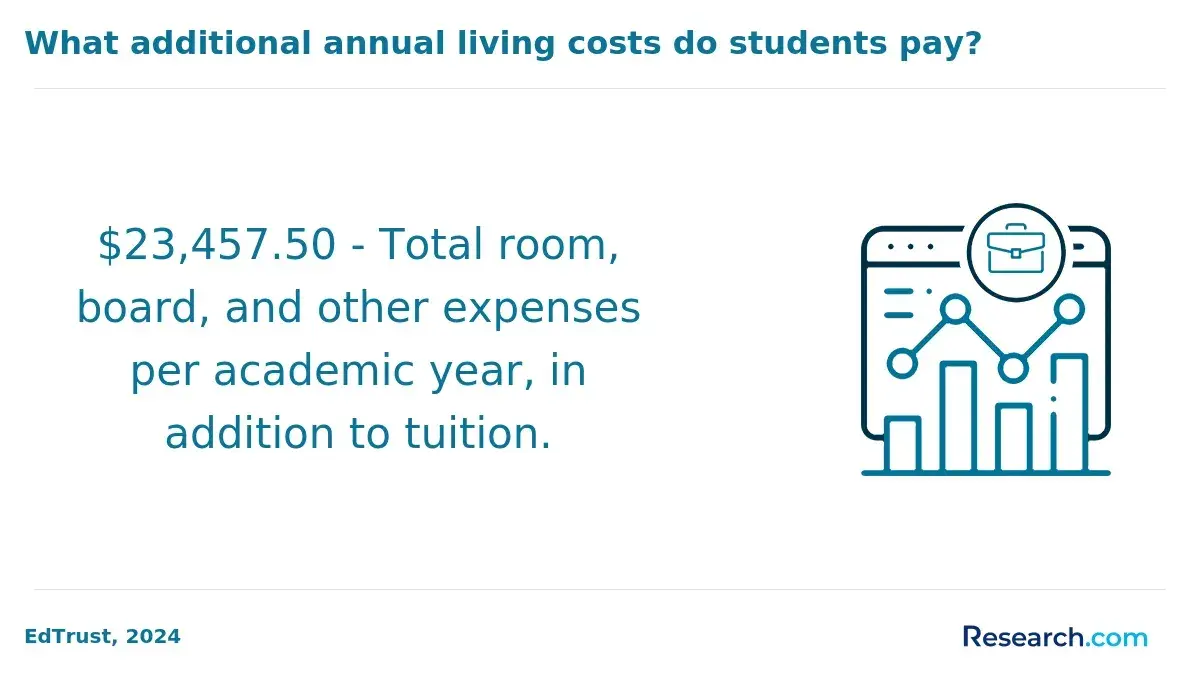
The cost of an online or hybrid surgical technology associate degree depends on residency, credits required, clinical fees, and whether the school is public or private. Most associate programs require roughly two academic years of study, but the total bill can differ widely because surgical technology has lab, supplies, compliance, and clinical expenses that do not always appear in the headline tuition rate.
The most useful way to compare programs is to estimate total cost of attendance for the degree, not just annual tuition. The table below shows the main cost categories students should request from each school:
| Cost item | Why it matters | Questions to ask the school |
| Tuition per credit | This is the base cost, but it rarely captures the full program price | Is the rate different for in-district, in-state, out-of-state, or online students? |
| Program and lab fees | Surgical technology courses may charge extra for labs, simulation, supplies, and equipment | Are fees charged every term, every clinical course, or only once? |
| Books and digital materials | Online courses may require access codes, e-textbooks, and testing platforms | Are materials included in tuition or billed separately? |
| Uniforms, shoes, and instruments | Clinical programs often require scrubs, professional shoes, instrument kits, or safety equipment | What must be purchased before the first lab or clinical rotation? |
| Background checks and health records | Hospitals commonly require drug screening, immunization records, CPR certification, and background checks | Which requirements are student-paid, and how often must they be renewed? |
| Clinical travel | An inexpensive program can become costly if clinical sites are far from home | How far may students be assigned for clinical rotations? |
| Certification exam fees | Certification can improve employability in many markets | Is exam preparation included, and is the exam fee included in program costs? |
College Board's 2024 data placed average tuition and fees at public two-year colleges at $4,050 for in-district students. That benchmark is useful because many surgical technology associate degrees are housed in community colleges; however, surgical technology students should expect additional program-specific costs beyond the campuswide average.
To build a realistic estimate, follow this sequence before you apply:
- Multiply the required number of credits by the tuition rate that applies to your residency and online status.
- Add all mandatory course, lab, technology, testing, and graduation fees listed in the catalog.
- Ask the program director for estimated costs for uniforms, supplies, health requirements, certification exams, and clinical travel.
- Subtract grants, scholarships, employer assistance, and transfer-credit savings that do not need to be repaid.
- Compare the remaining out-of-pocket cost with realistic entry-level wages in your local labor market, not only national median wages.
The biggest cost red flags are vague fee disclosures, unclear clinical travel expectations, and tuition quotes that exclude prerequisites. If a school advertises a low program price but requires expensive prerequisite courses, repeated campus visits, or long unpaid clinical commutes, the real cost may be much higher than it first appears.
How Long Does It Take to Complete an Online Surgical Technology Associate Degree?
Most online or hybrid surgical technology associate degrees take about two years of full-time study, but actual time to completion depends on prerequisites, cohort start dates, clinical availability, and whether the student can attend daytime labs and clinical rotations. Surgical technology is less flexible than many online associate degrees because clinical education must align with hospital schedules and faculty supervision requirements.
The table below summarizes common completion patterns. Use it to decide whether a cheaper but slower option is truly better than a slightly more expensive program that gets you into the workforce sooner.
| Enrollment path | Typical duration | Who it fits | Financial trade-off |
| Full-time cohort AAS | About 18 to 24 months after prerequisites | Students who can manage daytime labs, clinicals, and a set course sequence | Often provides the fastest path to wages but may limit work hours while enrolled |
| Part-time prerequisite plus full-time clinical phase | About 24 to 36 months | Working adults who need to complete sciences and general education gradually | Lower term-by-term cost, but delayed graduation can postpone earnings |
| Accelerated or compressed cohort | May be shorter than a traditional two-year plan when prerequisites are completed first | Students with strong time availability and completed general education credits | Can improve ROI through faster completion, but the workload is intense |
| Transfer-credit pathway | Varies based on accepted credits | Students who already completed anatomy, English, math, or psychology | Can reduce tuition and time if credits apply directly to the degree plan |
| Waitlist or selective-admission pathway | Program length plus waiting time | Students applying to highly competitive public programs | Low tuition may be offset by delayed entry if waitlists are long |
The fastest path is not always the highest-value path. A student who can complete prerequisites online at a low-cost community college and then enter an accredited clinical cohort may spend less overall than a student who enrolls immediately in a higher-priced private program. However, if waiting an extra year means postponing full-time employment, the cheaper route may have a hidden opportunity cost.
Before choosing part-time or full-time study, ask the program these questions:
- Are surgical technology courses offered every term or only once per year?
- Can general education and science prerequisites be completed online before the clinical cohort begins?
- Are clinical rotations scheduled during weekdays only, or are evening and weekend options available?
- What happens if a student fails or withdraws from a clinical course that is offered only once per year?
- Does the program accept transfer credits for anatomy, physiology, microbiology, English, math, or psychology?
A common mistake is comparing programs by advertised duration without checking when the next cohort begins. A 16-month program with a one-year wait may take longer in practice than a 24-month program with immediate entry.
An online surgical technology associate degree most directly prepares students for surgical technologist roles, but the skills can also support related allied health positions depending on employer requirements, state rules, certification, and additional training. Students should be careful not to assume that every operating room or healthcare job is available with the associate degree alone.
The table below uses U.S. wage and outlook data to show realistic career targets connected to surgical technology training. National medians help with comparison, but local wages can differ substantially by state, hospital system, shift, and experience level.
| Career path | Typical role | Relevant education or credential | 2024 median wage or salary context | Career value note |
| Surgical technologist | Prepares operating rooms, maintains sterile fields, passes instruments, counts supplies, and supports surgical teams | Associate degree or accredited surgical technology program; certification often preferred or required by employers | BLS reported a 2024 median annual wage of $62,830 | Primary target career for this degree and usually the clearest ROI case |
| Surgical assistant pathway | Provides more advanced intraoperative assistance under surgeon direction | Often requires additional education, experience, and credentialing beyond entry-level surgical technology | Pay may be higher than entry-level surgical technology, but requirements vary | Better viewed as an advancement path, not an immediate associate-only outcome |
| Sterile processing or central service role | Cleans, sterilizes, prepares, and tracks instruments and equipment | Certificate, experience, or employer training may be accepted; surgical technology training can be relevant | Usually lower than surgical technologist median pay | May be an entry route into perioperative services but may not justify an associate degree by itself |
| Operating room aide or anesthesia technician support role | Assists with room turnover, equipment, supplies, and patient support tasks | Requirements vary by employer and state | Often below surgical technologist median pay | Useful for gaining hospital experience while completing the degree |
| Healthcare supervisor or coordinator pathway | Coordinates supplies, scheduling, quality processes, or perioperative support teams | Experience plus additional education may be needed | Salary depends heavily on role and employer | Often requires experience and sometimes a bachelor's degree for promotion |
The highest-paying outcome directly tied to the associate degree is usually surgical technologist employment in settings such as hospitals, outpatient surgery centers, and specialty surgical practices. BLS also projects employment for surgical assistants and technologists to grow 5% from 2024 to 2034, which suggests steady demand rather than explosive growth. For students, that means program quality, certification readiness, and local clinical connections may matter as much as national job-growth numbers.
Students should also understand the difference between median wage and starting wage. Median pay represents the middle of the wage distribution, not what a new graduate should expect immediately. Entry-level surgical technologists may start lower and move upward with certification, experience, specialty exposure, shift differentials, and strong references from clinical sites.
The best return on investment comes from a program that combines low net cost, timely completion, accreditation, certification eligibility, and strong access to clinical training. A cheap degree with weak clinical placement can produce poor value, while a moderately priced program with high completion support and employer recognition may be financially stronger.
A practical ROI comparison starts with the tuition-to-earnings relationship. For example, the 2024 BLS median wage for surgical technologists was $62,830, so students should be cautious about borrowing heavily for a program when lower-cost accredited community college options may lead to the same entry credential.
The table below shows how to think about ROI by program profile rather than by tuition alone. It is designed to help students weigh affordability against career readiness.
| Program profile | ROI potential | Why it may work | When to be cautious |
| Low-cost public accredited AAS with local clinical partners | Often strong | Lower tuition reduces debt, and local clinical sites can support hiring connections | Selective admission, waitlists, or fixed daytime clinicals may delay completion |
| Hybrid program with accepted transfer credits | Strong when credits reduce both time and tuition | Prior coursework can shorten the degree and reduce out-of-pocket cost | Transfer credits may not apply to the clinical core or may expire for science courses |
| Accelerated accredited cohort | Potentially strong | Faster completion can move students into paid work sooner | Higher intensity may not suit students who need to work full time |
| Higher-cost private associate program | Mixed | May offer frequent starts, structured advising, or convenient scheduling | ROI weakens if tuition is high and outcomes are not clearly documented |
| Non-accredited or unclear-accreditation program | High risk | May appear cheap or convenient | Certification eligibility and employer acceptance may be limited |
Students who later want management roles may eventually need more than an associate degree. A surgical technologist with operating room experience might later consider healthcare operations, quality improvement, or administration pathways; for example, experienced professionals comparing graduate-level options can review an affordable online MBA healthcare management program after completing a bachelor's degree or meeting graduate admissions requirements.
Use these steps to estimate whether a program's ROI is reasonable for your situation:
- Calculate the net price after grants, scholarships, transfer credits, and employer aid.
- Estimate how long it will take from enrollment to eligibility for entry-level employment.
- Research local job postings to see whether employers require certification, experience, or graduation from an accredited program.
- Compare realistic starting pay in your region with monthly loan payments if you must borrow.
- Give extra value to programs with strong clinical placement, certification preparation, and transparent graduate outcomes.
The strongest ROI usually belongs to students who finish on time, keep borrowing low, pass a recognized certification exam when needed, and use clinical rotations to build employer relationships. The weakest ROI often comes from enrolling quickly without checking accreditation, total cost, or local hiring requirements.
Financial aid can significantly reduce the out-of-pocket cost of an online or hybrid surgical technology associate degree, especially at accredited public colleges that participate in federal student aid. The key is to focus first on aid that does not have to be repaid, then use loans cautiously only after the full program cost is clear.
The Federal Pell Grant maximum award for the 2025-26 award year is $7,395 for eligible students. That amount can cover a substantial share of tuition at many public two-year colleges, but eligibility depends on financial need, enrollment intensity, and federal aid rules.
The table below summarizes common aid sources and how they affect affordability:
| Aid source | Repayment required? | How it helps surgical technology students | Important limitation |
| Federal Pell Grant | No | Can reduce tuition and fees for eligible undergraduate students | Eligibility depends on FAFSA results and enrollment status |
| State grants | Usually no | May support in-state students attending public colleges | Deadlines and residency rules vary by state |
| Institutional scholarships | Usually no | May be available through allied health, foundation, or workforce programs | May require separate applications or minimum GPA |
| Workforce development funding | Usually no or limited repayment | Can support training for high-demand healthcare roles | May require eligibility through a workforce agency |
| Employer tuition assistance | Usually no, if service rules are met | Useful for hospital employees moving into surgical technology | May require continued employment or reimbursement if you leave early |
| Federal student loans | Yes | Can fill remaining gaps after grants and scholarships | Interest and repayment affect ROI; undergraduate Direct Loans for 2025-26 carry a fixed 6.39% rate |
Students comparing allied health options should also consider whether a shorter credential could meet their immediate employment goal. For example, someone who wants a lower-cost, non-operating-room administrative path might compare surgical technology with medical billing and coding before committing to a clinical associate degree.
To reduce total cost, complete these steps before accepting loans:
- Submit the FAFSA early and list every school you are considering.
- Ask each financial aid office for a program-specific cost estimate that includes lab, clinical, and supply fees.
- Search for hospital foundation scholarships, state workforce grants, and community college allied health awards.
- Ask current healthcare employers about tuition reimbursement or internal transfer programs into perioperative services.
- Borrow only after you know the full cost, expected timeline, and local entry-level wage range.
A major mistake is using loans to cover a high-cost program before comparing lower-cost accredited public options. Loans can be appropriate, but they should not hide a weak ROI calculation.
Accreditation is one of the most important value factors in surgical technology because it can affect certification eligibility, employer recognition, transfer options, and the credibility of the clinical curriculum. In this field, affordability without appropriate accreditation can be a serious red flag.
Students should distinguish institutional accreditation from programmatic accreditation. Institutional accreditation applies to the college as a whole and affects federal aid eligibility and transfer recognition. Programmatic accreditation, commonly through CAAHEP or ABHES for surgical technology programs, evaluates whether the surgical technology curriculum meets field-specific standards.
The table below explains the quality checks that matter most when comparing inexpensive programs:
| Quality factor | Why it affects value | What students should verify |
| Institutional accreditation | Supports federal aid access, credit recognition, and overall institutional legitimacy | Confirm the college is accredited by a recognized accreditor |
| Programmatic accreditation | May affect certification eligibility and employer acceptance | Confirm the current CAAHEP or ABHES status for the surgical technology program |
| Certification exam eligibility | Certification can be preferred or required in many job markets | Ask which exams graduates are eligible to take and whether pass-rate data is available |
| Clinical placement support | Clinical access is essential for completing the degree and building employability | Ask whether the school assigns sites and how far students may need to travel |
| Graduate outcomes | Completion, placement, and exam outcomes help show whether the program delivers value | Request recent outcomes and ask how they are measured |
| Faculty and lab resources | Operating room skills require current equipment and qualified instructors | Ask about simulation labs, faculty credentials, and student-to-instructor ratios in lab settings |
Program quality also matters because surgical technology is changing. Operating rooms increasingly use advanced imaging, robotics-assisted procedures, digital documentation, and complex instrument systems. An affordable program should still teach sterile technique, anatomy, instrumentation, surgical procedures, safety, communication, and adaptability in technology-rich environments.
Do not rely only on marketing language such as "online," "fast," or "career-ready." A quality program should be able to answer specific questions about accreditation, clinical cases, competency assessment, certification preparation, and graduate outcomes. If staff cannot clearly explain these items, keep looking.
Flexible surgical technology programs exist, but flexibility has limits because students must complete labs, simulations, and supervised clinical rotations. The most flexible options typically place theory and general education courses online while requiring students to attend scheduled in-person clinical components.
Students who need faster completion should look for programs that accept transfer credits, allow prerequisites online, offer multiple start dates, or use compressed cohorts. Those comparing broader healthcare options can also explore accelerated healthcare programs, especially if they prefer management or administrative roles over operating room practice.
The table below compares flexible formats that may appear in surgical technology associate degree pathways:
| Flexible option | How it works | Best for | Main risk |
| Online general education courses | Students complete English, psychology, math, or humanities online before or during the program | Working adults and students with family responsibilities | Science labs and surgical technology courses may still require campus attendance |
| Hybrid surgical technology courses | Lectures may be online while labs and assessments are in person | Students who live within commuting distance of the college | Lab schedules may be fixed and difficult to change |
| Credit for prior college coursework | Previously completed courses reduce the remaining degree requirements | Transfer students and returning adults | Science credits may expire or may not match program requirements |
| Accelerated cohort | Courses are compressed into a shorter schedule after prerequisites are complete | Students who can study intensively and reduce work hours | Fast pacing can increase withdrawal risk if support is weak |
| Regional clinical placement | The school assigns clinical sites across a service area | Students outside the main campus city | Travel distance can add time and cost |
When flexibility is a top priority, students should ask whether the program publishes clinical schedules before enrollment. A program may be "online" for lectures but still require weekday morning clinical rotations, mandatory campus checkoffs, or travel to multiple hospital sites.
The best flexible program is not the one with the fewest campus visits; it is the one that lets you complete required competencies reliably without delaying graduation. Avoid programs that make clinical placement sound optional, informal, or entirely student-managed unless you already have a confirmed employer partner.
An online or hybrid surgical technology associate degree can be both a workforce credential and a stepping stone, but the pathway depends on degree type and transferability. An AAS is usually designed for direct employment, while an AA or AS is usually more transfer-oriented. Some AAS credits transfer well into applied bachelor's programs, but others may count only as electives.
Students who want long-term advancement should ask early whether the associate degree connects to bachelor's programs in health sciences, healthcare administration, nursing prerequisites, public health, or allied health leadership. Experienced healthcare workers who later complete a bachelor's degree may eventually consider higher-level administration programs, including a doctorate in healthcare administration, but that is a much later pathway and not an immediate outcome of an associate degree.
The table below explains common next-step options after a surgical technology associate degree:
| Next step | What it can support | Additional requirements | Transfer or advancement value |
| Certified Surgical Technologist pathway | Entry-level surgical technologist employment and stronger employer recognition | Graduation from an eligible program and exam requirements | Often the most important immediate post-degree credential |
| Surgical assisting pathway | Advanced intraoperative support roles | Experience, additional education, and credentialing may be required | Can raise the career ceiling for students who want to stay in the operating room |
| Bachelor's in health sciences | Allied health advancement, education, coordination, or leadership roles | Transferable credits and bachelor's admission requirements | Good fit when AAS credits are accepted into an applied bachelor's program |
| Bachelor's in healthcare administration | Healthcare operations, scheduling, quality, compliance, or supervisory pathways | General education and transferable associate credits | Useful for students who want to move away from direct surgical support over time |
| Nursing or other clinical pathway | Broader clinical practice options | Separate prerequisites, admission, licensure, and clinical education | Some science courses may help, but surgical technology is not automatically a nursing bridge |
Transfer planning is a major ROI factor. If you may pursue a bachelor's degree later, ask for a written transfer map before enrolling. A very cheap AAS can become less valuable if most credits do not transfer and you have to repeat general education or science courses later.
Students should choose an associate degree instead of a bachelor's degree when they want a faster, lower-cost route into an operating room role and are comfortable starting in a technical allied health position. Students should consider a bachelor's-first path if their main goal is management, public health, healthcare administration, or a clinical profession that requires bachelor's-level preparation or licensure.
How Should Students Choose the Cheapest Online Surgical Technology Associate Degree for Their Career Goals?
Students should choose the cheapest online surgical technology associate degree only after confirming that the program can realistically lead to the credential, clinical experience, and local employment opportunities they need. The right program is not necessarily the lowest-priced one; it is the lowest net-cost accredited program that fits your schedule, geography, transfer plans, and career target.
A clear selection process can prevent costly mistakes. Use the following steps to compare programs in a way that connects tuition to outcomes.
- Define your goal first: direct employment as a surgical technologist, a later surgical assisting pathway, or a broader allied health transfer plan.
- Confirm accreditation and certification eligibility before comparing tuition.
- Request a full cost sheet that includes tuition, fees, supplies, health requirements, exam costs, and clinical travel.
- Compare time to completion, including prerequisites, waitlists, cohort start dates, and course sequencing.
- Check local job postings to see whether employers prefer certification, prior experience, specific credentials, or graduation from an accredited program.
- Ask where clinical rotations occur and whether the school assigns placements.
- Review transfer agreements if you may pursue a bachelor's degree later.
- Compare net cost after grants and scholarships, not sticker price.
- Ask for recent completion, certification exams, and job placement outcomes.
- Choose the program that provides the best balance of low debt, timely completion, quality clinical training, and realistic career access.
The table below summarizes how different student priorities should shape the final decision:
| If your priority is... | Choose a program that... | Avoid programs that... |
| Lowest total cost | Offers in-district or in-state tuition, federal aid eligibility, and transparent fees | Advertise low tuition but hide lab, clinical, or prerequisite costs |
| Fastest employment | Has immediate cohort entry, accepted transfer credits, and strong clinical scheduling | Have long waitlists or unclear course sequencing |
| Certification readiness | Maintains recognized programmatic accreditation and publishes exam preparation support | Cannot clearly explain exam eligibility |
| Working while enrolled | Places lectures online and publishes lab and clinical schedules early | Use unpredictable clinical schedules that conflict with employment |
| Future bachelor's degree | Has written transfer agreements or applied bachelor's pathways | Offer credits that transfer only as electives or not at all |
| Local employment | Partners with hospitals or surgery centers in the region where you want to work | Require distant clinical travel with limited local employer connections |
Students should avoid choosing a program based primarily on rankings, speed, or marketing claims. Ask for evidence: accreditation status, total cost, clinical placement process, certification eligibility, and graduate outcomes. If the school cannot provide those details in writing, the program may be too risky even if it appears inexpensive.
The bottom line is that a cheap online or hybrid surgical technology associate degree can be worth it when it is accredited, clinically robust, affordable after aid, and aligned with local hiring requirements. It is less likely to be worth it when the program is unclear about clinicals, lacks recognized accreditation, costs far more than public alternatives, or does not support your long-term education goals.
Other Things You Should Know About Surgical Technology
Yes. Surgical technologists work in operating rooms and must be comfortable around blood, surgical instruments, sterile fields, and high-pressure medical situations. Students who are unsure should ask programs about observation opportunities or speak with working surgical technologists before enrolling.
Attention to detail, calm communication, manual dexterity, stamina, teamwork, and respect for sterile technique are essential. Small mistakes can affect patient safety, so programs often emphasize professionalism and consistency as much as technical knowledge.
It depends on the offense, state rules, school policy, clinical site requirements, and certification rules. Because hospitals usually require background checks, applicants should ask the program director confidentially about eligibility before paying application or enrollment fees.
Yes. Surgical technologists may stand for long periods, move equipment, maintain focus during lengthy procedures, and respond quickly in sterile environments. Students with physical limitations should ask schools and employers about essential functions and possible accommodations.
- Surgical Technologist | Graduate America https://ga.edu/outcomes/surgical-technologist
- Surgical Tech Salary â Hourly & Annually by State https://www.stepful.com/post/surgical-tech-salary
- Financial Aid for Surgical Technology Programs https://certifiedsurgicaltechnologist.com/education-for-surgical-technologists/financial-aid-surgical-technology-programs/
- How Long Does It Take to Complete a Surgical Tech Program? | American College of Healthcare and Technology https://www.ach.edu/blog/how-long-does-it-take-to-become-a-surgical-tech/
- Online Resources & Scholarships for Surgical Tech Students https://www.edumed.org/financial-aid/scholarships/surgical-tech-programs/
- Surgical Technician Programs in Houston https://surgicaltechprogramshouston.com/
- Surgical Technology AAS Degree https://www.lonestar.edu/programs-of-study/surgical-technology-aas.htm
- Surgical Technology Program in Texas https://www.chcp.edu/degrees-certificates/surgical-technology-aas-degree/
- Associate Surgical Technology https://www.monroeu.edu/academics/undergraduate-programs/school-allied-health-professions/associate-surgical-technology
- Steps On How To Become A Surgical Tech | HowToBecome Guide https://www.learnhowtobecome.org/surgical-tech/