2027 Cheapest Accredited Online Special Education Degree Programs That Accept FAFSA

Co-Founder and Chief Data Scientist
Finding an affordable online special education degree is really a net-price decision, not just a tuition search. The maximum Federal Pell Grant for the 2024-25 award year is $7,395, which can materially reduce costs for eligible undergraduates, but it will not cover every program equally. This guide is for future special education teachers, aides, career changers, and graduate students comparing accredited online degrees that participate in federal student aid. You will learn how to compare FAFSA eligibility, tuition, grants, transfer credits, licensure alignment, and career value before enrolling.
Key Things You Should Know
- The cheapest FAFSA-eligible online special education options are often public universities, competency-based programs, and low-cost online master's degrees; the best choice depends on degree level, licensure needs, transfer credits, and actual net price.
- For 2024-25, the maximum Pell Grant is $7,395 for eligible undergraduates, while federal loan limits vary by dependency status and degree level, so FAFSA participation does not mean a program will be fully covered.
- The U.S. Bureau of Labor Statistics reported a May 2024 median wage of $64,270 for special education teachers, making total borrowing and state licensure alignment major ROI factors.
Which Are the Cheapest Accredited Online Special Education Degree Programs That Accept FAFSA?
The cheapest accredited online special education degree programs that accept FAFSA are typically Title IV-participating institutions with regional accreditation, online tuition below many national averages, and degree programs that lead to either teacher preparation, advanced licensure, or special education career advancement. The important distinction is that a low published tuition rate is not always the lowest out-of-pocket cost after grants, scholarships, transfer credits, and fees.
The table below summarizes affordable online special education degree options that are commonly considered by cost-conscious students. Tuition figures are based on published online or distance-learning rates available for recent academic years and should be verified directly with each school because rates, fees, and licensure rules can change.
| School | Online special education degree | Published cost indicator | FAFSA participation | Best fit |
| Western Governors University | B.A. Special Education and Elementary Education or B.A. Special Education | Flat-rate term tuition; students who accelerate can lower total cost | Yes, for eligible degree-seeking students | Self-paced learners who can complete courses quickly |
| Fort Hays State University | B.S.E. Elementary Education/Special Education pathway options | Low per-credit online undergraduate tuition compared with many public universities | Yes, for eligible degree-seeking students | Students seeking a public-university online teaching pathway |
| Minot State University | M.S. Special Education | Low graduate per-credit tuition for an online master's program | Yes, for eligible graduate students | Licensed teachers seeking advanced special education preparation |
| Arkansas State University | M.S.E. Special Education options | Affordable online graduate tuition with relatively short program length | Yes, for eligible graduate students | Teachers who want a focused master's degree at a predictable cost |
| University of West Alabama | M.Ed. Special Education and related educator programs | Moderate per-credit online graduate tuition with multiple educator tracks | Yes, for eligible degree-seeking students | Teachers comparing low-cost graduate special education pathways |
| Old Dominion University | Online special education degree-completion and teacher-preparation pathways | Public online tuition with separate in-state and out-of-state rates | Yes, for eligible degree-seeking students | Transfer students who need an online public university option |
| Liberty University | B.S. Special Education Interdisciplinary Studies and graduate options | Online tuition varies by undergraduate or graduate level and enrollment status | Yes, for eligible degree-seeking students | Students who want a large private nonprofit online university with many start dates |
The right way to use this list is to compare total completion cost, not just the cheapest line item. A bachelor's degree with 120 credits can cost more in total than a master's degree with about 30 to 36 credits even when the bachelor's has a lower per-credit rate. Undergraduate students should also confirm whether the program leads to initial teacher licensure, while graduate students should confirm whether it supports endorsement, certification, salary-lane movement, or professional advancement in their state.
A common mistake is assuming that every online special education degree at a FAFSA-participating school is automatically aid-eligible. Federal aid usually applies to eligible degree programs, but some endorsements, certificates, nondegree sequences, or licensure-only tracks may have different aid treatment. Before applying, ask the financial aid office whether your exact program code is eligible for Title IV aid.
How Does FAFSA Eligibility Work for Online Special Education Degree Programs?
For online special education students, FAFSA eligibility usually depends on the following sequence. These steps are worth completing before you commit because they can prevent a costly enrollment mistake.
- Confirm that the institution has a valid federal school code and participates in Title IV federal student aid.
- Verify that the exact online special education degree, not just the university, is eligible for federal aid.
- Check whether you will be enrolled at least half time, because enrollment intensity can affect loan eligibility and grant amounts.
- Ask whether student-teaching, practicum, residency, or field-placement terms are billed differently from regular online coursework.
- Review satisfactory academic progress rules, because losing aid eligibility can immediately increase out-of-pocket costs.
This process is similar when comparing broader online institutions, including lists of good online colleges, but special education students have an extra layer to check: licensure alignment. A program can be FAFSA-eligible and accredited yet still not meet the teacher-certification requirements of every state.
FAFSA also does not decide your final cost by itself. It produces student aid eligibility information that schools use to package grants, federal loans, work-study, and sometimes institutional aid. Two students in the same program may receive different aid packages because of income, assets, dependency status, enrollment level, prior borrowing, and scholarship eligibility.
How Much Does an Online Special Education Degree Cost After Financial Aid?
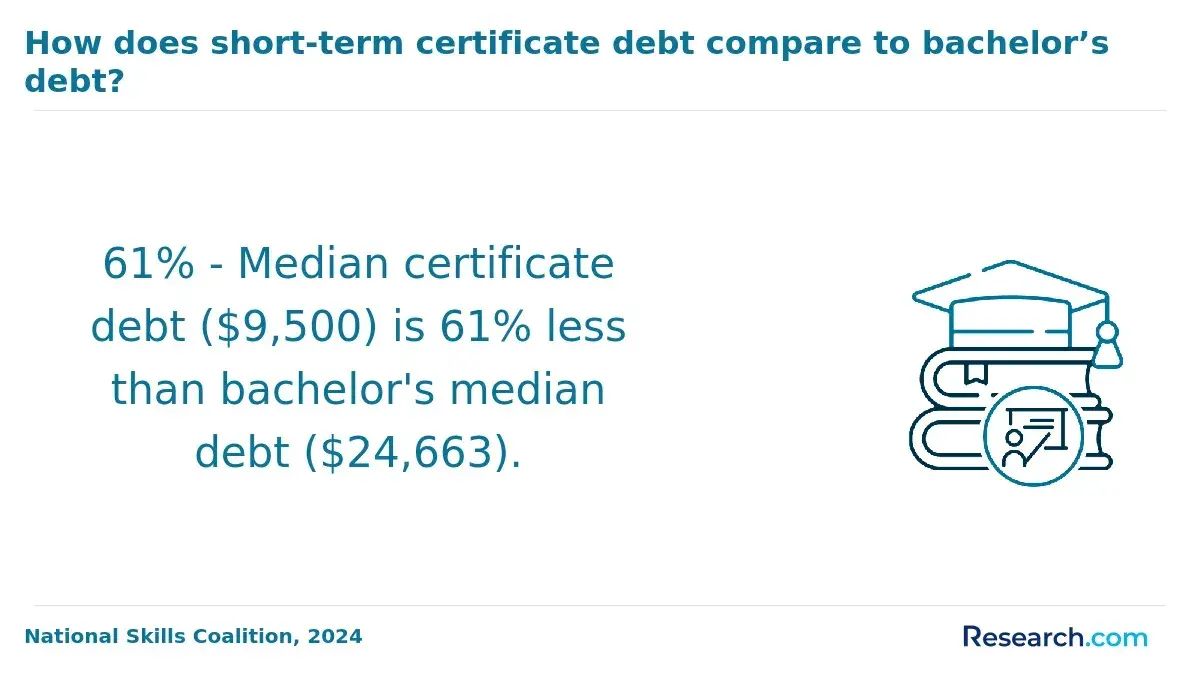
The real cost of an online special education degree after financial aid is the published cost of attendance minus grants, scholarships, employer assistance, and other non-loan aid. Loans can help cover the bill, but they do not reduce the price; they shift payment into the future. This is why net price and expected borrowing matter more than advertised tuition.
College Board's 2024-25 tuition data shows why online special education students should compare public, private nonprofit, and competency-based options carefully: average published tuition and fees were $11,610 for in-state students at public four-year colleges and $43,350 at private nonprofit four-year colleges. Those averages are not online special education prices, but they show the size of the gap students may face before aid is applied.
The table below shows how the cost picture changes depending on degree level and aid eligibility. These are decision categories rather than guarantees, because each school calculates cost of attendance and aid packages differently.
| Student type | Typical cost drivers | Potential aid impact | Cost warning |
| First-time bachelor's student | 120-credit degree, general education, teacher-preparation courses, student teaching | Pell Grants, state grants, institutional scholarships, federal loans | Low per-credit tuition can still add up over four years |
| Transfer bachelor's student | Remaining major credits, field placements, residency requirements, accepted transfer credits | Prior credits can reduce tuition if they apply to the degree plan | Credits that transfer as electives may not shorten the program |
| Licensed teacher pursuing a master's | 30 to 36 graduate credits, endorsement courses, practicum requirements | Federal graduate loans, employer aid, district tuition support, scholarships | Graduate students usually do not receive Pell Grants |
| Career changer | Prerequisites, licensure coursework, supervised teaching, possible unpaid fieldwork | Federal aid may help if enrolled in an eligible degree program | Nondegree licensure-only paths may have limited aid eligibility |
To estimate your likely out-of-pocket cost, request a written cost breakdown from each school. It should include tuition, mandatory fees, online course fees, background checks, exam fees, software, books, student-teaching costs, and any travel required for field placements.
Which Affordable Online Special Education Degree Programs Offer the Best Value?
The best-value online special education program is not always the cheapest one. Value comes from a combination of accreditation, licensure fit, completion speed, faculty support, transfer-credit acceptance, field-placement help, total borrowing, and career relevance.
For most students, the strongest value profiles fall into four groups. These categories can help you decide when paying slightly more may be reasonable.
- Lowest net price: Best for students who qualify for Pell Grants, state grants, institutional scholarships, or employer aid and can keep borrowing low.
- Fastest completion at a reasonable price: Best for students with many transfer credits or those who can progress quickly in competency-based formats.
- Best licensure fit: Best for future teachers who need a program that clearly aligns with their state's special education certification requirements.
- Best professional advancement fit: Best for licensed teachers who need a master's degree, endorsement, or salary-lane credential rather than an initial bachelor's degree.
Special education also overlaps with other helping professions, so students who are unsure about classroom teaching may want to compare adjacent pathways such as counseling, disability services, human services, and best online social work programs. That comparison matters because a low-cost teaching degree may be a poor value if the student ultimately wants a non-teaching role that requires a different license or graduate credential.
Are the Cheapest Online Special Education Degree Programs Properly Accredited?
The cheapest online special education degree programs are only worth considering if they are properly accredited. At minimum, students should look for institutional accreditation from an agency recognized by the U.S. Department of Education or the Council for Higher Education Accreditation. For teacher-preparation programs, programmatic recognition or approval by the state education agency is often just as important as institutional accreditation.
Accreditation affects transfer credits, federal aid eligibility, graduate admissions, employer recognition, and teacher licensure. However, accreditation alone does not prove that a program meets every state's special education certification requirements. Teacher licensure is state-controlled, and online programs may be designed for licensure in one state while offering limited portability elsewhere.
Before enrolling, verify accreditation and licensure fit using a direct checklist. This is especially important for low-cost programs because an inexpensive degree that does not support your required credential can become expensive to fix later.
- Search the institution in the U.S. Department of Education's accreditation database or ask the school for its accreditor and recognition status.
- Ask whether the online special education program is state-approved for teacher preparation or endorsement.
- Request written confirmation of whether the program leads to initial licensure, add-on endorsement, advanced certification, or non-licensure completion.
- Contact your state education agency to confirm whether out-of-state online coursework and field placements are acceptable.
- Ask how the school arranges student teaching, practicum hours, background checks, and certification exams for online students in your location.
Red flags include vague accreditation language, pressure to enroll before licensure questions are answered, unclear student-teaching rules, or a program page that says "may lead to licensure" without specifying where. A careful student should get the answer in writing before using federal aid or loans.
What FAFSA Grants and Federal Aid Can Pay for an Online Special Education Degree?
FAFSA can connect eligible online special education students to several types of federal aid. The mix depends on degree level, enrollment status, financial need, dependency status, prior borrowing, and whether the program is eligible for Title IV aid.
Undergraduate students often have the widest grant options. Graduate students usually rely more on loans, employer aid, scholarships, or district tuition benefits because Pell Grants are generally for eligible undergraduates who have not already earned a bachelor's degree.
The main federal aid categories are summarized below so students can understand what reduces cost and what creates repayment obligations.
- Federal Pell Grant: Need-based grant aid for eligible undergraduates; the maximum award for 2024-25 is $7,395, but actual awards vary.
- Federal Supplemental Educational Opportunity Grant: Campus-based grant aid for undergraduate students with exceptional financial need, available only at participating schools with funds to award.
- Direct Subsidized Loan: Undergraduate federal loan for eligible students with financial need; the government pays interest during certain in-school and deferment periods.
- Direct Unsubsidized Loan: Federal loan available to eligible undergraduate and graduate students; interest is the borrower's responsibility.
- Federal Work-Study: Part-time employment aid offered through participating schools, but availability for fully online students varies by institution.
- TEACH Grant: Federal grant for eligible students preparing to teach in high-need fields at qualifying schools; it has service obligations and can convert to a loan if requirements are not met.
The TEACH Grant can be relevant for special education because special education is commonly treated as a high-need teaching field. However, students should read the service agreement carefully. If the required teaching service is not completed, the grant can convert to a loan, which changes the affordability calculation.
FAFSA should be treated as one part of the funding plan. Students should also ask about state teacher scholarships, grow-your-own educator programs, paraprofessional-to-teacher grants, district tuition reimbursement, military education benefits, and scholarships from disability advocacy or educator associations.
How Do Transfer Credits Lower the Cost of an Online Special Education Degree?
Transfer credits can be one of the biggest cost reducers for an online special education bachelor's degree. If a school accepts prior general education, education foundation, or elective credits into the actual degree plan, the student can pay for fewer remaining credits and may graduate sooner.
The key phrase is "applies to the degree." Credits that transfer only as electives may look good on an evaluation but may not reduce the number of required semesters. Students coming from community colleges or associate degree online programs should ask for a program-specific degree audit, not just a general transfer estimate.
Use this process to estimate real transfer-credit savings before enrolling. It helps separate a school that accepts many credits in theory from one that actually shortens your path to graduation.
- Send official transcripts to every school on your shortlist before making a final decision.
- Ask for a written degree audit showing remaining courses, total credits left, and expected graduation timeline.
- Check whether education courses, child development courses, or prior field experiences satisfy major requirements or only electives.
- Ask whether there is a maximum transfer limit or a minimum number of credits that must be completed at the institution.
- Compare the cost of remaining credits, not the full published 120-credit price, across schools.
Transfer policies can also affect licensure. Some teacher-preparation programs require specific coursework, supervised field experiences, or student-teaching sequences to be completed through the awarding institution. If you already work as a paraprofessional, ask whether your classroom experience can support placement requirements, but do not assume it will replace required practicum hours.
The common mistake is choosing a lower per-credit program that accepts fewer credits. A school with a higher tuition rate can cost less overall if it accepts more prior coursework into the major and reduces your time to completion.
Which Students Benefit Most From a Low-Cost Online Special Education Degree With FAFSA?
Low-cost online special education degrees with FAFSA support are especially useful for students who need flexibility, want to minimize debt, and have a clear plan for licensure or career advancement. They are not automatically the right fit for every student, especially if the cheapest option does not match the student's state certification pathway.
The students most likely to benefit are those who can combine affordability with a realistic completion plan. These groups should pay close attention to aid eligibility, field placement rules, and support services.
- Paraprofessionals and teaching assistants: They may already understand special education settings and may be able to continue working while completing an online degree.
- Transfer students: They can reduce total cost if prior credits apply directly to general education or major requirements.
- Career changers: They can use online coursework to transition into teaching, but they must verify student-teaching and licensure requirements early.
- Licensed teachers: They may use an online master's or endorsement pathway to move into special education roles or meet district needs.
- Rural and working students: They may benefit from online access if local campus-based teacher-preparation options are limited.
Students comparing flexible degree options in other fields, such as a hotel and restaurant management degree online, should understand that teacher-preparation programs are different because they often require supervised fieldwork, background checks, and state exams. Online does not mean entirely independent or placement-free.
Students should avoid choosing primarily on low cost if they are unsure about working with students with disabilities, cannot complete field placements, need licensure in a state the program does not serve, or would need to borrow heavily without a clear repayment plan. Special education can be meaningful and stable work, but it also requires patience, documentation skills, collaboration with families and service providers, and comfort with individualized education programs.
How Does the Cost of an Online Special Education Degree Affect Career ROI?
Career ROI depends on how much you pay, how much you borrow, whether the degree leads to the credential you need, and how the credential affects your employment options. For special education, ROI is closely tied to state licensure and public school salary schedules, not just the degree title.
The U.S. Bureau of Labor Statistics reported a May 2024 median wage of $64,270 for special education teachers. This figure is useful as a broad benchmark, but actual pay varies by state, district, grade level, union contract, years of experience, and whether the role is in a public, private, or specialized setting.
Students should compare expected debt against realistic earnings rather than assuming that any accredited degree will pay off quickly. A low-cost program that leads to licensure and keeps borrowing modest can offer stronger ROI than a higher-cost program with unclear certification value. For licensed teachers, a master's degree may improve ROI if it qualifies for district salary-lane increases, endorsement opportunities, or leadership roles, but those benefits vary by employer.
Long-term career planning also matters. Some educators eventually pursue administration, applied behavior analysis, educational leadership, or doctoral study; others compare accelerated graduate routes such as shortest PhD programs after gaining classroom experience. Those later choices should not justify excessive undergraduate borrowing, but they can help students think about whether a bachelor's, master's, or endorsement pathway best fits their goals.
To judge ROI, ask each school for total program cost, typical completion time, licensure pass-rate information if available, placement support, and graduate outcomes. Then compare that with your state's teacher salary schedule and your likely monthly loan payment. The goal is not to find the cheapest possible degree in isolation; it is to find the least expensive credible route to the career outcome you actually want.
How Should Students Choose the Cheapest FAFSA-Eligible Online Special Education Degree?
Students should choose the cheapest FAFSA-eligible online special education degree by comparing net price, accreditation, licensure alignment, transfer credits, completion timeline, field-placement support, and total borrowing. The best decision is usually the program that gets you to the required credential with the least avoidable debt and the fewest academic detours.
Use the following decision framework before applying or paying an enrollment deposit. It turns a confusing list of online programs into a practical comparison.
- Define your goal: Decide whether you need initial teacher licensure, a bachelor's degree, a master's degree, an endorsement, or non-licensure disability-services preparation.
- Verify accreditation and state approval: Confirm both institutional accreditation and whether the program meets your state's special education credential requirements.
- Confirm FAFSA eligibility: Ask whether the exact online program is Title IV-eligible and whether your enrollment plan qualifies for the aid you expect.
- Calculate total completion cost: Include tuition, fees, books, exams, background checks, technology, travel, and student-teaching expenses.
- Request a transfer-credit audit: Compare remaining credits and time to graduation, not just advertised tuition.
- Compare gift aid before loans: Prioritize Pell Grants, scholarships, state aid, employer support, and TEACH Grant eligibility before deciding how much to borrow.
- Evaluate support and outcomes: Ask about advising, field placements, licensure exam preparation, online student services, and completion support.
When comparing offers, create a simple shortlist with three numbers for each school: total cost after grants and scholarships, estimated total borrowing, and expected time to completion. If one program is cheaper but delays graduation by a year or fails to meet licensure requirements, it may not be the better financial choice.
The most important final question is: "Will this program qualify me for the role I want in the state where I plan to work, at a debt level I can reasonably manage?" If the answer is unclear, keep asking questions before enrolling.
Other Things You Should Know About Special Education
Financial aid eligibility for online special education degree students is determined by the FAFSA process. In 2027, students must fill out the FAFSA form and meet specific criteria, such as enrollment in an accredited program and maintaining satisfactory academic progress, to receive aid.
Often, yes. Bachelor's programs may require transcripts, minimum GPA standards, prerequisite courses, and admission to a teacher-preparation sequence. Master's programs usually require a bachelor's degree, and some require an active teaching license.
It can be useful for roles in disability services, advocacy, educational support, or human services, but it may not qualify you to become a licensed public school teacher. Always match the degree type to the job requirement.
FAFSA must be renewed annually for students enrolled in online special education programs. The renewal process typically begins on October 1 each year, and accurate financial and tax documents are essential. Early submission ensures priority consideration for available financial aid.
References
- 2025 Most Affordable Online Master's Degrees in Special Education https://www.onlineu.com/most-affordable-colleges/special-education-masters-degrees
- Top 25 Most Affordable Online Master’s in Special Education 2025 https://www.masters-in-special-education.com/best/affordable-online-masters-special-education-2016/
- Online Master's in Special Education — Worcester State University https://online.worcester.edu/programs/education/med-special-education/
- Top 15 Accredited Online Special Education Bachelor’s Degree Programs | Special Education Degrees https://www.special-education-degree.net/top-accredited-online-special-education-bachelors-degree-programs/
- National Council on Disability | Students with Disabilities Face Financial Aid Barriers https://www.ncd.gov/report/students-with-disabilities-face-financial-aid-barriers/
- Financial Aid For Online Colleges https://www.affordablecollegesonline.org/financial-aid/financial-aid-for-online-colleges/
- Estimate your college cost | USAGov https://www.usa.gov/estimate-college-cost
- Best Online Education Specialist (Ed.S.) Degrees of 2026 - EdDPrograms.org https://www.eddprograms.org/eds-degrees/best-online-eds-degrees/
- How Special Education Teachers Can Fully Utilize Financial Aid - Graduate Programs for Educators https://www.graduateprogram.org/blog/how-special-education-teachers-can-fully-utilize-financial-aid/