2027 Cheapest Accredited Online Social Work Degree Programs That Accept FAFSA

Co-Founder and Chief Data Scientist
Choosing an online social work degree usually comes down to one question: Will the program lead to a credible credential without creating unmanageable debt? College Board's latest pricing data shows published in-state tuition and fees at public four-year colleges averaging $11,610, while private nonprofit colleges average $43,350.
That gap makes FAFSA eligibility, transfer credits, and accreditation especially important. This guide is for students comparing low-cost online BSW and MSW options, and it explains how to judge real affordability, not just advertised tuition.
Key Things You Should Know
- The cheapest FAFSA-eligible online social work degrees are usually public, CSWE-accredited BSW programs with online tuition commonly below $400 per credit before grants, scholarships, and transfer savings.
- FAFSA participation means the school can process federal aid, but it does not guarantee a Pell Grant, scholarship, full funding, or enough aid to cover living expenses.
- BLS data lists the median annual wage for social workers at $61,330, so ROI depends heavily on total borrowing, licensure goals, field placement access, and whether the degree qualifies for the job you want.
Which Are the Cheapest Accredited Online Social Work Degree Programs That Accept FAFSA?
The cheapest accredited online social work degree programs that accept FAFSA are typically offered by public universities with regional institutional accreditation, Council on Social Work Education accreditation for the social work program, and participation in federal Title IV aid.
The table below highlights examples of lower-cost online options to research first; tuition changes often, so use these as a shortlist rather than a final ranking.
| School | Online social work degree | Accreditation to verify | Published cost signal | Best fit |
| Fort Hays State University | Online BSW | Regional institutional accreditation and CSWE BSW accreditation | Often among the lowest public online undergraduate per-credit rates | Students seeking a low-cost bachelor's path with federal aid access |
| University of Arkansas at Little Rock | Online BSW | Regional institutional accreditation and CSWE BSW accreditation | Online undergraduate tuition is commonly advertised at a flat per-credit rate | Transfer students who want a public university option with online delivery |
| Eastern New Mexico University | Online BSW | Regional institutional accreditation and CSWE BSW accreditation | Known for comparatively low public tuition and online affordability | Cost-sensitive students comparing total tuition plus fees |
| Bemidji State University | Online BSW degree-completion option | Regional institutional accreditation and CSWE BSW accreditation | Often priced in the lower public online undergraduate range | Students who already have general education or associate-level credits |
| Western New Mexico University | Online BSW | Regional institutional accreditation and CSWE BSW accreditation | Public online tuition may be competitive for both in-state and distance learners | Students who need flexibility and want to compare residency-based pricing |
| University of North Dakota | Online BSSW | Regional institutional accreditation and CSWE BSW accreditation | Usually not the absolute cheapest, but often a strong public-university value | Students prioritizing structured online support and recognizable public branding |
| Boise State University | Online MSW | Regional institutional accreditation and CSWE MSW accreditation | Often competitive among online MSW programs | BSW graduates or career changers comparing graduate-level affordability |
The lowest-cost choice is not always the cheapest degree to finish. A school with a slightly higher per-credit rate may cost less overall if it accepts more transfer credits, offers stronger need-based grants, reduces repeat coursework, or places you in a local field agency that does not require relocation.
When comparing programs, separate bachelor's and master's options. A BSW is usually the entry-level professional social work degree and may qualify graduates for generalist roles. An MSW is generally required for clinical licensure pathways, advanced practice roles, and many higher-responsibility positions.
Students interested in healthcare-facing alternatives may also compare adjacent fields such as the best dietetics masters programs if their long-term goal is patient support, community health, or interdisciplinary care rather than social work licensure.
How Does FAFSA Eligibility Work for Online Social Work Degree Programs?
FAFSA eligibility works through the institution first, then the student, then the program and enrollment status. In practical terms, the school must participate in federal student aid programs, the student must meet federal eligibility rules, and the online degree must be an eligible program leading to a recognized credential.
A common mistake is assuming "accepts FAFSA" means "affordable for every student." FAFSA is the application used to determine eligibility for federal grants, loans, and work-study, but the award can vary based on the Student Aid Index, dependency status, cost of attendance, enrollment intensity, prior borrowing, satisfactory academic progress, and school packaging policies.
Before applying, confirm the following items directly with the financial aid office and the social work department:
- Ask whether the online BSW or MSW is Title IV eligible for federal student aid, not merely whether the university participates in FAFSA.
- Confirm whether online students pay the same tuition and fees as campus students, a separate distance-learning rate, or additional technology fees.
- Ask whether field education credits are charged at the same rate as classroom credits.
- Check whether part-time enrollment affects Pell Grant, loan eligibility, scholarships, or program progression.
- Verify whether the school's CSWE accreditation applies to the specific online program format you plan to enter.
Students should also understand the difference between institutional eligibility and personal eligibility. A FAFSA-eligible school can still be unaffordable if your aid package is mostly loans, if you have already reached federal loan limits, or if the school's cost of attendance does not reflect your real living and transportation costs during field placement.
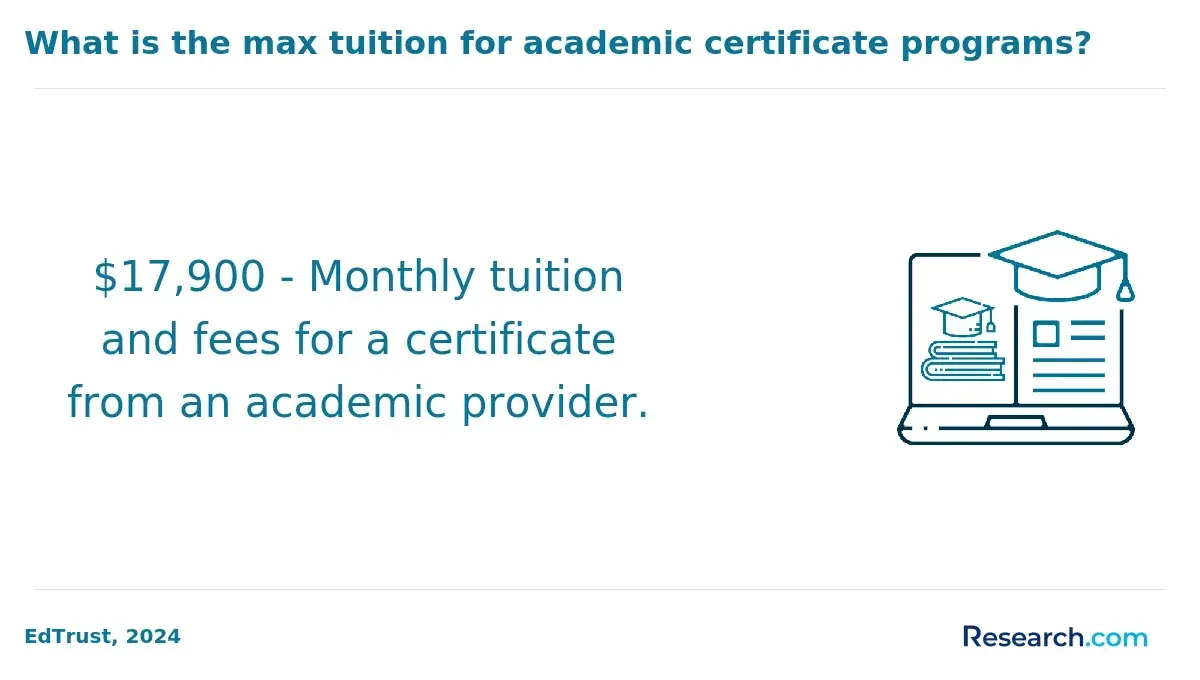
How Much Does an Online Social Work Degree Cost After Financial Aid?
The cost of an online social work degree after financial aid depends on published tuition, required credits, transfer credits, fees, grants, scholarships, and borrowing. For undergraduates, the maximum federal Pell Grant remains $7,395 for the 2024-25 and 2025-26 award years, which can make a low-tuition public online BSW much more affordable for eligible students.
The table below shows how the same advertised program can produce very different out-of-pocket costs depending on transfer credits and grants. The figures are illustrative planning scenarios, not school-specific offers, and students should replace them with official net price and aid data from each college.
| Scenario | Credits still needed | Example tuition rate | Tuition before aid | Potential affordability takeaway |
| Full bachelor's completion from first year | 120 credits | $300 per credit | $36,000 | Low per-credit tuition still creates a large total cost if few credits transfer |
| BSW transfer student with associate degree | 60 credits | $300 per credit | $18,000 | Transfer credit can cut tuition exposure roughly in half before aid |
| Higher-priced program with strong transfer acceptance | 45 credits | $450 per credit | $20,250 | A higher rate can compete if it accepts more credits and avoids retaking courses |
| Online MSW advanced standing | 30 to 39 credits | $600 per credit | $18,000 to $23,400 | CSWE-accredited BSW graduates may reduce graduate cost through advanced standing |
| Traditional online MSW | 60 credits | $600 per credit | $36,000 | Career changers may pay more because they need the full graduate curriculum |
Do not compare tuition alone. Ask each school for a total program cost estimate that includes tuition, mandatory fees, field education costs, background checks, liability insurance, books, software, graduation fees, and any required campus visits.
If a program advertises a low per-credit price but charges high online, clinical placement, or professional fees, its real cost may be closer to a higher-tuition competitor.
Online learning can reduce commuting and relocation costs, but it does not eliminate time costs. Social work programs require supervised field education, and unpaid or low-paid field hours can affect how much you can work while enrolled. That opportunity cost should be part of your affordability calculation.
Which Affordable Online Social Work Degree Programs Offer the Best Value?
The best-value affordable online social work programs combine low net cost with credible accreditation, strong transfer policies, practical field placement support, and alignment with the student's career goal. The cheapest published tuition is only one part of value; a program that helps you finish on time with less borrowing can be a better financial choice.
Use the table below to compare value factors that matter more than headline tuition. This is especially important for working adults, transfer students, and students planning to pursue licensure after graduation.
| Value factor | Why it matters | What to ask the school |
| CSWE accreditation | It is commonly required for social work licensure pathways and advanced standing MSW admission | Is the online format included in the accredited program? |
| Net price after grants | Grants reduce borrowing, while loans must be repaid | What was the typical grant aid package for similar online students? |
| Transfer credit acceptance | Accepted credits can reduce both cost and time to completion | How many of my credits apply to the major, not just electives? |
| Field placement support | Field education is required and can determine whether the online program is workable locally | Will the school help secure placements near my home? |
| Part-time flexibility | Working students may need slower pacing to avoid dropping out | Can I remain aid-eligible while attending part time? |
| Licensure alignment | Rules vary by state and by role | Does the curriculum meet educational requirements in my state? |
A more expensive program may be worth choosing when it reduces risk. For example, stronger field placement coordination can matter more than a small tuition difference if you live in a rural area or need evening and weekend flexibility. Similarly, a program with clearer licensure guidance may be a better fit for students targeting clinical social work than a cheaper program with limited advising.
Students comparing social work with other helping professions should look at credential requirements early. For example, some healthcare leadership roles may not require social work licensure, making healthcare administration online programs a better fit for students who prefer operations, compliance, budgeting, or management over direct client services.
Are the Cheapest Online Social Work Degree Programs Properly Accredited?
The cheapest online social work degree is only a good deal if it is properly accredited for your goal. Students should check two layers of accreditation: institutional accreditation and programmatic social work accreditation.
Institutional accreditation means the college or university meets recognized academic and administrative standards and is generally necessary for federal student aid participation.
Programmatic accreditation from the Council on Social Work Education is especially important because many employers, graduate schools, and state licensing boards use CSWE-accredited degrees as a standard requirement.
Here is how to verify accreditation before you enroll:
- Search the school in the U.S. Department of Education's accreditation database and confirm the institutional accreditor is recognized.
- Check the CSWE directory for the specific BSW or MSW program and confirm its accreditation status.
- Ask whether online students complete the same accredited curriculum as campus students.
- Confirm whether the program is fully accredited, in candidacy, or only planning to seek accreditation.
- Contact your state social work licensing board if your goal is licensure, because requirements vary by jurisdiction.
Be cautious with programs that use vague phrases such as "aligned with social work standards" without clearly stating CSWE accreditation. Also be careful with nationally accredited or unaccredited institutions if you plan to transfer credits, attend graduate school, or pursue licensure. A low tuition rate can become expensive if the credential is not accepted for the next step.
Accreditation checks are also common in other regulated healthcare fields. Students who later consider advanced clinical or leadership routes, such as PhD nursing programs online, will encounter similar questions about institutional recognition, professional standards, and whether online coursework is accepted for the intended credential.
What FAFSA Grants and Federal Aid Can Pay for an Online Social Work Degree?
Federal aid can reduce the upfront cost of an online social work degree, but students should separate gift aid from borrowed aid. Grants and scholarships lower net price, while federal loans can make enrollment possible but increase repayment obligations after graduation.
The table below summarizes the main federal aid categories students commonly encounter when using FAFSA for an online social work degree. Eligibility varies by student, school, degree level, and enrollment status.
| Aid type | Who may use it | How it affects affordability | Important limitation |
| Federal Pell Grant | Eligible undergraduate students without a prior bachelor's degree in many cases | Reduces net price without repayment | Amount depends on federal eligibility formulas, cost of attendance, and enrollment intensity |
| Federal Supplemental Educational Opportunity Grant | Undergraduates with high financial need at participating schools | Adds grant aid where available | Campus-based funds are limited and not offered equally at all schools |
| Federal Work-Study | Eligible students at participating schools | Provides earned wages that can help with expenses | Online students may have fewer convenient placements depending on location |
| Direct Subsidized Loan | Eligible undergraduates with financial need | Can cover remaining cost with favorable in-school interest treatment | Annual and aggregate borrowing limits apply |
| Direct Unsubsidized Loan | Undergraduate and graduate students who meet eligibility rules | Can fill gaps after grants and scholarships | Interest accrues and borrowing can affect ROI |
| Direct PLUS Loan | Graduate students or parents of dependent undergraduates | Can cover larger remaining balances | Usually more expensive than subsidized or unsubsidized federal loans |
Undergraduate loan limits matter when evaluating a "cheap" program. Dependent undergraduates generally face annual Direct Loan limits that rise by year in school, while independent students can often borrow more. If your remaining cost exceeds federal loan limits, you may need scholarships, payment plans, employer assistance, state grants, or private loans, each with different risks.
Graduate MSW students do not qualify for Pell Grants, so affordability often depends on unsubsidized loans, graduate assistantships, employer tuition benefits, state workforce grants, and school scholarships. Students planning public or nonprofit careers should also study federal repayment and forgiveness rules, but they should not choose a program assuming forgiveness will definitely apply.
How Do Transfer Credits Lower the Cost of an Online Social Work Degree?
Transfer credits can be the largest cost reducer for an online BSW because they lower the number of credits you must pay for at the university. This is why the cheapest per-credit program is not always the cheapest completion path.
Students with community college, prior university, military, or standardized exam credits should request an official transfer evaluation before committing. The difference between credits accepted as electives and credits applied to degree requirements can change the total cost by thousands of dollars.
Use this process to estimate transfer savings accurately:
- Collect unofficial transcripts from every institution you attended, including community colleges and dual-enrollment providers.
- Ask each social work program for a preliminary transfer review before paying an enrollment deposit.
- Separate general education, free elective, prerequisite, and major-course credits in the evaluation.
- Confirm the minimum number of credits that must be completed at the degree-granting institution.
- Ask whether social work practice, policy, research, and field education courses must be taken through the program regardless of prior coursework.
- Calculate total remaining credits multiplied by tuition and fees, then subtract grants and scholarships to compare net cost.
BSW programs commonly require upper-division social work courses and field education through the home institution, even when they accept many general education credits. MSW programs usually do not accept large numbers of transfer credits, but CSWE-accredited BSW graduates may qualify for advanced standing, which can shorten the MSW and reduce cost.
A red flag is any school that promises major transfer savings before reviewing transcripts. Another warning sign is a program that accepts many credits but applies them mostly as electives, leaving the student with nearly the same number of required courses to finish.
Which Students Benefit Most From a Low-Cost Online Social Work Degree With FAFSA?
Low-cost online social work degrees with FAFSA access are especially useful for students who need flexibility, are eligible for need-based aid, and have a clear plan for using the credential. They can be a strong fit for working adults, parents, first-generation students, rural learners, community college transfers, and students who cannot relocate for a campus program.
The biggest benefit goes to students who combine several affordability advantages. A Pell-eligible transfer student entering a low-tuition public online BSW may have a much lower net cost than a first-time student paying for all 120 credits. A BSW graduate entering an advanced standing online MSW may also reduce graduate tuition compared with a traditional MSW route.
These students should be more cautious about choosing primarily on low cost:
- Students seeking clinical licensure who have not confirmed the program meets their state's educational requirements.
- Students who cannot complete in-person field education hours because of work schedules, transportation limits, or local placement shortages.
- Students who have already used substantial federal aid and may be close to loan or lifetime grant limits.
- Students who need intensive academic support, because the cheapest online program may not provide the advising structure they need to finish.
- Students comparing social work with other healthcare careers that require different credentials, supervision, or licensing paths.
Social work is also part of a broader healthcare and behavioral health workforce. Students interested in mental health care but not certain about the MSW path may compare nursing-based psychiatric routes such as the shortest PMHNP certificate program, though those programs require a nursing background and lead to a different scope of practice.
How Does the Cost of an Online Social Work Degree Affect Career ROI?
The cost of an online social work degree affects career ROI because social work salaries vary by role, setting, state, licensure level, and experience. BLS data places the median annual wage for social workers at $61,330, which gives students a realistic benchmark for comparing total debt against potential earnings without assuming a guaranteed outcome.
ROI is strongest when the degree is the right credential for the intended role and the student keeps borrowing modest. A low-cost BSW may be financially reasonable for entry-level case management, child welfare, community outreach, or human services roles.
An MSW can be worth the added cost when it is required for clinical licensure, supervisory roles, healthcare social work, school social work, or specialized practice, but students should compare expected debt carefully.
The table below shows how degree level changes the ROI question. It does not predict earnings; instead, it identifies the cost-benefit issue students should evaluate before enrolling.
| Degree path | Typical purpose | ROI question to ask | Cost risk |
| Online associate-to-BSW transfer path | Finish a bachelor's degree for generalist social work roles | Will accepted credits reduce the remaining cost enough to limit borrowing? | Losing credits during transfer can erase savings |
| Full online BSW | Enter social work from the beginning of college | Can grants and public tuition keep four-year debt manageable? | Paying for all credits at a university can raise total cost |
| Advanced standing online MSW | Move from CSWE-accredited BSW to graduate practice | Does the shorter curriculum justify graduate tuition? | Not available without the right BSW background |
| Traditional online MSW | Enter social work at the graduate level from another major | Is the MSW required for the target role or license? | More credits and graduate loan reliance can increase repayment pressure |
Students should also consider non-tuition ROI factors, including unpaid field hours, supervision requirements after graduation, licensing exam costs, state application fees, and the time it takes to qualify for independent practice. A cheaper program with weak placement support can delay graduation or licensure progress, which can reduce real-world ROI.
Some students drawn to social impact roles may find stronger financial alignment in adjacent healthcare leadership or advanced nursing routes, depending on prior education. For example, nurses comparing long-term leadership and clinical advancement may also examine DNP online programs, while social work students should focus on CSWE accreditation and state licensure fit.
How Should Students Choose the Cheapest FAFSA-Eligible Online Social Work Degree?
To choose the cheapest FAFSA-eligible online social work degree, compare the program's net cost, not just its tuition. The best choice is the lowest-risk program that is accredited, aid-eligible, transferable, licensure-aligned, and realistic for your schedule and field placement needs.
Use this practical selection process before enrolling:
- Confirm the school participates in federal student aid and that the specific online degree is Title IV eligible.
- Verify institutional accreditation and CSWE accreditation for the exact BSW or MSW pathway.
- Request a written total cost estimate covering tuition, fees, books, field costs, technology charges, and any campus requirements.
- Complete the FAFSA as early as possible and compare official aid offers from multiple schools.
- Ask for a transcript evaluation before committing, especially if you have community college or prior university credits.
- Compare grant aid separately from loans so you know how much money reduces cost and how much must be repaid.
- Ask how online field placements are arranged in your area and whether placement delays could extend the program.
- Check state licensure requirements if you plan to become a licensed social worker, clinical social worker, or school social worker.
- Estimate monthly loan repayment under conservative salary assumptions before accepting the full aid package.
- Choose the program with the best combination of low net price, completion support, accreditation, and career fit.
Red flags include unclear accreditation language, pressure to enroll before receiving an aid offer, vague transfer answers, unusually high required fees, no local field placement plan, and promises that FAFSA will cover everything. Treat affordability as a verified calculation, not a marketing claim.
The final decision should match your career goal. If you want direct social work practice, prioritize CSWE accreditation and field education. If you want broader healthcare management, policy, or operations work, compare social work against related options before borrowing for a degree that may not be required.
Other Things You Should Know About Social Work Programs
Coursework may be online, but accredited social work programs require in-person field education. Many schools help online students complete placements near their home, but availability depends on location, schedule, and agency capacity.
It depends on the state and license level. A CSWE-accredited BSW may qualify for some bachelor's-level licenses or social service roles, but clinical licensure usually requires an MSW plus supervised post-graduate experience.
Some public universities charge a flat online rate, while others use residency-based tuition. Always ask whether the quoted rate applies to your state, degree level, and enrollment status.
If you do not have a bachelor's degree, a BSW can be the most direct path and may qualify you for advanced standing MSW admission later. If you already have a bachelor's in another field, a traditional MSW may be the more relevant route.
References
- 12 Best Online DSW Programs: Expert-Reviewed Guide for 2026 - Social Work Education Center https://www.socialworkdegree.net/online-dsw-programs/
- Best Affordable Master's Degree In Social Work https://www.psychology.org/social-work/best-affordable-masters-programs/
- Is an Online MSW Worth It? 2025 Cost-Benefit Analysis & Career Guide - Social Work Degrees https://www.socialworkdegrees.org/is-it-worth-it-to-get-an-online-msw
- Online MSW Programs No GRE Required - MasterofSocialWork.com https://www.masterofsocialwork.com/faqs/gre-requirements-online-msw-programs
- 2025 Most Affordable Online MSW Programs https://www.onlineu.com/most-affordable-colleges/msw-degrees
- Online Social Work Degree Programs | Pacific Oaks College https://www.pacificoaks.edu/social-work-degree-programs/
- Online Master’s in Social Work Programs https://onlinecounselingprograms.com/online-counseling-degrees/cswe-accredited-online-msw-programs/
- Best Online Social Work Degrees 2025 https://www.affordablecollegesonline.org/degrees/social-work-programs/
- 71 Most Affordable CSWE Accredited Online MSW Programs - MSW Degrees https://www.mswdegrees.org/degrees/online/msw-programs/