2027 Cheapest Accredited Online Music Education Degree Programs That Accept FAFSA

Co-Founder and Chief Data Scientist
Key Things You Should Know
- The lowest published tuition is not always the lowest real cost; compare total credits, fees, transfer acceptance, residency requirements, and expected borrowing before choosing an online music education program.
- Most fully online FAFSA-eligible music education degrees are master's programs for licensed or experienced music educators; bachelor's programs that lead to initial teacher licensure often require in-person student teaching or field placements.
- Graduate students generally cannot use Pell Grants, but they may use federal Direct Unsubsidized Loans up to $20,500 per academic year, while eligible undergraduates may qualify for Pell Grants and subsidized loans.
Which Are the Cheapest Accredited Online Music Education Degree Programs That Accept FAFSA?
The cheapest FAFSA-eligible online music education programs are usually public university master's degrees with regional institutional accreditation, National Association of Schools of Music recognition, and tuition charged per credit. The table below compares lower-cost options with published online or distance tuition estimates; always confirm current tuition, fees, aid eligibility, and program availability directly with the school before applying.
| School | Online music education degree | Typical credits | Published tuition estimate | Estimated tuition-only cost | FAFSA participation | Accreditation notes |
| Georgia College & State University | Online Master of Music Education | 30 | About $340 per credit | About $10,200 | Yes | Regionally accredited; music unit listed with NASM |
| University of Florida | Online Master of Music in Music Education | 33 | $448.73 per credit | About $14,808 | Yes | Regionally accredited; music unit listed with NASM |
| Kent State University | Online Master of Music in Music Education | 30 | About $540 per credit | About $16,200 | Yes | Regionally accredited; music unit listed with NASM |
| University of Southern Mississippi | Online Master of Music Education | 30 | About $535 per credit | About $16,050 | Yes | Regionally accredited; music unit listed with NASM |
| Auburn University | Online Master of Music Education | 30 | About $577 per credit | About $17,310 | Yes | Regionally accredited; music unit listed with NASM |
| University of Northern Colorado | Online Master of Music in Music Education | 30 | About $650 per credit | About $19,500 | Yes | Regionally accredited; music unit listed with NASM |
| University of Georgia | Online Master of Music Education | 33 | About $629 per credit | About $20,757 | Yes | Regionally accredited; music unit listed with NASM |
| Boston University | Online Master of Music in Music Education | 32 | About $995 per credit | About $31,840 | Yes | Regionally accredited; music unit listed with NASM |
For many students, the most affordable choices are not necessarily the most famous schools. A program with a slightly higher per-credit price may still cost less overall if it requires fewer credits, accepts graduate transfer credit, avoids travel, or fits a teacher's work schedule well enough to prevent dropped courses.
How Does FAFSA Eligibility Work for Online Music Education Degree Programs?
FAFSA eligibility means the institution participates in federal Title IV student aid programs and the student is enrolled in an eligible degree or certificate program. It does not mean every student receives grants, every cost is covered, or every online format qualifies in the same way.
For an online music education degree, four eligibility layers matter. Students should verify each one before treating the program as affordable.
- Confirm the school participates in federal student aid by checking the institution's federal school code and financial aid office information.
- Confirm the specific online music education degree is an aid-eligible program, not a noncredit, professional development, or continuing education option.
- Confirm your enrollment status because half-time, three-quarter-time, and full-time enrollment can change the amount and timing of aid.
- Confirm your personal eligibility, including citizenship or eligible noncitizen status, satisfactory academic progress, loan limits, prior degree status, and default history.
Music education students should also separate FAFSA eligibility from licensure eligibility. FAFSA is a financial aid process; teacher certification is governed by state education agencies and school district hiring rules. A low-cost online master's may be excellent for an already licensed teacher but inappropriate for someone who still needs supervised student teaching for initial licensure.
This distinction also applies across other education and health-related fields. For example, students researching online speech pathology programs masters options must also compare federal aid eligibility with clinical placement and licensure requirements rather than assuming online delivery settles everything.
Practical rule: do not ask only "Do you accept FAFSA?" Ask "Is this exact online music education degree Title IV eligible for my enrollment level, and does it support my state licensure or career goal?"
How Much Does an Online Music Education Degree Cost After Financial Aid?
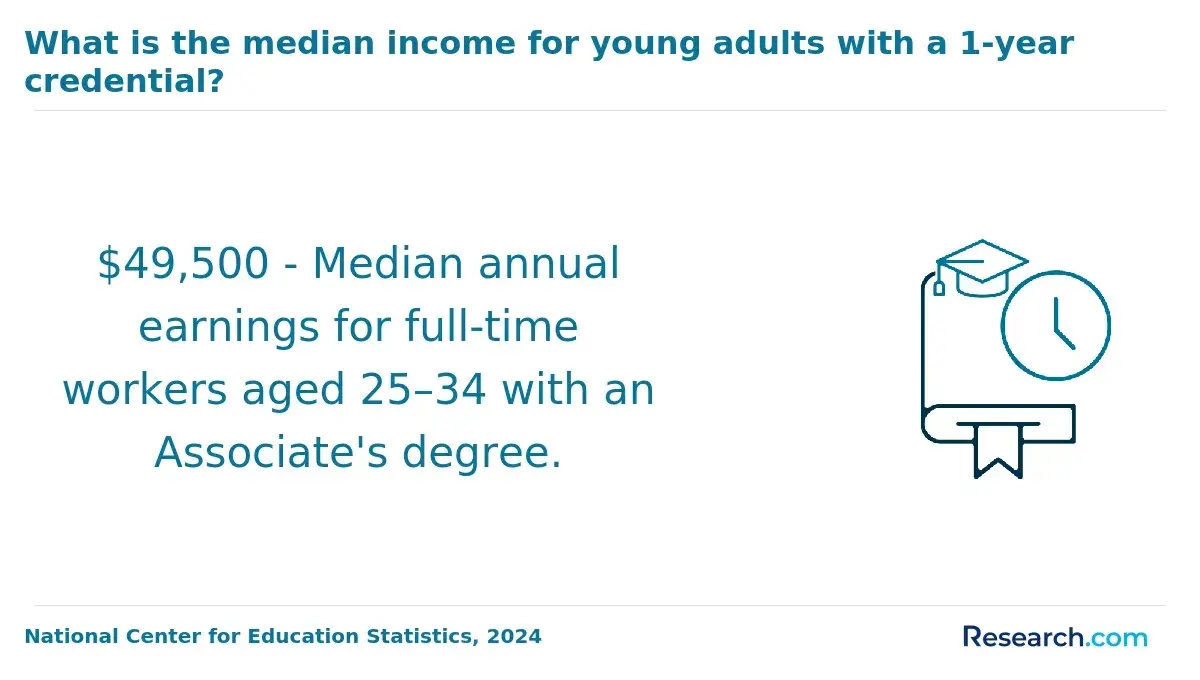
The real cost after financial aid is the school's cost of attendance minus grants, scholarships, tuition waivers, employer support, and any aid you do not have to repay. Loans reduce the amount due today, but they do not reduce the final cost unless they are forgiven or subsidized under a qualifying repayment or service program.
The table below shows how different aid packages can change the out-of-pocket cost of a hypothetical $16,000 tuition-only online music education master's program. It is not a promise of aid; it is a planning model that helps students understand why net price matters more than advertised tuition.
| Scenario | Tuition-only program cost | Grant, scholarship, or employer aid | Amount potentially financed or paid out of pocket | What it means |
| No gift aid | $16,000 | $0 | $16,000 | The student may need savings, payment plans, or loans for the full tuition amount. |
| Small institutional scholarship | $16,000 | $2,000 | $14,000 | A modest award helps, but borrowing may still be significant. |
| Employer tuition assistance | $16,000 | $5,250 | $10,750 | This can be valuable for working teachers if the employer reimburses graduate coursework. |
| Scholarship plus employer aid | $16,000 | $7,250 | $8,750 | Combining aid sources can make a mid-priced program cheaper than a lower-tuition school with no aid. |
Graduate music education students should pay close attention to the difference between grants and loans. Pell Grants are generally for eligible undergraduates, so many master's students rely on scholarships, employer reimbursement, federal Direct Unsubsidized Loans, payment plans, or state teacher support programs.
Fees can also change the final bill. Ask each school for a full cost-of-attendance estimate that includes tuition, online course fees, books, software, recording equipment, background checks, graduation fees, travel for any required residency, and costs tied to field experiences.
Which Affordable Online Music Education Degree Programs Offer the Best Value?
The best value is the program that produces the right credential at the lowest realistic net cost, not simply the school with the lowest tuition line. In music education, value depends on degree level, teacher licensure fit, faculty expertise, ensemble or pedagogy requirements, flexibility, accreditation, and whether the degree can help you advance professionally.
Use the comparison below to decide when a cheaper program is genuinely better and when a more expensive option may be justified.
| Value factor | Why it matters | Low-cost program is stronger when | Higher-cost program may be worth it when |
| Total credits required | More credits usually mean higher tuition and more time. | The degree requires 30 to 33 credits and aligns with your goals. | Extra credits support licensure, endorsements, or specialized training you need. |
| Transfer or prior graduate credit | Accepted credits can reduce both cost and completion time. | The school accepts relevant prior graduate coursework. | The cheaper school accepts few or no transfer credits. |
| Licensure relevance | Music teacher requirements vary by state. | You already hold a teaching license and need advancement-focused study. | You need a pathway with supervised fieldwork or state-specific certification support. |
| Format flexibility | Working teachers often need asynchronous or summer-friendly schedules. | The schedule lets you keep working full time. | A residency or synchronous format provides mentoring you value. |
| Career mobility | Some programs may support curriculum leadership, department chair roles, or doctoral preparation. | You mainly need an accredited graduate credential for salary-lane movement. | You want a specific faculty mentor, research pathway, or professional network. |
A useful affordability comparison is to look at other low-cost graduate fields and notice how tuition, program length, and career goals interact. Students comparing music education with humanities-oriented graduate options may find the same net-price logic in guides to the cheapest online history master's degree, where the lowest sticker price is only one part of value.
Common red flags include a program that advertises low tuition but does not publish fees clearly, cannot confirm Title IV eligibility for the online degree, lacks recognized institutional accreditation, or describes itself as "music education" while offering no clear connection to teaching practice, curriculum, assessment, or pedagogy.
Are the Cheapest Online Music Education Degree Programs Properly Accredited?
Accreditation is the quality-control step that protects your eligibility for federal aid, transfer credit, employer recognition, and, in some cases, teacher licensure. The cheapest online music education degree is not a good deal if the credential is not recognized by employers, graduate schools, or state education agencies.
Students should check two kinds of accreditation. Institutional accreditation applies to the university as a whole and is required for federal student aid participation. Programmatic music accreditation, often through NASM, is not always legally required for every job, but it can signal that the music unit has been reviewed against field-specific standards.
Before applying, complete these verification steps. They are especially important for online programs because the website may market multiple formats, certificates, and degrees together.
- Search the school in the U.S. Department of Education's Database of Accredited Postsecondary Institutions and Programs or the Council for Higher Education Accreditation directory.
- Confirm the accreditor is recognized and that the institution's accreditation is active, not probationary or expired.
- Check whether the music school, department, or program is listed by NASM if programmatic music accreditation matters for your goals.
- Ask the state teacher licensing office whether the degree supports the credential, endorsement, or salary-lane purpose you have in mind.
- Get written confirmation from admissions or financial aid that the specific online degree is eligible for federal student aid.
Do not confuse "accredited university" with "state-approved teacher preparation pathway." A university may be accredited and FAFSA-eligible, while a particular online master's in music education may be intended only for licensed teachers seeking professional growth rather than first-time certification.
What FAFSA Grants and Federal Aid Can Pay for an Online Music Education Degree?
FAFSA is the application that determines eligibility for federal grants, loans, and work-study, and it may also be used by states and colleges to award their own aid. The type of aid available depends heavily on whether the student is an undergraduate or graduate student.
The table below summarizes the federal aid categories most relevant to online music education students. Use it to separate aid that lowers the price from aid that simply delays payment.
| Aid type | Who may qualify | Repayment required? | How it can affect affordability |
| Federal Pell Grant | Eligible undergraduates without a prior bachelor's degree in most cases | No | Can significantly reduce undergraduate tuition, but usually does not apply to master's students. |
| Federal Supplemental Educational Opportunity Grant | Undergraduates with exceptional financial need at participating schools | No | Availability depends on the school's funding and awarding policy. |
| Direct Subsidized Loan | Eligible undergraduates with financial need | Yes | Interest benefits can make it less expensive than unsubsidized borrowing while enrolled. |
| Direct Unsubsidized Loan | Eligible undergraduate and graduate students | Yes | Common for graduate students, but interest begins accruing after disbursement. |
| Graduate PLUS Loan | Graduate or professional students who meet credit requirements | Yes | Can cover remaining costs but may increase debt quickly. |
| Federal Work-Study | Eligible students at participating institutions | No | May provide part-time earnings, but online graduate availability varies by school. |
Undergraduate students should also ask about state grants, teacher preparation scholarships, and institutional need-based aid. Graduate students should ask about music education scholarships, educator discounts, summer-only payment structures, and employer tuition reimbursement.
A major mistake is assuming that FAFSA acceptance means the program will be fully funded. In reality, aid depends on dependency status, income, assets, prior borrowing, enrollment intensity, cost of attendance, academic progress, and the school's own awarding policies.
How Do Transfer Credits Lower the Cost of an Online Music Education Degree?
Transfer credit can be one of the fastest ways to lower the cost of an online music education degree. It reduces the number of credits you must pay for, and it can shorten time to completion if transferred courses satisfy required categories rather than only electives.
The financial impact is easiest to see with a simple example. If a program charges $450 per credit, every accepted 3-credit course can reduce tuition by $1,350 before fees.
| Accepted transfer credits | Example per-credit tuition | Potential tuition reduction | Best fit |
| 6 credits | $450 | $2,700 | Graduate students with prior relevant coursework |
| 12 credits | $450 | $5,400 | Students changing schools after starting a master's |
| 30 credits | $450 | $13,500 | Bachelor's transfer students with completed general education or music coursework |
| 60 credits | $450 | $27,000 | Students entering a bachelor's program after an associate degree |
Transfer rules are usually stricter at the graduate level. Many master's programs accept only a small number of graduate credits, require a minimum grade, reject older coursework, and insist that credits match the program's curriculum. Bachelor's programs may accept more transfer credit, but music theory, aural skills, conducting, methods, ensemble, and fieldwork requirements may still need faculty review.
Students trying to lower the cost of a bachelor's pathway may want to start by understanding associate-level options and transfer planning. A guide on what is the easiest associate degree to get can help clarify how general education credits may fit into a longer degree plan, although music education majors should still verify course-by-course transfer with the receiving university.
Before enrolling, request an official transfer evaluation, not just an informal estimate. The cheapest school can become expensive if it rejects credits another accredited institution would have accepted.
Which Students Benefit Most From a Low-Cost Online Music Education Degree With FAFSA?
A low-cost FAFSA-eligible online music education degree is most valuable when the student already has a clear professional goal and the program directly supports it. The right fit is often different for a current band director, a paraprofessional seeking licensure, a private music instructor, and a career changer.
The students most likely to benefit share a few traits. They can use online flexibility without losing access to required fieldwork, they have a realistic aid plan, and they understand how the degree will be recognized by employers or licensing agencies.
- Licensed K-12 music teachers seeking salary-lane movement may benefit from an affordable online master's if their district recognizes the degree for compensation or advancement.
- Working educators with employer tuition assistance can reduce borrowing substantially if reimbursement rules align with the school's calendar and course load.
- Transfer students pursuing a bachelor's degree may benefit when prior credits satisfy general education or lower-division requirements, but they must confirm music-specific sequencing.
- Rural students or military-connected students may benefit from online delivery when campus-based music education programs are not accessible locally.
- Students planning doctoral study may benefit from a low-cost master's if it includes research, pedagogy, and faculty mentoring strong enough for future academic goals.
Students should be more cautious if they need initial teacher licensure and the online program is not explicitly state-approved for that purpose. They should also avoid choosing primarily by price if they need extensive conducting feedback, ensemble participation, supervised teaching placements, or state-specific endorsement preparation.
Career changers may find it useful to compare how different helping and education professions structure online study. For example, accelerated social work programs often serve students trying to move quickly into licensed practice, while music education pathways may be constrained by school-based teaching requirements and state certification rules.
How Does the Cost of an Online Music Education Degree Affect Career ROI?
Career ROI depends on how much you pay, how much you borrow, whether the degree changes your pay or job options, and how long you remain in the field. For music educators, ROI is often tied to district salary schedules, state licensure, supplemental duties, leadership opportunities, and eligibility for advanced roles.
BLS May 2024 wage data puts the median annual wage for music directors and composers at $64,670, while many K-12 teaching roles follow district salary schedules rather than a single national wage. This matters because an online music education degree may be financially worthwhile for one teacher if it moves them into a higher salary lane, but less compelling for another if their employer does not reward the credential.
To estimate ROI before enrolling, compare the total net cost with a conservative view of career benefit. Avoid counting uncertain raises, side income, or promotions as guaranteed.
- Calculate total program cost, including tuition, fees, books, technology, travel, and lost income if you reduce work hours.
- Subtract grants, scholarships, tuition reimbursement, and savings you can use without borrowing.
- Estimate total borrowing and monthly repayment under federal loan options.
- Ask your district or employer whether the degree qualifies for salary-lane movement, stipends, or promotion consideration.
- Compare the likely annual pay change with the total net cost to estimate how long it may take to break even.
A more expensive program can have better ROI if it is recognized by your employer, supports licensure, accepts transfer credit, offers strong mentoring, or helps you complete without delaying graduation. A cheaper program can have poor ROI if it extends your timeline, does not support your credential goal, or leads to unnecessary borrowing.
How Should Students Choose the Cheapest FAFSA-Eligible Online Music Education Degree?
The best approach is to compare programs in stages: eligibility first, then total cost, then academic fit, then career value. This prevents a common mistake: falling in love with a low tuition number before confirming that the degree is aid-eligible, accredited, and useful for your state or employer.
Use this step-by-step checklist before submitting an enrollment deposit. It is designed to help you compare programs on net value instead of marketing claims.
- Identify your goal: initial teacher licensure, graduate salary advancement, curriculum leadership, doctoral preparation, or professional enrichment.
- Confirm institutional accreditation and, when relevant, music-specific accreditation or state approval.
- Ask whether the exact online degree is Title IV eligible and whether your expected enrollment status qualifies for aid.
- Request a full cost-of-attendance estimate, not just tuition per credit.
- Ask for a preliminary financial aid estimate that separates grants, scholarships, loans, and work-study.
- Request an official transfer-credit review before enrolling if you have prior college or graduate coursework.
- Check whether any campus visits, residencies, recitals, field placements, or student teaching experiences create extra costs.
- Ask your state licensing office or employer whether the program satisfies your credential or salary objective.
- Compare expected borrowing with realistic career benefits, including salary-lane rules if you are already employed as a teacher.
- Choose the lowest net-cost program that meets your accreditation, licensure, flexibility, and career requirements.
Accreditation research is especially important when programs lead toward regulated professions or school-based credentials. Students who want a broader example of how accreditation affects online professional degrees can compare the process used for online MFT programs accredited pathways, where institutional and programmatic recognition can both influence eligibility and professional outcomes.
The final decision should not be "Which school is cheapest?" It should be "Which accredited, FAFSA-eligible program gets me to my music education goal with the least unnecessary debt and the fewest credential risks?"
Other Things You Should Know About Music Education
Many online master's programs are designed for working teachers and may offer asynchronous courses, evening work, or summer-heavy schedules. Still, students should check weekly time expectations, practicum requirements, and whether any live sessions conflict with school or rehearsal responsibilities.
Some programs require auditions, teaching videos, portfolios, musicianship assessments, or proof of prior music study. Master's programs may also ask for a teaching license, resume, statement of purpose, and undergraduate music coursework.
Policies vary by institution, but many universities do not distinguish online and campus formats on the diploma. Students who care about transcript wording should ask the registrar how delivery format appears on official records.
Students may need a reliable computer, high-speed internet, webcam, microphone, notation software, recording tools, and access to an instrument or teaching setting. These costs are often not obvious in tuition comparisons, so ask whether they are included in the cost-of-attendance estimate.
References
- Online Music Programs: Earn Your Music Degree Online | MI https://www.mi.edu/mi-online/
- Music Education Master’s Programs Online: Review Top Schools https://www.onlinemastersdegrees.org/best-programs/education/music-education/
- EDUCATION CONNECTION Get Matched for FREE! https://www.educationconnection.com/
- Music Education Statistics and Facts|Children's Music Workshop https://www.childrensmusicworkshop.com/advocacy/factsandstatistics/
- Is the Cost of a Music Degree Ethical? https://www.schmopera.com/is-the-cost-of-a-music-degree-ethical/
- Earn a Master’s Degree in Music Education Online with These Top Programs https://www.onlinecolleges.me/education-degrees/masters/music-education/
- 2025 Most Affordable Online Master's Degrees in Music Education https://www.onlineu.com/most-affordable-colleges/music-masters-degrees
- Funding for Music Students | Grants & Scholarships | ISM https://www.ism.org/advice/funding-for-students/
- How to Pay for College: Music Major’s Guide to Funding Music Education - Inside Music Schools https://insidemusicschools.com/blog/how-to-pay-for-college-music-majors-guide-to-funding-music-education/
- Search international scholarships financial aid and loans https://www.internationalscholarships.com/search