2027 Cheapest Accredited Online Electrical Engineering Degree Programs That Accept FAFSA

Co-Founder and Chief Data Scientist
Choosing an online electrical engineering degree is a high-stakes cost decision because tuition, accreditation, transfer credit, and FAFSA eligibility can change the real price dramatically. The payoff can be meaningful: the U. S. Bureau of Labor Statistics reports a median pay of $113,460 for electrical and electronics engineers, with 9% projected employment growth from 2023 to 2033.
This guide is for students comparing affordable online programs, financial aid options, and long-term value. You will learn how to separate low tuition from true affordability before you apply.
Key Things You Should Know
- The cheapest FAFSA-eligible online electrical engineering options are usually public universities, but the lowest advertised tuition is not always the lowest net cost after grants, scholarships, fees, and transfer credits.
- For undergraduate students with high financial need, the federal Pell Grant maximum is $7,395 for the 2024-2025 award year, which can substantially reduce tuition-only cost at lower-priced public programs.
- ABET programmatic accreditation is especially important for students who may pursue engineering licensure, graduate study, or employers that screen for accredited engineering degrees.
Which Are the Cheapest Accredited Online Electrical Engineering Degree Programs That Accept FAFSA?
The cheapest accredited online electrical engineering degree programs that accept FAFSA are typically offered by institutionally accredited public universities that participate in federal student aid. The key is to confirm three things separately: the school's Title IV federal aid participation, the online program's eligibility for aid, and the engineering program's accreditation status.
The table below compares lower-cost online electrical engineering or closely related engineering degree options that are commonly considered by U.S. students. Tuition changes frequently, so use these figures as a screening tool and verify the current published rate with each university before applying.
| School | Online degree | Accreditation signal to verify | Typical credit requirement | Published tuition pattern | Best fit |
| Stony Brook University | Online B.S. in Electrical Engineering degree-completion pathway | Institutional accreditation and ABET status for the electrical engineering program | Upper-division completion after transfer preparation | Often among the lower-cost options for New York residents and online out-of-state students under SUNY tuition rules | Students with strong lower-division engineering, math, and science transfer credits |
| Florida International University | Online B.S. in Electrical Engineering | Institutional accreditation and ABET status for the electrical engineering program | About 128 credits | Lower in-state tuition; higher out-of-state tuition | Florida residents and transfer students who want a fully online public university option |
| University of North Dakota | Online B.S. in Electrical Engineering | Institutional accreditation and ABET-accredited engineering program status | About 125 credits | Flat or online-specific pricing may make costs more predictable | Students who need a long-established online engineering format with lab planning support |
| Arizona State University Online | Online B.S.E. in Electrical Engineering | Institutional accreditation and ABET-accredited engineering program status | About 120 credits | Per-credit online tuition is typically higher than the lowest public in-state rates | Students who value scale, course availability, and online student support |
For many students, the practical answer is this: Stony Brook and FIU can be among the cheapest choices if you qualify for favorable tuition or transfer in many credits, while UND and ASU may be worth considering if their format, scheduling, or support services reduce your risk of stopping out. A cheaper program that delays graduation by several semesters can become more expensive than a higher-tuition program that accepts more credits and offers the courses you need on time.
Be careful with programs labeled "electrical engineering technology." They can be legitimate, accredited, and career-relevant, but they are not always equivalent to a B.S. in Electrical Engineering for engineering licensure, graduate engineering admission, or employer screening. If your goal is to become a licensed professional engineer, ask the school whether the specific online degree meets the educational expectations in your state.
How Does FAFSA Eligibility Work for Online Electrical Engineering Degree Programs?
FAFSA eligibility starts with the institution, not the marketing page for a degree. A school must participate in federal student aid programs, and the student must be admitted into an eligible degree or certificate program. Online delivery alone does not make a program ineligible, but not every online offering at a FAFSA-participating school is automatically aid-eligible.
Use this process before you assume federal aid will apply to an online electrical engineering degree:
- Confirm that the university has a current federal school code and participates in Title IV federal student aid.
- Ask whether the exact online electrical engineering program, not just the institution, is eligible for federal aid.
- Check whether you must enroll at least half time to receive the type and amount of aid you expect.
- Ask whether online lab kits, proctored exams, software, residency requirements, or engineering course fees are included in the cost of attendance.
- Review satisfactory academic progress rules because losing eligibility can interrupt grants and loans.
The biggest misconception is that "accepts FAFSA" means the degree will be fully covered. FAFSA is an application, not an award. Your aid package depends on your Student Aid Index, dependency status, enrollment intensity, year in school, lifetime Pell usage, loan history, and the school's cost of attendance.
Students comparing engineering with other online majors should also remember that aid eligibility does not make all degrees equally expensive to complete. Lab-based engineering programs usually require more sequenced courses than many non-lab majors, while fields such as a business administration degree online may offer more flexible transfer pathways at some institutions.
How Much Does an Online Electrical Engineering Degree Cost After Financial Aid?
The cost of an online electrical engineering degree after financial aid depends on tuition, required fees, transfer credits, grants, scholarships, and borrowing. For undergraduate students, the 2024-2025 maximum Pell Grant is $7,395, which is most powerful at schools with low per-credit tuition and becomes less covering at higher-cost programs.
The table below illustrates why students should compare tuition-only estimates before and after grant aid. These examples are simplified and do not guarantee an aid award; they show how the same federal grant maximum can affect lower- and higher-tuition programs differently.
| Cost scenario | Tuition-only example | Effect of a $7,395 Pell Grant maximum | What it means for the student |
| Low in-state public tuition | About $7,000 to $9,000 for 30 credits | May cover most or nearly all tuition before fees | Fees, books, software, and living costs may still require savings, scholarships, work income, or loans |
| Moderate online public tuition | About $15,000 to $18,000 for 30 credits | May reduce tuition by less than half | Students should compare institutional scholarships and transfer credit policies carefully |
| Higher online per-credit tuition | More than $18,000 for 30 credits | Helpful but unlikely to make the program low-cost by itself | ROI depends heavily on completion speed, borrowing, employer aid, and career outcomes |
A realistic budget should include more than tuition. Electrical engineering students may need calculators, lab supplies, circuit kits, specialized software, exam proctoring, textbooks, and reliable computing equipment. Some schools include technology costs in fees, while others require students to purchase materials separately.
A common mistake is comparing one school's tuition per credit with another school's estimated cost of attendance. Those are not the same. Tuition per credit is only the instructional charge, while cost of attendance may include fees, books, housing, food, transportation, and personal expenses used for financial aid budgeting.
Which Affordable Online Electrical Engineering Degree Programs Offer the Best Value?
The best value is not always the cheapest published price. In electrical engineering, value comes from the relationship between total net cost, ABET accreditation, transfer acceptance, course availability, lab quality, advising, graduation timeline, and career alignment.
Use the following comparison when deciding whether a low-cost program is genuinely a better deal:
- Choose the lowest-tuition program when it is properly accredited, accepts your transfer credits, offers the required courses on a predictable schedule, and does not require costly travel or repeated course delays.
- Choose a moderately priced program when it has stronger transfer acceptance, better online lab support, more frequent start dates, or employer-recognized engineering outcomes that improve your chance of completing on time.
- Avoid choosing purely on price when the program's accreditation is unclear, the curriculum is not a true electrical engineering degree, or the school cannot explain how online students complete lab and design requirements.
Current labor-market trends also affect value. Employers increasingly expect electrical engineering graduates to work with embedded systems, power electronics, automation, signal processing, robotics, semiconductors, and data-driven design tools. A program that offers relevant electives, simulation software, and senior design experience may be worth more than a cheaper program with limited technical depth.
Some students discover that their real goal is not traditional electrical engineering but technology strategy, automation, robotics, or machine learning. If that sounds like you, comparing engineering programs with the best online AI degree programs can clarify whether you need an engineering license-oriented path or a computing-focused path.
Are the Cheapest Online Electrical Engineering Degree Programs Properly Accredited?
Accreditation should be verified before cost because financial aid and career value both depend on legitimacy. There are two levels to understand: institutional accreditation and programmatic accreditation. Institutional accreditation affects federal aid eligibility and general academic recognition, while ABET accreditation is the key programmatic signal for many engineering degrees.
For online electrical engineering students, ABET matters because some employers, graduate programs, and state licensing boards may prefer or require an ABET-accredited engineering degree. Requirements vary by state and role, so students interested in professional engineer licensure should check their state board before enrolling.
Before committing to a low-cost program, ask these questions in writing:
- Is the institution accredited by an accreditor recognized by the U.S. Department of Education?
- Does the exact online electrical engineering degree appear under the school's ABET-accredited programs, or is only the campus version listed?
- Will the diploma or transcript distinguish online study from campus study?
- Does the curriculum meet the prerequisites for graduate engineering programs or professional engineering licensure in my state?
- Are required labs, proctored exams, and senior design projects available to online students without unexpected residency costs?
Red flags include vague statements such as "ABET-aligned," "modeled after ABET," or "accreditation pending" without a clear current status. Those phrases may describe a legitimate program in development, but they are not the same as current ABET accreditation.
What FAFSA Grants and Federal Aid Can Pay for an Online Electrical Engineering Degree?
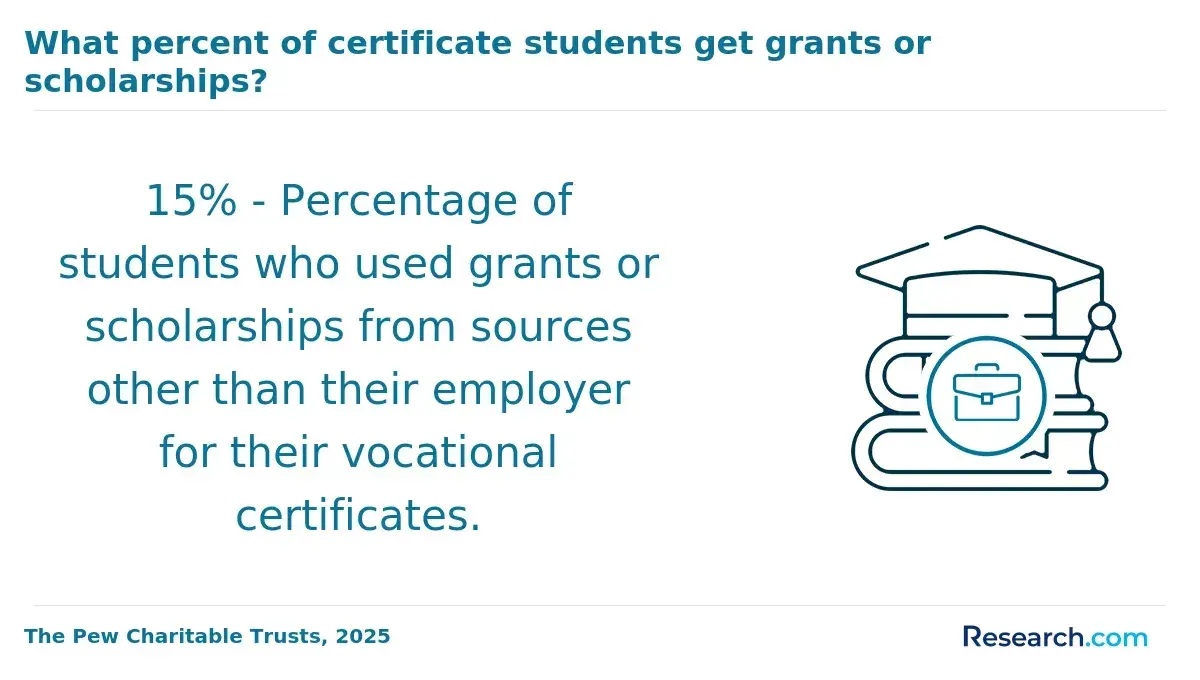
FAFSA can open access to several forms of federal student aid, but each type works differently. Grants reduce cost without repayment, loans must be repaid, and work-study depends on school participation and job availability. For many low-income undergraduate students, grants are the most important affordability tool because they reduce borrowing from the start.
The main federal aid categories to understand are:
- Federal Pell Grant: Need-based grant aid for eligible undergraduate students who have not already earned a bachelor's degree, with a maximum of $7,395 for the 2024-2025 award year.
- Federal Supplemental Educational Opportunity Grant: Campus-based grant aid for students with exceptional financial need, available only at participating schools with limited funding.
- Direct Subsidized Loans: Need-based federal loans for eligible undergraduate students, with the government paying interest during certain in-school and deferment periods.
- Direct Unsubsidized Loans: Federal loans that are not need-based, but interest begins accruing after disbursement.
- Federal Work-Study: Part-time employment funding at participating schools, which may be harder to use if the student needs fully remote work.
Federal loans can make a program accessible, but they do not make it cheaper. Dependent undergraduate students face annual federal loan limits that may not cover the full cost of a high-tuition engineering program. If the gap is large, students should look for institutional scholarships, state grants, employer tuition assistance, paid internships, co-ops, or a lower-cost transfer route before using private loans.
A smart financial aid comparison asks, "How much free aid will I receive, and how much will I borrow to finish?" not just "Does the school take FAFSA?" The second question matters, but the first determines the real affordability of the degree.
How Do Transfer Credits Lower the Cost of an Online Electrical Engineering Degree?
Transfer credits can lower the cost of an online electrical engineering degree more than almost any scholarship if they apply directly to the degree plan. This is especially true for students who complete general education, calculus, physics, chemistry, programming, and introductory engineering courses at a lower-cost community college before transferring.
The table below shows how transfer credit changes the cost equation. It focuses on decision impact rather than listing every school policy, because each university evaluates engineering transfer courses differently.
| Transfer pathway | Potential cost advantage | Main risk | Best use case |
| Community college to online B.S. in Electrical Engineering | Lower cost for general education and lower-division math or science | Engineering courses may not transfer unless preapproved | Students early in college who can follow an articulation plan |
| Associate degree in engineering or pre-engineering | Can satisfy many first- and second-year requirements | An associate degree alone does not guarantee junior standing in engineering | Students with access to a strong transfer agreement |
| Prior university credits | Can reduce remaining credits and time to graduation | Older technical credits may not meet current curriculum standards | Returning students who previously completed calculus, physics, or circuits |
| Military or industry training | May satisfy electives or technical requirements | Often less useful for upper-division engineering theory | Adult learners with documented technical experience |
Before taking transfer courses, get written approval from the destination university. Electrical engineering curricula are highly sequenced, and one missing prerequisite can delay circuits, electronics, signals, power systems, controls, or senior design by a full term.
Transfer planning is also where students should compare engineering with other online majors. A highly sequenced engineering plan may accept fewer free electives than an online graphic design degree, for example, so credits that transfer easily in one field may not reduce cost as much in electrical engineering.
Which Students Benefit Most From a Low-Cost Online Electrical Engineering Degree With FAFSA?
A low-cost online electrical engineering degree with FAFSA is most useful for students who need a legitimate engineering pathway but cannot pause work, relocate, or pay campus housing costs. It can also fit transfer students who already completed lower-division STEM courses and want to finish a bachelor's degree while managing family or employment responsibilities.
These students tend to benefit most:
- Florida, New York, North Dakota, or Arizona residents who qualify for favorable public tuition at a suitable online program.
- Community college transfer students with calculus, physics, programming, and general education credits that match the university's engineering plan.
- Working adults whose employers provide tuition assistance for engineering, utilities, manufacturing, defense, aerospace, electronics, energy, or automation roles.
- Students who are disciplined enough for online math-heavy coursework and can reserve consistent time for labs, design projects, and problem sets.
- Students who need FAFSA access but want to minimize debt through grants, scholarships, transfer credits, and part-time enrollment.
Students should be cautious if they dislike advanced math, need extensive in-person tutoring, or are choosing engineering only because it sounds lucrative. Electrical engineering is rigorous, and low tuition will not help if the format makes completion unlikely.
If your career goal is management, operations, entrepreneurship, or general corporate advancement rather than engineering design, a bachelor of business administration online may provide a more direct and flexible route. The better investment is the degree that matches the work you actually want to do.
How Does the Cost of an Online Electrical Engineering Degree Affect Career ROI?
Career ROI depends on total cost, debt, completion time, and the kinds of roles the degree can realistically help you pursue. Electrical engineering can lead to work in power systems, electronics, communications, semiconductors, controls, aerospace, defense, renewable energy, robotics, and embedded systems, but the degree does not guarantee a specific salary or job.
The BLS median pay figure of $113,460 for electrical and electronics engineers is useful because it shows the field's earnings potential, but students should compare that number with their expected debt, local job market, internship access, and willingness to relocate. A student who graduates with low debt from an accredited program may have stronger ROI flexibility than a student who borrows heavily for the same credential.
Use these ROI checkpoints before enrolling:
- Estimate total tuition and required fees for the credits you still need, not the full catalog program if you are transferring credits.
- Subtract grants and scholarships before counting loans because loans reduce cash pressure but increase long-term cost.
- Ask the program about internship, co-op, undergraduate research, senior design, and employer recruiting options for online students.
- Compare likely monthly loan payments with entry-level engineering salaries in your target region.
- Consider whether a more expensive program reduces time to completion enough to offset the extra tuition.
Some students later move from engineering into leadership, product management, technical operations, or organizational strategy. If long-term leadership is your goal, it may be useful to understand how technical undergraduate preparation compares with graduate management pathways such as an online doctorate in organizational leadership, although that credential serves a very different career stage.
How Should Students Choose the Cheapest FAFSA-Eligible Online Electrical Engineering Degree?
To choose the cheapest FAFSA-eligible online electrical engineering degree, start with fit and legitimacy, then compare net cost. A program is only affordable if you can complete it, use aid without excessive borrowing, and graduate with a credential that supports your career goals.
Follow this practical decision sequence:
- Confirm the exact online program name and degree level, such as B.S. in Electrical Engineering, B.S.E. in Electrical Engineering, or electrical engineering technology.
- Verify institutional accreditation, federal aid participation, and whether the exact program is eligible for FAFSA-based aid.
- Check ABET accreditation if you want engineering licensure, graduate engineering study, or employer recognition in traditional engineering roles.
- Request a transfer evaluation before enrolling, including how each math, science, engineering, and general education course applies to the degree plan.
- Calculate tuition, fees, books, lab kits, software, proctoring, travel, and any residency costs for only the credits you still need.
- Compare financial aid award letters by separating grants, scholarships, work-study, subsidized loans, unsubsidized loans, and private loans.
- Ask how often upper-division engineering courses are offered and whether online students can finish in the timeline advertised.
- Review student support, tutoring, advising, lab support, career services, internship access, and senior design expectations.
- Choose the program with the best combination of accreditation, net price, completion likelihood, and career alignment, not simply the lowest sticker price.
One final test is to compare opportunity cost. If you are choosing electrical engineering because you want to design, test, build, or improve electrical and electronic systems, a rigorous accredited program can be worth the effort. If your goals are broader business leadership or administration, compare engineering against a business administration degree online before committing to a math-intensive engineering curriculum.
Other Things You Should Know About Electrical Engineering
Some programs are mostly or fully online, but electrical engineering often includes labs, proctored exams, design projects, or required hardware kits. Ask whether any campus visits, synchronous labs, or in-person exams are required before enrolling.
Employer acceptance depends on the school, accreditation, curriculum, projects, internships, and your technical skills. Many employers focus more on whether the degree is from a recognized institution and whether you can demonstrate engineering competence.
Internships are not always required, but they can be very valuable. Engineering employers often look for practical experience with design tools, testing, documentation, teamwork, and real systems, so online students should ask how the school supports internships or co-ops.
The academic content can be just as demanding online as on campus. Online students need strong time management, comfort with independent problem-solving, and reliable access to technology, especially for math, labs, simulations, and design work.
References
- Free Application for Federal Student Aid (FAFSA) | USAGov https://www.usa.gov/fafsa
- 2025 Most Affordable Online Master's Degrees in Electrical Engineering https://www.onlineu.com/most-affordable-colleges/electrical-engineering-masters-degrees
- 9 Online Schools That Accept FAFSA (and How to Get Financial Aid) https://www.studentloanplanner.com/financial-aid-online-colleges/
- Is Electrical Engineering Hard? - Delta Wye Electric https://deltawye.com/how-difficult-is-electrical-engineering/
- Financial Aid for Online Programs | Illinois College https://www.ic.edu/online/tuition/financial-aid
- Top Affordable Electrical Engineering Degree Online? | Lifehack https://vocal.media/lifehack/top-affordable-electrical-engineering-degree-online
- Find Programs - ABET https://www.abet.org/accreditation/find-programs/
- Links | ECLBS EU Council of Business Schools https://www.eclbs.eu/list
- Washington Accord https://www.internationalengineeringalliance.org/accords/washington-accord
- Can You Get Financial Aid for Online College? Finding Out https://beal.edu/can-you-get-financial-aid-for-online-college/