2027 Cheapest Accredited Online Crime Analysis Degree Programs That Accept FAFSA

Co-Founder and Chief Data Scientist
Choosing an online crime analysis degree is really a cost-versus-career decision: you need a legitimate program, affordable tuition, and financial aid that actually lowers what you pay. The stakes are high because the Federal Student Aid office lists the maximum Pell Grant at $7,395 for the 2024-25 award year, which can substantially reduce costs for eligible undergraduates but will not cover every program in full. This guide is for students comparing FAFSA-eligible online options and explains tuition, accreditation, transfer credits, aid, and ROI so you can choose a program with fewer surprises.
Key Things You Should Know
- The cheapest FAFSA-eligible online crime analysis pathways are usually public university criminal justice, criminology, or crime science degrees with crime analysis electives or certificates; Florida resident online tuition can be under $250 per credit at several public institutions.
- FAFSA acceptance means the institution participates in federal student aid, not that every student receives grants or that the full degree is covered; the 2024-25 maximum Pell Grant is $7,395 for eligible undergraduates.
- Best value depends on net price, accreditation, transfer credit acceptance, analytics coursework, internship access, and likely debt compared with career targets such as crime analyst, intelligence analyst, criminal investigator, or public safety data specialist.
Which Are the Cheapest Accredited Online Crime Analysis Degree Programs That Accept FAFSA?
The cheapest accredited online crime analysis degree is rarely labeled only "crime analysis." Most affordable options are online bachelor's degrees in criminal justice, criminology, crime science, or justice studies that include crime mapping, intelligence analysis, research methods, statistics, data systems, or policing analytics. For federal aid, the key is that the institution participates in Title IV federal student aid and the program is offered as an eligible degree, not merely as a non-credit training course.
The table below compares low-cost online options that can fit a crime analysis goal. Tuition rates change, residency rules matter, and some schools charge additional distance learning, technology, or course fees, so use this as a short list to verify with each financial aid office before applying.
| School | Relevant online degree pathway | Published online tuition signal | Accreditation and FAFSA fit | Best for |
| University of Central Florida | Online B.A./B.S. in Criminal Justice with analytics-relevant coursework | Low in-state public tuition; higher nonresident tuition | Regionally accredited; participates in federal student aid | Florida residents seeking one of the lowest public online tuition options |
| University of South Florida | Online B.A. in Criminology | Low in-state public tuition; higher nonresident tuition | Regionally accredited; participates in federal student aid | Students who want criminology theory plus research and justice-system analysis |
| Florida International University | Online B.S. in Crime Science | Competitive Florida public online tuition, especially for residents | Regionally accredited; participates in federal student aid | Students who want a degree title closely aligned with crime science and analysis |
| American Public University System | Online B.A. in Criminal Justice or intelligence-focused related pathways | Flat per-credit online tuition often attractive to military and working adults | Regionally accredited; participates in federal student aid | Adult learners, military-affiliated students, and those needing flexible starts |
| Southern New Hampshire University | Online B.S. in Criminal Justice with crime analysis concentration options when available | Flat online undergraduate tuition, often simple to estimate | Regionally accredited; participates in federal student aid | Students who value frequent start dates and transfer-friendly advising |
| Colorado State University Global | Online B.S. in Criminal Justice and related analytics-friendly electives | Flat online tuition with no traditional campus residency pricing | Regionally accredited; participates in federal student aid | Working adults who want predictable pricing and asynchronous coursework |
The lowest advertised tuition is not always the lowest final cost. A Florida public university may be the cheapest for an in-state student, while a flat-rate private nonprofit or public online institution may be more affordable for an out-of-state adult learner with many transfer credits. The practical answer is to compare net cost after grants, scholarships, transfer credits, and required fees rather than ranking programs by tuition alone.
How Does FAFSA Eligibility Work for Online Crime Analysis Degree Programs?
FAFSA eligibility starts with the school and program. The Free Application for Federal Student Aid is used to determine eligibility for federal grants, loans, and work-study at participating institutions. An online degree can be eligible for the same federal aid framework as a campus degree if it is an approved Title IV program at an eligible institution.
The most common mistake is assuming "accepts FAFSA" means "free." FAFSA is the application, not the award. Your actual aid depends on your Student Aid Index, enrollment level, dependency status, prior borrowing, satisfactory academic progress, program eligibility, and the school's cost of attendance.
Before enrolling, confirm these items in writing because they directly affect whether aid can be applied to your specific program and term:
- Ask whether the institution participates in federal Title IV student aid and whether the online crime analysis, criminal justice, criminology, or crime science program is an eligible degree program.
- Confirm the school's federal school code and use it when submitting the FAFSA.
- Request a full cost of attendance showing tuition, mandatory fees, technology fees, books, supplies, and estimated living expenses if applicable.
- Ask whether your enrollment plan is full-time, three-quarter-time, half-time, or less than half-time because aid can change with course load.
- Review satisfactory academic progress rules, including GPA, completion rate, and maximum time frame for aid eligibility.
Students considering adjacent people-focused fields may compare this route with a psychology degree online, but the FAFSA rules still come down to the specific school, program, and enrollment status. Always verify eligibility before paying an application deposit.
How Much Does an Online Crime Analysis Degree Cost After Financial Aid?
An online crime analysis degree can cost very little after aid for some students and much more for others. The biggest cost drivers are residency status, transfer credits, tuition per credit, number of credits required, mandatory fees, course materials, and whether the student receives grant aid or relies mostly on loans.
The table below shows a practical way to think about total cost. It does not predict your award; it shows how the same degree can produce very different out-of-pocket costs depending on tuition level and grant eligibility.
| Cost factor | Lower-cost scenario | Higher-cost scenario | Why it matters |
| Tuition per credit | In-state public online tuition | Out-of-state or private tuition | Per-credit price multiplies across 120 credits for a bachelor's degree |
| Transfer credits | 60 accepted credits from a community college or prior college | Few or no credits accepted | Accepted credits can cut the number of paid credits in half |
| Grant aid | Pell Grant, state grant, or institutional scholarship | No grant eligibility | Grants reduce net price without repayment |
| Fees and materials | Low online fees and open educational resources | Technology fees, proctoring, textbooks, and lab software costs | Fees can make a low-tuition program less affordable than it first appears |
| Time to completion | Steady part-time or full-time progress | Stopped-out enrollment or repeated courses | Delays can increase borrowing and reduce the value of aid already used |
For undergraduates, the 2024-25 maximum Pell Grant is $7,395, but many students receive less or do not qualify. That means the most affordable plan is usually a combination of low tuition, transfer credits, grants, scholarships, and limited borrowing rather than FAFSA alone.
To estimate your likely net cost, build a simple completion budget before enrolling. Multiply remaining credits by tuition, add required fees, subtract confirmed grants and scholarships, then calculate how much would be paid out of pocket or borrowed. If the school cannot provide a clear estimate, treat that as a red flag.
Which Affordable Online Crime Analysis Degree Programs Offer the Best Value?
Use the following comparison when deciding whether a low-cost program is truly a good investment:
- Choose the lowest-tuition public option when you qualify for in-state rates, can complete the degree without relocating, and the curriculum includes research methods, statistics, crime mapping, policing, intelligence, or data analysis.
- Choose a flat-rate online institution when you are out of state, working full time, or need predictable pricing and frequent start dates.
- Choose a slightly higher-cost program when it accepts substantially more transfer credits, offers a stronger crime analysis concentration, or provides internship and agency networking support.
- Avoid a low-cost program if it lacks institutional accreditation, does not qualify for federal aid, has unclear fees, or offers too little analytics coursework for your career target.
Crime analysis increasingly overlaps with data tools, digital evidence, intelligence systems, and cyber-enabled investigations. Students who want a stronger technical direction may also compare cyber security degrees, especially if their goal is digital forensics, threat intelligence, or security analytics rather than traditional law enforcement analysis.
For many students, the best value program is the one that lets them graduate with the least debt while still building usable skills: statistical reasoning, database literacy, GIS or crime mapping exposure, report writing, legal and ethical judgment, and the ability to translate data into decisions for public safety leaders.
Are the Cheapest Online Crime Analysis Degree Programs Properly Accredited?
Accreditation is the first quality filter for any cheap online crime analysis degree. For FAFSA purposes, the school must be institutionally accredited by an accreditor recognized by the U.S. Department of Education and must participate in federal student aid. Programmatic accreditation is not usually required for criminal justice or crime analysis degrees, but institutional accreditation is essential for federal aid, transferability, employer recognition, and graduate school eligibility.
There are three checks students should complete before trusting a low-cost online program. These checks are simple, but they prevent some of the most expensive mistakes in online education:
- Search the institution in the U.S. Department of Education's accreditation database or confirm its recognized institutional accreditor on the school's official accreditation page.
- Confirm with financial aid staff that the exact online degree, concentration, or completion pathway is eligible for federal aid.
- Ask admissions whether credits from the program are commonly accepted by graduate schools or public universities if you may continue your education later.
Be cautious with schools that emphasize "certification," "career diploma," or "professional training" but do not clearly identify an accredited degree. Also be cautious if a school avoids giving a total cost estimate, pressures you to enroll immediately, or claims that FAFSA will cover everything without reviewing your eligibility.
A properly accredited online degree does not guarantee a job, but it keeps more doors open. It can support entry into public safety agencies, civilian analyst roles, law enforcement advancement, graduate study, or adjacent fields such as intelligence analysis and emergency management.
What FAFSA Grants and Federal Aid Can Pay for an Online Crime Analysis Degree?
Federal aid can make an online crime analysis degree more affordable, but each aid type works differently. Grants and scholarships are the most valuable because they generally do not need to be repaid, while loans can help cover gaps but increase long-term cost.
The table below summarizes common federal aid types and how they may apply to FAFSA-eligible online undergraduate programs. Award amounts and eligibility vary by student and aid year, so use the school's official aid offer for exact numbers.
| Aid type | Repayment required? | How it can help | Important limitation |
| Federal Pell Grant | No, unless eligibility rules are violated | Reduces tuition and related costs for eligible undergraduates with financial need | The maximum is not guaranteed and may not cover the full program cost |
| Federal Supplemental Educational Opportunity Grant | No, unless eligibility rules are violated | Can add need-based grant aid at participating schools | Campus-based funding is limited and not available to every eligible student |
| Federal Work-Study | No loan repayment | Provides part-time earnings that can reduce living or education expenses | Online students may have fewer local placements depending on the school |
| Direct Subsidized Loan | Yes | Can cover gaps after grants for eligible undergraduates | Borrowing limits apply and loans must be repaid |
| Direct Unsubsidized Loan | Yes | Available to many undergraduate and graduate students regardless of need | Interest responsibility can increase total repayment cost |
Federal loan limits are especially important for students completing a bachelor's degree online. Dependent undergraduates have annual borrowing limits that rise by year in school, and federal loans may not cover every cost if tuition is high or transfer credits are low.
To reduce borrowing, ask about state grants, public safety scholarships, employer tuition assistance, military education benefits, police department reimbursement, and institutional scholarships for transfer or adult students. If you already work for a law enforcement, corrections, emergency management, or municipal agency, employer assistance can sometimes be more valuable than a small tuition discount.
How Do Transfer Credits Lower the Cost of an Online Crime Analysis Degree?
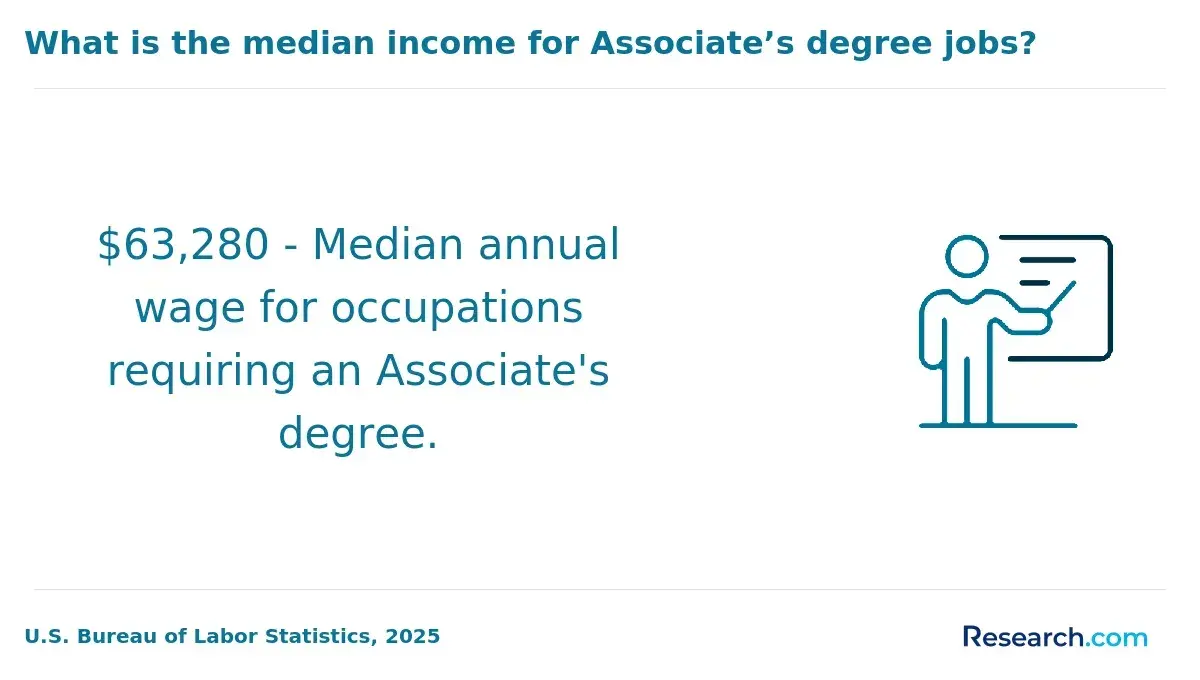
Transfer credits are one of the strongest cost-cutting tools for online crime analysis students. A bachelor's degree usually requires about 120 credits, so students who transfer an associate degree or prior college coursework may only need to pay for upper-division major requirements and remaining general education credits.
Before choosing a program, compare transfer policies carefully because a school with higher tuition may still cost less if it accepts more credits. Ask for an official or preliminary transfer evaluation before committing, not after enrollment.
These transfer-credit questions can reveal whether a program is genuinely affordable:
- How many total transfer credits can be applied toward the degree?
- Will an associate degree satisfy general education requirements, or will you still need additional lower-division courses?
- Do criminal justice, statistics, computer science, GIS, sociology, or public administration courses transfer into the major?
- Does the school award credit for military training, police academy coursework, professional certifications, or prior learning assessment?
- How many credits must be completed at the institution to meet residency requirements?
Transfer savings are especially important for adult learners returning with unfinished credits. Losing credits can add semesters, increase loan use, and delay career advancement. If two programs look similar, the one that accepts more applicable credits often provides the better financial outcome.
If graduate study is part of your long-term plan, also benchmark what low-cost graduate programs look like; comparing a quickest cheapest masters degree can help you think about speed, cost, and transferability even when the subject area differs.
Which Students Benefit Most From a Low-Cost Online Crime Analysis Degree With FAFSA?
A low-cost online crime analysis degree with FAFSA is a strong fit for students who want a public safety or justice career but need to control debt. It is especially useful for working adults, community college transfers, military-affiliated students, law enforcement personnel seeking advancement, and students who cannot relocate for a campus program.
This type of degree may be a good fit if you want to build analytical skills for roles such as crime analyst, intelligence analyst, research assistant, public safety data specialist, corrections analyst, or law enforcement support specialist. It can also support sworn officers who want a degree for promotion or specialized assignments, although agency requirements vary.
Students who benefit most usually share several traits:
- They can complete coursework online without needing a campus schedule.
- They have transfer credits or an affordable in-state public option.
- They are comfortable with statistics, writing, legal concepts, and data interpretation.
- They want a justice or public safety role but prefer analysis, planning, or investigations support over purely patrol-based work.
- They are willing to verify aid, accreditation, and total cost before enrolling.
Not every student should choose the cheapest crime analysis degree. If your goal is counseling, clinical practice, or family intervention, marriage and family therapy programs online may align better with licensure-focused work. If your goal is sworn law enforcement, check whether your target agency values a bachelor's degree, academy training, experience, or a specific major.
How Does the Cost of an Online Crime Analysis Degree Affect Career ROI?
Career ROI depends on how much you pay, how much you borrow, whether you finish, and how well the curriculum matches your target job. Crime analysis roles often sit at the intersection of criminal justice and data work, so students should look beyond degree title and evaluate skills that employers can recognize.
The U.S. Bureau of Labor Statistics' May 2024 wage data reports a median annual wage of $95,530 for detectives and criminal investigators, a related occupation that often requires experience and may not be an entry-level outcome for degree graduates. For students, the useful takeaway is not that a degree guarantees that salary; it is that public safety investigation and analysis careers can have meaningful earnings potential when education, experience, agency requirements, and specialized skills line up.
ROI improves when your degree cost stays low and your skills are marketable. Courses in statistics, research design, GIS, database tools, intelligence analysis, criminal law, ethics, and report writing are more directly useful than a broad curriculum with little analytical content.
Students comparing education investments may also review highest paying online degrees to understand how public safety analytics compares with faster-growing or more technical online degree paths. A crime analysis degree can be worthwhile, but it should be chosen because it fits your target work, not only because it is inexpensive.
A more expensive program can be worth it if it reduces time to completion, accepts more credits, offers stronger analytics coursework, connects students with agencies, or lowers your net price through grants. A cheaper program may be a poor ROI choice if it leads to excess borrowing, weak completion support, or a curriculum that does not build job-relevant skills.
How Should Students Choose the Cheapest FAFSA-Eligible Online Crime Analysis Degree?
The safest way to choose the cheapest FAFSA-eligible online crime analysis degree is to compare total net cost and academic fit side by side. Do not rely on rankings, advertisements, or tuition alone. Ask each school for a written estimate and compare the same cost categories across programs.
Use this step-by-step process before you enroll:
- Confirm institutional accreditation and federal aid participation for the exact online degree.
- Submit the FAFSA early and list every school you are seriously considering.
- Request a full cost of attendance and a program-specific tuition-and-fee estimate.
- Ask for a transfer credit evaluation before accepting admission.
- Compare grants and scholarships separately from loans so you know what must be repaid.
- Review the curriculum for statistics, research methods, crime mapping, intelligence, data systems, and applied analysis.
- Ask about online format, proctoring, internship options, career services, and whether courses are asynchronous or scheduled live.
- Estimate total borrowing through graduation and compare it with realistic entry-level and mid-career roles in your area.
Common red flags include unclear accreditation language, vague tuition pages, pressure to enroll quickly, no written aid estimate, poor transfer transparency, and claims that federal aid will automatically cover the full degree. A trustworthy school should be able to explain what you will pay, what aid may apply, and what happens if your enrollment status changes.
If you are comparing several online fields, keep the same decision framework: cost after aid, completion time, accreditation, career fit, and debt risk. The cheapest degree is the right choice only when it also supports the job you actually want.
Other Things You Should Know About Crime Analysis
Sometimes, but not always. FAFSA can only be used for eligible programs at participating institutions. A certificate embedded in an eligible degree may qualify, while a standalone non-credit certificate often does not.
Many crime analyst jobs prefer or require a bachelor's degree in criminal justice, criminology, statistics, public administration, computer science, or a related field. Some agencies accept equivalent experience, but requirements vary by employer.
No. Crime analysis is more data- and research-focused, while criminal justice is broader. Many students pursue a criminal justice or criminology degree with crime analysis electives, a concentration, or a related certificate.
Yes, some online programs allow local internships with law enforcement agencies, courts, nonprofits, or public safety offices. Availability depends on the school, your location, background checks, and agency partnerships.
References
- Earn An Online Criminal Justice Degree | OEDb.org https://www.oedb.org/rankings/online-criminal-justice-programs/
- Schools With Crime Analysis Degrees - AnalyticsDegrees.org https://www.analyticsdegrees.org/specialties/crime-analysis/
- Becoming a Crime Analyst | Certified Crime & Intelligence Analyst (CCIA) https://www.forensicscolleges.com/blog/htb/how-to-become-a-crime-analyst
- Most Affordable Online Criminal Justice Degrees https://www.affordablecollegesonline.org/degrees/criminal-justice-programs/
- Free Application for Federal Student Aid (FAFSA) | USAGov https://www.usa.gov/fafsa
- How to become a crime analyst | edX https://www.edx.org/become/how-to-become-a-crime-analyst
- Financial Aid Resources | All Criminal Justice Schools https://www.allcriminaljusticeschools.com/financial-aid/
- Affordable Online Criminal Justice Degree - iResearchNet https://criminal-justice.iresearchnet.com/criminology/criminology-and-criminal-justice-degrees/affordable-online-criminal-justice-degree/
- Understanding Financial Aid Eligibility and the FAFSA Process https://www.innovativecpagroup.com/resources/newsarticles/understanding-financial-aid-eligibility-and-the-fafsa-process/
- Financial Aid Tips for Criminal Justice Students https://www.criminaljusticeprograms.com/financial-aid/