2027 Cheapest Accredited Online Accounting Master's Programs With No Out-of-State Tuition Surcharge

Co-Founder and Chief Data Scientist
An online accounting master's can help working professionals meet CPA education requirements or move toward senior finance roles without paying a public university's nonresident premium. Cost comparisons require more than advertised tuition: credit requirements, fees, transfer rules, and accreditation can change the final price.
The U.S. Bureau of Labor Statistics reports median annual pay of $81,726 for accountants and auditors in May 2024, making program value especially important. This guide explains how to identify residency-neutral, accredited options and compare their true cost and career fit.
Key Things You Should Know
- A true no-out-of-state-surcharge policy charges online accounting master's students one published rate regardless of where they live. It does not automatically mean the program has the lowest total cost.
- Most accounting master's programs require roughly 30-36 graduate credits, so compare required credits, per-credit tuition, mandatory fees, and any prerequisite coursework rather than comparing a single tuition figure.
- For career context, accountants and auditors had median annual pay of $81,726 in May 2024, but a degree's return depends on CPA eligibility, employer goals, prior credits, debt, and the specific role pursued.
What Does No Out-Of-State Tuition Surcharge Mean for an Online Accounting Master's Program?
A no-out-of-state-tuition-surcharge online accounting master's program uses the same tuition rate for eligible online students whether they live in the university's home state or elsewhere in the U.S.
At a public university, this is commonly called a flat online rate, distance-learning rate, or residency-neutral tuition. It is not necessarily identical to the school's in-state campus tuition.
This model can be valuable for nonresidents because traditional public-university pricing often separates resident and nonresident rates. However, the policy must apply to the specific online accounting master's, not merely to some online courses at the university. A school may also exclude certain fees, prerequisite courses, hybrid classes, or international students from the flat rate.
The following comparison shows why the wording matters when evaluating an advertised "same tuition for all" policy.
| Tuition model | How residency affects tuition | Best fit | Important limitation |
| Residency-neutral online rate | Eligible online students pay one rate | Out-of-state students seeking predictable tuition | Fees and program exclusions may still apply |
| Traditional public tuition | Residents generally pay less than nonresidents | Students already eligible for in-state tuition | Nonresident costs can be substantially higher |
| Residency waiver | A nonresident discount is available under conditions | Students who meet stated waiver criteria | Eligibility may depend on enrollment, employer, or location |
| Private-university tuition | Usually one published rate for all students | Students comparing total value across institutions | The common rate may still be higher than public online pricing |
Ask admissions for a written confirmation of the online tuition schedule, the total required credits, and all mandatory fees. Do not rely on a university-wide statement such as "online students pay the same rate" until the program office confirms that it includes the accounting master's curriculum.
How Can Students Verify Accreditation for an Affordable Online Accounting Master's Program?
Start with institutional accreditation. This verifies that the university is accredited by an agency recognized by the U.S. Department of Education or the Council for Higher Education Accreditation. Institutional accreditation matters for federal aid eligibility, employer confidence, transfer review, and future doctoral applications.
Accounting programs may also hold specialized business accreditation, such as AACSB accreditation. Specialized accreditation can signal that a business school has met additional standards, but it is not universally required for accounting employment, CPA licensure, or a valid master's degree. Employers and state accountancy boards typically focus more directly on degree legitimacy, coursework, and CPA education requirements.
Use these checks before treating an inexpensive program as a serious option:
- Find the university's institutional accreditor on the school's official accreditation page and confirm that the accreditor is recognized by the U.S. Department of Education or CHEA.
- Confirm that the exact credential is a master's degree in accounting, accountancy, or a clearly defined accounting concentration rather than an unrelated business certificate.
- Review whether the business school has AACSB, ACBSP, IACBE, or another specialized accreditation, and decide whether that distinction matters to your employer or career target.
- For CPA plans, compare the curriculum and your prior transcript with the education rules of the state board where you expect to seek licensure.
- Ask whether online and campus students receive the same degree, transcript designation, academic support, and access to career services.
A common mistake is assuming that specialized business accreditation replaces institutional accreditation. It does not. Another is assuming that any "accounting" curriculum supplies the exact upper-level accounting and business credits required by a state board. Licensure rules vary by state, and schools cannot determine eligibility without reviewing the student's full academic record.
How Much Does the Cheapest Online Accounting Master's Program Cost in Total?
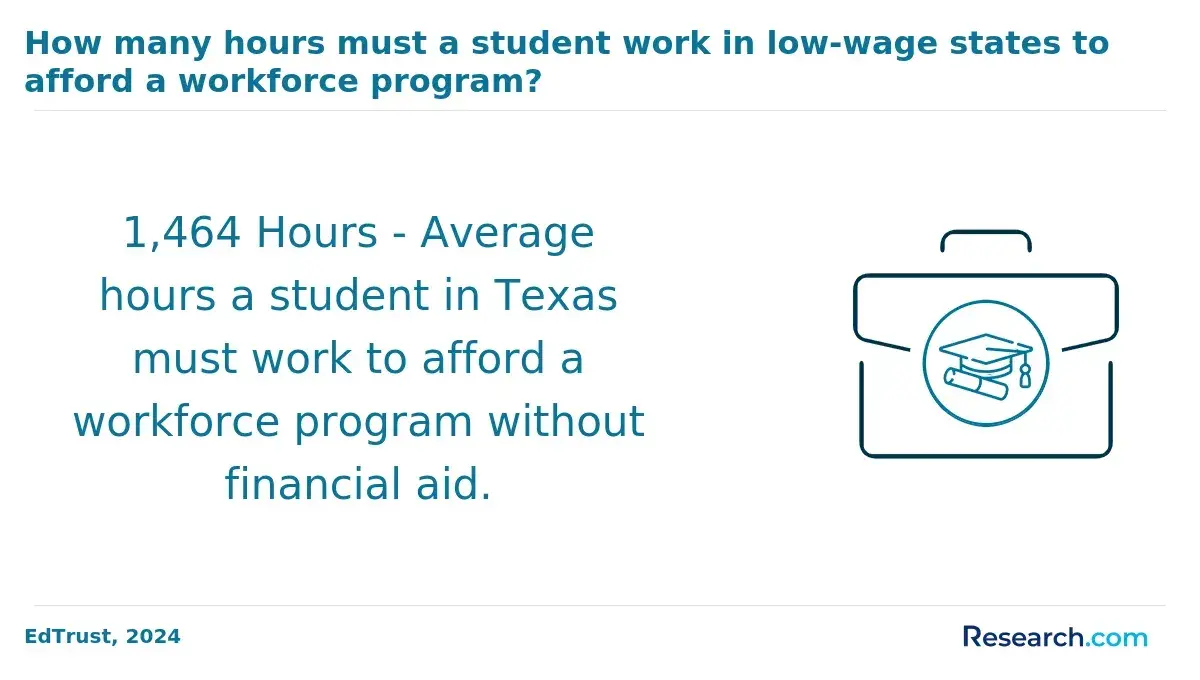
The cheapest advertised per-credit rate is not always the cheapest degree. Total direct cost equals required graduate credits multiplied by tuition, plus mandatory university, technology, course, graduation, and residency-related charges. Add the cost of prerequisite classes if your bachelor's degree did not include the accounting coursework required for admission or CPA preparation.
This cost worksheet helps applicants compare programs using figures supplied in each school's current tuition schedule rather than assumptions.
| Cost component | What to obtain from the university | How to use it in a comparison |
| Graduate tuition | Online per-credit rate or program-wide rate | Multiply by required program credits |
| Mandatory fees | Technology, distance-learning, student-service, and graduation fees | Add all charges that cannot be waived |
| Prerequisites | Required courses not included in the master's curriculum | Add tuition and fees for each missing course |
| In-person requirements | Residencies, orientations, exams, or capstone travel requirements | Estimate travel, lodging, and time-away-from-work costs |
| Books and software | Course material and accounting-software requirements | Budget separately because these costs vary by course |
Use this formula: estimated total direct cost = tuition for required credits + mandatory fees + prerequisite costs + required travel costs. Then subtract grants, scholarships, employer support, and other aid that does not need to be repaid to estimate your likely out-of-pocket price.
Students comparing accounting with adjacent business paths should also consider whether the curriculum fits the intended work. An accelerated degree in finance may suit corporate finance or investment-focused goals, while a Master of Accountancy is usually the more direct choice for advanced financial reporting, audit, taxation, and CPA-credit planning.
Do Online Accounting Master's Students Have to Establish Residency to Receive the Lowest Tuition Rate?
In a genuinely residency-neutral online program, eligible students receive the published online rate without moving to the institution's state or proving residency. That is the practical advantage of the model: it avoids making relocation part of the cost-saving strategy.
Still, "no residency requirement" should be verified rather than presumed. Some schools use a single online rate but limit it to fully online enrollment. A student who takes a campus course, enters a hybrid track, changes programs, or enrolls in a separately billed prerequisite may be charged under a different schedule.
Before applying, request answers to the following questions in writing so the financial expectation is clear:
- Does the published online rate apply to every required accounting master's course?
- Does the same rate apply for the entire time I remain continuously enrolled?
- Are online, technology, proctoring, course, or student-service fees charged separately?
- Are any courses delivered on campus or subject to a different rate?
- Does the policy apply to prerequisite accounting courses and summer enrollment?
- Can a future tuition increase change my rate before graduation?
A residency-neutral rate and in-state tuition are related but different concepts. The first is a pricing policy for online learners; the second is a legal classification that may affect campus tuition, state aid, and other benefits. Students who already qualify for in-state tuition should compare both available rates rather than assuming the online flat rate is lower.
How Do Public and Private Universities Compare on the Cost of an Online Accounting Master's Degree?
Public universities may offer especially competitive online pricing when they extend a flat rate to nonresidents, but they are not automatically the best-value choice. Private nonprofit universities generally do not use state residency categories, which can make pricing easier to understand. Their tuition may be higher, yet scholarships, shorter programs, fewer fees, or stronger career support can narrow the net-cost difference.
Compare the institution type at the program level, not as a shortcut for quality. The table highlights the trade-offs most relevant to an online accounting master's applicant.
| Comparison factor | Public university | Private nonprofit university | What to verify |
| Residency pricing | May have resident, nonresident, or flat online rates | Often one rate regardless of location | Whether the online accounting program has a separate rate |
| Net price | Can be low before aid, especially for residents | May be offset by institutional scholarships | Written aid offer and total direct cost |
| Scheduling | May follow standard academic terms | May offer multiple starts or accelerated terms | Course availability and realistic completion timeline |
| Program focus | May offer broad public-university resources | May offer a career-focused cohort model | CPA coursework, faculty access, and employer relevance |
When comparing professional degrees, use the same discipline-specific approach rather than assuming a school category determines value. For example, students evaluating helping-profession graduate options should compare accreditation, practicum obligations, and total charges in the cheapest CACREP-accredited programs online just as carefully as they compare accounting curriculum and CPA alignment.
Be cautious of a public-school comparison that uses resident tuition for one program and a nonresident rate for another. For an out-of-state online student, the relevant comparison is the rate they are actually eligible to pay, including all compulsory charges.
Can Financial Aid Reduce the Cost of a Cheap Online Accounting Master's Program?
Financial aid can reduce net cost, but graduate students should not assume aid will eliminate tuition. Eligible U.S. graduate students may use federal Direct Unsubsidized Loans and, subject to credit approval and borrowing limits, Direct PLUS Loans after filing the FAFSA. Schools can also offer institutional scholarships, graduate assistantships, payment plans, and limited need- or merit-based awards.
Employer tuition assistance can be particularly meaningful for accountants working in firms, corporations, government, or nonprofit organizations. Confirm whether reimbursement requires a minimum grade, continued employment, preapproval, a particular field of study, or repayment if you leave the employer. Also determine whether reimbursement is paid upfront or only after you initially cover the bill.
Review aid sources in this order because not all forms of assistance create the same long-term obligation:
- Submit the FAFSA early and review the school's financial-aid instructions for online graduate students.
- Apply for university scholarships and department awards with separate deadlines.
- Ask your employer for its written tuition-assistance policy and eligible-expense list.
- Use savings, payment plans, and employer funds before borrowing where feasible.
- Compare federal-loan terms with private loans only after calculating the remaining gap.
The most useful number is your net program cost, not the loan amount you are permitted to borrow. A higher-tuition program with a substantial nonrepayable scholarship may cost less than a low-tuition program with no aid, while an employer-funded program may be the best choice if it meets your career and scheduling needs.
How Do Program Format and Completion Time Affect the Cost of an Online Accounting Master's Degree?
Format affects both direct expenses and the opportunity cost of time. A fully online asynchronous program may reduce commuting and scheduling conflicts, while live online courses can provide more structure but may require attendance at set times. Hybrid programs can add travel costs, and short on-campus residencies can be worthwhile for networking but should be included in the budget.
Accelerated programs may lower the time spent paying recurring fees and can help students reach career milestones sooner. They are not automatically less expensive: compressed terms can make it harder to work full time, take fewer credits, or retake a difficult class without delaying graduation. Traditional pacing may be the better financial choice for students whose employer funds courses one at a time.
This format comparison identifies costs that do not appear in a per-credit tuition quote.
| Format or pace | Possible cost advantage | Potential added cost or risk | Best fit |
| Fully online, asynchronous | Lower commuting and greater work flexibility | Requires strong time management | Working students in different time zones |
| Fully online, synchronous | Regular faculty and peer interaction | Fixed meeting times may affect work hours | Students who prefer scheduled instruction |
| Hybrid or residency-based | In-person networking and applied learning | Travel, lodging, and missed-work expenses | Students able to attend required sessions |
| Accelerated | Potentially fewer terms and faster completion | Heavier workload and less scheduling flexibility | Students with capacity for intensive study |
| Part-time | Allows income and employer benefits to continue | More time exposed to tuition increases or recurring fees | Students balancing work or caregiving |
Acceleration is common across online fields, but it should be evaluated against course intensity and support needs. A fast cyber security degree may illustrate how accelerated online delivery works in another technical field, yet accounting students should specifically confirm sequencing for audit, tax, analytics, and capstone courses.
How Much Can Transfer Credits Reduce the Cost of an Online Accounting Master's Degree?
Transfer credit can reduce the number of courses you need to pay for, but policies vary widely. Many graduate programs limit transfer credits, require a minimum grade, impose a time limit on prior coursework, and require that transferred classes match the program's learning outcomes. Some programs do not accept graduate transfer credits at all.
Students should also distinguish transfer credit from advanced standing and prerequisite waivers. A waived prerequisite may save time but may not reduce the required number of credits in the master's curriculum. Conversely, a transferred graduate accounting course can reduce tuition only if the university applies it directly to degree requirements.
Take these steps before choosing a school based on a possible transfer discount:
- Send official transcripts and course descriptions for a preliminary evaluation before paying an enrollment deposit.
- Ask for the maximum transferable credits, minimum grade, age-of-coursework rule, and whether graduate accounting courses are eligible.
- Request a written degree plan showing transferred credits, remaining required credits, and projected completion term.
- Compare the price of completing all credits at one low-cost school with the price after transfer at each alternative.
- For CPA planning, confirm that transferred courses will be accepted by the relevant state accountancy board if you need them for educational requirements.
Transfer policies are especially important in regulated or standards-based fields, where course equivalency is carefully reviewed. Similar caution applies when comparing accredited speech language pathology programs, because a fast timeline is useful only when required academic and professional standards remain satisfied.
A red flag is a recruiter promising that credits "should transfer" without a transcript evaluation. Treat transfer credit as uncertain until the registrar or graduate program issues a documented decision.
Is a Cheap Online Accounting Master's Degree Worth the Cost for Career Advancement?
A lower-cost online accounting master's degree can be a strong investment when it fills a specific gap: advanced accounting knowledge, CPA educational credits, access to audit or tax work, or preparation for supervisory and specialized roles. It may be less compelling for someone who already meets CPA education requirements, has an employer that values experience over another degree, or needs a different credential for their target role.
Accountants and auditors prepare and examine financial records, assess controls, support tax compliance, analyze financial information, and communicate findings to leaders or clients. The Bureau of Labor Statistics projects 5% employment growth for accountants and auditors from 2023 to 2033.
That projection describes the occupation overall, not a guaranteed outcome for master's graduates, but it supports evaluating a degree alongside practical skills in analytics, accounting information systems, audit technology, tax research, and communication.
The most suitable degree type depends on the purpose of enrollment. A Master of Accountancy or MS in Accounting is typically professional and practice-oriented, often featuring a capstone rather than a thesis.
A research-focused MS or MA may better fit students interested in academic study or doctoral preparation. Specialized options in taxation, audit, forensic accounting, analytics, or assurance can add focus, while a generalist program may offer broader flexibility.
Use this career-fit test before borrowing for any program:
- Choose a CPA-oriented accounting master's if you need additional qualifying accounting or business coursework and the curriculum aligns with your state's rules.
- Choose a specialized track if it matches a realistic target such as tax, internal audit, forensic accounting, or accounting analytics.
- Choose the lowest total-cost accredited option if your employer mainly requires a legitimate graduate credential and the curriculum covers your skill gaps.
- Consider a higher-cost program only when its required outcomes, scheduling, recruitment access, network, or specialization offers a concrete advantage for your situation.
Students considering a later academic path should separately evaluate doctoral duration, research fit, and funding rather than assuming a master's leads directly to the right doctorate. Resources on the easiest PhD to get can help frame broader doctoral-format questions, but accounting doctoral admissions and research expectations remain program-specific.
How Should Students Compare the Cheapest Accredited Online Accounting Master's Programs?
Build a comparison using the same inputs for every program. Start with schools that offer institutional accreditation and a tuition policy that applies to all required online accounting courses. Then move beyond tuition to evaluate degree requirements, CPA alignment, scheduling, support, and likely net cost.
The following scorecard identifies the information that should be collected before submitting applications or accepting an offer.
| Decision category | What to compare | Why it matters |
| Accreditation | Institutional accreditor and any specialized business accreditation | Supports degree legitimacy and helps assess academic standards |
| Tuition policy | Online rate, residency treatment, annual increases, and excluded courses | Determines whether nonresident pricing is genuinely predictable |
| Total direct cost | Required credits, fees, prerequisites, materials, and travel | Prevents low per-credit tuition from masking higher total charges |
| CPA alignment | Accounting and business coursework, transcript review, and state-board guidance | Helps avoid paying for credits that do not meet your licensing plan |
| Format | Asynchronous or live classes, course length, residency, and enrollment options | Shows whether the program is workable alongside employment |
| Career value | Specializations, faculty expertise, advising, career services, and employer relevance | Connects the degree to a credible advancement goal |
| Transfer policy | Maximum credits, equivalencies, grade rules, and written evaluation | Clarifies whether prior coursework will actually reduce cost |
A practical final step is to request a written financial estimate from each finalist, then calculate net cost after confirmed scholarships and employer support. Compare that result with the credits you still need, the time you can realistically devote to study, and the job outcome you are pursuing.
The best affordable option is the one that is accredited, residency-neutral when you need it, academically suitable, and financially sustainable - not simply the program with the smallest tuition number on a webpage.
Other Things You Should Know About Accounting Programs
Not always. Some programs admit students with business or nonbusiness bachelor's degrees but require foundational courses in financial accounting, managerial accounting, auditing, taxation, economics, or statistics. Missing prerequisites can add time and cost, so request an admission evaluation before enrolling.
No. CPA eligibility is set by state accountancy boards and depends on your total college credits, specific accounting and business courses, degree level, and other state requirements. A master's may help meet the common 150-credit education threshold, but students should verify their own transcript against the rules of the state where they plan to pursue licensure.
A Master of Accountancy generally provides deeper accounting coursework in areas such as audit, tax, financial reporting, and assurance. An MBA with an accounting concentration usually emphasizes broader management, leadership, strategy, and finance. The accounting master's is often the more direct option for CPA-credit planning or technical accounting advancement.
Automation and AI tools are increasing the value of skills that go beyond routine transaction processing, including data analysis, internal controls, professional judgment, audit documentation, ethics, and clear communication. When comparing programs, look for coursework in accounting information systems, analytics, technology controls, or emerging accounting tools alongside core accounting content.
References
- Top 12 Accounting CPA Programs in 2026 - Controllers Council https://controllerscouncil.org/top-12-accounting-cpa-programs-in-2026/
- 2025 Most Affordable Online Master's Programs https://www.onlineu.com/most-affordable-colleges/masters-degrees
- Online Masters in Accounting Degree Programs, No GMAT https://teach.com/online-ed/business-degrees/online-masters-accounting/
- OnlineColleges.net https://www.onlinecolleges.net/rankings/best-online-masters-accounting-degree-programs/
- Most Affordable Online Accounting Master's Programs 2025 https://www.accounting.com/degrees/accounting/masters/most-affordable/
- Most Affordable Online Accounting Master's Degrees in 2025 https://www.onlinemastersdegrees.org/most-affordable/accounting-programs/
- Master's in Accounting https://online.cudenver.edu/programs/graduate/online-masters-accounting