2027 Online Accounting Doctorate Programs with No Dissertation Requirement

Co-Founder and Chief Data Scientist
Choosing an online accounting doctorate without a dissertation is really a choice between traditional research training and applied doctoral work. The distinction matters because the U.S. Bureau of Labor Statistics reported a 2024 median pay of $81,680 for accountants and auditors, while senior leadership and faculty pathways can require stronger credentials.
This guide is for working accountants, CPAs, finance leaders, and aspiring instructors who want a practical doctorate. You will learn what "no dissertation" actually means, how to verify legitimacy, and how to compare programs before committing time and money.
Key Things You Should Know
- Yes, some online accounting-related doctorates do not require a traditional five-chapter dissertation, but they usually replace it with a doctoral capstone, applied research project, consulting project, portfolio, or dissertation-in-practice.
- The most common no-dissertation pathway is a Doctor of Business Administration with an accounting, finance, or accounting-adjacent concentration; fully online PhD programs in accounting without dissertations are rare because PhD study is designed for original scholarly research.
- Use 2024 labor-market data carefully: accountants and auditors had a median pay of $81,680, but doctoral ROI depends more on your target role, employer, accreditation, tuition, and whether the final project matches your career goal.
Which Online Accounting Doctorate Programs Do Not Require a Dissertation?
Online accounting doctorates without a traditional dissertation are most often professional doctorates, especially Doctor of Business Administration programs with an accounting, accounting analytics, finance, taxation, or general business research focus. A traditional PhD in accounting is normally dissertation-based because it prepares students to produce original academic research, publish in scholarly journals, and compete for tenure-track faculty roles.
The practical answer is this: look for programs that explicitly describe the final requirement as a capstone, applied doctoral project, consulting project, portfolio, or research project rather than a dissertation. Some programs use similar language but still require a dissertation-style manuscript, so the catalog wording matters more than the marketing page.
The table below summarizes the doctorate formats a student is most likely to encounter when searching for an online accounting doctorate with no dissertation requirement. It helps separate truly dissertation-free pathways from programs that simply use different terminology for a large research manuscript.
| Doctorate format | Common accounting fit | Traditional dissertation usually required? | Typical final requirement | Best fit |
| DBA in Accounting or DBA with an accounting concentration | Strong | Not always | Applied doctoral project, capstone, consulting project, or dissertation-in-practice | Working accountants, controllers, executives, consultants, and practitioner-scholars |
| DBA in Business Administration with accounting electives | Moderate | Varies by school | Capstone, applied project, or dissertation | Students who want broad leadership training with accounting-related research |
| PhD in Accounting | Very strong for academic research | Yes, in most cases | Original scholarly dissertation | Aspiring tenure-track professors and accounting researchers |
| Doctorate in Business, Management, or Organizational Leadership | Indirect | Varies | Capstone, applied project, or dissertation | Accounting professionals moving into leadership, compliance, or operations roles |
Students who are still building foundational business knowledge may be better served by a lower-cost online business degree before pursuing doctoral study. A doctorate is most useful when it builds on substantial graduate education, professional accounting experience, or a clear leadership or teaching objective.
What Replaces the Dissertation in an Online Accounting Doctorate?
A no-dissertation doctorate does not mean a no-research doctorate. Legitimate doctoral programs still require advanced analysis, scholarly writing, methodology, and evidence-based problem solving. The difference is that the final product is usually applied to a real organization, accounting system, compliance issue, tax problem, audit process, financial reporting challenge, or leadership decision rather than framed as a traditional academic dissertation.
The table below compares common dissertation alternatives. This matters because two programs can both advertise "no dissertation" while requiring very different levels of research, writing, data analysis, and faculty review.
| Final requirement | What students usually produce | How it differs from a dissertation | What to verify before enrolling |
| Doctoral capstone | An applied paper, presentation, and evidence-based solution to a professional problem | More practice-focused and often shorter than a traditional dissertation | Required length, committee review, presentation format, and grading standards |
| Applied doctoral project | A research-supported intervention, analysis, or implementation plan | Uses doctoral research methods but centers on workplace application | Whether original data collection, IRB review, or employer access is required |
| Consulting project | A client-style analysis of a business, accounting, or financial problem | Often resembles executive consulting work rather than academic theory building | Whether the school provides project partners or students must secure their own site |
| Portfolio | A curated set of doctoral papers, projects, reflections, and competency evidence | Demonstrates mastery across the program instead of one long manuscript | Portfolio review process, defense requirement, and revision limits |
| Dissertation-in-practice | A research-based solution to a professional problem of practice | Applied in purpose, but may still be dissertation-like in structure | Whether the school officially classifies it as a dissertation requirement |
For accounting students, strong alternatives often involve audit quality, fraud prevention, accounting information systems, tax compliance, risk management, cost controls, financial reporting, or analytics. The best projects are specific enough to finish, rigorous enough to demonstrate doctoral-level skill, and relevant enough to support career advancement.
Before choosing a program, ask for the final-project handbook rather than relying only on admissions language. Review the rubric, defense rules, committee process, data requirements, revision policy, and examples of completed project titles if the school makes them available.
Are Online Accounting Doctorate Programs Without Dissertations Legitimate and Accredited?
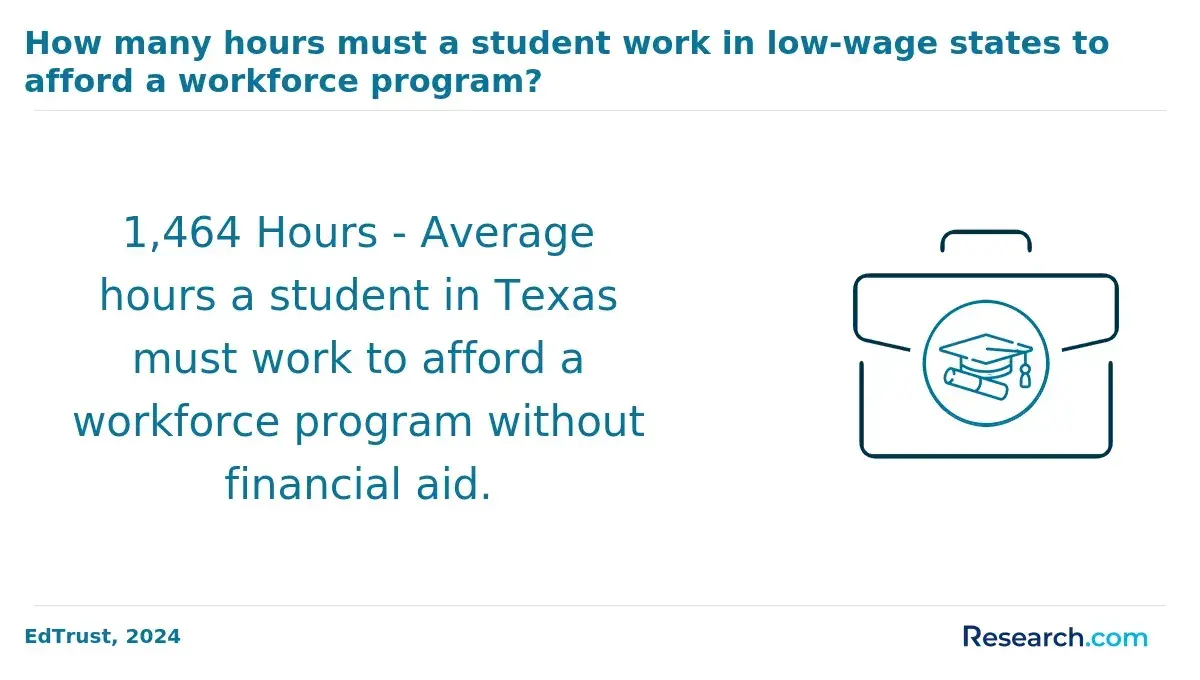
Yes, an online accounting doctorate without a traditional dissertation can be legitimate if it is offered by an appropriately accredited institution and has a clearly defined doctoral-level completion requirement. Accreditation is the first filter because it affects federal financial aid eligibility, transferability, employer recognition, and whether the credential is taken seriously.
Students should evaluate accreditation at two levels. Institutional accreditation confirms that the university meets broad academic standards. Business or accounting-related programmatic accreditation can add credibility, although not every legitimate DBA or doctoral business program has separate accounting accreditation.
Use the following checks before applying because no-dissertation language can attract both legitimate professional doctorates and weak programs that overpromise speed or simplicity:
- Confirm that the university has recognized institutional accreditation through official accreditation databases or the school's accreditor page.
- Review the academic catalog, not only the program landing page, to confirm whether the final requirement is a dissertation, capstone, applied project, or another named requirement.
- Check whether the doctorate is classified as a DBA, PhD, EdD, or another degree type because the title signals different academic and career expectations.
- Ask whether the program requires a committee, oral defense, residency, IRB review, original data collection, or publication-style manuscript.
- Look for transparent tuition, faculty credentials, doctoral policies, student support, and graduation requirements.
A major red flag is a program that says "no dissertation" but does not explain what replaces it. Another red flag is a school that implies doctoral work can be completed with little research, writing, or faculty review. At the doctoral level, convenience should not replace rigor.
Are No-Dissertation Online Accounting Doctorate Programs Easier to Complete?
No-dissertation online accounting doctorate programs may be more practical for working adults, but they are not necessarily easy. They often reduce the uncertainty of a traditional dissertation by using structured milestones, defined project rubrics, and applied deliverables. That structure can help students finish, but the work still requires advanced research, quantitative or qualitative analysis, accounting expertise, and doctoral-level writing.
The key difference is risk. A traditional dissertation can become difficult when the research question, data access, faculty feedback, or methodology changes late in the process. A capstone or applied project may be more predictable because the scope is often tied to a professional problem and mapped across courses.
Common mistakes can make a dissertation-free program harder than expected. Students should watch for these issues before enrolling:
- Assuming "no dissertation" means no major writing, when many capstones still require a substantial manuscript and formal presentation.
- Choosing a project topic that depends on confidential employer data without confirming permission early.
- Underestimating statistics, research design, accounting analytics, or methodology courses.
- Ignoring residency, synchronous session, or defense requirements that can disrupt work schedules.
- Focusing only on speed instead of faculty support, project structure, and completion policies.
For many working professionals, the easier part is not the academic level but the alignment with real accounting practice. A controller, auditor, or tax leader may find an applied project more intuitive than a theory-driven dissertation because it connects directly to problems they already solve at work.
How Long Does It Take to Complete an Online Accounting Doctorate Without a Dissertation?
Many online DBA-style accounting doctorates are designed for part-time completion while students continue working. The timeline often depends on transfer credits, cohort structure, course load, research sequence, and how quickly the student completes the final project. A dissertation-free format can be faster when the capstone is embedded into the curriculum rather than added after coursework.
The table below shows typical timeline patterns by doctoral structure. Use it to compare program design, not as a promise of completion, because schools set different credit loads, calendars, and project requirements.
| Program structure | Common pacing | Why the timeline varies | Best for |
| Course-embedded capstone DBA | Often structured around sequential milestones | Students progress faster when each course builds part of the final project | Working professionals who need predictable deadlines |
| Applied doctoral project after coursework | Coursework first, project later | The project may extend the timeline if data access or faculty approval takes longer than expected | Students with a clear workplace research site |
| Traditional dissertation doctorate | Coursework plus independent dissertation phase | Research design, proposal approval, data collection, and revisions can extend completion | Students pursuing academic research or tenure-track goals |
| Executive or cohort doctorate | Lockstep schedule | The calendar is predictable, but students may have less flexibility to slow down or accelerate | Professionals who prefer peer structure and scheduled progress |
When comparing timelines, ask schools how many students finish within the advertised timeframe and what happens if the capstone or project is not approved on the first attempt. Also ask whether time-to-degree limits apply, because some doctoral programs require completion within a set number of years.
Students should also account for life and work demands. Busy seasons in audit, tax, budgeting, or year-end reporting can affect progress more than the official program length suggests.
How Much Do Online Accounting Doctorate Programs Without Dissertations Cost?
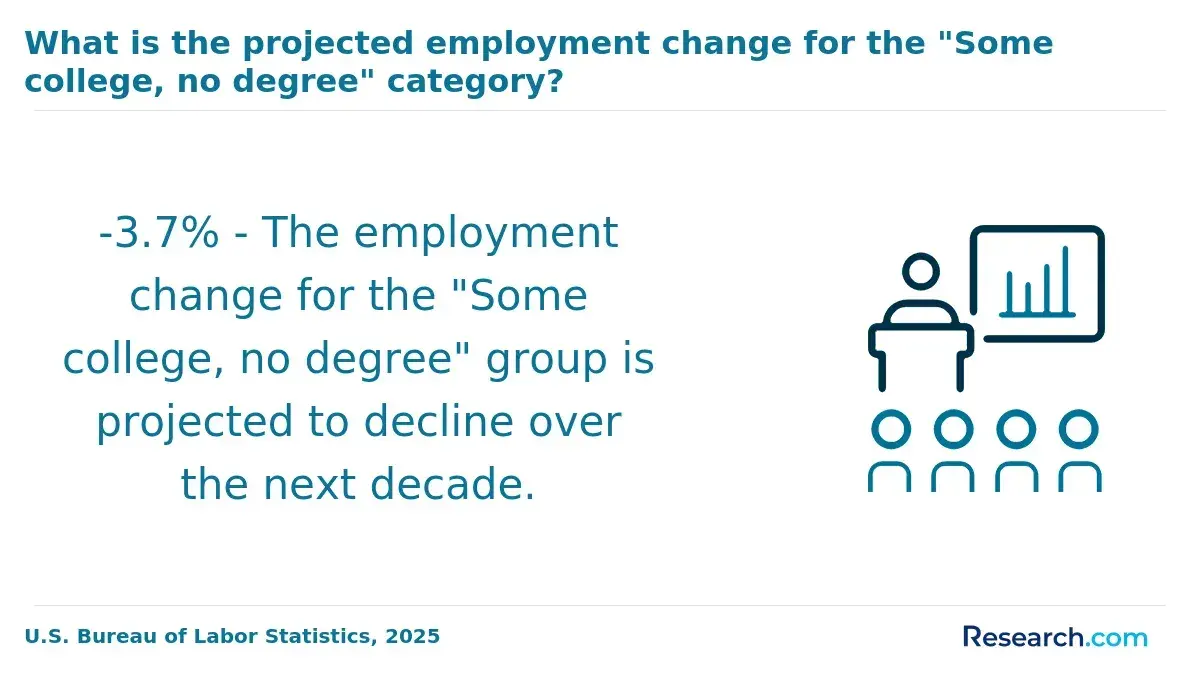
Costs vary widely because online accounting doctorate programs use different tuition models, credit requirements, technology fees, residency fees, and project-related expenses. The most reliable comparison is total program cost, not tuition per credit alone. A lower per-credit rate can still become expensive if the program requires more credits, mandatory residencies, or repeated project enrollment.
Federal borrowing rules also matter for affordability. Graduate and professional students can borrow up to $20,500 per academic year through the federal Direct Unsubsidized Loan program, which means many doctoral students may need savings, employer tuition support, payment plans, scholarships, or Graduate PLUS loans if annual costs exceed that amount.
When reviewing program costs, compare every required expense rather than only the advertised tuition rate:
- Tuition per credit or per term
- Total required doctoral credits
- Technology, online learning, library, graduation, and student service fees
- Residency, travel, lodging, and meals if any in-person sessions are required
- Capstone, project continuation, dissertation-equivalent, or research course fees
- Books, accounting software, statistical tools, database access, and exam proctoring
- Interest costs if borrowing federal or private loans
A no-dissertation program is not automatically cheaper. It may cost less if it shortens the final research phase, but it may cost more if the school charges premium doctoral tuition or requires multiple project courses. The safest approach is to request a written degree plan showing the exact credits, required fees, and estimated total cost through graduation.
Who Benefits Most From an Online Accounting Doctorate Without a Dissertation?
The best candidates are experienced accounting and business professionals who want doctoral-level credibility, applied research skills, and leadership preparation without pursuing a traditional academic research career. These students often care more about solving organizational problems than publishing theory-driven studies.
An online accounting doctorate without a dissertation may be a strong fit for professionals in these situations:
- CPAs, controllers, auditors, tax professionals, and finance managers who want to move into executive, consulting, or higher education roles.
- Accounting instructors at community colleges or teaching-focused institutions who need a terminal degree but do not need a research-intensive PhD.
- Professionals interested in applied accounting analytics, fraud prevention, governance, compliance, or financial systems improvement.
- Working adults who need an online format and a structured final project that can connect to their workplace.
Some readers may not need a doctorate yet. If your goal is to enter accounting, change careers, or qualify for entry-level roles, an online accounting degree may be a more appropriate starting point. If your goal is hands-on transaction processing, payroll, or small-business accounting support, a bookkeeping certification may offer a shorter and more targeted pathway.
A dissertation-free doctorate may not be the best fit for students who want a tenure-track research position at a research university, plan to publish heavily in academic accounting journals, or need deep training in econometrics, archival accounting research, or experimental methods. In those cases, a traditional PhD is usually the stronger signal.
How Does a No-Dissertation Online Accounting Doctorate Affect Career Opportunities?
A no-dissertation online accounting doctorate can support career opportunities when the degree type, accreditation, and final project align with the target role. It is most useful for applied leadership, consulting, teaching-focused faculty roles, corporate training, policy implementation, and senior accounting management. It is usually less ideal for research-intensive academic careers where employers expect a traditional dissertation and scholarly publication pipeline.
Career value also depends on how the student uses the doctorate. A capstone on internal controls, fraud analytics, sustainability reporting, tax technology, or audit process improvement can become a professional portfolio piece. Employers may care less about whether the final project is called a dissertation and more about whether the graduate can lead evidence-based change.
The labor-market context is favorable for accounting expertise, but a doctorate should still be evaluated role by role. The BLS reported the 2024 median pay for accountants and auditors at $81,680; this figure includes many roles that do not require a doctorate, so it should be used as a baseline for the profession rather than a doctoral salary estimate.
Common career paths connected to applied accounting doctorates include:
- Senior accounting manager, controller, or director of accounting
- Internal audit, risk, compliance, or governance leader
- Accounting consultant or advisory services professional
- Teaching-focused accounting faculty member or program director
- Corporate trainer for accounting systems, controls, analytics, or financial reporting
- Public-sector finance, audit, or accountability leader
Technology is also changing the value of doctoral-level accounting skills. AI, automation, and analytics tools can handle more routine processing, but organizations still need professionals who can interpret outputs, evaluate controls, manage ethical risks, and design better decision systems. A strong applied doctoral project can show those higher-level skills.
Accounting professionals building foundational expertise before doctoral study may pursue a bookkeeping certification to develop practical competencies in financial documentation and compliance. These accessible credentials strengthen foundational readiness for advanced accounting doctorates while providing immediate career mobility in accounting operations and finance roles.
How Do No-Dissertation Online Accounting Doctorates Compare With Traditional Doctorates?
The best choice depends on whether your goal is applied professional leadership or original academic research. A dissertation-free doctorate is not automatically less valuable, but it sends a different signal. It usually says, "I can apply research to complex professional problems." A traditional dissertation says, "I can design and defend original scholarship that contributes to academic knowledge."
The table below compares the two pathways across decision points that matter most to accounting professionals. Use it to match the degree structure to the job market you actually want to enter.
| Comparison point | No-dissertation online accounting doctorate | Traditional dissertation-based doctorate |
| Common degree type | DBA or applied professional doctorate | PhD or research doctorate |
| Primary purpose | Apply research to accounting, business, leadership, or organizational problems | Create original scholarly research for academic knowledge |
| Final requirement | Capstone, applied project, portfolio, consulting project, or dissertation-in-practice | Traditional dissertation with proposal, research, defense, and revisions |
| Best career fit | Executive leadership, consulting, teaching-focused roles, practitioner scholarship | Tenure-track academia, research universities, scholarly publication careers |
| Flexibility for working adults | Often higher because projects may connect to professional practice | Varies, but independent research demands can be less predictable |
| Research depth | Applied and practice-oriented | Theory-driven and methodologically intensive |
A dissertation-free doctorate may be the better choice if your career is already rooted in accounting practice and you want to lead, teach, consult, or solve complex organizational problems. A traditional doctorate may be better if you want to compete for research faculty positions or build a career around publishing accounting scholarship.
Students considering broader management alternatives should also compare doctoral study with specialized graduate options such as an MBA operations management online, especially if the real goal is operational leadership rather than doctoral-level research.
How Should Students Choose an Online Accounting Doctorate Without a Dissertation?
Start with the career outcome, then work backward to the degree structure. The right program is not simply the fastest or easiest-looking option. It is the one with recognized accreditation, transparent requirements, qualified faculty, strong student support, and a final project that helps you build evidence for the role you want next.
Use these steps to evaluate programs before applying:
- Define your target outcome, such as executive advancement, consulting, college teaching, accounting analytics leadership, or academic research.
- Confirm the degree type and decide whether a DBA, PhD, or another doctorate best matches that outcome.
- Verify institutional accreditation and review any business or accounting-specific accreditation the school claims.
- Read the academic catalog to confirm the exact final requirement and whether the program is truly dissertation-free.
- Request the capstone or applied project handbook and review the rubric, defense rules, committee process, and data requirements.
- Ask how online courses are delivered, including synchronous meetings, residencies, cohort pacing, and faculty availability.
- Compare total cost through graduation, including continuation fees, travel, software, books, and loan interest.
- Ask admissions advisors for completion data, student support details, and examples of acceptable project topics.
- Check whether the degree supports your licensing, promotion, teaching, or employer requirements before enrolling.
Red flags include vague final-project language, unrealistic completion promises, poor transparency about tuition, pressure-heavy admissions tactics, and faculty lists that do not show relevant doctoral credentials or accounting expertise. Also be cautious if a school cannot explain how its capstone demonstrates doctoral-level research competence.
The smartest choice is a program whose final project you would be proud to discuss in a promotion interview, consulting proposal, classroom, or leadership meeting. If the project directly supports your professional brand, the no-dissertation format can be a practical and credible route to doctoral-level advancement.
Other Things You Should Know About Accounting
No. CPA licensure is set by state boards of accountancy and usually depends on education hours, accounting coursework, exam completion, ethics requirements, and experience. A doctorate may add advanced credibility, but it is not the standard path to initial CPA licensure.
Yes. Many accountants build analytics skills through graduate certificates, software training, CPA continuing education, or a master's program. A doctorate is more appropriate when the goal involves leadership, teaching, consulting, or applied research rather than only technical upskilling.
Accounting is changing, not disappearing. Automation can reduce routine data entry and reconciliation work, but demand remains for professionals who understand controls, judgment, compliance, audit risk, financial interpretation, and ethical use of technology.
In most cases, yes. Many doctoral programs require or strongly prefer a master's degree, often in accounting, business, finance, taxation, or a related field. A master's program also helps students confirm whether advanced research and graduate-level accounting study fit their goals.
References
- Strategies for a Successful Capstone Project - Graduate Programs for Educators https://www.graduateprogram.org/blog/strategies-for-a-successful-capstone-project/
- Graduate Without a Dissertation? Master’s and PhD Options https://premierdissertations.com/graduate-without-dissertation/
- Can you get a PhD in one year? - Swiss School of Business Research https://ssbr-edu.ch/can-you-get-a-phd-in-one-year/
- Master's vs PhD/Doctorate Degrees - Key Differences - Wordvice https://wordvice.com/blog/masters-vs-phd-doctorate-degrees-key-differences/
- Contemplating a Doctorate in Accounting? - The CPA Journal https://www.cpajournal.com/2025/12/05/contemplating-a-doctorate-in-accounting-2/
- Best Online PhD and Doctorates in Accounting https://www.phds.me/online-programs/phd-doctorate-in-accounting/
- PhD Program in the Department of Accounting https://ium.edu.so/en/faculty/economics-and-business-administration/department-of-accounting/programme/phd-15-en
- The Role of Professional Doctorates in Bridging Academia ... https://jies.cultechpub.com/index.php/jies/article/download/16/11/94
- How to Pay for a Ph.D in 2026 - ELFI https://www.elfi.com/how-to-pay-for-a-ph-d/
- Doctorates in Accounting | Accounting.com https://www.accounting.com/degrees/accounting/phd/