
2027 Is an Online Accounting Doctorate Worth It? ROI, Salary Growth, and Career Impact

Co-Founder and Chief Data Scientist
An online accounting doctorate is a major investment, and its value depends on whether your career goal actually rewards doctoral-level expertise. The U.S. Bureau of Labor Statistics reports a May 2024 median salary of $81,680 for accountants and auditors, while higher-level finance and academic roles can pay substantially more.
This guide helps experienced accountants, CPAs, finance managers, instructors, and consultants compare costs, salary upside, time demands, and career impact so they can decide whether the degree is financially and professionally worth pursuing.
Key Things You Should Know
- An online accounting doctorate is most likely to pay off for professionals targeting accounting faculty roles, executive finance leadership, research-heavy consulting, or senior policy and governance positions, not for entry-level accounting work.
- BLS May 2024 data places accountants and auditors at a median of $81,680, while financial managers are at $161,700, making career path more important than the degree title alone.
- ROI depends on total program cost, employer tuition support, completion time, lost income, and whether a lower-cost credential such as a CPA, master's degree, certificate, or MBA can achieve the same goal.
What Is the ROI of an Online Accounting Doctorate?
The ROI of an online accounting doctorate is the relationship between what you invest and what you gain from the degree. The investment includes tuition, fees, books, technology costs, travel for residencies, interest on student loans, and the time you spend on coursework, research, and dissertation work. The return may include higher salary, eligibility for faculty positions, promotion into executive roles, consulting credibility, job security, and professional authority.
For most working professionals, the strongest financial case appears when the doctorate opens access to roles that were previously difficult to reach. If your current career path already tops out without requiring a doctorate, the ROI may be modest.
If the credential helps you move from practitioner to professor, from controller to executive, or from technical specialist to high-value consultant, the return can be stronger.
A useful ROI estimate compares your total net cost with realistic incremental earnings, not with the salary of a completely different career path. This table shows how to think about the calculation before assuming the degree automatically creates a pay raise.
| ROI factor | What to include | Why it matters |
| Direct education cost | Tuition, fees, books, software, residency expenses, graduation fees | Published tuition often understates the actual amount paid before completion |
| Financing cost | Loan interest, origination fees, repayment timeline | Borrowing can increase the real cost of the degree beyond the school's stated price |
| Opportunity cost | Reduced work hours, slower promotion timing, less consulting availability | Even online programs can limit earnings while enrolled |
| Incremental earnings | Salary increase tied to promotion, faculty appointment, consulting revenue, or leadership move | The most realistic ROI estimate focuses on the additional income attributable to the doctorate |
| Nonfinancial return | Research credibility, teaching eligibility, professional authority, job satisfaction | Some benefits are valuable even when they do not immediately appear in salary data |
The practical question is not simply "Will I earn more?" It is "Will this doctorate create a career opportunity that I could not reasonably access through a less expensive route?" That distinction prevents one of the most common mistakes: comparing doctoral salaries with bachelor's-level salaries without considering experience, industry, geography, CPA status, and job function.
How Much Can Salaries Increase After an Online Accounting Doctorate?
Salary growth after an online accounting doctorate is highly role-dependent. A doctorate may not dramatically change compensation for a staff accountant, senior accountant, or tax professional whose employer primarily rewards CPA licensure, billable hours, client portfolio, or management responsibility.
It can matter more in higher education, executive finance, litigation consulting, forensic accounting, and advisory roles where research skills and subject-matter authority carry more value.
BLS May 2024 data provides a useful benchmark: accountants and auditors had a median annual wage of $81,680. That figure does not isolate doctorate holders, but it shows the baseline market for accounting roles and helps readers avoid assuming that all accounting jobs pay doctoral-level premiums.
The table below compares common career directions connected to advanced accounting expertise. Use it as a context tool, not as a promise of post-graduation earnings.
| Career direction | Relevant 2024 U.S. salary benchmark | How a doctorate may affect pay | ROI signal |
| Accountant or auditor | BLS median annual wage: $81,680 | May help with specialization, credibility, or advancement, but many roles prioritize CPA status and experience | Moderate to low unless tied to promotion |
| Financial manager | BLS median annual wage: $161,700 | Can support executive credibility, risk oversight, governance, and strategic finance leadership | Potentially strong if the doctorate contributes to a leadership move |
| Management analyst or consultant | BLS median annual wage: $101,190 | May strengthen credibility in accounting systems, audit analytics, regulation, controls, or forensic work | Potentially strong for specialized consultants |
| Postsecondary business or accounting educator | Compensation varies by institution, rank, contract type, and research expectations | Often essential or strongly preferred for tenure-track and full-time faculty roles | Strongest when teaching or research is the primary goal |
The biggest salary mistake is attributing every raise after graduation to the doctorate. Promotions often result from a combination of leadership experience, CPA licensure, industry expertise, networking, and timing. A better approach is to ask employers, recruiters, faculty hiring committees, or consulting clients whether the doctorate would materially change your eligibility, compensation band, or credibility.
Which Career Paths Offer the Strongest Financial Return With an Online Accounting Doctorate?
The strongest financial return usually comes from career paths where doctoral training solves a specific market problem. In accounting, that often means teaching advanced topics, interpreting complex regulation, leading finance strategy, designing audit analytics systems, or advising on fraud, controls, valuation, and governance.
Professionals still building foundational accounting credentials may be better served first by an online accounting degree, CPA preparation, or targeted experience before considering a doctorate. A doctorate is typically a capstone credential for experienced professionals, not the fastest path into the field.
These career paths tend to have the clearest reasons to consider doctoral-level study:
- Accounting professor or business faculty member: A doctorate is often required or strongly preferred for full-time, tenure-track, or research-oriented faculty roles, especially at universities that value scholarly publication.
- Executive finance leader: CFOs, chief accounting officers, controllers, and audit executives may benefit when doctoral study strengthens strategic decision-making, governance expertise, and credibility with boards or regulators.
- Forensic accounting or litigation consultant: Doctoral-level research, statistical reasoning, and expert communication can support complex cases involving fraud, damages, controls, or financial reporting disputes.
- Audit analytics or accounting technology leader: Professionals working with AI-enabled audit tools, enterprise systems, internal controls, and data governance may use the doctorate to build authority in emerging technical areas.
- Policy, regulatory, or standards-focused specialist: The degree can be valuable for professionals who interpret accounting standards, advise institutions, or contribute to public-sector oversight and compliance strategy.
The weakest ROI often appears when the target job does not require or reward the credential.
For example, if your goal is to become a senior tax associate, staff auditor, payroll manager, or small-business bookkeeper, a doctorate is usually more education than the role requires. In those cases, CPA licensure, Enrolled Agent status, software expertise, or industry specialization may create a faster and cheaper return.
How Does an Online Accounting Doctorate Affect Career Advancement?
An online accounting doctorate can affect career advancement by changing how employers, academic institutions, clients, and peers perceive your expertise. It may qualify you for roles that require advanced research ability, independent scholarship, curriculum design, policy analysis, or executive-level judgment. However, it rarely replaces the need for professional experience.
The career impact is strongest when the program's design matches your target role. A PhD in accounting or business with an accounting focus is often more research-intensive and may fit academic research careers. A DBA with an accounting, finance, or business concentration is usually more applied and may fit executives, consultants, and practitioner-scholars.
Before enrolling, compare the advancement value of the degree against the requirements of your target role. The following questions can help you separate real career leverage from credential inflation:
- Do job postings for your target role require a doctorate, prefer one, or simply list it as a nice-to-have?
- Do people currently holding your desired role usually have a PhD, DBA, CPA, MBA, or another credential?
- Will your employer adjust your title, pay band, or promotion eligibility after completion?
- Does the program include dissertation, applied research, teaching preparation, or analytics work that aligns with your career goal?
- Can you demonstrate how the doctorate will help solve business problems, not just add letters after your name?
AI and automation make this analysis more important. Routine bookkeeping, reconciliation, and basic reporting tasks are increasingly supported by software, but employers still need professionals who can interpret results, evaluate controls, explain risk, and lead ethical decision-making. A doctorate can support those higher-order responsibilities when paired with practical accounting and technology experience.
How Much Does an Online Accounting Doctorate Cost Compared With Its Potential Benefits?
Online accounting doctorate costs vary widely by institution, credit load, residency requirements, transfer policy, and whether the program is delivered as a PhD, DBA, or business doctorate with an accounting specialization.
NCES data published in 2024 shows that average graduate tuition and required fees for the 2022-23 academic year were $12,596 at public institutions and $29,931 at private nonprofit institutions. That does not represent the price of every doctorate, but it is a useful warning that graduate study can carry substantial annual cost.
Some students compare doctoral programs with an online business degree because business schools may offer several routes into accounting leadership, finance management, analytics, or operations roles. The right comparison is not only tuition; it is tuition plus the career outcome you are actually trying to reach.
This table summarizes major cost categories that can affect the real price of an online accounting doctorate.
| Cost category | What to check | ROI implication |
| Tuition structure | Per-credit tuition, flat-rate terms, dissertation continuation fees | Programs with low advertised tuition can become expensive if dissertation work extends beyond the planned timeline |
| Residency requirements | Campus visits, travel, lodging, meals, time away from work | Short residencies can add value, but they also increase out-of-pocket cost |
| Transfer or prior learning policy | Accepted graduate credits, maximum transfer limits, age limits on prior coursework | Accepted credits may reduce both cost and time to completion |
| Employer support | Tuition reimbursement, professional development funds, promotion pathways | Employer funding can materially improve ROI if it does not require staying in a poor-fit role |
| Financing | Loan type, interest, repayment plan, borrowing amount | Debt can reduce ROI if salary gains are delayed or uncertain |
A common red flag is focusing only on the per-credit price. Students should ask for a full program cost estimate that includes required credits, fees, dissertation terms, residencies, textbooks, software, and expected completion time. If a school cannot explain the typical cost through completion, compare it carefully with programs that provide clearer financial planning information.
How Does the Time Required for an Online Accounting Doctorate Affect Its ROI?
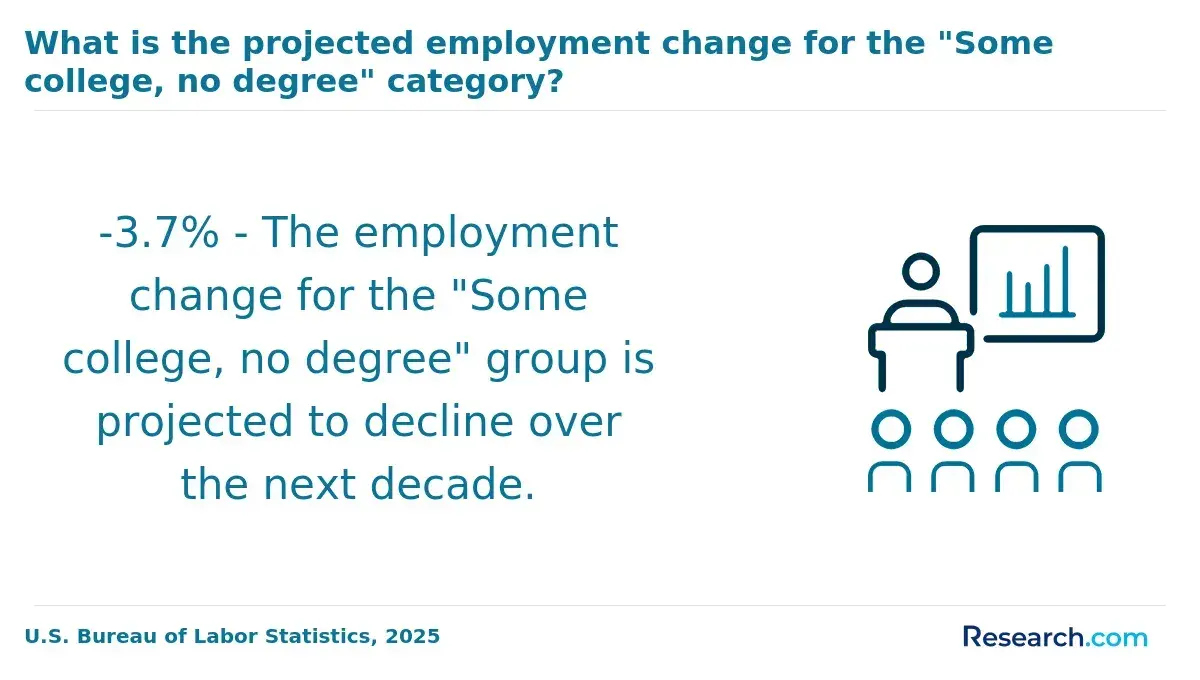
Time is one of the most important and underestimated ROI factors. Many online accounting doctorate programs are designed for working adults and may take several years, especially when dissertation or applied research requirements are included. Even when you keep working full time, the degree can reduce your availability for overtime, consulting, networking, family responsibilities, or job searching.
The financial effect of time is simple: the longer the program takes, the longer you wait to receive any salary or career benefit. If a degree costs $60,000 and contributes to a $15,000 annual pay increase after completion, the simple payback period is about four years after the raise begins. If completion takes longer than expected or the raise is smaller, the payback period lengthens.
To evaluate time-based ROI, use a conservative process rather than an optimistic best-case scenario:
- Confirm the program's required credits, dissertation expectations, residency dates, and maximum completion limit.
- Ask how long working adults typically take to finish, not just the fastest advertised timeline.
- Estimate how many hours per week you can realistically study without reducing job performance.
- Calculate whether you may need to reduce work hours, decline consulting projects, or delay promotions while enrolled.
- Run a break-even estimate using conservative salary growth, not the highest salary posted for your desired role.
Completion risk matters, too. A doctorate that is never finished can leave students with debt and limited credential value. Strong advising, clear dissertation milestones, faculty availability, and cohort support can improve the likelihood that the investment produces an actual return.
Does an Online Accounting Doctorate Have the Same Career Value as a Campus-Based Degree?
An online accounting doctorate can have strong career value when it comes from an accredited institution, has rigorous faculty oversight, includes meaningful research or applied scholarship, and aligns with the student's career goals.
Employers increasingly understand online graduate education, especially for working professionals, but they may still look closely at accreditation, institutional reputation, dissertation quality, and relevance to the role.
The most important distinction is not online versus campus; it is quality versus weak fit. A well-designed online doctorate from a credible institution may be more practical for a working CPA or finance leader than a campus program that requires relocation or career interruption.
However, some research-intensive academic roles may still place greater weight on scholarly output, faculty mentorship, and discipline-specific research training than on format alone.
This comparison shows where online and campus formats may differ for ROI purposes.
| Factor | Online accounting doctorate | Campus-based accounting doctorate | ROI takeaway |
| Work continuity | Often allows students to remain employed | May require relocation or reduced work | Online formats can reduce opportunity cost |
| Networking | Depends on cohort design, residencies, faculty access, and virtual engagement | Often offers more frequent in-person faculty and peer interaction | Students must be intentional about building relationships online |
| Academic research preparation | Varies widely by program type and faculty model | Often stronger in traditional full-time PhD programs | Future professors should examine publication support and placement outcomes closely |
| Employer perception | Strong when accredited, rigorous, and relevant | Strong when institution and program are well regarded | Format matters less than credibility, fit, and outcomes |
| Cost flexibility | May reduce relocation and commuting expenses | May offer assistantships in some full-time programs | The lower-cost option depends on funding, not delivery format alone |
Students should verify institutional accreditation and, when relevant, business-school accreditation or professional alignment. Requirements can vary by employer, state, licensing board, and academic hiring committee, so it is wise to confirm that the degree format will be accepted for the exact job or promotion you want.
How Does an Online Accounting Doctorate Compare With Other Career Advancement Options?
An online accounting doctorate is not the only path to advancement. In many cases, a CPA license, master's degree, MBA, graduate certificate, analytics credential, or specialized tax credential may offer a faster return. The best option depends on whether your goal is practice, leadership, teaching, consulting, or research.
For professionals who want broader management preparation rather than accounting scholarship, an MBA operations management online program or another business-focused master's route may be more practical. The doctorate makes the most sense when the goal requires advanced inquiry, expert authority, or academic qualification.
The table below compares common alternatives by the kind of career problem they solve.
| Option | Best fit | Typical advantage over a doctorate | When the doctorate may be stronger |
| CPA license | Public accounting, audit, tax, controllership, financial reporting | Directly recognized in many accounting career paths | When aiming for faculty, research, or high-level expert consulting roles |
| Master's in accounting | CPA preparation, technical accounting, audit or tax advancement | Usually shorter and more career-specific for accounting practice | When the target role requires doctoral-level teaching or research capability |
| MBA | Management, strategy, finance leadership, operations, entrepreneurship | Broad leadership preparation and employer familiarity | When deep accounting expertise or scholarly credibility is central to the goal |
| Graduate certificate | Analytics, taxation, forensic accounting, fraud examination, systems | Lower cost and faster skill development | When a certificate will not satisfy academic or executive credibility needs |
| Online accounting doctorate | Faculty roles, research, executive authority, specialized consulting | Highest credential level and strongest scholarly signal | When the career outcome clearly rewards doctoral-level expertise |
A major mistake is choosing the highest credential when a targeted credential would do. If your employer would promote you with a CPA license plus management experience, a doctorate may be unnecessarily expensive. If your goal is to teach full time at a university or build a consulting practice around accounting research and expert testimony, a doctorate may be the better long-term investment.
Which Professionals Are Most Likely to Benefit From an Online Accounting Doctorate?
The professionals most likely to benefit are those who already have substantial accounting, finance, audit, tax, or business experience and can connect the doctorate to a specific next step. The degree is usually less suitable for people who are still exploring the field or need a fast route to entry-level accounting employment.
Strong candidates often share several characteristics. The list below can help readers assess whether they are in a good position to gain value from the investment.
- Experienced CPAs or accounting managers who want to move into executive, academic, or expert advisory roles.
- Finance leaders who need deeper research, governance, analytics, or accounting policy expertise for senior decision-making.
- College instructors or adjunct faculty members who need a doctorate to qualify for full-time or higher-ranking academic roles.
- Consultants who can convert doctoral research expertise into higher-value services, publications, expert testimony, or specialized client work.
- Professionals with employer funding, tuition reimbursement, or a clear promotion pathway tied to doctoral completion.
The degree is less likely to be worth it for students who mainly want a first accounting job, a modest raise, or basic bookkeeping skills. It may also be a poor fit for professionals who dislike research, writing, data analysis, long-term independent projects, or ambiguous dissertation work. Doctoral programs reward persistence and inquiry, not just technical accounting ability.
How Can Students Determine Whether an Online Accounting Doctorate Is Worth It?
Students can determine whether an online accounting doctorate is worth it by building a personalized ROI case before applying. The goal is to compare the doctorate with the lowest-cost path that can credibly achieve the same career outcome. That may be the doctorate, but it may also be CPA licensure, a master's degree, an MBA, a certificate, or targeted work experience.
For readers whose immediate goal is practical accounting support for small businesses, payroll, or entry-level finance operations, a bookkeeping certification may be a more proportionate first step than doctoral study. Matching the credential to the career goal is the foundation of a good ROI decision.
Use this step-by-step process before committing to a program:
- Define the exact role you want after graduation, such as professor, CFO, forensic consultant, audit analytics leader, or policy specialist.
- Collect real job postings and note whether a doctorate is required, preferred, or absent from the qualifications.
- Estimate total program cost through completion, including fees, residencies, dissertation terms, financing, and possible lost income.
- Ask your employer or target employers whether the degree would affect promotion eligibility, salary range, or hiring competitiveness.
- Compare the doctorate with alternatives such as CPA licensure, a master's degree, MBA, certificate, or specialized experience.
- Calculate a conservative break-even period using expected additional earnings, not best-case salaries.
- Evaluate program quality through accreditation, faculty expertise, dissertation support, completion expectations, student services, and alumni outcomes.
- Decide whether the financial and nonfinancial benefits justify the cost, time, risk, and debt for your specific situation.
Ask schools direct questions before enrolling:
- What is the typical time to completion for working adults?
- How many students finish the dissertation?
- What career support exists for doctoral students?
- Are residencies required?
- What accounting research or applied scholarship expertise does the faculty offer?
- Can the school provide a total cost estimate through completion?
Clear answers do not guarantee ROI, but vague answers are a warning sign.
The bottom line: an online accounting doctorate can be worth it when it unlocks a clearly defined career outcome that values doctoral expertise. It is less likely to be worth it when pursued mainly for prestige, a vague salary boost, or the assumption that more education automatically produces better financial results.
Other Things You Should Know About Accounting Doctorates
Accountants do not need a license for every accounting role, but CPAs are licensed by state boards. CPA requirements vary by state and may include education hours, exam passage, ethics requirements, and supervised experience.
AI is changing accounting tasks, especially data entry, reconciliation, and basic reporting. It is not eliminating the need for professionals who can interpret financial information, evaluate controls, manage risk, communicate findings, and apply ethical judgment.
Important skills include financial reporting, audit and tax knowledge, data analysis, accounting software, internal controls, communication, professional ethics, and business judgment. Advanced roles increasingly value analytics, systems knowledge, and the ability to explain complex information clearly.
Yes. Professionals from finance, operations, compliance, data analytics, or management can move into accounting, but they may need prerequisite coursework, accounting credits, software training, or CPA-focused education depending on the role they want.
References
- Is Grad School Worth It? A Comprehensive Return on Investment Analysis - FREOPP https://freopp.org/whitepapers/is-grad-school-worth-it-a-comprehensive-return-on-investment-analysis/
- Online vs Traditional PhD Programs: 2026 Comparison Guide https://streamlinedai.app/blog/online-schools-phd
- Cost vs. Value: How to Evaluate the ROI of Top MBA Programs | Articles | Unimy https://www.unimy.com/article/cost-vs-value-how-to-evaluate-the-roi-of-top-mba-programs
- 15 Accounting Careers: Undergraduate & Graduate Paths https://www.baypath.edu/news/bay-path-university-blogs/post/15-accounting-careers-undergraduate-graduate-paths/
- How Much Does a PhD Cost https://aituedu.org/how-much-does-a-phd-cost/
- Contemplating a Doctorate in Accounting? - The CPA Journal https://www.cpajournal.com/2025/12/05/contemplating-a-doctorate-in-accounting-2/
- Is College Worth it? | Return on Investment Analysis of College Degree https://educationdata.org/college-degree-roi


