2027 Accelerated Online Accounting Doctorate Programs: Faster Timelines, Credit Transfers, and Completion Paths

Co-Founder and Chief Data Scientist
Choosing an accelerated online accounting doctorate is really a timing decision: how quickly can you finish without weakening academic quality or career value? The stakes are high because BLS data published in 2024 places the median wage for accountants and auditors at $81,680, while advanced accounting credentials can support movement into teaching, consulting, research, and executive roles.
This guide is for CPAs, faculty candidates, controllers, auditors, and business professionals comparing faster doctoral routes. You will learn how timelines, transfer credits, dissertation formats, residencies, and workload affect the smartest path to completion.
Key Things You Should Know
- The fastest realistic online accounting doctorate pathway is usually a DBA or professional doctorate with an accounting concentration, prior graduate coursework, year-round enrollment, and a capstone or applied dissertation; many legitimate accelerated routes still take about 3 years or more.
- Transfer credit can shorten the path, but schools often cap doctoral transfer credits, require recent graduate-level work, and rarely accept credits for dissertation, capstone, or residency requirements.
- Cost and pace are linked: federal Direct PLUS Loans for graduate students carry a 9.08% interest rate for 2024-2025, so finishing sooner can reduce borrowing time, but only if the faster schedule does not trigger repeats, withdrawals, or delayed dissertation completion.
Which Online Accounting Doctorate Programs Offer the Fastest Accelerated Pathways?
The fastest accelerated online accounting doctorate programs are usually not traditional research PhD programs. They are typically Doctor of Business Administration, Doctor of Accounting, or business doctorates with an accounting specialization that use structured course sequencing, applied research, and shorter academic terms.
A traditional accounting PhD is designed mainly for academic research careers and often includes advanced econometrics, research seminars, comprehensive exams, and a dissertation. An accelerated professional doctorate is more likely to focus on applied accounting problems, executive decision-making, audit analytics, taxation, governance, fraud examination, or accounting education.
The table below compares the main online doctorate formats by speed and fit. Use it to separate programs that are genuinely accelerated from programs that simply advertise flexibility.
| Program type | Typical online availability | Fastest realistic timeline | Best fit | Main speed limitation |
| DBA with accounting specialization | Common among online business doctorates | About 3 years with continuous enrollment | Working executives, CPAs, controllers, consultants, and adjunct faculty | Applied dissertation or doctoral project approval |
| Doctor of Accounting or accounting-focused professional doctorate | Less common but highly relevant | About 3 to 4 years | Accounting faculty candidates, senior practitioners, and technical specialists | Specialized research sequence and faculty availability |
| PhD in Business with accounting concentration | Limited online availability | Often 4 years or longer | Research-focused students seeking tenure-track academic roles | Research apprenticeship, dissertation depth, and comprehensive exams |
| Education doctorate with accounting or business education focus | Available at some online institutions | About 3 years in structured cohorts | Community college instructors, curriculum leaders, and accounting educators | Program may not be suitable for accounting research or CPA-oriented goals |
The fastest option for most working professionals is a DBA-style program with a clearly defined accounting specialization, dissertation milestones embedded in coursework, and limited residency requirements. Students who are still building foundational business knowledge may need to start with an online accounting degree or master's-level accounting coursework before a doctorate becomes realistic.
Be cautious with any school that promises a doctoral degree in an unusually short time without explaining dissertation expectations, faculty supervision, accreditation, transfer policy, and required scholarly work. Speed should come from efficient structure, not reduced academic substance.
Which Completion Pathways Help Students Finish an Online Accounting Doctorate Sooner?
The completion pathway matters as much as the program name. Two students in the same online accounting doctorate can finish at very different times depending on whether they pursue a dissertation, applied dissertation, doctoral project, capstone, or publication-based research sequence.
The following comparison shows how common completion models affect speed. It is especially useful if you are deciding between academic research, professional advancement, and teaching-oriented goals.
| Completion pathway | How it works | Relative speed | Best career alignment | Watch for |
| Capstone or doctoral project | Solves an applied accounting, audit, tax, systems, or governance problem | Often fastest when tightly structured | Corporate leadership, consulting, practice improvement, and applied teaching | May not carry the same research weight as a dissertation for some faculty roles |
| Applied dissertation | Uses doctoral research methods to study a real professional problem | Moderate to fast if milestones start early | Senior practice roles, teaching, and practitioner scholarship | Delays can occur during proposal, data collection, or committee review |
| Traditional dissertation | Contributes original scholarly research to accounting knowledge | Usually slower | Research-intensive academic roles and scholarly publishing | Topic approval, methodology, data access, and revisions can extend the timeline |
| Publication-based pathway | Requires publishable or submitted research outputs | Variable | Academic candidates and researchers | Journal review timelines are outside the student's full control |
Students who want the fastest legitimate path usually benefit from a capstone or applied dissertation, provided the format is accepted by their target employers. Students aiming for tenure-track roles should be more cautious because research expectations may favor a traditional dissertation or a PhD-style program.
Before enrolling, ask the program to explain exactly when the final project begins. A strong accelerated doctorate usually introduces topic development, literature review work, research methods, and committee feedback early instead of waiting until all coursework is finished.
How Do Transfer Credits Affect Completion Time for an Online Accounting Doctorate?
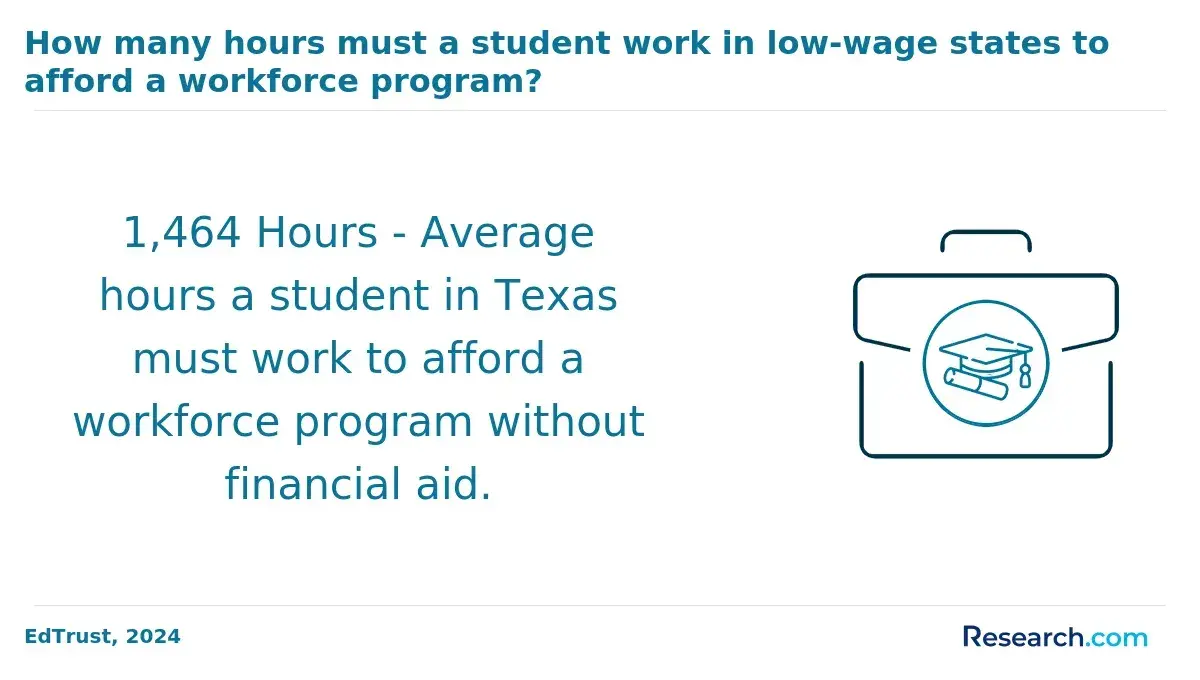
Transfer credits can reduce completion time, but they are one of the most misunderstood parts of accelerated doctoral planning. Schools may accept prior graduate credits only if they match doctoral-level outcomes, were earned within a stated time limit, came from an accredited institution, and were not already used in a way that conflicts with institutional policy.
The table below summarizes how transfer policies typically affect time-to-degree. Exact limits vary by school, so students should request a written transfer evaluation before committing to an enrollment deposit.
| Prior academic background | Possible transfer advantage | Likely effect on timeline | Key condition |
| Master's in accounting or taxation | May satisfy advanced accounting or business foundation requirements | Can shorten coursework if credits are accepted | Courses must align with the doctoral curriculum and grade standards |
| MBA with accounting concentration | May cover business strategy, finance, leadership, or analytics content | May reduce elective or prerequisite load | Accounting specialization requirements may still remain |
| Graduate certificate in accounting analytics, tax, audit, or fraud | May support elective transfer or prerequisite waiver | Limited but useful reduction | Certificate credits must be graduate-level and transcripted |
| Prior doctoral coursework | May transfer research methods, statistics, or concentration courses | Can create the largest time savings | Credits are often reviewed course by course and may expire |
| Professional certifications such as CPA, CMA, CIA, or CFE | May strengthen admission or waive limited prerequisites | Usually does not replace dissertation or doctoral research credits | Credit for credentials is not automatic and is school-specific |
The most important rule is to distinguish a transfer credit from a prerequisite waiver. A waiver may let you skip a foundation course, but it may not reduce the total number of doctoral credits required for graduation.
To maximize transfer credit before enrolling, follow a short verification process:
- Request the school's doctoral transfer credit policy in writing, including maximum credits, grade minimums, age limits, and excluded courses.
- Send unofficial transcripts before applying if the admissions team allows a preliminary review.
- Ask whether transferred credits reduce total tuition, total time, or only prerequisite requirements.
- Confirm whether research methods, comprehensive exams, residencies, dissertation, or capstone credits must be completed at the degree-granting institution.
- Keep syllabi from prior graduate courses because doctoral faculty may need them to judge content equivalency.
Transfer credits make the most sense for students with recent graduate accounting, business analytics, taxation, audit, or doctoral research coursework. They are less useful for students whose prior credits are old, unrelated, undergraduate-level, or awarded by institutions without recognized accreditation.
What Program Features Help Students Complete an Online Accounting Doctorate Faster?
Accelerated completion is usually the result of program design, not personal motivation alone. The best programs remove administrative friction, sequence courses predictably, and build doctoral research work into the curriculum from the start.
Look for features that shorten the path without lowering expectations. These characteristics can help students stay continuously enrolled and avoid losing months between terms, approvals, or research milestones.
- Year-round course availability with summer enrollment, because long breaks can extend the calendar even when the credit count is modest.
- Short academic terms, such as 8-week sessions, combined with predictable course rotations that prevent students from waiting for required classes.
- Embedded dissertation or capstone milestones, including topic selection, literature review, methodology, and proposal development during coursework.
- Dedicated doctoral advising with clear checkpoints for registration, research approval, committee formation, and graduation audits.
- Transparent residency requirements, especially if the program is marketed as online but still requires campus visits, synchronous weekends, or research seminars.
- Accounting-specific faculty expertise in audit, tax, financial reporting, analytics, governance, or accounting education, so students do not lose time trying to find a qualified supervisor.
- Accessible data and research support, including library access, statistical software guidance, research ethics support, and help with institutional review board procedures.
Technology is also changing what "faster" looks like. AI-enabled research tools, accounting analytics platforms, and automation in audit and reporting can help students search literature, manage data, and model practice problems more efficiently, but they do not replace original analysis, ethical data handling, or faculty-approved research design.
Students comparing business-related options may also want to understand how doctoral study differs from an online business degree. A doctorate is not simply a longer business program; it requires independent research, scholarly writing, and sustained problem-solving at a much higher level.
What Factors Most Commonly Delay Graduation From an Accelerated Online Accounting Doctorate?
Most delayed graduations are not caused by a single failed course. They usually come from a mismatch between advertised timelines and the student's real academic, professional, financial, and research conditions.
The most common delay factors are predictable, which means students can reduce the risk before enrolling. Pay close attention to these issues during program comparison:
- Assuming the advertised completion time applies to every student, even though it may require full-time enrollment, no course repeats, accepted transfer credits, and immediate dissertation progress.
- Choosing a dissertation topic that is too broad, too difficult to measure, or dependent on confidential employer data that cannot be released.
- Underestimating the weekly workload of compressed terms, especially when accounting research, quantitative analysis, and doctoral writing overlap.
- Ignoring residency or synchronous attendance requirements that conflict with busy seasons in tax, audit, corporate reporting, or government finance.
- Waiting too long to form a committee, secure topic approval, or complete research ethics requirements.
- Changing jobs, losing employer tuition support, or facing travel-heavy work assignments during critical research stages.
- Failing to confirm whether the program has enough accounting-specialized faculty to supervise the intended topic.
A practical way to avoid delays is to map your professional calendar against the program calendar. For example, CPAs in public accounting should be cautious about taking the heaviest doctoral research courses during tax season or year-end audit periods.
Another common mistake is treating online study as automatically flexible. Many accelerated online doctorates require weekly discussions, synchronous sessions, group projects, proposal deadlines, and faculty meetings. Flexibility helps, but acceleration still requires protected study time.
Which Accelerated Online Accounting Doctorate Programs Are Best for Working Professionals?
The best accelerated online accounting doctorate for a working professional is usually one that offers predictable pacing rather than maximum speed at all costs. Professionals in accounting often face seasonal workload spikes, regulatory deadlines, month-end close cycles, audits, tax filings, and leadership responsibilities that can make an overly aggressive schedule risky.
The table below shows which program structures tend to fit different working professionals. Use it to match the doctorate format to your work rhythm instead of choosing only by advertised duration.
| Student profile | Best-fit accelerated structure | Why it works | Potential concern |
| CPA in public accounting | Part-time DBA with year-round options | Allows lighter loads during tax or audit season | May take longer than a full-time accelerated route |
| Corporate controller or finance director | Applied doctorate with asynchronous coursework | Supports study around reporting cycles and executive meetings | Capstone topic must be feasible without exposing confidential data |
| Community college or adjunct instructor | Doctorate with accounting education or applied research focus | Can align research with curriculum, assessment, or student outcomes | Institutional hiring rules may specify preferred doctorate types |
| Government auditor or nonprofit finance leader | Professional doctorate with governance, compliance, or audit analytics focus | Connects doctoral work to public accountability and risk management | Data access and permissions must be planned early |
| Consultant or self-employed professional | Flexible cohort or independent-paced model with strong advising | Can support variable client workloads | Less structure can increase procrastination risk |
Working adults should ask whether the program allows temporary course-load adjustments without forcing a long stop-out. A slightly slower but continuous pathway is often faster in practice than a rigid accelerated plan that becomes impossible during peak work periods.
Professionals comparing leadership-focused graduate options may also evaluate an MBA operations management online program if their goal is operational leadership rather than doctoral research, teaching, or advanced accounting scholarship.
Does Accelerating an Online Accounting Doctorate Affect Cost or Academic Quality?
Accelerating an online accounting doctorate can reduce opportunity cost, but it does not automatically make the degree cheaper or better. The financial outcome depends on tuition structure, transfer credits, employer support, loan interest, time away from work, and whether acceleration increases the chance of course withdrawals or delayed research completion.
Graduate borrowing deserves special attention. Federal student aid terms for 2024-2025 list a 9.08% interest rate for Direct PLUS Loans, which means students who borrow heavily should compare not only tuition but also how long balances may accrue interest while they are enrolled.
The table below summarizes the trade-offs between accelerated and standard-paced doctoral study. It can help you decide whether speed improves value in your specific situation.
| Factor | Accelerated online doctorate | Standard-paced online doctorate | Decision point |
| Calendar time | Shorter if courses and research milestones are completed without interruption | Longer but often easier to balance | Choose acceleration only if your schedule can support sustained doctoral work |
| Tuition exposure | May be lower if fewer terms and transfer credits reduce total enrollment | May be higher if per-term fees continue over more semesters | Compare total program cost, not just per-credit tuition |
| Academic intensity | Higher weekly workload and faster deadlines | More time for reading, writing, and revision | Consider your writing speed and research readiness |
| Research quality | Can be strong when advising and milestones are built in | Can allow more time for deeper theoretical development | Quality depends on faculty, design, and student execution, not pace alone |
| Risk of delay | Higher if one missed milestone disrupts a compressed sequence | Lower weekly pressure but more total time for life interruptions | Ask for actual student completion patterns, not only the fastest possible route |
Academic quality should be judged by accreditation, curriculum depth, faculty qualifications, research support, student outcomes, and employer relevance. Do not assume that a slower program is automatically stronger or that a faster program is automatically weaker.
A useful cost test is to ask the school for a complete tuition and fee estimate under three scenarios: no transfer credits, maximum approved transfer credits, and one additional term of dissertation or capstone enrollment. This makes the real cost of delay visible before you enroll.
Which Careers Benefit Most From Completing an Accelerated Online Accounting Doctorate?
An accelerated online accounting doctorate is most valuable when it supports a role that rewards advanced expertise, teaching ability, research capacity, or senior-level judgment. It is usually not necessary for entry-level accounting, bookkeeping, payroll, or basic tax preparation roles.
BLS data published in 2024 reports a 6% projected employment growth rate for accountants and auditors from 2023 to 2033, which is faster than the average for all occupations. For doctorate seekers, this matters because the broader accounting labor market continues to need professionals who can interpret standards, manage risk, teach future accountants, and apply technology to complex reporting problems.
The careers below are among the strongest fits for an accelerated accounting doctorate. The degree may strengthen candidacy, but requirements vary by employer, school, state, and role.
- Accounting professor or lecturer: teaches accounting, audit, tax, systems, or analytics courses; some institutions prefer or require a doctorate, while research universities may favor PhD-level preparation.
- Senior accounting executive: leads financial reporting, internal control, compliance, or governance functions where doctoral-level applied research can support better decision-making.
- Forensic accounting or fraud examination consultant: applies research, analytics, and investigative methods to disputes, internal investigations, and risk assessments.
- Audit, tax, or advisory partner-track professional: uses advanced specialization to support thought leadership, complex client work, training, and technical advisory services.
- Accounting curriculum or assessment leader: designs programs, evaluates learning outcomes, and supports accreditation or institutional improvement in higher education settings.
- Policy, regulatory, or standards-focused specialist: analyzes accounting rules, compliance systems, reporting practices, or public-sector accountability issues.
Students whose goals are more technical or entry-level should consider a shorter credential before committing to a doctorate. For example, a bookkeeping certification may be a better first step for someone who needs immediate job-ready accounting skills rather than doctoral research preparation.
The doctorate tends to make the most sense when the student already has a strong accounting foundation, professional experience, and a career target that clearly values the credential. Without that alignment, the time and cost may outweigh the benefit.
Which Students Are Most Likely to Succeed in an Accelerated Online Accounting Doctorate?
Students most likely to succeed in an accelerated online accounting doctorate are not simply the ones with the highest motivation. They are the ones whose academic background, work schedule, writing ability, research readiness, and support systems match the pace.
Strong candidates usually share several traits. These indicators can help you judge whether acceleration is realistic before you enroll:
- They already have graduate-level preparation in accounting, business, taxation, finance, analytics, or research methods.
- They can reserve consistent weekly study blocks for reading, writing, data analysis, and faculty communication.
- They have a clear research interest that can become a feasible capstone, applied dissertation, or dissertation topic.
- They are comfortable with scholarly writing and willing to revise extensively based on committee feedback.
- They have employer, family, or financial support that reduces the risk of stopping out during high-pressure terms.
- They understand that online doctoral work still requires collaboration, deadlines, presentations, and independent research discipline.
Students should be cautious about acceleration if they are changing fields, have not taken graduate accounting courses, dislike academic writing, or cannot identify a practical research problem. These students may still succeed, but a standard-paced program or additional preparatory coursework may be more realistic.
A good self-test is to draft a one-page research interest statement before applying. If you can explain the accounting problem, why it matters, what data might be available, and who benefits from the findings, you are more prepared for an accelerated doctoral format.
How Should Students Compare Accelerated Online Accounting Doctorate Programs?
Comparing accelerated online accounting doctorate programs requires more than ranking them by the shortest advertised timeline. The right choice is the program that minimizes unnecessary delay while matching your career goal, academic background, finances, and research interests.
Use this step-by-step process before applying. It is designed to reveal hidden timeline and cost issues that are easy to miss in marketing materials.
- Confirm accreditation at both the institutional level and, when relevant, the business school or accounting program level.
- Ask whether the program is a DBA, PhD, Doctor of Accounting, EdD, or another doctorate, and verify whether that credential fits your target employers.
- Request the full degree plan, including course sequence, dissertation or capstone credits, residencies, comprehensive exams, and graduation audit requirements.
- Get a written transfer credit review before enrolling, especially if you have prior doctoral coursework or a recent master's degree.
- Ask for the average and median completion time for recent online doctoral students, not only the minimum possible timeline.
- Review faculty profiles to confirm that someone can supervise your intended accounting topic.
- Compare total cost under realistic pacing scenarios, including extra dissertation terms, technology fees, residency travel, and loan interest.
- Ask how students are supported if they miss a milestone, need to pause for one term, or must change dissertation topics.
- Speak with admissions, financial aid, and a program director rather than relying only on website claims.
- Choose the fastest program only after confirming that it preserves research quality, employer relevance, and manageable workload.
Red flags include vague accreditation claims, pressure to enroll before transfer review, no clear dissertation process, limited accounting faculty, unusually short completion promises, and refusal to disclose typical completion patterns. A legitimate accelerated program should be able to explain how students finish faster without avoiding doctoral-level research.
If you are still deciding between doctoral study and another graduate route, compare the credential against your specific career target. A doctorate is usually best for teaching, advanced consulting, research leadership, and senior professional authority; a master's or MBA may be better for faster promotion into management when doctoral research is not required.
Other Things You Should Know About Accounting
Yes, some programs admit students without a CPA license, especially DBA or business doctorate programs. However, a CPA can strengthen your profile for accounting faculty, audit, tax, or senior practice roles, and some employers may prefer it.
They can be respected when the institution is properly accredited, the curriculum is rigorous, faculty are qualified, and the final research project is credible. Employers generally care more about accreditation, relevance, and outcomes than whether every course was online.
Some do, but many professional doctorate programs waive standardized tests for applicants with a graduate degree, strong GPA, CPA licensure, or substantial professional experience. Requirements vary by school.
It may be worth it for consulting, executive leadership, policy, forensic accounting, or specialized advisory work, but it is not necessary for many accounting careers. The degree makes the most sense when your target role clearly values doctoral-level expertise.
References
- Can you get a PhD in one year? - Swiss School of Business Research https://ssbr-edu.ch/can-you-get-a-phd-in-one-year/
- UMass Global Announces New Ed.D. Transfer Credit Policy https://www.umassglobal.edu/blog-news/umass-global-announces-new-edd-transfer-credit-policy
- Contemplating a Doctorate in Accounting? - The CPA Journal https://www.cpajournal.com/2025/12/05/contemplating-a-doctorate-in-accounting-2/
- How Long Does It Take to Get a PhD? Complete Timeline Guide https://streamlinedai.app/blog/how-long-does-it-take-to-get-a-phd
- Accelerated Accounting Degrees Online 2025 | Accounting.com https://www.accounting.com/degrees/accounting/accelerated-online-bachelors/
- Best Online PhD and Doctorates in Accounting https://www.phds.me/online-programs/phd-doctorate-in-accounting/
- Can You Transfer Credits From a Completed Degree? https://www.edvisorly.com/student-guides/can-you-transfer-credits-from-a-completed-degree