
2027 Cheapest Accredited Online Materials Science & Engineering Master's Programs With Flat-Rate Tuition: Costs per Term and Total Degree Estimates

Co-Founder and Chief Data Scientist
An online materials science and engineering master's can support work in metals, polymers, semiconductors, energy, manufacturing, and quality engineering, but advertised tuition can obscure the true price. The U.S. Bureau of Labor Statistics reports a $108,310 median annual wage for materials engineers in 2024, making cost and career alignment especially important.
This guide explains how flat-rate tuition works, how to estimate a full degree price, and how to identify whether a program is genuinely a strong value rather than merely inexpensive per term.
Key Things You Should Know
- A flat-rate term is cheapest only when students can use most or all included credits, taking a light load can make the effective cost per credit substantially higher.
- There is no reliable nationwide "cheapest" ranking without confirming each school's current online delivery, institutional accreditation, credit requirements, flat-rate cap, and mandatory fees in writing.
- For graduate students, the annual federal Direct Unsubsidized Loan limit is generally $20,500, so students should compare the full degree estimate with aid, savings, and employer reimbursement rather than focus only on one term's price.
What Does Flat-Rate Tuition Mean for an Online Materials Science & Engineering Master's Program?
Flat-rate tuition means a university charges one tuition amount for a defined enrollment band during a term, rather than charging separately for every credit. A common structure is one price for full-time enrollment, such as a stated range of credits, although the range, academic calendar, and charges excluded from tuition vary by institution.
For an online materials science and engineering master's, the model may apply to a semester, quarter, eight-week session, or competency-based subscription period. It does not automatically mean unlimited courses, unlimited credits, laboratory access, or a fixed total-degree price. Some engineering programs use per-credit tuition even when the broader university uses a flat-rate model for other graduate programs.
A flat-rate model usually fits working engineers who can consistently take the maximum permitted load and have enough time for demanding technical courses. It can be a poor fit for students taking one course at a time, needing frequent breaks, or completing prerequisites before entering core materials coursework.
Before treating a listed rate as comparable, verify these policy details with the program:
- The exact number of credits included and the maximum credits allowed in each billed term.
- Whether thesis, capstone, practicum, independent-study, or laboratory courses follow the same tuition rule.
- Whether online students pay the same rate as campus students and whether residency changes the price.
- Whether the flat rate applies throughout continuous enrollment or can change in a later academic year.
Accreditation also requires careful interpretation. Institutional accreditation is the central accreditation check for a master's degree and financial-aid eligibility. ABET accreditation is more commonly associated with undergraduate engineering programs; a graduate materials program may be academically strong without a separate ABET-accredited master's designation. Confirm the credential's relevance with employers, doctoral programs, or any licensing authority connected to your intended role.
How Much Does a Flat-Rate Online Materials Science & Engineering Master's Program Cost Per Term?
There is not a defensible universal per-term price for online materials science and engineering master's programs because relatively few programs publish a program-specific flat-rate price with the same credit cap and fee treatment. The practical answer is the school's current billed rate for your intended enrollment level. A low term price is not enough to establish that a program is cheapest.
The calculation below turns a published term charge into an effective tuition cost per credit. It is useful because two programs with the same term tuition can have very different value if one includes more applicable credits.
| Calculation | Formula | What it tells you |
| Effective tuition per credit | Flat-rate tuition ÷ credits actually completed in the term | Whether the rate remains competitive at your course load |
| Billed cost per term | Flat-rate tuition + mandatory term fees | The amount to budget before books and optional travel |
| Cost of an extra term | Additional tuition + required fees for that term | The financial consequence of falling short of the planned load |
Ask admissions or student accounts for a written estimate that identifies tuition, mandatory fees, credits included, and the effective dates of the rate. Do not rely on a university-wide graduate tuition page if the online engineering program has a separate tuition schedule.
How Much Does an Online Materials Science & Engineering Master's Degree Cost in Total With Flat-Rate Tuition?
Total degree cost depends on the number of paid terms, not just required credits. Start with the curriculum's required credits, then map those credits to the maximum number a student can realistically complete in each flat-rate term. Add a contingency for a course that is unavailable, repeated, withdrawn from, or sequenced behind a prerequisite.
This planning table shows the appropriate method for comparing schools without pretending that all programs have identical calendars or rates.
| Total-cost component | How to estimate it | Why it matters |
| Tuition | Published flat-rate tuition × expected paid terms | Forms the largest advertised cost for most students |
| Mandatory fees | Required term fees × expected paid terms, plus one-time charges | May materially change a close comparison |
| Academic materials | School estimate for software, texts, supplies, and required equipment | May differ by course and specialization |
| Travel or residency costs | Required trips, lodging, transportation, and meals | Can apply even to programs marketed as online |
| Contingency term | One additional billed term, if likely | Tests whether the budget can withstand delay |
A useful formula is: estimated total cost = (tuition per term + mandatory fees per term) × expected terms + one-time charges + required materials and travel. Compare that result against a per-credit program's required credits multiplied by its per-credit price, then add comparable fees.
Students comparing costs across technical master's fields can use the same total-cost discipline applied to master of data science online options: compare the published completion requirements, not a headline tuition figure alone.
How Does Course Load Affect the Cost of a Flat-Rate Online Materials Science & Engineering Master's Degree?
Course load is the main financial lever in a flat-rate program. If a term price covers up to a stated credit limit, completing fewer credits does not normally reduce tuition. The student pays the same billed amount while receiving fewer credits toward graduation.
The following comparison uses variables rather than assumed school prices. Substitute the institution's published term tuition and permitted credit range to see whether your schedule captures the intended value.
| Enrollment pattern | Tuition paid | Effective cost per completed credit | Typical value implication |
| Maximum included load | One flat-rate term | Term tuition ÷ maximum completed credits | Usually the strongest tuition value |
| Moderate load | One flat-rate term | Term tuition ÷ moderate completed credits | May be reasonable for full-time professionals |
| Light load | One flat-rate term | Term tuition ÷ few completed credits | Often weak value compared with per-credit pricing |
| Overload attempt | May trigger approval or additional charges | Depends on policy | Confirm rules before planning around it |
Materials courses can include intensive calculations, characterization methods, thermodynamics, kinetics, computational tools, and design work. A course load that is financially efficient but academically unsustainable can lead to withdrawals or lower performance, both of which may erase apparent savings. Review syllabi, prerequisite chains, course rotation, and weekly workload before committing to a maximum load.
A common mistake is assuming that every remaining course will fit into the final term. If the flat rate requires a minimum full-time enrollment, a student with one remaining course may still face a full term charge. Ask whether a final-term part-time rate exists.
Is Flat-Rate Tuition Cheaper Than Per-Credit Tuition for an Online Materials Science & Engineering Master's Degree?
Flat-rate tuition is cheaper only when its effective cost per completed credit is below the per-credit alternative and the student avoids extra billed terms. Per-credit tuition is often better for professionals who need one course at a time, have variable work schedules, or want to reduce financial exposure while testing whether online graduate study fits.
Use this break-even comparison before accepting an offer. The flat-rate option wins at a given load when the term rate is lower than the per-credit rate multiplied by the credits you will complete that term, after comparable fees are included.
| Question | Flat-rate option | Per-credit option |
| Best for | Students able to complete a high, permitted load each term | Students needing flexible or part-time pacing |
| Cost predictability | Strong per billed term | Strong per enrolled credit |
| Risk of taking fewer courses | Higher effective cost per credit | Usually lower immediate tuition cost |
| Risk of an extra term | Can be substantial | Usually limited to remaining credits and fees |
| Best comparison method | Total expected terms and maximum usable credits | Total required credits and current per-credit price |
Do not assume online delivery itself makes a degree cheaper than campus study. Online programs may reduce commuting or relocation costs, but they can charge technology fees, require synchronous attendance, or include limited in-person laboratory experiences. Similar comparison discipline is useful when examining a MLIS degree cost: pricing structure and completion pace matter as much as the format label.
What Fees and Additional Expenses Apply to a Flat-Rate Online Materials Science & Engineering Master's Program?
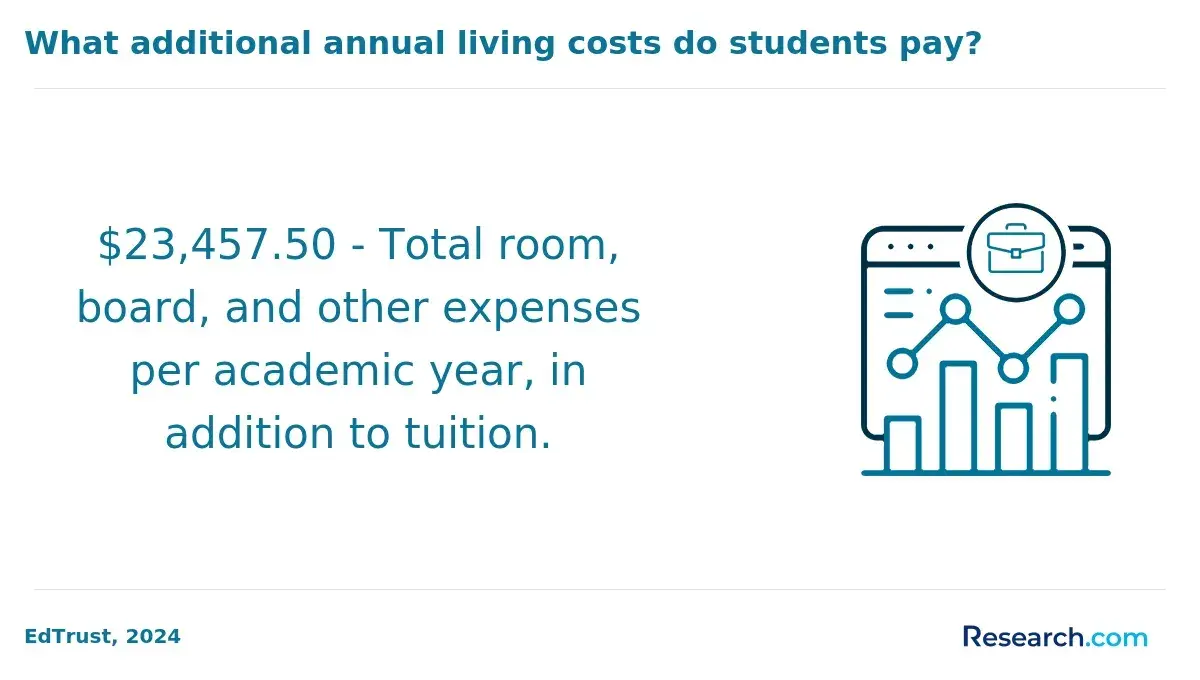
Flat-rate tuition usually covers tuition only. Required charges can include application, enrollment, student services, technology, distance-learning, graduation, laboratory, proctoring, and course-material fees. A school may charge some fees once and others every term, so students should separate them in their budget.
The categories below are the most important ones to request in a written cost estimate. Their availability and amount vary by university and course.
- Mandatory institutional and online-learning fees charged each academic term or session.
- Special course charges for laboratory access, materials characterization, software, remote-proctoring, or consumable supplies.
- Required books, engineering software, computer hardware, and reliable high-speed internet.
- Travel, lodging, meals, and lost work time if an orientation, residency, laboratory intensive, or presentation is required.
- Health insurance or other enrollment-related charges if the university applies them to online graduate students.
Request confirmation of whether fees are refundable after a withdrawal and whether they increase with credit load. Also confirm whether the program is fully online in practice, not merely available online. A single required campus visit can change the total cost more than a small tuition difference.
Comparing hidden costs is relevant across online graduate fields, including cheapest online marketing degree options, where published tuition likewise may not include every required expense.
Can Accelerated Study Lower the Total Cost of a Flat-Rate Online Materials Science & Engineering Master's Degree?
Accelerated study can lower tuition when it reduces the number of flat-rate terms without causing an overload charge or an additional term later. The savings come from avoiding one or more complete term bills, not from completing individual credits faster in isolation.
Acceleration is most realistic when courses are offered frequently, prerequisites do not create bottlenecks, and the student can maintain the needed workload alongside employment. It may be a poor choice for students who need foundational engineering preparation, have substantial caregiving or travel demands, or expect a major work project during the program.
Use these steps to test whether an accelerated plan is financially sound:
- Map every required course and prerequisite onto the program's actual term-by-term schedule.
- Identify the maximum credits covered by the flat rate and any overload approval rules.
- Compare the number of billed terms in the standard plan with the accelerated plan.
- Add required fees to each term in both scenarios.
- Ask whether capstone, thesis, or research courses are available when needed and covered by the same rate.
- Choose the faster plan only if the workload is sustainable and the reduced terms produce real savings.
Acceleration may also affect employer reimbursement timing and federal aid eligibility. A student should confirm those effects before paying a larger upfront term bill. Cost-focused comparisons in other fields, such as online SLP programs, similarly require attention to required sequencing and supervised components rather than duration claims alone.
Can Financial Aid and Employer Reimbursement Reduce the Cost of a Flat-Rate Online Materials Science & Engineering Master's?
Yes. Federal student aid, employer education benefits, scholarships, military benefits, savings, and payment plans can reduce out-of-pocket cost or spread payments, but eligibility is individualized. Students should submit the Free Application for Federal Student Aid and confirm that the school and program support the aid being considered.
Graduate students generally may borrow up to $20,500 annually in Direct Unsubsidized Loans, subject to federal eligibility and aggregate limits. That amount can be useful for budgeting, but it is not a recommendation to borrow the maximum; compare borrowing with expected employer support, emergency savings, interest costs, and the program's career relevance.
Employer reimbursement can be particularly relevant in materials-related roles because coursework may support process improvement, failure analysis, quality systems, product development, or advanced manufacturing work. Ask the benefits administrator whether approval is required before enrollment, whether grades are required, whether the benefit has an annual cap, and whether a repayment obligation applies if you leave the employer.
Financial-aid comparisons should use net cost rather than sticker price. A low-tuition program that is ineligible for your aid source may cost more out of pocket than a higher-tuition option with meaningful employer support or institutional funding. This same caution applies when comparing professional programs such as cheapest CACREP-accredited programs online, where program-specific eligibility and professional requirements can affect the actual financial decision.
How Do Enrollment Breaks and Extra Terms Affect the Cost of an Online Materials Science & Engineering Master's Degree?
Enrollment breaks and extra terms can materially increase the cost of a flat-rate degree because each active term may trigger a new full tuition charge and mandatory fees. A planned leave may be appropriate, but students should understand the financial and academic consequences before stopping out.
Extra terms commonly result from course sequencing, a missed prerequisite, a failed or withdrawn course, an unavailable elective, a thesis or capstone extension, or reducing the load below the pace assumed in the original budget. Tuition may also change between academic years, meaning the final term can cost more than earlier terms.
Before enrolling, obtain clear answers to these questions:
- What tuition and fees apply to a student who needs only one remaining course or a capstone?
- Can students take an approved leave without reapplying, losing catalog rights, or facing a changed tuition schedule?
- How often are required courses offered, and what happens if a course is cancelled or full?
- What are the withdrawal, repeat-course, academic-progress, and time-to-degree policies?
- Does the school charge a continuation, thesis, or registration fee after coursework is complete?
A red flag is a sales estimate that assumes every course is available exactly when needed but does not provide a course rotation. Build a conservative budget with at least the possibility of one additional term when work schedules or prerequisite-heavy curricula make delays plausible.
How Should Students Choose the Best-Value Flat-Rate Online Materials Science & Engineering Master's Program?
The best-value program is not necessarily the one with the lowest advertised term tuition. It is the accredited, career-relevant option that a student can complete at a sustainable pace with the lowest credible total cost and acceptable academic support.
Use the comparison criteria below to distinguish a genuinely economical option from a superficially cheap one.
| Decision factor | What to verify | Why it affects value |
| Academic fit | Courses in your target area, such as polymers, metals, ceramics, electronic materials, biomaterials, or manufacturing | Relevant skills matter more than a small tuition difference |
| Accreditation and reputation | Institutional accreditation and employer or doctoral-program recognition | Protects degree usability and aid eligibility |
| Pricing structure | Term charge, included credits, overload policy, and final-term rule | Determines whether flat-rate pricing benefits your pace |
| Total credible cost | Tuition, required fees, materials, travel, and likely extra-term exposure | Supports an apples-to-apples decision |
| Schedule design | Course rotation, live-session requirements, completion timeline, and support services | Reduces the risk of expensive delays |
| Career return | Alignment with your current role, target employers, and advancement path | Helps assess whether borrowing or time away from work is justified |
Materials engineers work on the selection, testing, processing, and performance of materials used in products and systems. The degree can be most valuable for engineers seeking deeper technical specialization, research and development responsibility, advanced manufacturing roles, semiconductor or battery work, or preparation for doctoral study. It is less compelling when an employer values a narrower certificate, project experience, or a different engineering specialty more directly.
Make the final choice after requesting a written program plan, calculating standard and conservative total-cost scenarios, and discussing course relevance with a manager or professionals in the intended field. Do not select solely on a "flat-rate" label, and do not assume an institution's public, private, or nonprofit status independently determines return on investment.
Other Things You Should Know About Materials Science & Engineering
Applicants commonly need a bachelor's degree in materials science, engineering, physics, chemistry, or a closely related discipline. Programs may expect preparation in calculus, chemistry, physics, and core engineering subjects. Applicants from adjacent fields may need prerequisite coursework.
Yes, but the format varies. Some programs use simulation, remote tools, kits, employer-based projects, or limited campus intensives. Confirm exactly how laboratory, characterization, and capstone requirements are completed before applying.
Licensure requirements are determined by state boards and commonly focus on undergraduate education, examinations, and qualifying experience. A master's degree may support technical development but does not by itself establish eligibility. Check the board rules in the state where you plan to practice.
Depending on prior education and experience, graduates may pursue or advance in materials engineering, process engineering, quality engineering, product development, failure analysis, manufacturing, semiconductor, energy, aerospace, or research roles. Employers evaluate the full combination of degree, technical skills, projects, and experience.
References
- Why Is Accreditation Important? | ACE Blog https://ace.edu/blog/why-is-accreditation-important/
- Total Access Program - Frequently Asked Questions (FAQ) - Follett Higher Education https://support.follett.com/hc/en-us/articles/33300431901332-Total-Access-Program-Frequently-Asked-Questions-FAQ
- TMS Scholarships - Material Advantage https://materialadvantage.org/financial-opportunities/tms-scholarships
- What does college tuition pay for? https://www.nacubo.org/Topics/COVID-19/What-does-tuition-pay-for
- Full-Time Student Hours vs. Part-Time: What's the Difference? https://www.citizensbank.com/student/articles/full-time-student-hours.aspx
- Facts about working full-time as a full-time student https://www.luminafoundation.org/topics/todays-students/working-adults/
- Transparency bills seek to reveal the true costs of college | Alabama Reflector https://alabamareflector.com/2024/02/28/transparency-bills-seek-to-reveal-the-true-costs-of-college/


