2027 Changing RN-to-MSN Programs Midway with a Non-Nursing Bachelor's Degree: Questions About Credits and Remaining Requirements
Audited and Verified:
Our Editorial and Data Verification Process
Research.com uses government datasets, official education statistics and primary institutional information to support its career and degree guides. Our review process checks factual accuracy, occupational definitions, source dates and the requirements associated with the credentials discussed.
How This Article Was Fact-Checked
Our editorial team verifies salary estimates, employment projections, education requirements and program information against original data providers and official organizations. Salary figures are checked against the relevant occupational definitions and reporting periods. Information about licensure, accreditation and required in-person training is reviewed separately.
Fact-checked and verified on:

Co-Founder and Chief Data Scientist
If you are partway through an RN-to-MSN program, changing schools can affect much more than your credit total. A receiving program may accept your non-nursing bachelor's degree and prior nursing coursework yet still require different bridge courses, clinical experiences, or a longer course sequence.
This guide is for licensed RNs weighing a transfer. It explains which records to gather, how to distinguish accepted credits from requirements actually satisfied, and how to get a reliable comparison of the time and cost left before you leave your current program.
Key Things You Should Know
- A non-nursing bachelor's degree may satisfy a degree-based admission requirement, but it does not replace an RN license or automatically satisfy upper-division nursing courses.
- Get a written evaluation of three separate questions: which credits the school accepts, which requirements those credits fulfill, and which courses and supervised experiences remain.
- Compare total remaining cost and the actual course sequence - not credits alone. As a hypothetical example, 30 remaining credits at $700 per credit equal $21,000 in tuition before fees and other expenses.
Can you enter an RN-to-MSN program with a non-nursing bachelor's degree?
Often, yes - if you are already a licensed RN and the receiving program admits RNs whose bachelor's degrees are outside nursing. Some programs are designed for ADN- or diploma-prepared RNs; others accept an RN with a bachelor's degree in another field through a distinct entry track. A school may require an unencumbered RN license, specified prior nursing education, a minimum GPA, prerequisite sciences or statistics, and relevant experience for a specialty track.
Your bachelor's degree can demonstrate prior college-level study and may cover general education or statistics. It does not become a BSN, supply missing nursing competencies, or guarantee entry directly into graduate courses. Ask admissions to identify your exact entry track and the credential awarded along the way, if any.
If you do not hold an RN license, a conventional postlicensure RN-to-MSN program is not the route to initial licensure. Instead, compare prelicensure options, including online direct-entry MSN program comparisons, while checking each program's initial-licensure eligibility and in-person clinical requirements.
How do RN-to-MSN programs evaluate transfer credits from prior college coursework?
The receiving institution evaluates official transcripts, but its nursing program determines whether prior work meets specific nursing and track requirements. A course can appear as accepted transfer credit without replacing a required bridge course or advancing you in the clinical sequence. Completed MSN coursework deserves a separate review from undergraduate credit: graduate-level content, grades, recency, and specialty alignment may all matter.
The table separates the records schools commonly review from the decisions those records can support. It is a comparison framework, not a promise that any category will transfer.
| Prior learning | Potential application | Common limit |
| Non-nursing bachelor's courses | General education, statistics, or other stated prerequisites | Course age, grades, lab format, and approved equivalencies |
| ADN or diploma nursing education | RN bridge entry or designated undergraduate nursing credit | School-specific articulation and upper-division requirements |
| Completed BSN bridge courses | Comparable nursing-major requirements | Different learning outcomes or required course sequence |
| Completed MSN courses | Graduate core or specialty requirements | Graduate transfer caps, grades, recency, and track fit |
| Prior supervised clinical work | Possible review against documented track competencies | Hours or employment experience may not meet the new program's rules |
Request official transcripts, course syllabi from the terms you attended, catalog descriptions, and any faculty-verified clinical-hour and competency records. Then request a written, track-specific degree audit showing accepted credit, substitutions, unmet requirements, and who approved each decision. If your entry credential is an ADN, ADN-to-MSN bridge programs provide a useful comparison - but their credit policies are not interchangeable.
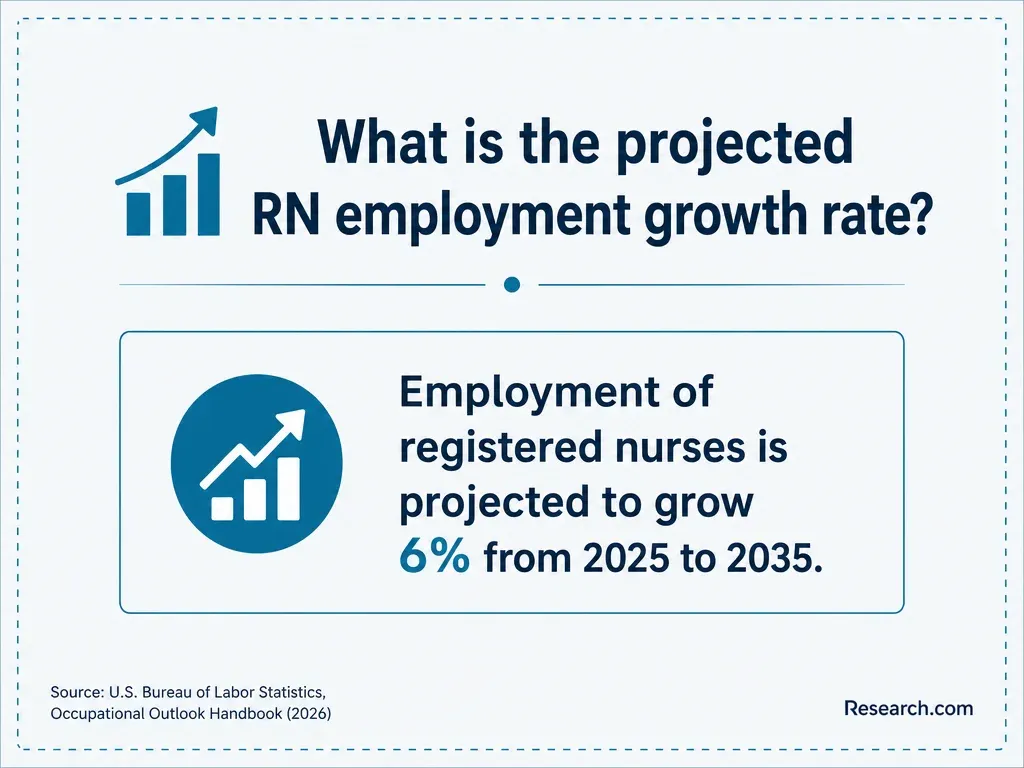
What requirements remain after transferring into an RN-to-MSN program?
The remaining requirements are those on the receiving program's approved degree plan for your entry term and MSN track, not simply the difference between its advertised credit total and your completed credits. Expect a review of prerequisites, undergraduate nursing bridge work, graduate core and specialty courses, supervised experiences, and any project or culminating assessment.
Before withdrawing from your current program, ask the receiving school for a written plan that identifies course substitutions, minimum grades, required credits taken at that institution, and the first term each outstanding course is available. Confirm whether admission to the university also grants admission to the nursing major and chosen MSN track. Incomplete courses, a leave of absence, or a course repeated under the new school's policy can change the plan.
For prerequisite disputes, comparing prerequisite and GPA policies in nursing schools can help frame questions, but only the receiving program can approve an equivalency or waiver for your record.
There is no universal BSN bridge checklist. Programs may require upper-division nursing work in community or population health, evidence-based practice, leadership, research, health assessment, or nursing concepts before - or alongside - MSN courses. Your non-nursing major may have developed useful research, communication, or management skills without satisfying a course whose outcomes specifically assess nursing practice.
Ask whether the school awards a BSN after bridge work or uses the bridge solely to establish progression into the MSN. That distinction affects both your interim credential and your options if you stop before completing the master's degree. Also confirm whether prior anatomy, physiology, microbiology, chemistry, or statistics courses meet the school's grade, age, and laboratory rules.
An LPN/LVN-to-RN pathway serves a different starting license; hybrid practical nursing study options do not substitute for the RN credential or determine which BSN-level courses an already-licensed RN can skip.
Check three distinct matters: the institution's recognized institutional accreditation, the nursing program's applicable accreditation and its scope, and the program's authorization to enroll and prepare students where you live and plan to complete clinical work. Nursing program accreditation may be through ACEN or CCNE, as applicable; verify the specific degree and program rather than relying on a university-wide claim.
The school verifies RN licensure under its admissions and progression policies, often including license status and the jurisdiction where you practice. Your state board of nursing controls nursing licensure; the school controls admission and credit awards. If your MSN track aims at advanced practice, separately confirm that its population focus and supervised preparation meet the relevant certifying body's and intended state's requirements. A non-APRN MSN does not qualify its graduate for NP practice.
Admissions selectivity is a separate question from approval or accreditation. Even when exploring less competitive DNP admissions as a later option, verify the exact program's status and your jurisdictional eligibility independently.
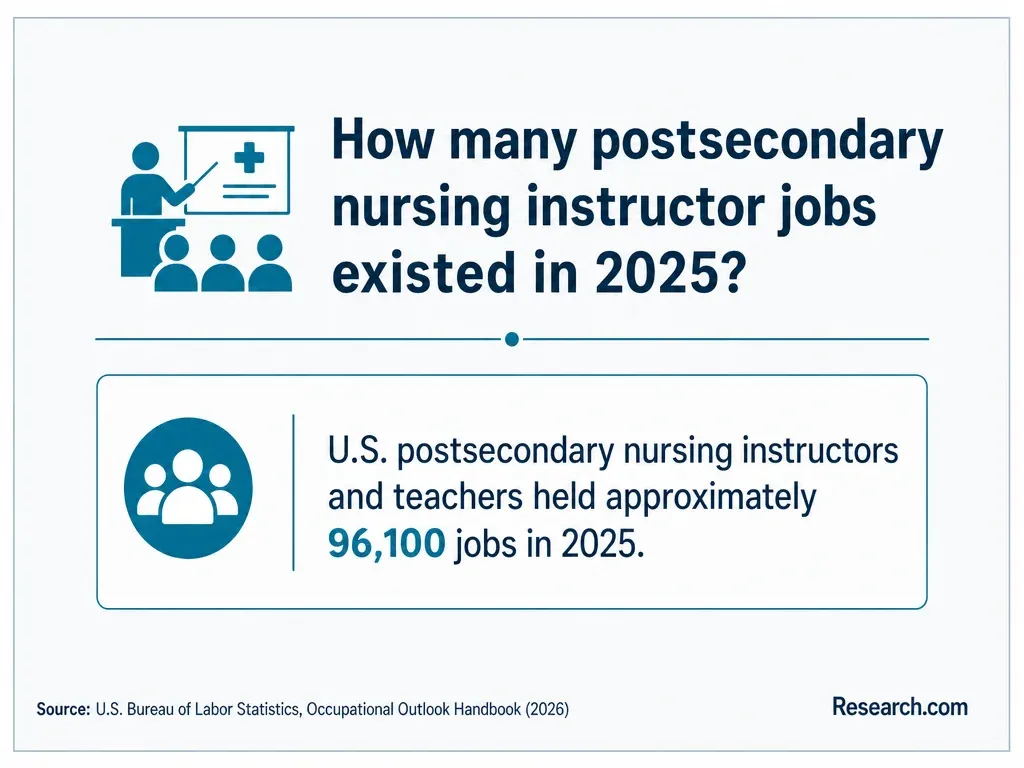
Yes, if their published entry track accepts your RN preparation and non-nursing bachelor's degree. "Online" describes some coursework, not necessarily the entire degree. A program may still require scheduled live classes, on-campus visits, simulation, approved clinical sites, or supervised hours near your home.
Before transferring, confirm that the school enrolls students in your state, permits clinical placements there, and explains who secures sites and preceptors. Ask whether required sessions and specialty courses run often enough to support your planned pace. For example, online psychiatric NP master's schedule options need evaluation for live attendance, placement access, and population-specific clinical requirements - not speed alone.
There is no dependable timeline until the receiving program maps your credits to a term-by-term schedule. A substantial credit award might leave only a few courses yet save little time if a required class is offered infrequently or must precede clinical placement. Conversely, a course that replaces a prerequisite can remove an entire sequencing delay.
Compare two dates in writing: your estimated graduation date if you stay and your earliest feasible graduation date if you transfer. Include the next start date, part-time or full-time course load, required course order, clinical-site availability, and the possibility of an interrupted term. A separate search for time-efficient online DNP pathways is relevant only if a doctorate - not this MSN transfer - is your intended qualification.
Remaining work depends on your track. A non-APRN MSN may emphasize nursing education, leadership, or informatics, with projects or practice experiences defined by the school. An APRN track requires population- and role-specific graduate preparation and supervised clinical experiences under its approved plan. Prior RN employment, simulation, or clinical hours completed elsewhere do not automatically replace those requirements.
For a prior graduate course or placement, ask the program to compare its learning outcomes and documented supervised hours with the new track's requirements. Supply syllabi, logs, site and preceptor information, and evaluations where available; faculty should identify any gaps before you assume an experience counts. Confirm who arranges placements and whether your workplace is an eligible site.
If you already hold an MSN and are considering a doctorate instead, online practice doctorates for MSN-prepared nurses require a separate review of practice experiences and degree requirements. A program description suggesting no new clinical rotations should not be read as a waiver of every practice-hour or project obligation.
Price the approved remaining degree plan, not the advertised full-program tuition or the number of credits the school agrees to accept. Compare tuition by charge unit, mandatory fees, repeated or nonapplicable courses, clinical and travel expenses, and any income lost if your schedule changes. Graduate tuition may differ from undergraduate bridge tuition.
For a transparent hypothetical calculation, the following figures show why tuition savings cannot be inferred from a transfer-credit count alone:
- 30 remaining credits at $700 per credit: $21,000 in tuition.
- 24 remaining credits at $850 per credit: $20,400 in tuition.
The second plan costs less in this example despite its higher per-credit price; neither total includes fees or assumes that either school offers those rates. Request an itemized estimate for your evaluated plan and check aid eligibility, employer reimbursement rules, and whether changing enrollment intensity affects funding. If your intended track is psychiatric NP, PMHNP programs compared by tuition can inform an initial comparison, but your personal remaining balance is the relevant price.
What careers, salaries, and certifications can an RN-to-MSN degree support?
The answer depends on the MSN track and your existing RN experience. Education, leadership, and informatics tracks can support applications for related nursing roles, subject to employer expectations for practice, teaching, management, or technical skills. An appropriately designed APRN track may support an application for role- and population-specific certification and state APRN authorization after its separate requirements are met. The degree alone grants neither.
Use occupation-specific U.S. Bureau of Labor Statistics wages as context for the role you actually seek - not as a predicted salary increase from transferring or earning an MSN. An RN wage figure, for example, covers RNs with varied education and jobs; it is not an MSN graduate starting salary. Ask prospective employers which credentials and experience they require before paying to repeat graduate work.
If you are already an appropriately prepared and certified psychiatric NP, short-format online PMHNP study should be assessed against a specific new educational goal, not treated as an automatic career upgrade. For your present transfer decision, the best school is the one that can document a credible path to your intended role without unnecessary repeated coursework or compromised eligibility.
Other Things You Should Know About Nursing
A school may make a provisional assessment, but final credit usually depends on an official transcript showing the completed course and acceptable grade. Ask when the final decision will be issued.
Policies vary. A receiving school may use prior grades to evaluate admission while calculating its institutional GPA separately. Ask how transferred grades affect nursing progression and honors.
Do not assume so. Before withdrawing, ask your current program about leave, readmission deadlines, curriculum changes, and whether a clinical place would remain available.
Only if its pathway explicitly awards a BSN and you complete that degree's requirements. Get the interim-award policy in writing if having a BSN before MSN graduation matters to you.
- .14 Evaluation and Review Process for Transfer of Courses and Credits. | Library of Maryland Regulations https://regs.maryland.gov/us/md/exec/comar/13B.06.02.14
- Master's of Science in Nursing - RN to MSN Program https://johnsonbethel.uccs.edu/academics/nursing/bachelor-science-nursing-rn-msn-program
- RN to MSN Program - College of Nursing | University of South Carolina https://sc.edu/study/colleges_schools/nursing/academic_programs/rntomsn.php
- Online RN to MSN Program | Wilkes University Online https://onlinenursingdegrees.wilkes.edu/programs/rn-msn-online
- Undergraduate Practicum Requirements | wichita.edu https://www.wichita.edu/academics/health_professions/nursing/documents/ugrad-web-documents/ug-clinical-requirements.php
- Transfer Course Policy - Academic Catalogs https://catalog.southernct.edu/graduate/transfer-credit-policies/transfer-course-policy.html
- How Do Transfer Credits Work When You Go Back to School? | Whitworth Online https://online.whitworth.edu/news-articles/how-do-transfer-credits-work-when-you-go-back-to-school/
- A-2: Transfer Student and Transfer Course Processes | psu.edu https://aappm.psu.edu/policy/a-2-transfer-student-and-transfer-course-processes
- Minimum Grade Standard Public Comment | SUNY Transfer Equivalency Platform https://step.transfer.suny.edu/hub/public-comment/1-min-grade/
- RN-to-MSN: Registered Nurse to Master of Science in Nursing | University of Maryland School of Nursing https://www.nursing.umaryland.edu/academics/grad/registered-nurse-to-masters/