2027 Can You Get Into an Online Fire Science Doctorate Program with a Low GPA? Admission Chances and Alternatives

Co-Founder and Chief Data Scientist
A low GPA can make doctoral admissions feel uncertain, especially in a specialized field like fire science, emergency management, or public safety leadership. Yet many online doctorate programs review applicants holistically, weighing graduate readiness, leadership, research goals, and professional experience. The stakes are real: the National Center for Education Statistics reported that average graduate tuition and required fees exceeded $20,000 at degree-granting institutions in its latest published data, so applying strategically matters. This guide explains your admission chances, ways to strengthen your file, and alternatives if a doctorate is not the best next move.
Key Things You Should Know
- Admission may still be possible with a low GPA, especially if the program uses holistic review, accepts conditional admission, or values public safety leadership experience.
- A GPA below 3.0 is often a concern for doctoral admissions, but recent graduate coursework, strong recommendations, and a clear research fit can offset earlier academic weakness.
- Before applying, compare minimum GPA rules, total cost, accreditation, and career fit because graduate tuition can exceed $20,000 before books, fees, and lost work time are considered.
Can You Get Into an Online Fire Science Doctorate Program With a Low GPA?
Yes, you may be able to get into an online fire science doctorate program with a low GPA, but your chances depend on how low the GPA is, whether it is undergraduate or graduate GPA, and how closely your background matches the program's mission. Fire science doctorates are often housed under public safety, emergency management, occupational safety, homeland security, or leadership programs rather than under a department called "fire science," so admission standards vary widely.
In practical terms, a GPA below 3.0 is usually the point where applicants should expect extra scrutiny. Some doctoral programs use 3.0 as a minimum for regular admission, while others allow exceptions if the applicant has a relevant master's degree, strong professional experience, or evidence of recent academic improvement. A 2.9 with strong graduate grades is a different case from a 2.4 with no recent coursework.
The table below summarizes how admissions committees commonly interpret GPA ranges. These are not universal rules, but they can help you estimate whether you should apply now, improve your record first, or consider a bridge credential.
| GPA situation | Typical admissions interpretation | Best application strategy |
| 3.5 or higher | Usually academically competitive if the rest of the application is aligned | Focus on research fit, leadership goals, and program match |
| 3.0 to 3.49 | Often meets standard doctoral expectations | Strengthen the statement of purpose and recommendations |
| 2.75 to 2.99 | May be considered low but potentially explainable | Target holistic or conditional-admission programs |
| Below 2.75 | More likely to trigger concern about doctoral readiness | Consider graduate coursework, a certificate, or a master's-first pathway |
A low GPA matters less when it is old, isolated, and contradicted by later achievement. It matters more when weak grades occurred in writing-intensive, research, statistics, public administration, or technical safety courses that resemble doctoral work. The most important question is not "Can anyone get admitted with my GPA?" but "Can I prove I am ready for doctoral-level reading, writing, research, and independent work now?"
What Admissions Factors Matter Most Beyond GPA for Online Fire Science Doctorate Programs?
Admissions committees usually want evidence that you can complete advanced study and contribute to the field. In fire science and public safety, that evidence often comes from a mix of leadership experience, applied problem-solving, communication ability, and a focused doctoral goal.
The table below shows the major factors that can offset a lower GPA and why each one matters in an online doctoral review.
| Admissions factor | Why it matters | How it can help a low-GPA applicant |
| Professional experience | Fire service, emergency management, inspection, safety, or public administration work shows field maturity | Demonstrates practical expertise beyond classroom performance |
| Graduate-level grades | Recent coursework is a stronger predictor than older undergraduate grades | Shows current academic readiness |
| Statement of purpose | Explains your research interests, career goals, and program fit | Lets you address academic growth without making excuses |
| Recommendations | Provides third-party evidence of leadership, writing, judgment, and persistence | Can validate that your GPA does not reflect your current ability |
| Writing sample | Doctoral programs rely heavily on analysis and scholarly writing | Can reduce concern about past academic performance |
| Certifications and training | Credentials such as fire officer, inspector, investigator, emergency management, or safety training show specialization | Supports your credibility and professional focus |
For applicants with fire service backgrounds, leadership responsibility can be especially persuasive. Supervisory experience, incident command roles, code enforcement work, prevention initiatives, training development, grant administration, and community risk reduction projects can show that you already work at a high level in the field.
If your long-term interests overlap with law enforcement, emergency response, or public safety administration, reviewing an online criminal justice degree can also help you compare adjacent academic paths before committing to a doctorate.
Which Online Fire Science Doctorate Programs Offer Flexible Admission Pathways?
The most flexible pathways are usually found in applied or professional doctoral programs rather than traditional research doctorates. Because "online fire science doctorate" is a narrow category, many relevant options use broader labels such as emergency management, public safety, homeland security, occupational safety, organizational leadership, public administration, or disaster science.
The table below compares common doctoral pathways for fire science professionals who need flexibility in GPA review, schedule, and career alignment.
| Program type | Common degree names | Best fit | Admission flexibility |
| Public safety doctorate | PhD or professional doctorate in public safety, emergency services, or public administration | Fire chiefs, emergency services leaders, public safety administrators | Often values leadership and applied experience |
| Emergency management doctorate | Doctorate in emergency management, disaster science, or homeland security | Applicants focused on disaster response, resilience, mitigation, and policy | May consider professional background heavily |
| Occupational safety doctorate | Doctorate in occupational safety, safety sciences, or environmental health and safety | Fire prevention, inspection, industrial safety, and risk management professionals | May expect technical or science-related preparation |
| Organizational leadership doctorate | EdD or PhD in leadership with public safety relevance | Applicants pursuing training, administration, consulting, or executive leadership | Often broadest in applicant background |
| Public administration doctorate | DPA or PhD in public administration | Applicants interested in policy, budgeting, governance, and agency leadership | Varies by school but may use holistic review |
Flexible does not mean easy. Doctoral work still requires advanced writing, research methods, time management, and independent study. The best flexible program is one that is transparent about minimum GPA rules, allows applicants to explain academic history, and offers advising support before or immediately after enrollment.
Applicants drawn to prevention, workplace safety, inspection, or environmental risk roles may also want to compare doctoral options with the best online environmental health and safety programs, especially if a master's or certificate would be a stronger bridge than immediate doctoral enrollment.
How Can Applicants Strengthen an Online Fire Science Doctorate Application With a Low GPA?
A low-GPA application needs to answer one central concern: why should the committee believe your past grades do not reflect your current doctoral readiness? The strongest applications do this with evidence, not vague reassurance.
Use the following steps to make your application more credible and easier for an admissions committee to support.
- Identify whether the low GPA is undergraduate, graduate, major-specific, or cumulative, because a weak undergraduate record is easier to overcome when later graduate grades are strong.
- Contact admissions before applying and ask whether the GPA minimum is firm, whether conditional admission exists, and whether recent coursework can offset older grades.
- Write a focused GPA addendum if there were documented issues such as military deployment, illness, family obligations, early-career instability, or a clear upward grade trend.
- Choose recommenders who can discuss doctoral-level qualities such as writing ability, analytical judgment, leadership under pressure, ethical decision-making, and follow-through.
- Submit a polished writing sample if allowed, preferably one that analyzes a public safety problem, evaluates evidence, and proposes a practical solution.
- Connect your research interests to faculty expertise, program concentrations, or applied problems such as community risk reduction, wildfire response, firefighter health, code enforcement, or emergency planning.
- If standardized tests are optional, submit GRE or similar scores only if they are strong enough to add new evidence of academic readiness.
The biggest mistake is trying to hide the GPA. Admissions committees will see transcripts. A concise, accountable explanation is usually better than silence, but the addendum should focus on what changed and why the problem is unlikely to repeat.
Should Students Complete Additional Coursework Before Applying to an Online Fire Science Doctorate?
Additional coursework can be a smart move if your GPA is below the stated minimum, your academic record is old, or your transcript lacks research, statistics, public administration, or writing-heavy courses. It is less useful if you already have strong recent graduate grades and the problem is mainly a single bad semester from many years ago.
Before paying for more classes, decide what academic weakness you are trying to correct. The goal is not simply to collect credits; it is to create recent proof that you can succeed in doctoral-level work.
| Coursework option | When it makes sense | Main limitation |
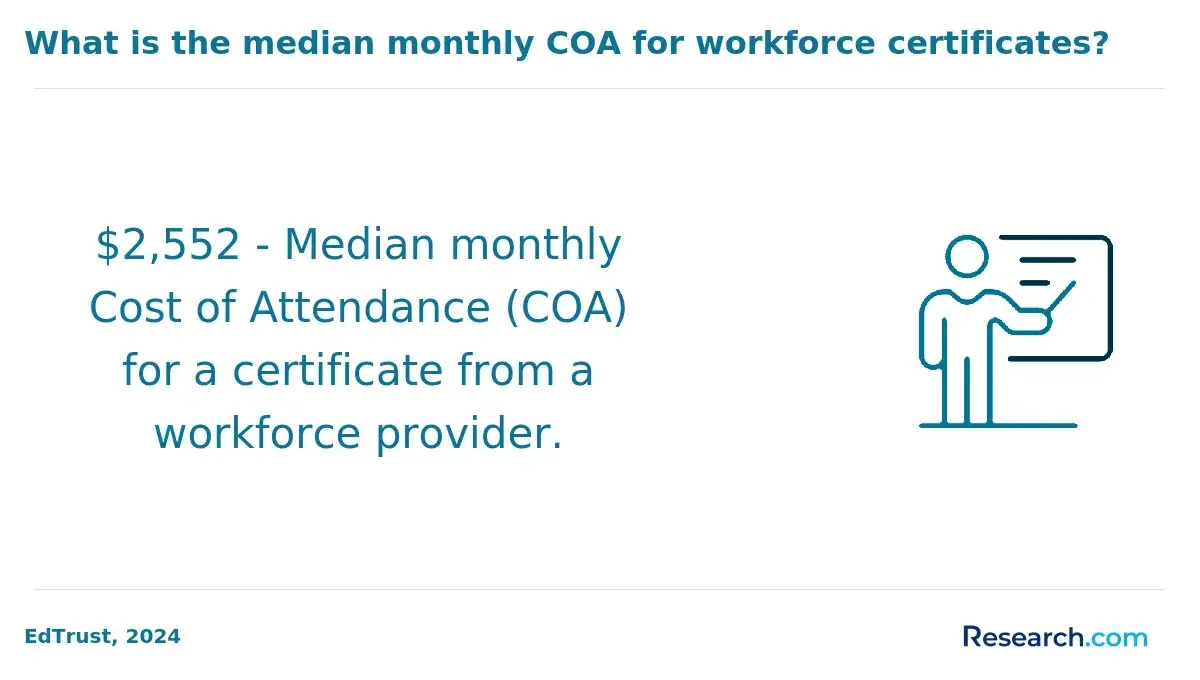
| Graduate certificate | You need recent graduate grades in a related field | Credits may not transfer into a doctorate |
| Non-degree graduate courses | You want targeted proof in statistics, research methods, public administration, or safety | Financial aid may be limited for non-degree enrollment |
| Second master's degree | Your first master's GPA is weak or unrelated to your doctoral goal | Costs and time commitment can be substantial |
| Research or writing course | Your application needs evidence of scholarly communication ability | One course may not overcome a very low cumulative GPA |
| Professional certification coursework | You need stronger applied specialization in fire, safety, emergency management, or inspection | May not carry academic credit |
Cost should be part of the decision. If you are considering a related public safety or justice pathway first, compare the criminal justice degree price with the cost of stand-alone graduate courses, certificates, and doctoral credits so you do not overpay for a credential that only partly solves the admissions problem.
How Do Conditional Admission and Probationary Admission Work in Online Fire Science Doctorate Programs?
Conditional admission and probationary admission allow a school to admit an applicant who may not meet every standard requirement. These pathways are especially relevant for low-GPA applicants, but the terms are school-specific and should be verified in writing before enrollment.
Most conditional pathways require the student to prove readiness early in the program. Common conditions include the following requirements.
- Earn a minimum grade in the first doctoral courses, often in research, writing, leadership, or foundations courses.
- Maintain a specified GPA during the first term or first set of credits.
- Complete prerequisite coursework before advancing into core doctoral courses.
- Meet with an academic advisor more frequently during the first enrollment period.
- Submit missing documentation, such as final transcripts, professional credentials, or test scores.
Conditional admission can be a good opportunity if the conditions are realistic and affordable. It can be risky if you are allowed to start expensive coursework without clear confirmation that you can continue after the probationary period.
Ask admissions these questions before accepting an offer.
- What exact GPA or grade must I earn to move from conditional to regular status?
- How many credits can I take before full admission is reviewed?
- Will the credits count toward the doctorate if I successfully complete the condition?
- Will conditional status affect financial aid, employer tuition reimbursement, or veteran education benefits?
- What happens academically and financially if I do not meet the condition?
Does a Low GPA Affect Financial Aid or Scholarship Opportunities in Online Fire Science Doctorate Programs?
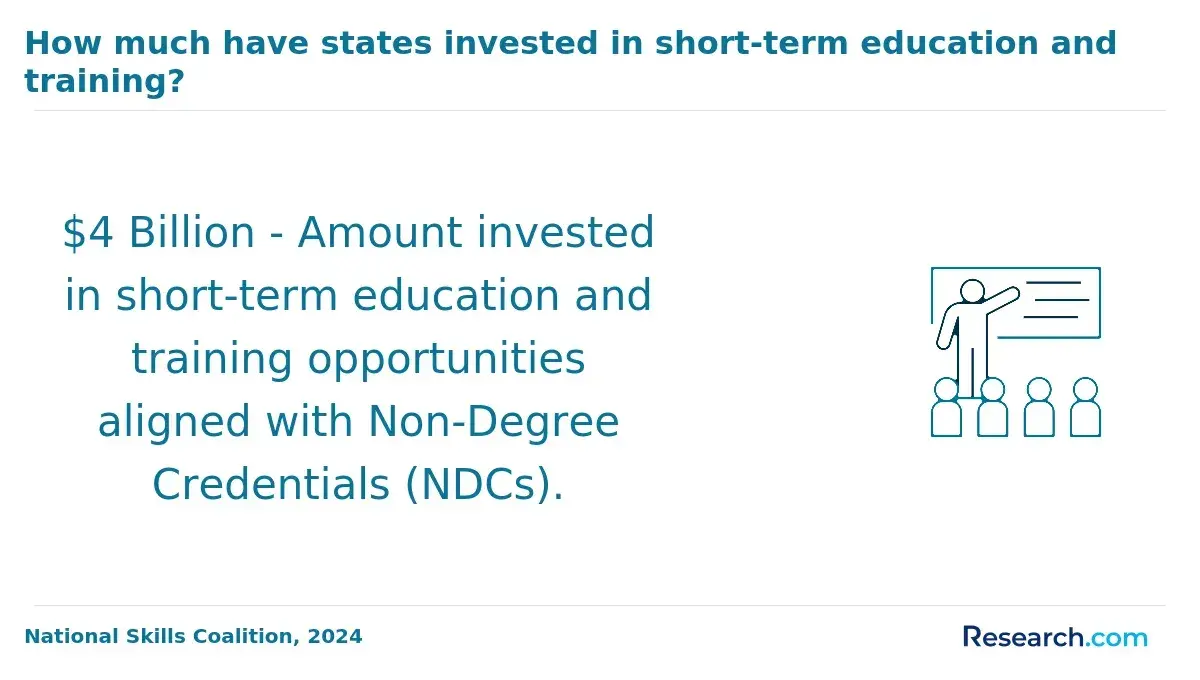
A low GPA can affect merit scholarships and assistantship competitiveness, but it does not automatically eliminate all financial aid options. Federal student aid eligibility is generally tied to enrollment status, program eligibility, citizenship or eligible noncitizen status, satisfactory academic progress, and other federal rules rather than a single admissions GPA. However, once enrolled, doctoral students must maintain satisfactory academic progress to keep aid.
The latest Federal Student Aid portfolio data showed that graduate and professional borrowers hold a large share of federal student loan balances, which matters because doctoral programs can add debt quickly. For a low-GPA applicant, the financial question is not only "Can I get in?" but "Can I complete the program without taking on debt for a program I am not academically ready to finish?"
Low GPA can influence funding in several ways, so review each funding source separately.
- Merit scholarships may require a minimum GPA, strong academic record, or competitive review.
- Employer tuition assistance may require continued employment, passing grades, or service commitments after reimbursement.
- Public safety association scholarships may prioritize leadership, service, financial need, or a specific career area rather than GPA alone.
- Federal loans may be available to eligible graduate students, but borrowing limits, interest, and repayment plans should be reviewed before enrollment.
- Assistantships are less common in fully online professional doctorates and may be more competitive when available.
Avoid assuming that admission means affordability. Request a full cost estimate that includes tuition, fees, technology charges, residencies, books, travel, dissertation or capstone continuation credits, and the expected number of terms to completion.
Does a Low GPA Affect Career Outcomes After Completing an Online Fire Science Doctorate?
In most fire science and public safety careers, your completed doctorate, professional experience, leadership record, certifications, and reputation will matter more than the GPA that got you admitted. Employers rarely ask for an old undergraduate GPA after you have completed a terminal degree, although academic employers may review doctoral transcripts, research output, teaching ability, and publications.
The career value of a doctorate depends on the role you are targeting. It may support advancement into executive leadership, emergency management administration, college teaching, research, consulting, policy analysis, training leadership, or senior safety roles. It is usually not required for front-line firefighter positions, and it may not produce a strong return on investment if your agency's promotion system is based mainly on exams, rank time, civil service rules, or certifications.
For salary context, the U.S. Bureau of Labor Statistics reported a May 2024 median annual wage of $86,130 for emergency management directors. This figure is not a doctorate-specific salary, but it helps frame the type of leadership labor market many fire science doctoral students are targeting.
The table below connects common career goals to the likely value of a doctorate. Use it to decide whether the degree supports your actual next role rather than a general desire for advancement.
| Career goal | How a doctorate may help | When another credential may be better |
| Fire department executive leadership | Can strengthen leadership, research, policy, and administrative credibility | If promotions are based mainly on internal exams or command experience |
| Emergency management director | Can support advanced planning, mitigation, interagency coordination, and policy analysis | If the role requires specific emergency management certifications more than a doctorate |
| College teaching | May meet terminal-degree expectations for faculty or leadership roles | If adjunct teaching only requires a master's degree in your target institution |
| Safety or risk consulting | Can signal expertise and support research-based consulting services | If clients mainly require licensure, technical certification, or field experience |
| Firefighter or company officer advancement | May support long-term leadership development | If a bachelor's, master's, or certification provides sufficient advancement value |
Which Students Are Most Likely to Succeed in an Online Fire Science Doctorate Despite a Low GPA?
Students most likely to succeed are not necessarily those with perfect academic histories. They are applicants who can show that the reasons for the low GPA have been resolved and that they now have the discipline, writing ability, and support system required for doctoral work.
Strong low-GPA candidates often share the following traits.
- They have recent academic success, preferably in graduate-level courses related to research, leadership, public administration, safety, emergency management, or policy.
- They can explain their academic history briefly and professionally without blaming others or ignoring the transcript.
- They have a specific doctoral purpose, such as studying firefighter health, disaster planning, community risk reduction, wildfire policy, code enforcement, or emergency services leadership.
- They understand the time demands of online doctoral work and have a realistic weekly study schedule.
- They have workplace or family support that makes multi-year study manageable.
- They are comfortable with research methods, academic writing, online collaboration, and iterative feedback.
Students who struggle are often those who apply only because the program is online, underestimate the dissertation or capstone process, or assume professional rank automatically translates into doctoral writing readiness. Field expertise is valuable, but it must be converted into evidence-based analysis.
If you are not ready for doctoral writing yet, an earlier public safety pathway may still build momentum. For example, students at the beginning of the education ladder can compare the best online associate degree programs in criminal justice before progressing to bachelor's, master's, and doctoral options.
How Should Students Decide Whether to Apply to an Online Fire Science Doctorate With a Low GPA?
The best decision depends on your GPA gap, career goal, finances, and evidence of current readiness. Applying immediately can make sense if you are close to the minimum and have strong professional credentials. Waiting can be wiser if your GPA is far below the threshold, your writing is weak, or you cannot afford to risk conditional enrollment.
Use this decision framework before you submit applications.
- List your cumulative undergraduate GPA, graduate GPA, last 60-credit GPA, and major GPA so you know which number each school will evaluate.
- Identify at least five relevant programs and record their minimum GPA, admission exceptions, format, accreditation, dissertation or capstone requirements, and total estimated cost.
- Email admissions with your GPA profile and ask whether applicants with similar records have been considered through holistic, conditional, or probationary review.
- Compare the doctorate with alternatives such as a graduate certificate, second master's, emergency management credential, safety credential, or leadership program.
- Apply now only if you can present clear evidence of academic readiness and the program confirms that your GPA does not make you ineligible.
- Delay applying if the minimum GPA is firm, your transcript lacks recent success, or the financial risk of probationary admission is too high.
The table below summarizes which path is usually most sensible based on the applicant's profile.
| Applicant profile | Most practical next step | Why |
| GPA slightly below 3.0 with strong graduate work | Apply to holistic or conditional programs | Recent performance may offset the cumulative number |
| GPA below 2.75 with no recent coursework | Complete graduate coursework first | The application needs current proof of readiness |
| Strong fire leadership but weak academic writing | Take research and writing-focused graduate courses | Doctoral success depends heavily on written analysis |
| Unclear career goal | Delay and compare alternatives | A doctorate is too expensive for vague advancement goals |
| Goal is teaching, research, or executive leadership | Apply selectively after confirming program fit | The doctorate may align with long-term outcomes |
A low GPA should make you more strategic, not automatically discourage you. The right move is the one that gives you the strongest chance of admission, completion, and career value without taking unnecessary financial risk.
Other Things You Should Know About Fire Science
No. Fire science focuses more on fire behavior, prevention, suppression, investigation, codes, and emergency services. Emergency management is broader and includes disaster preparedness, mitigation, response, recovery, and coordination across agencies.
Most firefighters do not need a doctorate. A doctorate is usually more relevant for senior administration, research, college teaching, consulting, policy, or specialized leadership roles rather than entry-level or front-line firefighting.
It can be respected if the school is properly accredited, the curriculum is rigorous, and the degree fits your career goal. Employers may also consider your experience, certifications, leadership record, and the reputation of the institution.
Students should confirm institutional accreditation from an accreditor recognized by the U.S. Department of Education. For specialized safety, emergency management, or public administration programs, they should also ask whether any field-specific accreditation or professional alignment applies.
References
- Fire Science Degree | Fire Science Schools & Colleges https://www.firescience.org/fire-science-degrees-and-programs/
- How To Get into Grad School With a Low GPA https://www.princetonreview.com/grad-school-advice/how-to-get-into-grad-school-with-low-gpa
- 2026 Most Affordable Online Fire Science Degrees https://www.onlineu.com/most-affordable-colleges/fire-science-degrees
- 10 Ways to Increase Your Chances of Getting into Graduate School https://paloaltou.edu/resources/business-of-practice-blog/getting-into-graduate-school