2027 Can a BS in Business Administration Prepare You for a Professional Services Operations Manager Role? Skills and Entry Requirements
Audited and Verified:
Our Editorial and Data Verification Process
Research.com uses government datasets, official education statistics and primary institutional information to support its career and degree guides. Our review process checks factual accuracy, occupational definitions, source dates and the requirements associated with the credentials discussed.
How This Article Was Fact-Checked
Our editorial team verifies salary estimates, employment projections, education requirements and program information against original data providers and official organizations. Salary figures are checked against the relevant occupational definitions and reporting periods. Information about licensure, accreditation and required in-person training is reviewed separately.
Fact-checked and verified on:

Co-Founder and Chief Data Scientist
Professional services firms depend on more than client-facing expertise. Someone must coordinate staffing, projects, budgets, and the systems that keep work moving. If you are considering a BS in Business Administration for that role, the important distinction is between learning how operations work and being ready to manage them. This guide explains what the job involves, which courses and work experiences matter most, and how to judge whether a business degree - or a more targeted path - fits your starting point.
Key Things You Should Know
- A BS in Business Administration can build relevant financial, analytical, and management skills, but employers generally expect evidence of operational responsibility before hiring someone to manage a professional services function.
- Look for experience with client-project scheduling, staff utilization, budgets, and service delivery - not only general management coursework. A coordinator or project-support role can provide that evidence.
- The U.S. Bureau of Labor Statistics reports a May 2025 median annual wage of $105,770 for general and operations managers and projects 5% employment growth from 2025 to 2035. That occupation-wide figure is not a starting salary or a forecast specific to professional services.
What Does a Professional Services Operations Manager Do?
A professional services operations manager helps a firm deliver work reliably and profitably. The setting might be a consulting, accounting, design, engineering, legal, or other client-service organization. Responsibilities vary with firm size: one manager may oversee a single practice's workflows, while another coordinates operations across several teams.
The work commonly includes matching available staff to projects, monitoring deadlines and budgets, improving handoffs between sales and delivery teams, supporting billing processes, and reporting operational risks to leadership. Managers may track utilization - how much available working time is spent on client work - but high utilization alone does not prove that projects are profitable or that staff workloads are sustainable.
This is primarily an operation for delivering expertise, not moving physical goods. Students drawn instead to inventory, transportation, and purchasing can compare shorter online supply chain bachelor's pathways before choosing a degree focus.
Can a BS in Business Administration Prepare You for Operations Management?
Yes, as a foundation - not as a substitute for experience. Accounting and finance can help you interpret project costs; operations and analytics can help you diagnose delays; and management courses can help you understand team structure and decision-making. The value depends on the program's actual curriculum and whether you can apply it to service work.
For an early-career student, the strongest path often combines the BS with a project-coordination job, internship, or approved applied assignment. If you already coordinate schedules or support client delivery, the degree may help you take on broader budgeting and process responsibilities. Document what you actually owned and improved; a management title is less persuasive than clear evidence of responsibility.
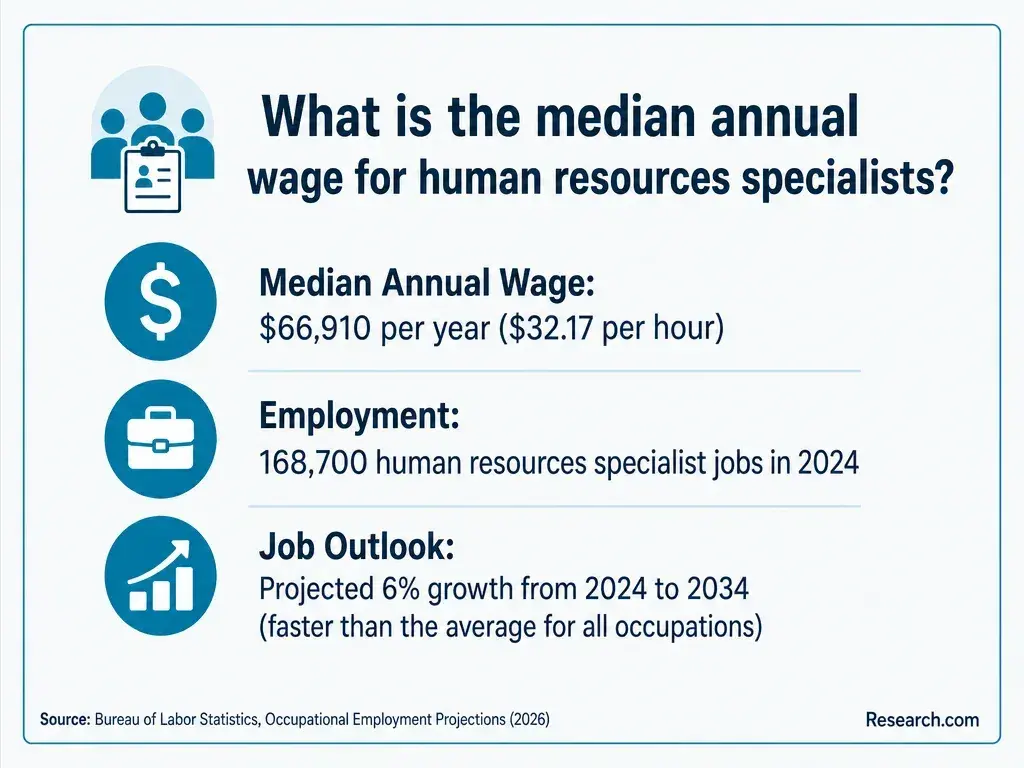
Choose a narrower pathway if your goal is narrower. Someone primarily interested in recruiting, employee relations, or HR policy should compare human resources degree pathways. Someone aiming to manage a firm's overall delivery function may benefit more from the breadth of business administration plus relevant work experience.
What Skills Are Required for Professional Services Operations Managers?
The defining skill is turning incomplete information about people, projects, and money into workable decisions. A manager must also explain those decisions to client-facing professionals, whose priorities may differ from the operations team's.
The following connections distinguish general business knowledge from evidence an employer can evaluate:
| Skill | Typical decision | Useful evidence of practice |
| Capacity planning | Which qualified staff can take on new work without jeopardizing existing commitments? | A supervised staffing plan showing assumptions and constraints |
| Financial judgment | Is a project using more time or expense than its budget allows? | A budget-to-actual analysis that explains variances |
| Process improvement | Where are approvals, handoffs, or billing steps slowing delivery? | A process map and a feasible proposed change |
| Communication and leadership | How should competing client and team priorities be resolved? | Documented coordination, escalation, and follow-through |
Spreadsheet fluency and sound data interpretation matter, but so do confidentiality and judgment. Staffing records, client contracts, and project margins may be restricted; a student portfolio should use permitted, anonymized, or hypothetical material rather than expose firm data. If your preferred work is specifically employee administration, human resources bachelor's credit transfer options may be worth examining alongside a general business degree.
Start with the required business core, then use available electives or an official concentration to deepen the skills most relevant to service delivery. Course titles alone are not enough: compare syllabi and assignments to see whether students actually analyze budgets, processes, and organizational data.
Prioritize managerial accounting or budgeting, operations management, project management, business statistics, spreadsheet-based analytics, organizational behavior, and business information systems. Contracting or business law can add useful context, though those courses do not qualify a graduate to give legal advice. A project-based course is especially valuable when it requires you to identify assumptions, recommend a change, and explain its limits.
Ask an adviser which courses have prerequisites, when they are offered, and whether an operations or project management concentration adds credits beyond the BS. If you are considering a separate project management bachelor's rather than a few relevant electives, project management undergraduate scholarship comparisons can inform that larger education decision. An elective or informal cluster does not become an official concentration unless the school awards it as one.
There is no single degree or experience rule for the job title. Employers may seek a bachelor's degree in business or a related field, but their requirements depend on the firm's size, specialty, systems, and scope of authority. Managing a practice-wide budget and staff assignments is a different proposition from supporting one team's scheduling.
A realistic early-career route is to seek work as an operations coordinator, project coordinator, resource-scheduling assistant, or administrative specialist, then pursue responsibility for reporting, workflow improvements, and cross-team decisions. Existing client-service, finance, or supervisory experience can shorten the skills gap, but it should be assessed against the target posting rather than counted as automatic qualification.
Before applying to a degree, check its admissions rules separately from employers' hiring rules. Entry conditions for prospective business administration students can help frame questions about prior coursework; the institution must confirm admission and which credits satisfy its degree requirements.
The operations-manager role itself generally does not require an occupational license. That does not remove licensing obligations from the firm or its client-facing professionals. Attorneys, accountants performing regulated work, architects, and other practitioners must meet the rules applicable to their services and jurisdiction. An operations manager should understand where those boundaries affect staffing and approvals without presenting a business degree as permission to perform regulated work.
Check a job posting for duties that cross into a separately regulated occupation, then verify those duties with the relevant state board or regulator. If your sole reason for considering a BS is the belief that this management title requires one for licensure, confirm that assumption before paying for a degree. Shorter affordable business administration degree pathways may reduce a completion burden, but they do not create an operations license or replace required experience.
A voluntary certification may help you demonstrate a particular skill, especially when your job includes substantial project coordination or process improvement. Project-management credentials and process-improvement training are possibilities, but their value depends on the work you want to do and the certifying organization's eligibility rules. A course completion certificate, an academic concentration, and a professional certification are different credentials.
Review current exam, experience, renewal, and fee requirements directly with the certification provider before committing. If you lack opportunities to use the methods at work, a supervised project or an employer-supported assignment may offer more immediate evidence of readiness. For a larger commitment to a project management degree, tuition and aid questions for project management students are a separate comparison from the cost and eligibility of a voluntary certification.
A bachelor's degree is commonly planned as four years of full-time undergraduate study, but completion time depends on applicable transfer credits, course sequencing, and enrollment pace. A returning student should request an official degree audit: credits a school accepts do not necessarily satisfy its business core, concentration, or residency requirements.
There is no reliable single price for this path. Compare each school's tuition and mandatory fees against the courses you still need, then account for books, software, commuting or technology costs, and any earnings you would give up to study. Ask the financial-aid office about aid eligibility and the timing of any employer reimbursement rather than assuming either will cover the bill.
When comparing cost-effective paths to a business degree, request written estimates based on the same transfer-credit assumptions and enrollment pace. The lowest advertised tuition may not be the lowest cost to finish if required courses are unavailable or prior credits apply only as electives.
Choose the format that lets you complete relevant work, not simply the one that sounds most convenient. Online study may fit an existing job in client services, while campus study may offer easier access to scheduled group work or local employers. Neither format inherently provides an internship, networking access, or a flexible weekly schedule.
Ask how often classes meet live, whether exams are proctored, when group projects occur, and whether a capstone or internship requires employer or faculty approval. Also check whether operations electives run in the terms you can attend. Accelerated online pathways for business students may shorten calendar time, but compressed courses can increase the weekly workload; compare that demand with your work and caregiving commitments before enrolling.
How Can You Choose an Accredited Business Administration Program?
Verify that the institution holds recognized institutional accreditation and confirm the exact degree name, delivery format, and current curriculum. AACSB, ACBSP, and IACBE accreditation, where applicable, concerns the scope identified by the accreditor; do not assume every degree at an institution is covered. Accreditation is a quality checkpoint, not proof that graduates obtain operations-manager jobs.
Then evaluate fit for this specific career: look for substantial operations and finance coursework, opportunities to analyze service-delivery problems, access to internships or approved workplace projects, and career support connected to relevant employers. Ask who approves a workplace project and what confidential material may be used. A national comparison of accelerated business bachelor's schools can identify options to investigate, but confirm accreditation scope, course availability, transfer treatment, and total completion cost with each school before deciding.
Other Things You Should Know About Business Administration
Yes. Coordinating schedules, tracking costs, or improving client handoffs can be relevant even without a formal operations title. Describe your decision-making authority and results accurately.
Not generally. Some employers may prefer graduate study for senior roles, but relevant delivery experience and demonstrated judgment may matter more than an additional degree.
Either may fit. Compare actual courses and applied opportunities: the stronger choice is the one that closes your gaps in service operations, budgeting, analytics, and leadership.
Use an approved, anonymized work sample or a clearly labeled hypothetical staffing plan, budget analysis, or process map. Explain your assumptions and your role without revealing restricted information.
- How to Become a Business Operations Manager | GMercyU https://www.gmercyu.edu/academics/learn/become-operations-manager
- What is a business administration degree? | Northwest Media Center https://www.nwmissouri.edu/media/news/2025/07/what-is-a-business-administration-degree.htm
- Operations Manager (General) - NC State Online https://online-distance.ncsu.edu/career/operations-manager/
- Best Tips on How to Become a Business Operations Manager in the USA | Edgewood College https://online.edgewood.edu/blog/how-to-become-a-business-operations-manager-in-the-usa/
- How Industry Certificates Can Boost Your Career | St. Kate's https://continuinged.stkate.edu/how-industry-recognized-professional-certificates-can-boost-your-career/
- Wondering Which Credentials are Right for You? Our Guide is Here to Help! | Continuing and Professional Education https://ce.arizona.edu/news/choosing-professional-credentials-guide
- Operations Management Career Path | Roles, Skills & Salary | YSU https://online.ysu.edu/degrees/undergraduate/bsba/management/operations-manager-career-path/
- Business Administration: Definition and 27 Career Paths | indeed.com https://www.indeed.com/career-advice/finding-a-job/business-administration-definition
- General and Operations Manager Careers | nbmbaa.org https://jobs.nbmbaa.org/career-resources/explore-the-work-5/general-and-operations-manager-careers-what-the-largest-management-code-covers-118