2027 Budgeting for Unpaid SLP Clinical Rotations: How to Compare Affordable Study Plans

Co-Founder and Chief Data Scientist

Reviewed by Rhea Paul, PhD
SLP Education & Research Expert
Unpaid clinical rotations can turn an affordable speech-language pathology graduate program into a difficult cash-flow problem. Tuition is only part of the decision: placement hours may limit employment while adding commuting, compliance, housing, and childcare costs.
This guide is for current and prospective SLP graduate students who need to compare study-load and work plans realistically. Use it to estimate your rotation-term expenses, pressure-test funding options, and choose a schedule that supports progress toward licensure without creating avoidable debt or burnout.
Key Things You Should Know
- Budget by rotation term, not by tuition alone: include lost work income, transportation, compliance requirements, meals, childcare, and an emergency buffer alongside school charges.
- A full-time placement may be academically efficient but financially risky when required hours overlap with paid work; compare at least a full-time, reduced-work, and extended-program scenario before committing.
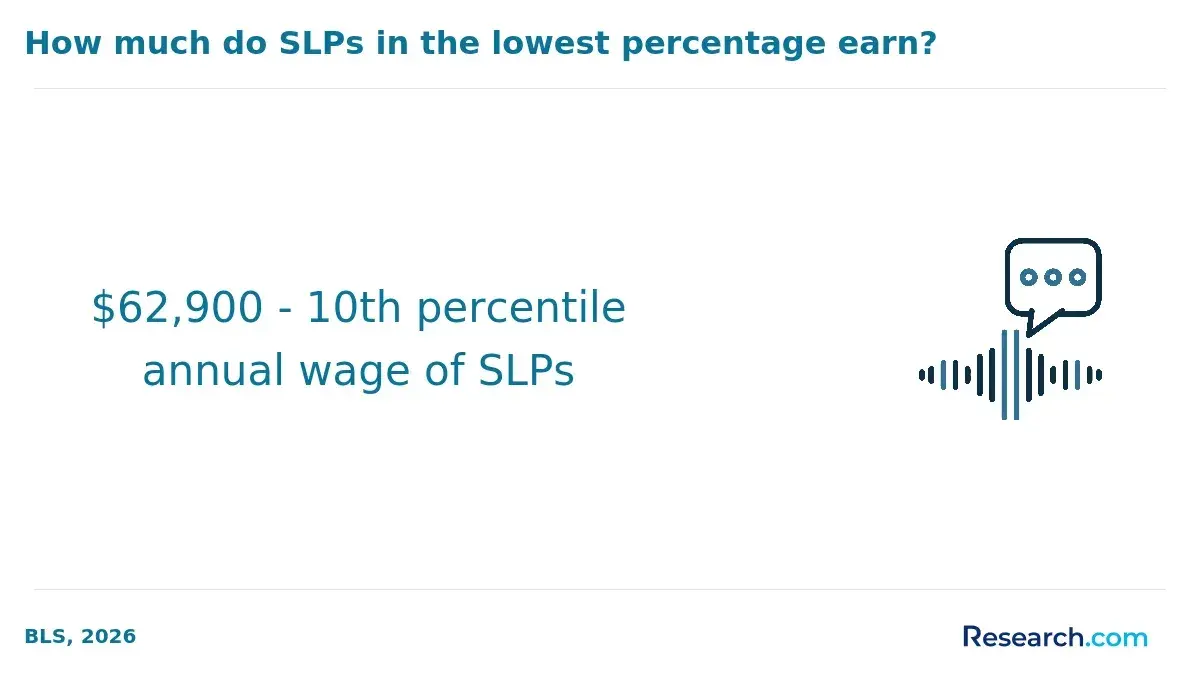
- SLP is a strong long-term field - BLS reports a $97,870 median annual wage for speech-language pathologists in May 2025 and projects 17% employment growth from 2025 to 2035 - but future earning potential does not make any level of current borrowing automatically affordable.
How should SLP graduate students forecast the real costs of unpaid clinical rotations?
Forecasting means estimating the cash you will need during each clinical term, not simply reviewing the university's annual tuition figure. An unpaid rotation is a supervised educational experience in which the student completes clinical learning requirements without wages from the placement site. Because the schedule may resemble a workweek, the largest hidden cost is often income that the student can no longer earn.
Start with a term-based forecast. Use the actual academic calendar, anticipated placement days, travel time, and your employer's scheduling rules. If your site is not assigned yet, create a conservative estimate using the longest reasonable commute or the more expensive of two plausible placement areas. This prevents a low-cost local placement from becoming the only assumption supporting your plan.
The following framework separates costs that require cash from income that disappears when clinical hours increase. Both affect whether a plan is sustainable.
| Budget component | What to calculate | Why it matters during rotation |
| Program charges | Tuition, university fees, clinical-course fees, insurance, technology, and graduation-related charges | Billing may occur before aid is disbursed or before work hours can be adjusted. |
| Rotation-specific spending | Commuting, parking, tolls, professional clothing, meals, background checks, drug screens, immunizations, and supplies | Many costs are mandatory or time-sensitive even when the placement is unpaid. |
| Living expenses | Housing, utilities, food, phone, insurance, debt payments, healthcare, and dependent care | These continue regardless of clinical workload. |
| Income change | Expected take-home pay before placement minus expected take-home pay during placement | This is the opportunity cost that tuition-only comparisons miss. |
| Contingency reserve | Cash available for reassignment, car repairs, illness, delayed payroll, or an added compliance item | Clinical schedules leave little room to solve a shortfall through extra shifts. |
Use after-tax income, not gross wages, and treat uncertain money as unavailable until it is confirmed in writing. A scholarship that has not been awarded, a promised extra shift, or a possible paid assistantship should be shown separately from guaranteed resources.
For each term, apply this simple calculation: cash gap = total term expenses + lost net income − confirmed aid − confirmed savings − expected net work income. A positive gap requires a specific solution, such as reducing expenses, changing pace, securing funding, or borrowing within a defined limit. It is not enough to assume that the gap will "work itself out."
Which major expense categories do SLP clinical placements add beyond regular grad school tuition?
Clinical education can add expenses that are not visible on a program's tuition page. Requirements vary by university, site, state, and health system, so students should request a current clinical onboarding checklist before setting a final budget.
Common placement-related categories include the following:
- Transportation costs, including mileage or transit fares, parking, tolls, vehicle maintenance, rideshare backup, and occasional overnight lodging.
- Compliance costs, such as criminal-background checks, fingerprinting, drug screening, immunizations, titers, tuberculosis testing, CPR training, and medical documentation.
- Professional requirements, including liability coverage if not included by the program, required attire, shoes, name badges, and site-specific materials.
- Time-related living costs, including convenience meals, additional childcare, pet care, and reduced flexibility for lower-cost shopping or household tasks.
- Academic and technology costs, including assessment materials when required, secure internet access, software, printing, and travel to campus-based orientations or competency activities.
Do not assume every item will apply. Instead, mark each cost as confirmed, likely, or possible. Confirmed costs belong in your base budget. Likely and possible costs should be funded from a reserve or addressed before accepting a schedule that leaves no margin.
Students comparing online SLP programs should also separate instructional convenience from clinical affordability. Online coursework can reduce relocation or campus commuting, but it does not necessarily eliminate travel to placements, campus visits, synchronous sessions, or the possibility of a site outside a student's preferred area.
How can students compare different study-load and work-hour plans to stay financially afloat?
The best plan is not always the fastest completion path or the lowest tuition-per-credit option. Compare plans by their total effect on cash flow, debt, time to graduation, health, and ability to meet clinical expectations. A slower plan can cost more in tuition or foregone career earnings, while a faster plan can require borrowing that is too large for your circumstances.
This comparison shows the trade-offs students should evaluate before choosing a clinical-term workload. It does not assume that every school offers each pacing option.
| Plan type | Typical financial advantage | Primary trade-off | May fit best when |
| Full-time study with minimal paid work | May shorten time to graduation and simplify clinical scheduling | Higher short-term cash gap and greater reliance on savings, aid, or loans | You have reliable funding, low fixed expenses, and a realistic emergency reserve |
| Full-time study with limited flexible work | Preserves some income while maintaining academic momentum | Schedule conflicts and fatigue can increase quickly during intensive placements | Your job permits predictable evening or weekend hours that do not impair clinical performance |
| Part-time or extended sequence | May preserve steadier employment and reduce borrowing per term | Longer enrollment can extend tuition exposure and delay full-time SLP earnings | Your program permits it and stable current income is essential |
| Employer-supported pathway | Benefits, tuition assistance, or reduced living costs may lower the cash gap | Eligibility rules, service commitments, and schedule constraints may apply | You can verify the benefit terms and the job remains compatible with clinical hours |
Compare each option using the same assumptions: identical housing costs, the same conservative placement commute, expected tax withholding, and only confirmed funding. If one plan depends on working every available weekend, test a second version with fewer hours. That sensitivity check reveals whether the plan survives a normal disruption such as illness, exams, or a required training day.
Accelerated formats deserve particular scrutiny. SLP accelerated programs can reduce the time before entering the profession, but dense terms may leave little capacity for paid work or remediation if a clinical requirement changes. Choose an accelerated path only when the budget works without assuming perfect attendance, maximum work hours, or unverified placement timing.
What budgeting frameworks work best for SLPs balancing classes, rotations, and part-time jobs?
A rotation budget needs a framework that accounts for timing, not just annual totals. The most practical approach is a zero-based, term-level budget paired with a cash-flow calendar. In a zero-based budget, every expected dollar of income, savings, aid, and borrowing is assigned to a required expense, reserve, or debt payment before the term starts.
Use a three-layer system. Layer one covers non-negotiable obligations such as housing, food, insurance, minimum debt payments, tuition, and required clinical costs. Layer two covers variable expenses that can be adjusted, such as discretionary spending, meal convenience, subscriptions, and nonessential travel. Layer three is a protected contingency reserve for placement changes and genuine emergencies.
To put the framework into action, complete these steps before registration or before a clinical schedule is finalized:
- Build a monthly calendar showing tuition due dates, financial-aid disbursement dates, rent, job paydays, placement start dates, and one-time compliance deadlines.
- Calculate a base plan using only guaranteed income, confirmed aid, and cash savings available after any existing emergency needs.
- Create a conservative plan that reduces work income or adds a higher commute cost, then identify exactly how the gap would be covered.
- Set a weekly spending allowance for flexible costs after fixed expenses and reserves are funded.
- Review actual spending after the first two placement weeks and adjust early rather than relying on credit cards to bridge recurring shortfalls.
A percentage-based household budget can be useful for general spending habits, but it is often too blunt for a clinical term. Rotation schedules create uneven income and one-time requirements. Cash-flow timing and a dedicated clinical-cost category usually provide a clearer decision tool.
How do site assignments, commuting patterns, and schedule blocks change your rotation budget math?
Placement location and schedule can change affordability more than a modest difference in tuition. A site that is farther away, begins earlier, requires several short shifts, or has limited parking can increase direct travel costs and reduce the number of work shifts you can realistically keep. Students should avoid treating "within commuting distance" as a financial guarantee.
Estimate transportation using the actual schedule pattern: round-trip distance or transit fare multiplied by placement days, plus parking, tolls, and a maintenance allowance if you drive. Then assess time separately. A long commute may not appear expensive in a spreadsheet, but it can eliminate evening work, make childcare coverage more costly, or create safety concerns after late shifts.
Schedule blocks also matter. A four-day placement with long days may preserve one workday but leave little energy for it. Five shorter clinical days may reduce childcare gaps but prevent a full paid shift. Ask the clinical coordinator what can be known before assignment, whether students may express geographic constraints, how reassignments are handled, and whether travel to specialized sites is ever required.
Before selecting a program format, examine how placement coordination works. Some SLP programs online may offer flexibility in coursework while still requiring students to meet local placement, travel, and availability expectations. Admissions accessibility should never substitute for verification of accreditation, state eligibility, clinical support, and the practical cost of completing required experiences.
When comparing two possible placements, use the more expensive option as your planning baseline unless the school confirms the assignment. If a plan remains affordable only with one ideal site, it is a fragile plan.
Which funding sources, stipends, and employer benefits realistically offset unpaid SLP rotations?
Students can often combine funding sources, but each source has different timing, restrictions, and reliability. The safest strategy is to prioritize money that does not require repayment, then evaluate employment-related support, and use loans only after the remaining gap is clear.
Potential offsets are worth investigating in this order:
- Institutional scholarships, tuition waivers, graduate assistantships, and departmental awards, with attention to whether clinical enrollment affects eligibility or work-hour requirements.
- Federal, state, or school-based need-based aid for eligible students, confirmed through the institution's financial-aid office rather than assumed from a prior year.
- Employer tuition assistance, education reimbursement, paid leave, flexible scheduling, or health-insurance benefits from a current employer.
- Workplace scholarships or workforce programs offered by hospitals, school districts, rehabilitation providers, unions, or community organizations, when eligibility and service requirements are documented.
- Family support, savings, or a temporary reduction in household expenses, provided the agreement is clear and does not displace essential emergency savings.
Read the conditions carefully. Tuition reimbursement may be paid after the course ends, may require a minimum grade, may be taxable in some circumstances, or may trigger repayment if you leave the employer. A stipend may be limited to specific expenses and may not arrive before onboarding costs are due.
For students evaluating the long-term value of the expense, it can help to understand how much do speech pathologists make across settings and roles. Use compensation information as an ROI input, not as a reason to overlook repayment terms, regional wage variation, or the costs of becoming licensed in your intended state.
How can SLP students evaluate loan use, deferment, and repayment while in heavy clinical load?
Loans can make a required clinical term possible, but affordability depends on total borrowing, interest, future repayment, and the student's ability to finish the program. Before borrowing, distinguish between tuition charges and living expenses, since both may be financed but both increase the repayment burden.
Ask the financial-aid office which loans are available, whether interest accrues while enrolled, what enrollment level is required for in-school status, and how a reduced course load or leave of absence could affect eligibility or repayment. Federal loan rules and program policies can change, so rely on current official disclosures for your specific situation.
Use a borrowing guardrail rather than deciding loan amounts one bill at a time. Add existing student debt to projected remaining borrowing, then model the result using the repayment information provided by your servicer or financial-aid office. The goal is not to predict an exact future salary; it is to identify whether the repayment obligation still leaves room for housing, transportation, insurance, licensure expenses, and normal financial shocks.
The profession's outlook supports thoughtful planning, not overconfidence. The Bureau of Labor Statistics projects about 12,500 openings for speech-language pathologists each year on average from 2025 to 2035. Job prospects and pay can still vary by setting, state, experience, hours worked, and local demand. If a budget requires an unusually high starting income to remain viable, reduce the gap before enrollment if possible.
Avoid using credit cards, payday loans, or repeated informal borrowing to cover predictable clinical expenses. Those tools may solve a due-date problem while creating a more expensive and less manageable repayment problem. If the loan package does not cover an unavoidable gap, reconsider pacing, housing, work arrangements, or program cost before the term begins.
What consumer-protection and licensure rules shape paid versus unpaid SLP clinical experiences?
Students should not assume that an unpaid placement is improper simply because it resembles work, or that a paid role automatically counts toward clinical requirements. Clinical education is governed by academic, accreditation, site, and professional requirements. Whether an experience meets degree and future licensure expectations depends on supervision, documentation, competencies, and the rules of the program and relevant licensing authorities.
For a master's program leading toward SLP practice, confirm that the program's accreditation status and curriculum align with your intended path. The American Speech-Language-Hearing Association's Council on Academic Accreditation and state licensing boards are key places to verify requirements. State licensure rules can differ, and an institution's general statement that a program is "online" or "licensure-track" does not replace a state-specific disclosure.
Before accepting a placement or changing jobs, obtain written answers to these questions:
- Does this experience count toward the program's required clinical education, and who approves it?
- Who provides supervision, how are hours documented, and what happens if the site cannot continue the placement?
- Is the student responsible for any site fees, screenings, insurance, travel, or training before starting?
- Can paid employment duties be separated from student clinical hours, and will the arrangement meet university and site policies?
- Does the program state that its curriculum is designed to meet licensure educational requirements where the student plans to seek a license?
Consumer protection begins with written documentation. Keep copies of tuition schedules, financial-aid notices, clinical handbooks, placement communications, licensure disclosures, and any employer-benefit agreement. Verbal assurances are helpful, but they are difficult to use when a site, schedule, or funding decision changes.
How can students build and compare multiple scenario-based budgets for upcoming rotation terms?
A scenario budget turns uncertainty into a decision tool. Build three versions before you commit to a schedule: a base case using confirmed facts, a constrained case with less work income or a more expensive commute, and a disruption case that includes a placement change or unexpected required expense. The constrained case is often the most useful because it tests whether the plan can survive ordinary setbacks.
This comparison template identifies the information to hold constant and the variables that should change across scenarios.
| Scenario | Assumptions to use | Decision signal |
| Base case | Confirmed placement schedule, expected work hours, known tuition and fees, confirmed aid, normal living expenses | Shows whether the plan works under current information. |
| Constrained case | Fewer paid hours, higher commuting costs, or a delayed reimbursement while fixed expenses remain unchanged | Shows whether a modest disruption creates a cash shortage. |
| Disruption case | Site reassignment, vehicle repair, added childcare, illness-related lost wages, or an additional compliance expense | Shows whether savings and contingency funding are sufficient. |
For each scenario, calculate the term-end cash balance and the total new borrowing required. Then compare the nonfinancial load: weekly hours in class, clinic, commuting, paid work, studying, caregiving, and recovery. A plan can show a small positive cash balance but still be unsafe if it leaves no time for sleep, coursework, or unexpected events.
Use the result to make a concrete choice. If only the base case works, seek a lower-cost housing or commute option, apply for aid, adjust work expectations, or ask whether the clinical sequence can be changed. If the constrained case works but the disruption case does not, build the reserve before the term. If none of the scenarios work without high-cost debt, the financially responsible choice may be to delay, extend, or choose a different program structure.
Which red flags in "affordable" SLP study plans signal unsustainable debt or burnout risk?
An affordable plan should remain workable when real life is slightly more expensive or less predictable than expected. Low advertised tuition is not enough if clinical terms require you to stop working, travel far from home, or borrow for routine living expenses without a clear repayment strategy.
Watch for these warning signs before signing up for a clinical sequence:
- The budget includes tuition but omits lost wages, transportation, placement onboarding, food, childcare, healthcare, or existing debt payments.
- The plan works only if every available paid shift is completed despite full-time clinical hours, exams, commuting, and required documentation.
- You are counting on an unconfirmed scholarship, assistantship, placement location, reimbursement, or family contribution to pay mandatory expenses.
- Credit cards or short-term high-cost borrowing are being used for recurring rent, groceries, transportation, or predictable school costs.
- The program cannot clearly explain clinical placement support, site travel expectations, accreditation status, state authorization, or licensure disclosures.
- A faster completion timeline is being chosen without enough cash reserve to absorb a delayed placement, reduced work hours, or a required retake.
- Your schedule leaves no protected time for sleep, illness, caregiving, study, or basic household tasks.
A better plan identifies what you will cut, postpone, refinance, or fund before a shortfall occurs. It also includes an exit or adjustment path: whom to contact at the school, whether part-time enrollment is possible, how a leave affects aid, and what expenses can be reduced without jeopardizing clinical progress.
Affordable does not mean choosing the absolute lowest sticker price. It means choosing the program pace, placement model, and funding structure that allow you to complete required training with manageable debt and enough capacity to learn safely.
Other Things You Should Know About Speech Language Pathology
Many students do, but the realistic number of hours depends on placement days, commute time, coursework, documentation, and personal responsibilities. Confirm your clinical schedule first, then test a reduced-work scenario. Flexible evening or weekend work may be more compatible than a job with fixed daytime shifts.
Most required graduate clinical practicum experiences are educational and unpaid, although policies and opportunities vary. Do not assume a site will pay or that a paid job will count toward program requirements. Ask the program for written clarification before relying on either arrangement.
Not automatically. Compare total cost, including transportation, lodging, lost wages, required campus travel, fees, and the risk that a distant site limits paid work. A higher-tuition option can be less expensive overall if it provides a more workable clinical schedule and reduces major living or travel costs.
Ask how placements are assigned, when schedules are released, whether students can state geographic constraints, how many daytime hours are typically required, whether part-time progression is available, what travel or residency requirements exist, and how a change in enrollment affects financial aid and graduation timing.
References
- Financial implications of unpaid clinical placements for allied... https://pmc.ncbi.nlm.nih.gov/articles/PMC11566465/
- Anticipating and planning for unexpected costs in med school https://thedo.osteopathic.org/columns/anticipating-and-planning-for-unexpected-costs-in-med-school/