2027 BS in Business Administration Program Choice: A Project That Builds Broad General Business Skills as a Capstone Option
Audited and Verified:
Our Editorial and Data Verification Process
Research.com uses government datasets, official education statistics and primary institutional information to support its career and degree guides. Our review process checks factual accuracy, occupational definitions, source dates and the requirements associated with the credentials discussed.
How This Article Was Fact-Checked
Our editorial team verifies salary estimates, employment projections, education requirements and program information against original data providers and official organizations. Salary figures are checked against the relevant occupational definitions and reporting periods. Information about licensure, accreditation and required in-person training is reviewed separately.
Fact-checked and verified on:

Co-Founder and Chief Data Scientist
A broad business capstone can be a strong choice if you want to show how accounting, marketing, operations, and management work together - not just describe them separately. It can also become too ambitious to finish or too dependent on company data you cannot use.
This guide is for BS in Business Administration students comparing capstone options and programs. It explains what a feasible general business project looks like, how to check academic requirements, and how to turn the finished work into credible evidence of your skills.
Key Things You Should Know
- Choose a broad capstone when the decision requires several business functions; choose a specialized project when your target role calls for deeper evidence in one function.
- Scope the project around one decision-maker, a defined problem, usable data, and a recommendation - not a claim that you improved a real organization.
- Confirm the school's capstone approval, data-use, and portfolio rules before committing to a workplace project; a degree or project alone does not qualify you for a management role.
What Is a BS in Business Administration With a Broad General Business Capstone?
A BS in Business Administration is an undergraduate degree that typically combines general education with a business core. A broad general business capstone is a culminating assignment that applies several parts of that core to one organizational decision. Depending on the school, students might produce an integrated business analysis, an operating plan, or a recommendation supported by financial, customer, and operational evidence.
The capstone is usually a course or project option within the degree, not a separate degree or formal concentration. For example, a student could assess whether a small organization should extend its service hours. The analysis might consider customer demand, staffing capacity, operating costs, and implementation risks. The decision is specific enough to study, but broad enough to demonstrate general business judgment.
This option fits students exploring several business functions or aiming for coordination roles. If you already know you want to build deep expertise in one area, compare the capstone with specialized coursework; human resources degree costs and options, for example, are more relevant if your goal specifically requires substantial HR preparation. Check the actual degree plan before assuming a general capstone can replace a required concentration project.
What Does a BS in Business Administration Curriculum Include?
Business administration curricula vary, but the core commonly introduces accounting, finance, economics, marketing, management, operations, statistics, and business communication. The capstone asks students to connect selected concepts rather than demonstrate advanced expertise in every subject. Its usefulness depends partly on whether prerequisite courses come before the project and whether electives give you enough depth for your intended decision.
When comparing curricula, look for a clear relationship between coursework and the capstone output. A staffing proposal needs more than an organizational behavior class: it may also require a cost estimate, a workable schedule, and a way to assess service quality. Conversely, a student targeting a specialized supply chain role may get stronger preparation from a focused sequence than from a general project; comparing accelerated supply chain bachelor's degrees can clarify the additional courses and scheduling trade-offs.
Ask an adviser which courses must be completed before the capstone, which electives count toward the degree, and whether the project must address a prescribed topic. An elective cluster is not necessarily an official concentration.
Is an Online or Campus-Based Business Administration Program Better?
Neither format is inherently better for this capstone. Online study may make it easier to use public information or an approved workplace problem, while campus study may provide more regular access to teammates, faculty, and local organizations. The deciding issue is how the program supervises and assesses the project - not its delivery label.
Before choosing a format, check whether the capstone requires live meetings, group work, a presentation, a particular software tool, an external client, or an in-person visit. An asynchronous course can still have fixed deadlines and coordinated team assignments. If price and scheduling both matter, use find inexpensive online business administration colleges as a starting point, then confirm each school's actual capstone obligations and charges.
Requirements depend on the institution and whether you enter as a first-year or transfer student. Schools may review secondary-school records, previous college transcripts, academic standing, and readiness for quantitative coursework. Some admit students to the university before they can enter the business major. Admission also does not establish that prior credits satisfy the courses needed to begin the capstone.
If you have previous college work, request an official evaluation showing which credits apply to general education, the business core, electives, and prerequisites. Before paying an application charge, you can compare accredited schools with no application charge; then ask the admissions and business advising offices about major-entry rules and the earliest term you could take the capstone.
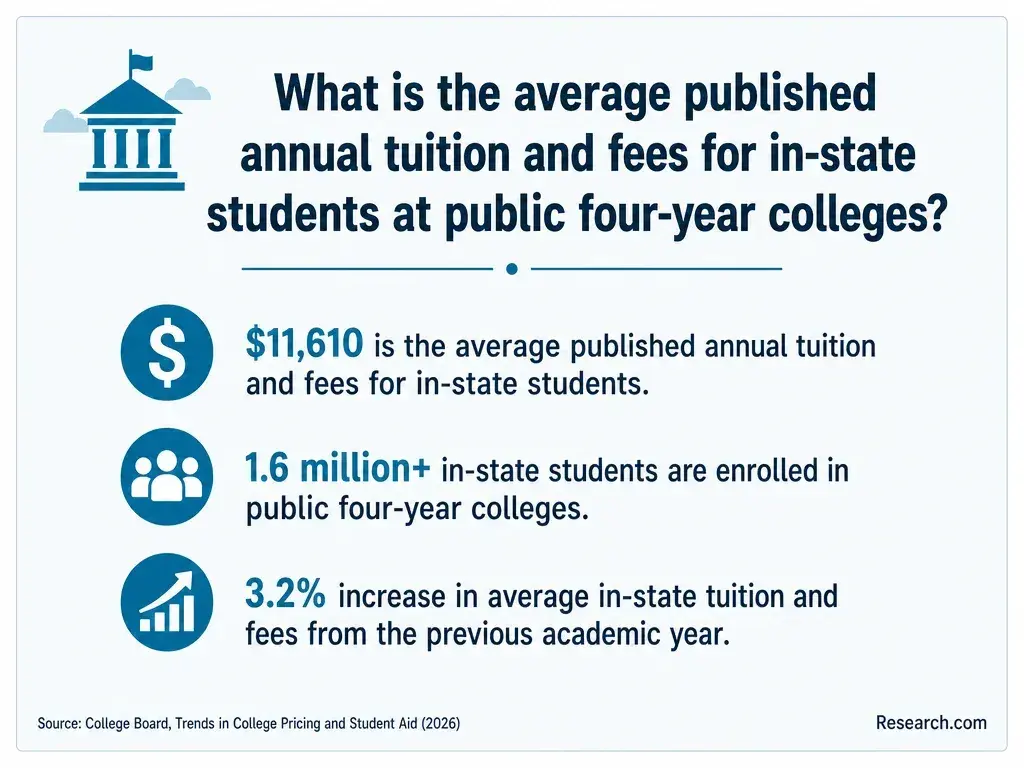
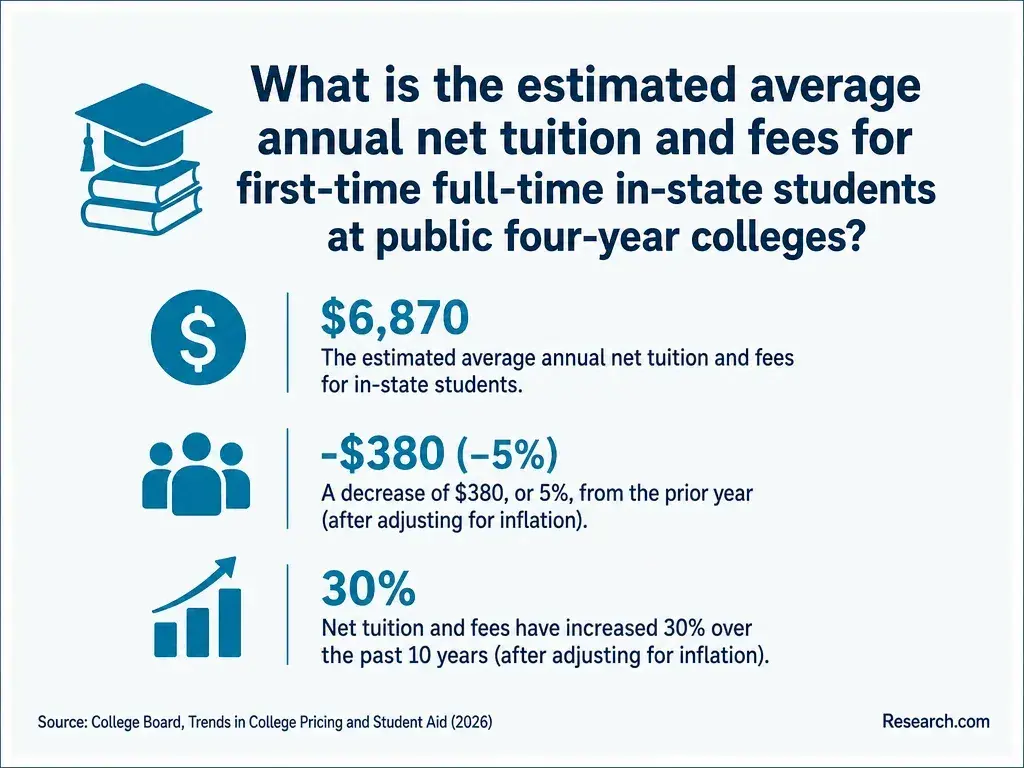
Completion time and cost depend on remaining required credits, course sequencing, enrollment pace, and the school's tuition and fee structure. A capstone offered infrequently can delay graduation even if every other requirement is finished. A workplace project may also carry costs in time, travel, software, or obtaining permissions, even when it has no separate project fee.
Compare programs using an official degree audit and a term-by-term plan, not an advertised fastest completion time. Ask for tuition and mandatory fees for the courses you still need, and check whether a lighter final term changes financial-aid eligibility. Resources to compare American fast-paced business bachelor's degrees can identify programs to investigate, but only the school can confirm your credit applicability and capstone schedule.
First, confirm that the institution holds recognized institutional accreditation by checking the accreditor's directory and the institution's stated status. Then check whether any claimed business accreditation - such as AACSB, ACBSP, or IACBE - covers the relevant business unit and degree. Institutional accreditation and business-specific accreditation answer different questions; neither guarantees a particular capstone experience or employment outcome.
If affordability is part of your search, you can compare low-tuition business administration schools accepting FAFSA. Verify accreditation directly, then ask each school which capstone rules apply to your enrollment term. A listing or accreditation claim does not establish your individual financial-aid eligibility.
A well-scoped capstone develops the ability to define a decision, connect evidence across functions, explain uncertainty, and present a recommendation to an intended decision-maker. Those skills are more convincing when the final document shows how you reached a conclusion, including alternatives you rejected and assumptions that could change it.
The following compact structure works for many general business projects. Adapt it to the faculty rubric rather than treating it as a school-approved template.
- Decision and audience: Name the choice to be made, who can make it, and the timeframe.
- Evidence: Identify permitted public, simulated, or approved organizational data; record its source and limitations.
- Integrated analysis: Examine relevant customer, financial, operational, and people implications without forcing in unrelated functions.
- Options and recommendation: Compare feasible approaches, costs, risks, and measures that could later test the decision.
- Review: Seek faculty feedback, revise unsupported claims, and prepare a shareable version that respects data and intellectual-property rules.
For a service-hours proposal, useful measures might include projected demand, staffing coverage, and incremental cost. Projections are assumptions, not observed results; a classroom recommendation is not evidence that an employer approved or implemented it. If you want to demonstrate detailed scheduling and project controls instead of cross-functional judgment, assess whether targeted training is a better fit, including the financial aid at low-cost project management schools.
The degree can support applications for business-facing roles such as operations coordinator, administrative specialist, sales operations associate, or project coordinator. The capstone can help you discuss how you weighed costs, customer needs, and implementation constraints. Hiring still depends on the role's requirements, relevant experience, and the quality of your work sample; graduation does not confer managerial authority.
Match the project to positions you plan to pursue. A cross-functional service proposal may be useful for operations coordination, while an HR-focused applicant may need stronger evidence of HR practices and relevant experience. Students with prior college work who choose that narrower route can also investigate how to finish an HR bachelor's using previous college credits. For either path, describe your actual contribution and label an academic proposal as a proposal, not a completed business improvement.
There is no single salary or growth rate for BS in Business Administration graduates. Outcomes vary by occupation, location, employer, and experience. For context, the U.S. Bureau of Labor Statistics reports a May 2025 median annual wage of $78,760 for market research analysts and projects 7% employment growth for that occupation from 2025 to 2035. Those are occupation-wide figures, not expected earnings or job prospects for a new graduate with a general business capstone.
Use a target occupation's duties and entry requirements to judge the project's career value. A capstone containing customer analysis might provide a relevant interview example, but research-intensive jobs may also require stronger analytical methods or experience. Compare likely costs and completion time against your own target roles; supply chain degree duration and salary considerations may be useful if you are deciding between broad preparation and that specific field.
Do Business Administration Graduates Need Licenses or Certifications?
A general business capstone does not require an occupational license, and the BS itself does not award a professional certification. Some later career paths have separate rules: accounting licensure, for example, is governed by state requirements, while other employers may value role-specific credentials or training. A course or project should not be presented as satisfying those requirements without confirmation from the responsible body.
Choose additional credentials only after identifying a target job and checking its actual qualifications. If the immediate goal is to show broad decision-making, finishing an approved capstone and documenting relevant work may be more useful than buying a certificate. If the goal requires a specific credential, compare its requirements and cost with the degree plan; business administration degree return and completion planning can help frame that wider education decision.
Other Things You Should Know About Business Administration
Possibly. The instructor's rules control whether group work is allowed and how individual contributions are assessed. Clarify those rules before choosing teammates or a topic.
Follow the course's AI-use policy. Verify any generated analysis, disclose assistance if required, and never enter confidential organizational information into a tool without authorization.
That can still make a strong capstone. Explain what the evidence shows, identify its limits, and recommend a different option or further testing rather than forcing a favorable conclusion.
Not necessarily. Some courses allow public information, a case, or a simulated organization. Confirm the permitted project types with the instructor before relying on a company's participation.
- Partnering with Students to Develop a Capstone for a... - PMC https://pmc.ncbi.nlm.nih.gov/articles/PMC11732519/
- What Is a Capstone Project? - Boston University Questrom https://www.bu.edu/questrom/blog/what-is-a-capstone-project/
- What is a business administration degree? | Northwest Media Center https://www.nwmissouri.edu/media/news/2025/07/what-is-a-business-administration-degree.htm
- What Skills Will Future Business Graduates Need? | AACSB https://www.aacsb.edu/insights/articles/2025/08/what-skills-will-future-business-graduates-need
- Effective Problem-Solving Techniques in Business | Mitch Daniels School of Business https://business.purdue.edu/graduate-programs/blog/posts/problem-solving-techniques-in-business.php
- Enrollment Requirements, Prerequisites & Overrides | Illinois https://www.registrar.illinois.edu/registration/registration-process/enrollment-reqs-prereqs/
- What Is a Capstone Project? Types, Examples, and Tips | SCU https://www.scu.edu/business/blog/business-concepts/what-is-a-capstone-project/
- What Is a Capstone Project? | National University https://www.nu.edu/blog/what-is-a-capstone-project/
- Capstone Experiences | Assessment and Curriculum Development Office https://manoa.hawaii.edu/assessmenttest/resources/how-to/capstone-experiences/
- Capstone Courses & Projects | University of North Texas at Dallas https://www.untdallas.edu/provost/academic-affairs/framework/hips/capstone.php