2027 BS in Business Administration Decision Guide: Taking Prerequisites Before Enrollment or During the Degree
Audited and Verified:
Our Editorial and Data Verification Process
Research.com uses government datasets, official education statistics and primary institutional information to support its career and degree guides. Our review process checks factual accuracy, occupational definitions, source dates and the requirements associated with the credentials discussed.
How This Article Was Fact-Checked
Our editorial team verifies salary estimates, employment projections, education requirements and program information against original data providers and official organizations. Salary figures are checked against the relevant occupational definitions and reporting periods. Information about licensure, accreditation and required in-person training is reviewed separately.
Fact-checked and verified on:

Co-Founder and Chief Data Scientist
Taking a prerequisite early can make your first term easier - or leave you paying for a course your chosen school will not apply to the degree. This guide is for prospective and returning BS in Business Administration students deciding where and when to complete math, accounting, economics, and other preparatory courses. You'll learn how to distinguish admission requirements from courses you can take after enrollment, compare the effects on cost and graduation timing, and get the right approvals before registering.
Key Things You Should Know
- Take a course before enrollment if it is required for admission or unlocks first-term classes; otherwise, taking it within the degree may avoid unnecessary or nontransferable credits.
- Get written confirmation that an outside course satisfies the specific requirement - not merely that its credits will transfer - before paying for it.
- A typical bachelor's degree requires about 120 semester credits, but prerequisite sequencing and credits that apply to the degree matter more to your finish date than the total alone.
What Is a BS in Business Administration?
A BS in Business Administration is an undergraduate degree combining general education with subjects such as accounting, economics, finance, marketing, management, operations, and quantitative analysis. Schools differ in how much math they require, when students enter the business major, and whether a concentration adds courses or fits within electives. Those differences determine whether a preparatory course is urgent.
A BBA, BA in Business, or BS in Management may cover overlapping material but follow a different degree plan. If your goal is specifically organizational leadership, compare the actual curriculum and remaining requirements of accelerated organizational leadership college programs rather than assuming the degree titles are interchangeable.
Should You Take Prerequisites Before Enrollment or During the Degree?
Complete a prerequisite before enrollment when the school requires it for admission, or when delaying it would block courses you need in your first term. If the school admits you with the course outstanding and offers it in a workable sequence, completing it during the degree can be simpler. "Prerequisite" may mean a condition for university admission, admission to the business major, or registration in one later course; ask which applies.
The comparison below shows why the same course can lead to different decisions at different schools.
| Situation | Before enrollment | During the degree |
| Required for admission | Necessary unless an approved alternative or exception applies | Possible only if the school offers conditional admission |
| Required for a first-term course | May prevent a sequencing delay | May postpone the next course in the sequence |
| Needed later in the curriculum | May offer scheduling or price advantages if approved for transfer | Usually reduces uncertainty about whether it meets the requirement |
| Recommended, not required | Useful for skill-building, but may add cost without advancing the degree | Support or introductory coursework may be enough |
Students from non-business backgrounds should not assume that unfamiliarity with accounting or economics makes them ineligible. Conversely, professional experience alone may not replace a required course. Request the current catalog requirements and a written review of any proposed outside class. For a closer look at how schools distinguish eligibility from preparation, consult the business administration degree admissions requirements guide.
Before registering elsewhere, send the school the course description, credit value, and proposed term. Ask the admissions or business-program office whether it meets the prerequisite, then ask the transfer office how it would apply to your degree. If you already have college credits, request an updated degree audit; acceptance as an elective does not mean a business requirement is satisfied.
How Do You Choose an Accredited BS in Business Administration Program?
Check that the institution holds recognized institutional accreditation, then verify the exact degree and its requirements in the current catalog. AACSB, ACBSP, and IACBE accreditation concerns business education, but its scope varies; confirm whether the school's named business program is covered rather than treating a logo as proof.
For this decision, the most useful program comparison is a written answer to three questions: When can you enter the business major? Which courses must precede its core classes? How will your existing or planned credits apply? Also check required-course availability; an approved prerequisite is less helpful if the next course is not offered when you need it. Online business degree rankings for US college applicants can help form a shortlist, but an official degree audit and course schedule should determine your enrollment plan.
Requirements commonly combine general education, a business core, electives or a concentration, and sometimes a capstone. Programs may require college algebra or another quantitative course before statistics; introductory accounting before finance; or economics before advanced business courses. The names and order vary, so a course list alone is not a reliable schedule.
Work backward from the classes you want to take. For example, a student interested in HR should check whether the program offers an official concentration, which introductory courses precede its electives, and whether those electives are offered often enough to fit the graduation plan. The HR degree requirements and job opportunities provide context for comparing broad business preparation with a more focused pathway. An HR elective by itself is not a separate credential.
Schools may evaluate a high school credential, previous college transcripts, academic standing, and any published entry requirements. Some admit students to the university first and require specified coursework or grades before entry to the business major. Others admit directly to the program or allow an outstanding course under conditional admission. An application checklist therefore cannot tell you on its own when every prerequisite is due.
Submit transcripts from every prior college and ask admissions to identify requirements that must be complete before admission. Ask the business adviser which requirements can be completed after admission but before upper-level courses. Applicants comparing schools may also consider accredited online colleges without application fees, while checking each school's actual business-major admission rules. An application-fee policy does not establish transfer eligibility or lower the eventual degree cost.
A typical full-time bachelor's plan spans about four academic years and 120 semester credits; transfer credit, part-time enrollment, and course sequencing can change the remaining time substantially. An outside prerequisite saves time only if it applies as intended and lets you take a needed course sooner. It may instead add credits beyond those required for graduation.
Compare the full cost of each option: tuition and fees for the prerequisite, books or software, travel or proctoring, aid eligibility, and the cost of any delayed term. Obtain a degree audit and an aid estimate before assuming that a lower per-course price means a lower total cost. Affordable business administration programs with federal aid access can provide comparison candidates, but confirm your own eligibility and each school's charges directly.
Neither format changes the central rule: the school must approve how a course fulfills its degree requirements. Online study can make it easier to fit a prerequisite around work, but fixed deadlines, live sessions, proctored assessments, and group assignments can still affect your schedule. Campus classes may offer a predictable meeting time or easier access to tutoring, depending on the school.
If you plan to take a prerequisite at one institution while pursuing an online degree at another, confirm transfer approval before enrolling in the outside class. Ask whether you can take both courses concurrently and whether that affects aid or academic standing. When comparing degree options for working business administration students, review actual course meeting times and assessment rules, not just an "online" label.
Graduates may seek roles such as operations coordinator, HR assistant or specialist, marketing coordinator, procurement staff member, or project coordinator. The appropriate entry point depends on previous work, internships, technical skills, and the employer's requirements. A business degree supplies a broad foundation; it does not automatically qualify a new graduate to manage staff or budgets.
Your target function can help settle a prerequisite decision. A student aiming for analytical work may benefit from completing math early enough to reach statistics and applied courses without delay. Someone with substantial project experience might instead compare the business curriculum with online project management degrees with lower tuition, checking which pathway fills their actual skill gaps rather than choosing by job title alone.
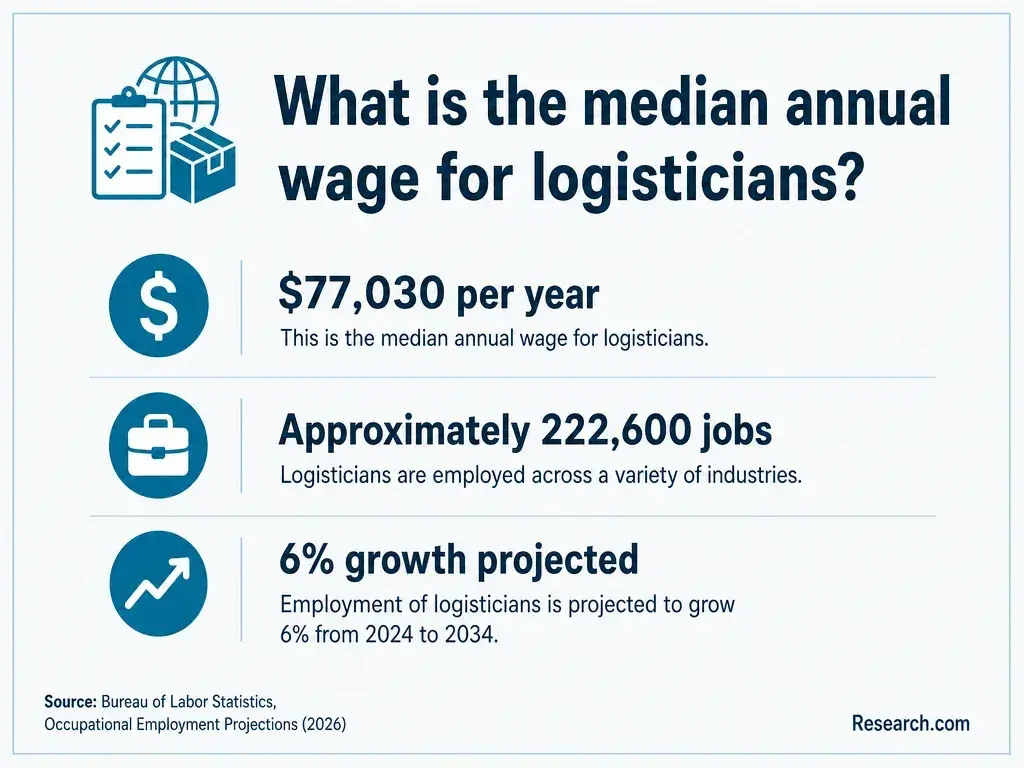
There is no single salary or employment projection for everyone with this degree. As one occupation-specific reference, the U.S. Bureau of Labor Statistics reports a May 2025 median annual wage of $75,940 for human resources specialists and projects 6% employment growth from 2025 to 2035. That median covers workers across experience levels and is not an expected starting salary for a business graduate.
Use a target occupation and local job postings to assess whether employers value particular coursework, software skills, or experience. Then compare the cost and timing of meeting those requirements; paying for an extra prerequisite is hard to justify solely on the assumption that a degree will raise earnings. Value-focused online business college choices are a starting point for cost comparisons, not a substitute for your personalized remaining-credit estimate.
Which Certifications or Licenses Do Business Administration Careers Require?
Most general business roles do not have a license attached to the BS in Business Administration. Specific work can be different: CPA licensure is governed by state rules, certain financial-services activities require registration or licenses, and professional certifications may impose separate education or experience criteria. Neither a concentration nor a course automatically grants those credentials.
If a particular credential is your goal, check its governing body's eligibility rules before choosing extra coursework. That may change whether the BS, a specialized degree, or targeted training is the better investment. For a project-focused path, compare total costs of project management programs alongside any separate certification requirements; completing the degree does not itself award a project-management certification.
Other Things You Should Know About Business Administration
Possibly. Ask the school for its exam-credit policy, required score, and written confirmation that the award fulfills the specific prerequisite rather than elective credit.
Often, but check each course's prerequisites and your likely weekly workload. If either course is required for the next term's classes, ask an adviser to confirm the sequence before registering.
Review the school's repeat and minimum-grade policies promptly. A retake may delay courses that depend on it, so ask an adviser to revise your degree plan and check any financial-aid implications.
Do not assume it does. Eligibility depends on your enrollment and aid circumstances; ask the financial-aid office to assess your specific plan before committing to prerequisite-only study.
- Credit for Prior Learning | Transfer Credit Ohio https://transfercredit.ohio.gov/students/student-programs/Prior-Learning-Assessments
- Business Administration Transfer Pathway - UC Admissions https://admission.universityofcalifornia.edu/admission-requirements/transfer-requirements/uc-transfer-programs/transfer-pathways/business-administration.html
- Selecting a Major in the College of Business Administration | Barry S. Miller College of Business https://business.ucf.edu/undergraduate-programs/selecting-a-major/
- Academic Rules - Course Catalog - Syracuse University https://courses.syracuse.edu/undergraduate/academic-rules
- College of Business Administration - Academic Catalog https://catalog.uic.edu/ucat/colleges-depts/business-administration/
- Undergraduate Academic Regulations | University of South Carolina https://academicbulletins.sc.edu/undergraduate/policies-regulations/undergraduate-academic-regulations/
- Academic Progress to Degree | osu.edu https://ugeducation.osu.edu/academics/academic-progress-degree
- Online Bachelor of Business Administration | Information Technology Services https://online.louisville.edu/programs/bachelors/online-bachelor-of-business-administration
- Permission to Complete a Course at another Institution after Matriculation | Temple University Bulletin https://bulletin.temple.edu/undergraduate/academic-policies/permission-complete-course-institution-matriculation/
- Prerequisite Enforcement | Office of the Registrar | Oregon State University https://registrar.oregonstate.edu/prerequisite-enforcement