2027 Best Value Online Construction Management Degree Programs: Affordable Accredited Options with the Strongest ROI

Co-Founder and Chief Data Scientist
Choosing an online construction management degree is a cost-and-credibility decision. The lowest tuition is not always the best value, and the most expensive program is not automatically stronger. Students need to compare accreditation, total price, transfer credit, course format, employer recognition, and career outcomes before committing to a program.
This guide is for budget-conscious students, working adults, career changers, and construction professionals who want an accredited online degree without taking on unnecessary debt. Approximately 78% of construction management graduates secure industry certification that boosts average salaries by over 15%, which makes program quality, certification preparation, and licensure pathways especially important. Below, you will find practical guidance on identifying affordable programs, estimating full costs, evaluating ROI, using financial aid, and choosing a degree that employers are more likely to respect.
Key Things to Know About the Best Value Online Construction Management Degree Programs
- Best-value online construction management programs balance affordable tuition, financial aid, transfer credits, and flexible formats-minimizing total education costs for working adults.
- Compare accreditation, graduation rates, student support, pacing, and career outcomes carefully to evaluate a program's real educational and financial value.
- Review hidden fees, residency rules, credit transfers, salary potential, and employer recognition to ensure a program supports career growth and financial stability long term.
What Are the Best Value Online Construction Management Degree Programs?
The best value online construction management degree programs combine affordable tuition with recognized accreditation, flexible scheduling, strong transfer policies, and clear career preparation. A program should not be judged by tuition alone. The strongest options help students graduate on time, qualify for financial aid, build job-ready skills, and avoid credits that do not transfer or credentials employers question.
For students comparing affordable online options, value usually comes from one of the following program types:
- Public regional universities: These institutions often offer lower tuition, especially for in-state students, while maintaining regional accreditation. They are frequently a strong fit for students who need online coursework, transfer-credit flexibility, and a recognizable public university credential.
- Competency-based education programs: Competency-based models can work well for adults who already have construction, project coordination, estimating, or supervisory experience. Students move by demonstrating mastery instead of simply completing seat time, which may reduce the time and cost needed to finish.
- Career-focused private nonprofit colleges: Some nonprofit institutions cost more than public schools but may offer streamlined online formats, strong advising, and career services. They can be worth considering when the program has transparent pricing, good student support, and clear construction industry alignment.
- Hybrid and workplace-integrated programs: Programs that combine online classes with employer partnerships, field-based projects, or internship options can be valuable for students who want to apply coursework directly to their current job or local construction market.
- State consortiums and collaborative networks: Some states allow students to access online courses across participating accredited institutions. This can improve course availability, reduce scheduling delays, and help students complete remaining requirements more efficiently.
Students comparing program length and completion options may also want to review the best 2-year construction management degree online if speed, transfer credits, and affordability are major priorities.
For students planning beyond the bachelor’s or master’s level, related graduate pathways such as an online PhD can provide a broader view of advanced online study options, though doctoral study is not required for most construction management roles.
How Do You Choose an Affordable Accredited Online Construction Management Degree?
To choose an affordable accredited online construction management degree, start with accreditation, then compare total cost, transfer credit, course flexibility, and graduate outcomes. This order matters. A low-cost program can become expensive if credits do not transfer, financial aid is unavailable, required fees are unclear, or the credential lacks employer recognition.
Use the following factors to narrow your list:
- Accreditation credentials: Regional accreditation is essential for academic credibility, federal aid eligibility, and smoother credit transfer. Programmatic accreditation from organizations such as the American Council for Construction Education can also signal that the curriculum reflects construction industry standards.
- Total tuition transparency: Compare the full cost of attendance, not just the advertised per-credit rate. Include online learning fees, technology fees, books, software, graduation fees, and any required campus visits or proctored exams.
- Flexible delivery: Working adults should look for asynchronous courses, predictable term schedules, part-time enrollment, and clear deadlines. A program that technically is “online” may still require live sessions that conflict with work shifts.
- Transfer and credit policies: Generous transfer policies can reduce both tuition and time to completion. Ask how many credits the school accepts, whether technical or associate degree credits count, and whether industry certifications or military training may be evaluated.
- Student outcomes: Graduation rates, retention rates, job placement information, and career support can help you judge whether students actually finish and benefit from the degree. Tools such as College Scorecard can help verify institutional data.
A simple decision rule is useful: choose the lowest-cost accredited program that fits your schedule, accepts the most applicable prior credit, and provides credible evidence of student support and career preparation.
Students comparing online education costs across fields can also look at how other programs present affordability and outcomes, such as a library degree, but construction management applicants should prioritize construction-specific curriculum, accreditation, and employer relevance.
Which Online Construction Management Degree Programs Offer the Highest ROI?
The highest-ROI online construction management programs are usually accredited, competitively priced, transfer-friendly, and closely aligned with construction industry hiring needs. ROI improves when students pay less, graduate faster, avoid unnecessary borrowing, and qualify for roles with strong wage growth. Data suggests graduates from programs costing less than $25,000 can reach median salaries above $60,000 within five years, making cost control and program outcomes central to the decision.
| ROI Factor | Why It Matters | What to Check Before Enrolling |
| Graduation completion | Students who finish on time avoid extra tuition, fees, and delayed earnings. | Look for programs with graduation rates exceeding 60% and strong advising support. |
| Industry alignment | Construction employers value practical skills in scheduling, estimating, safety, contracts, and project coordination. | Review course requirements, software exposure, internship options, and employer partnerships. |
| Transparent tuition | Clear pricing helps students plan borrowing and avoid unexpected costs. | Ask for a full cost estimate, including fees and required materials. |
| Flexible credit policies | Transfer credits and accelerated formats can reduce total time in school. | Request a preliminary transfer evaluation before committing. |
Students should be cautious with programs that advertise affordability but provide limited information about graduation outcomes, accreditation, or fees. A low tuition rate loses value if the program lacks support, delays graduation, or fails to prepare students for construction management responsibilities.
One graduate described the value of choosing a program with clear tuition and flexible credit policies: “Balancing work, family, and coursework felt overwhelming initially, but clear tuition helped me plan finances better, and the ability to transfer previous credits shortened my study period. Finishing on time gave me a sense of accomplishment and kept my debt manageable-allowing me to focus on advancing my career without financial strain.” The lesson is straightforward: ROI depends on both price and completion strategy.
The cost of an online construction management degree varies widely by institution type, residency status, transfer credit, and program length. Public universities usually cost less than private colleges, but the final price depends on more than tuition. Students should calculate the full amount they will pay from enrollment to graduation.
- Per-credit pricing: Public universities usually bill between $300 and $600 per credit hour for in-state learners. Out-of-state students may face higher fees often exceeding $1,000 per credit. Private colleges typically charge more, pushing overall degree costs past $40,000 in many cases.
- Flat-rate tuition: Some schools charge a flat rate for a term rather than a strict per-credit price. This can benefit motivated students who can handle a heavier course load without risking poor performance or withdrawal.
- Transfer credit savings: Transfer-friendly programs can significantly reduce the number of required credits. Students with previous college coursework, military training, or technical education should ask for an official credit review early.
- Additional fees: Online students may still pay technology fees, course fees, software costs, proctoring fees, and graduation fees. These charges can change the affordability of a program that initially appears inexpensive.
- Accelerated completion: Year-round enrollment, shorter terms, and fast-track courses can reduce the number of semesters paid. However, accelerated study is best for students who have enough time each week to keep up.
Before enrolling, ask each school for a written cost estimate based on your expected transfer credits, residency status, enrollment pace, and degree requirements. This makes it easier to compare programs on real cost rather than advertised tuition.
Students evaluating affordability across online professional programs can also compare cost structures used in fields such as PsyD online degrees, while remembering that construction management programs should be judged by construction-specific outcomes and employer relevance.
Affordable online construction management degrees can be respected by employers when they come from accredited institutions with credible curricula and relevant career preparation. Employers generally care less about whether the degree was online and more about whether the school is legitimate, the program is rigorous, and the graduate can perform on the job. Recent surveys show that 72% of employers value accreditation and graduate outcomes more than the educational delivery mode.
- Regional accreditation: A regionally accredited institution gives employers confidence that the school meets recognized academic standards. It also supports credit transfer, graduate school eligibility, and federal financial aid access.
- Institutional reputation: Public universities and established nonprofit providers often carry stronger recognition than unfamiliar schools. Reputation is not everything, but it can help during resume screening.
- Graduate outcomes: Employers respond well to programs that can show students complete the degree, gain relevant skills, and move into construction-related roles. Career services, internship support, and employer networks matter.
- Employer collaboration: Advisory boards, internship relationships, and industry-informed coursework help ensure students learn current practices in scheduling, estimating, safety, procurement, and project management.
Students should avoid assuming that “affordable” means “less respected.” A lower-cost degree from a regionally accredited public university may be more credible than a higher-cost degree from a school with weak transparency. The key is to verify accreditation, review the curriculum, and make sure the program prepares students for the type of construction work they want to pursue.
One graduate who worried about employer recognition found that accreditation and internship experience mattered most. She explained that hiring managers focused on the program’s credibility, her practical skills, and the validated credential she brought to the interview. In her words, “The program's reputation mattered far more than its price.”
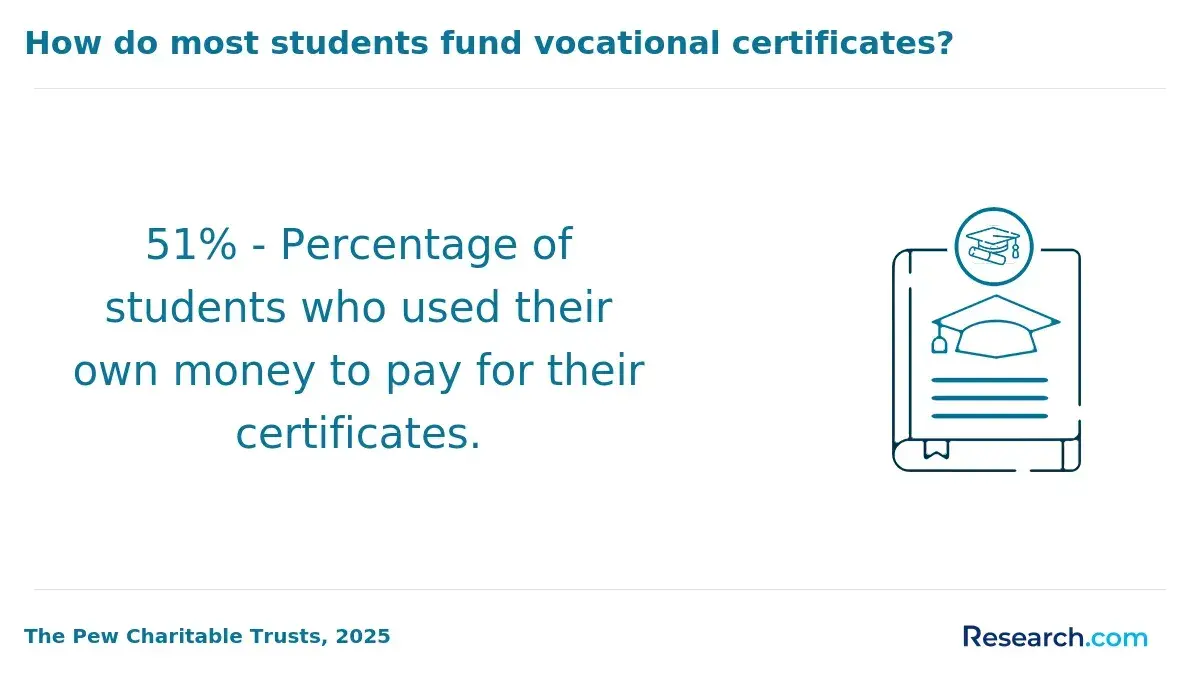
Students should look first for institutional accreditation, especially regional accreditation, and then consider construction-specific programmatic accreditation where available. Accreditation affects financial aid eligibility, transfer credit, graduate school options, and employer confidence. Studies find that over 70% of employers prioritize graduates from accredited programs, which makes verification essential before enrolling.
- Regional accreditation: Regional accreditation from recognized agencies such as the Higher Learning Commission or Southern Association of Colleges and Schools indicates that the institution meets academic and administrative quality standards. It is also important for federal financial aid and credit transfer.
- Programmatic accreditation: Specialized recognition from organizations such as the American Council for Construction Education (ACCE) can strengthen a program’s credibility. It suggests the curriculum, faculty qualifications, and learning outcomes align with construction management expectations.
- Nonprofit status and transparency: Public and nonprofit institutions often provide clearer public information on tuition, graduation rates, and student outcomes. For-profit status is not the only factor to consider, but students should scrutinize costs, completion rates, and support services carefully.
- Transferability and graduate eligibility: Accreditation influences whether other institutions accept your credits and whether graduate programs recognize your degree. This matters for students who may later pursue a master’s degree, certificate, or professional advancement.
- Employer confidence and ROI: Accredited programs are easier to explain to employers and can reduce the risk of earning a credential with limited recognition. For cost-conscious students, accreditation protects both educational quality and long-term value.
Before applying, verify accreditation directly through the school’s website and recognized accreditation databases. Do not rely only on marketing language. Terms such as “licensed,” “approved,” or “authorized” do not always mean the same thing as accredited.
The best online construction management programs for working adults offer asynchronous classes, part-time options, transfer-friendly policies, and practical coursework that connects to current job responsibilities. Recent data shows that nearly 40% of adult learners now enroll in fully online programs to accommodate work and family commitments while advancing their careers. For these students, flexibility is not a convenience; it is often the difference between finishing and stopping out.
- Asynchronous learning: Courses that do not require fixed weekly login times are better for students with job sites, shift work, travel, or family responsibilities. Deadlines still matter, but students have more control over when they study.
- Competency-based programs: Adults with construction experience may benefit from programs that allow faster progress after demonstrating mastery. This can reduce both time and tuition if the student is self-directed.
- Transfer-friendly institutions: Working adults often bring previous college credits, associate degrees, military training, or technical education. Programs with generous and transparent transfer rules can prevent students from repeating material they already know.
- Employer-aligned curricula: Courses should cover practical areas such as estimating, scheduling, safety management, contracts, building systems, and project controls. Programs connected to employer needs can improve job relevance.
- Flexible part-time enrollment: Some adults need to slow down during busy work seasons and take more credits during lighter periods. A good program allows steady progress without forcing an unrealistic pace.
Working adults should also ask about advising hours, tutoring availability, mobile access to course materials, and whether group projects require live coordination. These details can make a major difference for students balancing school with full-time employment.
Online construction management students may qualify for federal aid, employer tuition assistance, institutional scholarships, transfer-credit savings, and military or veteran benefits. With nearly 60% of undergraduates relying on FAFSA aid and employer tuition assistance programs growing by over 10% annually, students should build a funding plan before enrolling rather than after the first bill arrives.
- Federal grants and loans: Eligible students in qualifying programs may access Title IV funding, including Pell Grants and Direct Loans. Grants do not require repayment, while loans should be borrowed carefully based on expected total cost and repayment capacity.
- Employer tuition assistance: Construction firms, contractors, engineering companies, and related employers may reimburse part of tuition. Students should confirm annual limits, grade requirements, repayment obligations, and whether the degree must relate directly to their current role.
- Institutional scholarships: Accredited schools may offer merit-based, need-based, transfer, adult learner, or online student scholarships. Requirements often include enrollment minimums and satisfactory academic progress.
- Transfer-credit savings: Transfer credit is one of the most practical affordability tools. Fewer required credits can mean lower tuition, fewer fees, and faster completion.
- Military and veteran benefits: Veterans and active service members may use GI Bill or Tuition Assistance programs that can cover tuition, fees, and sometimes additional living stipends.
Students should compare how aid works with each school’s tuition model. A scholarship may be less valuable at a high-cost school than a smaller award at a lower-cost public university. Similarly, employer reimbursement may require students to pay upfront and wait for repayment after grades are posted.
Students comparing affordability strategies in other accelerated online fields can also review an accelerated business administration degree online to understand how tuition structure, program pace, and financial aid planning interact.
An online construction management degree can prepare graduates for roles in project coordination, estimating, site supervision, scheduling, contracts, and construction operations. The industry is projected to grow 8% through 2031, and employers need professionals who can manage budgets, timelines, safety requirements, subcontractors, and documentation.
- Entry-level roles: Graduates may start as assistant project managers, estimators, project coordinators, field engineers, or site supervisors. These roles build the field experience needed for advancement.
- Management-track careers: With experience, graduates can move toward construction manager, project manager, operations manager, or director-level roles. Advancement usually depends on both education and demonstrated job-site performance.
- Specialized industry positions: Construction management graduates may work in commercial, residential, infrastructure, industrial, or sustainability-focused construction. Skills in building information modeling (BIM), green building practices, safety, and cost control can improve competitiveness.
- Remote and hybrid work: Some planning, estimating, scheduling, procurement, and documentation tasks can be performed remotely or in hybrid formats. However, many construction management roles still require regular field, client, or job-site presence.
For students focused on value, the best career outcomes usually come from combining an accredited degree with internships, field experience, software skills, and industry certifications. The degree can open doors, but construction employers also look for proof that graduates can solve practical project problems.
Students comparing cost, flexibility, and credential value across disciplines can also review approaches used in an online physics degree, while keeping in mind that construction management career preparation is much more directly tied to field operations and project delivery.
Salary potential for online construction management graduates depends on job role, location, experience, industry sector, and credentials. Median annual wages for construction managers exceeded $98,000 in recent years, but graduates should expect earnings to vary based on market demand and the level of responsibility they hold.
- Industry focus: Commercial, infrastructure, and sustainable construction sectors often offer stronger salary potential than some residential roles because projects may be larger, more complex, and more specialized.
- Geographic demand: Active construction markets and urban centers can offer higher pay, though cost of living and competition should also be considered.
- Experience and advancement: Entry-level roles may start lower, but earnings can rise as professionals gain field experience, manage larger projects, earn certifications, and move into leadership.
- Accredited education: A degree from a recognized accredited program can support career mobility, especially when paired with practical experience and employer-valued skills.
- Transferable skills: Budgeting, scheduling, estimating, contract administration, safety management, communication, and construction software skills can improve long-term earning potential.
Students should evaluate salary potential against total program cost. A degree with lower tuition, strong completion support, and practical coursework may produce a better financial outcome than a more expensive program with similar career results.
What Graduates Say About Best Value Online Construction Management Degree Programs
- Kylian: "As a student on a tight budget, finding an affordable, accredited online construction management degree was crucial for me. I was impressed by programs that balance cost with strong industry recognition, ensuring my investment would pay off in the long run. The best value programs I discovered not only saved money but also opened doors to high-ROI careers in project supervision and site management."
- Dallas: "Balancing work and study made choosing the right online construction management degree essential to maximize both my time and return. I looked closely at ROI metrics and found that some accredited programs provide excellent value by preparing graduates for lucrative roles in construction estimating and contract management. Reflecting on my journey, prioritizing programs with solid reputations was key to advancing professionally without financial strain."
- Ryan: "For adult learners aiming to shift careers, an online construction management degree that offers both affordability and accreditation can make a significant difference. I appreciated programs highlighting career trajectories in construction planning and facilities management, where the ROI is typically highest. This clarity gave me confidence that my education would translate directly into meaningful job opportunities and career growth."
Other Things You Should Know About Construction Management Degrees
Hands-on experience is critical in construction management education-many online programs incorporate virtual simulations, project-based assignments, and case studies to bridge the gap. Some also require internships or cooperative education placements to ensure students gain real-world skills. This practical exposure helps students apply theoretical knowledge and improves job readiness upon graduation.
Yes, online programs are designed to offer flexible scheduling options suitable for working professionals. Many feature asynchronous coursework that allows students to complete classes at their own pace and live sessions scheduled during evenings or weekends. This flexibility enables students to balance employment, family, and study commitments effectively.
Construction management programs may vary in emphasis-some prioritize technical skills like cost estimation and project scheduling, while others focus more on leadership, sustainability, or legal aspects. It is important to review each program's curriculum to match your career goals and interests, ensuring the content equips you with the most relevant and up-to-date industry competencies.
Most online construction management bachelor’s programs require college algebra, with some asking for pre-calculus, physics, or a basic statistics course. Applicants without those prerequisites may complete them during the first year, and transfer students usually need a minimum 2.0 to 2.5 GPA.
- Construction Management Jobs and Career Path | Cardinal Civil https://cardinalcivil.com/blog/what-jobs-can-you-get-with-a-construction-management-degree
- Is a degree in construction management worth it? | edX https://www.edx.org/resources/is-a-degree-in-construction-management-worth-it
- Best Online Construction Management Degrees https://www.affordablecollegesonline.org/degrees/construction-management-programs/
- Certified Construction Manager | Construction Management Association of America https://www.cmaanet.org/certification/ccm
- Types of Financial Aid for Online Colleges https://www.umassglobal.edu/blog-news/types-financial-aid-online-colleges
- BSc (Hons) Construction Management https://www.ube.ac.uk/undergraduate/construction-management/
- 5 Construction Management Career Opportunities Out of College https://aic-builds.org/5-construction-management-career-opportunities-out-of-college/
- Best Online Construction Management Degrees 2025 https://www.onlineu.com/degrees/construction-management