
2027 Best Two-Year Degrees With Scholarship Options

Co-Founder and Chief Data Scientist
Choosing a two-year degree means weighing more than the major: a scholarship may reduce tuition, but the program still needs to fit your career goal and budget. The College Board reported average published tuition and fees of $4,050 for full-time, in-district students at public two-year colleges in 2024-25, before books, transportation, and other expenses. This guide compares six degree fields for students seeking workforce entry or a transfer pathway. You'll learn where to look for scholarships, which careers require additional credentials, and what to verify before enrolling.
Key Things You Should Know
- For direct career preparation, compare nursing and accredited allied-health programs first; for a bachelor's pathway, compare transferable business, psychology, criminal justice, or IT courses against your intended university's requirements.
- Published public two-year college tuition and fees averaged $4,050 for in-district students in 2024-25, but scholarships should be evaluated against the full cost of attendance - not tuition alone.
- An associate degree commonly requires about 60 credits, while selective admission, clinical placements, part-time study, and course sequencing can extend completion beyond two years.
Top 10 Best Two-Year Degrees With Scholarship Options
Business Programs
A business administration or accounting associate degree can support entry-level office, bookkeeping, or operations work; an Associate of Arts (AA) or Associate of Science (AS) may also provide a route to a bachelor's degree. Compare transfer agreements before choosing courses.
School-foundation scholarships and local business awards may be available, sometimes with major or residency restrictions. Choose this field if you want broad options, but check job postings: management roles usually require experience, and many professional accounting careers require further education.
Healthcare Programs
Career-focused Associate of Applied Science (AAS) programs in dental hygiene, diagnostic medical sonography, and radiologic technology can prepare students for specific clinical roles. Their fit depends on local program availability, accreditation, admission requirements, clinical capacity, and state credential rules.
Hospital, professional-association, and college-foundation scholarships are worth checking, but awards may not cover equipment, screenings, or travel to placements. Choose a specialty only after confirming that its clinical schedule and credential pathway work where you intend to practice.
Information Technology Programs
IT associate degrees may emphasize networking, cybersecurity, software development, or technical support. An AS may suit students planning to transfer; an AAS often emphasizes hands-on workforce skills. Look for scholarships through college foundations, technology employers, and local industry groups.
Compare lab access, projects, internship opportunities, and how courses map to your target job. A cybersecurity degree alone rarely substitutes for the experience many security positions require, so technical support or network administration may be a more realistic first step.
Nursing / Pre-Nursing Programs
An associate degree in nursing (ADN) can lead toward registered nurse licensure after graduation and passage of the required licensing exam; state nursing-board requirements also apply. Pre-nursing programs instead prepare students to apply to a nursing program and do not independently qualify them for RN licensure.
Nursing-school, hospital, and workforce scholarships may have service or academic conditions. Before applying, distinguish general college admission from competitive nursing admission, and confirm clinical schedules, program approval, and examination eligibility.
Criminal Justice Programs
A criminal justice AA or AS often suits transfer to a bachelor's program; a career-oriented AAS may focus more on public-safety operations. Scholarships may come from college foundations, civic organizations, or public-safety associations.
Match the curriculum to a specific goal before enrolling: police hiring standards vary by agency and can include academy training and background checks, while some federal roles require a bachelor's degree. An associate degree does not itself confer law-enforcement authority.
Psychology / Counseling Programs
A psychology or counseling-studies AA or AS is usually a transfer starting point, not a qualification to practice independently as a counselor or psychologist. Students may explore entry-level support work, but duties and requirements vary.
College-foundation and transfer scholarships can make the longer education pathway more manageable.
If your goal is licensed counseling, map the required bachelor's, graduate education, supervised experience, and state license before committing to an associate program; confirm that its credits will apply toward that plan.
What Are the Best Two-Year Degrees for Career Opportunities?
The best two-year degree for career opportunities depends on whether you want a defined occupation soon or flexibility to transfer. Clinical programs offer clearer routes toward specific jobs but typically have selective admission and in-person requirements.
Business and IT offer broader entry points; psychology and many criminal justice paths depend more heavily on later education or employer-specific training.
This comparison summarizes the main decision for each field. "Scholarship lead" identifies where to search, not a promise that an award is available or that every student qualifies.
| Degree field | Strongest fit | Key trade-off | Scholarship lead |
| Nursing and allied health | Students seeking a defined clinical occupation | Selective admission and required clinical work | College foundations and healthcare employers |
| Information technology | Students who can build demonstrable technical skills | Entry-level experience still matters | Technology employers and local industry groups |
| Business | Students seeking broad office roles or transfer | Advanced roles often require more experience or education | College foundations and local businesses |
| Criminal justice or psychology | Students with a planned transfer or public-service goal | Target careers may have separate education or hiring rules | Transfer, civic, and community awards |
If your target job does not require an associate degree, compare the degree's full cost with a certificate, apprenticeship, or other fast track career programs. The shorter path makes sense only if its training meets employer or licensing requirements.
Which Two-Year Degrees Offer the Highest Salary Potential?
Among the fields covered here, some licensed healthcare occupations have particularly high occupational median wages. The U.S. Bureau of Labor Statistics reported a May 2024 median annual wage of $94,260 for dental hygienists.
That is a wage for workers in the occupation, not an expected starting salary or the measured earnings of everyone who completes a dental hygiene associate degree.
Compare salary potential with the requirements for entering each occupation. A higher occupational wage is less useful to you if the nearest accredited program has limited seats, substantial clinical expenses, or a credential that will not meet your state's rules.
| Path | How to interpret salary potential | What to verify first |
| Dental hygiene and other licensed allied health | Compare occupation-specific wages, not broad "healthcare graduate" claims | Program accreditation, clinical placement, and state credential eligibility |
| Registered nursing | RN wages cover nurses with different education and experience levels | Board approval, program admission, and licensing-exam eligibility |
| IT and business | Pay varies substantially by role, skills, location, and experience | Entry-level job requirements and opportunities to gain experience |
How Can Students Find Scholarships for Two-Year Degree Programs?
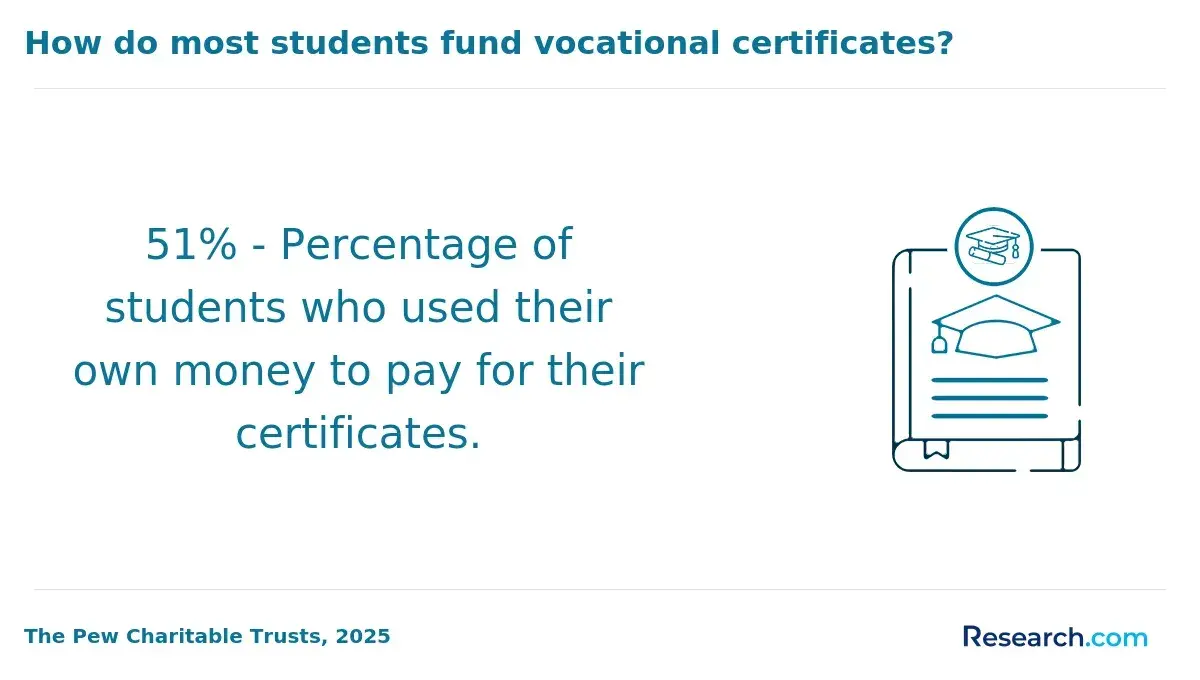
Start with the college's financial-aid office and foundation: they can identify awards for associate students, specific majors, local residents, and students with financial need.
Then check community foundations, employers, unions, and relevant professional associations. Submit the FAFSA if eligible so the school can assess federal aid alongside institutional awards; ask how an outside scholarship would affect the rest of your aid package.
A manageable search follows three steps, which help you avoid spending time on awards you cannot use:
- Request the program's full cost of attendance, including fees, supplies, commuting, and any clinical expenses.
- Filter scholarships by enrollment status, major, residency, deadlines, and any renewal or service conditions.
- Compare your estimated net cost after grants and scholarships, then ask whether awards remain available if you study part time or transfer.
Never pay a fee to "unlock" a scholarship. For transfer-oriented degrees, check scholarship rules at both the community college and your prospective bachelor's institution.
What Accreditation Should Two-Year Degree Programs Have?
First, confirm that the college holds institutional accreditation from an accreditor recognized by the U.S. Department of Education. Institutional accreditation matters for federal-aid eligibility and may affect transfer, but it does not guarantee that individual courses will count toward a bachelor's major.
Next, check whether the specific program needs specialized accreditation or state approval. This is particularly important in nursing, dental hygiene, sonography, and radiologic technology, where the applicable credential pathway depends on the occupation and state.
Ask the program which accreditor or approving body applies, whether its current status covers your campus or delivery format, and whether graduates meet the educational requirements for the credential you want. Get transfer-credit decisions from the receiving institution rather than relying on an informal assurance.
What Are the Admission Requirements for Two-Year Degree Programs?
Many community colleges admit applicants with a high school diploma or equivalent, but admission to the college does not mean admission to every major. Nursing and other clinical programs may separately require prerequisite courses, grades, an entrance assessment, a background check, immunizations, or a competitive application. Requirements vary by program and state.
Ask admissions for the current major-specific checklist and application calendar. If you have prior college coursework, request a transfer evaluation that shows which credits fulfill general education, prerequisites, and major requirements - not merely how many credits the school will accept. Standardized college-admission tests may not be required, but placement or program-specific assessments may still apply.
How Long Do Two-Year Degrees Take and What Do They Cost?
Many associate degrees require roughly 60 credits, making two academic years plausible for a student who can take a full-time load and access required courses on schedule. Prerequisites, limited clinical seats, part-time enrollment, and courses offered only in certain terms can extend that timeline.
A short individual course is not the same as a short degree; claims about an associate degree in 6 months online free should be checked for assumptions about previously earned credits, remaining requirements, and actual fees.
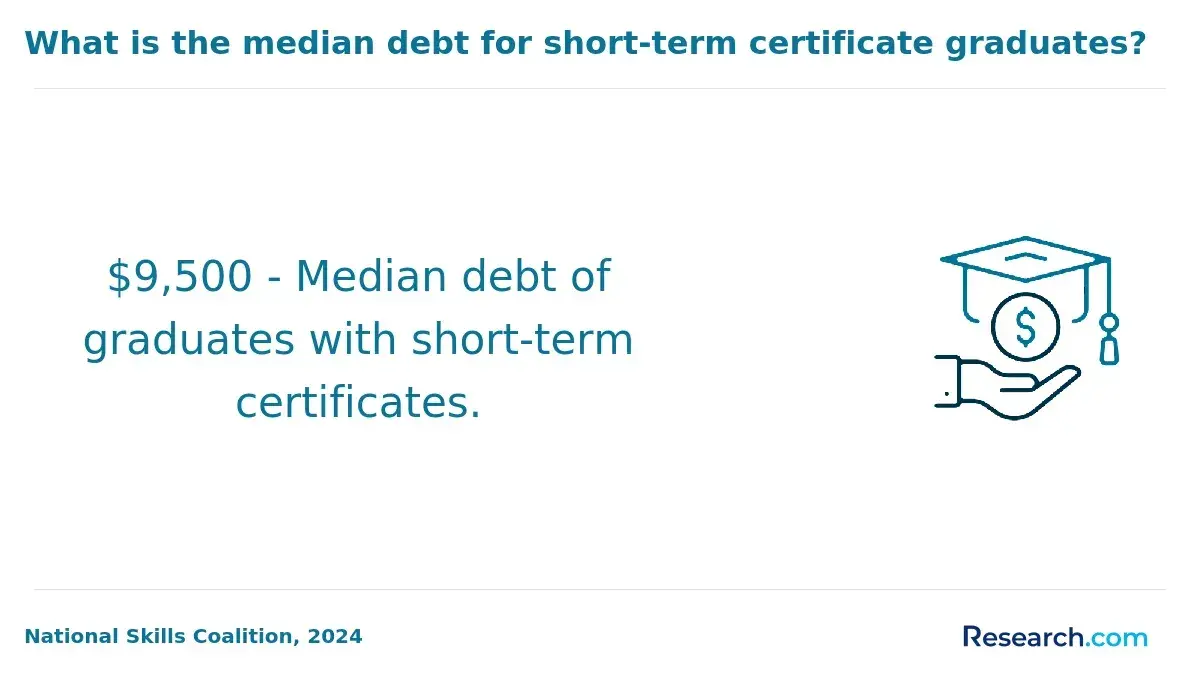
The College Board's 2024-25 public two-year in-district tuition-and-fee average of $4,050 is a starting point, not a two-year program price. Add books, software, equipment, transportation, living expenses, and any clinical or examination costs.
Compare each school's estimated total cost to completion after grants and scholarships. If you plan to transfer, include the cost of the bachelor's coursework you will still need.
Are Online or Campus-Based Two-Year Degrees Better?
Online study can be a strong fit for students balancing classes with work or caregiving, especially in transfer-oriented business, psychology, or some IT courses. It is not automatically self-paced: check meeting times, deadlines, lab access, and proctored assessments.
Campus classes may offer easier access to equipment and face-to-face support. Nursing and many allied-health programs require in-person labs or clinical placements even when lectures are online.
Choose by the schedule you can sustain, not the delivery label. Ask for a sample term schedule showing every required campus visit, clinical shift, and course start date.
If you hope to continue beyond a bachelor's degree, formats such as competency based masters degrees are a separate, later decision; they do not remove an associate program's clinical or transfer requirements.
What Coursework Do Students Complete in Two-Year Degree Programs?
Most programs combine general education - such as writing, mathematics, and communication - with courses in the major. Business students may study accounting and management; IT students may complete networking or programming labs.
Healthcare and nursing curricula can add science prerequisites, supervised labs, and clinical rotations. Psychology and criminal justice programs often include introductory theory, research, or law-related courses.
The degree label is only a clue to its purpose. An AA or AS is often designed with transfer in mind, while an AAS commonly emphasizes workforce preparation; schools can structure them differently.
Compare the actual course map with both your intended job's requirements and, if applicable, the receiving university's major requirements. Credits that transfer as electives may not shorten the bachelor's program.
What Certifications and Licenses Do Graduates Need for Their Careers?
The associate degree and the credential to practice are separate. An ADN graduate seeking RN licensure must meet state board requirements and pass the NCLEX-RN. Allied-health graduates may need a professional examination, certification, and/or state license, depending on the specialty and location.
Criminal justice graduates may need academy training or other agency-specific qualifications; IT certifications can be useful for particular jobs but are not universal requirements.
Before enrolling, ask the program to identify the exact credential its graduates pursue and whether its curriculum meets requirements in your intended state. Counseling and psychologist licensure generally require education well beyond an associate degree, along with supervised experience and examinations.
Students exploring research-oriented PhD programs online should not assume that an online doctorate meets clinical licensing requirements; the relevant board and program must be checked separately.
Other Things You Should Know About
Yes. Community colleges, foundations, employers, and outside organizations may offer awards to eligible associate-degree students. Check each award's major, enrollment, residency, and renewal rules.
A career-focused program tied to a defined occupation may be the clearest route. Nursing and allied-health programs are examples, but confirm admission, clinical, accreditation, and credential requirements before choosing one.
Start with your goal, not the abbreviation. AA and AS programs often support transfer, while AAS programs often emphasize workforce preparation. Verify the particular school's curriculum and transfer agreements.
They might, but do not assume so. Compare your aid offer with tuition, mandatory fees, supplies, transportation, and living costs, and ask whether the scholarship can be renewed.
References
- Fast Facts: Tuition costs of colleges and universities (76) | ed.gov https://nces.ed.gov/fastfacts/display.asp
- Kansas Promise Act Scholarship | Kansas Board of Regents https://kansasregents.gov/students/student_financial_aid/promise-act-scholarship
- High Demand Occupations Requiring an Industry Recognized Credential | Mass.gov https://www.mass.gov/info-details/high-demand-occupations-requiring-an-industry-recognized-credential
- [PDF] IOWA COMMUNITY COLLEGES TUITION & FEES https://educate.iowa.gov/media/7502/download
- Associate's degree: Career Outlook | bls.gov https://www.bls.gov/careeroutlook/subject/associates_degree.htm
- Your financial path to graduation | consumerfinance.gov https://www.consumerfinance.gov/paying-for-college/your-financial-path-to-graduation/
- Transfer pathways | Minnesota MyHigherEd https://myhighered.mn.gov/transfer-students/transfer-pathways
- Types of Financial Aid - LOSFA https://mylosfa.la.gov/paying-for-college/types-of-financial-aid/
- Healthcare | Apprenticeship.gov https://www.apprenticeship.gov/apprenticeship-industries/healthcare
- Glossary - College Scorecard - Department of Education https://collegescorecard.ed.gov/data/glossary/


