
2027 Best Two-Year Degrees With Part-Time Study Options

Co-Founder and Chief Data Scientist
Choosing a two-year degree around work or family means looking beyond whether a college allows part-time enrollment: you need courses you can actually take in sequence. The College Board reported average published tuition and fees of $4,050 for in-district students at public two-year colleges in 2024-25, before books, transportation, and other expenses.
That makes the path worth considering, but the best choice depends on your schedule and goal. This guide compares six fields, identifies clinical and transfer hurdles, and shows what to verify before enrolling.
Key Things You Should Know
- For predictable scheduling, business, IT, and transfer-oriented psychology programs are often easier to fit around work than degrees with required clinical placements; confirm the actual part-time course sequence.
- A 60-credit degree taken at six credits each fall and spring takes about five years without summer courses or transferred credits. Prerequisites and limited course offerings can extend that timeline.
- Healthcare may offer a clearer route to a licensed occupation, but the degree alone may not be enough. For context, the U.S. Bureau of Labor Statistics reports a 2024 median wage of $93,600 for registered nurses across the occupation, not for new associate-degree graduates.
Top 10 Best Two-Year Degrees With Part-Time Study Options - Best Part-Time Degrees
Business Programs
An associate degree in business administration, accounting, or management can suit students who need evening or asynchronous coursework. An AA or AS may emphasize transfer; an AAS may emphasize bookkeeping, office operations, and applied software. Ask whether required courses run every term and whether the schedule permits part-time enrollment. Business is a flexible starting point for administrative work, but an associate degree alone rarely qualifies someone for a management role. Choose a transfer-focused program if a bachelor's degree is your intended next step.
Healthcare Programs
Associate programs in radiography, dental hygiene, and diagnostic medical sonography can prepare students for defined clinical roles, subject to applicable credentialing rules. They are less flexible than online-heavy majors: labs and clinical shifts may occur during business hours even when lectures are online. Admission to the college may not mean admission to the healthcare program. Before committing, request its part-time clinical sequence, placement expectations, programmatic accreditation status, and eligibility requirements for the occupation you want in your state.
Information Technology Programs
IT associate degrees commonly cover networking, systems administration, programming, or cybersecurity fundamentals. Many courses work well online, but labs, group projects, and scheduled assessments can still constrain your week. An AAS may target technical support or junior IT work; an AS may offer a stronger transfer route, depending on the curriculum. Compare course availability and hands-on practice, not just delivery labels. Employers may also value demonstrable projects, experience, or certifications; a cybersecurity degree does not automatically lead to a cybersecurity job.
Nursing / Pre-Nursing Programs
An associate degree in nursing, often called an ADN, can prepare eligible graduates to seek registered nurse licensure after meeting state requirements and passing the NCLEX-RN. Clinical rotations are in person, and nursing-course sequences may restrict part-time study even if prerequisites can be taken slowly. A pre-nursing AS is different: it generally covers prerequisites and does not itself qualify you for RN licensure. Check nursing-program accreditation, state board approval, admission competitiveness, clinical schedules, and any RN-to-BSN transfer pathway.
Criminal Justice Programs
Criminal justice AA, AS, and AAS programs may cover courts, policing, corrections, and report writing. Coursework can be comparatively easy to schedule part time, particularly online, but career requirements vary sharply. Police agencies may require academy training, background checks, and other qualifications; an associate degree is not a substitute. A transfer-oriented curriculum can be useful for students considering a bachelor's degree, while an applied curriculum may better suit certain support roles. Match the program to a specific employer or agency's requirements.
Psychology / Counseling Programs
A psychology AA or AS is usually a transfer pathway, not a qualification to practice as a counselor or psychologist. It can suit part-time students because introductory coursework often has fewer fixed in-person requirements than clinical majors. Look for an articulation agreement if you plan to continue to a bachelor's degree, and confirm that statistics and other prerequisites will apply to that major. Counseling-related support jobs have different requirements by employer and state; independent clinical practice requires substantially more education and licensure.
What Are the Best Two-Year Degrees for Part-Time Students?
The best part-time option is the one whose required courses fit your weekly availability and lead toward your intended credential or job. An associate degree usually includes general education and major courses; AA and AS degrees often support transfer, while AAS degrees often emphasize workforce preparation. Those labels are useful starting points, not guarantees.
This comparison highlights the scheduling constraint and primary purpose of each field. Use it to narrow your choices before comparing individual colleges' course schedules.
| Field | Part-time scheduling consideration | Best fit |
| Business | Check that required courses recur regularly | Broad administrative preparation or transfer |
| Healthcare | Clinical placements may have fixed hours | A specific allied-health occupation |
| IT | Check labs, projects, and scheduled sessions | Technical skills and a portfolio of work |
| Nursing | Clinical and cohort sequences may limit part-time study | Eligible students pursuing RN licensure |
| Criminal justice | Coursework may be flexible; agency training may not be | Transfer or a defined public-safety goal |
| Psychology | Check transfer requirements early | Students planning further education |
If your goal requires a bachelor's degree, compare the complete transfer route - not just the associate program - with the lowest cost online bachelor's degree option. The cheaper first step is not necessarily cheaper overall if credits apply only as electives.
Which Two-Year Degrees Offer the Strongest Career and Salary Potential?
For a clearly defined occupation, nursing and some allied-health degrees offer a more direct education-to-credential pathway than broad business or psychology degrees. That potential comes with selective admission, clinical hours, and licensing or certification requirements. IT can also lead to technical work, but job title and pay depend heavily on the role, skills, experience, and local market.
The Bureau of Labor Statistics reports a 2024 median annual wage of $93,600 for registered nurses. That is the midpoint for employed RNs across experience levels and education routes - not an expected starting salary or a return promised by an ADN. To judge career value, compare local job postings, their required credentials, and the total cost and time needed to qualify. Psychology students seeking clinical counseling work should account for education beyond the associate degree.
Are Online or Campus-Based Two-Year Programs Better for Part-Time Students?
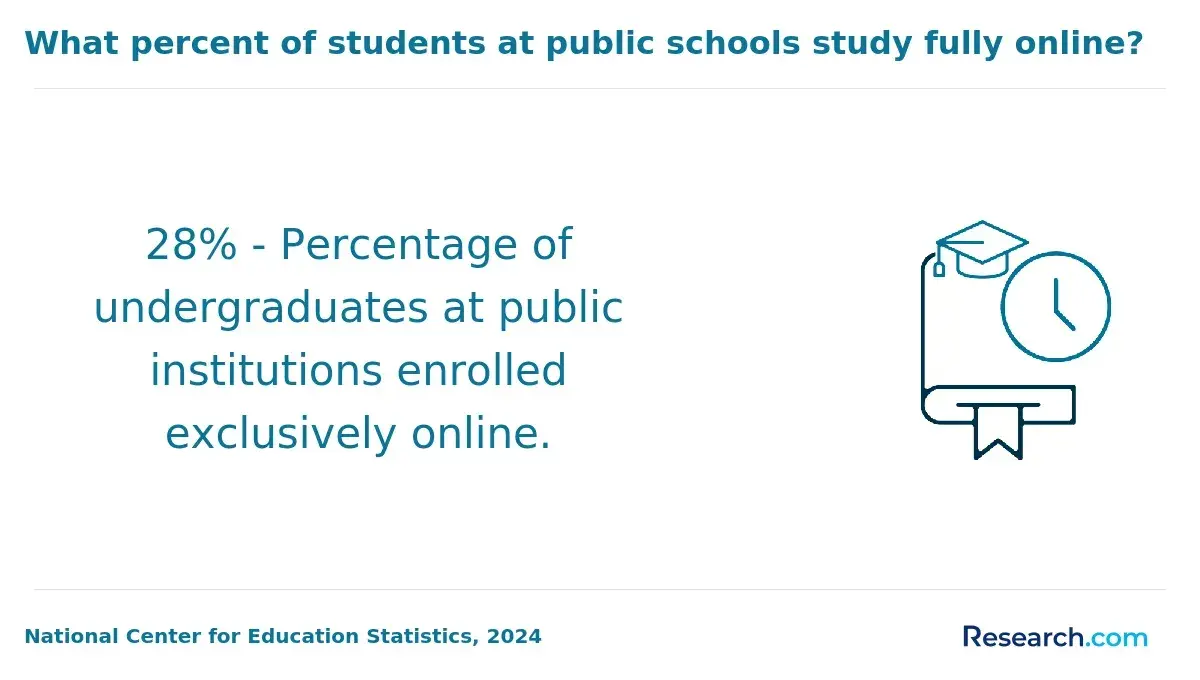
Neither online nor campus study is automatically better for part-time students. The deciding factor is whether required attendance, deadlines, and hands-on work fit a repeatable weekly schedule.
These formats differ most in when and where you must participate. Check the actual course and program requirements rather than assuming that an "online" label means self-paced study.
| Format | Scheduling advantage | Constraint to verify |
| Asynchronous online | Coursework can often be done outside work hours | Fixed deadlines, proctored exams, and group meetings |
| Scheduled online | No regular commute to class | Required live sessions |
| Hybrid | Some remote coursework with in-person practice | Frequency and timing of campus visits |
| Campus-based | Direct access to labs and instructors | Commute and fixed meeting times |
Healthcare and nursing students should also ask who arranges local clinical placements and whether shifts can be scheduled around employment. A fully online lecture does not remove an in-person clinical requirement.
What Do You Learn in Popular Two-Year Degree Programs?
Most associate programs combine general education - such as writing, math, and communication - with courses in a major. Business students may study accounting and operations; IT students may work with networks and programming; criminal justice students may examine legal processes and public-safety systems. Psychology students typically take introductory behavioral science and research-related coursework.
Healthcare and nursing programs add occupation-specific science, labs, and supervised practice. These requirements matter for part-time planning because a course may be offered only after a prerequisite, or a clinical placement may require daytime availability. Request a term-by-term plan showing prerequisites, general education, major courses, and any in-person components.
What Are the Admission Requirements for Part-Time Two-Year Degrees?
Colleges commonly ask associate-degree applicants for a high school diploma or equivalent and prior college transcripts, if applicable. Placement measures or prerequisite coursework may determine which classes you can start. Open admission to a college does not establish eligibility for a selective nursing or allied-health major; those programs may have separate grades, prerequisites, applications, and deadlines.
If you have prior credits, ask for an evaluation showing which courses satisfy your specific degree requirements. Application fees are only one enrollment cost, but online colleges free application options may be worth comparing if their programs also meet your schedule and career goal.
How Long Do Part-Time Two-Year Degrees Take and What Do They Cost?
A two-year degree commonly requires around 60 semester credits, but "two-year" generally describes a full-time plan. At six credits each fall and spring, 60 credits take about five years without summer study or accepted transfer credit. Clinical sequencing, course availability, and prerequisites can change that estimate. Shorter course terms do not, by themselves, shorten the whole degree; evaluate any fast track schools against the complete credit and attendance requirements.
The College Board's 2024-25 average of $4,050 in published tuition and fees for in-district students at public two-year colleges is a starting benchmark, not a program quote or net price. Books, technology, transportation, clinical supplies, and extra semesters can materially change total cost. Ask each college for a part-time, term-by-term estimate; compare residency rates, aid eligibility at your planned course load, scholarships, and employer assistance.
Which Jobs Can You Get With a Two-Year Degree?
Possible roles depend on the major and requirements beyond the degree. Business graduates may seek administrative or bookkeeping work; IT graduates may pursue technical support roles; and criminal justice graduates may consider records or other agency support positions. Employers set their own experience and skill requirements.
An eligible nursing graduate can pursue RN licensure, while graduates of specific allied-health programs may pursue their occupation's required credential. A psychology associate degree is more commonly a step toward further study than a route to independent counseling practice. Before enrolling, compare local job postings with the program's curriculum and ask whether graduates qualify to seek the credential those postings request.
What Certifications or Licenses Do Two-Year Degree Careers Require?
Check the occupation's requirements separately from the college's graduation requirements. Prospective RNs need to meet state nursing-board rules and pass the NCLEX-RN. Radiography, dental hygiene, and sonography roles may involve state licensure or employer-expected certification, with requirements varying by occupation and location. Criminal justice agencies can impose their own academy, screening, and training requirements.
In IT, certifications may help demonstrate particular skills, but they are not universal substitutes for experience. An associate degree in psychology or counseling does not confer a license to practice independently; clinical counseling generally requires graduate education and state licensure. If that is your long-term goal, plan the bachelor's and graduate stages as well as the associate degree. An easy online masters degree label should never replace checking whether a specific graduate program meets your state's licensing requirements.
How Can You Choose an Accredited Two-Year Program?
Start by confirming the college's institutional accreditation through a recognized accreditor. Then check whether your intended occupation requires or favors programmatic accreditation and whether the specific program meets your state's licensing or certification eligibility rules. Accreditation of the college alone does not answer every professional-eligibility question.
Before accepting an offer, get written answers about the part-time course rotation, clinical or campus attendance, total required credits and fees, and how prior credits apply. If you intend to transfer, ask the destination college whether each course fulfills your intended bachelor's requirements, not merely whether it accepts the credit. Red flags include an unclear clinical schedule, promises of guaranteed jobs or salaries, and a program that cannot explain its credential eligibility.
Other Things You Should Know About
Often, yes, especially in programs with regularly offered evening or asynchronous courses. Clinical rotations and required live sessions can be harder to fit around fixed work hours, so request a term-by-term schedule.
It can. Eligibility and award amounts depend on your enrollment level and aid program. Ask the financial aid office for an estimate based on the credits you actually plan to take each term.
AA and AS programs are often transfer-oriented, while AAS programs are often career-focused. The receiving college decides how credits apply, so verify a pathway for your intended major before choosing.
Potentially, if the specific program meets applicable accreditation and credential requirements and you complete its required in-person training. Verify eligibility with the program and the relevant state board before enrolling.
References
- Fast Facts: Tuition costs of colleges and universities (76) | ed.gov https://nces.ed.gov/fastfacts/display.asp
- Flexible Schedule Options | Middlesex College https://middlesexcollege.edu/academics/flexible-schedule-options/
- College Price - AACC https://www.aacc.nche.edu/category/news/datapoints/college-price/
- Licensure Programs - Office of Institutional Effectiveness https://institutionaleffectiveness.louisiana.edu/accreditation/licensure-programs
- How Many Credits Do You Need to Graduate College? | SNHU https://www.snhu.edu/about-us/newsroom/education/how-many-credits-to-graduate-college
- What Is an Articulation Agreement? | University of Phoenix https://www.phoenix.edu/blog/what-is-an-articulation-agreement.html
- Complying with Professional Licensure Requirements: A Beginner's Checklist | wiche.edu https://wcetsan.wiche.edu/resources/complying-professional-licensure-requirements-beginners-checklist
- Postsecondary Articulation Agreements | stevenscollege.edu https://www.stevenscollege.edu/academics/postsecondary-articulation-agreements/
- Professional Licensure Disclosures - Institutional Accreditation | University of Illinois Chicago https://hlcaccreditation.uic.edu/professional-licensure-disclosures/
- Clinical Information - Nursing Students - UW-Madison https://students.nursing.wisc.edu/clinical-information/


