2027 Best Professional Doctorate Programs With Employer Tuition Assistance

Co-Founder and Chief Data Scientist
Employer tuition assistance can make a professional doctorate more attainable - but a benefit that covers graduate courses may still exclude doctoral study. The distinction matters because the IRS generally allows employers to provide up to $5,250 in tax-free educational assistance per employee each calendar year under a qualifying plan. For working professionals considering a DBA, EdD, DNP, or another practice-focused doctorate, the best choice is one that advances a specific goal and qualifies under their employer's policy. This guide compares fields, explains what to verify, and shows how to estimate the cost left to pay.
Key Things You Should Know
- Confirm eligibility before applying: An employer's graduate benefit does not necessarily cover doctoral tuition, professional fees, clinical placements, or a program outside its approved-school list.
- Separate tax treatment from reimbursement: The federal educational-assistance exclusion is generally up to $5,250 per calendar year; your employer may pay less, more, or nothing for a particular doctorate.
- Choose for career fit, not the benefit alone: Compare the degree's purpose, accreditation, licensing implications, required time away from work, and total cost after assistance.
Top 10 Best Professional Doctorate Programs With Employer Tuition Assistance
Business / DBA Programs
A Doctor of Business Administration (DBA) is best suited to experienced managers who want to investigate workplace problems and apply research to strategy, operations, or organizational change. An employer may find a proposed project compelling if it addresses a business priority, but that does not establish benefit eligibility. Ask whether the DBA is covered as a graduate degree and whether research or residency expenses qualify. If the goal is a promotion based mainly on management experience, compare the DBA's uncovered cost with an MBA or targeted executive training.
Education / EdD Programs
A Doctor of Education (EdD) commonly emphasizes applied inquiry and improvement in schools, colleges, or learning organizations. It may fit educators whose employer supports degree study tied to their current role. Compare the culminating project, course schedule, and any district salary-schedule rules before enrolling; an EdD does not automatically increase pay. An education PhD generally places greater emphasis on original research and is not an interchangeable substitute when the objective is practice-focused leadership.
Educational Leadership Programs
Educational leadership doctorates may be EdDs focused on school systems, higher education, or organizational leadership. Choose a concentration that matches the role you want, then check whether your district, university, or other employer approves both the degree and institution. If you seek principal or superintendent credentials, verify state-specific preparation and experience requirements separately: the doctorate itself may not confer certification. School-year workloads also make cohort meetings and project deadlines important when comparing programs.
Psychology Programs
A Doctor of Psychology (PsyD) can be appropriate for students pursuing clinical practice, but employer assistance is rarely the only financing question. Required supervised training, internship placement, and state licensure rules can constrain where and how you study while employed. For a clinical, counseling, or school psychology pathway, check program accreditation and the relevant state board before accepting an offer. Someone seeking organizational development rather than psychologist licensure should compare less costly degrees or training first.
Nursing / DNP Programs
A Doctor of Nursing Practice (DNP) emphasizes advanced nursing practice, evidence-based improvement, and clinical or systems leadership. Hospitals and health systems are logical places to ask about doctoral benefits, but an existing nursing benefit may cover only specified programs or roles. Compare post-bachelor's and post-master's pathways, required clinical hours, and placement support. A DNP does not replace the separate certification, licensure, and practice requirements for an advanced practice registered nurse role.
Public Health Programs
A Doctor of Public Health (DrPH) generally targets public health leadership and applied population-health work. It may suit professionals at health departments, health systems, or nonprofits when an employer approves the degree and the schedule permits field-based work. Compare concentrations and applied-project requirements with the problems you handle on the job. If you primarily want to conduct original research, a public health PhD may be a better match; if you need foundational skills, an MPH may be sufficient.
Computer Science Programs
Practice-oriented technology doctorates may include a Doctor of Engineering (DEng) or another institution-defined professional doctorate with a computing focus. Confirm the actual credential and curriculum: a computer science PhD is usually research-oriented and should not be relabeled a professional doctorate. Employer support is most useful when the applied project addresses a substantial technical challenge and the degree is explicitly eligible. For many software roles, specialized experience or graduate coursework may deliver the needed skills at lower cost.
Cybersecurity Programs
A professional doctorate with a cybersecurity concentration can serve experienced practitioners tackling governance, infrastructure, or risk problems. Degrees and culminating requirements vary substantially, so compare the credential awarded and whether the work is applied rather than assuming every cybersecurity doctorate is alike. Ask your employer whether security study qualifies and whether the project may use confidential workplace information. If you need an immediate technical credential, relevant certifications and hands-on experience may be more practical.
Social Work / Human Services Programs
A Doctor of Social Work (DSW) typically emphasizes advanced practice, leadership, or applied scholarship. It may fit experienced professionals improving service delivery, especially when an agency will support a work-related project. Review the program's admission expectations, fieldwork or residency requirements, and your employer's doctoral reimbursement rules. Social work licensure depends on state requirements and qualifying education and supervised experience; a DSW alone does not create a new license or guarantee a leadership position.
Public Administration / Public Policy Programs
A Doctor of Public Administration (DPA) is a practice-focused option for experienced public or nonprofit leaders evaluating policy and organizational performance. Government employees should check agency-specific education policies, approval authority, and service commitments rather than assuming public employment brings doctoral funding. Compare applied projects with your intended role: policy analysis, agency leadership, and academic research call for different preparation. A master's in public administration plus experience may be enough for many management jobs.
What Are Professional Doctorate Programs With Employer Tuition Assistance?
Professional doctorate programs with employer tuition assistance are practice-oriented doctoral programs that an employer agrees to help pay for under its education-benefit policy. The assistance belongs to the employee's benefit arrangement, not inherently to the degree: the same EdD or DBA might be reimbursable for one student and ineligible for another. Eligible payments may go directly to a school or reimburse the employee after a course is completed.
There is no universal "best" employer-funded doctorate or defensible ranking based on degree names alone. Start with the occupational goal, then compare eligible programs by accreditation, remaining out-of-pocket cost, schedule, applied-work requirements, and what happens if you change jobs. If a doctorate is not required for your goal, quick certifications may be a smaller first investment - but verify whether they carry value in your field.
Universities, health systems, school districts, government agencies, and private employers may offer education benefits, but eligibility is set by each employer's current written policy. A company advertising tuition assistance is not necessarily offering doctoral tuition assistance. Benefits may be limited by job classification, tenure, performance, approved fields, accredited schools, annual budgets, or a required period of service after payment.
Before selecting a school, request the plan document and written answers from human resources or the benefits administrator. Ask whether your specific doctoral degree and institution qualify; whether approval is required before admission or each term; whether fees, residencies, and projects are covered; and whether you must repay assistance after leaving. If your employer offers only master's-level support, do not build a doctoral budget around it.
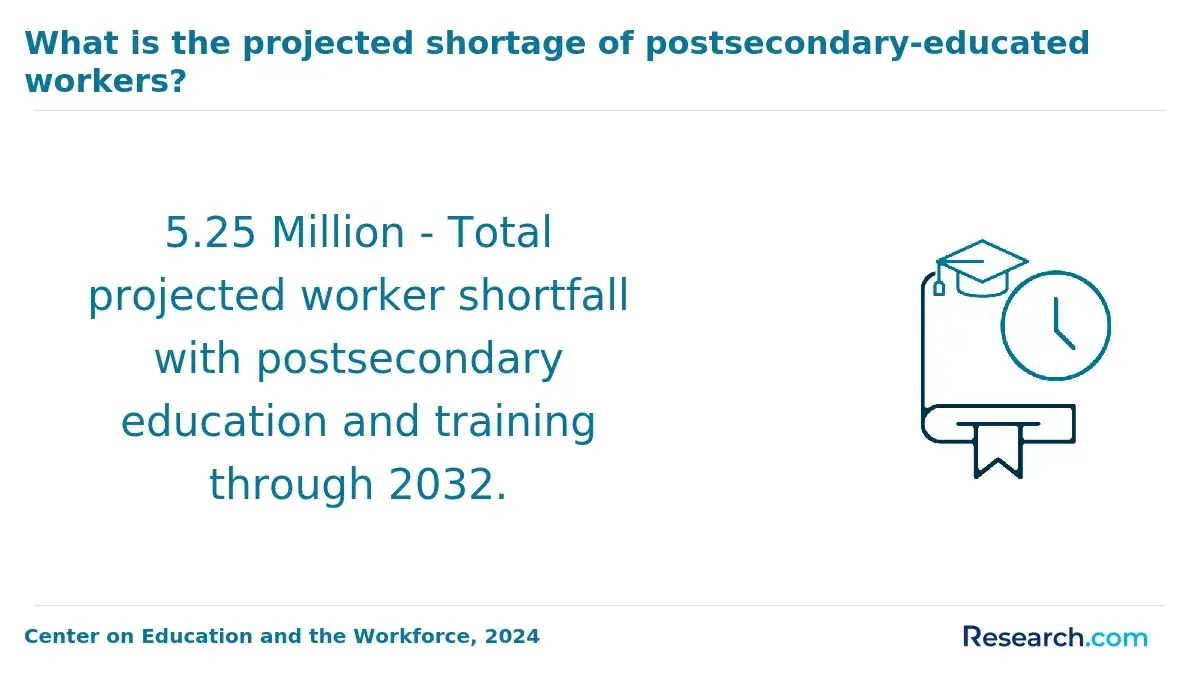
Employer coverage ranges from no eligible doctoral assistance to partial or substantial support; there is no standard reimbursement amount. Under a qualifying educational-assistance plan, Internal Revenue Code Section 127 generally permits up to $5,250 per employee per calendar year to be excluded from federal taxable income. That is a tax rule, not a requirement that an employer pay $5,250 or a cap on what it can pay. Different tax treatment may apply to amounts above the exclusion, so confirm details with payroll or a tax professional.
The comparison that matters is what remains payable across the full degree. This table separates costs that employers often treat differently; your plan document controls actual eligibility.
| Cost or condition | What to verify | Why it changes the decision |
| Tuition and mandatory fees | Annual cap, covered fees, and approved course load | Published tuition may understate the student's bill. |
| Travel, residencies, and placements | Whether non-tuition expenses qualify | Required attendance can create substantial unreimbursed costs. |
| Payment and repayment rules | Preapproval, grade threshold, reimbursement timing, and service agreement | Students may need to pay upfront or repay benefits after leaving. |
Request a term-by-term cost estimate from each school, then apply only benefits your employer has confirmed in writing. Ask the financial aid office how employer payments interact with scholarships, loans, and other aid.
The strongest career fit is a doctorate that supports work you can realistically enter or advance in - not the one attached to the highest occupational wage. A DNP can be pertinent to advanced nursing practice or systems improvement; a PsyD may be necessary for a particular psychologist-licensure pathway; and an EdD, DBA, DrPH, DSW, or DPA may support applied leadership. These outcomes still depend on licensing rules, prior experience, employer hiring practices, and the specific role.
Compare the doctorate with your next-best alternative. An MBA, MPH, master's in education, relevant certification, or additional professional experience may address the same near-term goal with less time away from work. For someone early in an education pathway, even short degrees that pay well may be worth evaluating before committing to many years of further study. Do not use an occupational median wage as a forecast of what doctoral graduates will earn.
First, confirm that the institution holds recognized institutional accreditation using the U.S. Department of Education's accreditation database or the accreditor's directory. Then check the programmatic and state rules for your intended occupation. For clinical, counseling, or school psychology, investigate American Psychological Association accreditation and the target state psychology board. For nursing, check the program's nursing accreditation, applicable advanced-practice preparation standards, and the state board of nursing. For public health, check whether Council on Education for Public Health accreditation matters for your goal.
Ask the school to identify the exact program and pathway - not merely the university - covered by any accreditation claim. If licensure is the objective, obtain the state board's requirements for education, supervised practice, examinations, and any location restrictions before paying a deposit. A doctorate can meet some requirements without satisfying all of them.
Professional doctorate admissions vary by field and entry pathway. DBA, EdD, DrPH, DSW, and DPA applicants often need relevant professional preparation; some programs require a master's degree or substantial experience. DNP programs may offer distinct post-bachelor's and post-master's routes, while licensure-oriented PsyD programs evaluate preparation for clinical training. Common application materials include transcripts, recommendations, a statement of purpose, a résumé, and sometimes a writing sample or interview. Confirm each program's GPA, testing, prerequisite, and license rules rather than assuming a general graduate-school policy applies.
If you have not completed a bachelor's degree, finish that eligibility step before planning doctoral admission. Accelerated online bachelor degree programs accredited can be one way for a working adult to investigate that earlier stage; they do not themselves shorten or guarantee admission to a doctorate. Applicants who already hold graduate credits should request a program-level evaluation of whether those credits satisfy actual doctoral requirements.
Online delivery can reduce commuting, but it does not establish that a doctorate is self-paced or entirely remote. Scheduled seminars, project meetings, oral defenses, campus residencies, clinical placements, and internships may still apply. Campus study may offer easier access to facilities or in-person collaboration but can make continued employment and relocation more difficult.
The useful comparison is the entire degree schedule, not a course's online label. This table highlights the constraints a working student should compare before asking an employer to approve a program.
| Format | Potential advantage | Constraint to check |
| Online | Less routine travel | Live sessions, local placements, and any required visits |
| Hybrid or low-residency | Remote coursework with scheduled in-person work | Travel dates, time off, and unreimbursed expenses |
| Campus-based | Regular access to on-site resources | Commute, work-schedule conflicts, or relocation |
Obtain a written schedule of all in-person and synchronous requirements, including the culminating project stage. Confirm that both your employer and the school can accommodate the time those requirements demand.
Completion time depends on entry pathway, enrollment intensity, course sequencing, accepted graduate credit, and the doctoral project or clinical requirements. A post-master's DNP can differ substantially from a post-bachelor's pathway; an applied dissertation may extend beyond the last scheduled course. Ask for the program's published completion expectations for your entry route and what happens when a student pauses enrollment.
Calculate total cost using all required credits, current tuition and mandatory fees, likely tuition changes, travel, placements, research expenses, and income you may forgo. Subtract only confirmed employer assistance and other aid, accounting for annual caps and reimbursement delays. A lower per-credit price is not necessarily the cheaper degree if it requires more credits or travel. If you are still completing undergraduate education, compare that separate expense first; lists of cheapest online degrees do not indicate what a later doctorate will cost.
What Salaries and Job Outlook Can Professional Doctorate Graduates Expect?
Use U.S. Bureau of Labor Statistics (BLS) occupation data as context, not as a promise of a doctoral return. For example, BLS reports a May 2024 median annual wage of $129,210 for nurse practitioners. That is an occupation-wide figure, not the earnings of DNP graduates; nurse practitioners also need the appropriate nursing education, certification, and state licensure. A DNP is not universally required to enter that occupation. Leadership wages in business, education, or public service likewise reflect experience and responsibility as well as education.
Employment prospects differ by role and location, and a doctorate does not independently secure a promotion. For a realistic return-on-investment check, identify the jobs you would pursue, verify their actual credential requirements, compare local openings and BLS outlook information, and weigh any plausible career gain against the uncovered cost and time commitment. Avoid choosing a doctorate from a salary ranking without checking whether the job requires it.
Other Things You Should Know About
Possibly. Get written confirmation that the doctoral program, school, delivery format, and individual expenses meet the employer's policy before enrolling.
No. Qualifying educational-assistance plans generally allow a federal exclusion up to $5,250 per employee per calendar year. Amounts beyond that may have different tax treatment.
Often, but employer payments may affect an aid package. Ask the school's financial aid office how and when to report the benefit, and confirm your employer's rules on combining funding sources.
Future assistance may end, and a service agreement may require repayment of prior benefits. Read the repayment terms and budget for finishing without employer support before committing.
- Frequently asked questions about educational assistance programs | Internal Revenue Service https://www.irs.gov/newsroom/frequently-asked-questions-about-educational-assistance-programs
- Standards for Accreditation - New England Commission Higher Education https://www.neche.org/standards-for-accreditation/