2027 Best Professional Doctorate Programs With Career Coaching

Co-Founder and Chief Data Scientist
A professional doctorate may strengthen your practice or leadership skills, but career coaching can make the difference between having a degree plan and having a career plan. The stakes are substantial: the U.S. Bureau of Labor Statistics (BLS) reports a 2024 median wage of $117,960 for medical and health services managers, a role where experience matters and a doctorate is not generally required.
This guide is for working professionals comparing practice-focused doctorates. It explains which fields fit different goals, what meaningful doctoral-level career support looks like, and how to check whether a program's cost and services justify enrolling.
Key Things You Should Know
- Verify access, not advertising: Ask whether doctoral students can book individual career-coaching appointments, receive field-specific help, and use services after graduation.
- Match support to the outcome: A DNP applicant may need clinical leadership guidance; a DBA applicant may need executive-transition or consulting support. Neither service guarantees a job.
- Check the alternative: BLS reports a 2024 median wage of $61,330 for social workers, an occupation that does not generally require a doctorate. Compare the DSW's added cost with your specific advancement goal.
Top 10 Best Professional Doctorate Programs With Career Coaching - Top Programs
Business / DBA Programs
A Doctor of Business Administration (DBA) generally suits experienced managers who want to apply research to organizational problems. Career coaching is most useful when it helps students translate a workplace project into a credible case for advancement, consulting, or a change of industry. Ask whether doctoral students can meet with coaches experienced in executive hiring, not just use a general résumé portal. An MBA or additional management experience may be a better investment if your goal does not require doctoral-level inquiry.
Education / EdD Programs
A Doctor of Education (EdD) often emphasizes applied improvement in schools, colleges, or education organizations. Useful coaching might cover leadership portfolios, interviews, and explaining the impact of a doctoral project. Confirm that the service supports your intended sector; advice for K-12 administrators may not fit a higher-education career. An EdD does not automatically confer administrator certification or a faculty appointment. Compare it with a research-focused education PhD if producing original scholarship is your primary goal.
Educational Leadership Programs
Educational leadership doctorates may award an EdD or another professional credential. Their value depends on the role: district leadership, college administration, and nonprofit leadership have different hiring standards. Ask whether career advisers understand the relevant employer and state requirements and can help turn an applied project into evidence of leadership ability. Check certification eligibility separately before enrolling. If you mainly need a state administrator credential, a qualifying post-master's program may be more direct.
Psychology Programs
A Doctor of Psychology (PsyD) may prepare students for clinical practice, depending on its curriculum and accreditation. Career support should address supervised training, internship applications, and the state licensure pathway - not merely job-search materials. Verify programmatic accreditation and whether the program meets requirements where you intend to practice. Some applied psychology doctorates are nonclinical; they should not be mistaken for licensure preparation. Compare a PsyD with a psychology PhD according to your clinical and research goals.
Nursing / DNP Programs
A Doctor of Nursing Practice (DNP) focuses on advanced nursing practice, systems improvement, or leadership. Relevant coaching may help nurses move into a specialty, prepare for leadership interviews, or communicate the results of an evidence-based practice project. Confirm the entry pathway and whether the program prepares you for any intended advanced-practice certification. A DNP does not replace required nursing licensure, certification, or clinical preparation. If your goal is primarily nursing research, compare a nursing PhD.
Public Health Programs
A Doctor of Public Health (DrPH) typically emphasizes public health leadership and applied population-health work. Strong career support might include guidance on government hiring, cross-sector networking, and presenting a field-based project to employers. Ask whether advisers have experience with the organizations you want to join. A Master of Public Health plus relevant experience may be sufficient for many roles; a public health PhD is usually the closer match for an original-research career.
Computer Science Programs
Practice-focused computing doctorates may carry different degree names, so inspect the awarded credential and curriculum rather than assuming every computing doctorate is a PhD. Career coaching should help candidates explain applied technical work to employers and assess whether the credential adds value beyond a master's degree and industry experience. Check for meaningful project supervision and access to advisers who understand technical hiring. A doctorate is rarely the only route to software or technology leadership.
Cybersecurity Programs
A professional cybersecurity doctorate can suit practitioners studying organizational risk, governance, or applied security problems. Useful coaching would connect a doctoral project to a specific goal, such as security leadership or consulting, without implying that the degree itself qualifies someone for a senior post. Compare the program with targeted certifications and deeper industry experience. Ask whether its career advisers understand security hiring and whether its project can be completed using data you are permitted to access.
Social Work / Human Services Programs
A Doctor of Social Work (DSW) commonly serves experienced practitioners seeking advanced practice, teaching, or organizational leadership. Career coaching can help distinguish those routes and prepare a portfolio demonstrating practice impact. Check admission requirements for prior social work education and practice, and verify the licensure rules for any clinical work you intend to do. A DSW does not by itself grant a clinical license. For many positions, an accredited master's degree and supervised experience remain the essential qualifications.
Public Administration / Public Policy Programs
A Doctor of Public Administration (DPA) or comparable practice-oriented policy doctorate may support experienced public-sector professionals working on implementation and leadership problems. Career support is most valuable when it addresses government hiring, promotion systems, and communicating policy results to nonacademic audiences. Ask whether coaches understand your target agency or nonprofit sector. A doctorate alone will not satisfy position-specific experience requirements; an MPA or relevant public-service experience may be the more efficient next step.
What Is a Professional Doctorate With Career Coaching?
A professional doctorate with career coaching is a practice-focused doctoral program whose students can obtain career-planning help relevant to their goals. Coaching may involve individual appointments, résumé or portfolio feedback, interview practice, networking strategy, or help explaining an applied doctoral project. It is separate from academic advising, project supervision, and job placement.
A DBA, EdD, DNP, PsyD, DrPH, DSW, or DPA can serve a different professional purpose. By contrast, an online PhD is a research doctorate, even when delivered remotely. Choose based on the work you want to do and the support you can actually use—not on a coaching label alone.
There is no dependable school-level "best" list without confirming that career coaching is available to students in each specific doctoral program. University-wide career-service advertising does not establish doctoral eligibility, individual access, or field expertise. The comparison below shows which coaching questions matter most across professional doctorate families; it does not certify that a particular school offers those services.
| Program family | Career goal to test | Coaching support to verify |
| DBA; computing or cybersecurity doctorate | Leadership, consulting, or a technical career transition | Experienced advisers, project-to-portfolio guidance, and relevant employer connections |
| EdD; educational leadership; DPA | School, college, government, or nonprofit leadership | Sector-specific hiring guidance and feedback on leadership evidence |
| DNP; PsyD | Advanced practice or clinical career development | Guidance aligned with clinical placements, credentials, and intended state of practice |
| DrPH; DSW | Practice leadership or cross-sector advancement | Help presenting applied work and navigating the target profession |
To build a shortlist, ask each program for its doctoral career-service eligibility policy and a description of individual appointments. Then compare adviser expertise, appointment availability, alumni access, accreditation, total cost, and the required doctoral project or clinical work. Treat reported employment outcomes cautiously unless the school defines the population and measurement period.
Start with recognized institutional accreditation, then check whether your field or intended license calls for programmatic accreditation. This is especially important for clinical psychology, nursing, social work, and other regulated pathways. A school's general accreditation does not establish that a particular degree satisfies a state board's requirements.
Before applying, confirm the exact awarded credential, required project or dissertation, clinical or residency obligations, and whether career coaching is available to doctoral students. Compare a written total-cost estimate rather than tuition alone. If you are comparing doctoral formats, remember that good online colleges for military personnel still need program-specific checks: broad student support does not prove that a particular doctorate offers appropriate coaching, benefits processing, or scheduling.
Requirements depend on the credential and entry pathway. Professional doctorates normally require a completed bachelor's degree; many require or prefer a relevant master's degree, professional experience, an existing license, or a combination. Applicants may need transcripts, recommendations, a statement of purpose, a writing sample, an interview, and evidence of practice experience. Clinical and advanced-practice programs can impose additional prerequisites.
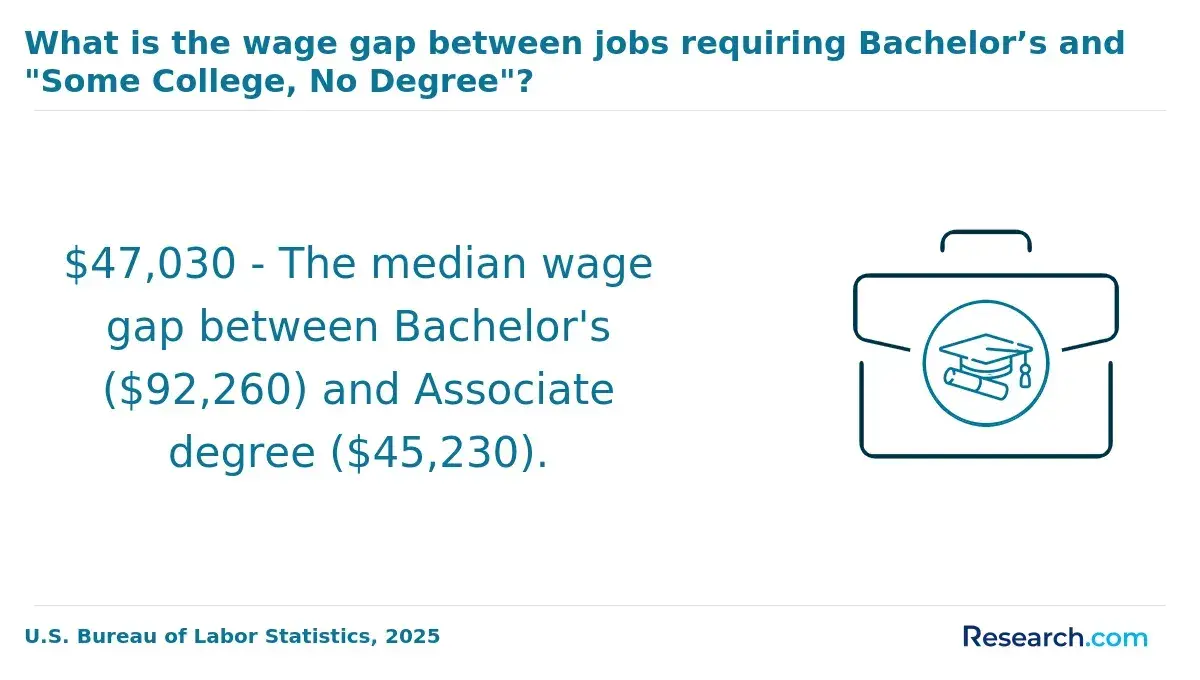
Check the doctoral program's own rules for GPA, standardized tests, licensure, and prior graduate credit; an institution's undergraduate policy is not enough. If you are still considering an associate's degree, plan for the bachelor's-level—and potentially master's-level—education needed before doctoral admission. Ask whether eligible graduate coursework will actually satisfy requirements in your intended doctorate; admission with a master's degree does not automatically shorten it.
Professional doctorates combine advanced field knowledge with methods for evaluating evidence and addressing problems in practice. The culminating work may be an applied dissertation, doctoral project, clinical project, capstone, or another substantial scholarly requirement. Coursework alone is not the whole degree: project approval, data access, supervision, and, where applicable, practica or clinical hours affect progress.
Do not assume "no dissertation" means no research. Even a search for an online PhD criminal justice no dissertation option calls for checking the official degree requirements and awarded credential: a PhD is not interchangeable with a practice-focused doctorate, and a differently named culminating project can still demand extensive research.
There is no reliable single price or completion time for professional doctorates. The amount owed depends on required credits, tuition structure, fees, enrollment pace, and any accepted graduate coursework. Time also depends on project approval, supervision, clinical hours, course sequencing, and residency requirements; finishing classes does not necessarily mean finishing the degree.
Request an itemized estimate covering tuition, mandatory and program fees, travel, clinical or placement costs, and the cost of additional terms if a project takes longer. Ask about scholarships, employer assistance, payment options, and any assistantship terms rather than assuming funding is available. Compare that commitment with the less expensive possibility of a master's degree, certification, or additional experience when those paths meet your goal.
An online professional doctorate can be effective for a student whose program offers strong supervision, appropriate experiential training, and accessible career coaching. Delivery mode alone does not establish quality or flexibility. Online courses can still have scheduled meetings and deadlines; a program may also require local clinical placements, campus residencies, or an in-person defense.
Ask where every requirement takes place and whether coaching appointments can be completed remotely and outside your work hours. Compare the support available to online and campus students, including project mentorship and career appointments. For a clinical pathway, confirm that placements and the degree align with the state where you intend to seek licensure.
Career possibilities depend more on the credential's purpose, prior experience, licensing, and employer requirements than on the doctorate alone. The BLS figures below are occupational medians, not salaries earned by graduates; neither occupation generally requires a professional doctorate for entry.
| Occupation | U.S. median annual wage, 2024 | Doctoral decision |
| Medical and health services managers | $117,960 | Assess whether a DNP, DrPH, or other doctorate adds value beyond required experience and existing qualifications. |
| Social workers | $61,330 | Assess whether a DSW advances a specific practice, teaching, or leadership goal beyond master's-level preparation. |
Use occupational wages as context, not a return-on-investment forecast. Before enrolling, identify a target role, review its actual requirements, and compare the doctorate's full cost and time away from other opportunities with a realistic alternative. Career coaching can help you plan that transition, but access to coaching is not evidence of promotion or employment.
Do Professional Doctorate Graduates Need Licensure or Certification?
Sometimes. Licensure and certification depend on the profession, role, and state—not simply on possession of a doctorate. A PsyD student pursuing psychologist licensure must verify educational eligibility and additional examination and supervised-practice requirements. DNP students must check applicable nursing licenses and advanced-practice certification. Education leadership roles may have state credential requirements, while clinical social work has its own licensing pathway.
Contact the relevant state board before applying, particularly if you may move or study online across state lines. Ask the program to identify which pathway it prepares students for and what graduates must still complete. Do not treat career coaching, accreditation, or a degree title as a substitute for a licensing determination.
Other Things You Should Know About
Not necessarily. Confirm that students in your specific doctorate can book individual appointments and receive guidance suited to their field.
It may improve your preparation, but neither coaching nor a doctorate guarantees employment. Ask what the service provides rather than assuming it places graduates.
Choose a professional doctorate for an appropriate practice-focused goal and a PhD when original research is central to your plan. Advancement also depends on experience and the role's requirements.
Ask who provides doctoral career coaching, how appointments are scheduled, whether online students and alumni qualify, what the entire degree costs, and which requirements must be completed in person.
- Accreditation in the U.S. | ed.gov http://www.ed.gov/laws-and-policy/higher-education-laws-and-policy/college-accreditation/accreditation-in-the-us
- Exploring the effectiveness of the Career Guidance and... - PMC https://pmc.ncbi.nlm.nih.gov/articles/PMC11534603/
- Cost of Attendance (Budget) | 2025-2026 Federal Student Aid Handbook https://fsapartners.ed.gov/knowledge-center/fsa-handbook/2025-2026/vol3/ch2-cost-attendance-budget
- Coaching and Teaching Studies, PhD | West Virginia University https://www.wvu.edu/academics/programs/coaching-and-teaching-studies-phd/
- Accreditation | Walden University https://www.waldenu.edu/about/accreditation
- EdD in Transformational Leadership & Coaching | MIU https://www.miu.edu/cba/edd-in-transformational-leadership-and-coaching
- Admissions Requirements and Procedures - Pitt Catalog https://catalog.upp.pitt.edu/content.php
- Mid-Career Doctoral Program in Educational Leadership, Ed.D. | Penn GSE https://www.gse.upenn.edu/academics/mid-career-doctoral-program-educational-leadership-edd
- Using Artificial Intelligence to Navigate the New Challenges of College and Career - Harvard ALI Social Impact Review https://www.sir.advancedleadership.harvard.edu/articles/using-artificial-intelligence-to-navigate-the-new-challenges-of-college-and-career
- Accreditation | Loyola University Chicago https://www.luc.edu/accreditation/