2027 Best Online Respiratory Care Therapy Degree Programs at Nonprofit Universities

Co-Founder and Chief Data Scientist
Choosing an online respiratory care therapy degree requires more than finding a nonprofit school with convenient classes: entry-level practice depends on accredited education, hands-on clinical training, and eligibility for credentialing.
The U.S. Bureau of Labor Statistics projects 13% employment growth for respiratory therapists from 2024 to 2034, faster than the average for all occupations. This guide helps prospective and practicing respiratory care students compare nonprofit programs by degree level, total cost, format, support, and career fit.
Key Things You Should Know
- For initial respiratory therapist licensure, prioritize a program accredited by the Commission on Accreditation for Respiratory Care (CoARC), with required in-person clinical experiences; an "online" entry-level program is rarely 100% remote.
- The BLS projects 13% growth in respiratory therapist employment from 2024 to 2034, but a degree alone does not create eligibility for a state license or National Board for Respiratory Care examination.
- The strongest nonprofit option is not automatically the least expensive: compare net price, clinical placement arrangements, transfer policies, schedule requirements, credentialing outcomes, and whether the degree matches your current education level.
What Makes an Online Respiratory Care Therapy Degree Program at a Nonprofit University Different?
An online respiratory care therapy degree at a nonprofit university combines remote academic coursework with the supervised practical education required for respiratory care practice. Nonprofit institutions include public colleges and universities as well as private nonprofit universities. Their tax status does not independently confirm educational quality, affordability, accreditation, or licensing eligibility.
Most online respiratory care options serve registered respiratory therapists (RRTs) who already hold an associate degree and want to complete a bachelor's degree. These completion programs commonly cover leadership, research, population health, education, management, and advanced clinical concepts online. Entry-level associate and bachelor's programs may use online lectures and simulations, but laboratory checkoffs and clinical rotations are generally completed in person at approved healthcare sites.
Program structure should match where you are in the profession. The comparison below separates the most common pathways.
| Program type | Best for | Typical format | Key outcome to verify |
| Associate degree in respiratory care | Students seeking entry-level preparation | Hybrid; campus labs and clinicals are required | CoARC accreditation and examination/licensure eligibility |
| RN-to-BS or RRT-to-BS completion degree | Credentialed respiratory therapists with prior college credit | Mostly online, often without new clinical rotations | Transfer-credit evaluation and degree-completion time |
| Bachelor's degree in respiratory care | New students seeking a four-year pathway or advanced preparation | Hybrid for prelicensure study; online for completion options | Clinical capacity, curriculum, and credentialing pathway |
| Master's degree | RRTs pursuing leadership, education, research, or administration | Frequently online or hybrid | Fit with nonclinical advancement goals |
For clinicians who may later move into operations or administration, a respiratory care bachelor's degree can pair well with a healthcare management certificate. That route may be more targeted than changing majors, but it does not replace respiratory care licensure or clinical experience.
Public nonprofit institutions may offer lower tuition for in-state residents, while private nonprofit universities may offer standardized online tuition, smaller cohorts, or more structured advising. Neither model is universally better. Students should compare the actual program rather than assume a public school is always cheaper or that a private nonprofit offers more personal support.
How Can Students Verify Accreditation for an Online Respiratory Care Therapy Degree at a Nonprofit University?
Students should verify two separate forms of accreditation: institutional accreditation for the university and programmatic accreditation for the respiratory care program. Institutional accreditation supports federal aid eligibility, transferability, and general academic oversight. Programmatic accreditation is especially important for entry-level respiratory care students because it is closely tied to professional preparation and examination eligibility.
For entry-level respiratory care education, CoARC accreditation is the central credential to investigate. Do not rely only on a school's statement that it is "accredited," because that may refer solely to the institution rather than the specific respiratory care program. A bachelor's completion degree for already credentialed RRTs may not need to function as a separately accredited entry-to-practice program, so its value should instead be measured by institutional accreditation, curriculum, and employer relevance.
Use this verification sequence before paying an application fee or committing to enrollment.
- Confirm the university's institutional accreditation through the accreditor named on the school's official website and federal school information.
- Search CoARC's program directory for the exact campus, degree level, and delivery format of an entry-level respiratory care program.
- Ask whether online students complete laboratory and clinical requirements at university-approved sites and whether placement is guaranteed, arranged, or student-led.
- Contact the licensing board in the state where you expect to practice to confirm its current education, examination, and licensing rules.
- Request written confirmation of whether graduates are eligible to pursue the National Board for Respiratory Care credentialing examinations.
Accreditation status can change, and state rules differ. Students relocating during a program should recheck requirements in the destination state. A school should be able to explain its authorization to enroll students in your state and disclose any location-based restrictions before enrollment.
A major red flag is language that promises "online respiratory therapy certification" without clearly identifying the degree, clinical requirements, CoARC status, and pathway to the RRT credential. Another is a school that cannot identify who is responsible for securing clinical placements.
How Rigorous Are Online Respiratory Care Therapy Degree Programs at Nonprofit Universities?
Rigorous online respiratory care programs are not easier versions of campus programs. They use the same learning outcomes expected for the degree level while shifting lectures, discussions, case analyses, and assignments to a digital environment. Prelicensure students still need practical competency assessment, patient-care experience, and clinical supervision.
In an associate or entry-level bachelor's pathway, coursework commonly includes anatomy and physiology, cardiopulmonary physiology, pharmacology, mechanical ventilation, neonatal and pediatric care, diagnostics, critical care, ethics, and patient assessment. Students must apply this knowledge under pressure, communicate with interdisciplinary teams, and document care accurately. Online instruction can support the academic portions, but simulation and clinical education remain essential.
Bachelor's completion programs are rigorous in a different way. They typically assume the student already has technical respiratory care education and an active professional background. Coursework may emphasize evidence-based practice, quality improvement, leadership, health policy, informatics, teaching, and research interpretation. These programs are often a good fit for working RRTs, but they do not usually provide initial clinical training for someone new to the profession.
Students should expect weekly deadlines, substantial reading, discussion participation, examinations, and group or applied projects. Asynchronous programs provide timing flexibility, not reduced workload. Synchronous courses add scheduled meetings, which can improve interaction but may be difficult for students working rotating hospital shifts.
Before applying, request a sample course sequence and ask whether faculty are licensed respiratory therapists, whether clinical instructors supervise competency evaluation, and how the program assesses skills. A program that offers only generic healthcare courses without a clear respiratory care curriculum may not deliver the professional preparation an aspiring therapist needs.
How Much Does an Online Respiratory Care Therapy Degree Cost at a Nonprofit University?
Cost varies substantially by degree level, residency status, transfer credit, clinical requirements, and whether a school charges separate online, technology, laboratory, or graduation fees. Advertised per-credit tuition is useful only after students know how many credits they must actually take. For a completion degree, a generous transfer evaluation can matter more than a modest difference in per-credit price.
For broad context, the College Board's 2024-25 published tuition and fees estimate was $11,610 for in-state students at public four-year institutions, $30,780 for out-of-state students at public four-year institutions, and $43,350 at private nonprofit four-year institutions. These figures are not respiratory care program prices or net prices, but they show why residency and institutional type deserve close attention.
The cost categories below help students build an apples-to-apples estimate from each university's written information.
| Cost category | Why it matters | What to request |
| Tuition by required credit | Published rates may exclude prerequisite and general education courses | Total credits remaining after transfer evaluation |
| Mandatory fees | Online, technology, laboratory, clinical, and graduation charges can change the total | Fee schedule for the full expected enrollment period |
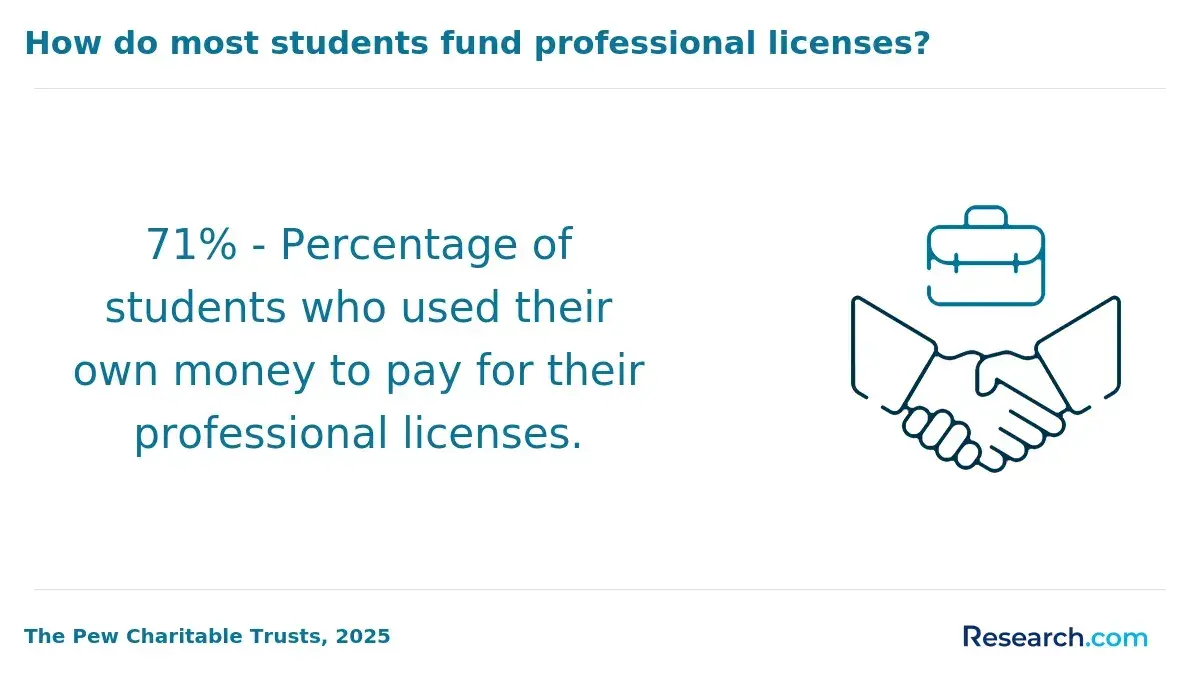
| Clinical expenses | Travel, parking, immunizations, background checks, uniforms, and testing may be student-paid | Estimated out-of-pocket clinical and compliance costs |
| Books and equipment | Digital platforms, software, devices, and professional supplies may be required | Current course-material and equipment list |
| Lost work time | Clinicals and synchronous meetings may limit paid shifts | Typical weekly clinical and live-session commitments |
Students considering adjacent administrative roles should distinguish a respiratory care degree from shorter credentials. A medical billing and coding online schools that accept financial aid search may be relevant for someone pursuing revenue-cycle work, but billing and coding education does not qualify a student to practice as a respiratory therapist.
Lower tuition is valuable only if the program is accredited when needed, accepts enough transfer credit, supports clinical completion, and aligns with your goal. A higher-priced program may be a better value when it has transparent clinical arrangements and prevents unnecessary repeated coursework; it may be a poor value when fees, travel, or weak transfer policies erase its convenience advantage.
What Financial Aid Is Available for an Online Respiratory Care Therapy Degree at a Nonprofit University?
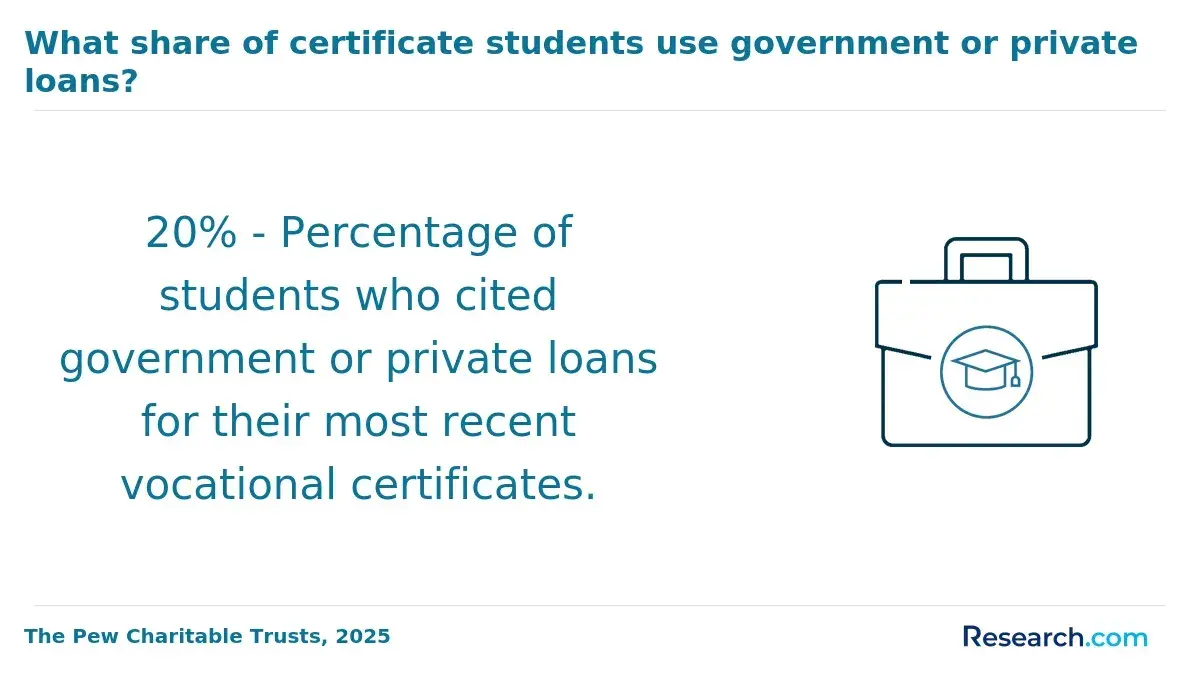
Eligible students at institutionally accredited nonprofit universities may use federal financial aid for qualifying degree programs, including Direct Loans and, for eligible undergraduate students, Pell Grants. Aid eligibility depends on factors such as enrollment status, satisfactory academic progress, remaining federal aid eligibility, program length, and the school's participation in federal student aid programs.
Complete the Free Application for Federal Student Aid (FAFSA) early and compare each university's aid offer after subtracting grants and scholarships, not before. Borrowing limits and aid availability can differ for undergraduate, graduate, full-time, and part-time students. Clinical schedules can also affect whether a student can maintain the enrollment level assumed in an aid offer.
Students should explore aid sources in a deliberate order because grants and employer support may reduce the amount they need to borrow.
- Submit the FAFSA and review federal, state, and institutional grant eligibility.
- Ask the university about respiratory care department scholarships, adult-learner awards, and transfer-student scholarships.
- Check whether your hospital, health system, military employer, or union offers tuition assistance or reimbursement for job-related study.
- Compare loan amounts, interest terms, and expected repayment obligations before accepting optional borrowing.
- Ask whether clinical attendance, repeated courses, or reduced enrollment could affect aid disbursement or satisfactory academic progress.
Federal work-study may be less practical for students whose clinical rotations occupy daytime hours, and employer tuition reimbursement may require continued employment after graduation. Read repayment or service agreements carefully. Private loans should generally be a later option after students understand federal aid and institutional scholarship opportunities.
A financial aid office can explain school-specific rules, but it cannot determine whether a program satisfies state licensure requirements. Keep financial planning and professional eligibility as separate checklists.
How Flexible Are Online Respiratory Care Therapy Degree Programs at Nonprofit Universities?
Flexibility depends on the degree type. RRT-to-bachelor's and many respiratory care master's programs may be largely asynchronous, letting working clinicians complete readings and assignments around rotating shifts. Entry-level programs are less flexible because clinical rotations, laboratory sessions, skill checkoffs, and some examinations occur at fixed times and locations.
Students should not interpret "online" as "self-paced." Most programs use weekly modules and firm due dates. Accelerated terms can shorten completion time but compress reading, assignments, and exams into fewer weeks. A traditional semester pace may be safer for students balancing full-time work, caregiving, or variable shift schedules.
This comparison can help students choose a structure that matches their commitments.
| Format | Potential advantage | Important limitation | Best fit |
| Asynchronous online | Coursework can be completed at varied times during the week | Deadlines remain; clinical requirements may still be fixed | Working RRTs with irregular shifts |
| Synchronous online | Live faculty interaction and scheduled peer engagement | Required meetings can conflict with work schedules | Students who prefer real-time instruction |
| Hybrid entry-level program | Online theory may reduce commuting | Labs and clinicals require in-person attendance | Local students seeking initial preparation |
| Accelerated completion program | Potentially faster degree completion | High weekly workload and fewer recovery periods | Students with strong time availability and transfer credit |
Ask each program for a calendar showing mandatory live sessions, campus visits, clinical dates, and examination requirements. Also ask whether clinical shifts include evenings, weekends, or daytime hours, and whether students can pause enrollment without losing progress. These practical details often determine whether an online program is workable.
A common mistake is choosing a program based on asynchronous lecture delivery while overlooking clinical travel or a required daytime practicum. Students new to respiratory care should generally favor the program with feasible, clearly documented clinical access over the one with the most remote coursework.
What Student Support Services Do Nonprofit Universities Provide for Online Respiratory Care Therapy Degree Students?
Online respiratory care students need more than a learning platform. Effective support includes academic advising, transfer-credit evaluation, faculty access, library services, tutoring, disability accommodations, technology help, career guidance, and clear clinical coordination. The most important services vary by pathway: a prelicensure student may need intensive clinical and exam support, while an RRT completing a bachelor's degree may need help balancing work, transfer credit, and career advancement.
Ask schools to describe services in operational terms rather than broad marketing language. For example, "career support" could mean a self-service job board or individual coaching; "clinical support" could mean the university secures a site or merely provides paperwork after the student finds one.
Students considering a future shift into related healthcare fields can also explore options such as ultrasound tech programs, but should expect different prerequisites, clinical competencies, and credentialing processes. A respiratory care degree does not automatically transfer into sonography practice.
The most useful questions for an admissions representative or program director are the following.
- Who evaluates transfer credit, and will I receive a written degree plan before enrolling?
- How quickly can online students reach respiratory care faculty and academic advisors?
- What tutoring, examination preparation, and simulation resources are available to distance learners?
- Does the school arrange clinical placements, approve student-proposed sites, or require students to find sites independently?
- What support is available if a clinical placement falls through or a student needs to repeat a competency?
- Can online students access career coaching, alumni networking, and employer information in their state?
Support quality is especially consequential in programs with clinical requirements. A school that provides transparent placement policies, responsive advising, and accessible faculty can reduce avoidable delays, although no institution can eliminate the need for students to meet performance, compliance, and attendance standards.
Do Online Respiratory Care Therapy Degree Programs at Nonprofit Universities Prepare Graduates for In-Demand Careers?
They can, provided the program delivers the education and credentialing pathway required for the job. Respiratory therapists assess breathing problems, administer treatments, manage ventilatory support, perform diagnostic testing, educate patients, and collaborate with physicians and nurses. They work in hospitals, emergency settings, outpatient care, sleep laboratories, rehabilitation, home care, and other clinical environments.
The U.S. Bureau of Labor Statistics reports that respiratory therapists had a median annual wage of $80,450 in May 2024. Median pay is a national midpoint rather than a starting-salary promise; actual earnings vary by geographic area, shift differentials, employer, experience, credentialing, and setting.
For an aspiring therapist, the critical career question is whether the degree supports state licensure and professional credentialing. For a current RRT, an online bachelor's or master's degree may support advancement into educator, supervisor, clinical specialist, quality-improvement, management, or sales-related roles, though employers set their own requirements and may value experience alongside education.
Respiratory care also develops transferable skills, including patient assessment, clinical reasoning, equipment operation, infection-control awareness, documentation, and team communication. Students interested in movement science, rehabilitation, or wellness should recognize that these are separate academic and professional routes; best kinesiology programs may better fit a student whose goal is exercise science rather than cardiopulmonary patient care.
Before enrolling, review the program's credentialing-exam outcomes where available, clinical affiliations, graduate employment information, and the types of employers that recruit from the program. Treat outcome data as one decision factor, not a guarantee of employment. Local job postings can also show whether employers in your target area prefer an associate, bachelor's, or advanced degree.
Can an Online Respiratory Care Therapy Degree From a Nonprofit University Prepare Students for Graduate School?
Yes, an institutionally accredited bachelor's degree in respiratory care can prepare students for many graduate programs, especially in healthcare administration, education, public health, leadership, clinical research, and related disciplines. However, admission requirements vary by graduate school. A bachelor's completion degree is generally the most direct next academic step for an RRT with an associate degree.
Graduate admissions committees commonly review the accredited bachelor's degree, cumulative and prerequisite GPA, professional experience, recommendations, résumé, statement of purpose, and any required statistics or research coursework. Students considering graduate school should select elective courses strategically and preserve strong academic performance rather than choosing an accelerated program solely for speed.
A master's degree makes sense for professionals seeking specialized leadership, educational, administrative, or research responsibilities. A doctoral degree is usually most appropriate for advanced practice, executive leadership, research, faculty careers, or other highly specialized goals. It is not normally required for routine entry-level respiratory therapist practice.
Students whose long-range interests include advanced nursing leadership should understand that respiratory care is not a shortcut into nursing doctoral education. easiest DNP programs may help prospective nursing doctoral students compare programs, but DNP admission normally requires nursing education and licensure prerequisites that respiratory care credentials do not satisfy.
Before selecting an online bachelor's completion program, ask whether it includes upper-division writing, research methods, statistics, and evidence-based practice. Those courses can strengthen graduate-school readiness. Also ask prospective graduate programs directly whether they recognize the intended online degree and whether they require a particular undergraduate major or prerequisite sequence.
How Should Students Compare the Best Online Respiratory Care Therapy Degree Programs at Nonprofit Universities?
The best program is the one that meets your professional eligibility requirements and is realistically affordable and completable. Start by separating entry-level programs from degree-completion and graduate programs; comparing them as though they serve the same student produces misleading conclusions.
Use a short list of three to five programs and collect the same information from each. The following comparison framework focuses on the factors that most directly affect value and completion.
| Comparison factor | What a strong answer looks like | Potential red flag |
| Accreditation | Institutional accreditation is clear; CoARC status is confirmed for entry-level preparation | Only vague statements that the university is accredited |
| Career eligibility | Written explanation of examination and state licensing pathway | No answer about licensure or credentialing eligibility |
| Clinical education | Defined sites, supervision, schedule expectations, and placement responsibilities | Students must locate clinicals with little institutional support |
| Total cost | Written estimate including tuition, fees, materials, travel, and clinical expenses | Only a per-credit tuition figure is provided |
| Transfer credit | Individual evaluation and documented remaining-credit plan | Broad promises without a transcript review |
| Online design | Clear distinction between asynchronous work, live sessions, labs, and clinicals | "Fully online" claim without practical-requirement details |
| Student outcomes | Transparent completion, credentialing, or career information with context | Unverified salary claims or guaranteed-job language |
After reviewing the evidence, make a final decision using a structured process rather than rankings alone.
- Define your target outcome: initial RRT eligibility, bachelor's completion, leadership advancement, or graduate-school preparation.
- Remove programs that do not meet your state, accreditation, clinical, or transfer-credit requirements.
- Calculate each remaining program's estimated total cost after grants, scholarships, employer support, and realistic travel expenses.
- Test the calendar against your work and caregiving schedule, including mandatory clinical and synchronous commitments.
- Speak with a program director, not only an enrollment representative, about curriculum, clinical policies, and professional outcomes.
- Choose the program with the strongest documented fit for your goals, not simply the lowest advertised tuition or most favorable ranking.
Common mistakes include assuming nonprofit status proves quality, confusing institutional accreditation with CoARC accreditation, enrolling before a transfer evaluation, and underestimating clinical travel or lost work time. A careful comparison protects both your educational investment and your pathway into a regulated healthcare profession.
Other Things You Should Know About Respiratory Care Therapy
Usually not. Academic courses may be online, but entry-level respiratory therapy education requires hands-on laboratory training and supervised clinical experiences. Confirm exactly where and when those requirements occur before applying.
An accredited associate degree is commonly the entry-level education pathway, subject to state licensure and credentialing requirements. A bachelor's degree can be useful for advancement, leadership, education, or graduate study, but it does not replace required licensure steps.
Requirements vary by state. Many states require licensure, and employers commonly expect professional credentials through the National Board for Respiratory Care. Check the licensing board in the state where you plan to work because rules can change.
Completion time depends on transfer credit, enrollment pace, and course sequencing. Credentialed RRTs with substantial transferable coursework may finish faster than students who need general education or prerequisite courses. Request a personalized degree plan for a realistic timeline.
References
- Respiratory Therapy - River Valley Community College https://www.rivervalley.edu/program/respiratory-therapy/
- Respiratory Therapy Associate Degree https://chartercollege.edu/programs/health-care/respiratory-therapy-aas/
- Respiratory Care https://www.blackrivertech.edu/college-classes/areas-of-study/nursing-allied-health/respiratory-care
- Respiratory Therapist Associate's Degree | Platt College https://plattcollege.edu/programs/school-of-medical-sciences/respiratory-therapy/
- Education & Employment - MD/DC Society for Respiratory Care https://mddcsoc.org/education/
- Respiratory Care - Programmatic Outcomes Data - City Colleges of Chicago https://www.ccc.edu/malcolm-x/departments/respiratory-care-programmatic-outcomes-data/
- Education Programs & Resources for WA State - Respiratory Care Society of Washington https://www.rcsw.org/education
- Respiratory Therapist | Kirkwood Community College https://www.kirkwood.edu/programs/degrees/health-wellness/respiratory-therapist
- Online/Hybrid Respiratory Therapy | 18 Month Program | WVJC https://www.wvjc.edu/respiratory-therapy-online/
- Local Respiratory Therapy Programs Report 100% Employment Rate for Recent Graduates - Kettering College https://kc.edu/local-respiratory-therapy-programs-report-100-employment-rate-for-recent-graduates/