
2027 Best Online Organizational Leadership Doctorate Programs for Career Advancement Beyond a Master's Degree

Co-Founder and Chief Data Scientist
If you already hold a master's degree, the real question is whether a doctorate will open roles your current credential cannot. The U. S. Bureau of Labor Statistics reported a May 2024 median annual wage of $122,090 for management occupations, well above the all-occupation median, which makes senior leadership advancement financially meaningful but not automatic.
This guide is for working professionals weighing an online organizational leadership doctorate for promotion, executive mobility, consulting, higher education, or organizational change roles. You'll learn which program types, specializations, costs, timelines, and career outcomes matter most before committing.
Key Things You Should Know
- An online organizational leadership doctorate is most valuable when it supports a specific advancement target, such as executive leadership, organizational development, talent strategy, higher education administration, consulting, or applied research leadership.
- Professional doctorates such as an EdD, DBA, DM, or DSL usually fit career advancement better than a PhD if your goal is senior practice-based leadership rather than full-time academic research.
- ROI depends on total program cost, time to completion, employer tuition support, and target role; federal graduate loan rates for 2024-2025 were 8.08% for Direct Unsubsidized Loans and 9.08% for Grad PLUS Loans, so borrowing strategy matters.
Which Online Organizational Leadership Doctorate Programs Best Support Career Advancement Beyond a Master's Degree?
The online organizational leadership doctorate programs that best support career advancement are not always the most famous or the most expensive. The strongest fit is usually a program that combines recognized accreditation, flexible scheduling, applied leadership research, credible faculty, and a doctoral project tied to the student's career goal.
Organizational leadership is an interdisciplinary field focused on how people, teams, systems, culture, strategy, and change affect organizational performance. At the doctoral level, students usually move beyond management techniques into evidence-based decision-making, organizational diagnosis, ethics, executive communication, change leadership, and research methods. If you are comparing a doctorate in organizational leadership online, prioritize programs that let you turn your workplace problems into doctoral research instead of requiring a topic disconnected from your career.
The table below compares common doctorate formats for master's-prepared professionals. Use it to match the degree type to the kind of advancement you want, not just to the title that sounds most prestigious.
| Doctorate type | Best fit after a master's degree | Typical career value | Research or project emphasis |
| EdD in Organizational Leadership | Education, nonprofit, public sector, training, human development, and mission-driven leadership | Strong for applied leadership, administration, organizational change, and teaching-adjacent roles | Often dissertation-in-practice or applied capstone |
| PhD in Organizational Leadership | Professionals aiming for research, faculty, policy analysis, or theory-building roles | Strong for academic and research credibility, but may be less practice-focused | Traditional dissertation with original research |
| DBA with leadership concentration | Business leaders, executives, consultants, entrepreneurs, and strategy professionals | Strong for executive practice, consulting, analytics, and business transformation | Applied business research or dissertation |
| Doctor of Management or DSL | Senior managers seeking broad leadership advancement across sectors | Strong for executive leadership, systems thinking, and organizational performance roles | Applied research, capstone, or dissertation depending on school |
For career advancement beyond a master's degree, look for programs with these features because they directly affect how usable the doctorate will be in the labor market.
- Institutional accreditation from an agency recognized by the U.S. Department of Education or the Council for Higher Education Accreditation.
- A curriculum that includes strategic leadership, organizational behavior, change management, ethics, research methods, data-informed decision-making, and executive communication.
- A dissertation, capstone, or applied doctoral project that can be connected to your current employer, target industry, or consulting niche.
- Online delivery designed for working adults, including asynchronous coursework, predictable residencies if required, and part-time enrollment options.
- Faculty with both scholarly credentials and practical leadership experience in business, education, healthcare, government, or nonprofit environments.
- Career support that goes beyond resume help, such as executive coaching, doctoral networking, alumni mentoring, consulting preparation, or employer partnerships.
A common mistake is assuming that "online" means lower quality or that "campus-based" means better outcomes. Employers usually care more about accreditation, relevance, reputation, demonstrated leadership results, and the credibility of your doctoral work than the delivery format alone.
Which Career Paths Become More Accessible With an Online Organizational Leadership Doctorate?
An online organizational leadership doctorate can make some roles more accessible, but it rarely works like a license that automatically unlocks a job. Its value is strongest in roles where senior judgment, organizational change, research literacy, cross-functional leadership, and credibility with executives or boards matter.
The table below summarizes career paths where a doctorate may strengthen competitiveness after a master's degree. Salary figures should be read as occupational context, not as a promise of doctoral earnings, because compensation varies by industry, region, employer size, and prior experience.
| Career path | How the doctorate can help | Doctorate requirement level | Salary context |
| Executive leadership and senior administration | Builds credibility in strategy, governance, ethics, change leadership, and enterprise decision-making | Usually optional, sometimes preferred | BLS reported a May 2024 median annual wage of $122,090 for management occupations overall |
| Organizational development director or consultant | Supports expertise in culture change, assessment, talent systems, and evidence-based interventions | Often preferred for senior consulting credibility | Pay varies widely because many roles sit inside HR, consulting, or management analysis categories |
| Human resources or talent strategy executive | Strengthens qualifications for workforce transformation, leadership development, succession planning, and employee experience strategy | Usually optional, sometimes preferred | Best outcomes often depend on seniority, certifications, and industry complexity |
| Higher education administration | Can support advancement into dean, provost, student success, academic affairs, or institutional effectiveness roles | Often preferred and sometimes expected for senior academic leadership | Compensation varies by institution type, role scope, and faculty or administrative track |
| Training and leadership development executive | Demonstrates advanced preparation in adult learning, organizational performance, coaching, and leadership systems | Optional but useful for senior roles | BLS May 2024 data for training and development managers shows this field sits in a high-skill management category |
| Healthcare, public sector, or nonprofit leadership | Supports systems leadership, stakeholder management, ethical decision-making, and policy-informed change | Optional unless a specific role requires a clinical, education, or professional license | Pay depends heavily on sector funding, geography, and regulated role requirements |
The doctorate is especially useful when you want to move from managing a function to shaping organizational direction. That shift can involve responsibilities such as leading enterprise change initiatives, redesigning talent systems, advising executives, evaluating program outcomes, supervising leaders of leaders, or translating research into policy and practice.
It may be less useful if your target role primarily rewards technical certifications, sales performance, portfolio evidence, or direct industry experience. For example, a project management executive may gain more immediate value from PMP, Lean Six Sigma, or industry-specific credentials if the employer does not reward doctoral education.
How Does an Online Organizational Leadership Doctorate Increase Earning Potential After a Master's Degree?
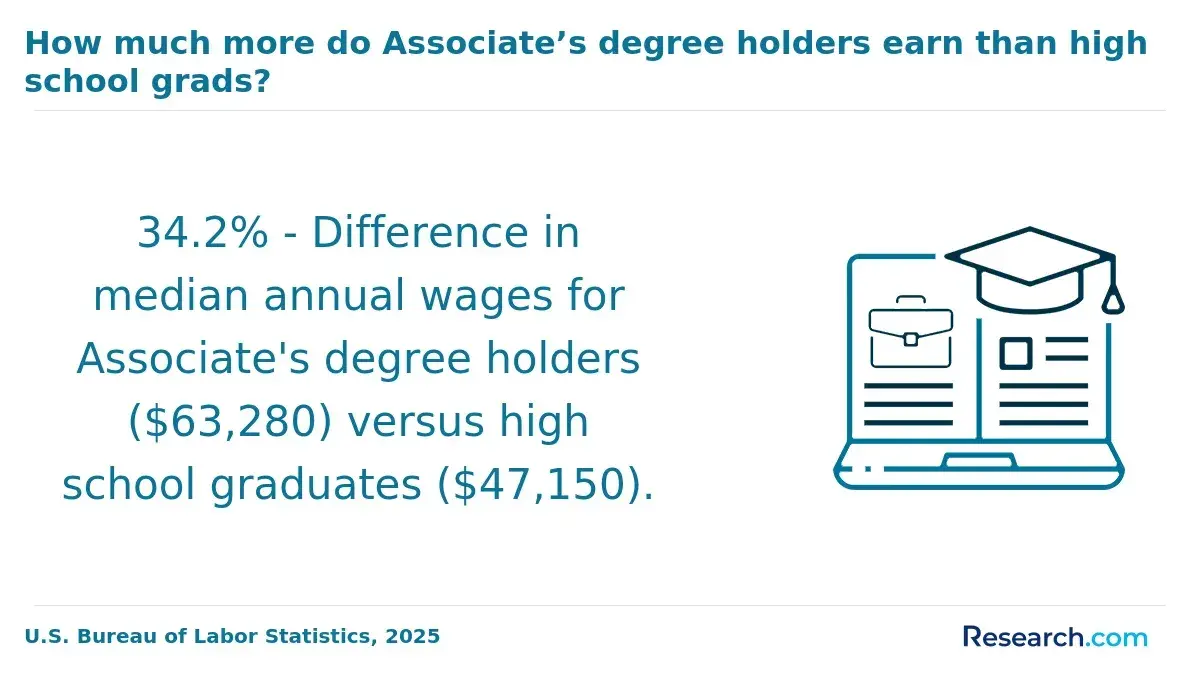
An online organizational leadership doctorate can increase earning potential indirectly by helping professionals compete for higher-scope roles. The degree itself does not create salary growth; the practical value comes from using doctoral-level skills to qualify for positions with larger budgets, larger teams, greater strategic responsibility, or higher consulting rates.
The most useful way to evaluate earnings is to compare the career ceiling at the master's level with the roles you could realistically pursue after the doctorate. The table below shows how the credential may affect advancement, depending on your current position.
| Current master's-level position | Possible doctoral-level advancement target | How earning potential may change | Key limitation |
| Department manager | Director, senior director, or enterprise change leader | Higher pay may come from larger teams, broader accountability, and strategic authority | Employers may still prioritize measurable leadership results over the degree |
| HR business partner or training manager | Chief learning officer, talent development executive, or organizational development director | Doctoral work can support credibility in workforce transformation and leadership systems | Certifications and business outcomes may matter as much as the doctorate |
| Higher education administrator | Dean, associate provost, institutional effectiveness leader, or senior student success executive | Doctoral credentials can be important for advancement in academic environments | Faculty status, publication record, and institutional norms vary widely |
| Consultant or coach | Executive advisor, organizational development consultant, or leadership strategy consultant | The doctorate may support premium positioning if paired with a clear niche and client results | Consulting income is not guaranteed and depends on reputation, demand, and business development |
For salary planning, use BLS occupational data as a baseline and then research your target employers. Management compensation can vary sharply by industry; healthcare systems, technology firms, financial services organizations, universities, government agencies, and nonprofits do not pay senior leaders the same way.
The smartest salary question is not "How much does this doctorate pay?" but "Which roles can I credibly pursue with this doctorate, my existing master's degree, and my experience?" If the next role requires a measurable track record in budgets, people leadership, analytics, or operations, build those achievements while enrolled rather than waiting until after graduation.
An online organizational leadership doctorate helps professionals qualify for leadership roles by developing evidence-based decision-making, executive communication, systems thinking, and applied research capacity. These are the competencies employers often expect when moving someone from functional management into enterprise leadership.
At the master's level, professionals often learn to manage teams, operations, projects, or specialized functions. At the doctoral level, the work typically asks a different question: how do leaders diagnose complex organizational problems, test solutions, influence stakeholders, and evaluate long-term effects?
The table below compares how a doctorate can add to a master's-level leadership profile. This distinction matters because many professionals already have strong experience but need a clearer signal that they can lead across systems, not just within one department.
| Leadership capability | Master's-level preparation | Doctoral-level contribution |
| Strategic decision-making | Applies established management models to business or organizational problems | Evaluates complex evidence, competing stakeholder priorities, and long-term organizational consequences |
| Change leadership | Supports project implementation and team adoption | Designs, leads, and assesses organization-wide change initiatives |
| Research literacy | Uses data and existing best practices | Produces applied research, evaluates interventions, and translates findings into executive recommendations |
| Executive communication | Presents plans and reports to supervisors or teams | Communicates evidence, risk, strategy, and ethics to senior leaders, boards, faculty bodies, or clients |
| Organizational diagnosis | Identifies operational or team-level problems | Analyzes culture, systems, incentives, governance, power dynamics, and performance gaps |
AI and automation are also changing leadership expectations. Senior leaders increasingly need to guide teams through technology adoption, workforce redesign, ethical use of data, and job redesign. A strong organizational leadership doctorate should help students evaluate human and organizational consequences of new technologies, not simply treat technology as an IT issue.
To turn doctoral study into leadership advancement, connect coursework to visible workplace outcomes. Examples include leading a change initiative, improving retention processes, redesigning leadership development, evaluating a training program, or building a data-informed succession plan. These achievements can make the degree more persuasive in promotion conversations.
The strongest specialization depends on the role you want next. A specialization should deepen your leadership identity rather than duplicate your master's degree; otherwise, you risk paying for another credential that does not materially change your career profile.
If you are not ready for a doctorate or need to strengthen your foundation first, comparing the best organizational development master's programs online can help you decide whether a second master's-level credential is a better short-term step. For professionals already at the director, senior manager, or advanced specialist level, the doctoral specialization should map to a clear promotion path.
The table below outlines common organizational leadership doctorate specializations and where they tend to create the strongest career value.
| Specialization | Best career fit | Why it can support advancement |
| Organizational development and change | OD director, change management consultant, transformation leader | Directly aligns with culture change, restructuring, leadership systems, and performance improvement |
| Human resources and talent leadership | HR executive, chief people officer track, talent development leader | Connects leadership theory to workforce planning, succession, employee experience, and learning strategy |
| Higher education leadership | Dean, provost office leader, student success executive, academic administrator | Matches environments where doctoral credentials often carry strong professional credibility |
| Healthcare leadership | Healthcare administrator, clinical operations leader, population health or quality leader | Useful for complex, regulated organizations where systems leadership and stakeholder management matter |
| Nonprofit or public leadership | Executive director, government administrator, foundation or community impact leader | Supports mission-driven strategy, governance, public accountability, and ethical leadership |
| Strategy, innovation, or entrepreneurship | Business transformation leader, consultant, founder, executive advisor | Helps connect leadership research to growth, innovation, and organizational adaptation |
For most career-focused students, organizational development and change is one of the most versatile specializations because it applies across business, healthcare, education, government, and nonprofit settings. However, higher education leadership may produce better value if your target employers are colleges or universities, while healthcare leadership may be more useful in hospitals, clinics, or health systems.
A red flag is choosing a specialization only because it sounds broad. Broad can be useful, but advancement often requires a recognizable niche. Employers and clients should be able to understand what problem your doctorate helps you solve.
Employers generally value an online organizational leadership doctorate when it is credible, relevant, and paired with leadership results. They are less likely to value it if the degree appears disconnected from the role, comes from an unaccredited institution, or substitutes for experience the job clearly requires.
In many sectors, online learning has become normal for working professionals. The key employer question is usually not whether the courses were online, but whether the school is accredited, the program is rigorous, and the graduate can apply doctoral-level thinking to business or organizational problems.
The table below shows how employer value can vary by setting. This helps explain why the same doctorate may be highly valuable in one career path and only mildly useful in another.
| Employer setting | How the doctorate may be viewed | What strengthens employer confidence |
| Higher education | Often valued, especially for senior administration, faculty-adjacent roles, and institutional leadership | Institutional accreditation, research quality, teaching experience, and alignment with academic norms |
| Corporate leadership | Valued when connected to measurable business outcomes and executive readiness | Track record in strategy, budgets, team leadership, transformation, and analytics |
| Healthcare organizations | Valued for systems leadership, quality improvement, workforce strategy, and administration | Healthcare experience, regulatory knowledge, interprofessional leadership, and relevant licenses if needed |
| Government and nonprofit organizations | Valued for policy implementation, ethics, stakeholder leadership, and program evaluation | Mission alignment, grant or program experience, public accountability, and governance knowledge |
| Consulting and coaching | Can increase credibility, especially with senior clients | Clear niche, client outcomes, publications, facilitation skill, and professional network |
Employer recognition also depends on the degree title. A DBA may be easier to explain in corporate strategy settings, while an EdD may be more recognizable in education and training environments. A PhD may carry the strongest research signal but may not be necessary for practice-based advancement.
Before enrolling, ask your current or target employers how doctoral credentials are treated in promotion decisions. If job postings, promotion rubrics, or executive profiles rarely mention doctorates, the degree may still help, but experience and results will likely carry more weight.
Most master's-prepared professionals should expect an online organizational leadership doctorate to take about three to five years, depending on transfer credits, enrollment pace, research requirements, and dissertation or capstone progress. Accelerated programs may be shorter, but they often require heavier course loads and faster topic development.
The table below compares common timeline factors. This matters because time is part of ROI: a lower-cost program can become less attractive if it takes much longer than expected, while an accelerated program can become risky if it does not fit your work and family schedule.
| Timeline factor | How it affects completion | What to ask before enrolling |
| Transfer or advanced standing credits | May reduce required coursework if the school accepts prior graduate credits | How many credits can transfer, and do they reduce tuition or only elective requirements? |
| Part-time enrollment | Improves work-life fit but may extend completion | What is the average completion time for part-time doctoral students? |
| Dissertation or capstone model | Applied projects may move faster for students with a clear workplace problem; traditional dissertations may take longer | What percentage of students finish the doctoral project within the planned timeline? |
| Residency requirements | Short residencies can strengthen networking but add travel time and cost | Are residencies required, optional, virtual, or in person? |
| Faculty advising structure | Strong advising can prevent delays during proposal, research approval, and final defense | How are dissertation chairs assigned, and how often do students meet with them? |
Working professionals should be realistic about the workload. Doctoral study often requires sustained reading, writing, research design, data analysis, and revision. The most common delay is not coursework; it is losing momentum during the dissertation or applied project stage.
A practical timeline strategy is to enter with a career-aligned research problem. For example, a healthcare leader might study leadership behaviors affecting staff retention, while an HR director might evaluate succession planning in distributed teams. A focused problem can shorten the distance between coursework, research, and career advancement.
The ROI of an online organizational leadership doctorate depends on whether the degree helps you reach a role that justifies the cost, time, and opportunity trade-offs. It is strongest when the doctorate supports a defined advancement path, employer-funded education, consulting revenue, higher education leadership, or a promotion ladder that explicitly values doctoral credentials.
Loan cost deserves special attention. For the 2024-2025 award year, Federal Student Aid set interest rates at 8.08% for graduate Direct Unsubsidized Loans and 9.08% for Grad PLUS Loans. That means two programs with similar tuition can produce different long-term costs depending on how much you borrow, when interest accrues, and how quickly you repay.
The table below summarizes the main ROI variables. Use it as a decision lens before applying, not after you have already committed to tuition and debt.
| ROI factor | Why it matters | Stronger ROI signal | Weaker ROI signal |
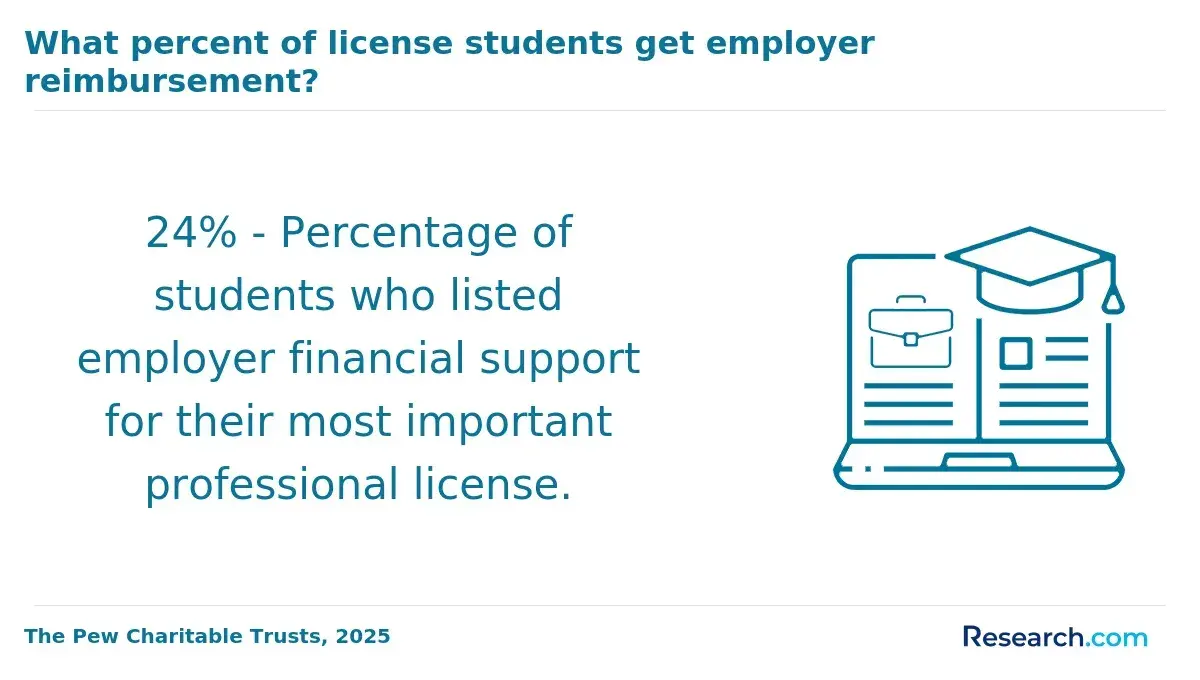
| Total program cost | Tuition, fees, residencies, books, technology, and borrowing costs affect payback time | Transparent tuition, employer reimbursement, scholarships, or pay-as-you-go affordability | High borrowing with unclear promotion or salary upside |
| Career target | The doctorate should connect to a specific senior role or consulting market | Target roles often prefer doctorates or reward advanced leadership expertise | Target roles mostly reward experience, licenses, or technical credentials instead |
| Time to completion | Longer timelines delay career benefits and increase opportunity cost | Strong advising, clear milestones, and manageable dissertation process | Poor completion support or vague doctoral project expectations |
| Employer support | Tuition reimbursement and promotion pathways can reduce risk | Employer confirms the degree aligns with advancement opportunities | No evidence the employer values the credential |
| Professional brand | The doctorate can strengthen consulting, speaking, teaching, or executive credibility | Program supports publishing, presentations, applied research, or network building | Program provides little visibility beyond coursework |
A doctorate may not be worth it if you are pursuing it mainly because you feel stuck, burned out, or unsure what to do next. In that situation, a lower-cost option such as executive coaching, a certification, a leadership development program, a job change, or a focused skill credential may offer better short-term value.
Before enrolling, calculate a realistic payback scenario. Compare the full cost of attendance with the compensation range of roles you can reasonably pursue, then test that assumption against job postings, alumni outcomes, employer feedback, and your own leadership record.
The professionals who benefit most from an online organizational leadership doctorate usually already have a strong master's-level foundation and several years of leadership or specialist experience. The degree works best as an advancement multiplier, not as a substitute for career direction.
Professionals coming from business backgrounds may already hold an online business degree, MBA, MPA, MS in HR, MEd, MSN, MSW, or another graduate credential. The doctorate can add value when it broadens their authority from functional expertise to organization-wide leadership.
The table below helps identify who is most likely to gain career value and who may need a different path first.
| Professional profile | Doctorate fit | Reason |
| Senior manager or director seeking executive advancement | Strong fit | The doctorate can support strategic leadership credibility when paired with measurable performance results |
| HR, OD, learning, or talent development professional | Strong fit | Organizational leadership directly supports workforce, culture, change, and leadership development roles |
| Higher education or nonprofit administrator | Strong fit | Doctoral credentials often carry professional weight in education and mission-driven leadership settings |
| Consultant, coach, or facilitator | Potentially strong fit | The degree can strengthen authority if combined with a clear niche, client outcomes, and business development |
| Early-career professional with little leadership experience | Usually weak fit | The student may struggle to apply doctoral work or convert the credential into senior opportunities |
| Professional seeking a regulated role | Depends on role | Organizational leadership doctorates usually do not replace state licensure, clinical credentials, or occupation-specific requirements |
The degree may also benefit professionals who want to teach part time, contribute to leadership research, publish practitioner-oriented work, or move into executive education. However, tenure-track faculty roles often prefer or require a PhD and evidence of scholarly publication, so an applied doctorate may not be the best route for that goal.
If you are unsure whether you are ready, review the job descriptions of your next three target roles. If they consistently emphasize executive influence, organizational change, research-based decision-making, and doctoral credentials, the degree may be a strong fit. If they emphasize technical tools, licenses, sales targets, or direct industry tenure, another path may be smarter.
How Should Professionals Choose an Online Organizational Leadership Doctorate for Career Advancement?
Choosing an online organizational leadership doctorate should start with your career target and then move to program comparison. A strong program is one that helps you become more competitive for a specific role, not simply one that adds "Dr." before your name.
If your advancement goal is more operations-centered than people-and-change-centered, compare alternatives such as an MBA operations management online before committing to a doctorate. A doctorate can be powerful, but another graduate credential or certification may be more efficient when the target role rewards operational, financial, or technical specialization.
Use the following steps to evaluate programs in a practical order. This sequence helps you avoid choosing based only on rankings, tuition, or marketing language.
- Define the role you want next, including job title, sector, salary range, employer type, and whether doctoral credentials are required, preferred, or optional.
- Verify institutional accreditation and, when relevant, programmatic business accreditation such as AACSB, ACBSP, or IACBE, while remembering that programmatic accreditation is not required for every organizational leadership doctorate.
- Compare the degree type with your goal: EdD for applied education or leadership practice, DBA for business leadership, PhD for research and academic goals, or DSL or DM for broad executive practice.
- Review the curriculum for strategy, change leadership, organizational behavior, ethics, research methods, data use, and executive communication.
- Ask how the dissertation, capstone, or applied project is structured and whether you can study a problem connected to your workplace or target industry.
- Calculate total cost, including tuition, fees, residencies, books, technology, travel, and loan interest if you borrow.
- Ask for career outcome information that is specific to doctoral students, not general graduate student marketing data.
- Evaluate the online format, including asynchronous work, live sessions, residencies, advising access, cohort structure, and expected weekly workload.
- Speak with alumni in your target field and ask whether the doctorate helped them gain interviews, promotions, consulting clients, or teaching opportunities.
- Compare the doctorate with lower-cost alternatives, including certifications, executive education, internal leadership programs, or a strategic job move.
Several red flags should slow your decision. Be cautious if a program is vague about accreditation, promises guaranteed career outcomes, hides fees, has unclear dissertation support, does not publish faculty credentials, or cannot explain how online doctoral students receive advising and research guidance.
Admissions requirements vary, but master's-prepared applicants are commonly asked for official transcripts, a resume or CV, references, a statement of purpose, writing sample, and sometimes an interview. GRE requirements have become less common in many professional doctoral programs, but policies vary by school.
The best final test is simple: can you explain, in one sentence, how this specific doctorate will help you move beyond your master's degree? If the answer is vague, keep researching before you enroll.
Other Things You Should Know About Organizational Leadership
Many professional online doctorate programs no longer require the GRE, especially for applicants with a completed master's degree and leadership experience. However, requirements vary by school, so confirm the current admissions policy before applying.
Often, yes. Many programs accept master's degrees in business, education, public administration, healthcare, psychology, human resources, or related fields. Some schools may require prerequisite coursework if your background does not include leadership, research, or organizational theory.
Some programs are fully online, while others require short virtual or in-person residencies. Residencies can add cost and travel time, but they may also provide networking, faculty access, and dissertation planning support.
Usually not. Organizational leadership is generally not a licensed profession. If your target role involves school administration, counseling, healthcare practice, or another regulated occupation, check state or professional licensing requirements separately.
- The Best EdD in Organizational Leadership Programs of 2025 https://www.eddprograms.org/schools/organizational-leadership/
- 5 Career Paths in Organizational Leadership https://www.jobconvo.com/blog/en/5-career-paths-organizational-leadership/
- Advance Your Leadership Career with a Doctorate in Organizational Leadership https://www.umassglobal.edu/blog-news/advance-your-leadership-career-a-doctorate-organizational-leadership
- Program Details https://www.eastern.edu/academics/graduate-programs/phd-organizational-leadership
- Scholarships for Doctor of Education (EdD) Students | Teach.com https://teach.com/online-ed/education-degrees/online-edd-programs/scholarships/
- Educational Funding https://phdproject.org/educational-funding/
- PhD Scholarships: Explore Your Online Education Aid Options https://www.oedb.org/phd-scholarship/
- Doctor of Organizational Leadership Online (Ed.D) https://www.marian.edu/academics/programs/doctorates/online/organizational-leadership
- Explore Top Scholarships for Online DBA Programs https://www.phds.me/financial-aid/scholarships-and-grants/doctorate-business-administration-dba/
- Online EdD Programs in Organizational Leadership (Doctor of Education) https://www.onlineeddprograms.com/specializations/organizational-leadership


