
2027 PhD vs Professional Doctorate in Organizational Leadership: Key Differences, Careers, and Salary Outcomes

Co-Founder and Chief Data Scientist
Choosing between a PhD and a professional doctorate in Organizational Leadership is really a choice between creating new research and applying evidence to solve leadership problems. The decision matters because demand for advanced organizational expertise is strong: the U. S. Bureau of Labor Statistics projects management analyst employment to grow 11% from 2023 to 2033.
This guide is for working leaders, aspiring professors, consultants, and researchers comparing doctoral paths. You will learn how the degrees differ in focus, admissions, cost, time, careers, salary context, and long-term value.
Key Things You Should Know
- A PhD in Organizational Leadership is usually best for research, faculty, policy, and scholarly roles, while a professional doctorate is usually best for senior leadership, consulting, organizational change, and applied problem-solving.
- Salary depends more on occupation, sector, experience, and leadership scope than on the doctorate label; BLS May 2024 median pay was $101,190 for management analysts and $127,090 for training and development managers.
- PhD programs are more likely to offer assistantships or tuition remission, while professional doctorates are more often designed for working adults and may require a dissertation-in-practice, consulting project, or applied capstone.
What Is the Difference Between a PhD and a Professional Doctorate in Organizational Leadership?
A PhD in Organizational Leadership is a research doctorate. Its central purpose is to prepare graduates to produce original scholarship about leadership, organizational behavior, change, ethics, strategy, decision-making, culture, and systems. A professional doctorate, such as an EdD, DBA, DM, or DSL with an organizational leadership focus, is an applied doctorate. Its purpose is to help experienced professionals use research to improve real organizations.
The simplest way to compare them is by asking, "Do I want to study leadership as a scholar, or use doctoral-level tools to lead change?" Both degrees can be rigorous, both may require doctoral research, and both may use the title "doctor." The difference is the expected outcome: a PhD usually contributes to theory, while a professional doctorate usually contributes to practice.
The table below summarizes the main decision points. Use it as a first-pass filter before looking at specific schools, because program names can vary widely.
| Comparison point | PhD in Organizational Leadership | Professional doctorate in Organizational Leadership |
| Primary focus | Original research and theory development | Applied leadership, organizational change, and practice improvement |
| Best fit | Aspiring professors, researchers, policy analysts, and scholar-practitioners | Executives, consultants, administrators, HR leaders, nonprofit leaders, and change managers |
| Final project | Traditional dissertation designed to add new knowledge to the field | Dissertation-in-practice, applied dissertation, strategic project, or capstone |
| Common learning mode | Full-time, research-intensive, sometimes residential | Part-time, online, hybrid, or executive format for working adults |
| Funding pattern | More likely to include assistantships, fellowships, or tuition remission | More often self-funded, employer-funded, or financed through loans |
| Typical career signal | Research capability and academic preparation | Advanced professional leadership and evidence-based decision-making |
A common mistake is assuming that a PhD is automatically "better." It is better only if it matches your goal. If you want to publish in peer-reviewed journals, compete for tenure-track roles, or lead research programs, the PhD is usually the stronger fit. If you want to transform an organization, expand consulting credibility, or move into executive leadership, a professional doctorate may be more practical.
How Do PhD and Professional Doctorate Curricula, Research, and Capstone Requirements Differ in Organizational Leadership?
Curriculum is where the difference becomes concrete. Both pathways may include leadership theory, ethics, organizational development, research methods, statistics, and change management, but they use those tools differently. A PhD curriculum asks students to build and test knowledge; a professional doctorate asks students to use knowledge to diagnose and solve organizational problems.
Most programs include a shared foundation, but the emphasis changes as students move toward the final doctoral project. The table below shows how those differences usually appear in coursework and research expectations.
| Program element | PhD pathway | Professional doctorate pathway |
| Leadership theory | Deep engagement with theory, critique, and model-building | Application of theory to leadership decisions, culture, and change |
| Research methods | Advanced qualitative, quantitative, or mixed-methods design for original scholarship | Applied inquiry, program evaluation, action research, case analysis, or improvement science |
| Statistics and analytics | Often more extensive, especially for students pursuing empirical research | Usually focused on interpreting evidence and using data for decisions |
| Field-based learning | May occur through research labs, teaching, or policy projects | Often embedded in the student's workplace or professional sector |
| Final product | Dissertation that answers a scholarly research question | Capstone or dissertation-in-practice that addresses an organizational challenge |
The dissertation-versus-capstone distinction matters because it affects your weekly work. A PhD student may spend substantial time reviewing literature, designing a study, collecting data, and defending theoretical significance. A professional doctorate student may conduct an organizational needs assessment, evaluate an intervention, build a strategic change plan, or measure leadership outcomes in a real setting.
When comparing programs, do not stop at the degree title. Review recent dissertations or capstones, faculty research areas, course descriptions, and whether the program requires comprehensive exams, residencies, publication, teaching, or field implementation. The best choice is the one whose required work resembles the work you want to do after graduation.
What Are the Admissions Requirements for a PhD vs Professional Doctorate in Organizational Leadership?
Admissions requirements overlap, but committees often look for different evidence of readiness. PhD admissions tend to prioritize research fit, academic preparation, writing ability, and alignment with faculty expertise. Professional doctorate admissions tend to prioritize leadership experience, professional accomplishments, organizational influence, and the ability to apply research in practice.
Applicants who are still building a business or leadership foundation may benefit from comparing earlier degree options before committing to doctoral study. For example, an online business degree can be a practical starting point for students who need broader preparation in management, finance, operations, or organizational systems before pursuing graduate leadership training.
Typical admissions materials include several common elements, but their importance varies by doctorate type. Use the list below to identify where your application will need the most strengthening.
- Prior degree: Many programs require a master's degree, although some admit bachelor's-prepared students into longer doctoral tracks.
- Professional experience: Professional doctorates often expect meaningful leadership experience; PhD programs may value experience but usually place more weight on research potential.
- Academic record: Both pathways review transcripts, but research-heavy PhD programs may scrutinize methods, statistics, and graduate writing preparation more closely.
- Writing sample or statement of purpose: PhD statements should explain research interests and faculty fit; professional doctorate statements should explain leadership goals and applied problems the applicant wants to address.
- Recommendations: PhD applicants benefit from academic recommenders who can speak to research ability, while professional doctorate applicants may use supervisors or senior leaders who can verify leadership impact.
- Interview: Interviews often test fit, motivation, time management, and whether the applicant understands the difference between doctoral study and career training.
Some schools have made standardized tests optional or removed them for many doctoral programs, but policies vary. Do not assume a program is easier because it does not require the GRE or GMAT; faculty fit, writing quality, and evidence of readiness may matter more.
How Long Does a PhD vs Professional Doctorate in Organizational Leadership Take, and Can You Work While Studying?
Time-to-degree depends on enrollment status, dissertation progress, transfer credits, residency requirements, and how quickly a student can complete research approvals and data collection. In general, PhD programs are more likely to require sustained research immersion, while professional doctorate programs are more likely to be structured around the schedules of working adults.
Many students comparing a doctorate in organizational leadership online are specifically trying to balance doctoral study with a full-time job. Online and hybrid formats can reduce relocation and commuting barriers, but they do not reduce the intellectual workload of doctoral research.
The table below gives a practical comparison of timeline and work-fit factors. These are typical patterns, not universal rules, so always confirm credit requirements and dissertation policies with each school.
| Timeline factor | PhD pathway | Professional doctorate pathway |
| Common pace | Often full-time, especially in funded research programs | Often part-time, cohort-based, online, hybrid, or executive format |
| Typical completion range | Often about 4 to 7 years depending on research progress | Often about 3 to 5 years depending on format and capstone scope |
| Work compatibility | Possible, but full-time employment can be difficult in research-intensive programs | Often designed for working professionals and current leaders |
| Main delay risk | Dissertation design, data access, publication expectations, or faculty fit | Capstone scope creep, workplace access, job changes, or limited time for writing |
| Residency expectations | May require campus presence, teaching, lab participation, or seminars | May require short residencies, weekend intensives, or virtual synchronous sessions |
If you plan to keep working, the most important question is not whether the program is online. It is whether the program's weekly workload, meeting schedule, research expectations, and milestone deadlines match your actual life. A flexible format can still become unmanageable if the dissertation or capstone requires extensive data collection during peak work periods.
Before enrolling, ask admissions advisors and current students these practical questions:
- How many hours per week do successful students usually spend on coursework during the first year?
- How often are synchronous sessions, residencies, committee meetings, or research seminars required?
- Can the dissertation or capstone be connected to your workplace, and what happens if you change jobs?
- What is the program's policy on leaves of absence, dissertation extensions, and maximum completion time?
- How quickly are students typically matched with dissertation or capstone chairs?
How Much Does a PhD vs Professional Doctorate in Organizational Leadership Cost, and Which Offers Better Funding?
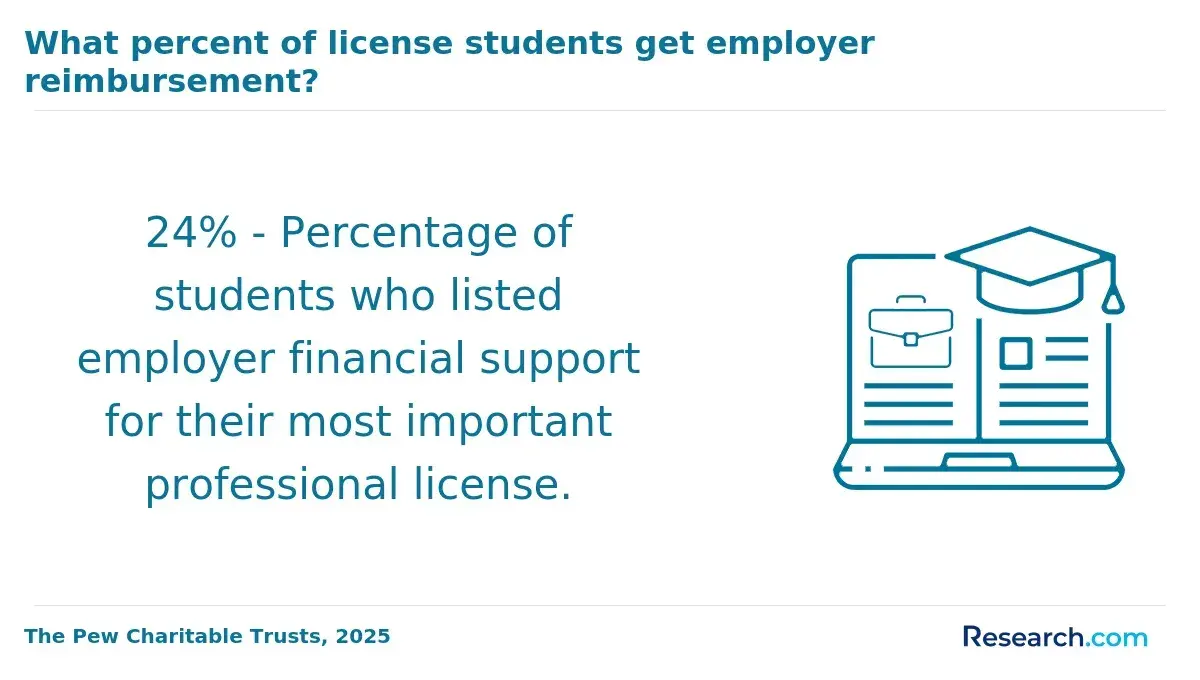
Cost is one of the biggest differences between the two pathways. PhD programs, especially at research universities, are more likely to offer assistantships, stipends, fellowships, tuition remission, or funded research roles. Professional doctorates are often marketed to employed adults and may rely more on tuition payments, employer reimbursement, military benefits, savings, or federal student loans.
Recent federal education data shows why total cost matters. NCES data published in 2024 reported that average graduate tuition and required fees were roughly $12,600 at public institutions and about $30,000 at private nonprofit institutions for the academic year measured. That does not include books, fees beyond required charges, residencies, travel, lost work time, loan interest, or additional dissertation terms, so program sticker price can understate the real cost.
The table below compares major cost drivers. Use it to estimate total cost of attendance rather than comparing tuition per credit alone.
| Cost factor | PhD pathway | Professional doctorate pathway |
| Tuition responsibility | May be reduced or waived in funded programs | Often paid by the student, employer, or loan funding |
| Assistantships | More common, especially in full-time campus programs | Less common, though some programs offer scholarships or discounts |
| Opportunity cost | Can be high if full-time study reduces income for several years | Can be lower if the student keeps working while enrolled |
| Travel and residency | May require relocation or regular campus participation | May require short residencies, intensives, or conference-style meetings |
| Dissertation or capstone continuation fees | Possible if research extends beyond coursework | Possible if applied project work extends beyond the planned timeline |
Funding is not just a financial issue; it changes the educational experience. A funded PhD may provide teaching, research, mentoring, and publication opportunities that support academic careers. A self-funded professional doctorate may offer more schedule flexibility and immediate workplace relevance, especially when the employer supports the project.
To avoid underestimating the investment, calculate the following before applying:
- Total tuition: Multiply credits by tuition and include annual tuition increases if disclosed.
- Mandatory fees: Add technology, dissertation, graduation, residency, and student service fees.
- Travel costs: Include flights, hotels, meals, commuting, parking, and time away from work for residencies.
- Lost income: Estimate income reduction if you must reduce hours, decline promotions, or leave work for full-time study.
- Loan interest: Compare the amount borrowed with likely repayment costs, not just the initial loan balance.
- Employer support: Confirm reimbursement caps, grade requirements, service obligations, and whether doctoral fees are covered.
What Careers Can You Pursue With a PhD vs Professional Doctorate in Organizational Leadership?
Both doctorates can support leadership careers, but they send different signals. A PhD signals advanced research capability and may be preferred for tenure-track faculty roles, institutional research, policy analysis, and theory-driven consulting. A professional doctorate signals advanced applied leadership and can support executive, administrative, consulting, organizational development, and change management roles.
Some students discover they do not need a doctorate for their target role. If your goal is to move into people strategy, organizational development, or leadership training rather than faculty research, comparing the best organizational development master's programs online may help you determine whether a master's degree would meet your career needs with less time and cost.
The table below connects each degree path to common roles and responsibilities. It is not a promise of eligibility, because employers may weigh experience, sector knowledge, publications, certifications, and leadership record differently.
| Career path | Better-aligned doctorate | Typical responsibilities | Salary context |
| University professor or academic researcher | PhD | Teach, publish research, advise students, secure grants, serve on committees | BLS May 2024 median pay for postsecondary teachers was $83,980, with wide variation by field and institution |
| Organizational development consultant | Either, depending on research versus practice focus | Assess culture, facilitate change, design interventions, evaluate outcomes | Often tied to consulting model, client base, industry, and prior leadership experience |
| Chief learning officer or training executive | Professional doctorate | Lead learning strategy, leadership development, talent systems, and workforce capability initiatives | BLS May 2024 median pay for training and development managers was $127,090 |
| Senior nonprofit or public-sector administrator | Professional doctorate or PhD | Lead programs, manage stakeholders, improve systems, evaluate impact | Pay varies strongly by agency, nonprofit size, funding, and executive scope |
| Institutional research or policy analyst | PhD | Design studies, analyze outcomes, evaluate programs, translate findings for decision-makers | Salary depends on sector, methods expertise, and analytic responsibilities |
| Human resources or people strategy leader | Professional doctorate | Develop talent strategy, succession plans, workforce analytics, culture programs, and leadership pipelines | BLS May 2024 median pay for human resources managers was $140,030 |
AI and automation are also changing leadership work. Employers increasingly expect leaders to interpret workforce data, manage change caused by technology adoption, support hybrid teams, and make ethical decisions about analytics and automation. A strong program should help students use data without reducing leadership to dashboards alone.
The best career fit usually comes from matching the doctorate to the work you want to do every week:
- Choose the PhD if you want to publish, teach research methods, design studies, compete for research-centered faculty roles, or influence leadership theory.
- Choose a professional doctorate if you want to lead transformation, build consulting authority, solve organizational problems, or apply evidence in a current professional context.
- Consider a master's, MBA, certificate, or industry credential instead if your target role values management experience more than doctoral-level research.
Which Pays More: a PhD or Professional Doctorate in Organizational Leadership?
Neither degree automatically pays more. Salary outcomes are shaped by job title, industry, organization size, geographic market, experience, leadership scope, and whether the graduate moves into academia, consulting, executive administration, HR, learning and development, or policy work. The degree can strengthen credibility, but the role usually drives compensation.
BLS May 2024 data illustrates the point: management analysts had a median annual wage of $101,190, while training and development managers had a median annual wage of $127,090. The applied management role may pay more than some academic roles, but that does not mean a professional doctorate is always more lucrative. A PhD graduate in a high-level consulting or executive role may out-earn a professional doctorate graduate in a lower-paying sector, and the reverse can also be true.
The table below compares salary logic by pathway. It focuses on how compensation is commonly determined rather than implying a fixed salary for either doctorate.
| Salary factor | How it affects PhD outcomes | How it affects professional doctorate outcomes |
| Occupation | Faculty, research, policy, analytics, and consulting roles vary widely in pay | Executive, HR, training, consulting, and administrative roles vary by scope and sector |
| Industry | Corporate research and consulting may pay more than some academic settings | Private-sector leadership roles may pay more than nonprofit or public-sector roles |
| Experience | Research record, publications, grants, and teaching experience matter | Leadership record, budget size, staff responsibility, and measurable organizational impact matter |
| Location | Universities and employers adjust compensation based on market and cost of labor | Executive and consulting compensation often reflects regional and industry demand |
| Funding and debt | A funded PhD may produce lower debt but may delay full-time earnings | A working professional doctorate may preserve income but can increase out-of-pocket tuition cost |
For ROI, compare the degree against your next realistic career move, not an idealized top salary. If a doctorate helps you qualify for a promotion, move into consulting, gain faculty eligibility, or lead larger organizational initiatives, the return may be meaningful. If your target role does not require doctoral preparation, the financial return may be weaker.
What Is the Job Outlook for PhD and Professional Doctorate Graduates in Organizational Leadership?
The job outlook is positive for several leadership-adjacent occupations, but it is not uniform. Organizational leadership graduates may compete in academic labor markets, consulting markets, HR leadership, learning and development, executive administration, public-sector management, and organizational change roles. Each market values different evidence of readiness.
The BLS 2023 to 2033 projections, published in 2024, show faster-than-average growth for several roles connected to organizational improvement. Management analysts are projected to grow 11%, while postsecondary teachers are projected to grow 8%. For readers, this means there is demand for both applied problem-solvers and educators, but competition can still be intense for tenure-track positions and senior executive roles.
Current hiring trends favor candidates who can connect leadership theory to measurable outcomes. Employers often look for people who can lead change, manage cross-functional teams, use data ethically, improve workforce performance, and guide organizations through digital transformation. Doctoral study can support those capabilities, but it should be paired with practical experience, communication skills, and a visible record of impact.
Academic careers require special caution. A PhD is often the preferred credential for tenure-track roles, but faculty hiring depends on discipline, publication record, teaching portfolio, institutional budget, and openings in a specific specialty. A professional doctorate may be well recognized for practitioner faculty, adjunct teaching, executive education, or applied leadership instruction, but it may not be treated the same as a research PhD in every academic department.
For stronger job-market positioning, build evidence while you are enrolled:
- Develop a portfolio of research, consulting reports, leadership projects, or measurable change initiatives.
- Choose dissertation or capstone topics connected to real employer demand, such as workforce analytics, inclusive leadership, change adoption, organizational culture, or AI-related transformation.
- Present at professional or academic conferences that match your target career path.
- Ask whether the program offers teaching opportunities, consulting labs, executive networks, or research assistantships.
- Track job postings for your target roles before applying so you know which doctorate employers actually request.
How Do Accreditation, Licensure, and Employer Recognition Differ for PhD vs Professional Doctorate in Organizational Leadership?
Accreditation is more important than the exact doctorate label. In the U.S., students should first confirm that the institution holds recognized institutional accreditation. Depending on the program's school or department, additional business, education, public administration, or specialized accreditation may also matter, especially for employer reimbursement, transferability, faculty hiring, or credibility.
Organizational Leadership itself is generally not a licensed profession. However, some students use the degree in fields that have separate rules, such as education administration, counseling, psychology, human resources, or public-sector leadership. A doctorate in Organizational Leadership does not automatically qualify someone for state licensure, superintendent certification, psychologist licensure, or any regulated credential unless the program is specifically designed to meet those requirements.
Employer recognition varies by setting. Universities may prefer a PhD for research faculty positions, while employers in business, healthcare, government, education, and nonprofits may value either doctorate if the candidate demonstrates leadership results. Some hiring managers may not understand the difference between an EdD, DBA, DM, DSL, and PhD, so graduates should be ready to explain the rigor and relevance of their doctoral work.
Use this checklist before applying to avoid accreditation and recognition problems:
- Verify institutional accreditation through the U.S. Department of Education or the Council for Higher Education Accreditation databases.
- Ask whether the program has specialized accreditation relevant to business, education, or public administration if your employer or target sector values it.
- Confirm whether the degree title and transcript wording match your career goal, especially if you plan to teach or apply for senior public-sector roles.
- Check whether the program meets any state-specific licensure or certification rules if your target role is regulated.
- Review faculty credentials, dissertation quality, graduate outcomes, and employer partnerships rather than relying only on marketing language.
Red flags include unclear accreditation status, vague dissertation requirements, unusually short completion promises, pressure-heavy admissions calls, undisclosed fees, and career claims that sound guaranteed. A reputable program should be transparent about costs, faculty, curriculum, completion expectations, and student support.
Is a PhD or Professional Doctorate in Organizational Leadership Worth It for Your Career Goals?
A doctorate in Organizational Leadership can be worth it when it directly supports a defined career goal that requires advanced research, leadership credibility, or applied organizational expertise. It is less likely to be worth it if you are pursuing the degree mainly for prestige, if your target role does not value doctoral preparation, or if the total cost creates debt that your likely career path cannot reasonably support.
If your goal is operational leadership rather than scholarship, you may also want to compare alternatives such as an MBA operations management online. An MBA may be a better fit for students who want finance, supply chain, operations, and management training without a dissertation or doctoral research requirement.
The clearest decision rule is to start with your end goal and work backward. A PhD is usually worth considering if your target outcome is faculty research, publication, policy scholarship, or advanced methodology. A professional doctorate is usually worth considering if your target outcome is executive leadership, consulting, organizational development, workforce strategy, or applied change leadership.
Use the following decision steps before applying:
- Write down your target role, not just your desired degree title.
- Review job postings for that role and note whether they ask for a PhD, professional doctorate, master's degree, or experience instead.
- Compare curriculum and final project requirements with the work you want to do after graduation.
- Calculate total program cost, including fees, travel, loan interest, and lost income.
- Ask programs for completion support, dissertation timelines, faculty availability, and graduate career outcomes.
- Choose the least expensive credible pathway that gives you the research depth, applied training, and professional signal your goal requires.
Common mistakes include choosing the most prestigious-sounding degree without checking career fit, assuming either doctorate guarantees higher pay, ignoring accreditation, comparing tuition without total cost, and selecting a program whose faculty do not match your research or practice interests. The better approach is to choose the doctorate that aligns with the problems you want to solve, the evidence you want to produce, and the career market you plan to enter.
Other Things You Should Know About Organizational Leadership
Yes, a professional doctorate is a doctoral degree, so graduates may use the title "doctor" in appropriate academic or professional contexts. However, you should present the exact credential clearly, such as EdD, DBA, DM, or DSL, and avoid implying licensure or clinical authority if the degree does not provide it.
The best option depends on your career setting. A DBA often fits business leadership and consulting, an EdD often fits education or learning leadership, a DM may fit management practice, and a DSL may focus directly on strategic leadership. Compare curriculum, faculty, final project format, and employer expectations before choosing.
Yes, if the institution is properly accredited, the curriculum is rigorous, and the student can demonstrate strong research or applied leadership work. Employers are usually more concerned with accreditation, relevance, experience, and outcomes than with whether every course was delivered online.
Not always. Many consultants build credibility through experience, results, certifications, a master's degree, or industry expertise. A doctorate can strengthen authority for research-based consulting, executive advising, or academic consulting, but it is not the only path into the field.
References
- Master’s Thesis vs. PhD Dissertation: Key Differences and How to Publish Your Research Globally https://www.globalxpublications.com/blog/masters-thesis-vs-phd-dissertation-publish-globally
- Thesis vs. Dissertation: What’s the difference? | AJE https://blog.aje.com/en/thesis-vs-dissertatio
- What are the Brainiest Companies? Alternative Careers for PhDs https://www.reveliolabs.com/news/business/what-are-the-brainiest-companies-alternative-careers-for-phds
- Advance Your Leadership Career with a Doctorate in Organizational Leadership https://www.umassglobal.edu/blog-news/advance-your-leadership-career-a-doctorate-organizational-leadership
- 7 Exciting PhD in Leadership Jobs You Didn't Know About https://www.ucumberlands.edu/blog/exciting-phd-leadership-jobs-you-didnt-know-about
- PhD vs. Professional Doctorate: Is there a difference? https://www.applykite.com/blog/phd-guide-phd-vs-postdoc
- Masters Thesis vs. PhD Dissertation: Key Differences - Wordvice https://wordvice.com/blog/dissertation-vs-thesis-key-differences/
- Thesis vs Dissertation: Key Differences Explained | Epic Essay https://www.epic-essay.com/blogs/thesis-vs-dissertation-key-differences-every-graduate-student-should-know/


