2027 Best Online Ministry Leadership Doctorate Programs for Teaching at the College Level

Co-Founder and Chief Data Scientist
Choosing an online ministry leadership doctorate is really a faculty-career decision: the right program can strengthen your teaching, research, and credibility, while the wrong one may limit academic options. The U. S. Bureau of Labor Statistics projects postsecondary teacher employment to grow 8% from 2023 to 2033, so competition will still reward strong credentials. This guide is for prospective doctoral students who want to teach in colleges, seminaries, Bible colleges, or universities and need to compare degree types, accreditation, cost, research expectations, and career outcomes before enrolling.
Key Things You Should Know
- The strongest online ministry leadership doctorate for future college professors is usually a research-focused PhD or ThD; a DMin can work well for practice-oriented ministry, seminary adjunct teaching, or applied leadership courses, but it may be less competitive for tenure-track roles.
- Look first for institutional accreditation and, for seminary or theological education careers, Association of Theological Schools accreditation; degree format matters less than academic rigor, faculty mentorship, dissertation quality, and teaching experience.
- Most online ministry leadership doctorates take about 3 to 7 years; compare total tuition, residency fees, dissertation support, and whether the program helps you publish, present, and teach before graduation.
Do You Need a Ministry Leadership Doctorate to Teach at the College Level?
You do not always need a ministry leadership doctorate to teach at the college level, but you usually need a graduate credential that matches the subject you want to teach. Community colleges, Bible colleges, seminaries, Christian universities, and online programs may all evaluate faculty differently. Some adjunct positions may accept a master's degree with substantial ministry experience, while full-time or graduate-level teaching roles often expect a terminal degree.
A ministry leadership doctorate is most useful when your teaching goals involve church leadership, pastoral administration, organizational leadership in faith communities, practical theology, missional leadership, discipleship systems, or ministry formation. It is less ideal if your goal is to teach biblical languages, systematic theology, church history, counseling licensure courses, or research-intensive religious studies unless the curriculum and dissertation clearly align with those fields.
The table below summarizes how doctorate credentials typically align with college teaching roles. Requirements vary by institution, so use this as a decision guide rather than a universal rule.
| Teaching Goal | Credential Usually Favored | How a Ministry Leadership Doctorate Fits | Main Limitation |
| Adjunct undergraduate teaching in ministry or leadership | Master's degree or doctorate in a relevant field | Often a strong fit, especially with ministry experience | Adjunct roles may be part-time and course-by-course |
| Full-time teaching at a Bible college or Christian university | Terminal degree in theology, ministry, leadership, or related field | Can be a strong fit if the doctorate includes research and teaching preparation | Institutions may prefer PhD, ThD, or discipline-specific doctorates |
| Seminary teaching in practical theology or ministry leadership | PhD, ThD, DMin, or equivalent terminal degree depending on role | Good fit for applied ministry courses, formation, preaching, leadership, and pastoral practice | Research faculty roles may prefer PhD or ThD preparation |
| Tenure-track university teaching | Research doctorate, commonly PhD or ThD | Possible if the program is academically rigorous and research-focused | Professional doctorates may be viewed as less research-intensive |
| Graduate-level research supervision | Research doctorate with publications and dissertation expertise | Best fit when the doctorate requires original research and scholarly output | A non-dissertation or purely applied doctorate may not be enough |
One common mistake is assuming that "doctorate" automatically means "professor." Faculty hiring committees usually review the whole profile: degree title, accredited institution, dissertation topic, publications, teaching experience, professional ministry record, references, and fit with the department's curriculum. If your long-term goal includes pastoral counseling instruction, compare ministry leadership options with the different types of counseling degrees, because counseling faculty roles may require discipline-specific training or licensure-related qualifications.
Which Online Ministry Leadership Doctorate Programs Are Best for Aspiring College Professors?
The best online ministry leadership doctorate is not simply the fastest or cheapest option. For aspiring college professors, the best program is the one that builds a credible academic profile: advanced disciplinary knowledge, research skill, a dissertation or major project that can become publishable work, supervised teaching experience, and faculty mentorship in your intended teaching area.
Because ministry leadership doctorates use different degree titles, compare them by academic purpose rather than by name alone. The table below shows which online doctorate type is usually the strongest fit for different college teaching goals.
| Best-Fit Program Type | Best For | Teaching Strength | What to Verify Before Enrolling |
| Online PhD in Christian Leadership, Practical Theology, or Ministry Leadership | Students seeking full-time, tenure-track, or graduate teaching roles | Research design, theory, dissertation scholarship, and academic writing | Whether faculty publish in your area and whether the program has strong dissertation supervision |
| Online ThD or PhD in Theological Studies with leadership concentration | Students who want to teach theology, ministry theory, ecclesiology, or doctoral seminars | Disciplinary depth and research credibility | Whether leadership courses are substantive rather than only electives |
| Online DMin in Ministry Leadership | Experienced pastors, ministry executives, chaplains, or practitioners who want to teach applied ministry | Practice-based expertise, applied research, and ministry innovation | Whether the final project is academically rigorous and useful for teaching or publication |
| Online EdD or Doctor of Strategic Leadership with ministry focus | Students interested in Christian higher education administration, leadership development, or organizational leadership | Leadership theory, organizational change, and applied education research | Whether the degree title and curriculum will be accepted by theology or ministry departments |
| Hybrid low-residency seminary doctorate | Students who want online flexibility plus intensive faculty interaction | Mentoring, cohort formation, research feedback, and professional networks | Residency costs, travel requirements, and whether attendance is mandatory |
For college teaching, prioritize programs with these academic features. They are especially important because online delivery can be strong, but only when it includes intentional research, teaching, and mentoring structures.
- Faculty alignment: At least one faculty member should publish or supervise research in your target area, such as pastoral leadership, ecclesial leadership, missional communities, congregational systems, practical theology, or Christian higher education.
- Dissertation or major research project: A traditional dissertation is usually stronger for research-intensive academic roles, while an applied doctoral project can be effective for teaching practice-based ministry courses.
- Teaching preparation: Look for pedagogy courses, teaching assistantships, online course design training, supervised teaching, or opportunities to guest lecture.
- Scholarly output: Strong programs encourage conference presentations, journal submissions, book reviews, and research colloquia before graduation.
- Academic networks: Cohorts, residencies, professional conferences, and faculty introductions can matter when applying for adjunct or full-time teaching roles.
If your interest leans more toward leading Christian institutions, colleges, nonprofits, or denominational organizations, it may also help to compare ministry doctorates with the best organizational development master's programs online before committing to doctoral study. Some students need a stronger leadership foundation before they are ready for dissertation-level work.
Should You Choose a PhD or Professional Doctorate in Ministry Leadership for College Teaching?
Choose a PhD or ThD if your primary goal is to become a scholar-teacher. Choose a professional doctorate, such as a DMin, if your primary goal is to become a reflective practitioner who may also teach applied ministry. Both can be legitimate, but they signal different forms of expertise to faculty hiring committees.
The distinction matters because many colleges still treat research productivity as evidence of long-term faculty potential. A professional doctorate can be respected, especially in ministry education, but applicants for tenure-track positions may need extra proof of research ability through publications, conference papers, and a strong academic writing sample.
The comparison below highlights the practical trade-offs for students who want to teach after graduation.
| Decision Point | PhD or ThD | DMin or Other Professional Doctorate |
| Primary purpose | Original scholarship and theory-building | Advanced ministry practice and applied problem-solving |
| Best academic fit | Tenure-track teaching, graduate teaching, research roles | Adjunct teaching, practitioner faculty roles, applied ministry courses |
| Final requirement | Usually a dissertation based on original research | Often a doctoral project, applied dissertation, or ministry research project |
| Faculty hiring perception | Often viewed as the standard research doctorate | May be viewed as practice-focused unless supported by strong scholarship |
| Best student profile | Students who want to publish, research, and teach as a major career goal | Experienced ministry leaders who want to teach from advanced practice |
A good rule is to start with the job description you want in five to ten years. If most postings ask for a PhD in theology, practical theology, leadership, or a related field, a professional doctorate may create a disadvantage. If postings emphasize ministry experience, pastoral formation, preaching, leadership practice, or field education, a DMin may be appropriate.
Students whose academic interests overlap with pastoral care should be careful here. If you hope to teach counseling-oriented courses rather than ministry leadership courses, compare doctorate plans with online masters programs for counseling to understand the discipline-specific expectations that may apply before moving into doctoral study.
Accreditation is one of the first things faculty hiring committees, graduate schools, and employers may check. For college teaching, an online doctorate from an accredited institution is usually more credible than an unaccredited or weakly accredited program, even if the unaccredited program is cheaper or faster.
Institutional accreditation is the baseline. In the U.S., colleges and universities are typically reviewed by institutional accreditors recognized by the U.S. Department of Education or the Council for Higher Education Accreditation. For seminaries and theological schools, programmatic or school-level accreditation from the Association of Theological Schools can be especially relevant because many seminaries and faith-based graduate schools recognize ATS standards in faculty and curriculum review.
The table below explains which accreditation checks matter most for aspiring college instructors.
| Accreditation Check | Why It Matters for Teaching | Red Flag |
| Institutional accreditation | Supports degree credibility, transferability, federal aid eligibility, and employer recognition | The school claims accreditation from an agency that is not recognized by major U.S. higher education authorities |
| ATS accreditation for theological schools | Can matter for seminary, Bible college, and graduate theological education roles | The school offers ministry doctorates but lacks recognized theological education accreditation |
| State authorization for online students | Confirms the school can enroll students in your state | The program accepts you without confirming whether your state is authorized |
| Faculty credentials | Shows whether the program is led by scholars qualified to mentor doctoral research | Doctoral faculty have little publication record or unclear terminal degrees |
| Doctoral outcome transparency | Helps you evaluate completion support and academic career fit | The school cannot explain dissertation completion, placement patterns, or teaching support |
Do not rely only on a school's marketing language. Before applying, check the institution's accreditation page, verify the accreditor independently, review the catalog, and ask admissions staff whether the doctorate is designed for academic teaching, ministry leadership, or both. If a school avoids direct answers, that is a serious red flag.
The curriculum should do more than deepen your ministry experience. If your goal is college teaching, the program should help you think like a scholar, design credible research, teach adult learners, and contribute to conversations in ministry leadership or practical theology.
Strong online ministry leadership doctorates usually combine advanced leadership theory, theological reflection, social science research methods, contextual ministry analysis, and teaching-oriented scholarly writing. A program that has many leadership courses but little research training may be useful for ministry practice but weaker for academic hiring.
Look closely at these curriculum features because they shape the academic evidence you can show future employers.
- Research methods depth: The program should include qualitative, quantitative, or mixed-methods research training appropriate to ministry contexts.
- Theological and biblical integration: Ministry leadership scholarship should connect leadership theory with ecclesiology, practical theology, biblical interpretation, ethics, and Christian formation.
- Pedagogy preparation: Courses or workshops in college teaching, online instruction, assessment, and curriculum design can help you compete for adjunct and full-time roles.
- Dissertation support: Strong programs offer proposal development, research design feedback, writing groups, library support, and regular advisor contact.
- Publication pathway: Ask whether students convert dissertation chapters, projects, or conference papers into journal articles or book chapters.
- Residency value: If residencies are required, they should provide research mentoring, scholarly community, presentation practice, or intensive seminars-not just administrative check-ins.
Dissertation format is one of the biggest decision points. A traditional dissertation usually carries more weight for research-focused roles because it demonstrates sustained scholarly inquiry. An applied doctoral project can still be valuable, especially if it uses rigorous methodology and produces insights relevant to ministry education. The weaker option is a program with a minimal capstone that does not show research competence.
Aspiring college professors should ask one practical question: "What will I have in my academic portfolio when I graduate?" If the answer is only a diploma, the program may not be enough.
Admission requirements vary by school and degree type, but most online ministry leadership doctorates expect applicants to show graduate-level academic readiness, ministry or leadership experience, and a clear research or professional purpose. DMin programs often require substantial ministry experience, while PhD programs usually place more weight on research preparation and academic writing.
Most applicants should prepare the following materials before contacting programs. These requirements help schools judge whether you can succeed in advanced doctoral work and whether your goals match the program's faculty strengths.
- Accredited master's degree: Many programs expect an MDiv, MA in theology, MA in ministry, master's in leadership, or related graduate degree.
- Graduate GPA: Competitive programs often set a minimum GPA, commonly around the B to B+ range, though each school defines its own threshold.
- Ministry or leadership experience: DMin programs may require several years of post-master's ministry experience; PhD programs may accept less ministry experience if the academic preparation is strong.
- Writing sample: A research paper, thesis chapter, or theological essay can show whether you are ready for doctoral-level scholarship.
- Statement of purpose: This should connect your research interests, teaching goals, ministry background, and faculty fit.
- Recommendations: Strong letters usually come from graduate faculty, ministry supervisors, or leaders who can speak to academic and professional readiness.
- Interview or faculty review: Some doctoral programs interview applicants to assess calling, research focus, theological fit, and readiness for online study.
Applicants with pastoral care, chaplaincy, or family ministry backgrounds should make sure the doctorate aligns with the courses they hope to teach. For example, students interested in family systems or pastoral counseling education may want to compare ministry leadership doctorates with the best online MFT programs, especially if future teaching may involve counseling-related curriculum.
One common admission mistake is applying before clarifying a research direction. You do not need a finished dissertation topic, but you should be able to name the problem you want to study, the ministry context you care about, and the faculty member or department that can support it.
Most online ministry leadership doctorates are built for working adults, especially pastors, ministry executives, chaplains, nonprofit leaders, and educators. Even so, "online" does not mean "light." Doctoral study requires sustained reading, writing, research, faculty meetings, and dissertation progress over several years.
A typical online DMin may take about 3 to 5 years, while an online PhD or ThD may take about 4 to 7 years depending on course load, dissertation pace, transfer credits, language or research requirements, and whether the student studies year-round. Accelerated formats can be appealing, but a faster program is not always better for future professors if it reduces research depth or mentoring time.
The table below shows how time-to-completion factors affect teaching preparation.
| Program Feature | Shorter Timeline Advantage | Academic Career Trade-Off |
| Accelerated courses | Can help working students finish coursework faster | May leave less time for deep reading, writing, and publication development |
| Part-time enrollment | Allows students to keep ministry or teaching jobs | May extend dissertation completion and delay academic applications |
| Residency requirements | Can create mentoring, networking, and presentation opportunities | Adds travel cost and may require time away from work |
| Cohort model | Provides structure and peer accountability | May offer less flexibility if personal or ministry responsibilities change |
| Self-paced dissertation phase | Allows flexibility for complex research | Can increase risk of delay without strong advisor support |
If you plan to work full time while enrolled, ask programs how often doctoral students meet advisors, whether courses are asynchronous, how residencies are scheduled, and what happens if ministry responsibilities interrupt your progress. The best working-adult programs are flexible but still structured enough to keep students moving toward completion.
Cost varies widely because online ministry leadership doctorates may be offered by private universities, seminaries, Christian colleges, or public institutions with leadership-focused doctoral pathways. Do not compare tuition by credit hour alone. The better comparison is total cost to graduation, including fees, residencies, books, technology, dissertation continuation credits, and travel.
Recent federal and national education data help put the decision in context. NCES data published in 2024 show that average annual graduate tuition and required fees were much lower at public institutions than at private nonprofit institutions, which means institutional type can affect total cost even before scholarships or employer support are considered.
When you estimate cost, include each of the following price categories rather than relying on the advertised tuition number.
- Per-credit tuition for all required coursework
- Dissertation, doctoral project, or continuation credits
- Online technology fees, library fees, and student services fees
- Residency tuition, lodging, meals, and travel if in-person sessions are required
- Books, software, transcription tools, research materials, and conference expenses
- Potential lost income if you reduce work hours during dissertation research
Graduate students may be eligible for federal student aid if the institution participates in Title IV aid programs. For the 2025-26 aid year, the federal Direct Unsubsidized Loan annual limit for many graduate and professional students is $20,500, while Grad PLUS loans may cover additional eligible costs after other aid is applied. These loans can help with access, but borrowing should be evaluated carefully because doctoral programs do not guarantee faculty employment.
Before enrolling, compare aid sources in this order. This sequence can reduce borrowing and help you judge whether the doctorate is financially realistic.
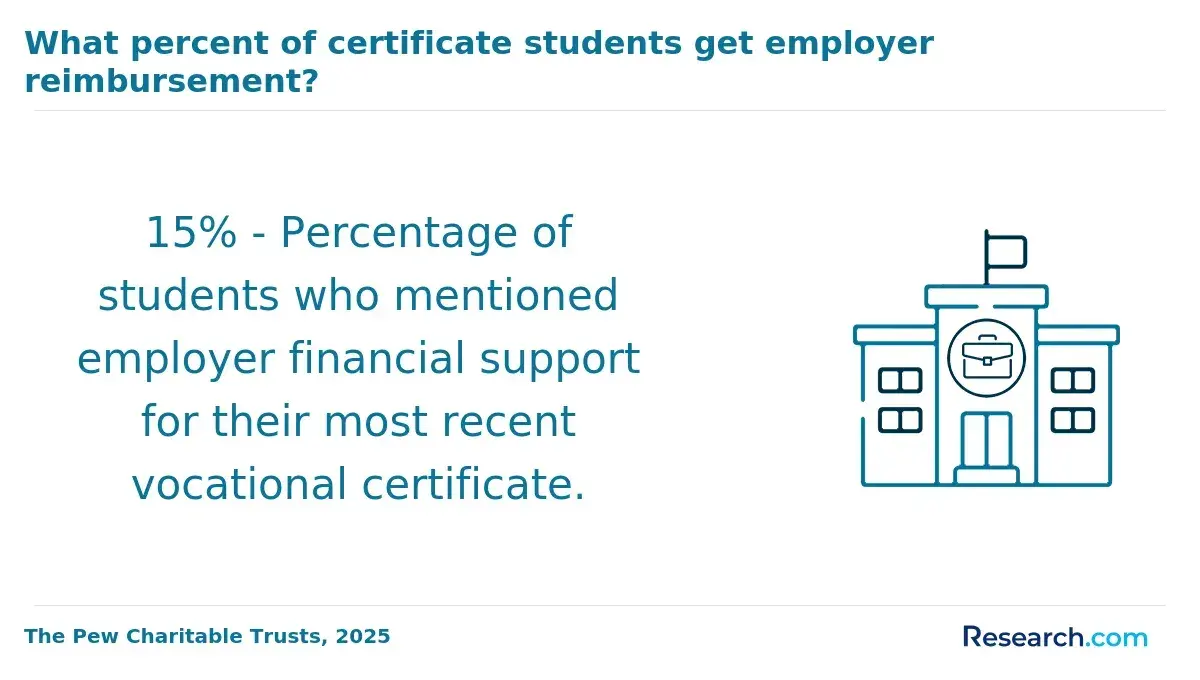
- Ask your employer, denomination, church, or ministry organization about tuition assistance.
- Check institutional scholarships, doctoral fellowships, ministry grants, and alumni discounts.
- Ask whether teaching assistantships, research assistantships, or adjunct opportunities are available to online doctoral students.
- Review federal loan eligibility only after subtracting grants, scholarships, and employer support.
- Calculate the monthly loan payment under likely repayment scenarios before accepting the full aid package.
A common financial mistake is choosing the lowest tuition program without checking completion support. A cheap doctorate that leaves students stalled in the dissertation phase can become more expensive than a higher-priced program with stronger advising, clearer milestones, and better academic mentoring.
An online ministry leadership doctorate can support several teaching paths, but the degree does not guarantee any specific role. Hiring depends on institutional mission, discipline fit, teaching record, research output, professional ministry experience, and whether the school views the doctorate as appropriate for the courses being taught.
The U.S. Bureau of Labor Statistics reported a median annual wage of $84,380 for postsecondary teachers in May 2023, with employment projected to grow 8% from 2023 to 2033. That broad figure includes many disciplines and institution types, so ministry leadership graduates should use it as a labor-market benchmark rather than a salary promise.
The table below outlines realistic teaching-related roles for graduates and how the doctorate may be evaluated.
| Role | Typical Responsibilities | How the Doctorate Helps | What Else You May Need |
| Adjunct instructor in ministry leadership | Teach undergraduate or graduate courses online or on campus | Shows advanced subject expertise and professional credibility | Prior teaching experience and flexible scheduling |
| Full-time faculty member at a Bible college or Christian university | Teach courses, advise students, serve on committees, support institutional mission | Can meet terminal-degree expectations if aligned with the department | Publications, teaching evaluations, and institutional fit |
| Seminary instructor in practical theology or leadership | Teach ministry practice, formation, leadership, field education, or pastoral courses | Connects ministry experience with advanced theological reflection | ATS-aligned credentials, ministry experience, and scholarly engagement |
| Online course developer or doctoral mentor | Design curriculum, assess learning, supervise projects, mentor students | Demonstrates content expertise and online doctoral learning experience | Instructional design skills and evidence of effective online teaching |
| Christian higher education administrator with teaching duties | Lead academic programs, train faculty, teach leadership courses | Supports credibility in leadership, formation, and organizational change | Administrative experience and accreditation knowledge |
Some graduates also teach in pastoral counseling, family ministry, chaplaincy, nonprofit leadership, or Christian education settings. If your intended teaching area includes marriage and family systems, compare curriculum expectations carefully because institutions may prefer counseling or MFT-specific credentials rather than a general ministry leadership doctorate.
How Can an Online Ministry Leadership Doctorate Help You Build a Competitive Academic CV?
A competitive academic CV is built gradually. The doctorate can provide the structure, mentorship, and scholarly community, but you still need to produce evidence that you can teach, research, publish, and serve an institution well.
Use your doctoral years to build an academic portfolio, not just finish courses. The following steps can help you turn an online ministry leadership doctorate into a stronger faculty application.
- Define your teaching lane early: Choose a clear area such as practical theology, ministry leadership, discipleship, preaching, congregational systems, church administration, or Christian leadership studies.
- Shape coursework around future syllabi: Save annotated bibliographies, lecture outlines, case studies, and research papers that can become teaching materials.
- Ask to teach or assist: Seek adjunct courses, teaching assistant roles, guest lectures, online discussion facilitation, or adult education teaching with formal evaluations.
- Present before you publish: Use doctoral colloquia and academic conferences to test dissertation ideas and receive feedback.
- Convert research into publications: Turn strong papers, literature reviews, or dissertation chapters into journal articles, book reviews, or practitioner-scholar essays.
- Document online teaching skill: Keep evidence of learning management system experience, course design, assessment methods, and student engagement strategies.
- Build references intentionally: Faculty hiring committees value letters from scholars who know your research, teaching, and professional character.
Students who plan to teach in pastoral care or ministry counseling should also understand where ministry leadership ends and counseling preparation begins. Reviewing online masters programs for counseling can help clarify whether additional discipline-specific coursework may strengthen your long-term teaching profile.
Finally, avoid the mistake of disappearing during the dissertation phase. Stay connected to faculty, academic conferences, professional associations, and teaching opportunities. Many faculty careers begin through networks formed before graduation, especially in specialized fields such as ministry leadership and theological education.
Other Things You Should Know About Ministry Leadership
Yes, but the degree alone is not enough. Schools typically look for subject-area fit, an accredited doctorate, teaching experience, strong communication skills, and familiarity with online learning platforms. Prior online teaching or course design experience can make your application stronger.
Sometimes, especially in applied ministry programs, but it depends on the institution. Schools that emphasize research supervision may prefer faculty with a PhD, ThD, publications, and dissertation committee experience. A DMin holder may need a strong scholarly record to supervise research-focused doctoral work.
A traditional dissertation is not always required, but it is often helpful for academic credibility. If a program uses an applied project instead, make sure it includes rigorous research methods, a substantial written product, and outcomes that can support conference presentations or publications.
Choose the format that gives you the best combination of accreditation, faculty mentorship, research support, teaching opportunities, and academic networking. Online doctorates can be credible, but an on-campus or hybrid program may be better if you need closer mentoring, funded assistantships, or stronger access to research communities.
- 25 Best Online EdD Programs of 2025 https://www.eddprograms.org/schools/best-online-doctor-of-education-programs/
- Practical Advice Before you Pursue a Doctor of Ministry Degree https://danieldisgrigg.com/2023/11/04/advice-doctor-of-ministry/
- Midwestern Seminary announces Doctor of Ministry degree now offered fully online https://www.mbts.edu/article/midwestern-seminary-announces-doctor-of-ministry-now-fully-online/
- DMin or PhD - Which Path Fits Your Ministry or Academic Goals https://united.edu/dmin-or-phd/
- DOCTORAL DEGREE PROGRAMS https://www.saintchristy.online/copy-of-master-s-degree-programs
- Best Online Master’s Degrees in Religious Studies for 2025 https://www.onlinemastersdegrees.org/best-programs/religious-studies/
- Doctor of Ministry (D.Min.) - South Florida Bible College & Theological Seminary https://sfbc.edu/doctor-of-ministry-d-min-degree/
- All Doctor of Ministry (DMin) Programs - TheologyDegree.org https://www.theologydegree.org/programs/doctor-of-ministry/
- DMin Degree - United Theological Seminary of the Twin Cities https://www.unitedseminary.edu/doctor-of-ministry/
- Doctorate Programs - Faith Leads University https://flu.education/doctorate-programs/