2027 Best Online International Relations Master's Programs at Nonprofit Universities

Co-Founder and Chief Data Scientist
Choosing an online international relations master's program means weighing academic reputation against affordability, schedule control, and career relevance. Nonprofit universities can offer established faculty, institutional accreditation, and alumni networks, but program quality varies widely. The U.S. Bureau of Labor Statistics projects 7% employment growth for political scientists from 2023 to 2033, faster than the average for all occupations.
This guide helps prospective graduate students compare credible online options, understand total costs and formats, verify accreditation, and identify the program that best supports their policy, diplomacy, security, development, or global business goals.
Key Things You Should Know
- Prioritize institution-wide accreditation, a curriculum aligned with your target field, transparent tuition, and evidence of accessible faculty and career support; nonprofit status alone does not establish program quality.
- Many online international relations and related global affairs master's programs require roughly 30 to 42 credits and can be completed in about 18 to 24 months full-time, while part-time formats better suit working professionals.
- For salary context, political scientists had a $128,020 median annual wage in 2023, according to the U.S. Bureau of Labor Statistics, but this selective occupation often requires strong research training, relevant experience, and sometimes doctoral study.
Which Nonprofit Universities Offer the Best Online International Relations Master's Programs, and How Were They Selected?
The best online international relations master's program depends on whether you need policy analysis, diplomacy, security studies, humanitarian work, regional expertise, or a global-affairs credential for an employer. Because fully online programs may use titles such as international relations, diplomacy, global affairs, international security, or strategic studies, applicants should compare the curriculum rather than relying on the degree name alone.
The programs below represent nonprofit universities commonly considered by online learners. Selection factors include recognized institutional accreditation, a graduate-level international affairs curriculum, online or substantially online delivery, transparent program structure, and relevance to established international affairs careers. Students should confirm current tuition, state authorization, residency requirements, and course availability directly with each university before applying.
| Nonprofit university | Online program example | Typical academic emphasis | Best fit |
| American University | Master of Arts in International Relations and Business | International economics, business, policy, and regional studies | Professionals connecting global policy with private-sector or nonprofit work |
| Norwich University | Master of Arts in Diplomacy | Diplomacy, foreign policy, conflict, and international relations | Working adults seeking an applied, fully online diplomacy-focused degree |
| University of Oklahoma | Master of Arts in Global Affairs | Global governance, development, security, and policy | Students wanting an interdisciplinary public-university option |
| Liberty University | Master of Arts in International Relations | International relations, foreign policy, and geopolitical studies | Students seeking a faith-informed private nonprofit environment |
Use this comparison as a starting point, not a definitive ranking. A program can be a strong choice only if its required courses, delivery model, cost, and career resources match your intended role.
When comparing institutions, review the catalog, faculty biographies, course rotation, and graduate outcomes. Applicants who are also considering management-oriented international careers can compare an MBA online option when business leadership matters more than policy research or diplomatic analysis.
Why Choose a Nonprofit University for an Online International Relations Master's Degree?
A nonprofit university reinvests revenue into its educational mission rather than distributing profits to owners or shareholders. Nonprofit institutions include public universities and private colleges; they are not automatically inexpensive, selective, or academically superior. The practical advantage is that established nonprofit universities often have longstanding academic governance, library systems, faculty hiring standards, and alumni communities.
For an online international relations master's degree, nonprofit status can matter most when it is paired with recognizable institutional accreditation and a program connected to an established school of international affairs, public policy, political science, or global studies. Public nonprofit universities may offer lower tuition for in-state students, while private nonprofits may charge one online rate regardless of residence and sometimes provide more predictable course schedules.
Applicants should compare the trade-offs rather than treating institutional type as a shortcut for value. A lower-priced public program may have limited elective availability, while a higher-priced private nonprofit may provide smaller cohorts or stronger career programming. Students who want an accelerated service-focused pathway rather than a policy-intensive graduate degree may find a human services online program more aligned with their immediate goals.
Common red flags include vague faculty information, unclear institutional accreditation, aggressive claims about guaranteed employment, and tuition pages that omit mandatory fees. A nonprofit label should prompt further verification, not replace it.
What Accreditation Should an Online International Relations Master's Program Have?
The essential credential is institutional accreditation from an accreditor recognized by the U.S. Department of Education or the Council for Higher Education Accreditation. Accreditation confirms that the university meets broad standards for academic quality, finances, governance, student services, and assessment. It also affects federal aid eligibility, transfer-credit acceptance, employer confidence, and doctoral-program admissions.
International relations generally does not have a universal programmatic accreditor comparable to those used in nursing, counseling, or engineering. That means applicants should first verify institutional accreditation and then evaluate program-level evidence: faculty qualifications, curriculum depth, assessment practices, library access, and relevant experiential learning opportunities.
The following checks help separate a legitimate online degree from a program that may create problems later:
- Confirm the university's institutional accreditor through the institution and federal accreditation directories.
- Check whether the online program is authorized for students in your state and whether any residency or travel requirement applies.
- Review whether courses are taught by research-active faculty or qualified practitioners, not solely by temporary instructors.
- Ask whether the diploma and transcript identify online delivery; many institutions issue the same credential regardless of format, but policies vary.
- For careers requiring a later professional credential, verify requirements with the relevant employer, agency, or licensing board.
Do not confuse accreditation with rankings, memberships, or marketing badges. Those can be useful context, but institutional accreditation is the baseline safeguard. Students comparing credential-sensitive graduate fields can see why this distinction matters in PsyD online programs accredited information as well.
How Much Does an Online International Relations Master's Degree at a Nonprofit University Cost?
Total cost is more important than the advertised cost per credit. For context, National Center for Education Statistics data for 2022-23 placed average graduate tuition and required fees at $12,596 at public institutions and $28,017 at private nonprofit institutions. These are broad averages, not prices for international relations programs, and online rates can be lower, higher, or structured differently.
Programs often require 30 to 42 credits. Multiply the current per-credit rate by required credits, then add technology fees, books, residency travel, application fees, and any international study component. Ask whether tuition is locked for continuing students, since a low first-term price does not necessarily predict the final bill.
| Cost factor | Why it changes the total | What to verify |
| Per-credit tuition | Programs vary in required credit totals and rates | Rate for all required credits, not only the first term |
| Required fees | Online, technology, graduation, and student-service charges may apply | Fee schedule and whether fees are charged per course or term |
| Transfer credit | Approved graduate transfer work can reduce remaining coursework | Maximum transfer credits, grade minimum, and course-age policy |
| Residencies or travel | Optional or required in-person activities can add transportation and lodging costs | Location, frequency, and estimated out-of-pocket expenses |
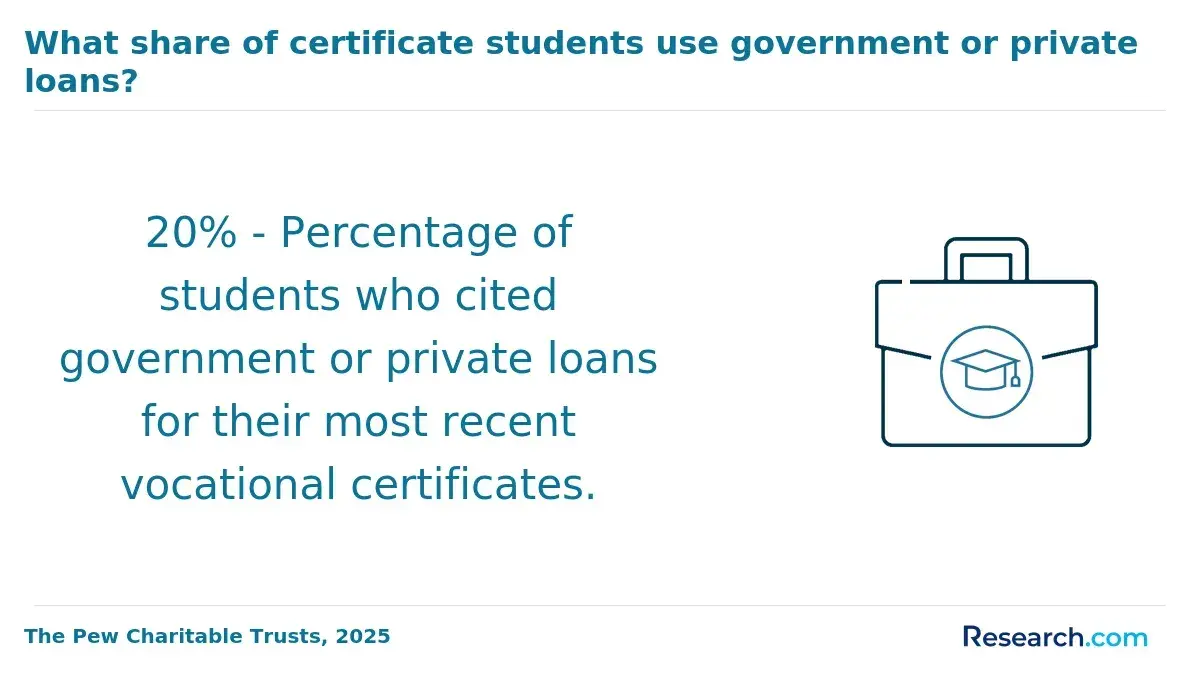
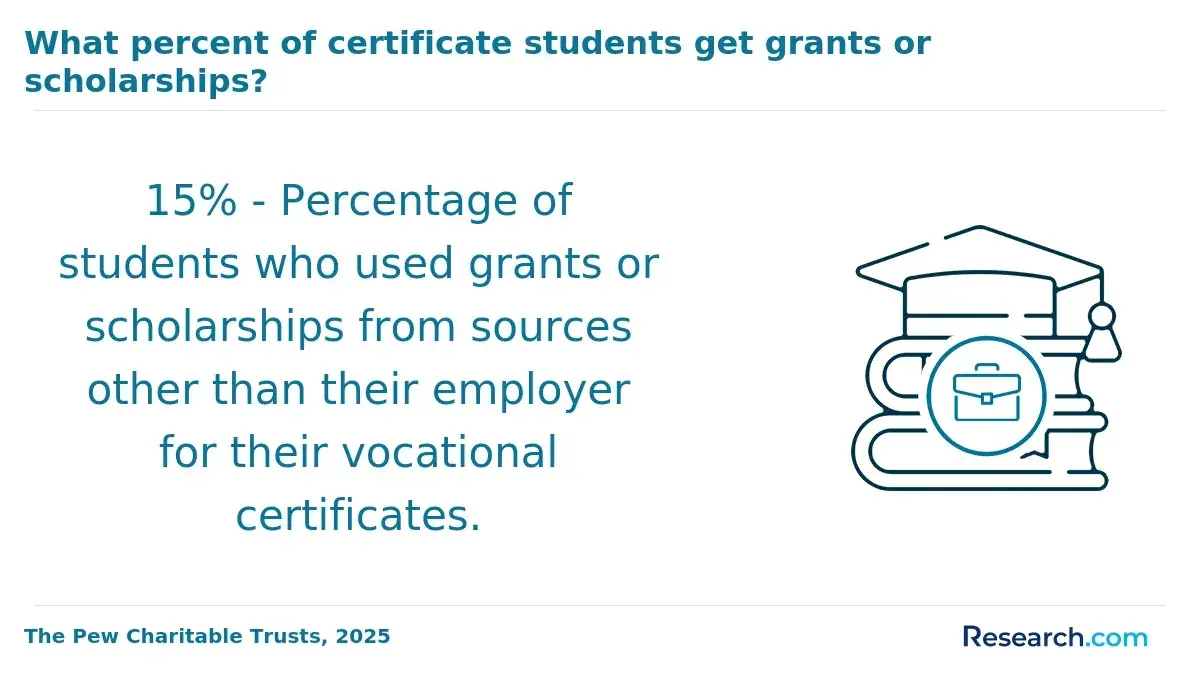
| Financial aid | Loans, scholarships, employer benefits, and military support affect net price | Institutional aid deadlines and aid eligibility for online students |
Before accepting admission, request a written estimate covering the complete degree pathway. Compare net cost after grants and employer assistance, not just sticker price. Students who need a lower-cost undergraduate foundation before graduate school can also explore an affordable online bachelor's degree.
What Are the Admission Requirements for Online International Relations Master's Programs?
Requirements vary by university, but most nonprofit online master's programs require a completed bachelor's degree from an accredited institution, official transcripts, an application, a statement of purpose, and recommendations. Some programs request a résumé, writing sample, or evidence of quantitative preparation. GRE requirements are increasingly optional or waived, but applicants should not assume that a waiver means academic preparation is unimportant.
Strong applicants show a clear connection between their past preparation and their intended international affairs work. Relevant backgrounds include political science, economics, history, languages, military service, public administration, journalism, business, nonprofit work, and international development. Applicants without an international relations major may still be competitive if they explain their goals and demonstrate research, writing, analytical, or cross-cultural experience.
Before applying, organize materials around the information an admissions committee actually needs to assess.
- Use the statement of purpose to name a realistic career direction and explain why the program's curriculum supports it.
- Choose recommenders who can describe graduate-level writing, research, judgment, leadership, or professional performance.
- Address a weak academic record briefly and provide concrete evidence of stronger recent work when applicable.
- Confirm English-language proficiency requirements if your prior education does not meet the institution's exemption policy.
- Ask whether prerequisite economics, statistics, or foreign-language coursework is recommended for your intended specialization.
A common mistake is applying to every program with the same generic essay. Tailoring your application to a program's faculty, courses, and delivery format makes your fit easier to evaluate and helps you avoid enrolling in a curriculum that does not serve your goals.
What Will You Study in an Online International Relations Master's Program?
Online international relations master's programs examine how governments, international organizations, businesses, and civil-society groups respond to cross-border challenges. Most programs combine theory with applied analysis. Coursework commonly develops the ability to interpret policy evidence, assess political risk, write concise briefing documents, and communicate across cultural and institutional contexts.
Core coursework often includes international relations theory, comparative politics, foreign policy, international political economy, international law, research methods, security studies, and conflict resolution. Electives may focus on global development, humanitarian assistance, regional politics, cybersecurity, climate governance, intelligence, trade, or diplomacy.
The table shows how concentration choices can connect coursework to likely professional settings. Titles and requirements differ by university, so use it to identify questions for program advisors.
| Academic focus | Typical skills | Potential work settings |
| Diplomacy and foreign policy | Briefing, negotiation, geopolitical analysis | Government agencies, advocacy organizations, policy institutes |
| International security | Risk assessment, strategic analysis, conflict analysis | Defense organizations, intelligence-adjacent research, consulting |
| Global development | Program evaluation, stakeholder engagement, development policy | Nonprofits, foundations, public agencies, contractors |
| International political economy | Economic analysis, trade research, market and country risk assessment | Businesses, trade groups, financial and consulting organizations |
Ask whether the capstone requires original research, a policy memo, a client project, or an internship. An applied project can be especially valuable for career changers who need a portfolio sample, while a research thesis may better prepare students considering doctoral study.
How Flexible Are Online International Relations Master's Programs, and How Long Do They Take?
Online delivery is not one format. Fully asynchronous courses let students complete work within weekly deadlines, while synchronous classes require live video meetings. Hybrid programs combine online coursework with campus residencies or intensives. The right format depends on whether you need maximum schedule flexibility, real-time discussion, networking, or access to a particular campus-based experience.
A 30- to 42-credit program commonly takes about 18 to 24 months of full-time study. Part-time students may take longer because they complete one or two courses per term, and completion time can increase if electives are offered only once a year. Accelerated terms can shorten the calendar but raise the weekly reading, writing, and discussion workload.
Compare format details before treating a program as flexible:
- Check the time zone and attendance expectations for live sessions.
- Review whether group projects require frequent real-time collaboration.
- Ask for a two-year course rotation, especially if you need a particular concentration.
- Confirm whether internships, capstones, or residencies can be completed near your home.
- Estimate the weekly workload honestly before choosing an accelerated schedule.
Working professionals often benefit from part-time, asynchronous formats, while students seeking intensive faculty interaction or cohort relationships may prefer scheduled live sessions. Flexibility has value only when it still leaves enough structure for you to finish.
What Student Support, Faculty Access, and Networking Do Online International Relations Master's Programs Offer?
Online students should receive more than a learning-management-system login. Strong programs provide responsive academic advising, research-library services, writing support, disability accommodations, technology assistance, and clear channels to reach instructors. For an international relations degree, career support and professional networking can be as important as course delivery because many roles depend on demonstrated writing, specialized knowledge, and relevant contacts.
Ask admissions teams how online students interact with faculty and peers. Useful indicators include office hours across time zones, small seminar sections, instructor feedback timelines, virtual speaker events, alumni mentoring, career coaching, internship guidance, and access to policy simulations or professional associations.
Students should also evaluate whether networking options fit their goals. A program based near federal agencies, international nonprofits, or global businesses may offer useful virtual and in-person events, but online learners should not assume proximity produces access. Ask how many online students use career services and what support is available to people who live outside the university's region.
If your objective is faster entry into the workforce rather than a graduate policy credential, compare the time and cost of the degree with quick certifications that pay well. A short credential may be useful for a defined technical skill, but it is not a substitute for graduate-level international affairs training.
What Jobs, Salaries, and Career Outcomes Can You Expect From an Online International Relations Master's Degree?
An international relations master's degree can support careers in policy research, government affairs, international development, geopolitical risk, global communications, intelligence analysis, humanitarian programming, trade, and nonprofit management. The degree does not qualify every graduate for diplomacy or federal service; many government positions have separate hiring processes, citizenship requirements, security-clearance standards, and experience preferences.
The U.S. Bureau of Labor Statistics reported a 2023 median annual wage of $128,020 for political scientists. This figure is useful as an upper-level occupation benchmark, not an expected salary for all graduates: political scientist roles are comparatively small in number and typically require substantial research expertise, while some employers prefer doctoral preparation. Salary varies substantially by sector, geography, job level, prior experience, and security eligibility.
The table distinguishes broad career directions from the capabilities employers may evaluate:
| Career direction | Typical responsibilities | Helpful preparation beyond the degree |
| Policy analyst | Research issues, write briefs, assess policy options | Strong writing samples, quantitative literacy, internship or policy experience |
| International program officer | Coordinate grants, partners, budgets, and program reporting | Project management, language skills, field or nonprofit experience |
| Geopolitical or country-risk analyst | Monitor political developments and business risks | Regional expertise, data analysis, private-sector knowledge |
| Government affairs specialist | Track policy, communicate with stakeholders, support advocacy | Legislative experience, professional network, persuasive communication |
To improve career value, choose electives tied to a target sector, complete an applied capstone, build a portfolio of policy writing, and seek experience while enrolled. Be skeptical of schools that advertise a single salary figure without identifying the job title, location, sample size, and reporting method.
Is an Online International Relations Master's Degree From a Nonprofit University Worth It?
An online international relations master's degree can be worth the investment when it fills a specific gap between your current experience and a realistic next role. It tends to offer the strongest value for professionals who need policy analysis, regional knowledge, research methods, or international-management capabilities and can use the degree's projects, faculty, and network while studying.
It may be less compelling if you primarily want an immediate salary increase without a target role, dislike sustained reading and analytical writing, or need a credential for a regulated profession. In those cases, an employer-recognized technical certificate, targeted language training, public administration degree, MBA, or work experience may deliver better short-term value.
Before enrolling, make a final comparison based on your personal return-on-investment case.
- Identify three target job titles and review their usual education, experience, and skill expectations.
- Calculate the full degree cost after grants, employer benefits, and likely borrowing.
- Compare required courses and capstone options against the work samples you need to build.
- Speak with admissions, financial aid, and career services rather than relying only on rankings or advertisements.
- Choose the format you can complete consistently without creating unmanageable work, family, or debt pressure.
The best nonprofit online program is therefore not necessarily the most famous or cheapest one. It is the accredited program with a manageable total cost, relevant faculty and curriculum, workable schedule, and career support that fits your intended path.
Other Things You Should Know About International Relations
Employers generally focus on the university's reputation, institutional accreditation, your skills, work samples, and relevant experience. Verify that the university is accredited and ask whether the diploma or transcript identifies online delivery if that matters to you.
Many online programs do not require language proficiency for admission or graduation. However, language ability can be a meaningful advantage for diplomacy, development, intelligence, regional analysis, and international nonprofit work.
Yes, an accredited online degree can meet educational requirements for many roles, but each federal position has its own qualifications. Citizenship, security clearance eligibility, specialized experience, veterans' preference, and hiring procedures may also apply.
Not always. Many programs use a capstone, policy analysis project, comprehensive examination, or applied portfolio instead. Students considering doctoral study may prefer a program that offers substantial independent research and faculty supervision.
References
- Types of student financial aid | USAGov https://www.usa.gov/student-aid
- M.A. in International Relations and Diplomacy https://www.ags.edu/international-relations/degree-programs/master-in-international-relations
- Master of Arts in International Relations and Security Studies | Webster Vienna Private University https://www.webster.ac.at/academics/ma-international-relations-security-studies.php
- Global Master of Arts: International Relations (Full-Time) https://graduate.sit.edu/program/global-master-of-arts-international-relations/
- Master of Science (M.S.) in International Affairs and Diplomatic Practice (Online) https://unitar.org/courses-learning-events/individual-learners/master-degree-related-qualifications/master-science-ms-international-affairs-and-diplomatic-practice-online
- Types of Student Financial Aid https://www.mefa.org/article/types-of-financial-aid/