2027 Cheapest Accredited Online International Relations Master's Programs With No Out-of-State Tuition Surcharge

Co-Founder and Chief Data Scientist
An online international relations master's can be a practical route to policy, government, nonprofit, intelligence, and globally focused business work, but advertised tuition can conceal major residency and fee differences. The U.S. Bureau of Labor Statistics reports that management analysts earned a $101,190 median annual wage in 2024, illustrating the value of policy, research, and strategic-analysis skills in adjacent careers. This guide helps working professionals compare accredited programs, calculate true costs, verify equal online rates, and decide whether a low-price degree fits their goals.
Key Things You Should Know
- A true no-out-of-state-surcharge program charges online students the same published tuition regardless of where they live, but it is not automatically the lowest-total-cost option after fees, required credits, and travel are included.
- Compare the full degree price by multiplying the applicable per-credit rate by required credits, then adding mandatory fees; a $50 per-credit difference equals $1,500 across a typical 30-credit master's program.
- Institutional accreditation is the essential credential to verify; international relations usually has no universal programmatic accreditor, so curriculum, faculty expertise, career support, and delivery format also matter.
What Does No Out-Of-State Tuition Surcharge Mean for an Online International Relations Master's Program?
A no-out-of-state-tuition-surcharge policy means an eligible online student pays the same tuition rate whether they live in the university's home state or elsewhere in the U.S. Schools may call this a flat online rate, distance-learning rate, online tuition rate, or residency-neutral tuition. It does not mean tuition is free, discounted, or equal to the school's lowest campus-based in-state rate.
This pricing structure most benefits nonresidents attending public universities, where campus out-of-state rates can be substantially higher than resident rates. It can also simplify budgeting for military-affiliated students, frequent movers, and working professionals who do not plan to relocate.
However, a private nonprofit university may charge one rate to all students without labeling it an online-residency policy; that is also residency-neutral pricing, but it still requires a total-cost comparison.
International relations master's programs may be offered as a Master of Arts, Master of Science, Master of International Affairs, Master of Global Affairs, or a closely related political science or diplomacy degree.
An MA often emphasizes regional studies, language, history, and policy interpretation, while an MS may place more weight on quantitative analysis, research methods, security studies, or data-informed policy. Professional programs commonly use a capstone or policy project; academic programs may require a thesis.
Before treating a listed rate as comparable, confirm what the school means by "online tuition." The following distinctions prevent the most common pricing mistakes.
| Pricing term | What it usually means | What the student should verify |
| No out-of-state surcharge | Residents and nonresidents pay the same online tuition rate. | That the rate applies to the exact international relations degree and all required terms. |
| In-state equivalent | Online nonresidents may receive a rate similar to resident tuition. | Whether course, college, or distance-learning fees still differ. |
| Flat online tuition | A single published rate applies to online learners. | Whether the price changes by credit load, course level, or location. |
| Residency waiver | A school waives the higher nonresident rate for qualifying students. | Eligibility rules, renewal conditions, and whether the waiver is automatic. |
| Private-university tuition | One tuition schedule often applies to all students. | Whether online fees, required residencies, and program charges increase the total. |
A common red flag is a university-wide statement that online students "may qualify" for a special rate. That language is not the same as a program-level guarantee. Ask admissions to confirm the applicable tuition schedule in writing for your start term, residency location, degree track, and expected enrollment pattern.
Students considering leadership roles that blend international policy with organizational management can also compare an MBA online option. An MBA is usually a better fit for corporate management or operations, whereas international relations is better aligned with geopolitical analysis, foreign policy, diplomacy, development, and global security.
How Can Students Verify Accreditation for an Affordable Online International Relations Master's Program?
For an online international relations master's, the most important accreditation check is usually institutional accreditation. Institutional accreditation indicates that an eligible accrediting agency has evaluated the university as a whole, including its academic standards, governance, financial practices, and student-support systems. It is particularly important for federal financial-aid eligibility, employer recognition, transfer-credit review, and future doctoral applications.
International relations does not generally have one universal programmatic accreditor comparable to accreditation systems used in fields such as nursing, counseling, or engineering.
That means students should not reject a legitimate program simply because it lacks a discipline-specific seal. Instead, assess whether the curriculum, faculty credentials, learning outcomes, and capstone or thesis expectations fit your intended career.
Use the following verification sequence before applying or paying a deposit. It separates a valid institutional credential from marketing language.
- Find the university's institutional accreditor on its official accreditation or consumer-information page.
- Confirm the institution and accreditor through the U.S. Department of Education or Council for Higher Education Accreditation directories.
- Verify that the online international relations master's is an official degree offered by that institution, not merely a certificate or partner-delivered course.
- Review the catalog for required credits, faculty, modality, graduation requirements, and any thesis, capstone, language, internship, or residency obligation.
- Ask whether the program has separate approvals or professional affiliations relevant to your target field, especially for government, security, development, or public-policy work.
Be cautious with phrases such as "internationally accredited," "globally recognized," or "approved" when a school does not name a recognized institutional accreditor. Also avoid assuming that accreditation of a university automatically answers every career question. Federal-agency hiring, security-clearance eligibility, diplomatic service paths, and employer preferences each involve separate requirements.
Accreditation checks matter across online graduate education. Readers evaluating clinical doctoral pathways can see why discipline-specific requirements add another layer by reviewing PsyD online programs accredited.
How Much Does the Cheapest Online International Relations Master's Program Cost in Total?
The cheapest accredited online international relations master's program is not necessarily the program with the lowest advertised per-credit tuition. Total cost depends on the number of credits required, mandatory institutional and course fees, books or databases, technology, and any in-person requirement. Without a common, current tuition schedule for every program, there is no responsible single nationwide "cheapest" program designation; the defensible comparison is the lowest verified total cost for your own residency and enrollment situation.
Start with this calculation: total estimated direct cost = required program credits × applicable per-credit tuition + mandatory fees + required program expenses. If a degree requires 30 credits, every $50 change in the per-credit rate changes tuition by $1,500. That makes credit requirements as important as the listed rate.
This worksheet identifies the cost categories to obtain from each school's catalog, tuition page, and financial-aid office. Use the same categories for every program so that one school's incomplete price does not appear artificially low.
| Cost category | How to calculate it | Why it can change the ranking |
| Base tuition | Required credits multiplied by the applicable online rate. | A low rate can be offset by a longer credit requirement. |
| Mandatory academic fees | Include per-term, per-credit, technology, distance-learning, and graduation charges. | Fees may apply even when online tuition is residency-neutral. |
| Course materials | Estimate books, simulations, software, databases, and required subscriptions. | Costs vary by course design and are not always included in tuition. |
| Travel and residency costs | Include transportation, lodging, meals, and time away from work if required. | A hybrid requirement can materially raise the practical cost of an online degree. |
| Financing cost | Consider interest and fees if borrowing is necessary. | The amount borrowed, not just published tuition, affects affordability. |
Request a written estimate for the full program rather than relying only on a tuition calculator. Ask whether tuition is locked for continuing students, whether rate changes typically take effect by academic year, and whether students pay different amounts in summer terms.
A program with slightly higher initial tuition but a written rate guarantee may be easier to budget than a lower-priced option subject to frequent increases.
Do not include optional living expenses in a school's direct-price ranking unless they are required for attendance, but do include them in your personal affordability decision. A fully online program can reduce relocation and commuting expenses, yet it may not eliminate costs for proctored exams, professional conferences, study travel, or a final on-campus presentation.
Do Online International Relations Master's Students Have to Establish Residency to Receive the Lowest Tuition Rate?
Usually, no. In a genuine no-out-of-state-surcharge online program, students do not need to establish state residency to receive the published online rate. The point of the model is that residency does not change the applicable tuition charge. Still, students should verify whether the school uses this policy for the specific graduate program rather than assuming that it applies across all online degrees.
Residency can still matter in several situations. A public university may offer a separate in-state campus rate that is lower than its online rate, restrict a waiver to certain states or affiliations, or require residency documentation for state grants. Some institutions also distinguish between online courses and hybrid courses, meaning a campus-based component could trigger a different schedule.
Before making a relocation decision, obtain answers to these targeted questions from enrollment and financial-aid staff. The answers clarify whether residency has any financial value for you.
- Is the quoted tuition rate identical for online graduate students in every U.S. state?
- Does the rate apply to every required international relations course, including electives and capstone credits?
- Are there separate charges for hybrid, summer, intensive, or on-campus courses?
- Would changing my state of residence affect tuition, state aid, employer reimbursement, or authorization to enroll?
- Is the tuition rate guaranteed for continuing students, and what conditions could change it?
Do not establish residency solely on an informal assumption that it will lower tuition. State residency rules can involve domicile, time in the state, employment, tax status, and other factors, and they vary by institution. For a truly residency-neutral program, relocating may add cost without reducing tuition.
How Do Public and Private Universities Compare on the Cost of an Online International Relations Master's Degree?
Public universities can be especially attractive to residents because their campus in-state tuition may be subsidized by state funding. For nonresidents, however, a public university's online flat rate or no-surcharge policy may be more competitive than its campus nonresident price. Private nonprofit universities generally charge one published tuition rate regardless of residency, which can make their pricing easier to compare but not automatically lower.
The best value depends on the specific program, not ownership category. A public institution may have lower tuition but require more credits or separate fees.
A private nonprofit may charge more per credit but offer a shorter curriculum, stronger career networks, more predictable pricing, or scholarships that reduce net cost. For-profit institutions may also use flat tuition; students should apply the same accreditation, outcomes, fee, and financing scrutiny to every school.
This comparison highlights the trade-offs worth evaluating before treating public or private status as a shortcut for affordability.
| Institution type | Potential cost advantage | Potential limitation | Best fit |
| Public university with residency-neutral online tuition | May extend a competitive rate to out-of-state online students. | Fees, course availability, and program length can vary. | Nonresidents seeking a public-university option without a residency move. |
| Public university with resident pricing | May be low cost for qualifying in-state students. | Nonresident and online rates may be higher or structured differently. | Students who clearly qualify for the resident rate. |
| Private nonprofit university | Often has one predictable tuition schedule and may offer institutional aid. | Sticker price can be higher than public tuition. | Students comparing net price, flexible pacing, and specialized curriculum. |
| Other private institution | May offer accelerated or niche formats. | Requires close review of accreditation, outcomes, borrowing, and fees. | Students who have verified the program's recognition and total cost. |
A prior low-cost undergraduate route can reduce the amount you need to borrow before graduate school. For students still completing foundational education, an affordable online bachelor's degree may be a sensible first step, especially when it builds writing, research, economics, statistics, foreign-language, or political-science preparation.
Can Financial Aid Reduce the Cost of a Cheap Online International Relations Master's Program?
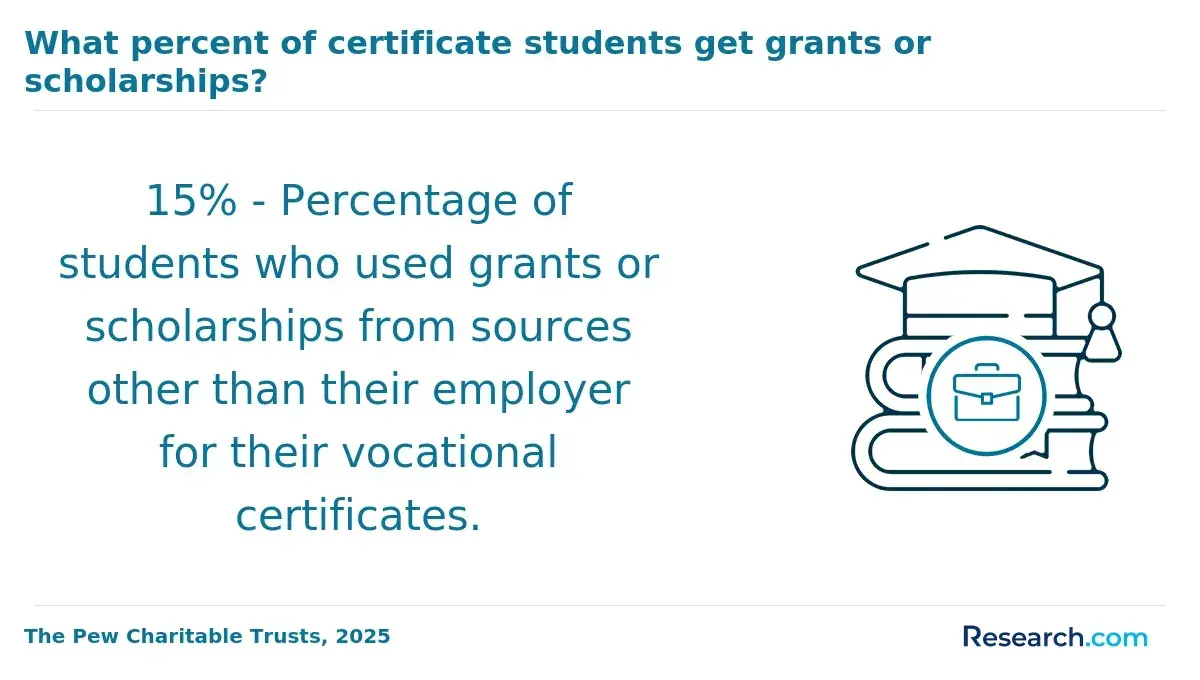
Federal aid, institutional scholarships, employer tuition assistance, military education benefits, external fellowships, and payment plans can reduce immediate out-of-pocket cost or borrowing. Online enrollment does not automatically disqualify a student from aid, but eligibility depends on the institution, enrollment status, degree level, citizenship or eligible noncitizen status, satisfactory academic progress, and the aid program's rules.
Graduate students should generally submit the FAFSA if they may use federal aid. Direct Unsubsidized Loans and Graduate PLUS Loans can be available to eligible students, but loans must be repaid with interest. Treat borrowing as a financing choice rather than a tuition discount, and compare the amount you would need to repay after graduation.
Use this order of review to estimate net cost responsibly. It prioritizes aid that does not create debt before comparing loan options.
- Confirm the school's total direct cost for your expected credit load and start term.
- Ask about graduate scholarships specifically open to online international relations students and whether a separate application is required.
- Check employer tuition assistance rules, including annual caps, grade requirements, repayment obligations, and approved-school restrictions.
- Review military, veteran, service-related, and public-sector benefits if applicable.
- Subtract confirmed grants, scholarships, and employer contributions from direct cost before deciding how much to borrow.
- Compare payment-plan fees and federal-loan terms before using higher-cost private financing.
Employer assistance can make a higher-tuition program less expensive to you than a lower-tuition alternative, but only when the employer will actually reimburse the degree and required expenses. Get the policy in writing before enrolling.
International relations students working in nonprofits, government contractors, logistics, technology, health systems, or multinational firms may find that employer support depends on how clearly the degree relates to their current role.
If your immediate objective is a faster, lower-commitment skills upgrade rather than a graduate credential, compare the role-specific return with quick certifications that pay well. A certificate can be useful for targeted skills, but it does not replace a master's degree when an employer or career path specifically requires graduate-level policy training.
How Do Program Format and Completion Time Affect the Cost of an Online International Relations Master's Degree?
Format affects both direct and indirect cost. Fully online asynchronous programs can work well for professionals who need to study around full-time work and want to avoid commuting or relocation. Synchronous courses may provide real-time discussion and networking but can be difficult across time zones. Hybrid programs can offer in-person access, simulations, or cohort experiences, yet required travel may outweigh a modest tuition advantage.
Completion time matters because a faster program can reduce the number of terms in which students pay recurring fees and can limit the period during which tuition may rise. It does not automatically reduce tuition: an accelerated 30-credit program and a traditional 30-credit program can have the same base tuition. Accelerated pacing may also be a poor fit if it causes a student to reduce work hours, retake coursework, or postpone completion.
This format comparison helps students match price with practical constraints rather than choosing solely on the shortest advertised timeline.
| Format or pace | Typical cost effect | Potential advantage | Key question to ask |
| Fully online asynchronous | Can reduce commuting and travel costs. | Flexible for working students in different time zones. | Are courses available often enough to finish on schedule? |
| Fully online synchronous | Direct tuition may be similar to asynchronous study. | Live discussion, faculty access, and cohort interaction. | Are meeting times workable from my location? |
| Hybrid or low-residency | Travel and lodging can increase total cost. | May provide networking and applied simulations. | How many visits are mandatory, and what are their likely expenses? |
| Accelerated | May reduce recurring term fees and exposure to rate changes. | Earlier completion for students with sufficient time. | What weekly workload is expected, and can I sustain it? |
| Part-time traditional | May increase the number of terms and recurring fees. | More manageable alongside work or caregiving. | Is there a maximum completion window or course-rotation risk? |
Review whether a program uses a thesis, non-thesis capstone, comprehensive exam, research project, internship, or practicum. These requirements can be academically valuable, particularly for students aiming at research, policy analysis, or doctoral study, but they may lengthen completion or add travel and supervision requirements.
Ask whether internships are arranged by the school, whether they can be completed at your workplace, and whether they carry separate tuition.
Students who are exploring people-centered public-service pathways alongside international work may also consider a human services online program. That option is more directly focused on client and community support, while international relations centers on cross-border systems, institutions, policy, and global issues.
How Much Can Transfer Credits Reduce the Cost of an Online International Relations Master's Degree?
Transfer credits can reduce total tuition only when a university accepts prior graduate-level coursework and applies it to degree requirements. Policies vary widely. Some programs accept a limited number of comparable credits from an accredited institution, while others require all or nearly all coursework to be completed through their own curriculum. Credits from certificates, professional training, or an unfinished graduate degree may not transfer automatically.
The potential savings are straightforward: each approved transfer credit can avoid the current tuition charge for one required credit, but only if it replaces - not merely supplements - a degree requirement.
For example, acceptance of 6 credits in a 30-credit program reduces the remaining coursework by one-fifth. Whether it is financially worthwhile depends on the new school's per-credit rate, evaluation fee, course expiration rules, and the likelihood of approval.
Ask for a preliminary transfer review before committing. The following records help a school determine whether a course is equivalent.
- Official transcript showing graduate-level credit and grade earned.
- Course syllabus, assignments, readings, and learning outcomes.
- Catalog description from the term when the course was completed.
- Evidence of institutional accreditation for the prior school when requested.
- Information about when the course was taken, because age limits may apply.
Do not assume that a bachelor's degree, work experience, military training, or professional credential will produce graduate transfer credit. Some schools may recognize prior learning in limited ways, but graduate transfer policies are often conservative.
Also compare the cost of transferring with the academic downside: a transferred methods course may save money, but completing the new program's version could better prepare you for its capstone or thesis.
Is a Cheap Online International Relations Master's Degree Worth the Cost for Career Advancement?
A low-cost accredited online international relations master's can be worthwhile when it builds skills and credentials directly connected to a realistic career target. Common directions include policy analysis, program management, global risk analysis, research, international development, public affairs, government relations, trade support, humanitarian work, and security-related research. The degree is not a universal hiring requirement, and job titles vary considerably by employer and agency.
Career value is strongest when students can demonstrate applied skills, not only course completion. Useful competencies often include policy writing, qualitative and quantitative research, geopolitical analysis, intercultural communication, foreign-language ability, negotiation, program evaluation, data literacy, and clear briefing skills.
Students interested in government or security work should understand that hiring, citizenship, background-investigation, and clearance requirements are set by employers and agencies, not by the degree alone.
Salary comparisons should be made carefully because "international relations professional" is not one standardized occupation. As a relevant benchmark, the U.S. Bureau of Labor Statistics reports a 2024 median annual wage of $101,190 for management analysts and projects 9% employment growth from 2024 to 2034.
This occupation is only one adjacent path, not an outcome guaranteed by an international relations degree; it shows why students should connect their specialization to a defined function such as analysis, operations, compliance, or program management.
Assess return on investment through your own likely career pathway. The following signals suggest that a program may justify a higher total cost, while their absence may support choosing the lower-cost accredited option.
- The curriculum provides the regional, functional, methodological, or language preparation required for your target role.
- Faculty, alumni, internship support, and employer relationships are relevant to the organizations you hope to join.
- The program offers a capstone, thesis, simulation, or applied project that can become a portfolio sample.
- The schedule allows you to retain income, gain related work experience, or use employer support while enrolled.
- The expected borrowing amount remains manageable even if a promotion or job change takes longer than hoped.
A cheap degree is less likely to be a sound investment if it lacks recognized accreditation, offers little academic support, has hidden residency costs, or does not align with your desired field. For research-heavy roles or future doctoral study, prioritize methods training, faculty mentorship, thesis options, and academic reputation over a small initial tuition difference.
For working professionals seeking advancement in an existing organization, a flexible accredited non-thesis program with a practical capstone may offer better value.
How Should Students Compare the Cheapest Accredited Online International Relations Master's Programs?
Compare programs using a consistent evidence-based scorecard, beginning with verified institutional accreditation and total direct cost. Do not rank schools from a search-result tuition snippet alone. The best affordable choice is the program that meets your academic and career needs at the lowest realistic net cost, not simply the lowest published rate.
Use this comparison table for every program on your shortlist. It combines the factors that most often change a seemingly cheap option into a more expensive or less suitable one.
| Comparison factor | What to record | Decision impact |
| Accreditation | Institutional accreditor and verification status. | Supports aid eligibility, recognition, transfer review, and future study. |
| Residency policy | Exact online tuition rule for your state and degree. | Confirms whether a nonresident surcharge applies. |
| Required credits | Total credits, prerequisites, thesis or capstone credits, and electives. | Determines base tuition and time to completion. |
| Total direct cost | Tuition plus mandatory fees and required program expenses. | Produces a fair affordability ranking. |
| Format | Asynchronous, synchronous, hybrid, residency, and travel requirements. | Changes both practical expenses and work compatibility. |
| Curriculum fit | Concentrations, methods, regional focus, language, and final project. | Connects the degree to your intended role. |
| Funding | Scholarships, employer eligibility, aid deadlines, and payment options. | Determines net cost and borrowing need. |
| Student outcomes | Career services, alumni access, internships, and published outcomes where available. | Helps assess value beyond price. |
Once you have gathered the information, take these final steps before enrolling. They turn a general price comparison into a decision that accounts for your finances and career plan.
- Shortlist only accredited institutions that can enroll students in your state and offer the degree in your preferred format.
- Request a written tuition-and-fee estimate for the complete program, including the rate that applies to your residency status.
- Calculate direct cost using required credits, not the minimum number of credits shown in a marketing summary.
- Subtract only confirmed scholarships, grants, benefits, and employer contributions to estimate net cost.
- Compare curriculum, capstone or thesis options, faculty expertise, and career support against your target job or doctoral goal.
- Choose the lowest-net-cost program that meets your nonnegotiables for accreditation, academic fit, schedule, and professional value.
Keep copies of tuition quotes, transfer decisions, scholarship offers, and statements about residency-neutral pricing. Terms can change between application and enrollment, and written confirmation gives you a clearer basis for budgeting and asking follow-up questions.
Other Things You Should Know About International Relations
Most affordable online international relations master's programs waive GRE or GMAT requirements for 2027. However, some schools may request alternative assessments, such as a personal statement or writing sample, as part of their holistic review process.
Some programs require language study, encourage it, or embed it within a regional concentration; others do not. Language proficiency can be valuable for diplomacy, intelligence, development, journalism, and regional-analysis roles, but requirements differ by institution and specialization.
Applicants commonly come from political science, history, economics, business, sociology, geography, languages, and related fields. Many programs also consider applicants from other majors if they can demonstrate strong writing, analytical ability, and any required prerequisite coursework.
It can, provided the university is appropriately accredited and the program offers the academic preparation required by doctoral admissions committees. Students considering a PhD should favor programs with rigorous research methods, substantial faculty interaction, strong recommendations, and a thesis or research-focused capstone when available.
References
- Master of Arts in International Relations https://online.norwich.edu/online/programs-courses/programs/master-arts-international-relations
- Top Scholarships for Out of State Students to Apply for in September 2026 https://bold.org/scholarships/by-type/scholarships-for-out-of-state-students/
- 2025's Top Online Master's Degrees in International Relations https://www.onlinemastersdegrees.org/best-programs/international-relations/
- Browse Scholarships - Scholarship America https://scholarshipamerica.org/students/browse-scholarships/
- Global Master of Arts: International Relations (Full-Time) http://graduate.sit.edu/program/global-master-of-arts-international-relations/
- 1.0 Utah Scholarship and Aid Landing Page - Utah System of Higher Education https://ushe.edu/state-scholarships-aid/
- 11 tuition-free universities in the US for master's degrees https://studyinternational.com/news/tuition-free-universities-in-the-us/