2027 Best Online Instructional Design Degree Programs at Nonprofit Universities

Co-Founder and Chief Data Scientist
Choosing an online instructional design degree means balancing credible academic preparation with the time and money required to earn it. This matters as employers expand digital training and learning platforms: the U.S. Bureau of Labor Statistics reports a $74,620 median annual wage for instructional coordinators, based on 2023 wage data published in 2024. This guide helps prospective students compare nonprofit programs by degree level, accreditation, total cost, online format, support, and career relevance so they can build a practical shortlist.
Key Things You Should Know
- For most career changers and working professionals, an institutionally accredited online master's with a portfolio-based curriculum is the strongest instructional design option; bachelor's programs fit earlier-career students, while associate degrees are usually a transfer pathway rather than direct preparation for designer roles.
- Nonprofit status is not a quality guarantee: compare institutional accreditation, required live sessions, capstone or practicum expectations, transfer policies, and the full cost after fees - not tuition alone.
- Instructional coordinators had a $74,620 median annual wage in 2023, but this occupation often requires a master's degree and education-related experience; corporate instructional designer roles have varied titles, qualifications, and pay.
What Makes an Online Instructional Design Degree Program at a Nonprofit University Different?
An online instructional design degree teaches students to analyze learning needs, design instruction, develop digital learning materials, evaluate outcomes, and use learning technology. At a nonprofit university, the institution is generally organized around an educational mission rather than distributing profits to owners. Public universities are typically nonprofit, and many private universities are nonprofit as well.
That status can matter for governance, eligibility for federal aid, and institutional mission, but it does not independently establish academic quality or return on investment. The better question is whether a specific program has credible institutional accreditation, faculty with relevant experience, current technology-focused coursework, transparent costs, and support suited to online learners.
| Degree path | Typical fit | Common timeline | Practical consideration |
| Associate degree or certificate | Students exploring education technology or beginning college | About 2 years for an associate degree | Often best used to transfer into a bachelor's program; it may not meet preferred qualifications for instructional designer roles. |
| Bachelor's degree | New college students or career starters seeking entry-level learning and development work | About 4 years, potentially shorter with transfer credit | Look for projects, internships, accessibility, multimedia, and learning-management-system training. |
| Master's degree | Working professionals, teachers, trainers, and career changers | About 18 to 36 months part time | Often provides deeper design, evaluation, and leadership preparation plus a portfolio or capstone. |
| Doctoral degree | Professionals pursuing research, university teaching, executive leadership, or advanced consulting | Usually several years | Not usually necessary for entry into instructional design; evaluate research and dissertation requirements carefully. |
Generalist programs cover the full design process, while specialized programs may focus on learning analytics, higher education, corporate training, educational technology, accessibility, or e-learning development. A specialization is worthwhile when it matches a clear career target; otherwise, a broad curriculum and strong portfolio may provide more flexibility.
Students interested in training management, organizational learning, or related leadership responsibilities may also compare degree structures with business degrees online. A business-oriented program can complement instructional design, but it should not replace design, assessment, learning theory, and technology coursework for students seeking instructional design roles.
How Can Students Verify Accreditation for an Online Instructional Design Degree at a Nonprofit University?
Institutional accreditation is the first verification step. It indicates that a recognized accreditor has reviewed the university as a whole. Instructional design degrees generally do not have one universal programmatic accreditor comparable to those used in some licensed professions, so students should not assume a program must hold a separate specialized accreditation to be legitimate.
Verify claims independently before applying. A careful check protects students from confusing marketing language, unrecognized accreditors, and authorization issues for online study.
- Find the university's accreditor on the institution's official accreditation page and confirm the institution's current status in the U.S. Department of Education or Council for Higher Education Accreditation directories.
- Confirm that the exact online degree, concentration, and delivery format are offered by the accredited institution rather than by an unaffiliated partner.
- Ask whether the program has specialized recognition, state authorization limitations, or professional-alignment standards relevant to your intended field.
- Request the current catalog, course sequence, faculty list, and written transfer-credit policy before paying a deposit.
For students planning to work in K-12 settings, an instructional design degree is not automatically a teaching license, administrator credential, or state endorsement. Ask a state education agency and the university whether the degree supports your intended role. For corporate learning, healthcare training, higher education, and nonprofit training roles, employer requirements are usually more important than licensure.
A common mistake is treating "accredited" as a complete answer. Confirm who granted accreditation, whether it is current, and whether the curriculum actually develops the skills employers or graduate schools expect.
How Rigorous Are Online Instructional Design Degree Programs at Nonprofit Universities?
Well-designed online instructional design programs can be academically demanding because the field combines learning theory, research, writing, project management, media development, assessment, and technology. Rigor should show up in what students produce and revise, not simply in the number of readings or weekly discussion posts.
A strong curriculum usually moves from foundational concepts to applied work. Review course descriptions for needs assessment, adult learning, learning theories, instructional models, universal design and accessibility, assessment, learning analytics, e-learning authoring, project management, and evaluation. Programs built primarily around broad education courses may be less suitable for students seeking corporate or digital-learning roles.
Academic and career-focused programs can both be rigorous, but they emphasize different outcomes. Academic programs may give more weight to research methods and theory, while career-focused programs may devote more time to software workflows, project deliverables, and applied client work. Students considering doctoral study should prioritize research methods, scholarly writing, and faculty mentorship; students changing careers should prioritize portfolio development and employer-relevant tools.
Cost varies more by residency, transfer credit, degree level, and institutional pricing model than by nonprofit status alone. Public nonprofit universities may offer lower tuition to in-state students, while private nonprofit universities often use a single online rate and may provide institutional discounts. Compare the price of completing the credential, including fees and required technology, rather than selecting the lowest listed per-credit amount.
The table identifies the cost components that should appear in a written estimate. It is especially useful when two programs advertise similar tuition but have different completion requirements.
| Cost component | Why it changes the total | What to request |
| Tuition per credit or term | Rates may differ by residency, program, or course load. | The current rate and the number of credits required for your catalog year. |
| Mandatory university and online fees | Technology, distance-learning, graduation, and service fees may not be included in tuition. | An itemized estimate for the full program. |
| Transfer credit | Accepted prior credit can reduce both time and direct cost. | A preliminary evaluation and maximum transferable-credit limit. |
| Course materials and technology | Software, hardware, books, and optional certification exams can add costs. | A list of required tools and whether student licenses are included. |
| Experiential requirements | Travel, background checks, or project expenses may apply to some practica or residencies. | Written confirmation of any in-person or placement-related costs. |
Accelerated programs can reduce time away from career goals, but they do not automatically lower the total price. Faster terms can require a heavier weekly workload and may limit how much paid work a student can sustain. Ask whether tuition is charged per credit, per course, or per term, and whether an accelerated pace changes aid eligibility.
Students comparing fast, structured online pathways in another applied field can see similar pacing trade-offs in an accelerated paralegal program. The relevant lesson for instructional design is to evaluate workload, support, and total completion cost together rather than assuming speed equals value.
Eligible students at accredited nonprofit institutions may use federal financial aid, including Direct Loans and, for qualifying undergraduate students, Pell Grants. Graduate students generally have different federal aid options than undergraduates, so applicants should review the aid package by degree level rather than relying on a general affordability claim.
Build a funding plan before enrollment. The following sources can reduce borrowing or make monthly costs more predictable, although availability and eligibility vary by institution and student circumstances.
- Federal aid: Submit the FAFSA early and review grants, Direct Loans, work-study eligibility, and annual or aggregate borrowing limits.
- Institutional scholarships: Ask whether online students receive the same merit, alumni, military, educator, or need-based awards as campus students.
- Employer education assistance: Confirm the employer's reimbursement cap, grade requirements, approved-program rules, and whether payment occurs upfront or after course completion.
- State and professional awards: Search for education, workforce-development, instructional technology, and association scholarships that match your location or career background.
- Payment plans: Compare installment-plan fees with loan costs and make sure the payment schedule fits your income pattern.
Do not evaluate an award letter only by the amount offered. Separate grants and scholarships, which generally do not require repayment if conditions are met, from loans. Then compare the remaining balance with realistic borrowing needs, expected time to completion, and employer assistance. Loan decisions should account for living expenses and existing debt as well as tuition.
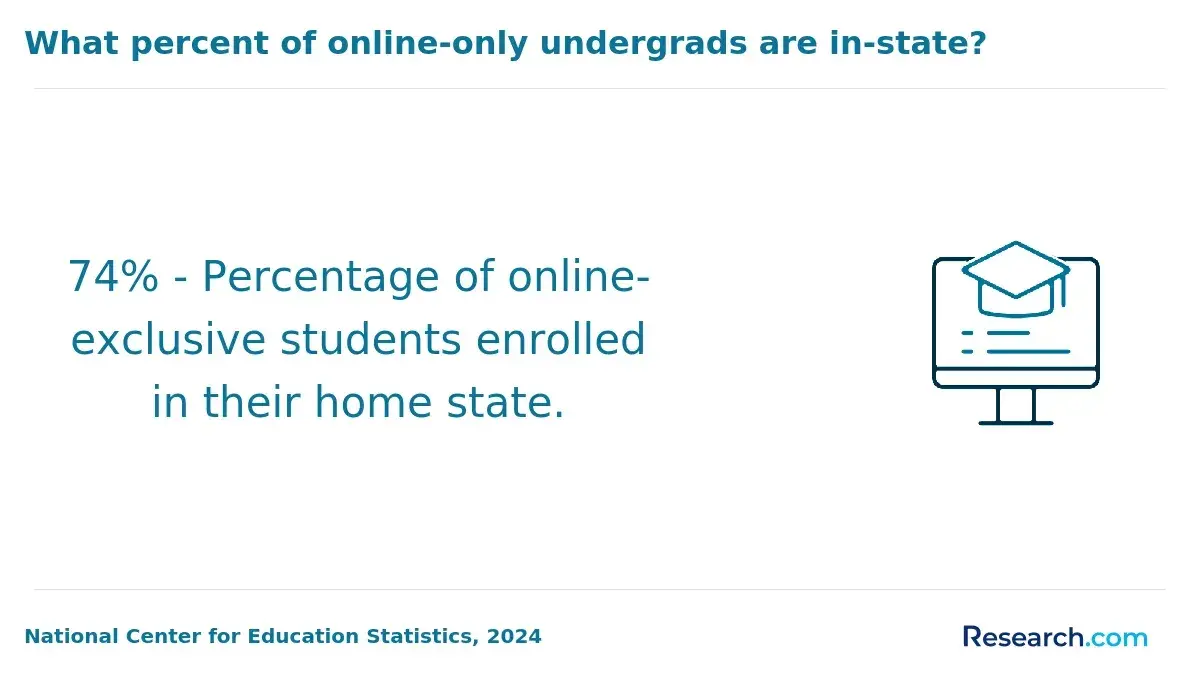
Online does not always mean self-paced. Some nonprofit programs are primarily asynchronous, allowing students to complete work by weekly deadlines, while others require scheduled video sessions, group meetings, proctored exams, campus visits, or field experiences. Working adults should obtain a sample course schedule before committing.
The format comparison below can help students match a program to their work, caregiving, and learning preferences.
| Format | Typical advantage | Potential limitation | Best fit |
| Asynchronous online | Greater control over when coursework is completed. | Weekly deadlines and group work still require consistent availability. | Independent learners with variable work schedules. |
| Synchronous online | Real-time instruction, feedback, and class community. | Fixed meeting times may conflict with work or time zones. | Students who prefer live discussion and regular structure. |
| Hybrid or low-residency | Can combine online convenience with in-person networking or intensive projects. | Travel and schedule demands may add cost and complexity. | Students able to attend required campus sessions. |
| Accelerated terms | May shorten the calendar time to graduation. | Compressed deadlines can make it harder to balance employment. | Students with substantial weekly study time and strong organization. |
Ask admissions staff for the expected weekly time commitment per course, the number of mandatory live sessions, policies for missed meetings, group-project expectations, and the availability of summer courses. Also ask whether students may attend part time, pause enrollment, or change concentration without delaying graduation.
Flexibility also matters when considering adjacent career paths. Students whose goals involve educational services for children should distinguish instructional design from clinical preparation; ASHA approved SLP programs online address a separately regulated professional pathway with distinct academic and clinical requirements.
Online student support can substantially affect completion and portfolio quality, particularly for students returning to school after time away or changing careers. Nonprofit universities vary widely in what they provide, so prospective students should test support claims by speaking with program staff and, when possible, current students.
Prioritize services that directly affect coursework, career transition, and online access. Strong programs commonly offer academic advising, library access, writing feedback, technology support, disability accommodations, tutoring, career coaching, and access to instructors outside scheduled class time.
For instructional design students, career support is most useful when it goes beyond general résumé review. Ask whether career staff understand learning and development job titles, can review a design portfolio, arrange employer panels, help students translate prior teaching or training experience, and provide networking opportunities with alumni. Also ask whether the university offers software access, multimedia labs, cloud storage, or instructional technology workshops for online students.
A red flag is a program that promotes extensive support but cannot explain response times, online access procedures, or whether services are available to fully online learners. Request direct contact information for advising, financial aid, accessibility services, and career development before enrolling.
An online instructional design degree can prepare graduates for learning and development roles when it combines theory with demonstrable work. Common job titles include instructional designer, learning experience designer, e-learning developer, training specialist, curriculum developer, learning technologist, and instructional coordinator. Titles are not standardized, so candidates should search job postings in their target industry before selecting courses or concentrations.
The U.S. Bureau of Labor Statistics projects 2% employment growth for instructional coordinators from 2023 to 2033. That relatively modest projection applies to a specific education-focused occupation, not every corporate instructional design role. Students should use it as context rather than as a forecast of personal employment prospects, and should assess demand in their region, industry, and preferred work arrangement.
Career preparation is strongest when students can show evidence of the following capabilities to employers.
- Analyzing a business or learner problem and defining measurable learning objectives.
- Designing learning experiences using appropriate instructional models, assessments, and feedback loops.
- Creating accessible digital content, storyboards, prototypes, and facilitator or learner materials.
- Using learning-management systems, authoring tools, multimedia workflows, and basic data interpretation when relevant.
- Managing stakeholders, deadlines, revisions, and evaluation plans for real or simulated projects.
Review a program's capstone requirements and ask to see anonymized examples of student work if available. Employers often value a clear portfolio and relevant experience alongside the degree. Students interested in behavior-focused training roles should understand that instructional design is distinct from clinical behavior analysis; BCBA masters programs follow a different professional preparation route and may involve credential-specific requirements.
Yes, an online instructional design degree from an institutionally accredited nonprofit university can support graduate-school applications. Admission decisions are program-specific and commonly consider prior grades, prerequisite coursework, professional experience, recommendation letters, writing samples, and alignment with faculty research or program goals.
A bachelor's degree is the usual entry point for a master's program. A master's in instructional design, educational technology, learning sciences, or a related area can support applications to doctoral programs, although doctoral programs may prefer evidence of research preparation. Students planning ahead should choose electives in research methods, statistics, evaluation, or learning analytics when available and retain strong examples of academic writing.
Before enrolling, ask whether the program includes a thesis option, applied capstone, research methods course, faculty mentorship, and opportunities to present or publish work. A professionally oriented master's can still be useful for doctoral admission, but applicants may need to demonstrate research readiness through coursework, projects, or additional experience.
For professionals whose long-term goal is organizational leadership rather than instructional design research, an online PhD in leadership may be a more aligned next step. Compare doctoral curricula carefully because leadership doctorates, education doctorates, and research PhDs can have different dissertation, residency, and career expectations.
How Should Students Compare the Best Online Instructional Design Degree Programs at Nonprofit Universities?
The best online instructional design program is the one that fits the student's intended role, existing education, schedule, and financial limits - not necessarily the lowest-priced or most highly ranked institution. Start with a shortlist of accredited nonprofit universities whose degree level, delivery format, and curriculum match your goals.
Use a consistent process to compare finalists. It reduces the risk of overlooking a required residency, unaffordable fee, weak transfer policy, or curriculum gap.
- Define your target setting: K-12, higher education, corporate learning, healthcare, government, nonprofit training, or educational technology.
- Choose the appropriate degree level based on your prior college credit, work experience, and whether employers in your target field commonly prefer a bachelor's or master's degree.
- Verify institutional accreditation and confirm that the exact online program is included in the university's current catalog.
- Compare curriculum maps for learning theory, accessibility, assessment, technology, evaluation, portfolio work, and any specialization you need.
- Request a written total-cost estimate that includes tuition, fees, materials, travel, and the effect of accepted transfer credit.
- Confirm scheduling details, including live class times, group work, residencies, course frequency, and part-time options.
- Evaluate support by asking about portfolio coaching, career services, faculty access, software, tutoring, and accommodations for online students.
- Compare outcomes carefully by asking how the school tracks completion, placement, internship participation, and alumni career transitions; treat any outcome claim as context, not a guarantee.
Public nonprofit universities may make the most financial sense for in-state students or students with substantial transfer credit. Private nonprofit universities may be a better fit when they offer a predictable online tuition rate, stronger scheduling options, a distinctive specialization, or more individualized support. Either can be a sound choice if the program's quality and total cost match the student's plan.
Common mistakes include assuming nonprofit status proves value, ignoring required synchronous sessions, comparing advertised tuition instead of program cost, enrolling before a transfer evaluation, and choosing a concentration without checking local job postings. A final shortlist should include at least one financially conservative option, one strongest curriculum match, and one program with the best schedule and support fit.
Other Things You Should Know About Instructional Design
Usually not at an advanced software-engineering level. Many roles benefit from comfort with authoring tools, learning-management systems, basic multimedia production, and occasionally simple HTML or data concepts. Review target job postings to determine which technical skills are most relevant.
A useful portfolio shows the problem, intended learners, objectives, design process, sample deliverables, accessibility decisions, assessment approach, and revisions based on feedback. Remove confidential information from workplace projects and explain your individual contribution to team work.
Yes. Teaching experience can provide strengths in lesson planning, assessment, facilitation, and learner support. Teachers moving into corporate or higher-education roles may need to add experience with adult learning, stakeholder communication, authoring tools, project management, and portfolio presentation.
A certificate can build targeted skills or help test interest in the field, especially for professionals with relevant experience. For roles that prefer graduate education or deeper design expertise, a certificate may be less competitive than a bachelor's or master's degree combined with a strong portfolio.
- Instructional Design Degree: Do You Need One In 2026? A Practical Guide For Teachers Transitioning Into ID https://elearningindustry.com/instructional-design-degree
- Online Master's Degrees in Instructional Design: Review Top Programs https://www.onlinemastersdegrees.org/best-programs/education/instructional-design/
- The 21 Best Instructional Design Masterâs Degree Programs | Devlin Peck https://www.devlinpeck.com/content/instructional-design-masters
- Top 20 Online Master's in Instructional Design https://www.topeducationdegrees.org/rankings/online-masters-instructional-design/
- Online College Costs: A Breakdown of Tuition and Fees | OnlineColleges.net https://www.onlinecolleges.net/for-students/online-college-costs/
- Top Instructional Design Degrees https://www.instructionaldesigncentral.com/instructionaldesigndegree
- Cost of Online College vs. Traditional | Champlain College Online https://online.champlain.edu/blog/cost-of-online-education-vs-traditional-education