2027 Best Online Human Services Doctorate Programs for Senior-Level Roles: Careers, Salaries, and Advancement Paths

Co-Founder and Chief Data Scientist
Choosing an online human services doctorate is usually a leadership decision, not just an academic one. The question is whether the degree can help you move from direct practice or program management into executive, policy, academic, or systems-level roles. The Bureau of Labor Statistics projects employment for social and community service managers to grow 8% from 2023 to 2033, faster than the average for all occupations.
This guide helps experienced professionals compare doctorate types, career paths, salary context, employer expectations, and ROI before committing years of time and tuition.
Key Things You Should Know
- An online doctorate is most valuable for experienced human services professionals targeting executive leadership, applied research, college teaching, policy, consulting, or system-level program design rather than entry-level practice.
- Common senior-level pathways include social and community service management, nonprofit executive leadership, health and human services administration, postsecondary teaching, policy leadership, and applied research; BLS May 2024 median pay for social and community service managers was $78,240.
- The strongest program fit depends on the goal: DSW or DHS programs often suit applied leadership, PhD programs suit research and faculty roles, and EdD-style pathways can fit training, organizational learning, and education-focused human services leadership.
Which Online Human Services Doctorate Programs Best Prepare Graduates for Senior-Level Leadership Roles?
The best online human services doctorate program is the one whose curriculum, research model, faculty expertise, and professional network match your target senior-level role. In this field, "doctorate" can mean several different degree types, and each prepares graduates for leadership in a different way.
Students comparing options often encounter professional doctorates, research doctorates, and adjacent doctoral pathways in social work, public administration, counseling education, or health services. Professionals already holding an MSW may also compare human services doctorates with DSW programs, especially when their goal is clinical leadership, social work administration, or practice innovation.
The table below compares common doctorate types by the senior-level outcomes they most often support. It is not a ranking; it is a decision tool for matching degree structure to career intent.
| Doctorate type | Best fit for | Typical culminating project | Leadership value |
| Doctor of Human Services or Human Services Leadership | Program directors, nonprofit executives, community service leaders, and agency administrators | Applied dissertation, capstone, or organizational improvement project | Strong fit for executive practice, program strategy, grant-funded service systems, and cross-agency collaboration |
| Doctor of Social Work | Licensed social workers, clinical administrators, social work educators, and practice leaders | Applied research project, practice innovation model, or dissertation | Useful for clinical leadership, social work agency management, workforce supervision, and policy-to-practice implementation |
| PhD in Human Services, Social Work, or related field | Researchers, tenure-track faculty candidates, policy analysts, and evaluation specialists | Traditional dissertation | Best suited to original research, academic publishing, research grants, and university-level scholarship |
| EdD with human services, counseling, or organizational leadership focus | Training directors, education administrators, workforce development leaders, and nonprofit learning executives | Dissertation in practice or applied improvement project | Useful for leading staff development, organizational change, professional education, and learning systems |
| Doctorate in Public Administration, Public Health, or Health Services | Government agency leaders, public-sector executives, health and human services administrators, and policy directors | Applied policy analysis, dissertation, or capstone | Strong for public systems leadership, budgeting, compliance, interagency planning, and population-level service strategy |
For senior-level preparation, look beyond the degree title. A strong program should include leadership theory, program evaluation, finance or budgeting, ethics, policy analysis, data-informed decision-making, and a research sequence that helps you solve real organizational problems.
Online format also matters. Executive-oriented programs often use asynchronous coursework for working professionals, while others require live seminars, residencies, teaching practica, research intensives, or field-based projects. A program with occasional residency requirements may still be online, but students should confirm travel costs, scheduling expectations, and whether the residency adds meaningful networking value.
Which Senior-Level Careers Can You Pursue With an Online Human Services Doctorate?
An online human services doctorate can support several senior-level careers, but the degree does not function like a universal promotion ticket. Most employers still weigh your professional record, management experience, budget responsibility, licensure status when relevant, and evidence that you can lead programs through complexity.
The most common senior-level outcomes fall into executive, administrative, academic, policy, and specialized consulting categories. The table below shows how doctorate preparation can connect to different roles and responsibilities.
| Career path | Common senior-level titles | What the role typically involves | Doctorate advantage |
| Human services administration | Executive director, chief program officer, agency administrator, regional director | Overseeing programs, budgets, staff, contracts, outcomes reporting, and community partnerships | Builds credibility in strategic planning, evaluation, governance, and evidence-based leadership |
| Nonprofit and community leadership | Nonprofit CEO, director of community initiatives, foundation program director | Leading mission strategy, fundraising priorities, board relations, advocacy, and cross-sector partnerships | Supports high-level decision-making, grant strategy, organizational change, and public-facing leadership |
| Health and behavioral health administration | Director of behavioral health services, integrated care administrator, population health program leader | Coordinating care systems, compliance, quality improvement, interdisciplinary teams, and service access | Helps connect human services practice with health systems, outcomes measurement, and policy requirements |
| Higher education and training | Professor, adjunct faculty member, program chair, curriculum director, training executive | Teaching, curriculum design, research, assessment, faculty supervision, and workforce development | Often required or strongly preferred for faculty and academic leadership roles |
| Policy, research, and evaluation | Policy director, research consultant, evaluation lead, senior analyst | Designing studies, analyzing outcomes, advising agencies, and translating evidence into practice | Provides advanced research and evaluation skills valued in policy and consulting environments |
Day-to-day work changes significantly at the senior level. Instead of carrying a direct caseload, leaders typically spend more time interpreting data, managing staff performance, defending budgets, negotiating with funders, responding to audits, presenting to boards, and designing systems that serve large populations.
Career fit also depends on whether you want to lead people, lead research, or lead change. A nonprofit CEO role may reward fundraising and governance experience, while a faculty role may require peer-reviewed scholarship. A state agency leadership role may prioritize policy implementation and regulatory knowledge over academic publishing.
How Much Can You Earn in Senior-Level Roles With an Online Human Services Doctorate?
Salaries for doctorate-prepared human services professionals vary widely because graduates move into different occupational categories. A doctorate may strengthen eligibility for senior roles, but pay is still shaped by employer type, region, funding source, staff size, budget authority, licensure, and prior management experience.
The Bureau of Labor Statistics May 2024 wage data provides useful benchmarks for several occupations that overlap with senior-level human services leadership. These figures describe occupational medians, not guaranteed outcomes for doctorate graduates.
| Occupation or role category | Relevant senior-level pathway | May 2024 median annual pay | How to interpret the figure |
| Social and community service managers | Human services agency leadership, nonprofit program administration, community services management | $78,240 | A practical benchmark for program directors and agency managers, especially outside large health systems |
| Medical and health services managers | Behavioral health administration, integrated care leadership, community health systems management | $117,960 | Often reflects higher-paying healthcare management environments with compliance and operational complexity |
| Postsecondary teachers | College teaching, social work or human services faculty, academic program leadership | $84,380 | Useful for academic roles, though pay varies substantially by discipline, institution, rank, and contract type |
| Top executives | Nonprofit CEO, agency executive director, chief operating officer, foundation executive | $105,350 | A broad benchmark; compensation depends heavily on organization size, funding base, and executive responsibility |
The strongest salary upside is often found where doctoral training overlaps with budget authority, healthcare administration, complex compliance, external funding, or executive accountability. For example, a doctorate may carry more market value when paired with a record of managing multimillion-dollar programs than when used alone as a credential.
Students should also compare salary growth against opportunity cost. Doctoral study can take several years, and time spent on coursework, research, and writing may limit overtime, consulting, job changes, or relocation during enrollment. The financial benefit is usually strongest when the degree supports a specific promotion pathway or unlocks roles that were previously difficult to access.
Executive positions in human services require more than compassion and subject-matter knowledge. Senior leaders must translate mission into measurable outcomes, manage limited resources, and make decisions that affect clients, employees, funders, and communities.
The skills below are especially important because they separate doctoral-level leadership from advanced direct practice. They also give students a practical checklist for evaluating whether a program prepares them for executive responsibility.
- Strategic leadership: The ability to set organizational priorities, align services with community needs, and make decisions under financial, political, and ethical constraints.
- Program evaluation: Competence in measuring outcomes, interpreting evidence, building logic models, and using data to improve services rather than simply reporting activity.
- Budgeting and resource management: Familiarity with grants, contracts, staffing models, compliance costs, reimbursement limits, and sustainability planning.
- Policy analysis: Understanding how federal, state, and local rules affect service delivery, funding, eligibility, privacy, documentation, and equity.
- Organizational change management: The ability to lead staff through restructuring, technology adoption, quality improvement, mergers, or new service models.
- Research translation: Skill in turning scholarly evidence into practical interventions, training programs, policy briefs, and executive recommendations.
- Ethical and culturally responsive leadership: Capacity to manage power, equity, confidentiality, community voice, and trauma-informed practice at an organizational level.
AI and data tools are becoming more relevant in these roles. Human services leaders may not need to build AI systems, but they increasingly need to evaluate predictive analytics, case-management platforms, automated reporting, privacy risks, algorithmic bias, and staff training needs before adopting technology.
A strong online doctorate should give students repeated opportunities to apply these skills to real problems. Look for assignments that involve board presentations, needs assessments, policy memos, evaluation plans, financial analysis, and leadership case studies rather than programs built only around theory papers.
Specialization choice can shape both your coursework and your post-graduation credibility. The best specialization is not always the most popular one; it is the one that matches the population, system, or leadership problem you want to influence.
The table below summarizes specializations that commonly align with senior-level human services opportunities. Use it to compare where each concentration has the clearest professional value.
| Specialization | Best leadership opportunities | Who should consider it |
| Nonprofit leadership and administration | Executive director, chief program officer, foundation program leader, development-informed administrator | Professionals who want to lead mission-driven organizations, manage boards, oversee grants, and scale community programs |
| Behavioral health or mental health administration | Behavioral health director, integrated services administrator, substance use program executive | Licensed or experienced behavioral health professionals moving into systems management and quality improvement |
| Gerontology and aging services | Aging services executive, long-term care program leader, senior services policy director | Professionals focused on older adults, caregiver systems, disability services, and age-friendly community planning |
| Child, family, and youth services | Child welfare administrator, family services director, youth program executive | Practitioners with experience in child welfare, family advocacy, school-community partnerships, or trauma-informed services |
| Criminal justice and community corrections | Reentry program director, victim services executive, justice-involved population services leader | Professionals bridging human services, public safety, behavioral health, and community reintegration |
| Policy, advocacy, and social change | Policy director, legislative analyst, advocacy organization executive, systems-change consultant | Professionals who want to influence laws, funding formulas, service access, and public-sector reform |
| Research, evaluation, and analytics | Evaluation consultant, research director, outcomes measurement leader, grant evaluation specialist | Students who enjoy data, evidence-based practice, assessment design, and applied research partnerships |
Specializations also affect the type of final project that will be most useful. A nonprofit leadership student may benefit from a capstone on revenue diversification, while a policy student may need a dissertation that analyzes service access or implementation barriers.
One common mistake is choosing a concentration because it sounds broad. Broad can be useful, but senior-level hiring often rewards clear expertise. If you want to run a behavioral health division, a general leadership track may be less persuasive than one with coursework in health systems, quality improvement, compliance, and interdisciplinary care.
An online human services doctorate supports advancement when it helps you demonstrate executive readiness before you apply for the next role. The degree can add credibility, but the strongest candidates use doctoral work to build a leadership portfolio, expand professional networks, and solve problems visible to current or future employers.
Doctoral study can support executive advancement in several practical ways. These steps are especially useful for students who are enrolling while working full time.
- Choose assignments that map to your current organization's real challenges. When allowed by your program, use papers, evaluations, and capstone work to analyze staffing, outcomes, funding, or service gaps you already understand.
- Build a portfolio of executive evidence. Save polished examples of strategic plans, evaluation models, policy briefs, grant analyses, training modules, and board-style presentations.
- Seek mentors beyond your immediate supervisor. Faculty, alumni, agency executives, and association leaders can help you understand what senior hiring committees actually value.
- Convert research into visible professional output. Present at conferences, publish practitioner articles, lead webinars, or brief local coalitions when appropriate.
- Ask for stretch assignments while enrolled. Doctoral training has more career value when paired with leadership responsibilities such as supervising teams, managing budgets, leading audits, or coordinating partnerships.
The degree can also help with career transition. A direct-practice professional may use the doctorate to move into program design, while a program manager may move toward executive administration or teaching. However, transitions are smoother when students choose projects, internships, residencies, and electives that clearly connect past experience to the next role.
Students should be careful not to disappear into the degree. Senior-level advancement still depends on visibility, relationship-building, and demonstrated performance. If doctoral study becomes isolated from your professional network, it may be less useful as a leadership bridge.
Employers usually evaluate an online human services doctorate by asking whether the credential is legitimate, relevant, and supported by evidence of leadership performance. The word "online" is rarely the deciding factor if the institution is properly accredited and the candidate can show strong professional outcomes.
For senior-level hiring, employers commonly look at several signals together. These criteria are useful when deciding whether a program will be respected in your target market.
- Institutional accreditation: The school should hold accreditation from an agency recognized by the U.S. Department of Education or the Council for Higher Education Accreditation.
- Discipline relevance: Coursework should match the role, whether that means human services leadership, social work administration, behavioral health, public administration, education, or policy.
- Faculty expertise: Faculty should have scholarship, executive experience, consulting experience, or community partnerships in your area of interest.
- Applied leadership evidence: Employers may value dissertations, capstones, publications, presentations, and portfolios that show practical impact.
- Professional experience: For executive roles, years of leadership, budget responsibility, supervision, and measurable program results often matter as much as the degree itself.
- Licensure fit: If the role involves clinical supervision or regulated practice, state licensure rules may matter more than the doctorate title.
Programmatic accreditation is more complex in human services than in fields such as nursing or counseling. Some adjacent degrees, such as social work, may involve discipline-specific accreditation at earlier degree levels, while many human services doctorates rely primarily on institutional accreditation. Students should verify what their target employers, licensing boards, or faculty roles require before enrolling.
A red flag is a program that promises rapid executive advancement, avoids clear accreditation language, lists vague faculty qualifications, or cannot explain what graduates do after completion. Another warning sign is a dissertation or capstone process with little faculty mentoring, because weak research support can delay completion and reduce the professional value of the degree.
The professionals who benefit most from an online human services doctorate usually already have a strong foundation in service delivery, supervision, program management, policy, or clinical practice. The degree is most valuable when it amplifies an existing career trajectory rather than replacing the need for experience.
Several groups are especially well positioned to benefit. If you are earlier in your education path, an accelerated human services degree online may be a more appropriate first step before considering graduate and doctoral study.
- Midcareer program managers: Professionals managing teams, contracts, or services who want to compete for director-level or executive roles.
- Licensed social workers and clinicians: Practitioners who want to move into agency leadership, clinical administration, teaching, supervision, or systems improvement.
- Nonprofit leaders: Directors and senior managers who need stronger skills in evaluation, governance, fundraising strategy, and organizational change.
- Public-sector professionals: Human services employees in state, county, or municipal agencies who want to influence policy, compliance, budgeting, or service design.
- College instructors and trainers: Educators who want stronger credentials for teaching, curriculum leadership, workforce development, or academic administration.
- Consultants and evaluators: Professionals who want doctoral-level credibility for advising agencies, measuring outcomes, or leading grant-funded evaluation projects.
Some students should pause before applying. If you are seeking entry-level case management, are unsure whether you want leadership, or need a degree primarily for basic licensure, a doctorate may be premature. Many future doctoral students first build practice depth through a master's route such as the best online MSW programs, depending on their professional goals and state requirements.
Undergraduate preparation also matters. Students interested in population behavior, inequality, community systems, and social research may begin through one of the best online bachelors in sociology programs before moving into graduate-level human services, social work, public administration, or policy study.
The ROI of an online human services doctorate depends on the relationship between cost, time, role access, salary potential, and nonfinancial returns such as influence, mission fit, and academic credibility. Because many human services organizations operate under tight public or nonprofit funding, students should be realistic about pay and intentional about career strategy.
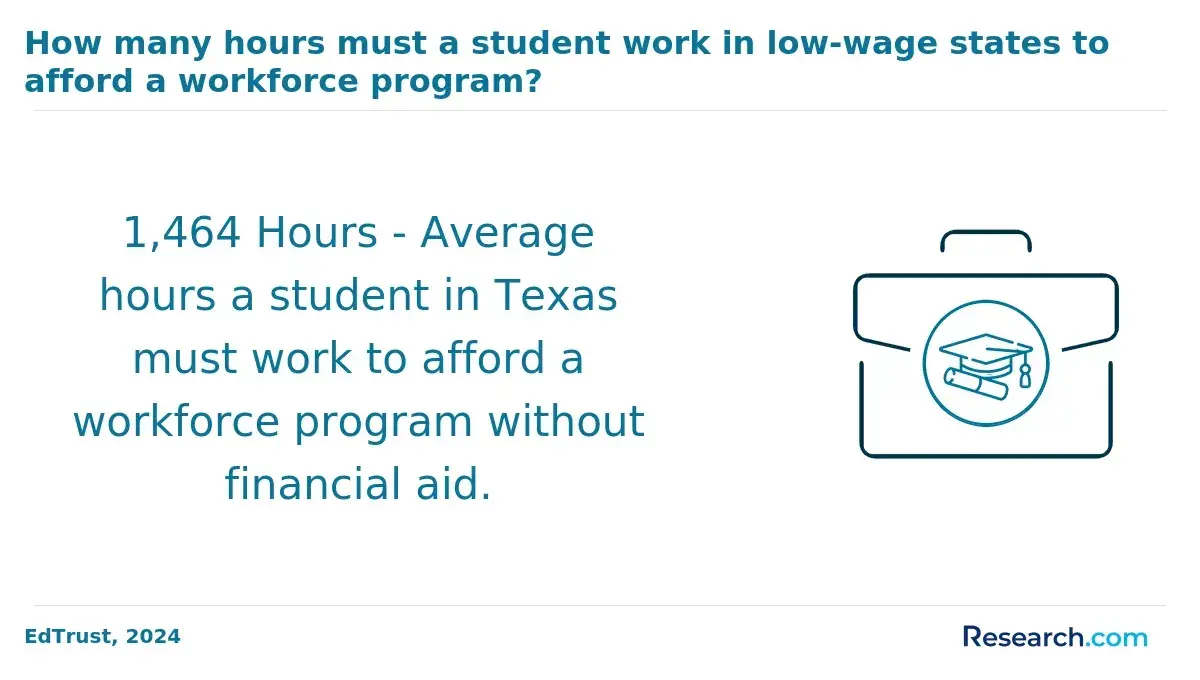
A practical ROI analysis should start with cost. NCES data released in 2024 shows that average graduate tuition and required fees differ substantially by sector, with public institutions typically costing less than private nonprofit institutions. That matters because a doctorate with similar employer recognition but lower net cost may produce a stronger financial return.
Students should compare these ROI factors before enrolling. The goal is not to reduce the decision to salary alone, but to understand whether the degree supports a realistic advancement plan.
- Total net cost: Include tuition, fees, books, technology fees, residency travel, lost income opportunities, and interest if you borrow.
- Employer support: Ask whether your organization offers tuition assistance, release time, research partnerships, promotion pathways, or salary adjustments for doctoral credentials.
- Time to completion: A three-year professional doctorate and a longer dissertation-heavy research doctorate may create very different opportunity costs.
- Role access: Identify jobs where a doctorate is required, preferred, or clearly valued, rather than assuming it will matter equally everywhere.
- Salary ceiling: Compare current compensation with realistic senior-level salary bands in your region and sector.
- Credential portability: Consider whether the degree will be recognized across nonprofits, government agencies, healthcare systems, consulting firms, and colleges.
- Nonfinancial value: Factor in mission impact, policy influence, teaching opportunities, research independence, and long-term professional identity.
Federal borrowing rules also affect ROI. For the 2024-25 award year, graduate students may borrow up to $20,500 annually in Direct Unsubsidized Loans, while Grad PLUS Loans can cover remaining eligible costs up to the cost of attendance after other aid. Borrowing more can make enrollment possible, but it also raises the salary threshold needed for a positive financial return.
A common mistake is calculating ROI only from the first job after graduation. Doctoral ROI often appears over a longer horizon through promotions, consulting, teaching, policy work, or executive mobility. Still, students should avoid taking on high debt without a specific plan for how the credential will improve their leadership options.
How Should Students Choose the Best Online Human Services Doctorate Program for Executive Career Goals?
Choosing the best online human services doctorate for executive goals requires a structured comparison. Start with the role you want, then work backward to the degree type, curriculum, faculty, research model, schedule, and total cost that support that outcome.
Use the following steps to compare programs in a way that reflects senior-level career value rather than marketing language.
- Define your target role first. Write down whether you want executive administration, faculty work, policy leadership, consulting, clinical administration, or research.
- Match the degree type to the role. Consider a professional doctorate for applied leadership, a PhD for research-intensive academic pathways, or an adjacent doctorate for public administration, education, health services, or social work leadership.
- Verify accreditation and employer recognition. Confirm institutional accreditation and ask employers, licensing boards, or academic hiring committees whether the credential fits your target role.
- Review the curriculum for executive content. Look for finance, policy, evaluation, governance, ethics, workforce leadership, data use, and organizational change.
- Compare dissertation and capstone expectations. Choose a model that matches your goals, schedule, research confidence, and desired professional output.
- Ask about completion support. Strong programs provide dissertation mentoring, writing support, research methods help, faculty access, and clear milestone tracking.
- Evaluate online flexibility honestly. Confirm synchronous sessions, residency requirements, practicum expectations, cohort pacing, and whether the schedule fits full-time work.
- Calculate net cost before applying. Include employer aid, scholarships, federal loans, payment plans, transfer credits, and the cost of delayed completion.
- Investigate career outcomes. Ask where graduates work, whether alumni hold senior roles, and how the program supports networking, publishing, conference presentations, or consulting.
- Look for red flags. Be cautious with unclear accreditation, vague outcome claims, unusually weak research support, pressure-heavy admissions, or programs that cannot explain leadership pathways.
Admissions requirements commonly include a master's degree, professional resume, statement of purpose, recommendations, graduate transcripts, and sometimes writing samples or interviews. Some programs require prior human services, social work, counseling, public administration, or nonprofit leadership experience; others admit career changers with related preparation.
The best final choice is usually not the cheapest program, the most famous school, or the fastest format by default. It is the program that creates the strongest fit between your experience, your target leadership market, your available time, and your willingness to complete advanced research or applied change work.
Other Things You Should Know About Human Services
Yes, many online programs are designed for working professionals, but the workload can still be demanding. Expect heavy reading, research, writing, group work, and dissertation or capstone milestones, especially in the final stage.
Some do and some do not. Programs may include residencies, intensives, dissertation seminars, or orientation weekends, so students should confirm travel requirements, timing, and extra costs before enrolling.
Most programs require a reliable internet connection, a computer with updated software, and proficiency in using virtual learning platforms such as Blackboard or Zoom. Some programs may also require access to specific databases or industry-specific software, so check each program's guidelines.
Usually not by itself. Clinical licensure depends on state rules, supervised experience, exams, and qualifying degrees in fields such as social work, counseling, psychology, or marriage and family therapy. Always check your state licensing board before enrolling.
- Doctor of Social Work | UNE Online https://online.une.edu/program/doctorate-in-social-work/
- Doctorate in Social Work (DSW) Programs Online https://www.onlinemswprograms.com/online-social-work-degrees/online-dsw/
- Health and Human Services: Campus & Online Degrees and Careers https://www.publichealthonline.org/human-services/online-degree-programs/
- Careers https://www.publichealthdegrees.org/careers/
- Academic and Career Paths for PhD Graduates | European Proceedings https://www.europeanproceedings.com/article/10.15405/epes.23056.44
- 2025 Most Affordable Online Doctorates in Education https://www.onlineu.com/most-affordable-colleges/education-doctoral-degrees
- PhDs in Human Services Online: View & Compare Programs https://www.edumed.org/online-schools/human-services-degrees/phd/
- Leadership - Bachelor of Human Services Online | IWU https://www.indwes.edu/program/bs-human-services/leadership/
- Online EdD Programs in Healthcare Professions & Nursing Education (Health Administration) https://www.onlineeddprograms.com/specializations/healthcare-professions
- Doctorate of Social Work (DSW) Degree Programs Online https://socialworklicensemap.com/social-work-degrees/doctorate-in-social-work/