2027 Best Online Health Services Doctorate Programs for Career Advancement Beyond a Master's Degree

Co-Founder and Chief Data Scientist
Choosing whether to move from a master's degree to an online health services doctorate is a career investment decision, not just an academic one. The stakes are rising as the U. S. Bureau of Labor Statistics projects medical and health services manager employment to grow 29% from 2023 to 2033, far faster than average.
This guide is for working healthcare, public health, informatics, and administration professionals who want senior leadership, teaching, consulting, or policy roles. You'll learn which doctoral paths fit different goals, what outcomes are realistic, and how to judge value before enrolling.
Key Things You Should Know
- An online health services doctorate is most valuable when it matches a specific advancement target, such as executive healthcare leadership, applied public health leadership, health informatics strategy, health policy, or university teaching.
- BLS data published in 2024 reports a $110,680 median annual wage for medical and health services managers and 29% projected job growth from 2023 to 2033, but a doctorate is usually preferred rather than strictly required for many management roles.
- The strongest ROI typically comes from accredited programs with flexible online formats, employer-recognized capstones or dissertations, transparent total costs, and direct alignment with roles above the master's level.
Which Online Health Services Doctorate Programs Best Support Career Advancement Beyond a Master's Degree?
The best online health services doctorate program is the one that connects your existing master's training to the next role you want. For many professionals, that means choosing between an applied professional doctorate, a research-focused PhD, or a discipline-specific doctorate in public health, healthcare administration, health sciences, nursing, or informatics.
If your current credential is a masters in healthcare administration, a doctorate may make the most sense when you are moving from department-level management into enterprise strategy, system leadership, academic teaching, consulting, or policy design. If you still need broad management foundations, another master's-level credential may be more practical than immediately entering a doctorate.
This comparison shows which doctorate types usually fit different career-advancement goals. Use it to narrow your search before comparing schools, tuition, admissions requirements, and graduation outcomes.
| Doctorate type | Best fit | Typical career advancement use | Common culminating requirement |
| Doctor of Healthcare Administration or Doctor of Health Administration | Experienced healthcare managers, directors, and executives | Hospital leadership, health system administration, consulting, operations strategy | Applied dissertation, doctoral project, or capstone |
| Doctor of Health Science | Clinicians, educators, allied health leaders, and interdisciplinary health professionals | Clinical program leadership, health professions education, quality improvement, organizational leadership | Applied research project or dissertation |
| Doctor of Public Health | Public health practitioners with leadership or policy goals | Public health administration, population health strategy, community health leadership, government or nonprofit leadership | Applied practice project, dissertation, or portfolio |
| PhD in Health Services, Health Policy, or Health Sciences | Professionals seeking research, faculty, or policy-analysis roles | University teaching, health services research, policy research, research leadership | Research dissertation |
| Doctorate in Health Informatics or Health Information Management | Health IT, analytics, revenue cycle, and information governance professionals | Data governance leadership, informatics strategy, digital transformation, health information executive roles | Applied informatics project or dissertation |
The main distinction is professional versus research orientation. A professional doctorate is usually better for advancement inside healthcare organizations because it emphasizes applied leadership, finance, quality improvement, compliance, and change management. A PhD is usually better for research-intensive careers, tenure-track academic roles, or policy analysis positions that expect original scholarship.
Before shortlisting programs, confirm institutional accreditation, online delivery format, faculty expertise, residency requirements, and whether the curriculum duplicates your master's coursework. Also check whether the school publishes completion rates, time-to-degree, doctoral project examples, and career services for experienced professionals rather than only entry-level students.
Which Career Paths Become More Accessible With an Online Health Services Doctorate?
An online health services doctorate can open doors to roles where employers want evidence of advanced leadership, research literacy, policy judgment, or the ability to manage complex systems. It does not automatically qualify you for every senior position, but it can strengthen your profile when paired with relevant experience, measurable achievements, and sector-specific expertise.
The table below separates roles where a doctorate may provide a clear advantage from roles where experience, licensure, or technical credentials may matter more. Salary figures reflect national BLS data published in 2024 and should be treated as context, not a guarantee.
| Career path | Doctorate value | Relevant BLS salary or outlook context | What employers usually evaluate |
| Medical and health services executive | Often preferred for system-level leadership, strategy, quality, or academic medical center roles | Medical and health services managers had a $110,680 median annual wage and 29% projected growth from 2023 to 2033 | Leadership record, financial results, regulatory knowledge, operational outcomes |
| Health policy or health services researcher | Strong advantage, especially for research-heavy roles | Research-oriented roles vary by employer and funding source | Research methods, publications, grant experience, policy expertise |
| Postsecondary health specialties educator | Often expected for full-time faculty or doctoral teaching roles | Health specialties teachers in postsecondary settings had a $105,650 median annual wage in BLS data | Teaching ability, doctorate type, publications, professional practice experience |
| Public health director or population health leader | Valuable for senior public agency, nonprofit, or system-level population health roles | Epidemiologists had 19% projected growth from 2023 to 2033 | Program outcomes, epidemiology literacy, community partnerships, grant leadership |
| Health informatics or data governance leader | Useful when the role combines technology, compliance, analytics, and executive strategy | Health information technologists and medical registrars had 16% projected growth from 2023 to 2033 | Data governance, EHR strategy, privacy, analytics, interoperability |
Doctoral study is especially useful for roles that require cross-functional decision-making. These positions often involve setting budgets, improving quality metrics, interpreting health data, managing compliance risk, leading workforce initiatives, or translating research into operational strategy.
A common mistake is assuming a doctorate replaces experience. In healthcare, senior roles usually require both: a record of solving real organizational problems and the academic preparation to lead at a broader level. If you are still early in your career, gaining management responsibility before or during doctoral study may produce better long-term results than relying on the degree alone.
How Does an Online Health Services Doctorate Increase Earning Potential After a Master's Degree?
A doctorate can increase earning potential indirectly by helping professionals compete for higher-responsibility roles, not by changing compensation on its own. The strongest salary upside usually comes when the degree supports a move into executive administration, consulting, faculty leadership, analytics strategy, or specialized policy work.
For example, BLS data published in 2024 places the median annual wage for medical and health services managers at $110,680. That figure helps frame the market for leadership roles, but it includes professionals with different education levels, organization sizes, regions, and specialties. Your actual earnings may depend more on scope of responsibility, employer type, geographic market, and prior results than on the credential alone.
Health data careers can also reward advanced specialization, especially as organizations invest in interoperability, analytics, privacy, and AI-enabled decision support. Professionals comparing leadership pathways in this area may want to review current health information management salary trends before deciding whether a doctorate, certification, or technical credential offers the better next step.
The highest-value doctoral outcomes tend to come from career moves like these:
- Moving from manager or director roles into vice president, chief officer, or system-level administrator positions.
- Transitioning from practice-based work into consulting, teaching, research leadership, or policy roles.
- Building advanced specialization in health informatics, quality improvement, population health, compliance, or organizational strategy.
- Using a doctoral capstone or dissertation to solve a real employer problem and demonstrate measurable impact.
The degree may not be worth the cost if your target employer promotes primarily through tenure, licensure, union rules, or operational performance without valuing doctoral education. Before enrolling, review job postings for your desired roles and count how often a doctorate is required, preferred, or absent from the qualifications.
Doctoral programs can help professionals move beyond master's-level management by developing the skills needed to lead across departments, facilities, populations, and stakeholder groups. At the doctoral level, the emphasis shifts from applying known practices to designing, evaluating, and defending complex decisions.
Leadership-focused online health services doctorates often build competencies that senior employers value because they affect organizational performance. These areas are especially important for professionals seeking executive or director-level advancement:
- Strategic decision-making: evaluating service lines, workforce constraints, reimbursement pressures, and long-term organizational risk.
- Evidence-based leadership: using research and operational data to justify decisions rather than relying only on experience or precedent.
- Quality and safety improvement: designing interventions that reduce errors, improve patient outcomes, and meet accreditation or regulatory expectations.
- Financial and operational analysis: connecting budgets, staffing, productivity, patient access, and performance metrics.
- Change management: leading technology adoption, process redesign, mergers, compliance initiatives, or culture change.
- Communication with executives and boards: translating technical, clinical, or policy issues into clear recommendations.
The online format can be an advantage for working professionals because assignments can often be tied to current workplace challenges. A strong doctoral project may become evidence of leadership readiness if it demonstrates cost reduction, quality improvement, better access, stronger compliance, or improved patient experience.
The red flag is a program that teaches leadership only in abstract terms. Look for courses that require applied analysis, executive communication, data interpretation, finance, ethics, policy, and measurable project outcomes.
The strongest specialization depends on where you already have experience and where you want more authority. A specialization should expand your career options beyond your master's degree rather than repeat the same content at a higher tuition level.
This table summarizes common specializations and the advancement paths they tend to support. It is most useful when read alongside real job postings in your region and sector.
| Specialization | Best for | Career advancement potential | When it may not be the best fit |
| Healthcare administration and executive leadership | Managers seeking system, hospital, clinic, or payer leadership | Strong for operations, strategy, quality, and executive roles | Less useful if your goal is research faculty work |
| Health informatics and analytics | Professionals in health IT, data governance, EHR, revenue cycle, or analytics | Strong as AI, interoperability, cybersecurity, and data-driven care expand | Weak if the curriculum lacks technical depth or real analytics projects |
| Public health leadership or population health | Public health, nonprofit, government, and health system professionals | Strong for community health strategy, prevention programs, and policy implementation | Less direct for hospital operations unless paired with administration experience |
| Health policy | Professionals interested in regulation, advocacy, think tanks, consulting, or government | Strong for policy analysis and leadership roles that require research literacy | May require additional writing, research, or legislative experience |
| Quality improvement and patient safety | Clinical leaders, administrators, and compliance professionals | Strong for organizations focused on outcomes, accreditation, and value-based care | Less useful if the program lacks applied improvement methodology |
| Health professions education | Clinicians or administrators who want teaching, curriculum, or academic leadership roles | Strong for faculty, program director, and continuing education leadership | May not lead to executive healthcare administration roles without management experience |
Current healthcare trends make informatics, quality, population health, and executive leadership especially relevant. AI-enabled tools, remote monitoring, cybersecurity risk, value-based payment models, and workforce shortages all require leaders who can interpret evidence and guide responsible implementation.
Avoid choosing a specialization only because it sounds prestigious. The better test is whether it helps you build a portfolio that employers can understand: projects, publications, dashboards, policy briefs, improvement plans, teaching materials, or leadership outcomes.
Employers usually value an online health services doctorate when it comes from an accredited institution, aligns with the role, and is supported by a strong professional record. The word "online" matters less than program quality, institutional reputation, applied rigor, faculty credibility, and whether the graduate can demonstrate leadership impact.
In healthcare, employer recognition often depends on the type of position. A hospital executive search committee may value an applied doctorate differently than a university hiring committee, a public health agency, or a consulting firm. Academic employers may prefer or require a PhD for research-heavy faculty roles, while healthcare systems may place more value on a DHA, DHSc, DrPH, or similar applied doctorate if the candidate has strong operational results.
Employers tend to look for the following signals when evaluating doctoral candidates:
- Regional or national institutional accreditation and, where relevant, discipline-specific accreditation or recognition.
- A curriculum that matches the role, such as finance and operations for administration or biostatistics and epidemiology for public health leadership.
- A dissertation, capstone, or doctoral project with practical relevance to healthcare organizations.
- Evidence of leadership before and during the program, such as promotions, cross-functional projects, committee work, or measurable outcomes.
- Communication skills, because senior roles require explaining complex data, regulation, and strategy to nontechnical audiences.
The main red flag is a program that advertises rapid advancement without showing credible outcomes. Be cautious if a school is vague about accreditation, total cost, faculty qualifications, graduation rates, student support, or the type of doctoral work required.
Most online health services doctorates take about three to six years after a master's degree, depending on credit requirements, dissertation or capstone structure, transfer policy, enrollment intensity, and how quickly the student completes research milestones. Working professionals should evaluate time as both an academic requirement and a career opportunity cost.
Some schools offer structured cohorts, year-round courses, or compressed terms, while others give students more flexibility. If speed is important, compare doctoral timelines with lower-level accelerated healthcare programs to determine whether you need a doctorate now or a faster credential first.
The table below outlines common timeline patterns. Actual completion time varies by school, research topic, committee feedback, and personal workload.
| Enrollment path | Typical pace | Best for | Key trade-off |
| Full-time online doctorate | Often faster, sometimes about three to four years | Professionals with flexible work schedules or strong employer support | Higher weekly workload and less flexibility during major projects |
| Part-time online doctorate | Often about four to six years | Full-time workers, caregivers, and executives with demanding schedules | Longer time before career benefits may appear |
| ABD or dissertation-completion pathway | Varies widely | Students who completed doctoral coursework elsewhere | Strict transfer and prior-credit rules may limit eligibility |
| Professional doctorate with capstone | Often more predictable than dissertation-heavy programs | Applied leaders who want workplace-relevant outcomes | May be less suitable for research-intensive academic careers |
To keep the timeline realistic, ask schools how many students complete the program while working full time, how dissertation or capstone committees are assigned, whether courses are asynchronous, and how often students can begin research planning before finishing all coursework.
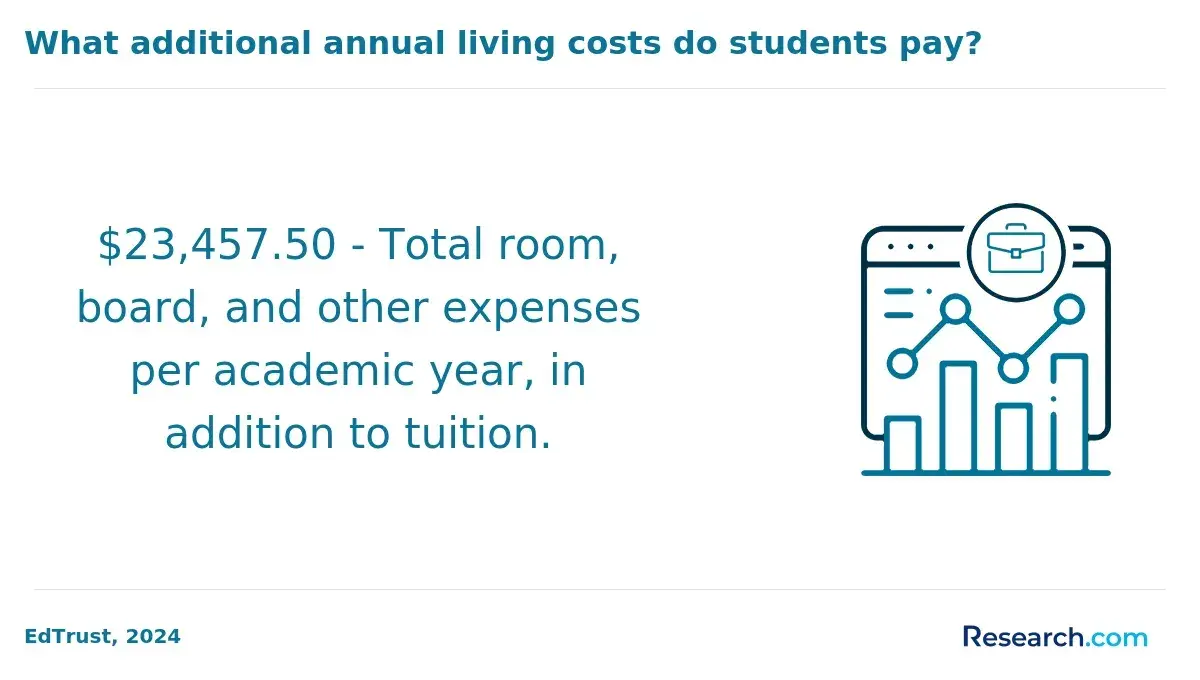
The ROI of an online health services doctorate depends on total cost, financing method, time to completion, career goal, salary movement, and whether your employer rewards the credential. The degree has stronger ROI when it helps you qualify for roles you could not realistically reach with only your master's degree and experience.
Financing matters because graduate borrowing is expensive. For federal loans first disbursed in the 2024-2025 award year, graduate Direct Unsubsidized Loans carry an 8.08% fixed interest rate, while Grad PLUS Loans carry a 9.08% fixed interest rate. That means tuition differences, scholarships, employer reimbursement, and time-to-completion can meaningfully change the long-term cost of the degree.
Use this ROI framework before applying:
- Identify three target roles and confirm whether a doctorate is required, preferred, or simply nice to have.
- Estimate total program cost, including tuition, fees, books, travel for residencies, technology, and loan interest.
- Ask your employer whether the doctorate affects promotion eligibility, pay bands, tuition reimbursement, or leadership-track consideration.
- Compare the doctorate with lower-cost alternatives such as executive certificates, professional certifications, leadership fellowships, or targeted technical training.
- Calculate the time needed to recover your net cost under conservative salary assumptions rather than best-case scenarios.
- Evaluate non-salary benefits, including academic eligibility, consulting credibility, research skills, network access, and long-term career mobility.
A doctorate may be a poor ROI if you are paying high tuition without a clear career target, if your intended role does not value doctoral education, or if the program's specialization does not connect to your current experience. It may be a strong investment if it positions you for executive scope, academic roles, consulting, or specialized leadership that requires advanced evidence-based decision-making.
The professionals who benefit most already have a master's degree, relevant work experience, and a clear advancement goal. The doctorate is usually most powerful as a career accelerator for people who are already close to senior-level responsibilities and need advanced preparation, credibility, or specialization to move further.
An online health services doctorate is often a strong fit for these professionals:
- Healthcare administrators who want to move from department leadership to enterprise, regional, or system-level roles.
- Clinicians with master's degrees who want to lead programs, teach, consult, or manage interdisciplinary teams.
- Public health professionals seeking senior roles in agencies, nonprofits, population health, or policy implementation.
- Health informatics and HIM professionals moving into data governance, digital strategy, privacy, or analytics leadership.
- Educators who want to teach health professions students, lead academic programs, or design continuing education.
- Consultants who need stronger research, evaluation, and executive communication skills.
Some professionals should wait or choose another path. A doctorate may not be the best next step if you do not yet know your target role, if you lack management or specialized experience, if your employer does not value doctoral education, or if a certification would solve the immediate career gap at much lower cost.
The best timing is usually when you can use the program to solve real workplace problems. Students who connect coursework to current leadership responsibilities often graduate with stronger portfolios, better references, and clearer evidence of doctoral-level capability.
How Should Professionals Choose an Online Health Services Doctorate for Career Advancement?
Choosing an online health services doctorate should start with career fit, not rankings alone. A highly ranked program that does not match your specialization, schedule, budget, or employer expectations may produce less value than a more practical program with stronger alignment.
If affordability is your biggest barrier and you are still comparing degree levels, reviewing a cheapest online healthcare administration degree list can help you understand lower-cost pathways before committing to doctoral tuition. For doctoral study, however, affordability should be weighed alongside accreditation, faculty access, research support, and career relevance.
Use these steps to evaluate programs before applying:
- Define your target role first, then choose the doctorate type that best matches that role.
- Verify institutional accreditation and any discipline-specific accreditation relevant to your field, such as public health, nursing, or health professions education requirements.
- Compare total cost rather than tuition alone, including fees, residencies, dissertation continuation credits, and loan interest.
- Ask whether prior graduate credits can transfer and whether transfer credits shorten both cost and time-to-degree.
- Review faculty expertise to ensure someone can supervise your intended research, capstone, or applied project.
- Compare dissertation, capstone, and project requirements based on whether your goal is research, executive leadership, teaching, or consulting.
- Ask for outcomes data, including completion rates, average time-to-degree, alumni roles, and career services for doctoral students.
- Check whether the online format fits your life, including synchronous sessions, residencies, practicum requirements, and weekly workload.
- Speak with current students or alumni about faculty responsiveness, research support, and whether the program helped them advance.
- Avoid programs that promise promotions, hide fees, minimize workload, or cannot clearly explain employer recognition.
The smartest choice is the program that makes your next career move more credible and more achievable. For some professionals, that is an applied doctorate with a workplace capstone. For others, it is a PhD with strong research mentorship. For others, the best decision is to delay doctoral study until their career goal is clearer.
Other Things You Should Know About Health Services
Yes, many online programs are designed for working professionals, but the workload can be demanding. Ask about weekly time expectations, synchronous meetings, residency requirements, and dissertation or capstone support before enrolling.
Some do and some do not. Programs may require short residencies, intensives, defenses, orientations, or applied project presentations, so review the full academic calendar and travel expectations.
Usually not by itself. Licensure rules depend on the profession and state, especially for clinical roles. Always check the relevant licensing board before assuming a doctoral program meets professional requirements.
It depends on the goal. A dissertation is usually stronger for research and academic careers, while a capstone or applied doctoral project may be more useful for executive, operational, consulting, or practice-focused advancement.
- Health and Human Services: Campus & Online Degrees and Careers https://www.publichealthonline.org/human-services/online-degree-programs/
- How to Pay for a Ph.D in 2026 - ELFI https://www.elfi.com/how-to-pay-for-a-ph-d/
- Is Grad School Worth It? A Comprehensive Return on Investment Analysis - FREOPP https://freopp.org/whitepapers/is-grad-school-worth-it-a-comprehensive-return-on-investment-analysis/
- Client Challenge https://www.springermedizin.de/analysis-of-the-doctor-of-public-health-drph-training-and-identi/26274958
- 25 Best Online EdD Programs of 2025 https://www.eddprograms.org/schools/best-online-doctor-of-education-programs/
- Transform Healthcare: Top Online PhDs in Health Sciences https://www.phds.me/online-programs/phd-in-health-sciences/
- Health Science Ph.D. (Online/Hybrid) - Degree Info & School Reviews https://www.edumed.org/online-schools/health-science-degrees/phd-doctorate/
- Doctor of Health Science Degree | Online https://www.baypath.edu/academics/graduate-programs/health-science-doctorate-dhsc/
- Career opportunities in medicine beyond being a doctor – Study Work Grow https://studyworkgrow.com/career-opportunities-in-medicine-beyond-being-a-doctor/
- How Long to Get a Doctor of Health Science? | University of Bridgeport https://www.bridgeport.edu/news/doctor-of-health-science-online-length-of-program/