
2027 Best Online Health Services Administration Doctorate Programs for Private Sector and Corporate Careers

Co-Founder and Chief Data Scientist
Corporate healthcare leaders are being asked to manage cost pressure, digital transformation, compliance risk, and patient-outcome strategy at the same time. The demand is measurable: the U. S. Bureau of Labor Statistics projects medical and health services manager employment to grow 29% from 2023 to 2033, far faster than average.
This guide is for healthcare administrators, consultants, analysts, executives, and operations professionals deciding whether an online Health Services Administration doctorate can support private-sector advancement. You will learn which program features matter, how applied and research doctorates differ, and how to choose a program aligned with corporate roles.
Key Things to Know About Online Health Services Administration Doctorate Programs for Corporate Careers
- An online Health Services Administration doctorate is most useful for professionals targeting senior strategy, operations, analytics, consulting, quality, compliance, or executive-track roles-not for entry-level healthcare administration jobs.
- BLS May 2024 data places the median annual wage for medical and health services managers at $117,960, while projected 2023 to 2033 job growth is 29%; the degree can strengthen candidacy but does not guarantee promotion or pay increases.
- Applied doctorates such as DHA, DrPH, or DBA in Healthcare Management usually fit corporate goals better than research-heavy PhD programs unless the target role involves policy research, health services research, or academic leadership.
Will Health Services Administration doctorate programs benefit corporate professionals?
Yes, but only when the doctorate matches a clear corporate objective. A Health Services Administration doctorate is a terminal degree focused on leadership, policy, finance, systems improvement, organizational performance, healthcare quality, and evidence-based decision-making. In the private sector, that can translate into stronger preparation for executive leadership, consulting, payer strategy, healthcare technology, pharmaceutical market access, value-based care, and enterprise operations.
The degree is usually most valuable for professionals who already have substantial healthcare experience. If you are still building foundational management knowledge, a masters in healthcare administration may offer a better near-term return before pursuing doctoral study.
A doctorate can benefit corporate professionals in several practical ways, especially when their current role already involves cross-functional leadership or complex decision-making:
- It can deepen strategic thinking in areas such as population health, reimbursement, risk management, organizational change, and healthcare economics.
- It can make a candidate more credible for executive-track roles that require evidence-based decision-making and the ability to interpret research, not just manage teams.
- It can support a transition from provider operations into consulting, payer leadership, health tech, policy strategy, or corporate training.
- It can help experienced professionals build a publishable or board-presentable capstone around a real business problem, such as reducing readmissions, improving claims workflows, or evaluating digital health adoption.
The main limitation is that the credential itself is not a shortcut. Corporate employers typically weigh experience, measurable results, leadership history, and industry knowledge alongside education. The doctorate is strongest when it helps you demonstrate better judgment, stronger analytics, and clearer executive communication.
What makes online Health Services Administration doctorate programs ideal for private sector or corporate careers?
The best online programs for corporate goals are not simply the most prestigious or the fastest. They are programs that let working professionals apply doctoral-level learning to real healthcare business problems. For private-sector careers, look for evidence that the curriculum goes beyond theory and connects leadership, finance, analytics, compliance, quality improvement, and organizational strategy.
Online format matters because many doctoral students are already directors, consultants, clinicians, analysts, or administrators. Flexible scheduling can make the degree possible, but the program still needs enough structure to support rigorous doctoral work. Some students compare doctoral programs after first looking at accelerated healthcare programs, but doctorate selection should prioritize fit and outcomes over speed.
Strong corporate-oriented programs usually share the following features:
- Applied dissertation, doctoral project, or capstone options that allow students to solve a workplace-relevant problem.
- Courses in healthcare finance, strategy, informatics, quality improvement, law, policy, ethics, and organizational behavior.
- Faculty with executive, consulting, payer, public health, or healthcare operations experience.
- Part-time pathways designed for working professionals rather than full-time academic researchers only.
- Clear institutional accreditation and transparent state authorization for online students.
- Residencies, intensives, simulations, or executive seminars that build networking and presentation skills without requiring frequent relocation.
The table below summarizes the program qualities that matter most for corporate careers and why each one affects practical value.
| Program quality | Why it matters for corporate careers | Best evidence to look for |
| Applied doctoral project | Lets students turn coursework into a business-relevant solution. | Examples of capstone topics, project rubrics, or employer-facing deliverables. |
| Healthcare finance and analytics coursework | Supports roles tied to growth, performance, payer strategy, and operations. | Required courses in finance, data analytics, health economics, or decision science. |
| Executive-format scheduling | Reduces career disruption for professionals who cannot pause full-time work. | Asynchronous classes, evening sessions, predictable residencies, or part-time plans. |
| Industry-experienced faculty | Improves exposure to boardroom, consulting, payer, and provider-system realities. | Faculty biographies showing executive, consulting, regulatory, or operational work. |
| Institutional accreditation | Protects credential credibility and financial aid eligibility. | Accreditation by a U.S. Department of Education-recognized institutional accreditor. |
What are the best online Health Services Administration doctorate programs for private sector careers?
The "best" program depends on whether your goal is executive leadership, consulting, health policy, operations, analytics, teaching, or research. The programs below are strong examples of online or primarily online doctoral options commonly considered by working healthcare professionals. Availability, format, tuition, residency requirements, and state authorization can change, so verify details directly with each school before applying.
This table is designed to help you compare program fit rather than treat one list as a universal ranking.
| Program | Credential type | Corporate-career fit | Best for |
| Medical University of South Carolina | Doctor of Health Administration | Executive-oriented healthcare leadership with emphasis on applied management and systems-level decision-making. | Experienced administrators pursuing senior leadership in provider, payer, consulting, or health system roles. |
| University of Alabama at Birmingham | Executive Doctor of Science in Healthcare Leadership | Designed for experienced leaders who want applied doctoral training connected to healthcare leadership practice. | Directors, executives, and clinicians moving into enterprise leadership or transformation roles. |
| Central Michigan University | Doctor of Health Administration | Offers a practitioner-focused route for healthcare leaders interested in strategy, policy, and administration. | Mid-career professionals who want a health administration doctorate with broad leadership applications. |
| A.T. Still University | Doctor of Health Administration | Focuses on leadership, health systems, policy, and applied healthcare administration topics. | Professionals interested in population health, systems improvement, and administrative leadership. |
| Franklin University | Doctor of Healthcare Administration | Online adult-learner model with applied coursework in healthcare leadership and organizational performance. | Working professionals who want flexibility and an applied doctoral project structure. |
| National University | Doctor of Healthcare Administration | Applied doctoral pathway for healthcare management, strategy, policy, and leadership development. | Professionals seeking online flexibility and practice-oriented doctoral work. |
| Walden University | Doctor of Healthcare Administration | Online format with emphasis on leadership, systems thinking, and applied change in healthcare organizations. | Working administrators seeking a flexible online structure and applied research focus. |
| Capella University | Doctor of Health Administration | Competency-based and applied doctoral options may appeal to experienced working professionals. | Self-directed learners who want applied healthcare leadership coursework. |
A good shortlist should include at least three programs with different strengths. For example, compare one executive-format public university, one flexible adult-learner institution, and one program with stronger research or policy depth. That comparison helps reveal whether you are buying prestige, convenience, applied learning, faculty access, or a specific career network.
The distinction matters because doctoral study requires years of sustained effort. If your goal is corporate advancement and you are comparing a doctorate against an online masters healthcare management option, the doctoral program should offer a clear additional advantage: executive credibility, advanced analytics, applied research capability, or a capstone that supports your employer's strategic priorities.
The table below compares the two broad pathways so you can match program type to your career goal.
| Factor | Applied doctorate | Research-focused doctorate |
| Common credentials | DHA, DrPH, DBA in Healthcare Management, DSc in Healthcare Leadership | PhD in Health Services, PhD in Health Policy, PhD in Healthcare Administration |
| Primary purpose | Improve professional practice and organizational outcomes. | Generate original scholarly research. |
| Typical final project | Applied dissertation, doctoral project, quality-improvement project, or practice-based study. | Traditional dissertation with original research contribution. |
| Corporate fit | Strong for executive leadership, consulting, operations, quality, strategy, and transformation. | Strong for research leadership, policy analysis, academic roles, think tanks, and evidence-generation teams. |
| Potential drawback | May be less ideal for tenure-track academic roles or research-intensive positions. | May be less practical for professionals seeking immediate business application. |
Choose the applied route if you want to lead people, redesign processes, evaluate performance, influence strategy, or move into executive consulting. Choose the research-focused route if your career depends on study design, peer-reviewed publication, advanced statistics, or leading research teams.
Health Services Administration doctorate programs can build skills that are difficult to develop through experience alone because doctoral work requires students to connect evidence, strategy, finance, ethics, and systems thinking. In corporate settings, those skills are valuable when decisions affect multiple stakeholders, revenue streams, regulatory obligations, and patient outcomes.
One current trend shaping these skills is the rise of AI, automation, and predictive analytics in healthcare operations. Corporate leaders do not need to become software engineers, but they do need to ask better questions about data quality, bias, workflow impact, compliance, and return on investment.
The following skill areas are especially relevant for private-sector roles:
- Strategic analysis: evaluating market position, service-line growth, payer mix, partnerships, and competitive threats.
- Healthcare finance: interpreting reimbursement models, cost structures, capital planning, and value-based payment implications.
- Data-informed decision-making: using dashboards, research findings, quality metrics, and operational data to guide action.
- Change leadership: leading transformation across clinical, administrative, technology, and compliance teams.
- Quality and performance improvement: designing interventions that improve safety, efficiency, patient experience, and outcomes.
- Policy and regulatory interpretation: understanding how federal and state rules affect corporate strategy and risk.
- Executive communication: presenting complex findings to boards, investors, senior leaders, clinicians, and external partners.
This table shows how those skills often map to the rhythm of a doctorate program.
| Stage of study | Typical learning focus | Corporate value |
| Early coursework | Healthcare systems, leadership theory, policy, ethics, and organizational behavior. | Builds a broader view of how business decisions affect patients, staff, regulators, and payers. |
| Middle coursework | Finance, analytics, quality improvement, strategy, and research methods. | Strengthens ability to evaluate initiatives and defend recommendations with evidence. |
| Proposal or project design | Problem framing, literature review, methodology, and stakeholder analysis. | Helps convert a workplace problem into a disciplined, measurable project. |
| Final project or dissertation | Applied research, evaluation, implementation, or original study. | Creates a portfolio-quality example of executive-level problem solving. |
A doctorate can support movement into roles where employers expect advanced judgment, systems thinking, and credibility with senior stakeholders. It may not be required for every role, but it can help differentiate candidates competing for leadership positions in complex healthcare organizations.
BLS projects 29% employment growth for medical and health services managers from 2023 to 2033. For readers, the important takeaway is not that every doctorate holder will see that growth directly, but that healthcare organizations are expected to keep needing leaders who can manage expanding services, technology adoption, compliance, and operational complexity.
The table below connects common corporate roles to the value a doctorate may add.
| Corporate role | Where the role appears | How the doctorate may help |
| Vice president of operations | Health systems, ambulatory networks, specialty care companies, senior care organizations | Supports enterprise-level process improvement, resource allocation, and performance strategy. |
| Healthcare strategy director | Hospitals, insurers, consulting firms, health tech companies | Strengthens market analysis, evidence review, and executive recommendation skills. |
| Quality and patient safety executive | Provider organizations, accreditation teams, risk management firms | Supports advanced quality improvement, safety culture, and outcomes measurement. |
| Population health leader | Payers, accountable care organizations, integrated delivery networks | Helps connect analytics, care models, equity, reimbursement, and long-term outcomes. |
| Healthcare consultant | Management consulting firms, independent advisory practices, vendor strategy teams | Adds credibility for clients facing operational, policy, finance, or transformation problems. |
| Chief administrative officer or chief operating officer track | Provider organizations, healthcare services companies, nonprofit and private systems | Signals readiness for broad administrative leadership when paired with strong experience. |
| Health policy or market access leader | Pharmaceutical, device, payer, and policy advisory organizations | Supports interpretation of policy evidence, reimbursement dynamics, and stakeholder impact. |
The degree tends to be less useful for roles that are highly technical but not leadership-oriented, such as entry-level billing, basic compliance support, or first-line clinic supervision. In those cases, targeted certifications or a master's degree may provide a faster and less expensive path.
Corporate partnerships can be an advantage when they create meaningful access to projects, executives, data, mentoring, case studies, or career-relevant networks. They are less valuable when the partnership is mainly a marketing label with no clear benefit for doctoral students.
Healthcare employers have continued to emphasize workforce development, leadership pipelines, and upskilling as staffing pressure and operational complexity persist. For doctoral students, this trend makes employer-connected learning attractive because it can connect academic work to real organizational problems.
Before giving extra weight to a partnership, ask what students actually receive. Useful partnership benefits may include:
- Employer-sponsored capstone or doctoral project opportunities.
- Guest lectures or executive seminars from healthcare industry leaders.
- Access to de-identified operational data for applied research.
- Tuition benefits, cohort pathways, or employer-supported scheduling.
- Mentorship from executives, consultants, payer leaders, or quality improvement specialists.
- Residencies hosted with healthcare organizations or industry partners.
The trade-off is that employer-connected programs may be more narrowly aligned with certain sectors. A program built around provider-system leadership may be excellent for hospital executives but less relevant for a professional targeting pharmaceutical strategy or health technology. Choose a partnership because it fits your goal, not because it sounds impressive.
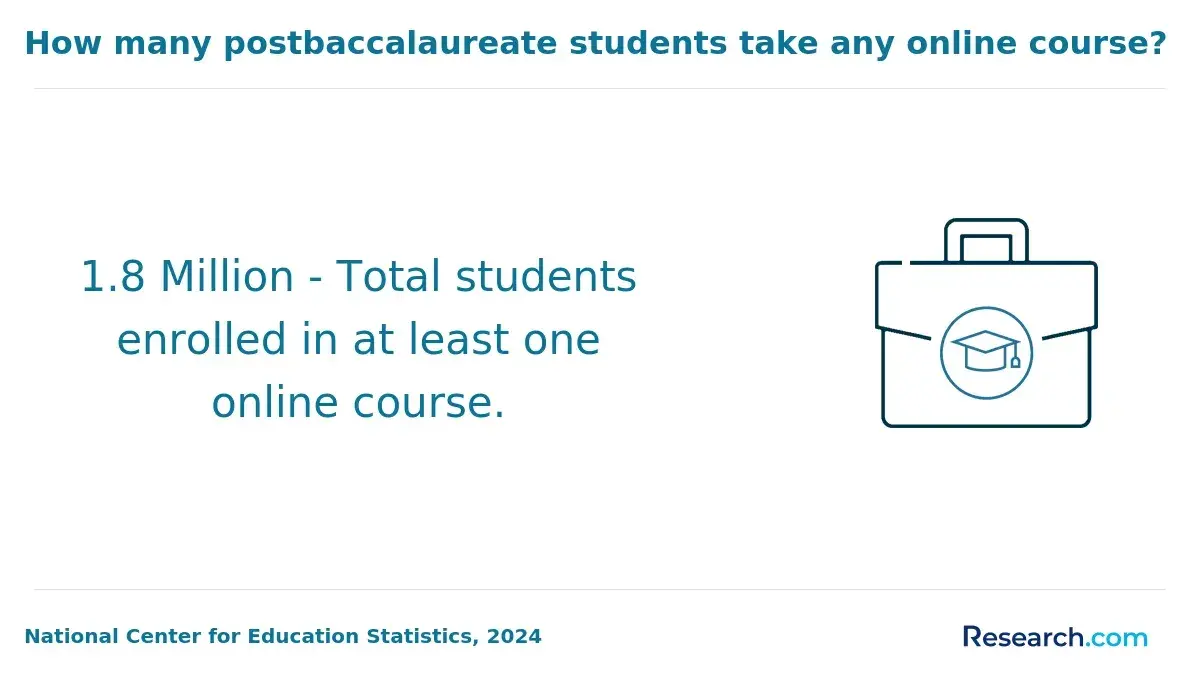
Corporate employers usually care less about whether the doctorate was online and more about whether it came from a credible institution, developed relevant skills, and aligns with the role. Online learning has become mainstream in U.S. higher education; NCES data released in 2024 showed that 53% of postsecondary students took at least one distance education course in fall 2022. That scale does not mean every online program is equal, but it explains why many employers now evaluate online credentials through the same quality filters they use for campus programs.
Employer perception is strongest when the program has clear quality signals. These signals are especially important because doctoral programs in healthcare administration do not all share one universal programmatic accreditor.
Look for employer-facing credibility markers such as:
- Institutional accreditation recognized by the U.S. Department of Education.
- A curriculum that includes finance, analytics, policy, ethics, quality, and leadership.
- Faculty with healthcare leadership, consulting, payer, research, or policy experience.
- Transparent dissertation or applied project expectations.
- Alumni in relevant corporate, executive, consulting, or health-system leadership roles.
- Reasonable admissions standards that match doctoral-level rigor.
Red flags include vague accreditation language, unclear dissertation support, aggressive promises about salary or promotion, and programs that cannot explain how online students receive faculty feedback, research guidance, or career-relevant networking.
Salary depends on role, employer type, region, experience, performance, and whether the doctorate is paired with leadership accomplishments. The degree may improve competitiveness for senior roles, but it should not be treated as a guaranteed salary increase.
BLS May 2024 wage data provides useful benchmarks for several roles that doctoral-level healthcare administration professionals may target or influence. These figures describe occupations, not degree-specific outcomes.
| Role category | Relevant private-sector pathway | Median annual wage benchmark |
| Medical and health services managers | Healthcare operations, service-line leadership, ambulatory leadership, payer or provider administration | $117,960 |
| Management analysts | Healthcare consulting, performance improvement, strategy advisory, operational redesign | $101,190 |
| Operations research analysts | Healthcare analytics, capacity planning, optimization, decision science | $91,290 |
| Chief executives | Executive leadership in healthcare companies, provider networks, nonprofits, and corporate health organizations | $206,680 |
Use these numbers as context, not as a promise. A director in a smaller rural provider organization may earn less than a strategy leader in a large national payer or consulting firm. Doctoral ROI is strongest when the credential helps you access a higher-responsibility role, negotiate broader scope, lead enterprise projects, or move into a sector with stronger compensation potential.
When estimating return on investment, compare total tuition, fees, travel for residencies, books, time to completion, employer tuition assistance, and the opportunity cost of reduced work hours. A lower-cost program is not automatically better, but a high-cost program should have a clear reason to be worth the difference.
How do you narrow down online Health Services Administration doctorate programs for corporate goals?
The best way to narrow programs is to start with the job you want next, not the degree title. A DHA, DrPH, DBA, DSc, or PhD can all be useful in different situations, but their value depends on how well the curriculum, project model, faculty, and network match your career plan.
If cost is your biggest constraint, first compare lower-cost healthcare administration pathways, including the cheapest online healthcare administration degree options, then decide whether a doctorate is necessary for the roles you want. Doctoral study is a major investment, so the decision should be tied to a specific advancement strategy.
Use this sequence to build a practical shortlist:
- Define your target role, such as healthcare strategy director, vice president of operations, quality executive, consultant, payer leader, or health policy strategist.
- Choose the doctorate type that fits that role: applied doctorate for corporate leadership, research doctorate for research-heavy or academic goals.
- Confirm institutional accreditation and online state authorization before reviewing less important features.
- Compare curriculum depth in finance, analytics, policy, quality improvement, leadership, informatics, and research methods.
- Ask whether the final project can address a real corporate or organizational problem.
- Review faculty backgrounds and look for experience relevant to your sector.
- Calculate total cost, including tuition, fees, residencies, travel, books, technology, and time away from work.
- Ask admissions advisors for completion timelines, dissertation support details, cohort size, and examples of recent doctoral projects.
- Speak with alumni if possible, especially those working in the role or sector you want.
- Eliminate programs that rely on vague career promises instead of transparent outcomes and academic support.
Several common mistakes can weaken the value of the degree. Avoid choosing a program only because it is fast, assuming all healthcare doctorates are viewed the same, ignoring dissertation support, overlooking residency costs, or picking a research-heavy PhD when your real goal is corporate leadership. A better approach is to match the program's structure to the work you want to be trusted with after graduation.
Before enrolling, ask the program these questions:
- Can the doctoral project be based on a workplace problem from my employer or industry?
- How often do online students meet with faculty advisors during the dissertation or project phase?
- What kinds of corporate, payer, provider, consulting, or policy roles do alumni hold?
- What support exists if a student changes jobs during the program?
- Are residencies required, and what are the full travel and attendance expectations?
- How does the curriculum address AI, analytics, value-based care, health equity, compliance, and financial performance?
Other Things You Should Know About Health Services Administration
Many online programs take about three to five years, depending on transfer credits, enrollment pace, dissertation or project progress, and residency requirements. Part-time students who work full time may need longer.
Most programs prefer or require professional experience in healthcare, public health, administration, clinical leadership, or a related field. Applicants from business, technology, or consulting backgrounds may qualify if they can show strong healthcare relevance.
Not always in the traditional PhD sense. Some applied doctorates require a doctoral project, capstone, practice-based dissertation, or quality-improvement study instead of a traditional research dissertation.
Often, yes, but policies vary. Confirm annual reimbursement limits, grade requirements, approved-school rules, repayment obligations, and whether doctoral fees, residencies, and dissertation credits are covered.
- Health Management Careers https://www.ache.org/Career-Resources/Start-Your-Career/Health-Management-Careers
- Health and Human Services: Campus & Online Degrees and Careers https://www.publichealthonline.org/human-services/online-degree-programs/
- Most Popular Online Degrees in Healthcare Administration 2025 https://www.onlineu.com/degrees/healthcare-administration
- Early Career & Student Opportunities at Cedars Sinai https://careers.cshs.org/early-career
- 5 Careers in Healthcare Administration https://www.warnerpacific.edu/blog/careers-in-healthcare-administration/
- Careers https://www.publichealthdegrees.org/careers/
- Future Students https://www.aupha.org/resourcecenter/futurestudents
- Top 30 Healthcare Management Degree Options - Healthcare Management Degree Guide https://www.healthcare-management-degree.net/top-healthcare-management-degree-options/
- DHA Online Programs 2020 | Healthcare-Administration-Degree.net https://www.healthcare-administration-degree.net/best/dha-online-programs-2/
- Doctor of Health Administration (DHA) | Doctor of Healthcare | University of Phoenix https://www.phoenix.edu/online-healthcare-degrees/health-administration-doctoral-degree.html


