
2027 Best Online Global Health Doctorate Programs for Executive and Leadership Careers

Co-Founder and Chief Data Scientist
Choosing an online global health doctorate is a high-stakes decision when you are balancing work, leadership goals, and tuition. These programs prepare experienced professionals to lead health systems, NGOs, agencies, universities, and consulting initiatives across complex cross-border health challenges. The timing is strong: the U. S. Bureau of Labor Statistics projects 29% growth for medical and health services managers from 2023 to 2033.
This guide helps working professionals, senior managers, and aspiring executives compare credible programs by accreditation, flexibility, cost, curriculum, and career fit.
Key Things You Should Know
- The strongest online global health doctorate options for executives are usually CEPH-accredited DrPH programs or regionally accredited professional doctorates with global health, health leadership, policy, epidemiology, or systems-change coursework.
- Most executive-friendly online doctorates take about 3 to 5 years, often using part-time formats, online coursework, limited residencies, and a dissertation, applied doctoral project, or practice-based capstone.
- Cost varies widely: NCES data published in 2024 shows average graduate tuition and fees of $12,596 at public institutions and $29,931 at private nonprofit institutions for 2022-2023, before program fees, travel, and lost work time.
What Are the Best Online Global Health Doctorate Programs for Executive and Leadership Careers?
The best online global health doctorate program is not simply the most famous school or the fastest option. For executive and leadership careers, the strongest programs combine recognized accreditation, senior-level public health or health systems curriculum, faculty with global or population health expertise, flexible delivery, and a culminating project that can be applied to a real organization or policy problem.
Because fully online doctorates with "global health" in the exact degree title are limited, many strong candidates are online or hybrid DrPH, PhD, or DHSc programs with global health concentrations, leadership tracks, or public health systems curricula. The table below summarizes program types and representative options that working leaders commonly evaluate:
| Program or program type | Best fit for | Typical format | Executive leadership value | Key trade-off |
| Johns Hopkins University DrPH with global health-related concentration options | Senior public health professionals seeking high-level policy, implementation, or global health leadership training | Primarily online with required on-site components | Strong public health reputation, research depth, and leadership-focused doctoral training | Competitive admissions, significant workload, and likely higher total cost |
| University of North Carolina online Executive DrPH in Health Leadership | Experienced health leaders who want an executive-style public health doctorate | Online cohort model with limited campus visits | Designed around leadership, systems thinking, and applied public health management | Less specialized in global health than some research-focused programs |
| Indiana University DrPH in Global Health Leadership | Professionals seeking a leadership doctorate with explicit global health orientation | Online or hybrid structure may include in-person requirements | Direct alignment with global health leadership, policy, and practice | Applicants should verify current delivery requirements and residency expectations |
| University of Illinois Chicago online DrPH in Leadership | Public health practitioners moving into senior organizational, governmental, or nonprofit leadership | Online with possible synchronous or applied components | Practice-focused training for population health leadership and organizational change | Global health emphasis depends on electives, project selection, and faculty match |
| Online PhD in Public Health or Health Sciences with global health research focus | Professionals aiming for research leadership, university teaching, or evidence-generation roles | Online or hybrid, often dissertation-intensive | Stronger preparation for research, scholarship, and academic leadership | May be less practical for executives who need applied management training |
| Online DHSc or professional health sciences doctorate with global or population health electives | Clinicians, administrators, and consultants seeking applied doctoral credibility | Often asynchronous or executive-friendly | Useful for interdisciplinary health leadership, consulting, and organizational strategy | May not carry the same public health specialization as a CEPH-accredited DrPH |
A practical shortlist should start with fit rather than prestige. If your goal is to lead a global health NGO, a DrPH with global health leadership and policy coursework may be stronger than a research-heavy PhD. If your goal is academic research, a PhD with a dissertation and faculty mentorship in implementation science, epidemiology, or global disease systems may be the better choice.
Use these criteria to compare programs before requesting information from schools:
- Confirm institutional accreditation and, for public health doctorates, whether the school or program is accredited by the Council on Education for Public Health.
- Check whether the curriculum includes global health governance, epidemiology, health equity, implementation science, leadership, finance, and policy analysis.
- Ask how many campus visits, residencies, synchronous sessions, and international or domestic field experiences are required.
- Review faculty profiles for global health, infectious disease, maternal and child health, humanitarian health, environmental health, health systems, or policy expertise.
- Compare dissertation or capstone expectations, especially whether you can use your current workplace as the setting for an applied project.
- Calculate total cost, including tuition, fees, software, travel, lodging, residencies, and reduced work capacity during intensive terms.
The biggest red flag is a program that markets itself as executive-friendly but cannot clearly explain accreditation, doctoral supervision, required in-person time, or career outcomes. A credible school should be transparent about completion requirements before you apply.
Which Type of Global Health Doctorate Is Best for Executive Leadership Careers?
For most working executives, the Doctor of Public Health is the most direct doctoral path because it is designed for applied leadership, policy, program evaluation, and systems change. A PhD is usually better for research-intensive careers, while a DHSc or similar professional doctorate may fit clinicians or health administrators who want broader interdisciplinary leadership training.
The best choice depends on the kind of authority you want the doctorate to support. The table below compares the most relevant doctoral options for global health leadership:
| Degree type | Primary purpose | Best for | Common culminating requirement | Executive career fit |
| DrPH in Global Health, Public Health Leadership, or Health Policy | Applied public health leadership | Senior managers, agency leaders, NGO directors, health policy professionals | Applied dissertation, doctoral project, or practice-based portfolio | Very strong for executive and cross-sector leadership roles |
| PhD in Global Health, Public Health, Epidemiology, or Health Sciences | Original research and scholarship | Researchers, faculty, principal investigators, research directors | Research dissertation | Strong for academic and research leadership, less targeted to management practice |
| DHSc or Doctor of Health Sciences | Applied clinical, educational, or health systems leadership | Clinicians, educators, administrators, consultants | Applied doctoral project or dissertation | Good for interdisciplinary health leadership, depending on curriculum |
| DHA or health administration doctorate | Healthcare administration and organizational strategy | Hospital, health system, payer, and operations leaders | Applied project or dissertation | Strong for domestic healthcare executive roles, but less global health-specific |
A DrPH is often the better investment if you want to lead population health strategy, manage large public health programs, work in government or nonprofit leadership, or influence policy. A PhD makes more sense if your career depends on publishing research, securing grants, teaching at a research university, or leading scientific teams.
Some readers may not need a doctorate yet. If your goal is to enter a regulated nutrition or dietetics pathway rather than lead global health systems, an online dietitian degree may be a more appropriate starting point before considering graduate or doctoral study.
Executives should be especially careful not to assume that "doctorate" automatically means "better." The right degree is the one that matches your target role, your evidence of leadership readiness, and the kind of problems you want to solve.
What Accreditation Should an Online Global Health Doctorate Program Have?
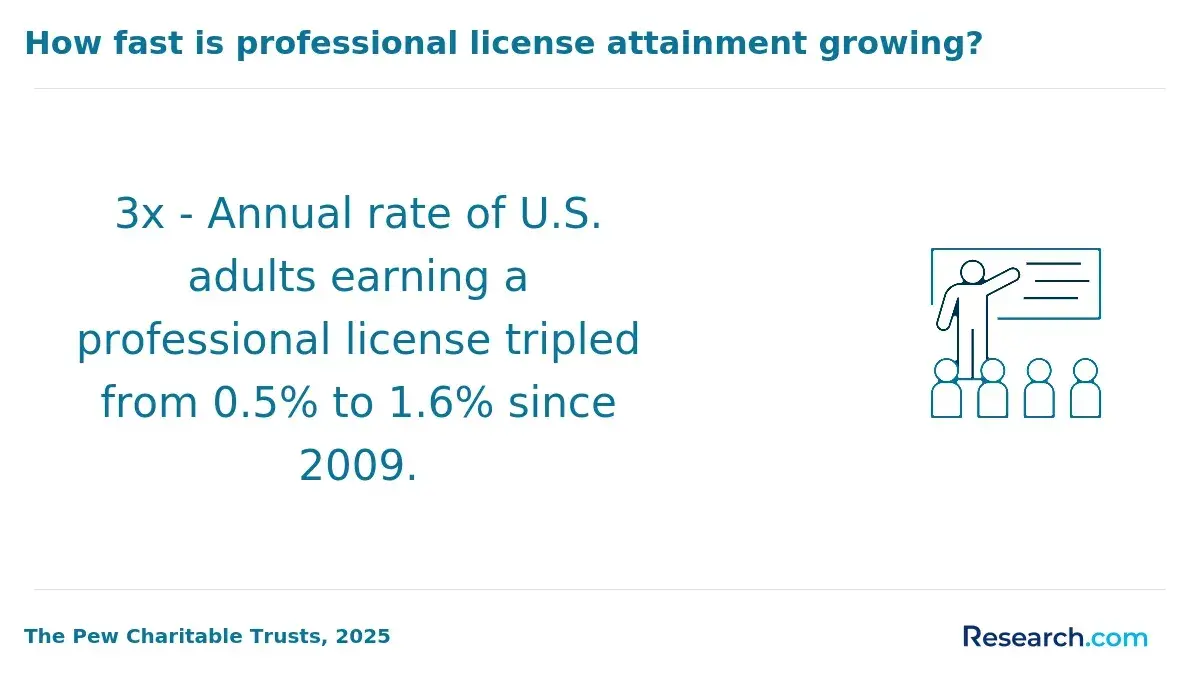
Accreditation is one of the most important quality checks for an online Global Health doctorate. At minimum, the institution should hold recognized institutional accreditation from an accreditor accepted by the U.S. Department of Education or the Council for Higher Education Accreditation. For public health doctorates, CEPH accreditation is especially important because it signals that the school or program meets public health education standards.
Accreditation affects more than reputation. It can influence federal financial aid eligibility, employer tuition benefits, faculty hiring, transferability of credits, and whether the credential is respected by public health agencies or universities.
Use the following checklist when reviewing a program's accreditation and credibility:
- Verify institutional accreditation on the school's official accreditation page and through recognized accreditor directories.
- For a DrPH, confirm whether the school or program is accredited by the Council on Education for Public Health.
- Check whether the doctorate is housed in a school of public health, health sciences, medicine, or another unit aligned with your career goals.
- Review whether faculty hold terminal degrees and have active scholarship or leadership experience in global health, policy, epidemiology, or health systems.
- Ask whether graduates have moved into roles in public health agencies, health systems, NGOs, consulting, academia, or executive leadership.
- Avoid schools that use vague language about "recognized," "international," or "pending" accreditation without naming the accrediting body.
Programmatic accreditation is not equally relevant for every doctoral type. A DHSc may not need CEPH accreditation if it is not a public health degree, but the institution should still be properly accredited, and the curriculum should clearly support your leadership goals.
What Do Students Learn in an Online Global Health Doctorate Program?
Typical doctoral coursework blends global health content with leadership and applied research. Students may study the following areas because they are directly relevant to senior decision-making:
- Global burden of disease, health equity, and social determinants of health
- Epidemiology, biostatistics, surveillance, and applied data interpretation
- Health policy, governance, law, ethics, and financing
- Program planning, monitoring, evaluation, and implementation science
- Organizational leadership, change management, negotiation, and communication
- Emergency preparedness, humanitarian response, infectious disease control, and health security
- Environmental and occupational health risks that affect population health outcomes
- Research methods, mixed-methods evaluation, dissertation design, or applied doctoral project development
Environmental health is increasingly important in global health leadership because climate-related hazards, workplace exposures, sanitation, and community risk all affect health systems planning. Professionals who want a narrower safety, compliance, or risk-management pathway may also compare the best online environmental health and safety programs before committing to a doctorate.
| Skill area | Why it matters for executives | How to evaluate it in a program |
| Systems thinking | Global health leaders must understand how policy, financing, culture, supply chains, and clinical systems interact. | Look for coursework in health systems, implementation science, and cross-sector partnerships. |
| Evidence-based decision-making | Executives need to interpret data without becoming full-time analysts. | Check for applied epidemiology, evaluation, and analytics assignments. |
| Strategic leadership | Senior roles require influence across agencies, funders, boards, and communities. | Review leadership courses, executive seminars, and group projects. |
| Policy and advocacy | Global health work often depends on law, funding, diplomacy, and public trust. | Look for policy analysis, ethics, governance, and communication training. |
| Research translation | Leaders must turn evidence into programs that work in real settings. | Ask how dissertations or capstones connect to practice problems. |
A program is usually weaker for executive careers if it offers generic health courses without advanced leadership, policy, finance, or applied research components. For senior professionals, doctoral study should sharpen decision-making in complex organizations.
Can You Complete an Online Global Health Doctorate While Working Full Time?
Yes, many online global health doctorate programs are designed for working professionals, but "online" does not always mean fully flexible. Executive-friendly programs often use part-time pacing, evening or asynchronous coursework, limited residencies, and applied projects that connect to the student's current organization.
Online learning remains a major part of U.S. graduate education. NCES data released in 2024 shows that 39% of postbaccalaureate students were enrolled exclusively in distance education in fall 2022, which reflects why universities continue to build flexible doctoral formats for working adults. For executives, the key question is not whether online study is accepted, but whether the weekly structure fits your job responsibilities.
Before enrolling, ask schools direct questions about workload and scheduling. These details determine whether the program is realistic while working full time:
- How many hours per week do students usually spend on readings, writing, meetings, and research?
- Are courses asynchronous, synchronous, or a mix of both?
- Are live sessions held during business hours, evenings, or weekends?
- How many campus visits, residencies, intensives, or orientation sessions are required?
- Can the dissertation or capstone be based on a problem from your workplace?
- Do students move through the program as a cohort, or can they slow down during demanding work periods?
- What happens if travel, caregiving, deployment, or executive responsibilities interrupt progress?
The most manageable programs for senior leaders are transparent about pacing and provide strong advising. The least manageable programs hide time requirements until after enrollment or require frequent synchronous attendance that conflicts with leadership travel, board meetings, clinical responsibilities, or emergency response work.
What Are the Admission Requirements for an Online Global Health Doctorate?
Admission requirements vary by school, but online Global Health doctorate programs usually expect applicants to have a master's degree, professional experience, leadership potential, and quantitative or research readiness. DrPH programs commonly prefer applicants with public health, healthcare, policy, nonprofit, government, or international development experience.
Competitive applicants usually show that they are ready to solve advanced practice or research problems, not simply continue school. Many programs review the following materials:
- Master's degree from an accredited institution, often in public health, health administration, nursing, medicine, policy, social science, nutrition, or a related field
- Graduate transcripts showing readiness for doctoral-level research, statistics, and writing
- Professional résumé or CV with leadership, management, program, research, or policy experience
- Statement of purpose explaining career goals, global health interests, and doctoral project direction
- Letters of recommendation from supervisors, faculty, or senior professionals who can speak to leadership capacity
- Writing sample, research paper, policy brief, or professional publication in some programs
- Interview, especially for cohort-based executive or DrPH programs
- English language proficiency documentation for applicants whose prior education does not meet school exemptions
If your background is strong in clinical care, nutrition, or health education but lighter in public health methods, you may need prerequisite coursework before doctoral admission. Some students use an accelerated nutrition degree online or related graduate preparation to build subject-matter depth, but doctoral programs will still expect evidence of leadership and research readiness.
A common mistake is applying to several programs with the same generic essay. Strong statements connect your experience to the school's faculty, curriculum, format, and dissertation or capstone model. For executive programs, admissions committees want to see a credible leadership problem you are prepared to investigate.
How Long Does It Take to Earn an Online Global Health Doctorate?
Most online Global Health doctorate programs take about 3 to 5 years, depending on degree type, transfer credits, enrollment pace, dissertation progress, and residency requirements. Executive DrPH programs may use a structured cohort model, while PhD programs can take longer because of research design, data collection, analysis, and dissertation defense.
The table below shows realistic timeline patterns for working professionals. Use it to compare speed against depth, supervision, and career fit.
| Program format | Typical timeline | Best fit | Potential drawback |
| Accelerated professional doctorate | About 3 years when continuously enrolled | Experienced leaders with a clear applied project and stable work schedule | Heavy workload and less flexibility if life or work demands change |
| Part-time executive DrPH | About 3 to 4 years | Working managers, directors, and senior practitioners | Cohort sequencing may limit course customization |
| Part-time PhD | Often 4 to 6 years or more | Students pursuing research, faculty, or scientific leadership roles | Longer dissertation process and higher opportunity cost |
| Hybrid doctorate with residencies | About 3 to 5 years | Students who value networking and in-person doctoral engagement | Travel costs and scheduling challenges |
Faster is not always better. A shorter program can be attractive for executives, but it may offer fewer electives, less research mentorship, or a compressed dissertation timeline. A longer program may provide deeper training, but the extra time can increase total cost and delay career benefits.
Before choosing the fastest option, ask whether students commonly finish on time and what support is available during the dissertation or capstone stage. Many doctoral delays happen after coursework, when students must define a feasible project, secure approvals, collect data, and complete revisions.
Does an Online Global Health Doctorate Require a Dissertation?
Many online global health doctorates require a dissertation, but the format depends on the degree. A PhD typically requires an original research dissertation. A DrPH may require an applied dissertation, doctoral project, integrated learning portfolio, or practice-based capstone. A DHSc may use either a dissertation or an applied doctoral project, depending on the school.
The main difference is purpose. A PhD dissertation is designed to contribute new scholarly knowledge. A DrPH or professional doctorate project is often designed to solve or evaluate a real public health practice problem.
| Culminating requirement | Common in | What it usually demonstrates | Best for |
| Traditional dissertation | PhD and some DrPH or DHSc programs | Original research, methodology, analysis, and scholarly contribution | Research, academic, and scientific leadership careers |
| Applied dissertation | Many DrPH and professional doctorates | Ability to use evidence to address a practice, policy, or systems problem | Public health executives, agency leaders, consultants, and program directors |
| Doctoral capstone or project | Some professional doctorates | Strategic application of research to an organizational challenge | Leaders who want a portfolio-ready executive project |
| Portfolio model | Some practice-focused DrPH programs | Mastery across competencies, leadership products, and applied deliverables | Experienced practitioners who want competency-based evidence of impact |
Executives should ask whether the final project can be connected to their workplace, consulting practice, agency, or community partnership. A well-designed applied project can produce a policy brief, evaluation plan, implementation strategy, or organizational improvement model that has immediate professional value.
Do not choose a "no dissertation" option without understanding what replaces it. A rigorous capstone can be highly valuable, but a weak final project may provide less evidence of doctoral-level expertise.
How Much Does an Online Global Health Doctorate Cost, and Is It Worth the Investment?
An online Global Health doctorate can be worth the investment for professionals who already have leadership experience and a clear plan to use the credential in executive, consulting, policy, academic, or senior public health roles. It is less likely to pay off quickly for students who are using the doctorate to enter the field without experience or who are unclear about their target role.
Cost varies widely by institution type, credit load, residency travel, fees, and time to completion. NCES data published in 2024 reports average graduate tuition and fees of $12,596 at public institutions and $29,931 at private nonprofit institutions for 2022-2023, which gives a useful baseline but does not capture the full cost of a doctoral program.
When comparing costs, include all major expense categories rather than relying only on advertised per-credit tuition:
- Graduate tuition by credit or term
- Doctoral program fees, technology fees, library fees, and graduation fees
- Residency travel, lodging, meals, and local transportation
- Books, software, data tools, transcription, survey platforms, or statistical packages
- Dissertation or project expenses, including editing, research support, or conference presentation costs
- Reduced income if you cut work hours, decline consulting projects, or pause promotion opportunities
- Student loan interest and repayment obligations
Salary context can help evaluate ROI, but it should not be treated as a guarantee. The U.S. Bureau of Labor Statistics reported a May 2024 median annual wage of $117,960 for medical and health services managers. That figure reflects a broad occupation, not only doctorate holders, but it shows that senior health management roles can be financially meaningful when the degree aligns with experience and advancement opportunities.
Some professionals may get a better return from a master's degree, certificate, or targeted leadership credential before pursuing a doctorate. For example, readers focused on food systems, population nutrition, or community nutrition leadership may want to compare the cheapest online master's in nutrition before committing to a doctoral program.
The investment is strongest when your employer offers tuition support, your doctoral project advances an organizational priority, or the credential supports a defined move into senior leadership, consulting, academia, or policy influence. It is riskier when you must borrow heavily without a realistic plan for how the doctorate will change your role, authority, or marketability.
What Executive Careers Can You Pursue With an Online Global Health Doctorate?
An online Global Health doctorate can support advancement into senior roles across public health agencies, health systems, universities, NGOs, foundations, consulting firms, and international health organizations. The degree is most powerful when paired with substantial experience, measurable leadership accomplishments, and a strong professional network.
The table below outlines common executive and leadership pathways. Salaries vary by employer, geography, funding source, and scope of responsibility, so use these as career categories rather than promised outcomes.
| Career path | Typical responsibilities | Relevant doctorate type | Leadership value |
| Public health director or deputy director | Lead population health programs, emergency response, budgets, partnerships, and policy implementation | DrPH, PhD, or related professional doctorate | Signals advanced expertise in evidence-based public health leadership |
| Global health program executive | Manage international or cross-border health initiatives, grants, field teams, and evaluation systems | DrPH in Global Health or PhD with a global health focus | Supports credibility with funders, agencies, and multidisciplinary partners |
| Health policy or advocacy leader | Analyze policy, guide coalitions, develop briefs, testify, and advise organizations | DrPH, PhD, or policy-focused doctorate | Builds authority in translating evidence into policy action |
| Healthcare or population health executive | Lead strategy for health systems, payers, value-based care, community benefit, or quality improvement | DrPH, DHA, DHSc, or PhD | Useful when global health skills intersect with equity, risk, preparedness, and systems change |
| Public health consultant | Advise agencies, NGOs, foundations, or health systems on strategy, evaluation, implementation, and grants | DrPH, PhD, DHSc | Can strengthen expert positioning when paired with a portfolio of results |
| University faculty or research leader | Teach, mentor, publish, secure funding, and lead research or practice centers | PhD or research-intensive DrPH | Most relevant when the program includes strong research training and dissertation mentorship |
Labor market data supports the broader demand for health leadership, but doctorate holders still need to compete on experience. BLS projects 29% growth for medical and health services managers from 2023 to 2033, much faster than the average for all occupations. For global health professionals, this suggests strong demand for leaders who can manage complex health systems, though specific global health executive openings may be more competitive and funding-dependent.
Common mistakes can limit the career value of the doctorate. Avoid these problems before enrolling:
- Choosing a program based only on rankings instead of fit with your leadership goal
- Ignoring accreditation, faculty expertise, and public health credibility
- Assuming an online format has no residency, synchronous, or fieldwork obligations
- Comparing tuition without calculating total cost and travel
- Selecting a research-heavy PhD when you need applied executive training
- Selecting a practice doctorate when your goal is tenure-track research faculty work
- Expecting the doctorate alone to create a promotion without building executive experience, sponsorship, and measurable results
The best next step is to define your target role first, then evaluate programs backward from that goal. Ask whether each program will help you build the evidence, network, research ability, and leadership portfolio that the role actually requires.
Other Things You Should Know About Global Health
Yes, it can be respected when the institution is properly accredited and the program has a rigorous curriculum, qualified faculty, and meaningful doctoral requirements. Employers usually care about the match between the degree, your experience, and the leadership role you are pursuing.
A DrPH is usually better for applied executive leadership, public health practice, policy, and program management. A PhD is usually better for research leadership, university teaching, and roles that require original scholarship.
Some programs are mostly online, but many require residencies, intensives, campus visits, fieldwork, or synchronous sessions. Always confirm the exact delivery format before applying, especially if you travel often or work full time.
You may want to wait if you lack relevant professional experience, are unsure of your target career, need a faster credential for entry-level advancement, or would need to borrow heavily without a clear ROI plan. A master's degree, certificate, or leadership fellowship may be a better first step.
References
- Faculty development: the need to ensure educational ... https://www.kosinmedj.org/journal/view.php
- ROI of Higher Education https://www.euclid.int/ROI-of-Higher-Education.html
- Top 10 Online PhD Programs for Working Professionals in 2025 - Maverick Business Academy London https://mbalondon.org.uk/top-10-online-phd-programs-for-working-professionals-in-2025/
- Gaps, Challenges, and Opportunities for Global Health Leadership Training | Annals of Global Health https://annalsofglobalhealth.org/articles/10.5334/aogh.3219
- Best Online PhD Programs for Working Professionals in the USA https://www.euroamerican.eu/best-online-phd-programs-usa-for-working-professionals
- Daniel E Dawes, JD , https://meharryglobal.org/course/phd-in-global-health-equity/
- Top 25 MPH in Global Health Programs - MPH Online https://www.mphonline.org/best-global-health-mph/
- How Health Science Leadership Drives Innovation in Healthcare https://www.tuw.edu/health/health-science-leadership/
- PhD in Public Health: Career Paths & Opportunities https://dblp.ucnedu.org/blog/career-paths-with-a-phd-in-public-health/
- Online DrPH Programs: Compare Top Schools & More https://www.edumed.org/online-schools/public-health-degrees/doctorate-drph/


