2027 Best Online Esports Business Degree Programs at Nonprofit Universities

Co-Founder and Chief Data Scientist
Choosing an online esports business degree means weighing a niche interest against practical business career preparation. This matters because esports organizations need skills beyond gameplay, including event operations, sponsorship, marketing, analytics, and community management. The U.S. Bureau of Labor Statistics projects 7% growth in meeting, convention, and event planner jobs from 2023 to 2033, a relevant benchmark for students interested in tournament and live-event work.
This guide explains how to compare nonprofit programs, evaluate total cost and flexibility, and select a degree aligned with your career goals.
Key Things You Should Know
- The strongest online esports business option is usually an institutionally accredited business, sport management, marketing, or entertainment-management degree with esports coursework, not simply a program with "esports" in its title.
- Nonprofit status can support access to federal aid and public accountability, but it does not prove quality; verify accreditation, curriculum, transfer rules, total cost, and career services before enrolling.
- For event-oriented careers, the BLS projects 7% growth for meeting, convention, and event planners from 2023 to 2033; students should build transferable skills in budgeting, sales, digital marketing, analytics, and operations.
What Makes an Online Esports Business Degree Program at a Nonprofit University Different?
An online esports business degree is typically a business-focused program that applies management, marketing, finance, communications, and event-production principles to competitive gaming. At nonprofit universities, the program may be offered as a dedicated esports business major, a concentration within sport management, or a business degree with esports electives and experiential projects.
Public universities and private nonprofit universities can both be nonprofit. Their structures often differ: public institutions may offer lower tuition to in-state residents, while private nonprofits may have more standardized online tuition, smaller cohorts, or accelerated terms. Neither model is automatically a better value.
Students should distinguish between a narrow esports credential and a degree that remains useful if the industry changes. A broad business curriculum can support jobs in esports while also preparing graduates for adjacent work in events, digital media, sponsorship, recreation, sports, and technology. Students who want that broader foundation can also compare a business degree online before committing to a specialized pathway.
This comparison shows the common academic routes into esports business and the trade-offs involved.
| Program route | Typical focus | Best fit | Potential limitation |
| Associate degree | Foundational business, communications, and digital-media coursework | Students seeking an affordable entry point or transfer pathway | May not qualify graduates for roles that prefer a bachelor's degree |
| Bachelor's in esports business or esports management | Industry-specific marketing, events, partnerships, and team or league operations | Students committed to esports-facing careers | Program availability and employer recognition vary |
| Bachelor's in business, sport management, or marketing with esports coursework | Transferable management and commercial skills with an esports application | Students who want flexibility across industries | May provide fewer dedicated esports courses |
| Master's degree | Advanced strategy, leadership, analytics, research, or sport-business management | Professionals or bachelor's graduates seeking advancement | Usually unnecessary for entry-level roles without relevant experience |
Look for a program that treats esports as a business ecosystem rather than only as competitive play. Useful coursework may cover sponsorship activation, audience development, tournament logistics, intellectual property, social media strategy, data interpretation, ethics, and revenue models.
How Can Students Verify Accreditation for an Online Esports Business Degree at a Nonprofit University?
Institutional accreditation is the first verification step. It indicates that a college or university has been reviewed by an accreditor recognized by the U.S. Department of Education or the Council for Higher Education Accreditation. Accreditation matters for federal financial aid eligibility, transfer-credit evaluation, graduate admissions, and employer confidence.
Esports business programs generally do not have a single universal programmatic accreditor. If the degree is housed in a business school, business accreditation from an organization such as AACSB, ACBSP, or IACBE can be a positive academic signal, but it is not a replacement for institutional accreditation and is not required for every sound program.
Use the following process before applying. It helps separate verifiable institutional facts from marketing claims.
- Search the institution in the U.S. Department of Education's Database of Accredited Postsecondary Institutions and Programs.
- Confirm that the accreditor is currently recognized and that accreditation applies to the degree-granting university, not only to a partner platform.
- Read the program page and catalog to confirm the exact degree title, delivery format, required credits, and any esports concentration or minor.
- Ask whether business-school accreditation applies to online students and whether it covers the school offering the degree.
- Request written confirmation of transfer-credit evaluation, internship expectations, and graduation requirements before paying an enrollment deposit.
A red flag is a school that highlights vague "international accreditation" language while making its recognized institutional accreditor difficult to identify. Another is a third-party training provider that presents a certificate as though it were a university degree.
How Rigorous Are Online Esports Business Degree Programs at Nonprofit Universities?
Online does not have to mean easier. A rigorous esports business program uses the same learning outcomes expected of comparable campus programs: business writing, quantitative reasoning, accounting or finance fundamentals, marketing analysis, leadership, legal and ethical decision-making, and applied project work. The esports component should ask students to apply those skills to realistic commercial problems.
Students should expect workload to vary by course and term length. Accelerated courses compress assignments into fewer weeks, which can be efficient but demanding for working adults. If speed is a priority, compare an accelerated business administration degree online with a standard-length program to determine whether the pace fits your work and family responsibilities.
Academic rigor is easier to assess through assignments than through course titles. Review syllabi or ask for examples of major assessments. Strong programs commonly require applied deliverables such as a tournament budget, sponsorship proposal, digital campaign analysis, operations plan, market-research report, or esports venue feasibility study.
This table identifies the evidence that most clearly demonstrates whether an online program has substantive academic and career value:
| What to examine | Stronger evidence | Why it matters |
| Curriculum | Required business core plus esports, sports, media, or event-management applications | Builds skills that transfer beyond one industry niche |
| Faculty | Faculty biographies showing relevant academic credentials and current industry or research experience | Helps students assess subject expertise and practical perspective |
| Assessment | Projects, presentations, case studies, and data-based assignments | Creates portfolio material and tests applied learning |
| Experiential learning | Structured internship, practicum, client project, or supervised event work | Connects coursework to professional evidence of competence |
| Academic standards | Published grading, attendance, integrity, and progression policies | Clarifies expectations before enrollment |
A common mistake is choosing a program because it promises access to an esports arena, team, or gaming lab. Those resources can be valuable, but online students should verify whether they can actually participate remotely and whether academic credit, mentoring, or career connections are attached.
How Much Does an Online Esports Business Degree Cost at a Nonprofit University?
The cost of an online esports business degree depends more on credit requirements, residency, transfer credits, fees, and aid than on the esports label. A bachelor's degree commonly requires about 120 credits, although a transfer student may need substantially fewer. Public nonprofit universities often charge different rates for in-state and out-of-state students, while private nonprofit universities may charge one rate regardless of location.
Do not compare advertised per-credit tuition alone. Request a written estimate that includes technology fees, online-course fees, textbooks, graduation fees, required software, travel for residencies, and the cost of any unpaid internship or practicum.
The total-cost comparison below can help students identify the information each school should provide. It intentionally does not assume that a lower listed tuition produces the better return on investment.
| Cost factor | What to request | Decision impact |
| Tuition rate | Current per-credit rate and whether it changes by residency or course level | Forms the starting point for comparing programs |
| Credits remaining | Written transfer-credit evaluation and degree audit | Can change total tuition far more than a small rate difference |
| Mandatory fees | Itemized online, technology, student service, and graduation fees | Prevents underestimating the final bill |
| Learning materials | Book, platform, software, equipment, and licensing requirements | Identifies recurring out-of-pocket costs |
| Experiential requirements | Travel, background check, insurance, or event participation costs | Shows whether "online" includes in-person expenses |
Students seeking the shortest path should be especially careful. Programs marketed alongside easy degrees that pay well may save time only when prior credits apply cleanly and the curriculum still develops employable skills. A fast degree with weak transferability, limited support, or few applied projects may cost less upfront but offer less career flexibility.
For a realistic comparison, calculate the net price after grants and scholarships, then divide it by the number of credits you must actually complete. Compare that figure with the program's internship access, curriculum quality, and likely usefulness for your target role.
What Financial Aid Is Available for an Online Esports Business Degree at a Nonprofit University?
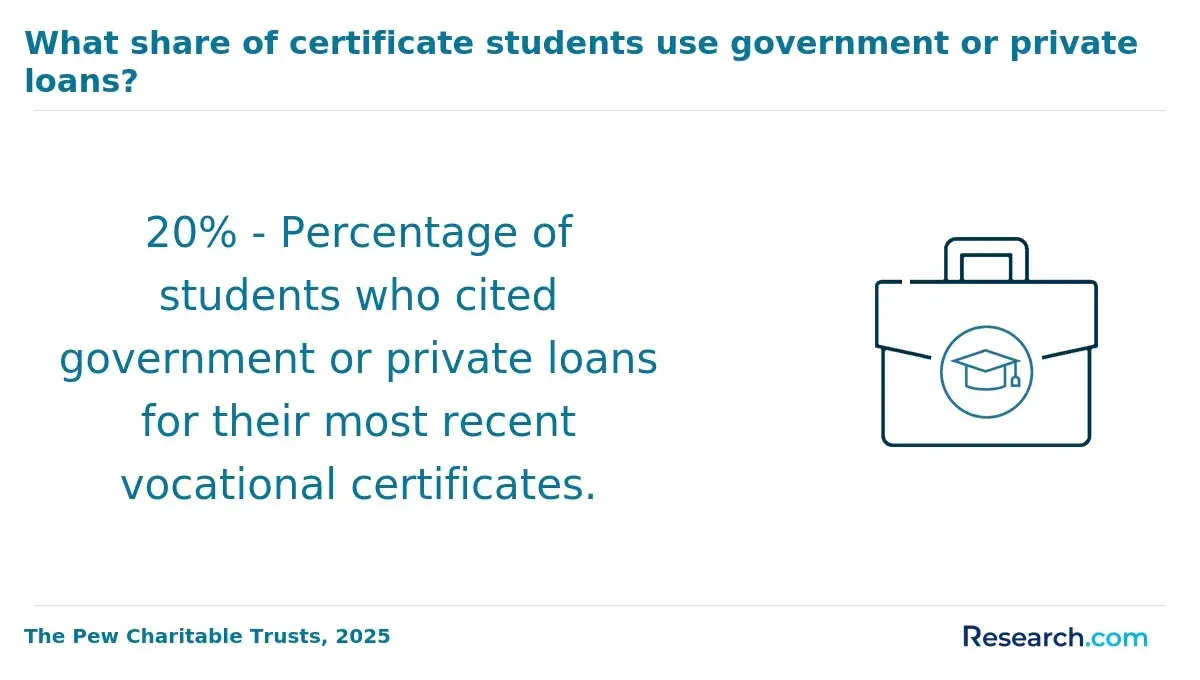
Eligible students at accredited nonprofit universities may use federal financial aid, including Pell Grants for qualifying undergraduate students, Direct Loans, and work-study opportunities. Financial aid is not automatic: students generally need to submit the Free Application for Federal Student Aid, meet enrollment and satisfactory academic progress requirements, and remain within applicable borrowing limits.
Institutional scholarships can be especially relevant for online learners, but availability varies. Ask whether scholarships are open to fully online students, whether awards renew automatically, and whether the school offers separate aid for transfer students, adult learners, veterans, student leaders, or students in sport and gaming activities.
Before accepting aid, compare the sources in this order because the funding type affects long-term cost:
- Apply for grants and scholarships first because they generally do not require repayment when eligibility conditions are met.
- Ask the financial aid office whether institutional awards can be combined with outside scholarships and employer tuition assistance.
- Review federal loan terms, projected borrowing, interest accrual, and repayment options before borrowing.
- Use private loans only after understanding their credit requirements, rates, repayment protections, and alternatives.
- Request a revised aid estimate if your income, enrollment level, or transfer-credit award changes.
Avoid treating the maximum loan amount as a recommended borrowing amount. Borrow only what is needed after accounting for grants, savings, employer benefits, and realistic living costs. Students should also ask whether dropping below half-time enrollment affects aid or loan repayment status.
How Flexible Are Online Esports Business Degree Programs at Nonprofit Universities?
Online esports business programs range from highly asynchronous formats to programs that require live evening classes, group presentations, virtual simulations, or short residencies. "Online" describes location, not necessarily scheduling freedom. Working students should confirm the time zone for live sessions and whether attendance is mandatory.
Asynchronous courses usually provide the most flexibility because students complete readings, recorded lectures, discussion posts, and assignments within weekly deadlines. Synchronous courses can offer faster feedback and stronger cohort interaction, but they require dependable availability at specific times. Hybrid programs may be useful for students who want on-campus esports facilities or in-person networking.
This format comparison can help applicants match program structure to their schedule:
| Format | Typical scheduling pattern | Best fit | Question to ask |
| Asynchronous online | Weekly deadlines with no regular live class | Working adults and students in different time zones | Are group projects or exams scheduled at fixed times? |
| Synchronous online | Live virtual meetings on set days and times | Students who value direct interaction and routine | Are recordings available for emergencies? |
| Hybrid | Online coursework plus campus meetings or residencies | Students near campus or seeking facility access | How often is travel required, and who pays? |
| Accelerated online | Shorter terms and frequent course starts | Students with transfer credit and reliable study time | How many hours per week are expected in each course? |
Students who need maximum scheduling control should review programs designed for adult learners, including an accelerated human services degree online as a useful example of how term length, transfer policy, and course sequencing can affect completion time across online degree fields.
Do not assume an accelerated degree is automatically more flexible. Taking one intensive course at a time may work well for some students, while a traditional semester may provide more time to absorb accounting, analytics, or business-law material.
What Student Support Services Do Nonprofit Universities Provide for Online Esports Business Degree Students?
Online students need support that works at a distance, not just services listed on a campus website. The best nonprofit programs provide a named academic advisor, access to faculty office hours, tutoring, library databases, technical support, disability accommodations, and career coaching without requiring students to travel.
Because esports business is relationship-driven, career support deserves extra scrutiny. A useful office should help students translate coursework into resumes, portfolios, internship searches, networking outreach, and interview preparation. It should also support careers outside esports, since early-career professionals may enter through events, marketing agencies, college recreation, sports organizations, or media companies.
Ask each school for specific service details rather than accepting a general promise of "student success." The following questions reveal whether support is accessible in practice:
- Will I have one advisor from enrollment through graduation, and how quickly do advisors typically respond?
- Can online students use tutoring, writing support, library research help, and disability services remotely?
- Does career services offer appointments outside standard business hours?
- Are internship listings, employer events, alumni mentoring, and portfolio reviews available to fully online students?
- Can online students participate in esports clubs, competitive teams, tournament production, or campus-industry partnerships?
A red flag is a program that markets networking opportunities but cannot explain how online students access them. Strong support is not merely a retention feature; it can help students obtain the applied experience employers often expect.
Do Online Esports Business Degree Programs at Nonprofit Universities Prepare Graduates for In-Demand Careers?
An online esports business degree can prepare students for in-demand adjacent careers when the curriculum develops broadly useful commercial skills. Pure esports job titles can be competitive and concentrated in certain markets, so students should not build a plan around becoming a professional player, streamer, or team executive immediately after graduation.
Relevant roles include tournament coordinator, event operations assistant, partnerships coordinator, community manager, social media specialist, account coordinator, sales representative, marketing assistant, venue operations coordinator, and program administrator. Responsibilities can include managing budgets, scheduling staff, coordinating vendors, tracking campaigns, supporting sponsors, communicating with players and audiences, and resolving operational issues.
The BLS reports a 2023 median annual wage of $59,440 for meeting, convention, and event planners, though this occupation is not identical to esports work and pay varies by location, experience, employer, and industry. Use this figure as a benchmark for event-management work rather than as a predicted starting salary.
This table maps transferable skills to career areas that may offer broader entry paths than esports alone:
| Skill developed | Esports application | Adjacent career area |
| Event operations | Tournament schedules, venue coordination, participant communication | Conferences, festivals, sports events, and community programming |
| Digital marketing | Audience growth, social content, campaign reporting | Agency, retail, entertainment, nonprofit, and technology marketing |
| Sponsorship and sales | Partner proposals, activation planning, account support | Sports, media, events, advertising, and business development |
| Data literacy | Engagement metrics, attendance trends, campaign performance | Market research, operations, customer success, and analytics support |
| Project management | Launch timelines, team coordination, risk tracking | Operations roles across many industries |
Build career evidence while enrolled. Complete internships, volunteer to run local events, create sponsorship decks and campaign reports, join professional associations, and keep a portfolio of projects that demonstrates business judgment. Students interested in behavior, community engagement, or consumer motivation may also find an online psychology degree relevant as an alternative or complementary field.
Artificial intelligence is also changing entry-level marketing and content workflows. Graduates benefit from learning to use AI tools responsibly for research, ideation, reporting, and workflow support while retaining the human skills employers need: judgment, relationship management, ethical decision-making, and clear communication.
Can an Online Esports Business Degree From a Nonprofit University Prepare Students for Graduate School?
A bachelor's degree from an institutionally accredited nonprofit university can provide a foundation for graduate study, provided students meet the admissions requirements of the program they later choose. Graduate schools commonly consider undergraduate GPA, completed prerequisites, recommendations, a statement of purpose, and, in some cases, professional experience or a portfolio.
Students interested in an MBA, sport management master's degree, marketing master's degree, communications program, analytics degree, or higher education program should choose undergraduate electives strategically. Accounting, economics, statistics, research methods, business law, and quantitative analysis can be especially useful preparation because some specialized esports curricula may not require them.
A master's degree makes the most sense when it supports a defined advancement goal, such as moving into leadership, analytics, collegiate esports administration, strategic partnerships, or a broader sport-business role. It is usually not necessary to enter many coordinator-level positions. Doctoral study is generally appropriate for students pursuing academic research, faculty careers, or advanced policy and leadership work, rather than standard industry entry roles.
Before enrolling, ask whether the bachelor's degree includes a transcripted major or concentration, whether courses carry standard academic credit, and whether there is a minimum GPA needed to remain in good standing. Save syllabi and major project samples; they can help document prerequisites and academic preparation during graduate applications.
How Should Students Compare the Best Online Esports Business Degree Programs at Nonprofit Universities?
The best online esports business program is the one that meets your academic, financial, and professional requirements—not necessarily the one with the most recognizable esports branding. Begin with a shortlist of institutionally accredited nonprofit universities, then compare each option using the same criteria.
Use this decision framework to create a manageable final shortlist. A program should be able to answer these questions clearly in writing:
| Comparison category | What to verify | Why it should influence your decision |
| Degree design | Exact major, concentration, business core, electives, and experiential requirements | Determines whether the credential supports esports and adjacent careers |
| Accreditation | Recognized institutional accreditation and any relevant business-school accreditation | Affects aid, transferability, graduate-school options, and credibility |
| Total net cost | Tuition, fees, materials, transfer credits, grants, and likely borrowing | Shows the realistic financial commitment |
| Online structure | Live sessions, deadlines, group work, residencies, exam rules, and time zone | Determines whether the program fits your schedule |
| Career preparation | Internships, projects, portfolio expectations, employer access, and career coaching | Helps convert coursework into job-search evidence |
| Student outcomes | Published retention, graduation, and career information where available | Provides context, while recognizing outcomes can differ by student and cohort |
After gathering the facts, take these final steps before choosing:
- Eliminate programs that cannot verify institutional accreditation, total cost, or online attendance expectations.
- Compare remaining programs using your own priorities, such as low borrowing, transfer speed, asynchronous scheduling, internships, or graduate-school preparation.
- Review at least one course sequence and identify where you will build a portfolio, gain experience, and develop transferable business skills.
- Speak with an admissions representative and, if possible, a program faculty member or current online student; ask the same questions at each school.
- Choose the program with the strongest overall fit, not the lowest tuition, fastest timeline, or most specialized title alone.
Common mistakes include assuming nonprofit status guarantees quality, overlooking required live classes, accepting a verbal transfer estimate instead of a written evaluation, and treating industry salary claims as promises. A well-chosen program should leave you with a credible degree, manageable borrowing, and skills useful in esports and beyond.
Other Things You Should Know About Esports Business
No. Esports business programs focus on commercial and operational work such as marketing, events, sponsorships, communications, leadership, and analytics. Familiarity with gaming culture can help, but strong writing, organization, sales, and project-management skills are often more important for business roles.
Often, yes. Your options are strongest when the degree includes a substantial business, marketing, sport management, or event-management foundation. Employers in adjacent fields may value demonstrated skills and experience more than the esports label on the degree.
Choose a specialized esports degree if its curriculum is rigorous, affordable, and includes meaningful business coursework and experience. Choose a general business degree with esports electives if you want wider career flexibility or if the specialized option lacks accreditation, transparent costs, or strong experiential learning.
Yes. Internships, client projects, volunteer tournament work, and campus event roles can provide practical evidence of your abilities. Look for programs that help online students locate opportunities and allow internships in events, marketing, sports, media, or technology - not only esports organizations.
References
- Online Business Degree Programs - OnlineEducation.com https://www.onlineeducation.com/business/
- Esports Education Market https://market.us/report/esports-education-market/
- Department of Business Administration https://www.saintpeters.edu/academics/undergraduate-programs/business/esports-business/
- Esports Management Concentration (Online or On Campus) - Fisher College https://www.fisher.edu/academics/undergraduate-programs/bs-in-management/esports-management-concentration
- Game Business & Esports Bachelor's Degree https://www.fullsail.edu/degrees/game-business-esports-bachelor
- Beyond Financial Aid - Finaid https://finaid.org/beyond/
- 10 Colleges with Esports Degree Programs | Animation Career Review https://www.animationcareerreview.com/articles/10-colleges-esports-degree-programs
- Affordable Accredited Online Colleges https://www.onlineu.com/online-schools/low-tuition
- Bachelor of Science in Esports and Gaming Administration https://www.fontbonne.edu/academics/eckelkamp-college-business/business-department/bachelor-of-science-in-esports-and-gaming-administration/