2027 Best Online Engineering Management Degree Programs at Nonprofit Universities

Co-Founder and Chief Data Scientist
Choosing an online engineering management degree means weighing technical credibility against cost, schedule, and leadership goals. This matters because U.S. architectural and engineering managers had a median annual wage of $167,740 in May 2024, according to the Bureau of Labor Statistics, though this role usually requires prior engineering experience.
This guide helps prospective students compare nonprofit bachelor's, master's, and doctoral pathways, verify quality signals, estimate total cost, and identify a program format that supports their next career step.
Key Things You Should Know
- For experienced engineers targeting supervisory or project leadership roles, an online master's in engineering management is usually the most direct option; bachelor's programs are better for students building technical and business foundations.
- Nonprofit status is not a quality guarantee: verify institutional accreditation, examine curriculum and faculty, and calculate total costs beyond advertised tuition before applying.
- Career potential is strongest when the degree complements real engineering experience; architectural and engineering managers had a $167,740 median annual wage in May 2024, but employers commonly expect both technical expertise and management capability.
What Makes an Online Engineering Management Degree Program at a Nonprofit University Different?
Nonprofit universities include public institutions and private nonprofit institutions. Their revenue is generally reinvested in the educational mission rather than distributed to owners, but this legal structure does not establish academic quality, affordability, or career value by itself. A public nonprofit may charge lower tuition to in-state students, while a private nonprofit may offer a more standardized online tuition rate, smaller cohorts, or specialized advising.
Degree level should match the student's starting point and goal. The comparison below shows the usual role of each pathway; individual admissions and curriculum requirements vary substantially:
| Program type | Best fit | Typical academic emphasis | Common next step |
| Associate degree | Students exploring technical fields or preparing to transfer | Math, science, introductory technology, and general education | Transfer to a bachelor's program |
| Bachelor's degree | Students seeking entry-level technical, operations, or project roles | Engineering fundamentals plus business and leadership | Engineering work experience or graduate study |
| Master's degree | Engineers and technical professionals moving toward leadership | Project, people, financial, and systems management | Engineering leadership, program management, or specialized doctoral study |
| Doctoral degree | Professionals pursuing research, executive leadership, or higher education | Advanced research, organizational strategy, and applied inquiry | Research, senior leadership, or faculty roles |
A bachelor's is typically the stronger starting investment for students without prior technical preparation. Readers comparing undergraduate outcomes across fields can also review the best bachelor's degrees when deciding whether engineering management is the right initial major. An MEM or MS is generally more valuable when it builds on an existing STEM degree and relevant work experience.
How Can Students Verify Accreditation for an Online Engineering Management Degree at a Nonprofit University?
Start with institutional accreditation. In the United States, a legitimate degree-granting university should be accredited by an agency recognized by the U.S. Department of Education or the Council for Higher Education Accreditation. Institutional accreditation affects federal aid eligibility, credit transfer, employer confidence, and admission to many graduate programs.
Programmatic accreditation is a separate question. ABET accreditation is especially relevant for many undergraduate engineering programs because it evaluates engineering curricula against discipline-specific criteria. Engineering management programs may not always hold ABET accreditation, particularly at the master's level, so students should ask whether the underlying engineering bachelor's program is accredited and whether program accreditation is needed for their intended licensure or career path.
Use these checks before paying an application fee. They help distinguish a credible online degree from a program that merely uses familiar terminology.
- Confirm the university's institutional accreditor through the university website and a federal or recognized accreditation directory.
- Check whether the exact undergraduate engineering program, not simply the institution, is ABET accredited when that matters for your goals.
- Ask admissions whether the online and campus versions lead to the same degree and appear the same way on the transcript.
- Contact the licensing board in the state where you intend to work if you may pursue a professional engineer licensure.
- Request written confirmation of transfer-credit rules and graduate-school eligibility before enrolling.
A common mistake is treating institutional accreditation and ABET accreditation as interchangeable. Institutional accreditation establishes broad institutional legitimacy; specialized accreditation evaluates a particular program. Neither one alone answers every question about faculty access, curriculum relevance, or career outcomes.
How Rigorous Are Online Engineering Management Degree Programs at Nonprofit Universities?
A credible online engineering management program should be academically comparable to its campus counterpart, even when lectures are delivered asynchronously. Rigorous programs expect students to interpret technical information, make operational decisions, communicate with stakeholders, manage budgets, and apply quantitative methods to realistic engineering or technology problems.
At the bachelor's level, expect prerequisites or core courses in calculus, statistics, physics, computing, economics, and engineering science. Master's programs often require a STEM bachelor's degree, professional experience, or prerequisite quantitative coursework. Some programs accept applicants from business or other majors but assign foundational courses before advanced engineering management study.
Curriculum labels can obscure meaningful differences. This comparison identifies what to look for when deciding whether a program is generalist, technical, or leadership-centered.
| Curriculum feature | What it can indicate | Who should prioritize it |
| Operations research, analytics, or systems engineering | Stronger quantitative and optimization focus | Students interested in manufacturing, logistics, systems, or technical operations |
| Project management and cost estimation | Applied planning, scheduling, and delivery skills | Current or aspiring project and program managers |
| Finance, accounting, and technology strategy | Business decision-making within technical organizations | Engineers moving into departmental leadership |
| Capstone, practicum, or industry project | Opportunity to apply concepts to a complex work problem | Students needing portfolio-ready evidence of management capability |
| Thesis or research methods | Preparation for research-intensive doctoral study | Students considering a PhD or academic pathway |
Online rigor also depends on assessment design. Look for substantial projects, case analyses, team collaboration, instructor feedback, and proctored or otherwise authenticated assessments where appropriate. Be cautious if a school cannot explain how it evaluates individual learning, supports group work across time zones, or ensures access to engineering software and library resources.
Students who need to strengthen quantitative preparation before applying may benefit from reviewing options for a math degree online. A full mathematics degree is not required for every applicant, but calculus, statistics, and analytical reasoning are valuable foundations for technical management study.
How Much Does an Online Engineering Management Degree Cost at a Nonprofit University?
Total cost is more informative than the per-credit tuition figure. Multiply the published per-credit rate by required credits, then add mandatory fees, technology charges, textbooks, proctoring, travel for any residencies, and the cost of prerequisite courses. Students should also consider whether part-time enrollment extends the time they carry living expenses or delay employer-funded reimbursement.
As a broad benchmark, College Board reported average published tuition and fees of $11,610 for in-state students at public four-year institutions and $43,350 at private nonprofit four-year institutions for the 2024-25 academic year. Those figures are not online engineering management prices and do not represent net price, but they illustrate why students should compare a specific program's complete cost rather than assume public or private nonprofit status determines affordability.
The following cost factors are more useful than a headline tuition rate when comparing programs:
| Cost factor | Why it matters | What to ask |
| Required credits | More credits can outweigh a lower per-credit rate | How many credits are required after transfer and prerequisites? |
| Online tuition policy | Some public institutions charge different resident and nonresident rates | Is online tuition the same regardless of residency? |
| Mandatory fees | Technology, graduation, courses, and distance-learning fees can add up | Which fees apply to fully online students? |
| Transfer credit | Approved transfer work may reduce both time and cost | What is the maximum transfer limit and evaluation process? |
| Employer support | Reimbursement may change the practical out-of-pocket cost | Can courses be scheduled around employer reimbursement requirements? |
A lower-cost program is not automatically the best value if it has limited advising, weak technical coursework, few electives, or a schedule that prevents completion. Conversely, a higher-priced program should justify the difference through curriculum fit, recognized faculty expertise, meaningful career support, or flexibility that allows a working professional to remain employed.
What Financial Aid Is Available for an Online Engineering Management Degree at a Nonprofit University?
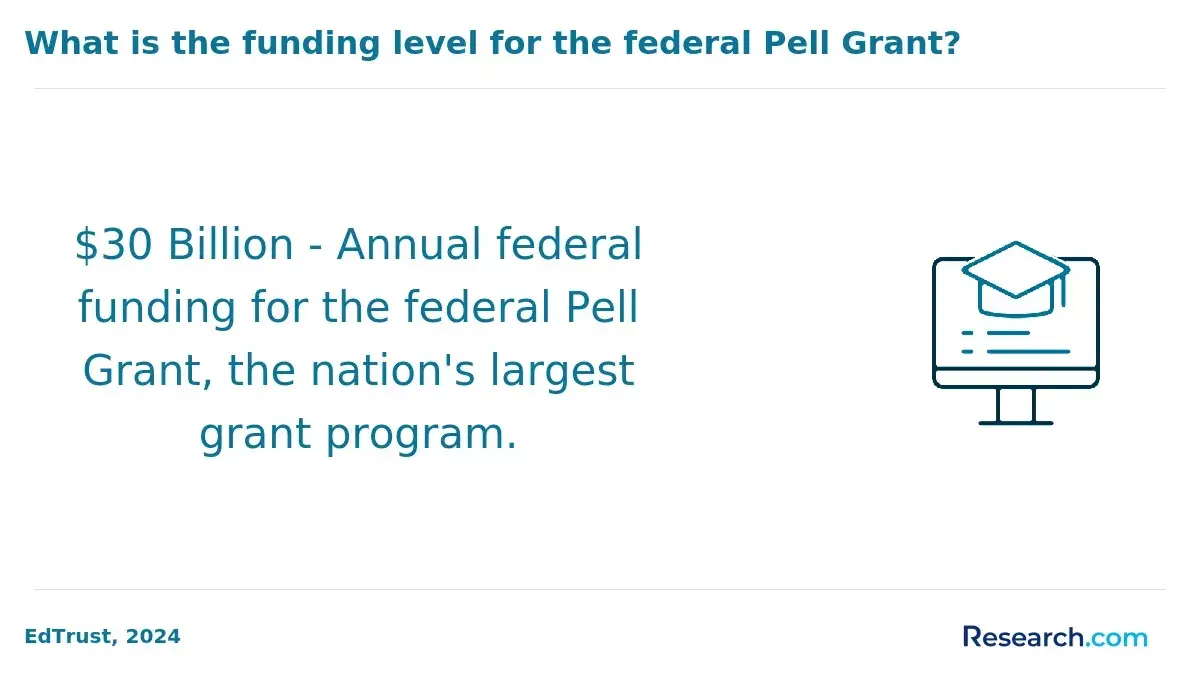
Eligible students at accredited nonprofit universities may use federal financial aid for qualifying online programs, provided they meet enrollment, citizenship or eligible noncitizen, satisfactory academic progress, and other federal requirements. Undergraduate students may be eligible for grants and loans; graduate students commonly rely on federal Direct Unsubsidized Loans, Graduate PLUS Loans, scholarships, savings, and employer benefits.
Complete the Free Application for Federal Student Aid early, even if you expect employer reimbursement. The FAFSA can be used to assess federal aid eligibility and may also be required for institutional need-based grants. Award availability, deadlines, and enrollment requirements differ by university.
Build a funding plan from several sources rather than assuming one award will cover the full bill. The options below are common, but eligibility and amounts are determined individually.
- Federal grants for eligible undergraduate students with demonstrated financial need
- Federal student loans for eligible undergraduate and graduate students
- University scholarships for online, transfer, STEM, adult, military-affiliated, or graduate students
- Employer tuition assistance or reimbursement tied to course grades, continued employment, or preapproval
- Professional association, industry, community, and veteran education benefits where eligible
Before borrowing, compare the school's net price estimate with expected reimbursement and your realistic completion timeline. Ask whether scholarships are renewable, whether part-time students qualify, and whether aid applies to prerequisite courses.
Students interested in management beyond engineering may also compare the structure of the cheapest online doctorate in organizational leadership if a later leadership doctorate is part of their long-term plan.
How Flexible Are Online Engineering Management Degree Programs at Nonprofit Universities?
"Online" does not always mean fully self-paced. Many nonprofit universities use asynchronous weekly modules that allow students to choose when they watch lectures and complete assignments before deadlines. Others require live evening meetings, group project sessions, exams through approved proctoring systems, campus visits, or short residencies.
For working students, part-time enrollment is usually the most sustainable format. Accelerated terms can shorten the calendar time to completion, but they compress reading, problem sets, team assignments, and exams into fewer weeks. A traditional semester format may be easier for students balancing major work projects, caregiving, or travel.
Compare delivery details before treating two online programs as equally flexible.
| Format | Advantages | Potential limitation |
| Asynchronous online | Greater control over weekly study times | Still includes firm deadlines and frequent independent work |
| Synchronous online | Real-time interaction with faculty and peers | Required meeting times may conflict with work or time zones |
| Hybrid or residency-based | May provide hands-on networking and intensive collaboration | Travel, lodging, and leave from work can raise the total cost |
| Accelerated terms | Can reduce calendar time to graduation | Higher weekly workload and fewer opportunities to recover from disruption |
| Part-time pathway | Often more manageable while employed | Longer completion timeline and possible changes in tuition or curriculum |
Ask for a sample course schedule and syllabus, not just a marketing description. Confirm required live sessions, expected weekly workload, group-project expectations, residency dates, exam rules, and whether course sequencing could delay graduation if one course is unavailable.
What Student Support Services Do Nonprofit Universities Provide for Online Engineering Management Degree Students?
Strong online student support makes a practical difference in a technical, project-heavy degree. The most useful services are those that help students resolve registration problems, access software and library materials, receive timely academic feedback, build professional networks, and plan a realistic path to completion.
Support varies by institution and sometimes by program level. A university may offer extensive campus services while giving online students limited evening access, so applicants should confirm what is actually available to distance learners.
Prioritize services that directly reduce barriers to learning and career movement.
- Dedicated academic advising for degree planning, transfer review, prerequisite sequencing, and registration
- Online tutoring, writing support, library research assistance, and access to technical databases
- Career coaching, résumé review, interview preparation, employer events, and alumni networking
- Disability services and accommodations designed for online course delivery
- Technical help desk coverage that matches evening and weekend study patterns
- Faculty office hours, cohort communities, and team-project tools that support professional connections
Ask how quickly advisors normally respond, whether career services are available after graduation, and whether online learners can participate in engineering clubs, employer fairs, and alumni events. Do not assume a large university automatically provides more individualized support; responsiveness and program-specific expertise are often more important.
Do Online Engineering Management Degree Programs at Nonprofit Universities Prepare Graduates for In-Demand Careers?
They can, particularly for professionals who pair the credential with engineering, manufacturing, construction, technology, logistics, or operations experience. Engineering management graduates may pursue roles such as engineering manager, project manager, program manager, operations manager, product manager, quality manager, systems manager, or technical consultant. Exact titles and requirements vary by industry and employer.
The U.S. Bureau of Labor Statistics projects employment of architectural and engineering managers to grow 4% from 2024 to 2034. This is a useful signal of continuing demand for leadership in technical settings, but it is not a guarantee for new graduates: these jobs typically require prior engineering experience, and employers may prefer industry knowledge, licensure, certifications, or demonstrated project leadership.
Career preparation is strongest when coursework maps to the work students want to do. Use this role-to-skill comparison to identify curriculum gaps before applying:
| Target role | Relevant skills | Useful program features |
| Engineering or operations manager | Resource allocation, process improvement, budgeting, and team leadership | Operations, finance, quality, and leadership courses |
| Project or program manager | Scheduling, risk management, stakeholder communication, and cost control | Project management, capstone work, and collaborative assignments |
| Product or technical manager | Market analysis, product lifecycle decisions, and cross-functional leadership | Technology strategy, analytics, and innovation electives |
| Manufacturing or quality leader | Lean processes, supply chains, statistical quality, and safety | Operations analytics, quality systems, and industry-focused electives |
Review faculty biographies, capstone examples, internship options, employer partnerships, and career reports when available. Students changing into technical management from a nontechnical background should be realistic: an engineering management degree can strengthen management preparation, but it may not replace the engineering experience required for highly technical supervisory positions.
For applicants weighing adjacent business skills, a bookkeeping certification online may be useful as a focused supplement for basic financial literacy, though it is not a substitute for engineering finance or management coursework.
Can an Online Engineering Management Degree From a Nonprofit University Prepare Students for Graduate School?
Yes, provided the institution is properly accredited and the curriculum includes the academic preparation required by the next program. An online degree from a nonprofit university is generally evaluated by its accreditation, transcript, grades, rigor, prerequisite coverage, recommendations, and fit with the destination program—not solely by whether classes were completed online.
A bachelor's degree can support applications to MEM, MS, MBA, or related graduate programs. A master's degree can support doctoral applications, although research-oriented PhD programs may expect advanced mathematics, research methods, a thesis or substantial project, and evidence of research readiness. Students interested in a doctorate should choose electives strategically and seek faculty mentorship early.
Before selecting an online program, compare its design with your possible next credential:
| Future goal | Helpful preparation during current study | Question to ask |
| MEM or MS admission | Strong grades in quantitative, engineering, and analytics courses | Which prerequisites do your graduates commonly need? |
| MBA admission | Leadership experience, finance exposure, and professional accomplishments | Can electives support business-school preparation? |
| Engineering or management PhD admission | Research methods, advanced analysis, thesis work, and faculty recommendations | Is a thesis or research project available online? |
| Professional certification | Relevant coursework and documented work experience | Does the curriculum align with certification knowledge areas? |
Keep course syllabi and major project descriptions, especially if you may apply to a selective graduate program later. They can help explain quantitative content, research work, and learning outcomes when a receiving institution evaluates whether your prior coursework meets prerequisites.
How Should Students Compare the Best Online Engineering Management Degree Programs at Nonprofit Universities?
The best program is the one that fits your degree level, technical background, career target, budget, and schedule - not necessarily the least expensive or most recognizable institution. Create a shortlist of accredited nonprofit universities, then compare the exact online program using the same criteria. This prevents a polished marketing page or headline ranking from outweighing more consequential details.
Use a deliberate comparison process before applying. It is especially important for transfer students, working adults, and applicants whose employer, state licensing rules, or graduate-school plans create additional constraints.
- Define your target role and decide whether you need an undergraduate foundation, a leadership-focused master's, or research preparation.
- Verify institutional accreditation and determine whether ABET accreditation or another specialized standard matters for your pathway.
- Request the full curriculum, including prerequisites, electives, capstone requirements, live-session expectations, and any residency obligations.
- Calculate total cost using required credits, fees, materials, travel, likely transfer credit, financial aid, and employer reimbursement.
- Compare faculty expertise, online advising, technical support, career services, graduation information, and available outcome reporting.
- Ask admissions for written answers about transfer limits, time-to-completion, course availability, transcript wording, and online student access to services.
- Rank finalists against your nonnegotiables, then apply to more than one suitable program if deadlines and costs allow.
Common red flags include vague accreditation language, unclear total charges, no published curriculum, promises of rapid advancement, pressure to enroll before receiving transfer evaluation, and an inability to explain how online students complete team projects or receive career support. Another frequent mistake is assuming that all management degrees qualify graduates for engineering licensure; licensure rules are state-specific and commonly depend on the underlying engineering education and supervised experience.
Students considering a broader change into people-centered leadership rather than technical management should distinguish this pathway from social work and related fields; for example, the cheapest CSWE-accredited online MSW programs address a separate professional education route with its own accreditation and licensure expectations.
A final shortlist should clearly show why each program fits your goals, what it will cost in total, what schedule it requires, and which career or graduate-school doors it is most likely to support. That evidence-based approach is more reliable than choosing solely by nonprofit status, tuition, or rankings.
Other Things You Should Know About Engineering Management
No. Engineering management usually applies management, finance, operations, and leadership concepts to technical organizations and engineering decisions. An MBA is broader and may be a better fit for students seeking general business careers, while an engineering management degree is often better aligned with technical leadership.
Many programs prefer or require a STEM or engineering background, but policies differ. Applicants from business, information technology, or other fields may be admitted with prerequisite coursework. Review math, science, and technical requirements before applying.
An engineering management degree alone does not automatically qualify someone for PE licensure. Requirements vary by state and commonly involve an approved engineering education pathway, examinations, and qualifying work experience. Check with the licensing board where you plan to practice.
Completion time depends on degree level, transfer credits, prerequisites, course sequencing, and enrollment pace. Bachelor's programs generally take longer than master's programs, while part-time study provides flexibility but can extend the timeline. Ask each school for a course-by-course completion plan.
References
- Graduate Employment Outcomes: How to Measure & Improve https://gosprout.app/graduate-employment-outcomes/
- Funding Your Online Master's Degree: How to Pay Less with Financial Aid https://www.onlinemastersdegrees.org/financial-aid/
- 2025 Most Popular Online Master's Degrees in Engineering Management https://www.onlineu.com/degrees/engineering-management
- Online Master of Science in Engineering Management | LSU New Orleans https://www.lsuneworleans.edu/academics/coe/engineering-management
- Engineering Management Degrees Online (MSEM, MEM) https://www.onlineengineeringprograms.com/management
- How does a college degree improve graduates' employment and earnings potential? - APLU https://www.aplu.org/our-work/publicuvalues/employment-earnings/
- Online Programs Search https://amspub.abet.org/aps/online-search
- Paying for a Master's Degree: Scholarships & Financial Aid Options https://www.gograd.org/paying-for-your-masters-degree/
- College Graduation Rates and How ACE Compares | ACE Blog https://ace.edu/blog/college-graduation-rates-and-how-ace-compares/
- Career earnings by college major - The Hamilton Project https://www.hamiltonproject.org/data/career-earnings-by-college-major/