2027 Online Engineering Management Master's Programs With No Letters of Recommendation

Co-Founder and Chief Data Scientist
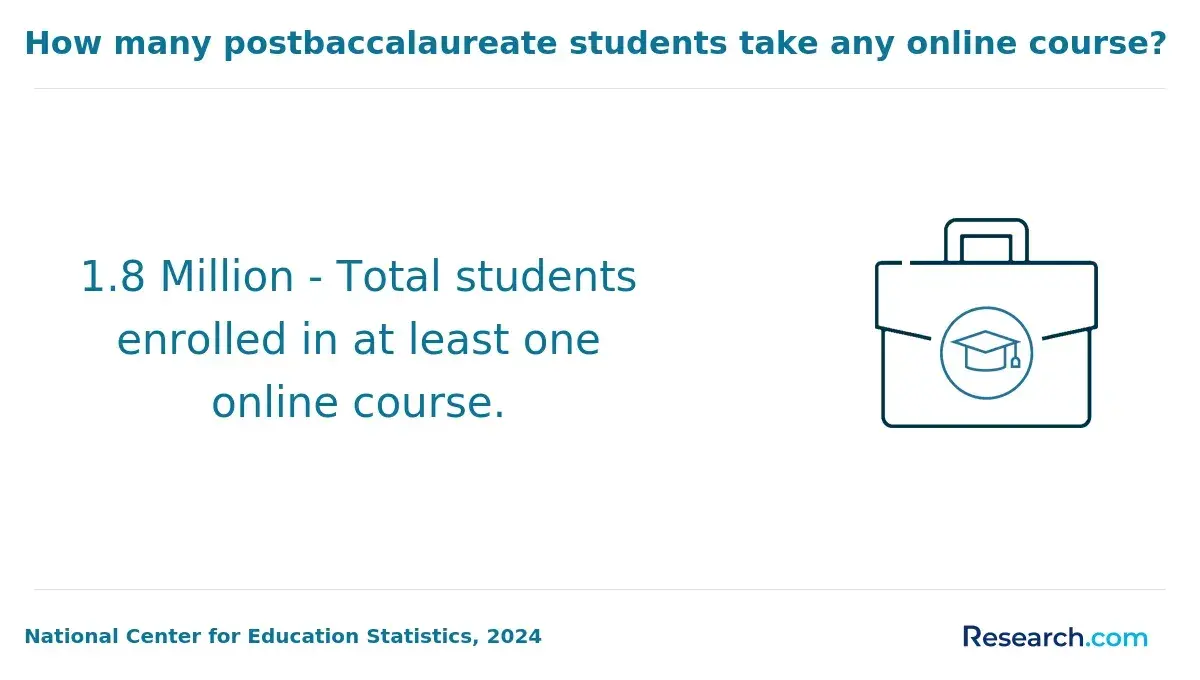
An engineering management master's can help experienced technical professionals move toward project, product, operations, and engineering-leadership roles, but recommendation letters can delay an otherwise strong application. U.S. postbaccalaureate enrollment exceeded 3 million students in recent NCES reporting, reflecting the large working-adult market seeking flexible graduate pathways.
This guide is for applicants who cannot obtain letters, prefer not to request them, or want to compare admissions policies. Learn which online options may waive letters, what replaces them, and how to apply strategically without sacrificing program quality.
Key Things to Know About Engineering Management Master's Programs with No Letters of Recommendation
- Some online engineering management master's options use a no-letter or performance-based admissions model, but applicants should verify the policy for their intended term because requirements can change by program and applicant type.
- A missing letter does not automatically reduce admission odds when letters are not required; admissions teams instead place greater weight on transcripts, quantitative preparation, professional experience, a résumé, and a focused statement of purpose.
- With more than 3 million U.S. postbaccalaureate students reported in recent NCES enrollment data, flexible admissions pathways matter particularly for working engineers who may have been out of school for years or cannot ask a current supervisor for a letter.
What purpose do letters of recommendation serve in Engineering Management admissions?
Letters of recommendation give an admissions committee third-party context that transcripts and résumés cannot always provide. In engineering management admissions, a strong letter may confirm that an applicant can lead technical work, communicate across teams, handle ambiguity, and succeed in graduate-level quantitative coursework.
Traditionally, faculty letters help a program assess academic readiness, while supervisor letters help establish workplace performance and leadership potential. Their usefulness depends heavily on how well the recommender knows the applicant. A generic letter from a senior executive is often less persuasive than a specific letter from a direct manager or professor.
The table shows the common evaluation areas that letters are intended to address. It also explains why a school may be comfortable waiving letters when other application materials provide comparable evidence.
| What admissions teams assess | How a recommendation letter can help | Other possible evidence |
| Academic readiness | Describes analytical ability, writing, and persistence in technical coursework | Official transcripts, grades in calculus, statistics, programming, or engineering courses |
| Leadership potential | Gives examples of influencing teams, managing projects, or mentoring colleagues | Résumés with scope, outcomes, promotions, and leadership responsibilities |
| Professional judgment | Explains reliability, communication, ethics, and decision-making under pressure | Statement of purpose, work portfolio, professional certifications, and interview responses |
| Program fit | Connects prior preparation to advanced study | Clear career goals and an explanation of why engineering management is the next step |
A no-letter policy does not mean a program ignores these qualities. It generally means the school believes it can assess them through more standardized, applicant-controlled materials.
Does missing a letter of recommendation hurt your admission odds for Engineering Management programs?
Missing a letter should not hurt an applicant at a program that explicitly lists no recommendation letters as required. In that setting, the absence of letters is built into the evaluation process. It can hurt at a program that requires letters, however, because an incomplete application may not move forward for review.
Admission odds are difficult to compare across engineering management programs because many schools do not publish program-level acceptance rates. Applicants should not assume that "no letters required" means "easy admission." A selective program can waive letters while maintaining minimum GPA expectations, prerequisite standards, professional-experience expectations, or performance requirements in early courses.
Use the program's published policy to decide how to respond to an unavailable recommender.
- If letters are not required, do not submit an unsolicited weak letter unless the school expressly permits optional materials and the letter adds meaningful evidence.
- If letters are optional, submit one only when the recommender can provide specific examples of your technical leadership, project impact, or academic ability.
- If letters are required, contact admissions before the deadline to ask whether a documented waiver, substitute professional reference, or later submission is possible.
- If no exception is available, apply to additional programs with published no-letter policies rather than submitting an incomplete application.
Do not write a lengthy explanation for a missing letter unless the application provides a place to do so or an admissions officer requests it. A concise, factual explanation is better than drawing attention away from stronger evidence.
Are there Engineering Management graduate programs that don't require letters of recommendation?
Yes. Some online engineering management graduate programs do not require recommendation letters for standard admission, and some use performance-based admission instead of a traditional application review. Under a performance-based approach, students may demonstrate readiness by completing designated courses at a required grade level before being formally admitted to the degree program.
This route can be especially practical for working engineers, military-affiliated applicants, career changers with relevant technical backgrounds, and applicants who left college years ago. It is not necessarily the right choice for everyone: applicants pursuing highly research-oriented programs, doctoral study, or competitive scholarships may still benefit from developing academic recommenders.
Engineering management is one of several professional graduate pathways that may appeal to experienced employees. Applicants whose goals are broader business leadership rather than technical-team leadership may also compare an online executive MBA, but they should examine curriculum carefully: engineering management typically retains a stronger emphasis on technical systems, operations, project delivery, and engineering decision-making.
Before treating any no-letter program as an option, confirm that the policy applies to the exact degree, online format, start term, and applicant category. Graduate-school requirements can differ from department requirements, and a policy for a certificate may not apply to the master's degree.
What are some online Engineering Management master's programs that don't require letters of recommendation?
One well-known example is the University of Colorado Boulder's online Master of Engineering in Engineering Management, which has used a performance-based admissions route through its online degree platform. Rather than relying on letters, the pathway allows eligible learners to establish readiness through specified for-credit coursework.
Because admissions policies and pathway courses can change, applicants should verify current requirements directly before enrolling or paying an application fee.
The table distinguishes the type of no-letter pathway an applicant may encounter. It is more useful than relying on a broad "no recommendation required" search filter, which may capture programs with hidden department-level requirements.
| Program or pathway type | Recommendation-letter approach | What to verify before applying |
| University of Colorado Boulder online Master of Engineering in Engineering Management | Performance-based admission pathway rather than traditional recommendation-letter review | Required pathway courses, minimum grades, tuition structure, transfer-credit rules, and timing of formal degree admission |
| Programs listing letters as "not required" | No letters in the standard application checklist | Whether letters are optional, whether international or low-GPA applicants face additional requirements, and whether a departmental application differs from the graduate-school page |
| Programs listing letters as "optional" | Letters can supplement but are not required for completeness | Whether an optional letter is genuinely considered and whether it can offset a weaker academic record |
When comparing programs, prioritize curriculum, institutional accreditation, faculty and industry connections, schedule format, total cost, and career fit over the absence of one admissions item. A program without letters is worth pursuing when its learning outcomes match the leadership work you want to do, not simply because it is easier to apply to.
Applicants should also be cautious of pages that advertise "no recommendations" without clarifying degree status, accreditation, or graduation requirements. Verify that the credential is a master's degree from an institution recognized by an institutional accreditor accepted by employers and, where relevant, your employer's tuition-benefit policy.
Why are more Engineering Management programs moving away from requiring recommendation letters?
Recommendation letters can be valuable, but they are also uneven evidence. Applicants with supportive supervisors, recent faculty relationships, and workplaces that permit external references often have an advantage over equally qualified candidates who work in confidential environments, changed jobs recently, or cannot disclose a planned career move to a current employer.
Online graduate education has expanded access for working professionals, many of whom have been out of undergraduate study long enough that asking a professor for a detailed letter is unrealistic. Programs can reduce this barrier by emphasizing verifiable records such as prior grades, employment history, prerequisite completion, and demonstrated performance in introductory graduate courses.
Requirement flexibility appears across professional graduate education, although the decision should still be discipline-specific. For example, admissions and career requirements for a BCBA degree differ substantially from engineering management, where evidence of technical work and organizational leadership may be more central than clinical supervision requirements.
Schools may also use more structured review systems that compare applicants against consistent criteria. This can make a well-documented résumé and statement of purpose more useful than a vague letter, but it does not eliminate review. Applicants should expect programs to screen for academic foundation, professional maturity, and realistic career goals.
What documents do Engineering Management master's programs accept in place of letters of recommendation?
Programs that waive letters generally do not ask applicants to "replace" them with a single document. Instead, they evaluate a combined record. The strongest applications make it easy for reviewers to see evidence of academic preparation, technical credibility, leadership growth, and a reason for pursuing engineering management now.
The following materials commonly carry more weight when recommendations are absent. Requirements vary, so treat the application checklist as controlling rather than assuming every school accepts every item.
| Application material | What it can demonstrate | How to make it stronger |
| Official transcripts | Academic performance and quantitative preparation | Address an isolated weak term briefly if needed; emphasize improvement and relevant advanced courses |
| Professional résumé | Career progression, technical scope, leadership, and measurable results | Use outcomes, team size, budget or schedule responsibility, systems managed, and tools used |
| Statement of purpose | Career direction, motivation, communication ability, and program fit | Connect a real management challenge to specific curriculum goals and a credible next career step |
| Portfolio or work samples | Applied problem-solving and project contribution | Remove confidential information and explain your individual role, method, and result |
| Prerequisite or pathway coursework | Current readiness for graduate-level work | Earn strong grades and use the experience to show consistency and discipline |
Technical projects can be particularly useful when they show how you used data to make an operational decision. Applicants needing deeper analytics preparation may compare a data science master's online option, but should choose that route only if data science - not engineering leadership - is their primary career target.
Can you get into reputable Engineering Management programs without a recommendation?
Yes. A reputable program can admit qualified applicants without recommendation letters when its published admissions system evaluates readiness through other credible evidence. Institutional reputation and program quality depend on factors such as accreditation, curriculum rigor, faculty qualifications, student support, assessment standards, transparency, and outcomes - not on whether the application includes letters.
Check the following indicators before committing to a program. Together, they help distinguish a legitimate flexible-admissions pathway from a program that provides too little information for an informed enrollment decision.
- Confirm institutional accreditation and determine whether the degree's engineering or business components align with your employer's expectations.
- Review required courses for coverage of engineering economics, project management, operations, systems thinking, organizational leadership, analytics, and technology strategy.
- Request a complete estimate of tuition, mandatory fees, course materials, and the expected time to completion before borrowing or using employer tuition benefits.
- Ask whether online students receive access to faculty, career services, technical libraries, advising, networking opportunities, and alumni resources.
- Read the admissions policy for minimum GPA, prerequisite courses, work-experience expectations, and any provisional or performance-based admission conditions.
Program fit matters more than a superficial comparison across fields. For instance, an instructional design master's degree online may suit professionals focused on training systems and learning technology, whereas engineering management is better aligned with leading technical projects, teams, and processes.
How can you strengthen your Engineering Management master's application without recommendation letters?
Without recommendations, your application should show a coherent record rather than a collection of documents. Admissions readers should be able to understand what you have done technically, how you have influenced people or processes, why you need graduate study, and how you can succeed in the program's academic environment.
Take these steps before submitting an application.
- Match your résumé to engineering management outcomes by identifying projects where you coordinated technical work, improved a process, managed risk, influenced stakeholders, or made data-informed decisions.
- Quantify results where possible, such as reduced cycle time, improved reliability, avoided rework, delivered a project milestone, or led a cross-functional team.
- Write a statement of purpose around one or two specific career goals, then name the skills you need to reach them rather than making broad claims about wanting to become a leader.
- Show current academic readiness by highlighting recent technical training, certifications, completed prerequisites, or strong grades in relevant courses.
- Explain material context briefly when necessary, including a low undergraduate GPA, a career interruption, or an unconventional background; focus on evidence of current capability.
- Ask admissions whether a portfolio, professional certification, interview, or optional reference can add useful context before submitting extra materials.
A common mistake is submitting a generic personal statement that could fit any business or engineering program. Another is treating a résumé as a job-description list. Strong materials show decisions, ownership, technical context, and results while protecting employer-confidential information.
Where can you get recommendation letters if your target Engineering Management program requires it?
If a target program requires letters, seek recommenders who can describe your work with detail and credibility. The best choice is not always the person with the highest title. A direct supervisor who observed your project leadership may be more useful than an executive who only knows your name.
Potential recommenders differ in what they can credibly discuss.
| Potential recommender | Best when they can speak to | Potential limitation |
| Current or former direct supervisor | Leadership, delivery, communication, technical judgment, and advancement | Current supervisors may not know you are considering graduate school |
| Project manager or technical lead | Cross-functional work, execution, problem-solving, and team contribution | May have less perspective on long-term career progression |
| Engineering professor | Academic ability, research, quantitative skills, and classroom performance | May be difficult to approach after a long gap from college |
| Client, vendor, or external collaborator | Professionalism, stakeholder management, and impact beyond your organization | Must understand your actual role well enough to be specific |
Request the letter at least several weeks before the deadline. Share your résumé, statement draft, the program description, submission deadline, and two or three accomplishments the recommender personally observed. Ask directly whether they can write a strong, specific recommendation. A hesitant recommender is a reason to ask someone else.
Professionals considering adjacent fields should not assume the same reference standards apply everywhere. Salary and credential pathways described in resources on forensic psychology salary differ from engineering management, where managers and technical leads are often especially relevant recommenders.
Can you still apply to Engineering Management programs if you're unable to get a recommendation letter?
Yes, if you apply to programs that do not require letters or if a required-letter program grants an exception. Do not assume a waiver will be approved. Ask the admissions office early, explain the constraint without oversharing, and ask a precise question: whether the requirement can be met through a former supervisor, professional reference, portfolio, interview, or other documented evidence.
Applying now makes sense when you have a strong transcript or current academic evidence, relevant technical experience, a well-developed career goal, and a verified no-letter option that fits your budget and schedule. Waiting may make sense when your target list consists mainly of programs that require letters and you can reasonably build a stronger relationship with a professor, manager, or project lead within the next application cycle.
Avoid two costly mistakes: applying only because a school waives letters, and delaying every application while pursuing one unavailable recommender. A balanced list can include no-letter programs, optional-letter programs, and one or two required-letter programs where you have credible references or a confirmed alternative arrangement.
Other Things You Should Know About Engineering Management
Many online programs are designed for working professionals and can be completed part time. Actual duration depends on credit requirements, course availability, transfer credits, and how many courses you take each term. Review the published course sequence rather than relying only on an advertised completion timeline.
Employers generally focus on the institution, curriculum, your technical experience, and the skills you can apply at work. Confirm that the diploma and transcript identify the degree appropriately and that the school holds recognized institutional accreditation.
Not necessarily. Letter, GRE, GPA, and prerequisite policies are separate decisions. Some programs waive both letters and standardized tests, while others may require prerequisite coursework or use a performance-based admission pathway instead.
It may, depending on your employer's education-benefit rules. Before enrolling, confirm eligible institutions, annual reimbursement limits, grade requirements, repayment obligations, preapproval deadlines, and whether the degree must relate directly to your current role.
References
- Credential Evaluation: A Complete Guide for 2026 https://myiee.org/blog/how-to-choose-the-right-credential-evaluation/
- 2025's Best Online Master's Programs: No GRE Required https://www.onlinemastersdegrees.org/best-programs/no-gre/
- Online Master of Science in Engineering Management | LSU New Orleans https://www.lsuneworleans.edu/academics/coe/engineering-management
- Average Cost of a Master's Degree: 2025 Analysis https://educationdata.org/average-cost-of-a-masters-degree
- Providing Pathways for Refugees: Practical Tips for Credential Assessment https://wenr.wes.org/credential-evaluation-issues/providing-pathways-for-refugees-practical-tips-for-credential-assessment/
- Credential Evaluation for US Universities, Choosing the Right Academic Report | IEE https://iee.com/blog/credential-evaluation-for-us-universities/