2027 Best Online Doctoral Programs for Remote Jobs

Co-Founder and Chief Data Scientist
A doctorate can deepen your expertise, but it cannot make a job remote. That distinction matters if you are considering years of study to change how you work. The U.S. Bureau of Labor Statistics (BLS) projects 33% employment growth for information security analysts from 2023 to 2033, illustrating demand in one remote-capable field—although that occupation typically does not require a doctorate. This guide compares online doctoral fields by career fit, required hands-on work, cost, and credentials so you can decide whether a doctorate is the right investment.
Key Things You Should Know
- Strongest remote-career fit: Business, education, computer science, cybersecurity, and public policy doctorates can support work done primarily on a computer, but employers—not degrees—determine remote eligibility.
- Check the whole program: Online coursework may still involve scheduled meetings, campus residencies, local clinical placements, or an in-person defense.
- Test the return: For many remote roles, a master's degree, relevant experience, or certification is sufficient; the projected 33% growth for information security analysts does not establish a need for doctoral study.
Top 10 Best Online Doctoral Programs for Remote Jobs - Remote Doctorates
Business / DBA Programs
A Doctor of Business Administration (DBA) suits experienced professionals who want to investigate organizational problems and apply research to practice. Remote-capable possibilities include consulting, organizational research, and some online teaching. Compare a DBA with an MBA: the MBA usually makes more sense for general management advancement, while a DBA offers a substantial applied-research experience. Expect methods coursework and a dissertation or doctoral project, depending on the program. Ask whether residencies, live seminars, or a workplace research site are required. Executive or consulting work still depends heavily on experience and clients.
Education / EdD Programs
A Doctor of Education (EdD) typically emphasizes improving educational practice through leadership, evaluation, or applied research. It can fit remote instructional design, curriculum, education consulting, and online higher education roles. A PhD in education generally places greater emphasis on original scholarly research; choose according to the work you want to do, not the initials alone. Review each program's project or dissertation, cohort schedule, and any school-based data collection. An EdD does not automatically confer teacher or administrator licensure, and many education roles require neither a doctorate nor remote availability.
Educational Leadership Programs
Educational leadership doctorates may award an EdD or PhD. An EdD often fits experienced administrators studying institutional change; a PhD may better fit research-intensive policy or academic goals. Remote-capable work can include education systems consulting, program evaluation, and some university administration, but leadership positions usually require substantial prior experience. If your goal is a principal or superintendent role, check state credential rules before enrolling: the doctorate alone may not satisfy them. Also confirm whether fieldwork requires access to a school or college and whether doctoral seminars meet live.
Psychology Programs
Psychology PhD programs often emphasize research; PsyD programs generally emphasize clinical practice. Remote research, user research, and certain telepsychology roles may be possible, but a clinical doctorate is not automatically an online-only pathway: supervised clinical training and state licensure requirements can involve in-person work. Confirm whether a program is designed for the license you seek and whether its training placements meet the rules in your state. For nonclinical research or organizational work, compare doctoral study with a relevant master's degree and experience before paying for a practice-oriented doctorate.
Nursing / DNP Programs
A Doctor of Nursing Practice (DNP) focuses on advanced nursing practice, systems improvement, or clinical leadership; a nursing PhD usually focuses more on original research. Telehealth and remote quality-improvement roles exist, but a DNP study may require clinical hours or a practice project at an approved site. Entry routes differ for registered nurses with bachelor's and master's degrees. Verify current RN licensure, specialty prerequisites, clinical-placement support, and applicable state practice rules. A DNP does not itself grant advanced practice authority or ensure that patient-care work can be performed remotely.
Public Health Programs
A Doctor of Public Health (DrPH) usually emphasizes applied public health leadership; a public health PhD generally prioritizes research. Epidemiologic analysis, program evaluation, and policy research may support remote arrangements, while community partnerships or field projects may require travel. Compare faculty expertise, data access, and any practicum or residency before enrolling. Public health employers often hire master's-prepared analysts, so a doctorate makes more sense when your target role specifically values advanced research, large-scale evaluation, or senior leadership experience.
Computer Science Programs
A computer science PhD is most relevant to original research in areas such as artificial intelligence, algorithms, or computing systems. Some research and development jobs permit remote work, but laboratories, adviser meetings, and funding arrangements can limit location flexibility during study. Evaluate prospective advisers, research output, dissertation expectations, and assistantship conditions before applying. A doctorate may help with research-scientist roles; software development generally offers a more direct route through a relevant bachelor's or master's degree and demonstrable technical experience.
Cybersecurity Programs
Cybersecurity doctorates may be research-focused PhDs or practice-oriented degrees. They can fit advanced security research, policy, and some consulting or teaching goals. Remote security jobs are common enough to investigate, but many analyst and engineering positions do not require doctoral education. Compare the program's research specialization with actual job descriptions, and check whether lab access, secure facilities, or employer restrictions limit remote work. For an operational security career, experience and a role-appropriate certification may offer a faster, less costly path.
Social Work / Human Services Programs
A Doctor of Social Work (DSW) often focuses on advanced practice or leadership; a social work PhD generally centers on research and scholarship. Remote possibilities include program evaluation, policy work, teaching, and some telebehavioral-health services. Direct clinical work requires the appropriate state license, and doctorate enrollment may not replace supervised-practice requirements. Ask whether the program requires an applied project, field partnership, or campus intensive. If your goal is teletherapy, verify licensing and employer rules first; a doctoral degree may not be necessary.
Public Administration / Public Policy Programs
A Doctor of Public Administration (DPA) generally emphasizes applied governance and management, while a public policy PhD usually stresses research methods and original analysis. Remote-capable work may include policy analysis, grant evaluation, consulting, and teaching, although government positions can impose location or security requirements. Match the curriculum to your intended sector: quantitative research preparation matters for analyst roles, while a workplace-based project may better fit experienced managers. Compare both paths with a master's in public administration or public policy before committing to doctoral study.
What Are the Best Online Doctoral Degrees for Remote Careers?
There is no universally best online doctorate for remote work. The best fit depends on whether your target occupation rewards doctoral research, applied leadership, or a regulated clinical credential—and whether you can complete the degree's non-online requirements.
This comparison identifies the primary career fit of each degree type. "Remote-capable" describes possible jobs, not a promise of remote employment.
| Doctoral path | Best-fit goal | Main remote-work constraint |
| DBA or EdD | Applied consulting, organizational improvement, or education leadership | Experience requirements and possible workplace projects |
| Computer science or cybersecurity PhD | Original research or specialized technical work | Research facilities, adviser expectations, or secure-work rules |
| DrPH or public policy PhD | Population-level analysis or policy research | Field partnerships, data access, or employer location policies |
| PsyD or DNP | Advanced clinical practice | Licensure, supervised training, and patient-care requirements |
If the job description calls for skills rather than doctoral research, compare a master's degree, experience, and shorter certificate programs that pay well. A shorter credential is not a substitute for clinical licensure or a research doctorate, but it may meet a narrower career goal.
Start with institutional accreditation, then investigate programmatic accreditation if your intended license, certification, or employer requires it. For clinical psychology, nursing, social work, and educator preparation, the relevant requirements vary by profession and state; an institution's accreditation alone may not establish eligibility.
To compare programs without mistaking "online" for "location-free," use these checks:
- Confirm the exact doctoral credential and whether its research or practice focus matches your target job.
- Request the degree plan, including live sessions, residencies, exams, research meetings, placements, and defense format.
- For a PhD, ask about adviser fit, dissertation supervision, funding conditions, and any full-time or location requirements.
- For a regulated career, check the program against the licensing board's rules in the state where you intend to practice.
A red flag is a school that cannot clearly explain required in-person activities or licensure eligibility. Get answers from the program and the relevant regulator before depositing.
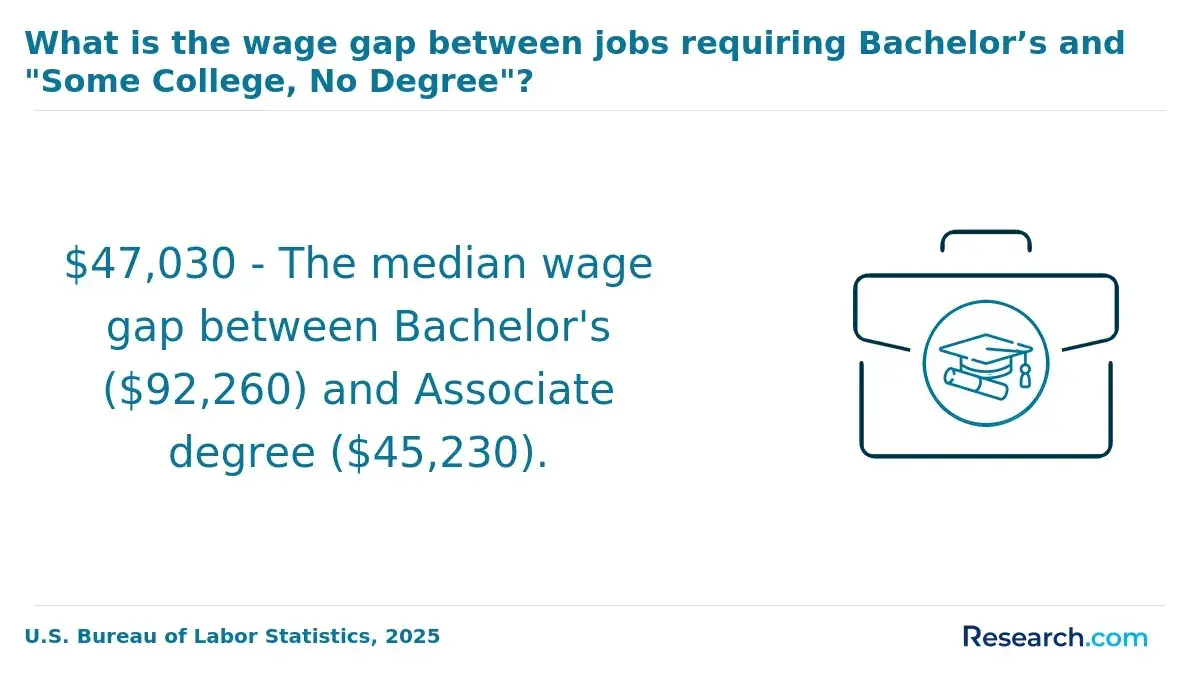
Few occupations are inherently remote, and few remote jobs require a doctorate simply because they are remote. Some research-scientist and university faculty roles require or strongly prefer doctoral training. Specialized consulting, evaluation, and leadership roles may value it alongside substantial experience. Security analysis, software development, instructional design, and many policy-analysis jobs commonly have routes that do not require a doctorate.
Admission usually requires at least a bachelor's degree; many professional doctorates require a relevant master's degree, professional experience, or an existing license. PhD programs may admit qualified applicants after a bachelor's degree but can weigh research preparation and faculty fit heavily. Requirements can include transcripts, recommendations, a statement of purpose, writing or research samples, interviews, and prerequisite coursework. GRE or GMAT policies vary by program.
Ask whether a master's degree actually reduces required coursework: it does not automatically provide advanced standing. Before applying to a research doctorate, identify faculty whose work fits your interests and confirm whether applicants should contact potential advisers.
Many doctoral programs take multiple years, but a reliable timeline must account for the entry pathway, enrollment load, course sequence, proposal approval, dissertation or project progress, and any clinical hours. Finishing coursework is not the same as finishing the degree. Ask programs for completion information specific to students with your starting qualifications and intended study pace.
For cost, compare the full expected commitment: required tuition and fees, books or software, research costs, travel, placement expenses, and income you may forgo. A funded PhD can cost a student less in tuition than a lower-priced, unfunded professional doctorate; verify the duration and conditions of any stipend or tuition remission. When reviewing cheap PhD programs online, compare funding and required in-person expenses rather than advertised tuition alone.
Most doctoral curricula combine advanced field coursework with research methods. A research PhD commonly progresses through examinations or candidacy, a dissertation proposal, original research, and a defense. Professional doctorates may instead require an applied dissertation, doctoral project, clinical project, or capstone. The precise requirement matters more than its label.
Ask for a current degree map and examples of acceptable culminating work. If your project needs patients, school data, employer records, a laboratory, or an external partner, find out how students obtain access and approvals. Those dependencies can shape both completion time and where you must work during the program.
Online delivery can reduce commuting without reducing doctoral standards. The practical difference is how coursework, supervision, research, and hands-on requirements are organized—not whether the final credential is automatically better or worse.
This comparison highlights the format trade-offs most likely to affect a working adult's decision. Individual programs may combine features from both columns.
| Consideration | Online or hybrid doctorate | Campus-based doctorate |
| Scheduling | May offer asynchronous coursework, but live meetings and deadlines can remain | Often requires more regular on-site attendance |
| Research access | May depend on remote tools, local partners, or periodic campus access | Can provide more routine access to laboratories and faculty |
| Experiential work | Clinical or field placements may need local approval | May offer established nearby placement networks |
| Costs | Can reduce commuting; travel for residencies may remain | May add relocation costs; funding may change the overall comparison |
Neither format guarantees a remote career. Choose the one that supports the training and professional relationships your target role requires.
Occupational pay is useful context, not an estimate of what a doctoral graduate will earn. BLS reported a $145,080 median annual wage for computer and information research scientists in 2023. That figure covers workers in the occupation across employers and work arrangements; it is neither a remote-work wage nor a promised return on a computer science PhD.
Growth and pay differ by occupation, location, employer, and experience. Before comparing a doctorate's cost with potential earnings, establish whether your intended job actually requires one. Broad lists of the highest paying college majors can provide early-career context, but they do not measure the incremental value of doctoral study or the availability of remote jobs.
Which Licenses and Certifications Do Remote Doctoral Careers Require?
Licensing depends on the occupation and state of practice, not on whether classes are online. Telepsychology generally requires appropriate psychologist licensure; advanced nursing practice requires applicable nursing credentials and state authorization; clinical social work requires the relevant social work license. School leadership credentials may also have state-specific preparation and experience rules.
For cybersecurity, business, public policy, and many research roles, a professional license may not be required, though employers may prefer certifications, clearances, publications, or specialized experience. Before enrollment, ask the program which credential its curriculum is designed to support, then verify that claim with the appropriate licensing or certification authority. Do not assume the doctorate itself awards the credential.
Other Things You Should Know About
Sometimes, but "online" alone does not establish that. Check for residencies, clinical placements, laboratories, proctored exams, and defenses.
A computer science or cybersecurity PhD can fit specialized research goals. Most software and security jobs do not require a doctorate, so compare the degree with experience and shorter training first.
An EdD often fits applied leadership or organizational improvement; a PhD generally fits original research. Neither guarantees an online teaching or administration position.
Usually not. First identify a target role, confirm its credential requirements, and check whether employers offer remote arrangements. Pursue the doctorate when its advanced training serves that role beyond the location benefit.
- Programmatic Accrediting Agencies | U.S. Department of Education http://www.ed.gov/laws-and-policy/higher-education-laws-and-policy/college-accreditation/programmatic-accrediting-agencies
- Doctoral Studies | UCLA Graduate Programs https://grad.ucla.edu/academics/doctoral-studies/
- Online doctoral degrees without a dissertation | Capella University https://www.capella.edu/blog/phd-doctorate/the-difference-between-a-dissertation-and-doctoral-capstone/
- Compare Online Human Services Programs | Human Services Edu https://www.humanservicesedu.org/online-human-services-programs/