
2027 Best Online Associate Degree Completion Programs With Employer Tuition Assistance

Co-Founder and Chief Data Scientist
If you have college credits but no degree, the best online completion program may be the one your employer will pay for - not the one with the lowest advertised tuition. Employer educational assistance can generally be tax-free up to $5,250 per employee each calendar year under federal rules, but eligible schools, programs, expenses, and payment methods depend on the employer. This guide is for working adults comparing unfinished-credit pathways. It explains which fields suit online study, how to estimate what you will still owe, and what to confirm with both your employer and college before enrolling.
Key Things You Should Know
- Start with your employer's eligible-program catalog: tuition assistance may cover an associate degree at one college but not the same major at another.
- Compare the credits that actually satisfy degree requirements, not just credits accepted. Many associate degrees require around 60 credits, and residency rules can leave coursework to complete even after a generous transfer evaluation.
- For cost context, the College Board reported average published in-district tuition and fees of $4,050 at public two-year colleges for 2024-25; your remaining-credit bill, fees, and employer benefit determine your actual cost.
Top 10 Best Online Associate Degree Completion Programs With Employer Tuition Assistance
Business Programs
Business administration and accounting associate pathways are strong options when an employer covers a broad selection of majors and you need courses that can often be completed online. An AA or AS may fit a planned bachelor's transfer; an AAS may emphasize immediate workplace skills. Ask whether prior accounting, economics, and general education credits meet specific requirements. Compare spreadsheet and accounting-software coursework with your career goal: a general business degree is versatile, but it does not by itself qualify you for management or CPA licensure.
Healthcare Programs
Healthcare administration, medical billing, and health information programs may offer online coursework without the clinical scheduling of patient-care degrees. They suit employees seeking office or records-related roles, but titles that sound similar can have different curricula. Check whether an AAS prepares you for work or an AS preserves your intended bachelor's transfer path. Ask about internships, approved credential preparation, software access, and any required in-person activities. Employer coverage does not establish eligibility for a professional certification.
Information Technology Programs
IT support, networking, and cybersecurity associate programs can suit workers who already have relevant experience or industry training to evaluate for credit. Compare hands-on labs, equipment requirements, and whether the online schedule permits evening study. An AAS may prioritize technical skills; an AS may better support transfer, depending on the college's agreement. Employer tuition benefits may not cover certification exams or hardware. An associate degree can support entry-level applications, but cybersecurity roles often also require experience.
Nursing / Pre-Nursing Programs
Pre-nursing AS coursework may be online, but completing prerequisites does not guarantee admission to a nursing program. An associate degree in nursing normally includes supervised clinical education that cannot be completed entirely online; admission is often selective. For licensed practical nurses, an employer-approved bridge pathway may offer online theory with local clinical placements. Verify your state board's approval, placement arrangements, scheduling, and eligibility for the NCLEX-RN before counting on employer assistance or a promised completion date.
Criminal Justice Programs
Criminal justice AA, AS, and AAS options can build knowledge of courts, corrections, and public safety while accommodating an online work schedule. Choose a transfer-oriented path if a bachelor's degree is your goal; compare an AAS against local hiring requirements if you want workforce preparation. Ask whether police academy training or military education can be evaluated for credit. A degree alone does not replace agency screening, academy training, physical standards, or other requirements for sworn positions.
Psychology / Counseling Programs
An online psychology AA or AS is generally a transfer foundation, making the destination bachelor's program more important than a short-term occupational claim. Counseling-focused associate coursework may support applications to certain entry-level human-services roles, subject to employer requirements, but it does not qualify someone to practice independently as a licensed counselor. Confirm that statistics, science, and other courses will apply to your next degree. If your employer funds only the associate program, plan separately for the education your intended profession requires.
What are online associate degree completion programs with employer tuition assistance?
An online associate degree completion program lets a student with previous college credit finish remaining requirements through primarily online study. It is a pathway based on your starting credits, not a separate type of associate credential. AA and AS degrees often support transfer, while AAS degrees often emphasize job skills; the actual curriculum and articulation agreement matter more than the initials.
Most associate degrees require roughly 60 credits, but a student entering with 30 credits may still need more than 30 if courses do not satisfy the major, general education, or residency requirements. "Online" can also mean scheduled live meetings, proctored assessments, labs, or local placements. Compare those requirements alongside other online degree programs before assuming a work schedule will fit.
Which employers offer tuition assistance for online associate degrees?
Amazon Career Choice, Walmart Live Better U, and Target's Dream to Be are examples of U.S. employer education benefits that have included college pathways. Do not assume every associate major or college is covered: available credentials, partner institutions, eligibility, and funding can change. An employer's general tuition-reimbursement policy may provide a different route from its direct-pay education network.
Ask benefits staff for the current eligible-school and program list, required hours or tenure, annual or per-term limits, covered fees and books, grade requirements, and whether payment occurs before classes start or after you pass. Confirm whether a change in employment status affects coverage and whether any repayment obligation applies. Then obtain written confirmation that your specific completion program, not merely the college, is eligible.
How much do online associate degree completion programs cost after employer assistance?
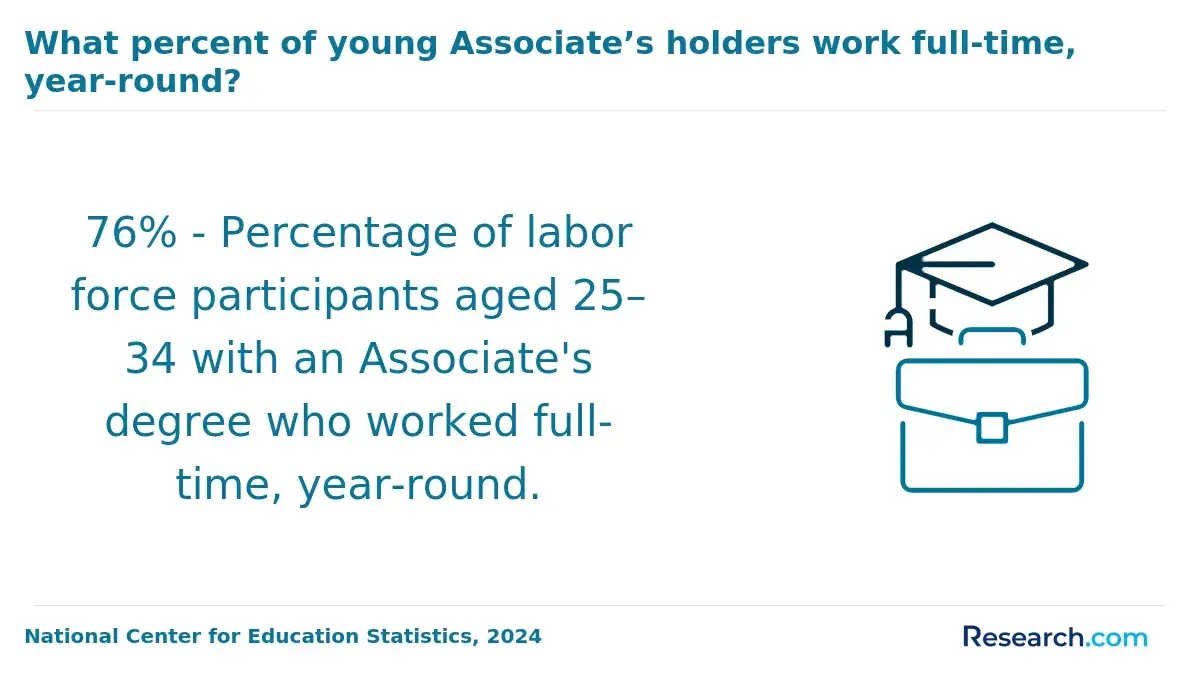
Your cost after employer assistance depends on the number of credits still required, the price of those credits, mandatory fees, covered expenses, and the timing and limits of your benefit. The College Board's 2024-25 public two-year in-district average of $4,050 in published tuition and fees describes a full academic year - not the bill for your remaining courses or a guaranteed net price.
Request a degree audit and itemized estimate covering tuition, online and course fees, books, equipment, and any clinical or travel expenses. Compare that total with the employer's actual approved contribution, not its headline maximum. Federal rules generally allow up to $5,250 in employer educational assistance to be excluded from an employee's income each calendar year; that tax rule neither requires an employer to offer that amount nor guarantees all expenses qualify. Ask the financial aid office how employer payments interact with grants and other aid before borrowing.
What accreditation should online associate degree completion programs have?
Look first for institutional accreditation from an accreditor recognized by the U.S. Department of Education. It matters for federal financial aid eligibility and may affect credit acceptance, although accreditation alone never guarantees that another college will accept a course. When comparing accredited online universities with community colleges, check the institution's current accreditation status directly rather than relying on an advertisement.
Some career paths need additional scrutiny. For nursing, verify state board approval and any program accreditation relevant to your licensing or transfer goals. For another regulated healthcare field, ask the applicable board or certifying organization whether the specific program and delivery format meet its requirements. Employer approval to pay for a degree is not a substitute for academic accreditation or professional eligibility.
How do transfer credits affect online associate degree completion?
Transferred credits lower cost and time only when they fulfill requirements you would otherwise need to complete. A college may accept an old elective yet still require its own major course. Policies differ on minimum grades, course age, subject equivalencies, maximum transfer credits, and credits that must be earned at the degree-granting institution. Prior learning, military training, exams, and industry credentials may be evaluated, but work experience does not automatically earn credit.
Request an official evaluation before committing to a program. Ask for a written audit separating accepted credits from credits applied to general education, the major, and electives; identify residency requirements and remaining course sequences. If a bachelor's degree is next, confirm how each remaining course applies there too. A seemingly easy associate route is poor value if it delays your bachelor's pathway; the question is different from what is the easiest bachelor's degree to get.
What admission requirements apply to online associate degree completion programs?
Typical college-level admission steps include an application, high school or equivalent credential, and official transcripts from every previously attended college. A completion pathway may also require a minimum number of transferable credits or a particular academic standing; some colleges admit students first and determine their remaining requirements after transcript review. Ask whether an evaluation is available before enrollment.
Admission to the college is not always admission to the major. Nursing and some allied-health programs may impose separate prerequisites, grades, background checks, and placement requirements. Avoid assuming that open institutional admission - or an employer's offer to pay - reserves a seat in a selective program.
What do students study in online associate degree completion programs?
Students usually complete a mix of unfinished general education and major courses. Depending on the field, that could mean accounting and communication in business, anatomy and other prerequisites in pre-nursing, or networking labs in IT. A transfer-oriented degree may prioritize courses required by a bachelor's program; a career-oriented AAS may devote more space to applied coursework.
For a working adult, delivery details can matter as much as subject matter. Ask which courses are asynchronous, which meet at fixed times, how often required courses run, and whether labs, internships, practicums, or clinical placements require attendance away from home. Short individual course terms do not prove the whole degree can be finished quickly, especially when prerequisites run in sequence.
What careers and salaries can graduates expect after completion?
Career prospects depend on the field, prior experience, location, and any required credential - not simply possession of an associate degree. Business and healthcare administration graduates may pursue relevant support roles; IT graduates may seek technical support work; psychology graduates commonly need further education for professional practice. Nursing illustrates the distinction: the Bureau of Labor Statistics reported a 2024 median annual wage of $93,600 for registered nurses as an occupation. That is not a predicted salary for associate-degree graduates, and RN practice requires meeting state licensing requirements and passing the licensing exam.
When comparing return on investment, use the occupation you can realistically enter after completing all required steps. If your target role requires a bachelor's degree, experience, or a license, account for that additional time and expense rather than treating the associate credential as the endpoint.
How can students choose a reputable online associate degree program?
The strongest choice is an accredited program that accepts and applies your prior credits, fits your working schedule, advances your intended career or transfer goal, and is confirmed eligible for your employer's benefit. A lower per-credit price may lose its advantage if more courses or uncovered fees remain; a faster advertised timeline may assume credits you do not have.
Before enrolling, get a written degree audit and total remaining-cost estimate from the college, plus written benefit approval from your employer. Check course availability, residency rules, any in-person requirements, and the credential needed for your target job. Be wary of guaranteed job or salary claims and of pressure to enroll before transfer evaluation. Keep the comparison focused on the credential you actually need: even guides to best 1 year PhD programs online address a fundamentally different stage of education, not a shortcut through associate completion.
Other Things You Should Know About
Possibly. Confirm that the specific school and major qualify, then ask whether the benefit covers only courses taken after approval.
No. Credits must meet the college's transfer rules and apply to remaining degree requirements; residency and major requirements may still leave courses to take.
Some programs allow it, but scheduled classes, labs, proctored assessments, internships, or clinical placements may restrict your availability. Check the full course plan.
Not necessarily. Benefits can exclude fees, books, equipment, or certain courses and may have funding limits. Compare written benefit approval with an itemized college estimate.
References
- Frequently asked questions about educational assistance programs | Internal Revenue Service https://www.irs.gov/newsroom/frequently-asked-questions-about-educational-assistance-programs
- Price of Attending an Undergraduate Institution - COE https://nces.ed.gov/programs/coe/indicator/cua/price-of-attending-an-undergraduate-institution
- Academic Years, Academic Calendars, Payment Periods, and Disbursements | 2025-2026 Federal Student Aid Handbook https://fsapartners.ed.gov/knowledge-center/fsa-handbook/2025-2026/vol3/ch1-academic-years-academic-calendars-payment-periods-and-disbursements
- Fully Online Degrees and Certificates | Montgomery College, Maryland https://www.montgomerycollege.edu/academics/mc-online/fully-online-degrees.html
- Academic Support: Coastal Alabama Community College https://www.coastalalabama.edu/student-services/academic-support/
- College Graduation Rates and How ACE Compares | ACE Blog https://ace.edu/blog/college-graduation-rates-and-how-ace-compares/
- Student Support Services at MCC - Middlesex Community College https://www.middlesex.edu/students/studentsupportservices.html
- Associate to Bachelor's Degree Completion | Tiffin University https://go.tiffin.edu/bachelors-programs/associate-to-bachelors-degree-completion/
- Employer Tuition Reimbursement: What Working Adults Need to Know | Winston-Salem State University https://ramsonline.wssu.edu/blog/employer-education-benefits/
- Return to School | Employer Tuition Assistance Programs | UMass Global https://www.umassglobal.edu/blog-news/get-your-employer-pay-college-tuition-assistance-programs


