2027 Best Online Artificial Intelligence Degree Programs at Nonprofit Universities

Co-Founder and Chief Data Scientist
Choosing an online artificial intelligence degree means weighing more than a school's name or nonprofit status. The U.S. Bureau of Labor Statistics projects 36% employment growth for data scientists from 2023 to 2033, making strong preparation in programming, data, and responsible AI increasingly valuable. This guide helps prospective undergraduate and graduate students compare nonprofit online AI programs by degree level, cost, accreditation, delivery format, support, and career fit so they can build a realistic shortlist.
Key Things You Should Know
- Nonprofit status is not a quality guarantee: prioritize institutional accreditation, a technical curriculum, transparent total cost, and outcomes that match your target role.
- For 2024-25, average published tuition and fees were $11,610 at public four-year colleges for in-state students and $43,350 at private nonprofit four-year colleges; online program pricing can differ substantially from these benchmarks.
- A bachelor's degree is usually the practical entry point for software, data, and junior AI roles, while a master's degree is better suited to professionals seeking advanced machine learning, AI engineering, or research-oriented work.
What Makes an Online Artificial Intelligence Degree Program at a Nonprofit University Different?
An online artificial intelligence degree at a nonprofit university is a credit-bearing academic program offered by a public institution or a private nonprofit institution. It typically combines computer science, mathematics, statistics, machine learning, data management, and ethics. Unlike a short AI certificate, a degree usually includes general education or graduate-level foundations, graded assessments, faculty oversight, and a transcript that may support employment or further study.
Program labels vary. Some schools offer a dedicated AI degree, while others offer an AI concentration within computer science, data science, analytics, or information technology. A dedicated program can provide a more focused sequence in machine learning and intelligent systems. A computer science degree with AI coursework may be the stronger option for students who want broader software engineering preparation or flexibility to pivot into cybersecurity, analytics, or development.
Degree level should reflect the student's preparation and intended role. The comparison below clarifies the most common pathways.
| Pathway | Typical applicant | Common preparation | Potential use |
| Associate degree or transfer pathway | New college student or career explorer | Introductory programming, algebra, general education | Build transferable credits before a bachelor's degree |
| Bachelor's degree in AI, computer science, or data science | Students seeking foundational technical roles | Programming, discrete math, calculus, statistics, algorithms | Junior software, data, analytics, or AI-adjacent positions |
| Master's degree in AI or machine learning | Career changer with quantitative preparation or technical professional | Programming, linear algebra, probability, often a bachelor's degree | Advanced technical work, AI engineering, applied machine learning |
| Doctoral degree | Students targeting original research or university teaching | Strong research background and advanced mathematics | Research scientist, advanced R&D, academic careers |
Students considering a bachelor's route should also compare AI with broader technical majors. A list of best bachelor degrees can help put the earning potential and opportunity cost of an AI-focused curriculum in a wider career context.
How Can Students Verify Accreditation for an Online Artificial Intelligence Degree at a Nonprofit University?
Start with institutional accreditation. In the U.S., recognized institutional accreditors evaluate an entire college or university, including governance, academic quality, financial practices, and student protections. Students should verify the institution's status directly through the U.S. Department of Education's accreditation database and confirm that the online program is awarded by the accredited institution itself, not merely marketed by a third-party company.
Programmatic accreditation is different. Computing and engineering programs may hold accreditation through specialized bodies such as ABET, but not every legitimate AI, data science, or computer science program has it. ABET accreditation can be especially useful for students seeking a structured computer science or engineering curriculum, yet its absence does not automatically make an AI program unsuitable. Evaluate the curriculum, faculty, assessment methods, and employer relevance alongside accreditation.
Use these verification steps before applying, particularly when a program is fully online or uses an unfamiliar program name.
- Confirm the university's institutional accreditation and that the accreditor is recognized by the U.S. Department of Education or the Council for Higher Education Accreditation.
- Check whether the exact degree title, concentration, and online format appear in the official catalog and on the institution's transcript policies.
- Ask whether the program or its related computer science department has programmatic accreditation and what that designation covers.
- Request written confirmation of transfer-credit evaluation, financial-aid eligibility, and whether online students receive the same degree designation as campus students.
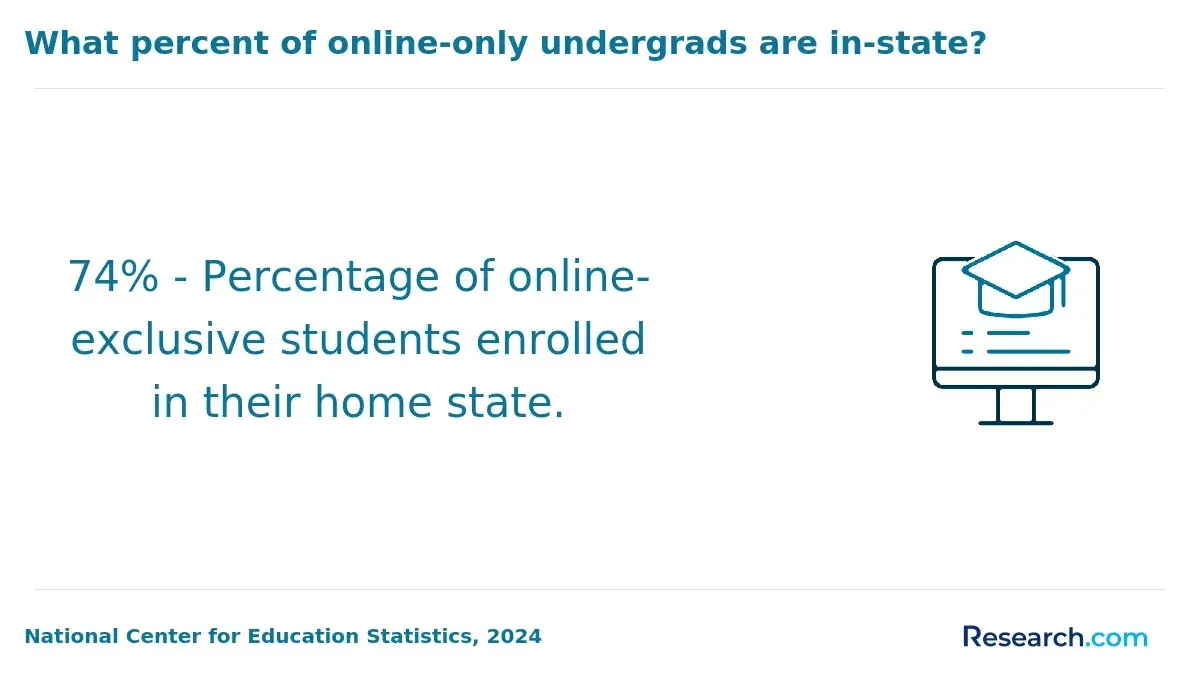
- Review state authorization information if you will study from a state different from the university's home state.
A red flag is vague language such as "internationally accredited" without naming the accreditor or showing the institution in an official directory. Another is a school that discusses rankings and career claims but does not clearly publish its degree requirements, faculty, transfer policies, or accreditation status.
How Rigorous Are Online Artificial Intelligence Degree Programs at Nonprofit Universities?
A credible online AI degree should be academically demanding because AI systems are built on technical foundations, not just familiarity with generative AI tools. Rigorous programs generally require students to write code, analyze data, use mathematical models, evaluate machine-learning results, document decisions, and complete projects under faculty assessment. Online delivery changes where learning happens, not necessarily the academic standard.
At the bachelor's level, expect prerequisite or core work in programming, data structures, algorithms, discrete mathematics, calculus, linear algebra, probability, and statistics. Master's programs often assume some of these competencies on entry and move more quickly into machine learning, deep learning, natural language processing, computer vision, cloud computing, optimization, or AI governance.
The strongest curricula balance technical depth with applied judgment. This is important because employers often need professionals who can define a useful problem, prepare imperfect data, test a model, communicate limitations, and avoid harmful or unreliable uses of automation. Students interested in creative technical work can also compare the skills involved in becoming a video game designer, where programming, interactive systems, and portfolio development can overlap with some AI applications.
Before enrolling, inspect a program's published course sequence rather than relying on course titles alone. The table identifies evidence that an online program is likely to provide meaningful academic depth.
| Curriculum feature | Why it matters | What to look for |
| Programming sequence | AI implementation requires practical software skills | Python plus software engineering, data structures, and version-control practice |
| Mathematical foundations | Helps students understand model behavior and limitations | Linear algebra, probability, statistics, calculus, or prerequisite pathways |
| Machine-learning coursework | Builds core AI modeling knowledge | Supervised and unsupervised learning, evaluation metrics, and model selection |
| Applied projects | Shows whether students can use concepts with real constraints | Capstone, portfolio, client project, research project, or internship option |
| Responsible AI content | Addresses privacy, bias, security, and governance concerns | Ethics, data governance, explainability, and documentation requirements |
Rigor is a fit issue as well as a quality issue. Students with limited math or coding background may benefit from a bachelor's program, bridge courses, or a broader computer science pathway before entering a compressed master's program. An accelerated degree can reduce time to completion, but it may require a heavier weekly workload and leave less time to build a portfolio.
The cost of an online AI degree depends on residency, degree level, credit requirements, transfer credits, technology fees, course materials, and whether tuition is charged by credit or by term. Published tuition is only one part of the decision. Students should estimate the complete cost through graduation and compare that figure with the time they expect to spend enrolled.
College Board reported average published tuition and fees of $11,610 for in-state students at public four-year institutions and $43,350 at private nonprofit four-year institutions in 2024-25. These figures are broad undergraduate benchmarks, not prices for a specific online AI program. They are useful for understanding why public in-state options can be compelling, while also showing why a private nonprofit program's grant aid, transfer policy, or accelerated schedule may change its net value.
The table separates the major cost factors students should collect from each school before comparing offers.
| Cost component | How it affects total cost | What to request |
| Tuition rate | Usually the largest direct charge | Per-credit or per-term rate for the exact online program |
| Required credits | Determines how many tuition units are needed | Degree plan after transfer-credit evaluation |
| Mandatory fees | May include technology, distance-learning, graduation, or course fees | Itemized fee schedule for online students |
| Books, software, and equipment | Can vary with coding, cloud, and project requirements | Estimated annual academic expenses and computer specifications |
| Travel or residency costs | Applies when a program includes immersion, proctoring, or capstone travel | Written confirmation of all in-person requirements |
| Lost income or reduced work hours | Can exceed fees for full-time students | Expected weekly workload and available part-time pacing |
Public nonprofit programs may offer resident tuition but charge a separate online or nonresident rate. Private nonprofit universities generally do not use state residency in the same way, but they may offer institutional grants. A low per-credit price is not automatically the best value if few prior credits transfer, required courses are scarce, or students must pay for extra prerequisite classes.
For a practical comparison, calculate total estimated charges minus grants and scholarships, then add realistic expenses for materials and any required travel. Do not count loans as a discount: borrowed funds reduce the bill today but create repayment obligations later.
Eligible students at accredited nonprofit universities may have access to federal financial aid, institutional scholarships, state grants, employer tuition assistance, military education benefits, and private scholarships. The availability of each option depends on enrollment status, program eligibility, citizenship or residency status, academic progress, and the institution's participation in federal aid programs.
The Free Application for Federal Student Aid is the primary starting point for federal grants, work-study eligibility, and federal student loans. Students should submit it early and verify the school's aid deadline, which may be earlier than the admissions deadline. Online enrollment does not automatically prevent aid eligibility, but a program must meet applicable federal requirements and students must maintain satisfactory academic progress.
Compare aid offers by separating grants and scholarships from loans and work opportunities. This distinction matters because grants and scholarships generally do not require repayment, while borrowing should be evaluated against total program cost, expected completion time, and a conservative post-graduation budget.
- Federal Pell Grants may be available to eligible undergraduate students with financial need and generally do not require repayment.
- Direct Subsidized and Direct Unsubsidized Loans may be available to eligible students, subject to annual and aggregate borrowing limits.
- Graduate students may be eligible for Direct Unsubsidized Loans and, where applicable, Graduate PLUS Loans after other aid is considered.
- Institutional scholarships may be merit-based, need-based, transfer-specific, employer-partnered, or designed for online learners.
- Employer tuition assistance can be valuable for working students, but employees should confirm grade requirements, repayment clauses, and whether the benefit covers online courses.
- Veterans and eligible dependents may be able to use GI Bill benefits or other military education programs, subject to program approval and enrollment rules.
Students should be cautious about private loans, especially before they have compared federal options. Private loan terms, interest rates, repayment protections, and co-signer requirements vary. A financial-aid office can explain institutional charges, but students should independently review the aid offer and borrowing terms before accepting debt.
Online AI programs vary widely in flexibility. Some are primarily asynchronous, allowing students to watch lectures and complete work within weekly deadlines. Others require live evening sessions, group meetings, timed examinations, virtual labs, or short campus residencies. A program can be fully online yet still demand predictable attendance at specific times.
Working adults often benefit from part-time, asynchronous programs with multiple start dates and predictable course rotations. Students who prefer live instruction, peer interaction, and immediate feedback may prefer synchronous formats. Neither model is inherently better; the right choice depends on work schedules, time zones, learning preferences, caregiving responsibilities, and the student's ability to maintain momentum independently.
Online study can be a practical option for professionals comparing technical education with management-oriented graduate pathways. For students whose goals lean toward leadership, operations, or business strategy rather than model development, an online MBA with no GMAT may be a more relevant alternative than an AI degree.
Ask admissions staff to describe the actual weekly experience, not simply whether the program is online. The following comparison points reveal whether a format will work with a student's schedule.
| Format feature | More flexible version | Potential trade-off |
| Class meetings | Recorded lectures and asynchronous discussion | Requires self-direction and may offer less real-time interaction |
| Course pacing | Part-time enrollment and multiple course start dates | Longer time to graduation |
| Assignment timing | Weekly windows for submissions | Deadlines still require consistent availability |
| Exams | Remote proctoring with several appointment times | Technology and identification rules may apply |
| Experiential learning | Remote capstone or local internship options | Students may need to arrange placements independently |
A common mistake is assuming asynchronous means self-paced. Most accredited degree courses have start and end dates, deadlines, team assignments, and faculty expectations. Request a sample syllabus and ask how often required live sessions occur before committing.
Online students need support that matches the demands of technical coursework. Strong nonprofit universities typically provide remote access to academic advising, library resources, tutoring, disability accommodations, financial-aid counseling, technical help, and career services. The key question is not whether a service exists, but whether online students can use it during the hours and in the format they need.
For AI students, targeted academic support can be especially important in programming, statistics, mathematics, and academic writing. Career support is more valuable when it includes technical résumé feedback, portfolio guidance, internship resources, mock interviews, employer events, and help translating projects into evidence of job-ready skills.
Students should ask for concrete information about response times, availability, and eligibility. This is particularly important for accelerated programs, where falling behind in one prerequisite-heavy course can delay later coursework.
- Academic advising should include a term-by-term plan, prerequisite checks, transfer-credit updates, and guidance on full-time or part-time pacing.
- Technical tutoring should cover the actual courses students take, such as Python, databases, statistics, calculus, or machine learning.
- Library services should provide remote database access, research consultations, and support for citing data and technical sources.
- Career services should help students build a portfolio, connect coursework to occupations, and prepare for technical recruiting processes.
- Accessibility services should explain how online accommodations are arranged for testing, course materials, captioning, and deadlines when appropriate.
- Technology support should state minimum computer requirements, software access, cloud-platform costs, and help-desk hours.
Students should also look for opportunities to build a peer network. Virtual office hours, cohort discussion spaces, coding clubs, research seminars, alumni mentoring, and team capstones can reduce the isolation that sometimes accompanies online study. These features are especially useful for career changers without an existing technical network.
An online AI degree can prepare graduates for in-demand work when it develops both technical competence and evidence of applied ability. The degree alone does not guarantee employment. Employers may evaluate programming ability, projects, internships, communication skills, domain knowledge, and the candidate's ability to work responsibly with data in addition to the degree title.
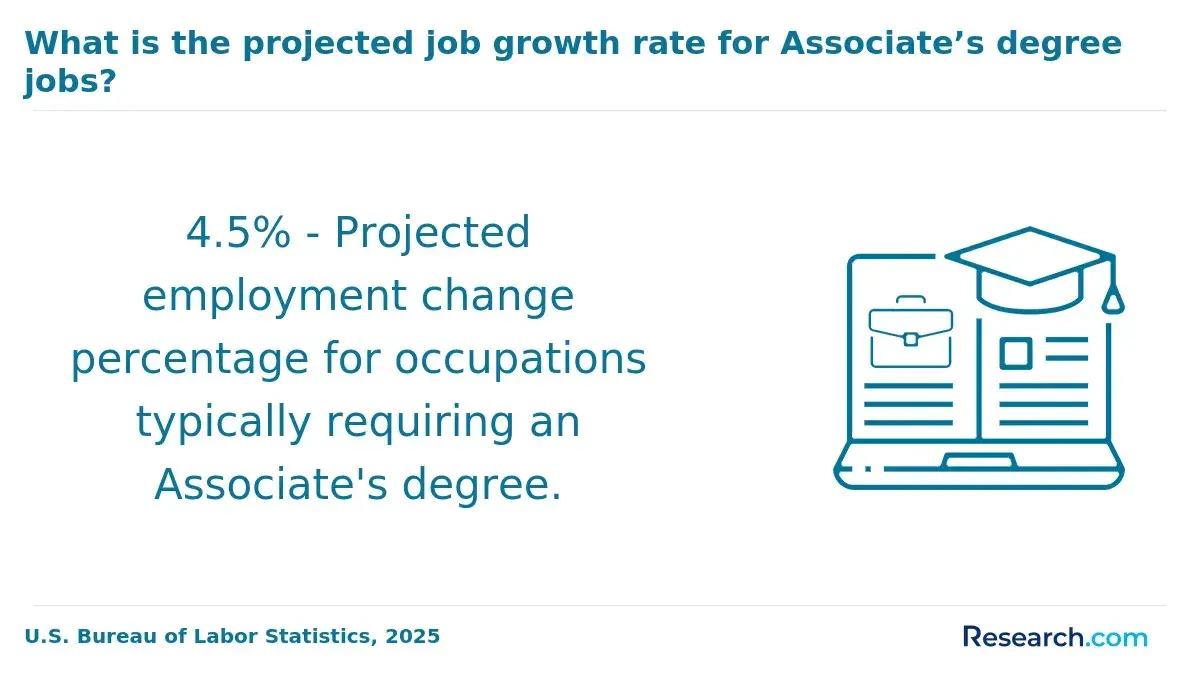
Labor-market demand supports careful investment in quantitative and computing skills. The U.S. Bureau of Labor Statistics projects data scientist employment to grow 36% from 2023 to 2033, much faster than the average for all occupations. Data scientist roles are not identical to AI engineer roles, but the projection signals ongoing demand for people who can analyze data, build models, and communicate findings. Students should use it as market context rather than as a forecast of an individual job offer.
Career preparation is strongest when a program aligns coursework with the role a student actually wants. The table shows examples of roles that may connect with AI study and the preparation typically expected beyond completing classes.
| Career direction | Typical responsibilities | Helpful preparation |
| Data analyst or analytics specialist | Clean data, create reports, identify patterns, communicate findings | SQL, Python or R, statistics, visualization, business communication |
| Data scientist | Build and evaluate predictive models and analyze complex data | Statistics, machine learning, programming, experimentation, portfolio projects |
| Machine-learning or AI engineer | Develop, deploy, monitor, and improve AI-enabled software systems | Strong software engineering, machine learning, cloud tools, MLOps, systems design |
| AI product or business analyst | Translate organizational needs into responsible AI use cases | Data literacy, product thinking, governance awareness, stakeholder communication |
| Research assistant or technical specialist | Support experiments, data preparation, literature review, and prototypes | Research methods, reproducible code, faculty projects, graduate-study preparation |
Salary varies by occupation, location, industry, experience, and education. The Bureau of Labor Statistics reported a median annual wage of $112,590 for data scientists in May 2024. That figure is a national occupation-wide median, not an entry-level salary or an outcome promised by any degree program. Applicants should review local job postings to see which tools, credentials, and experience levels employers request.
Build career evidence while enrolled. Complete substantial projects, document the problem and data limitations, publish code where appropriate, practice explaining technical choices, and seek internships or relevant work assignments. Students considering people-centered analytics or service systems may also find useful perspective in master of social work research, where ethical data use and human outcomes remain central.
Yes, an online AI degree from an accredited nonprofit university can prepare students for graduate school when it provides a strong transcript, appropriate prerequisites, faculty interaction, and evidence of advanced academic work. Graduate admissions committees generally focus on the applicant's academic preparation, course rigor, grades, recommendations, statement of purpose, and fit with the program rather than treating online delivery alone as disqualifying.
For admission to a technical master's program, a bachelor's student should prioritize calculus, linear algebra, probability, statistics, data structures, algorithms, and programming. For doctoral study, research experience may be equally important. A capstone is useful, but research-oriented applicants should seek opportunities to assist faculty, conduct an independent study, present work, or complete a thesis-like project when available.
A master's degree is not always required before a doctorate, and a dedicated AI master's is not always necessary for AI-related graduate study. Computer science, statistics, mathematics, data science, electrical engineering, and cognitive science can all be relevant depending on the research area. Students should work backward from the admission requirements of several target graduate programs before choosing undergraduate electives.
Ask schools whether online students may take research seminars, work with faculty, access labs remotely, request letters of recommendation, and complete a substantial final project. These opportunities can distinguish a career-focused online program from one that also supports academic progression.
Students should also compare graduate study with adjacent professional options. For example, professionals interested in behavior analysis have different curricular and certification considerations, so a cheapest BCBA online program may be more aligned with that pathway than a technical AI degree.
How Should Students Compare the Best Online Artificial Intelligence Degree Programs at Nonprofit Universities?
The best online AI program is the one that meets a student's academic starting point, budget, schedule, and intended career - not necessarily the lowest-priced, highest-ranked, or most heavily advertised option. Begin by deciding whether you need a transfer-friendly bachelor's degree, a career-changing master's degree, a specialized technical credential, or a broader computer science program with AI electives.
Create a shortlist of three to five accredited nonprofit options and request the same information from each. Comparing identical information prevents marketing language from obscuring meaningful differences in price, access, and requirements.
- Define the target outcome, such as software development, data analysis, machine-learning engineering, AI product work, or graduate study.
- Verify institutional accreditation, state authorization, the exact degree title, and any relevant programmatic accreditation.
- Map your completed coursework against prerequisites in programming, mathematics, statistics, and computer science.
- Request an official or preliminary transfer-credit evaluation before estimating time and cost to completion.
- Calculate total direct cost using required credits, tuition, fees, materials, and any travel rather than comparing tuition rates alone.
- Review the curriculum for coding, mathematics, machine learning, responsible AI, and a capstone or experiential component.
- Confirm the online format, including live sessions, group work, proctored exams, course rotation, and part-time availability.
- Ask how online students access tutoring, career coaching, internships, faculty office hours, and alumni networks.
- Compare outcomes information carefully, including retention, graduation, employment reporting methods, and the population included in each measure.
- Apply only after identifying how the degree supports your next role or graduate-school plan and how you will fund it.
Use this final scorecard to make trade-offs visible. A school that costs more may still be a better fit if it accepts substantially more transfer credit, provides a required specialty, or offers scheduling that lets a student keep working. Conversely, a lower-cost program may be the wiser choice when its curriculum, support, and completion pathway are equally strong.
| Comparison category | High-priority evidence | Common mistake to avoid |
| Academic fit | Prerequisites, course sequence, concentrations, faculty expertise | Choosing a degree title without reading required courses |
| Legitimacy | Recognized institutional accreditation and clear program ownership | Assuming nonprofit status proves quality |
| Affordability | Net price, fees, transfer credit, aid, and likely borrowing | Comparing only advertised per-credit tuition |
| Flexibility | Live meeting schedule, deadlines, pacing, residency, exam rules | Assuming fully online means fully self-paced |
| Career alignment | Projects, internships, portfolio support, relevant technical tools | Assuming a degree guarantees a particular job or salary |
| Graduate-school readiness | Math depth, research access, faculty recommendations, advanced electives | Waiting until senior year to check admissions prerequisites |
Public nonprofit universities are often especially attractive to qualified in-state students, while private nonprofit universities may make sense for students who value a specialized curriculum, transfer policy, cohort model, or grant package. Compare the individual offer, not the institution type alone. Before paying an enrollment deposit, get important promises about costs, transfer credit, delivery format, and graduation requirements in writing.
Other Things You Should Know About Artificial Intelligence
Most technical AI degrees require comfort with algebra, statistics, and eventually linear algebra and probability. Students who need more preparation can often complete prerequisite courses first. Strong math skills help with understanding models, but consistent practice and programming experience also matter.
Yes. Many people enter AI-related work through computer science, data science, statistics, engineering, information systems, or domain expertise. A degree focused on AI can be useful, but a portfolio, relevant technical skills, and experience often influence hiring decisions as well.
A certificate can be a low-risk way to test interest in Python, data analysis, or machine learning. It is most useful when the courses are credit-bearing or clearly transferable. Confirm transfer policies before assuming certificate coursework will shorten a future degree.
A useful portfolio includes a few well-documented projects rather than many unfinished exercises. Show the problem, data source, cleaning steps, model choice, evaluation method, limitations, ethical considerations, and your individual contribution. Avoid sharing confidential employer data or using datasets without permission.
- A Complete 4-Year Course Plan for an Artificial Intelligence Undergraduate Degree https://www.mihaileric.com/posts/complete-artificial-intelligence-undergraduate-course-plan/
- Average Cost of College [2025]: Yearly Tuition + Expenses https://educationdata.org/average-cost-of-college
- Artificial Intelligence Concentration https://www.fullsail.edu/degrees/artificial-intelligence-bachelor-degree-program
- Best Online AI Degrees: 2025 Rankings & Program Directory - MastersInAI.org https://www.mastersinai.org/degrees/online-artificial-intelligence-degrees/
- 9 Online Schools That Accept FAFSA (and How to Get Financial Aid) https://www.studentloanplanner.com/financial-aid-online-colleges/
- Top 25 Online Master's In AI Programs for 2026 - Programs.com https://programs.com/programs/online-masters-in-ai/
- Artificial Intelligence, MS Online https://www.nec.edu/programs/artificial-intelligence-ms-online
- AI Programs and Courses | DeVry University https://www.devry.edu/online-programs/area-of-study/artificial-intelligence.html
- Online Master's Degree in Artificial Intelligence (AI) & Machine Learning | CSU Global | Accredited https://csuglobal.edu/academic-programs/graduate-degrees/masters-science-degree-artificial-intelligence-machine-learning
- How Students and Recent Grads are Responding to the Rise of AI https://eig.org/how-students-and-recent-grads-are-responding-to-the-rise-of-ai/